Materials
Cotton stair runners: why they are rarely the right choice
Cotton is a wonderful fibre for clothing and bedding, but its properties are fundamentally ill-suited to the harsh environment of a staircase. Understanding why it struggles on stairs is essential for choosing a runner that lasts.
Written by the StairRunner.co editorial team · Updated 4 September 2026
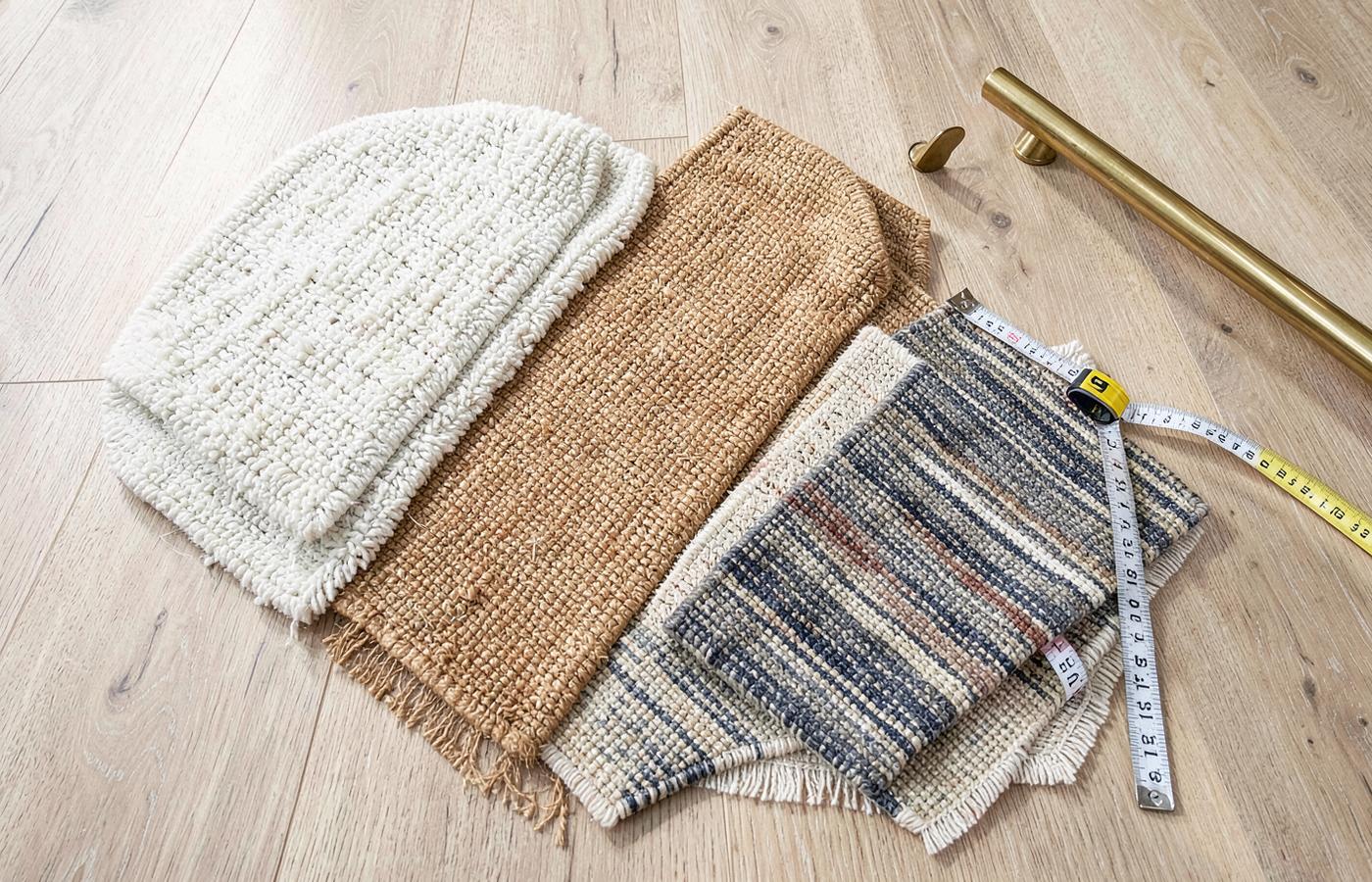
The properties of cotton
Cotton is a soft, natural, and highly absorbent cellulose fibre. These traits are what make it comfortable against the skin in clothing and breathable in bedding. However, on a staircase, these same traits become significant liabilities. Stairs are the most intensive part of a home's flooring; they endure high-impact pressure at the nosing, and they are constantly exposed to grit, dust, and spills. Cotton is simply not built to withstand this type of mechanical stress.
Unlike wool, which has a natural protective coating of lanolin and a complex, spring-like molecular structure, cotton fibres are relatively simple and flat. When you step on a cotton fibre, it doesn't "spring back." It stays compressed. Over the course of thousands of footsteps, this leads to a permanent flattening of the pile, making the runner look thin, worn, and tired long before a wool or synthetic alternative would. This lack of resilience is the single biggest technical hurdle for cotton in flooring.
The Physics of Absorbency: The Sponge Effect
One of the most challenging aspects of cotton on stairs is its relationship with moisture. Cotton is one of the most hydrophilic natural fibres used in textiles. While this is great for towels and activewear where moisture wicking is desired, it is a disaster for flooring. When a liquid—whether it's water, tea, or mud—comes into contact with cotton, the fibre absorbs it instantly through capillary action.
This means that instead of a spill sitting on the surface where it can be blotted away, it is pulled deep into the core of the yarn and into the backing of the runner. Once a stain is "set" in a cotton fibre, it is notoriously difficult to remove without using harsh chemicals that can further damage the material. For a high-traffic area like a hallway, where wet shoes and occasional spills are common, this level of absorbency is a major drawback. It also means that a cotton runner will hold onto ambient humidity, potentially leading to a "musty" smell in poorly ventilated spaces.
Why it struggles on stairs
The primary failure points for cotton runners are:
| Feature | Result |
|---|---|
| Absorbency | Sponge-like; any spill causes a deep, often permanent stain. |
| Crush resistance | Low; fibres compress and flatten almost immediately. |
| Durability | Fragile; shows traffic wear and "balding" very quickly. |
| Structural Stability | Poor; prone to stretching and rippling under tension. |
Cotton Blends: The Compromise That Works
If you are absolutely set on the aesthetic of cotton, you should look for a runner that is a cotton blend rather than 100% cotton. Manufacturers often blend cotton with more resilient fibres like polyester or nylon to improve its performance.
A cotton-synthetic blend can offer the soft, matte look and feel of cotton while gaining the stain resistance and crush resilience of the synthetic fibre. These blends are often woven more tightly than pure cotton runners, which helps prevent the "spreading" of the weave that occurs on stairs. However, even a blend will not reach the performance levels of a high-quality wool runner. It is a compromise that works for low-traffic homes or decorative staircases, but it still requires careful management and an understanding of its limitations.
Fading and UV Sensitivity
Cotton is also highly sensitive to ultraviolet (UV) light. If your staircase is in a bright, sunny hallway, a cotton runner will fade significantly over time. This fading is often uneven, occurring most rapidly on the parts of the runner that receive direct sunlight.
Unlike solution-dyed synthetics where the colour is baked into the plastic, cotton is dyed using traditional methods. The bond between the dye and the cotton fibre is relatively weak and can be broken down by UV radiation. This leads to a "washed-out" appearance that can make a relatively new runner look old and neglected. If you choose cotton, be prepared to use UV-filtering window treatments or professional UV-protectant sprays to protect your investment, though these only delay the inevitable.
Acoustic Dampening vs. Structural Integrity
One reason people are drawn to cotton is its ability to soften the sound of a home. A thick cotton weave can be an effective sound absorber, reducing the echo in a hallway. However, there is a trade-off. To get good acoustic performance from cotton, you need a thick, heavy weave, which is exactly the type of construction that is most prone to stretching and shifting on stairs.
A runner on stairs is under constant lateral tension. Every time someone walks up, they are pushing the runner down and away. Cotton's natural elasticity means it will gradually stretch out of shape. In a thick, loose weave, this results in "ripples" forming on the treads, which are not only unsightly but also a trip hazard. Achieving both sound insulation and safety with cotton is a difficult balancing act that often requires mechanical intervention.
Historical Context: Cotton in the Interior
Historically, cotton was rarely used for main staircases. It was much more common in "secondary" areas of the home, such as servants' quarters or back stairs, where the cost of wool could not be justified. In these settings, cotton "druggets" or simple runners were used to protect the wood of the stairs.
Today, the resurgence of cotton in flooring is driven largely by the "Scandi-chic" and farmhouse design trends, which value the raw, unrefined look of natural cotton weaves. While these looks are beautiful in a magazine, they were originally designed for low-traffic cottages rather than modern, busy suburban homes. Understanding this history helps explain why cotton often feels "underpowered" for the demands we place on it today.
Cleaning Protocols for Cotton Runners
If you do choose a cotton runner, your cleaning routine must be very specific. You cannot use standard carpet shampoos, which are often too alkaline for cotton and can cause the fibres to turn yellow or brown (a process known as cellulosic browning).
Instead, you should use pH-neutral cleaners specifically formulated for natural fibres. Vacuuming should be done with a suction-only machine, as a beater bar can pull and fray the relatively loose cotton yarns. If a spill occurs, the primary goal is "extraction" rather than "scrubbing." Using a wet-vacuum to pull the liquid out of the fibre before it has a chance to soak in is the only reliable way to prevent permanent staining.
Better alternatives
If you are drawn to the natural look of cotton, you are likely looking for a soft, understated aesthetic. You can achieve this with materials that perform significantly better.
- Wool: Offers the same natural aesthetic but with far superior resilience and stain resistance. Wool is the "gold standard" for residential stairs.
- Sisal/Seagrass: Offers a raw, organic texture if you want a firmer, more structural runner with a natural look.
- High-performance synthetics: Some modern synthetics are designed to look and feel surprisingly like natural cotton flatweaves while offering bulletproof performance and cleanability.
Sustainability: The Green Choice?
Many homeowners choose cotton because they want a "natural" and sustainable product. While cotton is a plant-based, renewable resource, its production is incredibly water-intensive and often involves significant pesticide use.
From a flooring perspective, a product's sustainability is also tied to its longevity. If a cotton runner needs to be replaced every three years because it has stained or worn out, its environmental footprint may actually be higher than a high-quality wool runner that lasts for twenty years. When considering the environment, think about the "total cost of ownership"—both financially and ecologically. A durable runner is almost always the more sustainable choice in the long run.
Failure Modes
Being aware of the specific ways cotton fails can help you prolong the life of your runner if you do choose to install one.
| Issue | Cause | Mitigation |
|---|---|---|
| Deep, set-in stains | High absorbency | Avoid in high-traffic or high-spill areas; treat immediately with specialist cleaners. |
| Flattened nosings | Low crush resistance | Use a very firm, high-density underlay to support the fibre. |
| Rippling/Stretching | Natural elasticity | Ensure professional installation with extra grippers and adhesive. |
| UV Fading | Sunlight exposure | Use UV-protective film on windows or choose a lighter colour where fading is less visible. |
Deep dive: long-term performance metrics
When investing in a stair runner, it is essential to consider the lifecycle of the product. Most runners are replaced not because they are worn out, but because they have become visually tired or impossible to clean. By understanding the specific failure modes of each fibre—from the snagging of loops to the crushing of pile—you can make a decision that aligns with your household intensity.
For cotton, the key metric is "dimensional stability." This refers to the material's ability to maintain its original shape under stress. Cotton scores poorly here compared to wool or nylon. Over time, the heat and humidity of a home, combined with the physical force of footsteps, will cause the cotton fibres to relax and stretch. This is why cotton is often better suited to "area rugs" that can be easily moved and adjusted, rather than fitted stair runners that must remain perfectly stationary for safety reasons.
The importance of edge finishing
The finish at the edge of your runner is where the most visible wear occurs first. Whether you choose a traditional whip-stitch, a broad binding, or a hidden edge, this finishing detail must be robust. On a high-traffic staircase, an poorly-finished edge will fray within months, leading to a ragged look that is impossible to repair without replacing the runner entirely.
With cotton runners, the edge finishing is particularly critical because the weave is often looser. A cotton "tapestry" binding can look beautiful, but it will show dirt very quickly. We recommend a heavy-duty linen or synthetic binding for cotton runners to provide some much-needed structural support to the edges. This helps the runner hold its shape and prevents the corners from curling, which is a common problem with thin cotton products.
Concluding Thoughts
Cotton is a beautiful material, but it belongs in areas of the home where its softness and absorbency can be appreciated—not on a flight of stairs. By choosing a material that is engineered for high-traffic environments, you ensure that your investment looks great for years, not months.
If you love the "look" of a cotton flatweave, consider a wool flatweave or a high-quality synthetic alternative. You will get the same aesthetic results with a fraction of the maintenance and a much longer lifespan. The goal of a stair runner is to provide safety, comfort, and style; cotton, unfortunately, struggles to deliver on the first two over the long term. See our guide on stair runner materials to help make an informed decision.
Frequently asked questions
- Is cotton a good material for a stair runner?
- Generally, no. Cotton is a highly absorbent, soft natural fibre that lacks the resilience and structural density required for the punishing demands of a staircase. It will show wear, crushing, and staining far more quickly than wool or synthetic alternatives.
- Why do people choose cotton?
- Cotton is often chosen for its soft 'hand', its natural, matt appearance, and its price point. While it can look beautiful in a low-traffic rug, those same properties make it unsuitable for the heavy, repeated impact of a flight of stairs.
- What are the biggest problems with cotton on stairs?
- The biggest issue is moisture absorption and lack of crush resistance. Cotton will soak up any liquid spill, which can be near-impossible to remove. It also flattens and crushes under heavy foot traffic, losing its texture and appeal very quickly.
- Are there any exceptions?
- Cotton is sometimes blended with other, stronger fibres to create a more resilient product. If you absolutely love the look of cotton, look for a tight-weave blend that has been specifically engineered for floor covering, but manage your expectations for long-term wear.
- What should I choose instead?
- Wool (for luxury, resilience, and style) or a high-density synthetic (for durability, stain resistance, and cleanability) are both vastly superior to cotton for a staircase application.
- Can I machine wash a cotton runner?
- While individual cotton rugs may be washable, a fitted stair runner cannot be machine washed. The agitation and heat would cause significant shrinkage, and once a fitted runner shrinks, it will no longer fit your stairs and must be discarded.
- How do I prevent a cotton runner from slipping?
- Cotton is a light fibre and the runners are often thin. To prevent slipping, you must use a high-quality, adhesive underlay or a non-slip rug pad specifically designed for stairs. Mechanical fixings like stair rods can also help hold it in place visually, though they don't replace the need for a good underlay.
Related guides
- MaterialsStair Runner Materials ComparedWool, nylon, polypropylene, sisal and jute judged on stair-specific wear, comfort, cleaning and safety.
 CareCleaning and Caring for a Stair RunnerRoutine vacuuming, spill response by fibre type, slipping and fraying, and when to call a professional.
 MaterialsSisal and Jute Stair RunnersNatural plant-fibre runners on stairs: durability, texture, moisture behaviour, borders and honest limitations.
- MaterialsWool Stair RunnersWhy wool holds its shape on stairs: crimp, twist, blends, staining, moths, shedding and honest limitations.