Independent stair runner reference
Stair runners: how to measure, choose and fit one
StairRunner.co explains how stair runners are measured, installed, chosen and cared for — with the formulas, trade-offs and failure points written out, so you can brief an installer or check a quote with confidence.
A stair runner (also called a stair carpet runner) is a strip of carpet fixed down the centre of a staircase, leaving a margin of tread visible on each side. It adds grip, softens noise and protects the stairs — and the exposed timber edges are part of the look.
Where would you like to start?
- Stair RunnersWhat a runner is, how it works, and whether one suits your staircase.
- MeasuringFormulas, worked examples and a calculator for runner length and width.
- InstallationMethods, tools, sequence, and the mistakes that show later.
- MaterialsWool, nylon, polypropylene, sisal and jute compared for stair use.
- Design IdeasWhy particular patterns, widths and colours work on stairs.
- CostThe variables that decide your quote, and how to compare bids.
- Cleaning & CareRoutine care, stains, slipping, fraying and wear.
- All GuidesThe full index of stair runner guides, grouped by topic.
What a stair runner actually is
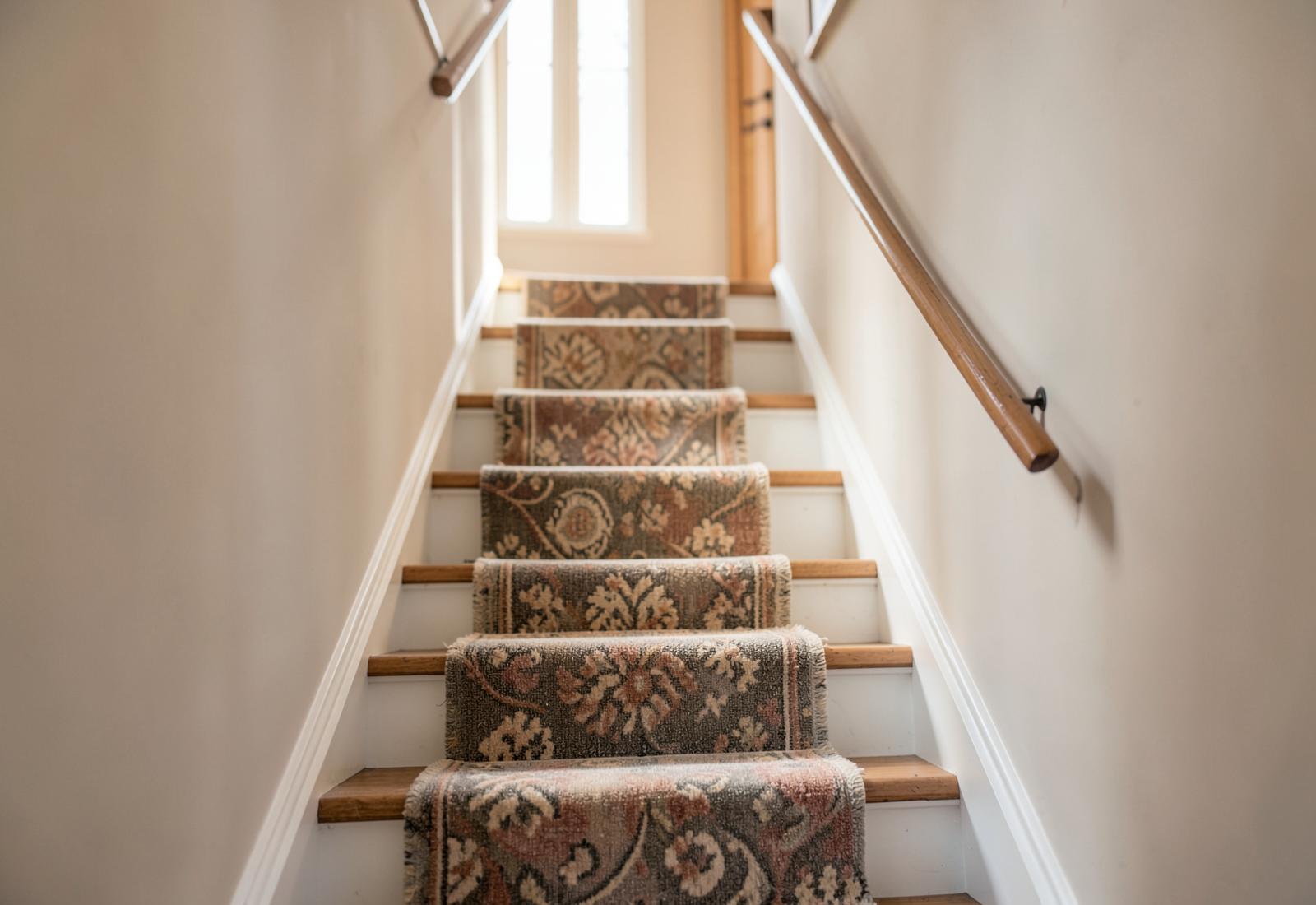
A stair runner is a strip of carpet, narrower than the full width of the staircase, fixed down the centre of each tread and riser and left running from the bottom step to the top, or to a landing where it changes direction. It differs from full stair carpeting, which covers the entire tread edge to edge, and from a loose stair mat, which is not fixed and does not continue the length of the flight. The exposed strip of tread and riser on each side — usually stained or painted timber — is a deliberate part of the look, not an oversight, and its width is one of the first decisions you make when specifying a runner. See what a stair runner is for the full definition and history of the style, or stair treads vs a runner if you are choosing between a continuous runner and individual pieces on each step.
Runners exist for reasons beyond decoration. A well-fitted runner softens footfall noise, adds grip on a surface that is otherwise a common site of falls, and protects the timber or existing carpet underneath from the concentrated wear that stairs receive compared with flat flooring. Because a runner is narrower than the stair and usually sits on a separate underlay, it can also be removed, refitted or replaced without disturbing the structure of the staircase itself, which is one reason it remains popular in older houses where the treads are original and worth preserving.
Stair runner ideas and inspiration
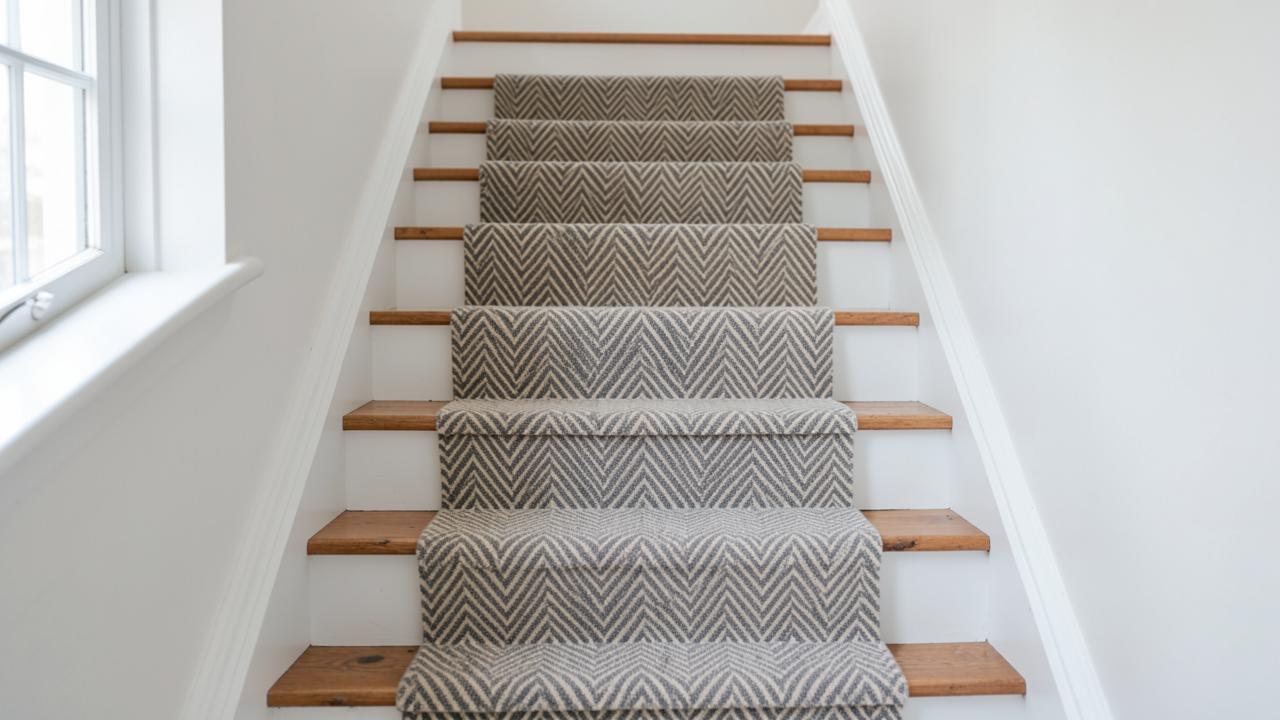
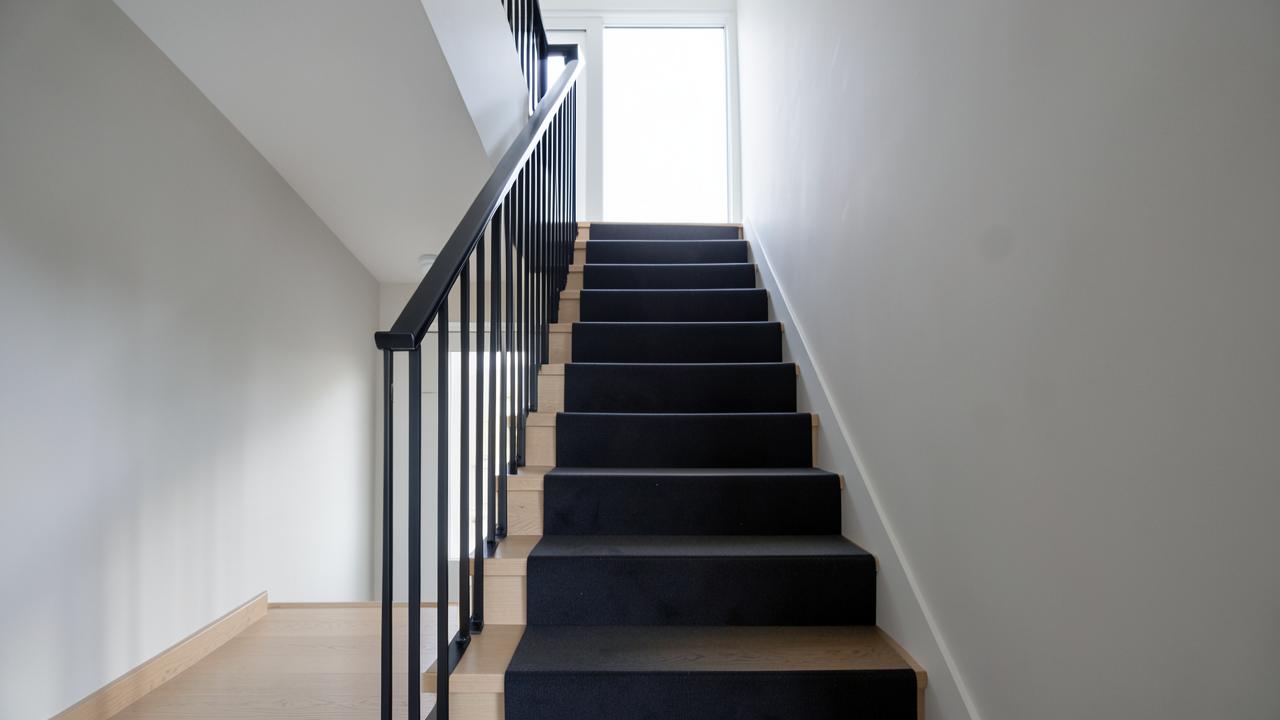
Most people searching for a stair runner are still deciding what it should look like. These guides collect the styles, colours and patterns that work on real staircases — from classic stripes to plain modern wool — with the practical trade-offs of each written out.
How to choose a stair runner
Choosing a runner is a sequence of dependent decisions rather than a single choice of colour or pattern. Getting the order right avoids paying twice — for example, choosing a material before you know whether the stair has winders that will consume it faster, or picking a width before you have measured how much tread margin looks right on your particular staircase.
- Measure the staircase — step count, tread depth, riser height, and whether it is a single straight flight or includes winders, landings and turns, or a top-of-stairs transition. Use the length calculator once you have real figures.
- Decide on width and margins from the clear tread width — see setting the runner width.
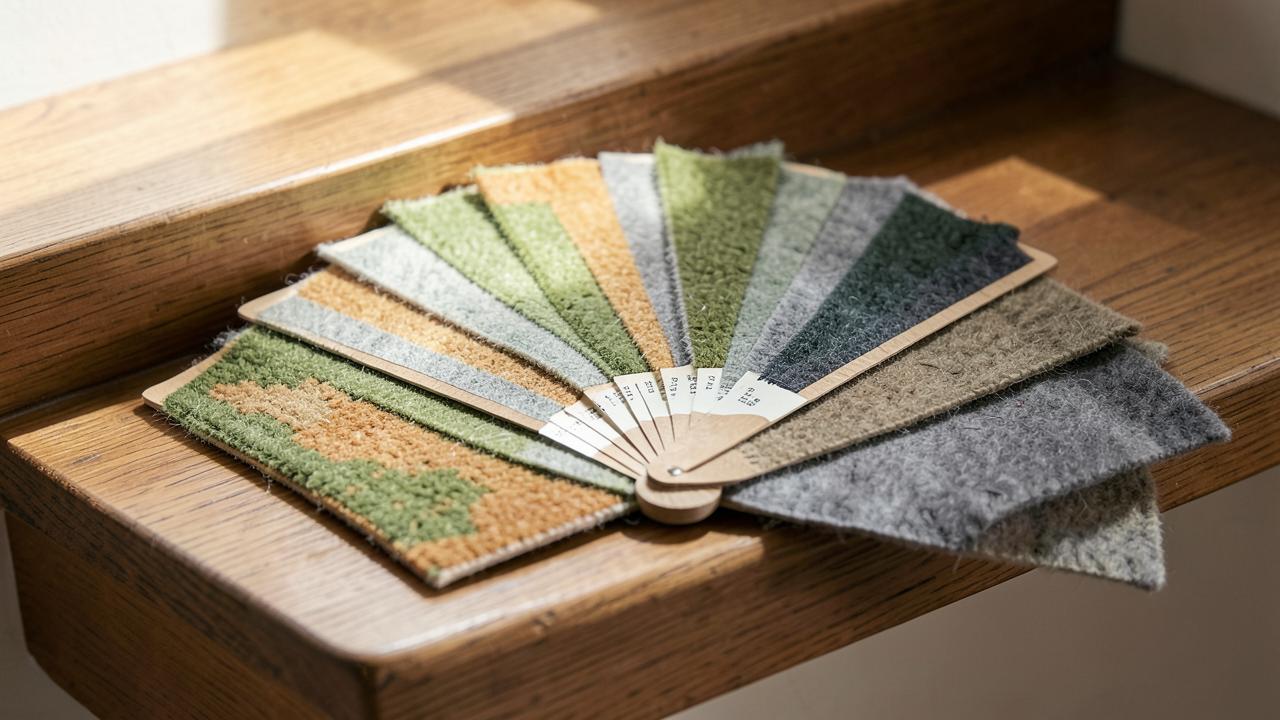
- Choose the material against how the stair is used: a busy family stair, a rental, a pet household or a low-traffic guest stair each favour different fibres — see wool vs synthetic, sisal and choosing the carpet.
- Choose colour and pattern with soiling and existing decor in mind — see colour choice and pattern choice.
- Decide on fixing and finishing — waterfall or Hollywood installation, and whether to add stair rods.
- Confirm underlay and installation — see underlay and installation, then plan for ongoing cleaning.
If you are fitting the runner yourself rather than through a professional installer, read DIY stair runner installation before you buy materials, since some tools and fixing methods are specific to stairs and not obvious from general carpet-fitting experience. If you already have carpet on the stairs and are deciding whether to keep it, remove it, or lay a runner over the top, see fitting a runner over existing carpet and runner vs full stair carpet.
What actually drives the cost
Stair runner cost is not a single number because it depends on variables that differ from house to house. Rather than quote a figure that will not apply to your stair, it is more useful to understand what moves the price up or down, so you can read a quote critically.
- Material
Fibre, construction and pile height set the baseline cost per metre before anything else is considered. See materials.
- Flight complexity
Winders, curves and multiple landings need templating and take longer to fit than a straight flight of the same length.
- Pattern and waste
A large repeat that must stay centred through turns increases the length you need to buy, independent of the price per metre.
- Fitting method and labour
Hollywood fitting, stair rods, and removal of old carpet or gripper all add labour time on top of the material cost. See installation cost.
For a fuller breakdown of typical cost components and how to compare quotes on a like-for- like basis, see stair runner cost.
Answers to the questions people ask first
- What is a stair runner?
- A length of carpet fixed down the centre of a staircase, leaving a margin of the tread and riser visible on each side. Also called a stair carpet runner or carpet runner for stairs. Read the full explanation.
- How do you measure for a stair runner?
- Add tread depth, riser height and a nosing allowance for one step, multiply by the number of steps, then add landings and a waste allowance. Read the full explanation.
- How wide should a stair runner be?
- Most runners leave 3–5 in (7–13 cm) of visible tread on each side, so width follows your stair width rather than a fixed rule. Read the full explanation.
- How do you fit a stair runner?
- The runner is fixed over underlay with gripper or adhesive at each tread-riser joint, working from the top of the flight down, then finished at the top and bottom edges. Read the full explanation.
- Waterfall or Hollywood installation?
- Waterfall drapes the runner straight over the nosing; Hollywood is tacked into each tread-riser joint for a tailored line and closer contact. Read the full explanation.
- Is a wool stair runner worth the extra cost?
- Wool resists crushing and hides soil well on stairs, but solution-dyed synthetics clean more aggressively and cost less. Read the full explanation.
- Can you put a stair runner over carpet?
- It is possible in some cases, but a soft or deep-pile existing carpet makes the runner unstable; a runner sits best on a firm, flat surface. Read the full explanation.
- Are stair runners a good idea on wooden stairs?
- Yes — a runner adds grip, softens noise and protects the treads, while leaving the timber visible at the margins as part of the look. Read the full explanation.
Safety is not an afterthought on stairs
Stairs are one of the more common locations for falls in the home, and a runner interacts directly with that risk — for better or worse. Fitted correctly, a runner with a grippy pile and firm underlay improves traction over bare timber or tile. Fitted poorly, a runner that is loose, unevenly tensioned, or worn through at the nosing becomes a trip hazard in its own right.
- Check the runner is fully secured at every nosing, not just at the top and bottom of the flight, particularly with a waterfall installation.
- Match the underlay firmness to the fixing method — too soft an underlay under a Hollywood fit can leave a spongy edge exactly where a foot lands.
- Consider a non-slip runner or backing for households with young children, older residents, or pets that also use the stairs.
- Inspect the runner periodically for wear at the nosing of the most-used steps, since this is where backing fails first and grip is lost earliest.
Caring for a runner over time
A stair runner wears unevenly by design: the centre of each tread, where feet land, wears faster than the edges. Regular vacuuming, prompt attention to spills, and periodic inspection of the fixings extend the life of a runner considerably more than any single product or treatment. If the runner was fitted with enough spare length, some installers can shift it slightly to move the worn section away from the nosing, which is worth asking about at the time of fitting rather than after wear has already appeared. For the full maintenance routine, including what to do about specific stains and pet accidents, see cleaning a stair runner. If a household member has allergies or the stairs see heavy pet traffic, a washable stair runner may be worth the trade-offs in material choice.
Who this site is for
StairRunner.co is written for anyone about to spend money on a stair runner and wanting to understand the decision before they make it — whether that means measuring a flight yourself, briefing a fitter accurately, or simply checking that a quote reflects the work involved. It is equally useful if you are renovating a period house with a curved staircase, fitting a straightforward flight in a new-build, or looking for ideas before you have settled on a style — see stair runner ideas and modern stair runner ideas for inspiration once the practical decisions above are settled. Unfamiliar terms used across the site are collected in the glossary.
Featured guides
- BasicsStair Runners: A Complete GuideWhat a stair runner is, how it differs from full carpet, and how to decide whether one is right for your staircase.
- MeasurementHow to Measure for a Stair RunnerThe tread-plus-riser formula, waste allowance, winders and landings, plus a calculator that shows its working.
- InstallationHow to Install a Stair RunnerWaterfall and Hollywood methods, staples versus rods, tools, sequence and quality checks.
- MaterialsStair Runner Materials ComparedWool, nylon, polypropylene, sisal and jute judged on stair-specific wear, comfort, cleaning and safety.
- DesignStair Runner Ideas That Actually WorkPattern scale, stripe direction, colour and border choices explained in terms of your staircase, not a mood board.
- CostWhat Affects Stair Runner CostThe material, labour and complexity variables behind a runner quote, and how to compare estimates fairly.
- CareCleaning and Caring for a Stair RunnerRoutine vacuuming, spill response by fibre type, slipping and fraying, and when to call a professional.
- ComparisonsStair Runner vs Full CarpetA side-by-side comparison of appearance, safety, noise, cleaning, cost and resale considerations.
How this site is written
Every guide here is written to answer one question properly. Where a figure depends on your staircase, your region or your material, we show the variables instead of inventing an average. Where practice differs between installers or manufacturers, we say so. We do not publish invented statistics, fabricated expert quotes, or prices we cannot support.
- No fabricated authority. We do not claim credentials, certifications or affiliations we do not have.
- Transparent maths. Calculators show every term so you can check the result yourself.
- Regulations vary. Stair geometry and fire requirements differ by jurisdiction; we flag where local rules apply.