Materials
Sisal and jute stair runners
Natural plant fibres give a staircase a texture nothing synthetic quite copies. They also have limitations that a showroom sample will not tell you about.
Written by the StairRunner.co editorial team · Updated 4 September 2026
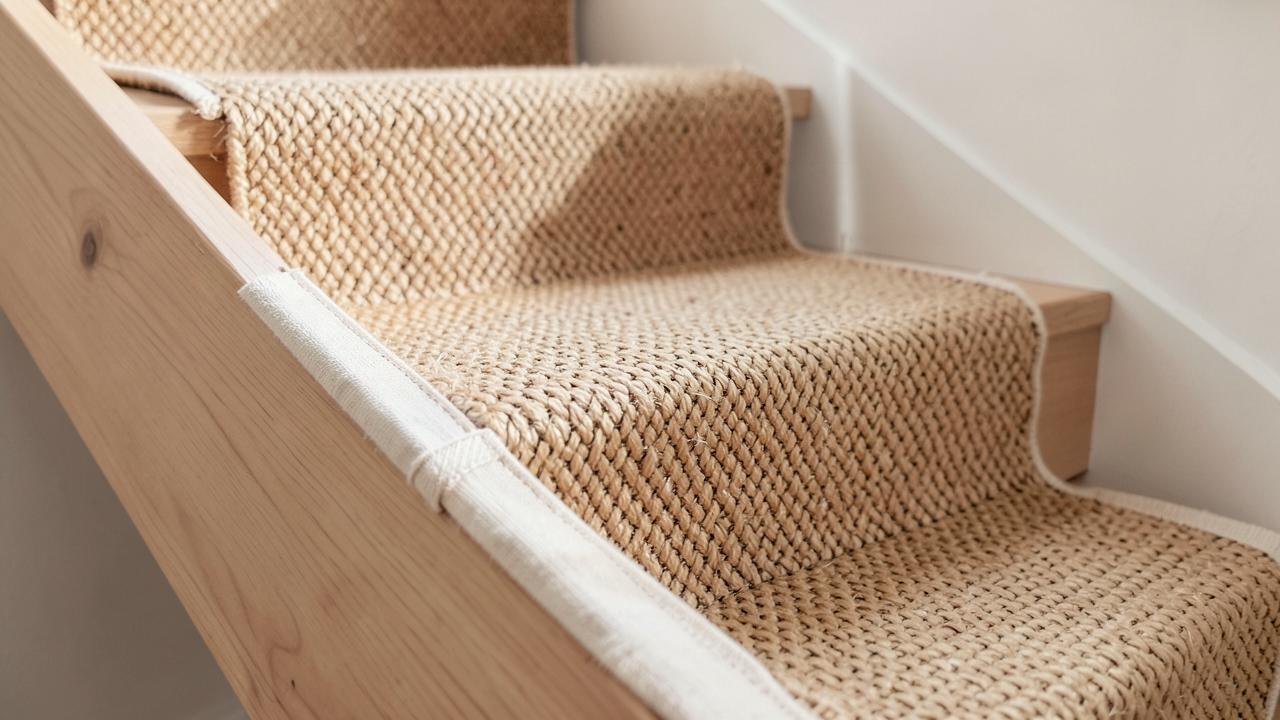
The plant fibres compared
| Fibre | Feel underfoot | Stair durability | Main weakness |
|---|---|---|---|
| Sisal | Firm, slightly abrasive | High | Water marking; needs dry cleaning methods |
| Jute | Soft, matte | Low to moderate | Sheds and wears in the walking lane |
| Seagrass | Smooth, hard | Moderate | Low friction; resists dyeing so colour is limited |
| Coir | Coarse, bristly | High | Harsh underfoot; rarely comfortable indoors on stairs |
| Wool-sisal blend | Softer, warmer | High | Costs more than either fibre alone |
| Synthetic sisal | Similar look, softer hand | Moderate to high | Can flatten; less depth of texture |
Weave matters as much as fibre
Sisal is sold in several weaves and they do not behave the same on stairs. A tight bouclé or small basketweave keeps its shape over the nosing. A large herringbone or a chunky panama can distort where it bends, and a coarse weave shows every wrap line on a waterfall installation. Ask to see the sample folded sharply over an edge before you commit.
Borders and edges
Natural fibre runners are almost always finished with a bound or taped edge — cotton, linen or faux leather are the usual choices. The border is a design decision as much as a protective one: a contrasting binding draws a firm line down the staircase and makes the runner read as a deliberate object, while a tonal binding lets the texture do the work. Faux leather and linen wear differently, so ask which the supplier recommends for stairs specifically.
Living with a natural runner
- Vacuum with a suction head; a hard beater bar can fuzz the surface fibres.
- Blot spills immediately and avoid soaking. Water rings on sisal are usually permanent, and they are the single most common regret owners report.
- Expect gradual colour shift in direct sunlight, particularly with undyed jute and seagrass.
- Consider a factory stain treatment if the staircase is a main household route. See cleaning and care for method by fibre.
When to pick something else
Choose wool or a good nylon instead if you want softness underfoot, if the stairs are steep, if pets use them constantly, or if you want to be able to wet-clean a spill without anxiety. The full comparison is in wool vs synthetic runners.
What "sisal" actually means in a showroom
Sisal is a hard fibre stripped from the leaves of the agave sisalana plant, then spun into yarn and woven flat, much as it has been for well over a century, first for rope and matting and later for interiors. What is sold as "sisal carpet" today is nearly always a machine-woven construction — bouclé, herringbone, basketweave, panama or a chevron — bonded to a secondary backing so it can be handled and fitted like any other floorcovering. Understanding that construction matters because the failure points on a staircase are almost always at the backing and the weave junctions, not in the raw fibre itself.
Jute, seagrass and coir are frequently grouped with sisal under the loose heading "natural fibre carpet", and suppliers sometimes blur the distinction further with marketing names. Ask specifically which plant the yarn comes from before you buy, because the four fibres behave quite differently once they are on a flight of stairs rather than a flat floor.
Why stairs are harder on natural fibre than flat floors
A flat-woven natural fibre has almost no cushioning of its own; the weave itself is doing the structural work that a synthetic pile relies on tufted yarn and backing latex to do. On a flat floor that stiffness is barely noticeable. On a stair, every tread forces the material to bend sharply around a nosing dozens of times down the flight, and every footfall then grinds that bent section against the timber edge. Sisal tolerates this better than jute or seagrass because its fibre is coarser and more abrasion-resistant, but no plant fibre is immune to it, which is why the nosing is where you should inspect a sample and where you should expect the first visible wear to appear years down the line.
This is also why a natural fibre runner is one of the few carpet choices where the backing specification genuinely changes what a fitter can do. A softer secondary backing wraps a nosing cleanly; a stiff one resists the bend and can crack or crease along the fold line over time, particularly on tighter winders where the bend is combined with a twist.
Reading a sisal sample properly
A showroom swatch tells you very little about long-term wear unless you test it the way a staircase will. Fold the sample sharply, pile side out, over your finger or the corner of a table and look at the fold from the angle you would see it looking up a flight from the hall — this is exactly how a fitted nosing reads. Run a fingernail firmly across the weave to see how easily the yarn distorts. Drop a few drips of water onto an offcut and watch how quickly and how visibly it marks; nearly all plant fibres will show a ring, but some show it faster and darker than others, and that is useful information before you commit to a colour and a location.
Where sisal genuinely excels
- Visual calm. The flat weave and muted natural tones sit quietly behind furniture, art and stair rods rather than competing with them, which is why designers reach for it in hallways and stairs more than almost anywhere else in the house.
- Dry wear resistance. Under normal foot traffic, with no significant water exposure, sisal is genuinely long-lived and does not crush the way a soft pile synthetic can.
- A consistent look at scale. Because the weave repeats regularly, sisal reads as a single continuous material down a long flight, with none of the pile-direction shading you sometimes see in cut-pile carpet.
- Compatibility with pattern borders. A plain sisal field with a contrast binding, or a bordered runner with a woven natural fibre inset, is a classic and durable combination for period and contemporary halls alike.
Where sisal genuinely struggles
Water is the recurring theme in every honest account of living with sisal. Wet umbrellas propped in a hallway, a dog shaking off rain at the bottom of the stairs, a dropped drink on a landing — these are ordinary household events that a synthetic fibre shrugs off and that sisal marks visibly, sometimes permanently. If your staircase sits near an entrance, a bathroom, or a kitchen doorway, weigh this risk seriously before choosing a plant fibre, or confine natural fibre to a drier part of the run and switch material at the landing.
Sisal is also firmer and less forgiving underfoot than a cut-pile wool or nylon, which some households actively prefer and others find unwelcoming, particularly for bare feet or young children sitting on the stairs. There is no way to soften this without changing the pad underneath, and even a generous underlay only takes the edge off, because the stiffness lives in the weave itself.
Choosing between sisal, jute, seagrass and coir
Treat the choice as a straightforward trade-off between durability and softness. Sisal and coir sit at the durable, firm end; jute sits at the soft, shorter-lived end; seagrass sits in between but resists dye and can feel slippery underfoot because of its natural surface wax. For a staircase carrying regular household traffic, sisal or a wool-sisal blend is usually the sound default, with jute reserved for lower-traffic areas such as a rarely used back stair, and coir reserved for utility or entrance settings where its coarse texture is an asset rather than a drawback.
Fitting considerations specific to natural fibre
Ask your fitter directly whether they have fitted natural fibre stair runners before, and specifically whether they have worked with the weave you have chosen. Stiff-backed sisal needs careful pre-bending and sometimes a different fixing method than a standard tackless strip installation used for tufted carpet; a fitter unfamiliar with the material can leave visible creasing at every nosing. If your stairs include curves, winders or a half-landing, confirm before ordering that the specific product you like can be worked around them at all — some heavier weaves genuinely cannot, and a custom order in a more flexible construction may be the only realistic route.
Maintenance over the life of the runner
Routine care for sisal is simple but different from ordinary carpet care. Vacuum regularly with suction only, since a rotating beater bar can pull and fuzz the surface fibres over time. Deal with spills the moment they happen: blot rather than rub, work from the outside of the mark inward, and avoid saturating the area with any cleaning liquid, since sisal wicks moisture into the backing and can develop odour or discolouration if it stays damp. For a full method by fibre, including what to do about a mark that has already set, see the cleaning and care guide.
Sunlight causes gradual, even fading in most natural fibres, which is generally less noticeable than the patchy wear pattern a synthetic can show, but it is worth knowing about in advance if your staircase gets strong direct light through a window or door.
Frequently asked questions
- Is sisal a good choice for stairs?
- Sisal is hard-wearing and holds a crisp weave on treads, which is why it is so widely specified. Its weaknesses are specific: it is firm underfoot, it marks easily with water, and most spills need blotting rather than wet cleaning. If those trade-offs are acceptable, it performs well on a staircase.
- What is the difference between sisal and jute?
- Sisal comes from agave leaf fibre and is stiff and abrasion-resistant. Jute comes from a plant stem, is much softer and shorter-fibred, and wears noticeably faster. On stairs, sisal is the durable option and jute is the comfort option that will not last as long.
- Does sisal make stairs slippery?
- A flat, tightly woven sisal has less surface friction than a cut-pile wool. Fitted tightly over a firm pad it is used safely in many homes, but on a steep flight, or where someone is unsteady, a textured or cut-pile alternative gives more grip.
- What is synthetic sisal?
- It is a polypropylene carpet woven to imitate a sisal look. It is far more tolerant of water and spills and usually cheaper, but it lacks the natural fibre's matte depth and can flatten sooner in the walking lane.
- Can sisal be dyed?
- Sisal takes dye reasonably well and is sold in a wide colour range, but the fibre keeps a slight natural sheen and variation that flat synthetic colour does not have. Seagrass, by contrast, resists dye almost entirely and is usually sold in its natural tone only.
- Is sisal suitable for a bathroom or kitchen landing?
- Not as a rule. Natural plant fibres absorb ambient moisture and mark badly where humidity or splashes are routine. If a runner needs to cross a wet-prone area, a synthetic sisal or a solution-dyed nylon is the safer specification.
- How long does a sisal stair runner last?
- On a well-used household staircase, a good-quality sisal fitted over the correct pad commonly performs for a decade or more before the walking lane needs attention, though exact life depends on traffic, sunlight and how quickly spills are dealt with.
Sources and further reading
Where guidance differs between manufacturers, trade bodies or local building regulations, we say so rather than presenting one position as universal.
Related guides
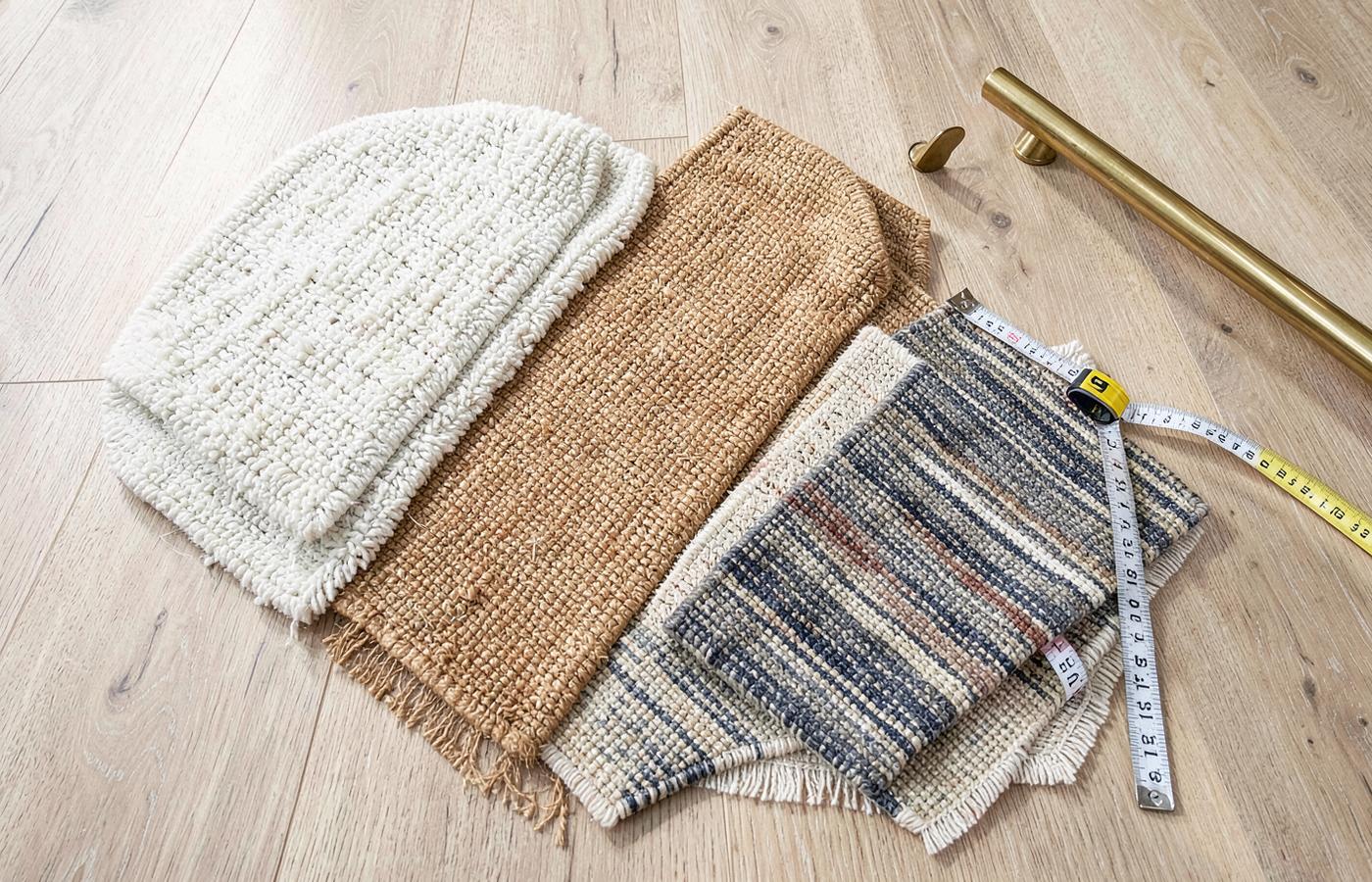 MaterialsStair Runner Materials ComparedWool, nylon, polypropylene, sisal and jute judged on stair-specific wear, comfort, cleaning and safety.
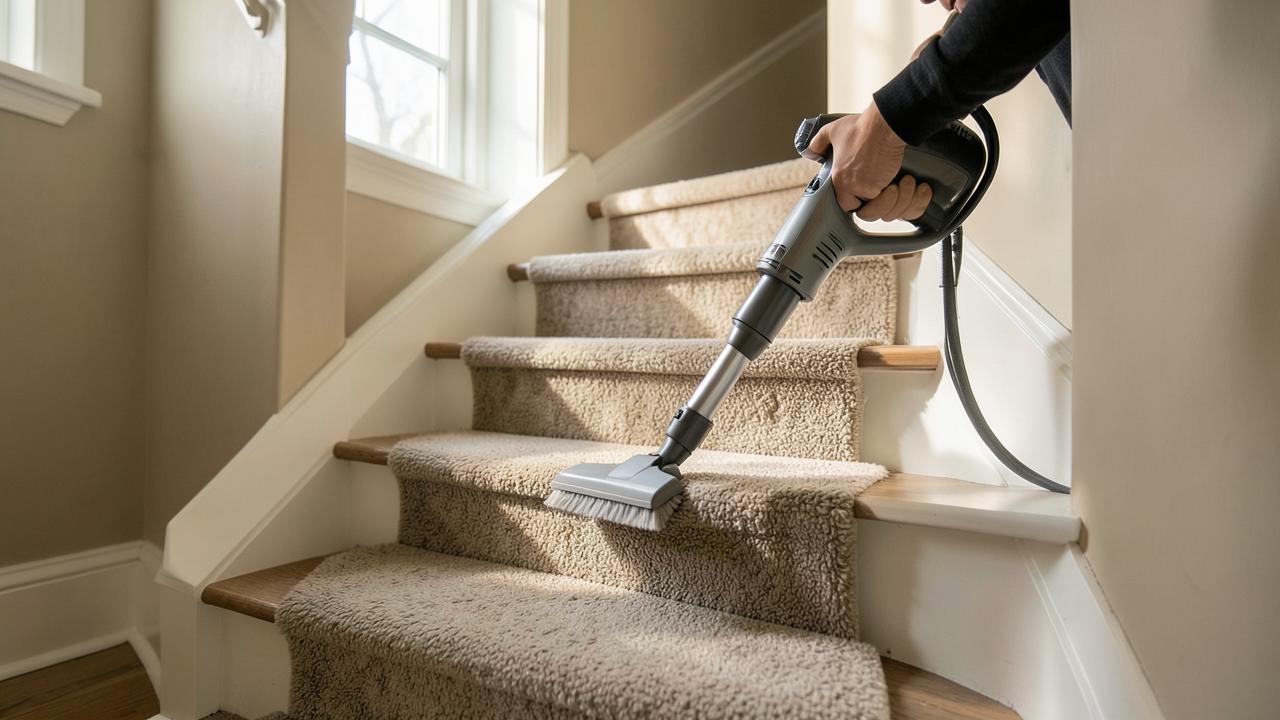 CareCleaning and Caring for a Stair RunnerRoutine vacuuming, spill response by fibre type, slipping and fraying, and when to call a professional.
- ComparisonsWool vs Synthetic Stair RunnersWool, nylon, polyester and polypropylene compared on stair-specific wear, cleaning, comfort and price.
- BuyingBest Carpet for a Stair RunnerThe specification checklist — fibre, pile, density, backing, width and pattern repeat — for stair-worthy carpet.