Stair runner basics
What is a stair runner?
The definition, the parts, the trade-offs against bare stairs and full carpet, and how to tell whether a runner suits your staircase.
Written by the StairRunner.co editorial team · Updated 4 September 2026
Why runners exist as a category at all
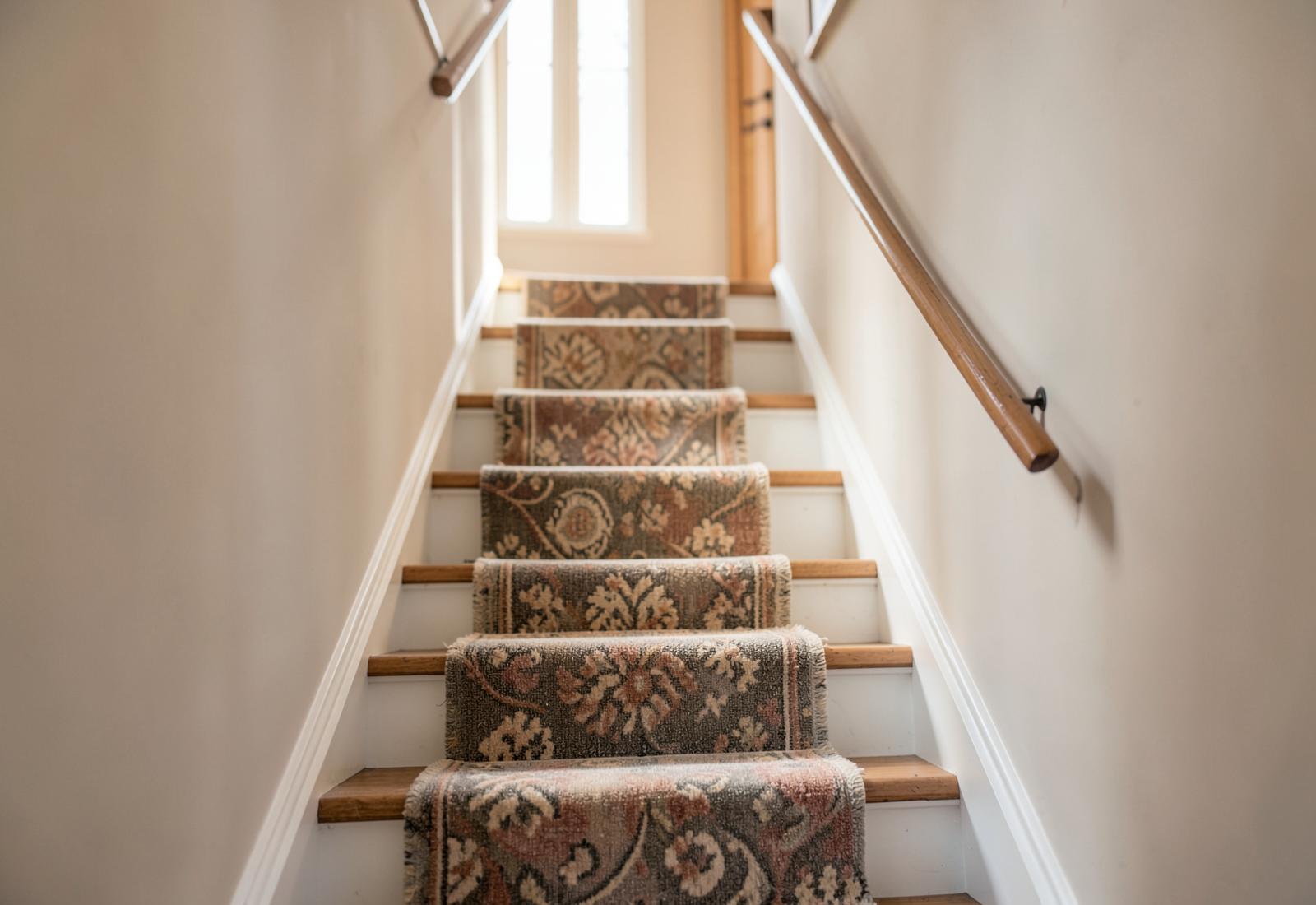
Full stair carpet and bare stairs both solve the staircase problem in one move: cover everything, or cover nothing. The runner exists because most staircases are made of a material worth looking at — oak, pine, painted softwood, sometimes stone — and full carpet hides that investment completely. A runner is a compromise with a long pedigree. It predates fitted carpet by centuries: historic houses used a strip of carpet or matting down the centre of the stairs, held by rods, precisely because loose runners could be lifted, beaten and rotated to spread wear, while the surrounding stair timber stayed on permanent display. Modern fitted runners keep the look and lose the portability, in exchange for a flatter, safer, more secure fit.
Understanding that history explains a lot of the vocabulary still used today — rods, brackets, "runs" — and it explains why a runner is judged by different standards from a fitted stair carpet. A runner is expected to show its edges. A fitted carpet is not.
The parts of a stair runner installation
A runner is a system rather than a single product, and each part affects how the finished job looks and lasts.
- The runner itself — broadloom carpet cut to width and bound, or a purpose-woven runner with a finished selvedge edge. Typical widths sit between 27 in and 36 in (69–91 cm).
- Underlay (padding) — a dense pad cut narrower than the runner, fitted tread by tread. It changes comfort, noise, the feel underfoot and the life of the pile.
- The fixing — staples, tack strips fitted into the tread-riser angle, or decorative stair rods with brackets. These determine how tightly the runner is held.
- The staircase — treads, risers and the projecting nosing at each front edge. The nosing is where the runner takes almost all its wear.
Those elements interact. A thick wool runner over a soft pad sits high on the tread and needs stair rods sized accordingly; a low-profile flatweave over a firm pad hugs the nosing and shows a crisper line. Choosing material and fixing method separately is the most common reason a finished runner looks wrong. Material choice and installation method should be decided together.
How a runner actually behaves under daily use
It helps to think of a runner as a wearing part, similar to a car tyre, rather than as permanent flooring. Every footfall bends the pile over the nosing, compresses it against the tack strip or staple line, and drags a small amount of grit across the fibres. That cycle repeats many times a day on a busy household staircase. Three things determine how long the runner keeps its appearance under that cycle: the resilience of the fibre and construction, the support given by the underlay, and the tightness and evenness of the original fit. Get any one of the three wrong and the others cannot fully compensate — a poor pad will crush even the best wool, and a loose fit will loosen even the densest weave over time.
This is also why the visible wear on a runner concentrates at specific points rather than spreading evenly: the centre of each nosing, the top three or four steps nearest a frequently used door, and any step where a stride naturally lands off-centre. Fitters and manufacturers both design around this pattern — dense construction at the point of contact matters more than overall thickness.
Runner, stair carpet or bare stairs?
The three options solve different problems. Full carpet covers the entire tread and riser wall-to-wall. A runner covers the middle. Bare stairs leave the timber exposed.
| Consideration | Runner | Full carpet | Bare stairs |
|---|---|---|---|
| Grip underfoot | Good in the walking zone | Good across the full tread | Poor, especially in socks |
| Noise | Noticeably reduced | Most reduced | Loudest |
| Shows the staircase | Yes, at the margins | No | Fully |
| Cleaning | Vacuum runner, wipe margins | Vacuum only, edges collect dust | Simplest |
| Replacement | Runner alone can be swapped | Whole staircase recovered | Refinishing when worn |
The full trade-off is set out in our runner versus full carpet comparison, including how each option behaves in a resale context and how much disruption each involves to fit or remove.
When a runner is a good fit
- The treads and side margins are in sound, presentable condition.
- You want to soften noise and improve grip without hiding the staircase.
- The staircase is a straight flight, or has winders an experienced fitter can shape.
- You are prepared to vacuum stairs regularly — runners show traffic lanes.
- You want the option to change the look of the staircase later without touching the timber underneath — a new runner is a far smaller job than refinishing stairs.
When a runner is the wrong answer
- The treads are damaged, patched or heavily stained across their full width. A runner highlights the margins rather than hiding them.
- Stair widths vary noticeably between steps, which makes a consistent side margin impossible.
- Household mobility needs favour continuous, high-contrast tread coverage. Discuss this with an occupational therapist rather than treating it as a style question.
- The staircase is open-sided or has a very narrow stringer margin, where a runner's edge would sit dangerously close to the drop rather than on solid tread.
Myths worth correcting
- "A runner is just a rug on the stairs." A rug is loose and unfixed; a runner is mechanically fixed to every tread. Loose rugs on stairs are a genuine fall hazard and are not the same product.
- "Thicker always means better." Excess thickness on stairs raises the edge profile, can round off the nosing underfoot, and complicates rod fitting. Density matters more than raw thickness.
- "Any carpet can be cut down into a runner." Broadloom carpet can be cut and bound, but not every construction survives being folded repeatedly over a nosing. See choosing carpet suited to stairs before repurposing an offcut.
What to check before you buy anything
- Confirm the staircase is structurally sound — a runner cannot fix a creaking tread.
- Decide whether you want the runner to wrap the bottom step or stop cleanly on it.
- Check whether the staircase includes winders, a curve, or an open side.
- Set a realistic budget band before falling for a specific pattern or fibre.
- Ask any fitter what they do differently for stairs compared with flat flooring.
What to work out next
- Measure the staircase to get a length and a realistic width.
- Choose a fibre and construction that matches your traffic, pets and cleaning habits.
- Decide on an installation method and whether you are fitting it yourself.
- Budget properly using the cost variables rather than a single headline number.
Maintenance over time
A runner is not a fit-and-forget product. Grit is the main enemy of pile fibre: it works its way down between tufts and abrades them from the inside every time the pile is compressed underfoot, which is why a regular vacuuming schedule does more for longevity than any cleaning product applied occasionally. Vacuum in the direction that lifts the pile rather than flattens it, pay particular attention to the crease where tread meets riser, since that is where grit collects and where suction is weakest, and address spills immediately rather than letting them dry into the fibre. See cleaning a stair runner for fibre-specific guidance, since wool and synthetics respond differently to the same spot-cleaning methods.
Beyond routine cleaning, periodically check the fixings themselves. Tack strips can work loose from the tread over years of flexing, staples can back out slightly, and stair rods can loosen at their brackets. A short seasonal check — running a hand along each edge and giving each rod a gentle push — catches most problems while they are still a five-minute fix rather than a full refit.
Common failure modes and how to spot them
| Failure mode | Early sign | Usual cause |
|---|---|---|
| Edge lifting | A corner or edge you can catch with a toe | Fixing not driven fully home, or pad too thick for the fixing depth |
| Nosing wear | Flattened, shiny or thinning pile at the front edge of a tread | Normal wear concentration, accelerated by a weak pad |
| Rippling | Visible waves along the length of a tread or landing | Insufficient tension at fitting, or pad settling unevenly |
| Colour patchiness | A lighter or darker band that was not there at fitting | Uneven sun exposure, or a repaired section from a different dye lot |
Runners in rented and period properties
Two situations deserve their own thinking. In a rental, both landlord and tenant benefit from a runner that can be removed cleanly without damaging the stairs beneath, which points towards stair rods or a lighter fixing method over permanent staples. In a period property, the staircase itself is often part of the building's character, and any fixing method that penetrates original timber should be discussed and, where possible, reversed later. In both cases, ask the fitter directly what marks their chosen method will leave behind before work starts, not after.
Frequently asked questions
- Are stair runners worth it?
- They are worth it when you want the safety and noise benefits of carpet without covering a staircase you like the look of, and when you accept that a runner is a wearing part that may need replacing before the rest of your flooring does.
- Do stair runners make stairs safer?
- A correctly fitted runner adds grip and softens a fall compared with bare timber, particularly in socks. A loose, thin or poorly secured runner does the opposite, so fixing quality matters more than the product itself.
- Can you put a stair runner on carpeted stairs?
- It is possible but rarely advisable. The runner cannot be gripped properly through an existing pile, the combined height changes the tread profile, and the edges lift. Removing the old carpet first is the sound approach.
- Do stair runners damage hardwood?
- Staples and tack strips leave small holes in the tread near the riser, usually hidden by the runner. Rod brackets leave screw holes. A runner can be removed and the stairs refinished, but expect filling and sanding.
- How long does a stair runner typically last?
- A well-chosen fibre, correctly fitted with a supportive pad, commonly gives many years of hard daily use before the pile at the nosings shows real wear. Lower-density budget materials show wear far sooner, regardless of how carefully they are fitted.
- Can a stair runner be moved or turned to even out wear?
- Only where it was designed to allow this — typically a runner held by stair rods with slack built in at the top or bottom. Runners fixed tight with tack strips and staples are cut to an exact length and cannot be shifted without refitting.
Related guides
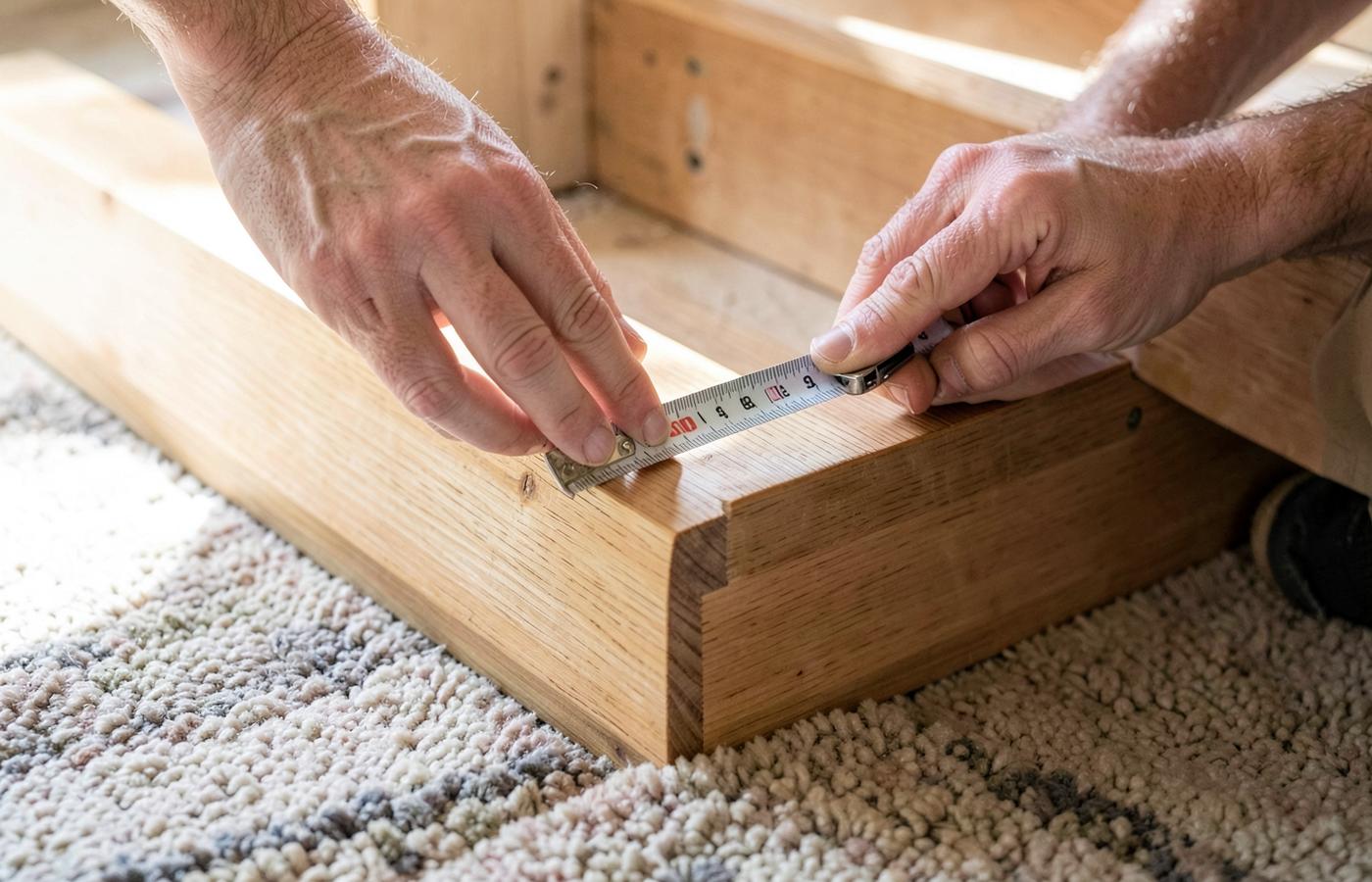 MeasurementHow to Measure for a Stair RunnerThe tread-plus-riser formula, waste allowance, winders and landings, plus a calculator that shows its working.
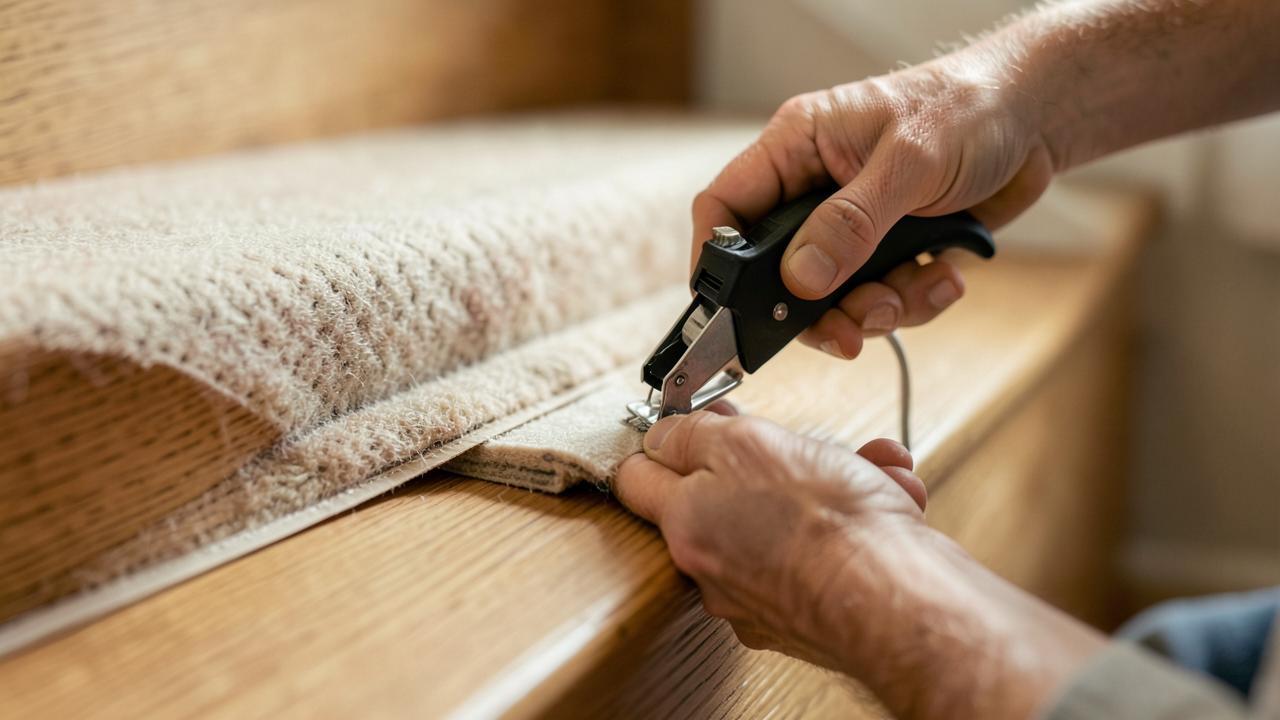 InstallationHow to Install a Stair RunnerWaterfall and Hollywood methods, staples versus rods, tools, sequence and quality checks.
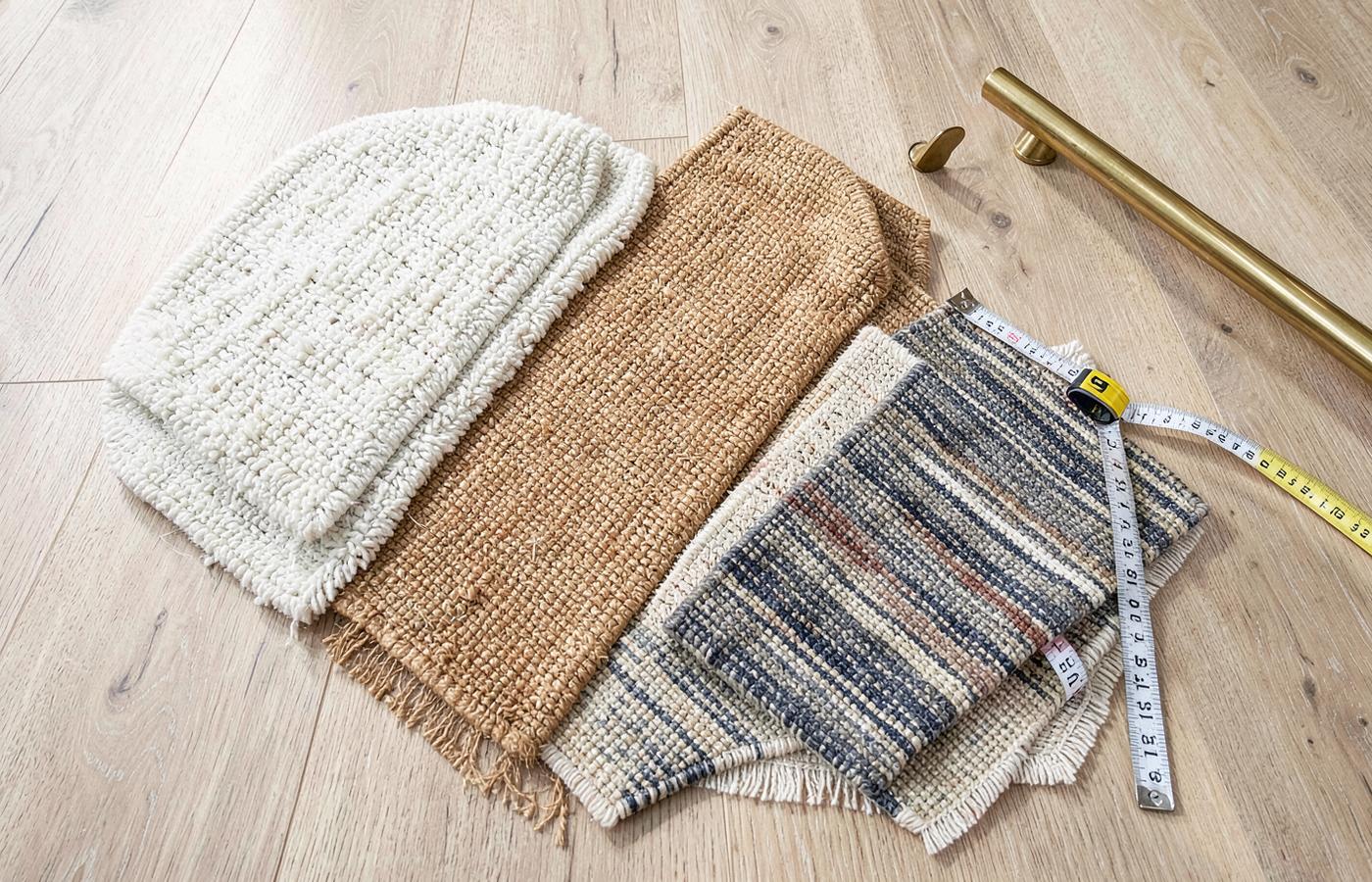 MaterialsStair Runner Materials ComparedWool, nylon, polypropylene, sisal and jute judged on stair-specific wear, comfort, cleaning and safety.
- ComparisonsStair Runner vs Full CarpetA side-by-side comparison of appearance, safety, noise, cleaning, cost and resale considerations.