Cleaning and care
Cleaning and caring for a stair runner
What routine care actually prevents, how to respond to a spill without setting the stain, and how to diagnose slipping, fraying and flattening before they become replacements.
Written by the StairRunner.co editorial team · Updated 4 September 2026
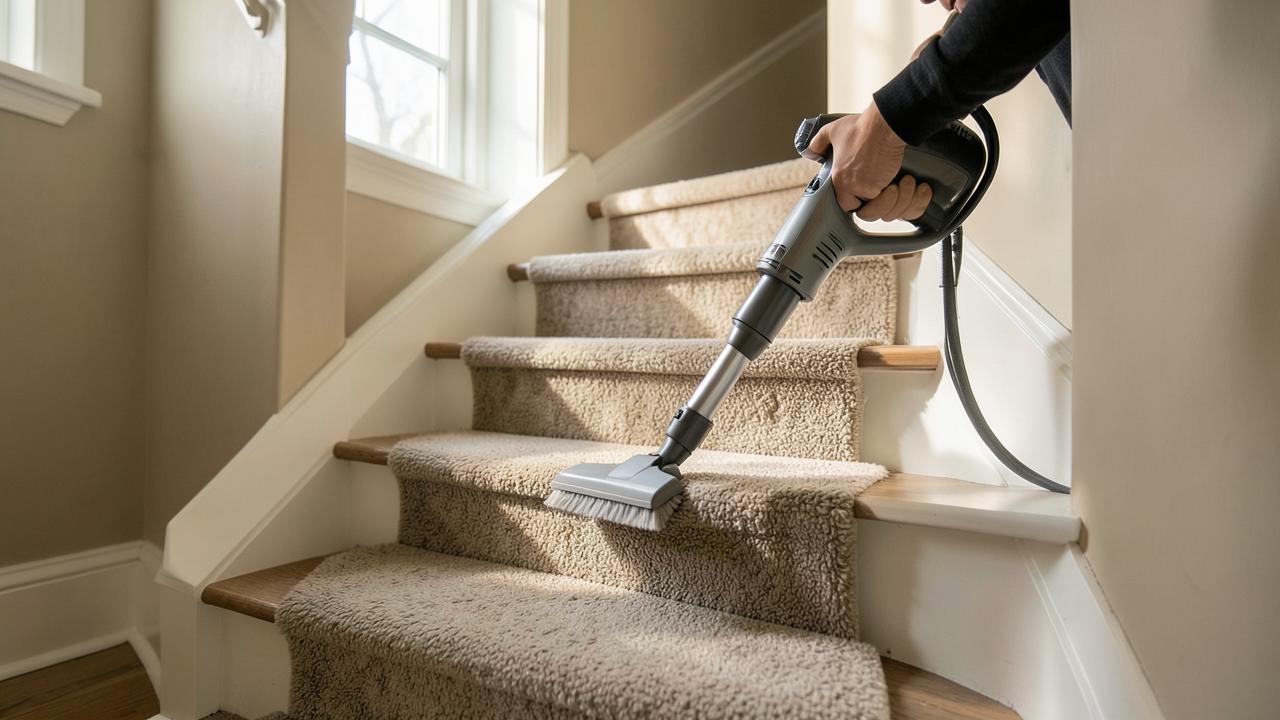
Routine care
Stair runners fail at the nosing, and they fail because of grit. Soil carried in on shoes works into the pile at the front edge, where every footfall grinds it against the fibre like sandpaper. Regular vacuuming is not cosmetic maintenance; it is the single most effective thing you can do to extend the life of the runner.
- Vacuum the flight weekly, using a handheld or a hose tool along the nosing and into the crease behind it.
- Use a suction-only setting on loop piles and natural fibres. Aggressive beater bars can pull loops.
- Place a doormat at each entrance; most stair soil arrives on shoes.
- Where the runner is genuinely held by stair rods, shifting it a small amount every few years redistributes wear across the nosings.
Dealing with spills
- Lift solids with a spoon or blunt edge before touching the liquid.
- Blot with a clean white cloth from the outside of the spill inward. Rubbing forces the stain into the backing and distorts the pile.
- Test any cleaning product on a hidden section — an offcut is ideal — and wait.
- Apply the minimum liquid needed. Over-wetting a stair runner risks the backing and the tread beneath.
- Blot dry, then dry the area with airflow before walking on it.
Cleaning by fibre
| Fibre | Routine approach | Avoid |
|---|---|---|
| Wool | pH-neutral wool-safe products, controlled moisture, prompt drying | Bleach, high-pH cleaners, saturation, high heat |
| Nylon | Hot water extraction, most carpet detergents; solution-dyed types are most tolerant | Over-wetting the backing; residue-heavy shampoos that attract soil |
| Polyester / polypropylene | Detergent-based cleaning; oily soil is the weak point | Excessive heat; solvent products unless specified |
| Sisal / jute | Dry powder cleaning, immediate blotting, professional dry methods | Water, steam, wet extraction — these cause staining and shrinkage |
Four common problems and their causes
The runner slips or creeps
Diagnose before treating. If the whole runner moves, the fixings are inadequate or have released. If it moves only at the bottom, it was fitted with uneven tension. If it was laid over existing carpet, nothing solid is holding it. In every case the answer is refitting to a proper gripper or staple installation. Anti-slip tape is a stopgap on a hazard, not a repair.
Fraying edges
Frays start where a binding has failed or where an unbound cut edge was left exposed. Stop the run early with a clear seam sealant applied sparingly, then have the edge rebound properly. Left alone, a frayed edge unravels along the weave and takes the width of the runner with it.
Flattened pile at the nosing
Crushing is normal wear accelerated by three things: pile that was too soft or too tall for stairs, missing or over-soft underlay, and grit. Light crushing can be lifted with gentle steam and brushing on wool and nylon. Once the pile is worn rather than crushed, the fibre is gone and no treatment restores it — which is why construction density matters at the buying stage.
Odours and pet accidents
Treat the backing, not just the surface. Urine passes through the pile and into the pad and tread, so a surface clean removes the stain and leaves the smell. Enzyme cleaners designed for pet waste break down the residue; heavy or repeated incidents usually mean replacing the affected pad section.
Understanding why stairs wear differently to floors
A stair runner experiences a different pattern of stress to a flat floor carpet, and understanding it explains most of the maintenance advice that follows. Every footfall on a staircase lands with more downward force than the same footfall on level ground, because weight is being both transferred and, on the way down, partly caught by that step. The nosing — the front lip of the tread — takes the brunt of this because it is where the foot typically lands and where the pile bends around a hard edge. Flat floor carpet has no equivalent point of concentrated bending and impact, which is why a runner reaching the end of its life usually shows wear as a band across each nosing long before the rest of the pile looks tired.
This has practical consequences. Cleaning attention should be weighted toward the nosings and the first few centimetres of each tread, not spread evenly along the flight. It also means that a runner installed with a small amount of slack for periodic reposition — a technique some fitters use with stair rods — can have its useful life extended by shifting wear to a fresh section of pile every few years.
A seasonal maintenance rhythm
Treating stair runner care as a single routine misses how conditions change through the year. A simple rhythm keeps the flight in good condition without turning maintenance into a chore.
- Weekly: vacuum the full flight, with particular attention to nosings and the crease at the back of each tread where grit collects unseen.
- Monthly: check visually for early fraying at any exposed edge, and for any give or movement underfoot that suggests a fixing has started to release.
- Seasonally: in wetter months, expect more grit and moisture tracked in on footwear, and increase vacuuming frequency accordingly; a doormat inside the door nearest the staircase does more for the runner's lifespan than almost anything else.
- Annually or biennially: arrange a professional deep clean appropriate to the fibre, particularly for wool, which benefits from periodic controlled cleaning even without visible soiling.
Reading wear before it becomes damage
Most stair runner problems are cheaper to fix the earlier they are caught. A short weekly visual check while vacuuming — looking rather than just running the machine over the surface — catches the early signs described below well before they become a full refit or replacement.
| What you notice | Likely cause | What to do |
|---|---|---|
| A slightly loose feel underfoot on one or two steps | A fixing beginning to release, often near the bottom of the flight | Have it checked promptly; this is how slipping starts |
| A thread pulling at a bound edge | Binding starting to fail at a stress point | Seal and book a repair before it runs |
| A shiny or matted band on the nosing only | Normal pile crushing concentrated where footfall lands | Steam and brush wool or nylon; monitor for further wear |
| A faint but persistent smell after cleaning | Contamination has reached the pad or subfloor | Investigate the pad in that section rather than re-cleaning the surface |
Myths worth correcting
- "Vacuuming wears carpet out faster." Grit left in the pile causes far more wear than the vacuum does; infrequent vacuuming is the real risk.
- "A stain treatment means you never need to worry about spills." A treatment delays absorption, giving you time to blot; it does not make the runner immune.
- "Any carpet shampoo is fine as long as you rinse it well." Fibre-specific chemistry matters, particularly for wool, and residue from the wrong product can attract soil faster afterwards.
- "If it looks clean on top, it is clean." Odour and staining below the surface are common and are not solved by surface cleaning alone.
Caring for natural fibre stairs specifically
Sisal, jute and other plant fibres behave differently enough from wool and synthetics that they deserve separate handling. They are naturally more abrasive underfoot, which is part of their appeal for heavy-traffic areas, but they are also more vulnerable to water: cellulose fibres swell, discolour and can shrink when wet, and this damage is frequently permanent. Dry powder cleaning methods and prompt blotting of any spill are the safe options; anything involving standing water or steam should be avoided unless a specialist confirms the specific product is suitable. If you are choosing between fibres for a stair application in the first place, this trade-off is covered in sisal stair runners and in the broader materials guide.
When to bring in a professional
- Annual or biennial deep cleaning on a main staircase, especially wool.
- Any large spill involving dye, oil, ink or bleach.
- Odours that return after cleaning, which indicate contamination below the pile.
- Any movement in the runner, which is a safety issue on a staircase.
Ask a cleaning contractor which method they intend to use and confirm it matches your manufacturer's care instructions before work starts.
Frequently asked questions
- How often should you vacuum a stair runner?
- Once or twice a week for a main staircase, and more with pets. Grit worked into the pile at the nosing is the main cause of premature wear, and vacuuming removes it before it does damage.
- Why does my stair runner keep slipping?
- Almost always a fixing problem rather than a material one: insufficient stretch during installation, fixings that have pulled out of soft timber, or a runner laid over existing carpet with nothing solid to grip. It needs refitting, not more tape.
- How do you stop a stair runner fraying at the edges?
- Stop the run immediately with a small amount of clear seam sealant on the exposed edge, then have the binding repaired. Fraying spreads along the weave, and an unbound edge on a stair will not stabilise on its own.
- Can you steam clean a stair runner?
- It depends on the fibre and the backing. Synthetics generally tolerate hot water extraction; wool needs controlled moisture and pH-neutral products; sisal and jute should not be wet cleaned at all. Check the manufacturer's care instructions first, because the wrong method can void a warranty.
- Is it safe to vacuum a stair runner with a beater bar attachment?
- Not on loop pile or natural fibre, where a rotating brush can pull loops or fray fibres. Use suction only on these; a beater bar is fine on a dense cut-pile synthetic.
- How do you get a musty smell out of a stair runner?
- Surface cleaning rarely solves it, because the smell usually comes from the pad or subfloor. Identify the affected section, treat or replace the pad beneath it, and ensure the area is fully dry before refitting.
- How do I remove candle wax from a stair runner?
- Let it harden completely, then gently scrape off the bulk with a blunt knife. Place a brown paper bag over the remainder and apply a low-heat iron; the paper will absorb the melted wax. Always test on an offcut first.
- Can I use a pressure washer on a synthetic runner if I take it outside?
- No. Pressure washing can delaminate the backing from the pile and cause permanent distortion. It also makes the runner incredibly heavy and difficult to dry, leading to mould risks.
Related guides
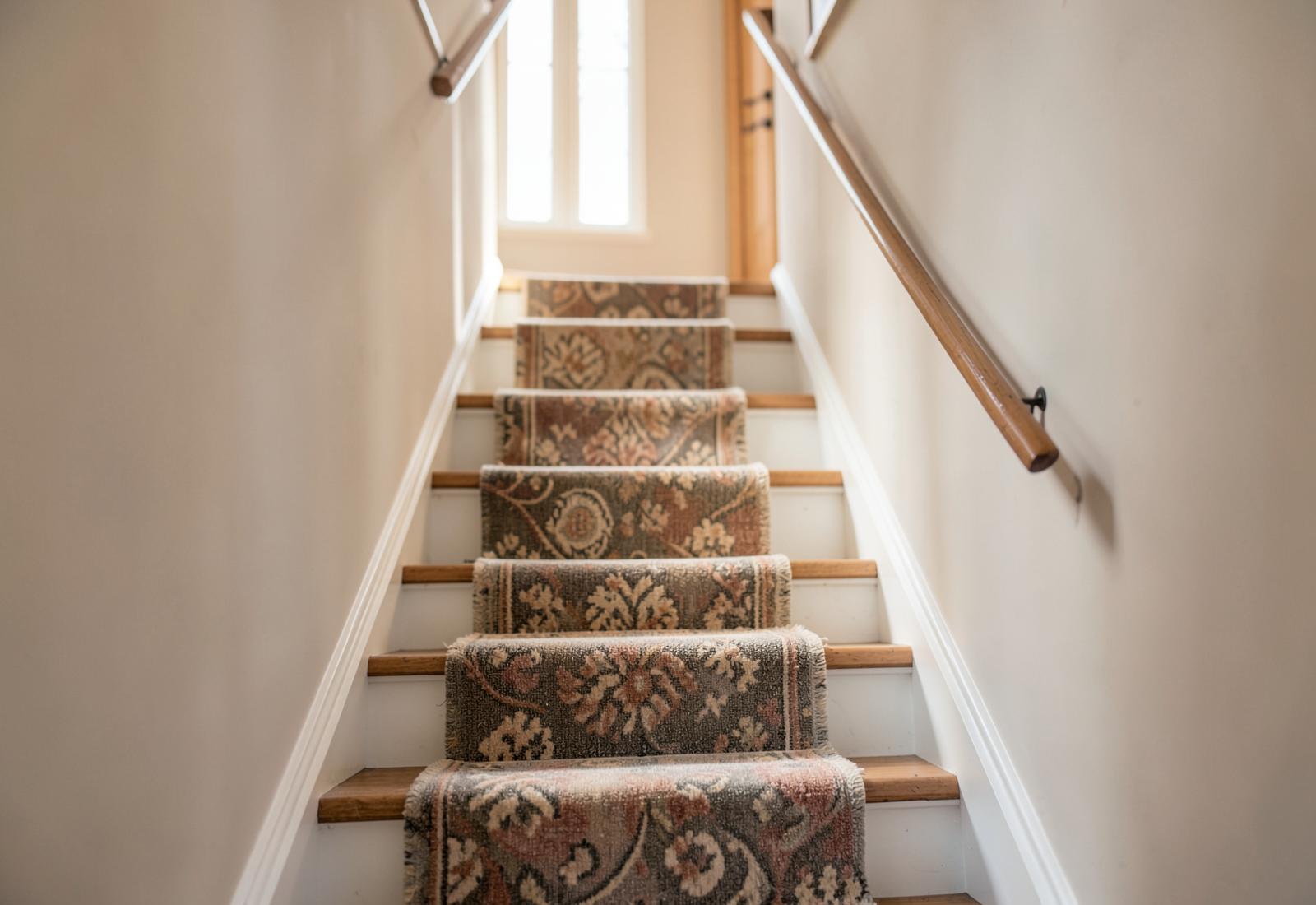 BasicsStair Runners: A Complete GuideWhat a stair runner is, how it differs from full carpet, and how to decide whether one is right for your staircase.
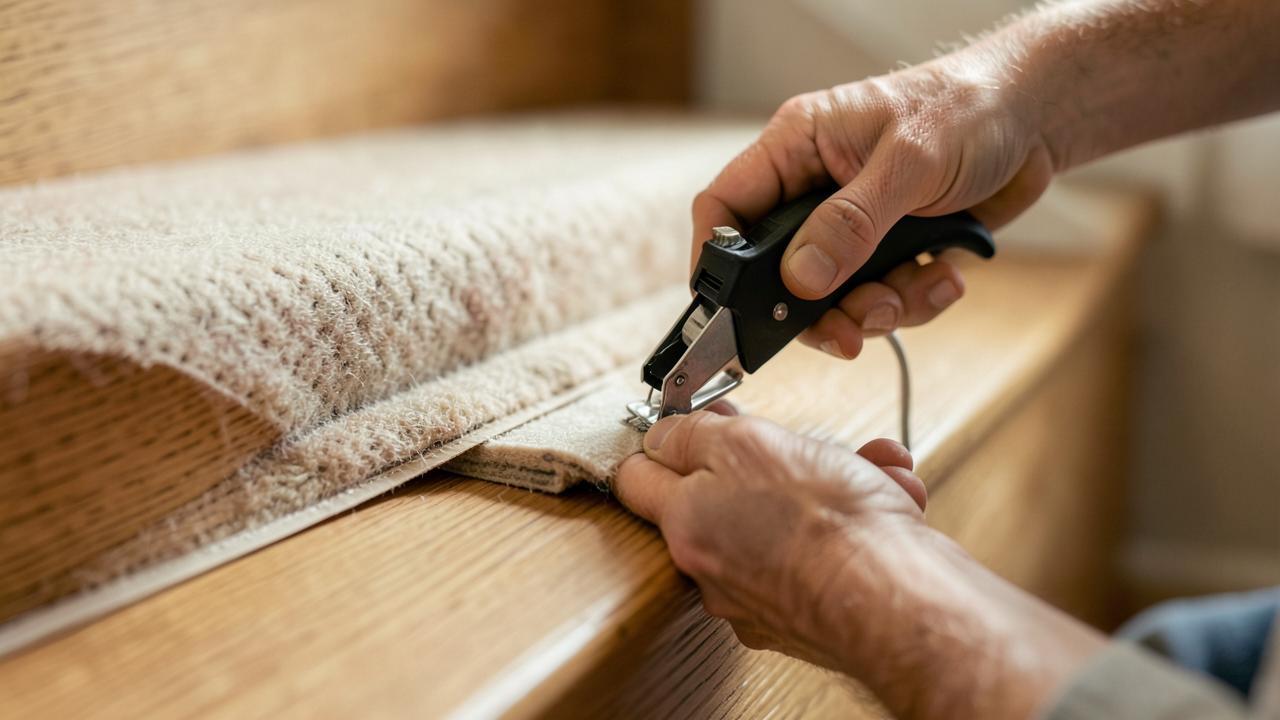 InstallationHow to Install a Stair RunnerWaterfall and Hollywood methods, staples versus rods, tools, sequence and quality checks.
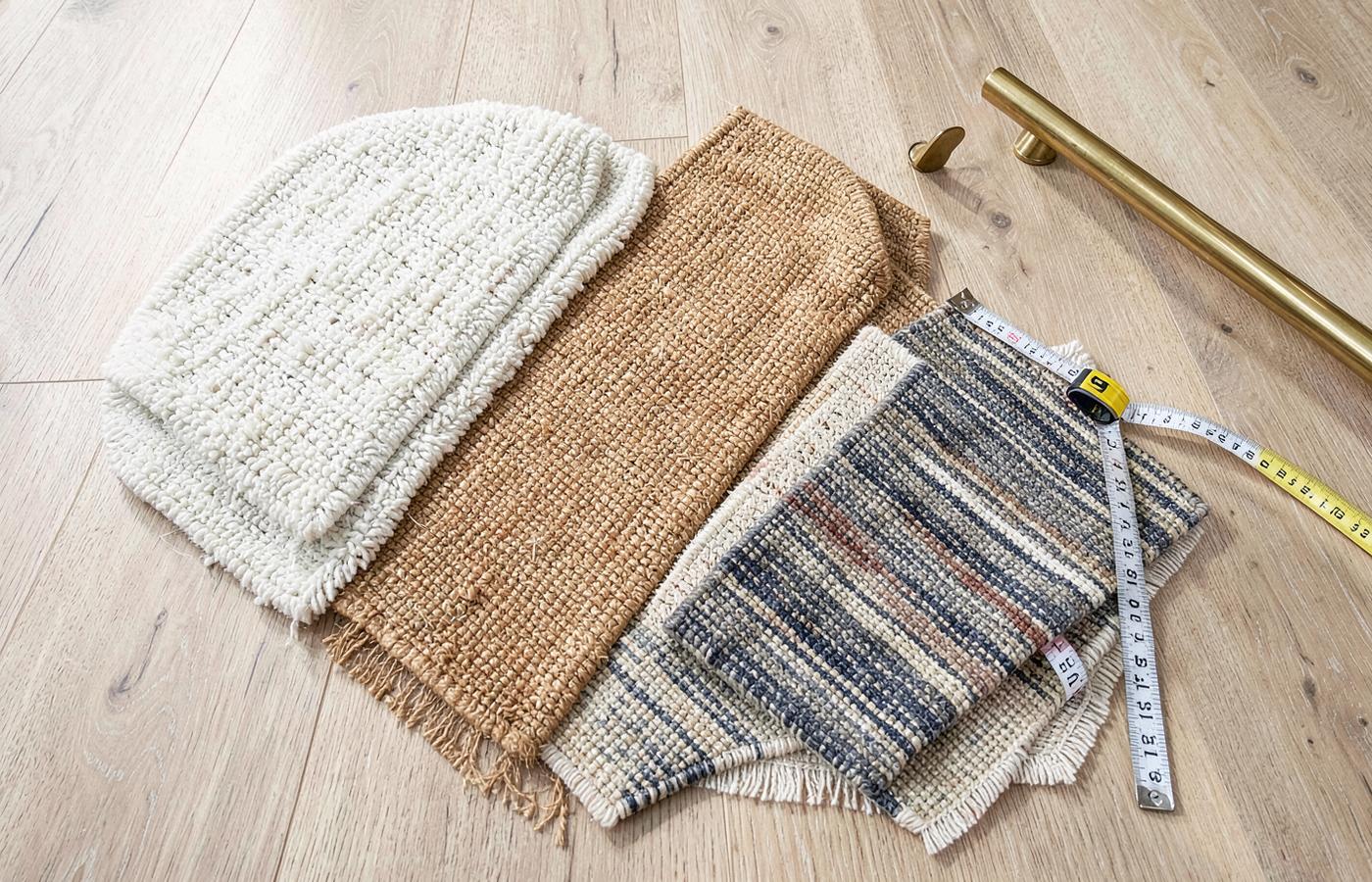 MaterialsStair Runner Materials ComparedWool, nylon, polypropylene, sisal and jute judged on stair-specific wear, comfort, cleaning and safety.
 CostWhat Affects Stair Runner CostThe material, labour and complexity variables behind a runner quote, and how to compare estimates fairly.
The anatomy of a stair-safe vacuum
Not all vacuums are suited to stairs. A heavy upright model is a safety hazard for the operator and often cannot reach the back of the tread effectively. The ideal stair vacuum is either a lightweight cordless stick with a motorised "mini-turbo" head or a canister vacuum where the main unit can sit securely on a step. Look for a vacuum with HEPA filtration if you have allergies, as the act of vacuuming stairs (especially the nosings) can kick up a significant amount of fine dust into your breathing zone. Avoid using long, heavy hoses that can pull you off balance while working on a flight.
The "dampness" test and drying times
One of the biggest mistakes in DIY stair cleaning is allowing people to walk on the runner while it is still damp. Damp fibres are more easily distorted and will attract soil from shoes or socks much faster than dry ones, often leaving a permanent "shadow" in the pile. A simple test is to press a dry white paper towel into the pile; if any moisture is transferred, the stairs are not yet ready for traffic. In the UK climate, this can take anywhere from 4 to 12 hours depending on humidity and airflow. Using a floor fan directed up the flight can cut this time in half.
Solvent vs. water-based spot cleaning
Not all stains respond to the same chemistry. Water-based stains (like tea, coffee, or mud) usually respond well to a dilute solution of pH-neutral detergent. However, oil-based stains (like grease, lipstick, or some food oils) require a dedicated carpet solvent. Never mix the two, and never use a solvent on anatural fibre like sisal without professional advice, as it can cause permanent discolouration. Forwool vs synthetic runners, the threshold for chemical sensitivity varies greatly; wool is easily damaged by high-alkaline solutions found in many "all-purpose" cleaners.