Materials
Stair runner materials compared
Stairs are the harshest flooring environment in a house. Here is how each fibre and construction behaves at the nosing, under a spill, and after five years.
Written by the StairRunner.co editorial team · Updated 4 September 2026
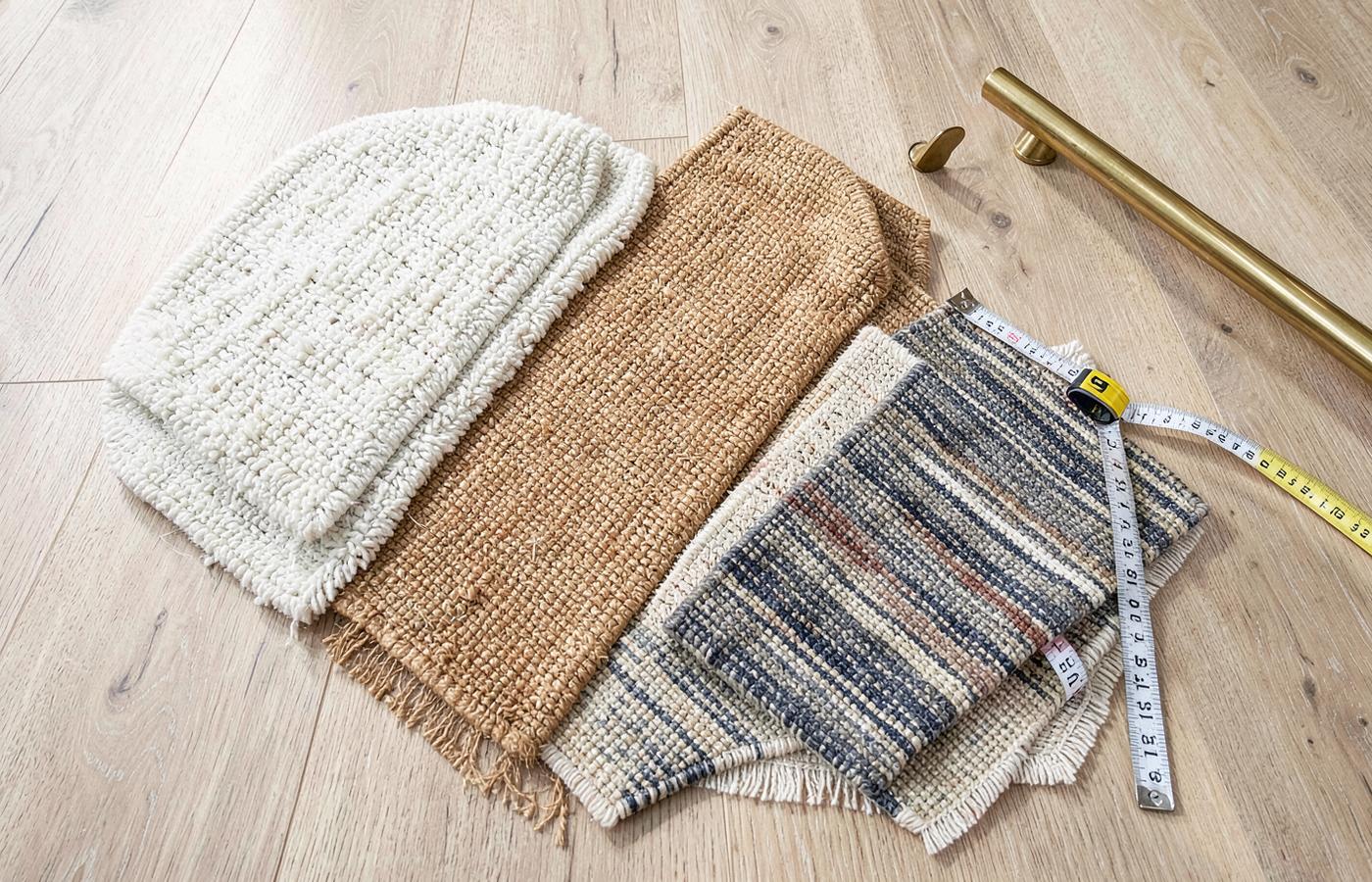
Why stairs punish materials differently from floors
A carpeted floor is compressed vertically and dragged horizontally by footfall spread across a large area. A stair nosing takes a concentrated bending load: the pile is folded almost double at the same narrow line, thousands of times, and that line receives the weight of a full stride rather than a distributed load. This is why a carpet that performs well in a living room can disappoint on stairs, and why manufacturers issue separate performance ratings — sometimes separate warranties — for stair use. Any comparison of fibres has to be read with that concentrated bending load in mind, not with flat-floor durability ratings.
Fibre comparison
| Fibre | Strengths on stairs | Limitations | Best for |
|---|---|---|---|
| Wool | Resilient pile, hides soil, naturally flame-resistant, comfortable | Highest material cost, can absorb water-based stains, prefers gentle cleaning | Main staircases where appearance matters long term |
| Nylon | Best abrasion resistance, recovers well, solution-dyed types tolerate bleach cleaners | Can be prone to static, quality varies widely by grade | Family homes, pets, heavy traffic |
| Polyester (PET) | Good stain resistance, rich colour, moderate price | Crushes and mats sooner than nylon under repeated footfall | Lower-traffic flights and secondary stairs |
| Polypropylene | Very stain resistant, inexpensive, cleans easily | Lowest resilience; flattens at the nosing, can shine under wear | Budget projects, rentals, short-term solutions |
| Sisal | Very strong fibre, crisp texture, striking appearance | Absorbs liquids, cannot be wet cleaned, coarse underfoot | Adult households prioritising looks and dry conditions |
| Jute | Soft for a natural fibre, warm colour | Weaker than sisal, sheds, poor with moisture | Light-traffic stairs and decorative use |
| Wool blends | Wool feel with added synthetic strength; wool-sisal is a common stair choice | Performance depends entirely on the blend ratio — ask for it | Balancing appearance, durability and cost |
Construction matters as much as fibre
Two wool runners can perform completely differently. On stairs, the pile is bent over the nosing thousands of times, so the way the yarn is anchored and how densely it is packed decide how long the front edge looks new.
- Low loop (Berber, herringbone, flatweave) — holds its shape over the nosing well and suits a Hollywood fit. Watch for snagging with pets.
- Cut pile, low and dense — comfortable, forgiving to fit, and safe with claws. Avoid deep plush and shaggy constructions on stairs entirely.
- Density — press the sample face down with your thumb. If you can feel the backing easily, it will crush at the nosing.
- Edge finish — binding, serging or a woven selvedge. On a runner the edge is permanently visible and permanently exposed, so a cheap binding fails first.
- Backing — a stable, tightly woven backing holds staples and gripper pins more securely than a loose or foam-laminated backing, which can tear under repeated stress at the fixing points.
Choosing by situation
- Pets — solution-dyed nylon in a cut pile. Cleans hard, hides accidents, resists claw snagging.
- Young children — density and a good pad matter more than fibre. Avoid slick, tight flatweaves without an anti-slip pad.
- Allergies — a low, dense pile that vacuums cleanly. Wool is fine for most people; dust management depends more on regular vacuuming than fibre choice.
- Sun-facing staircases — solution-dyed synthetics hold colour best. Natural fibres and surface-dyed carpets fade in direct light.
- Rental property — polypropylene or a mid-grade nylon, accepting a shorter replacement cycle.
- Period or listed properties — wool or a wool blend in a traditional weave usually sits most comfortably with original joinery and mouldings, and is more forgiving to re-dye or repair using traditional techniques than a synthetic.
Colour, pattern and how they interact with wear
Material choice is not purely technical. A mid-tone, textured or patterned carpet hides the earliest stages of wear and everyday soiling far better than a plain pale or dark colour, simply because the eye cannot easily separate a small variation in pile height from the pattern itself. This is one of the most practical reasons patterned runners remain popular on stairs even where a plain style is preferred elsewhere in the house. The patterns guide and colour guide cover this in more depth, including how to test a sample under your own stairwell lighting before committing to a full order.
Sustainability and washability considerations
Wool is a renewable fibre with a long service life, which offsets some of its higher upfront cost across the lifetime of the runner. Synthetics vary considerably: some ranges use recycled content, and solution dyeing itself reduces water use compared with conventional dyeing. If chemical sensitivity, spot-cleaning frequency or full washability matters more to your household than fibre origin, review the washable stair runner options before deciding between natural and synthetic fibres.
Underlay pairing
Pad choice should follow the runner. A dense, firm pad of moderate thickness supports the pile without letting the runner move over the nosing. Thick soft pads feel luxurious on a bedroom floor and are the wrong choice on stairs — they allow flex, which loosens fixings and shortens the life of the runner. Confirm the maximum pad thickness the material supplier recommends before ordering, since it affects how the runner is fixed and the finished height on each tread.
A short decision checklist
- List your household's real risk factors: pets, young children, spills, sun exposure.
- Shortlist two or three fibres that suit those factors, not simply the ones you like the look of.
- Compare constructions within that shortlist — density and pile height, not just fibre name.
- Check the stair-specific warranty terms before ordering.
- Choose a colour and pattern that will forgive early wear rather than reveal it.
How each fibre actually fails, step by step
Understanding the failure mode of a fibre is more useful than a durability rating alone, because it tells you what to watch for and roughly when to expect it.
- Wool typically fails by gradual pile thinning at the nosing, visible as a slightly duller, flatter band rather than a sudden defect. It rarely sheds fibre content wholesale, and colour tends to hold even as the pile height reduces.
- Nylon resists crushing for a long time, then tends to fail by colour change rather than structural wear, particularly in surface-dyed rather than solution-dyed grades exposed to sunlight or harsh cleaning chemicals.
- Polyester often fails by matting — individual fibres losing their twist and clumping together — which shows up as a texture change more than a colour or height change.
- Polypropylene tends to fail by a visible sheen developing in the traffic lane, where the fibre has been crushed and reflects light differently from the surrounding pile.
- Sisal and jute fail by fraying and breaking individual fibres at the nosing edge, which is why a wool or synthetic binding reinforcement at the edge is often recommended for natural fibre runners on stairs.
Terminology that affects a material comparison
| Term | What it means |
|---|---|
| Face weight | The weight of pile fibre per unit area, a rough proxy for density and durability |
| Twist level | How tightly cut-pile yarn is spun; a higher twist resists crushing and matting better |
| Denier | A measure of individual fibre thickness within a synthetic yarn, relevant to feel and resilience |
| Tuft bind | How firmly individual tufts are held in the backing; low tuft bind leads to fibre pulling loose |
| Traffic rating | A manufacturer classification indicating suitability for light, medium or heavy footfall, sometimes stair-specific |
Natural versus synthetic: the honest trade-off
Neither camp is unconditionally better on stairs. Natural fibres such as wool offer superior resilience and a look that ages gracefully, at a higher material cost and with more caution needed around liquid stains. Synthetics, particularly solution-dyed nylon, close most of the appearance gap while offering better resistance to spills and, usually, a lower price. The genuinely deciding factors are household risk — pets, children, spill frequency, direct sunlight — and budget, not an inherent superiority of one fibre family over the other. See wool versus synthetic for a direct, side-by-side comparison, and sisal stair runners for the specific trade-offs of natural plant fibre.
What to check on a physical sample before ordering
- Fold the sample sharply, mimicking a nosing, and check whether the backing shows through the pile at the fold.
- Press the pile flat with your thumb and release it, checking how quickly and fully it recovers.
- Rub the surface firmly with a dry white cloth to check for dye transfer.
- Check the reverse for backing quality — a stable, tightly woven backing holds fixings better over time.
- Ask what pad or underlay the manufacturer recommends specifically for stair use with that product.
Frequently asked questions
- What is the most durable stair runner material?
- Wool and nylon are the two strongest performers on stairs. Wool resists crushing and hides soil; nylon has excellent abrasion resistance and, in solution-dyed form, tolerates aggressive cleaning.
- Is sisal a good stair runner?
- Sisal looks excellent and wears hard, but it is unforgiving. It absorbs liquid stains readily, cannot be wet cleaned like a synthetic, and its coarse texture is harsh underfoot. Wool-sisal blends are a common compromise.
- What pile height works best on stairs?
- Low, dense pile. Loops and low cut piles hold their shape over the nosing, where a deep plush crushes and shows a worn line early. Density matters more than height.
- Are loop piles safe with pets?
- Claws can pull loops, and a snagged loop can run. Cut pile or a tightly woven low loop is the safer choice in a household with cats or large dogs.
- Does a more expensive material always last longer on stairs?
- Not automatically. Price often reflects fibre origin, design and brand rather than construction density alone. Two products at similar price points can have very different stair performance, so check density and stair-specific warranty terms rather than price alone.
- Can synthetic runners look as good as wool?
- Modern solution-dyed nylon and high-quality polyester can be visually very close to wool, especially in flatweave and low-loop constructions. The gap is more noticeable in deep pile and in how the fibre ages over many years than in first appearance.
Sources and further reading
- Carpet and Rug Institute — fibre characteristics and performance ratings
- The Wool Room / British Wool — wool carpet fibre properties
Where guidance differs between manufacturers, trade bodies or local building regulations, we say so rather than presenting one position as universal.
Related guides
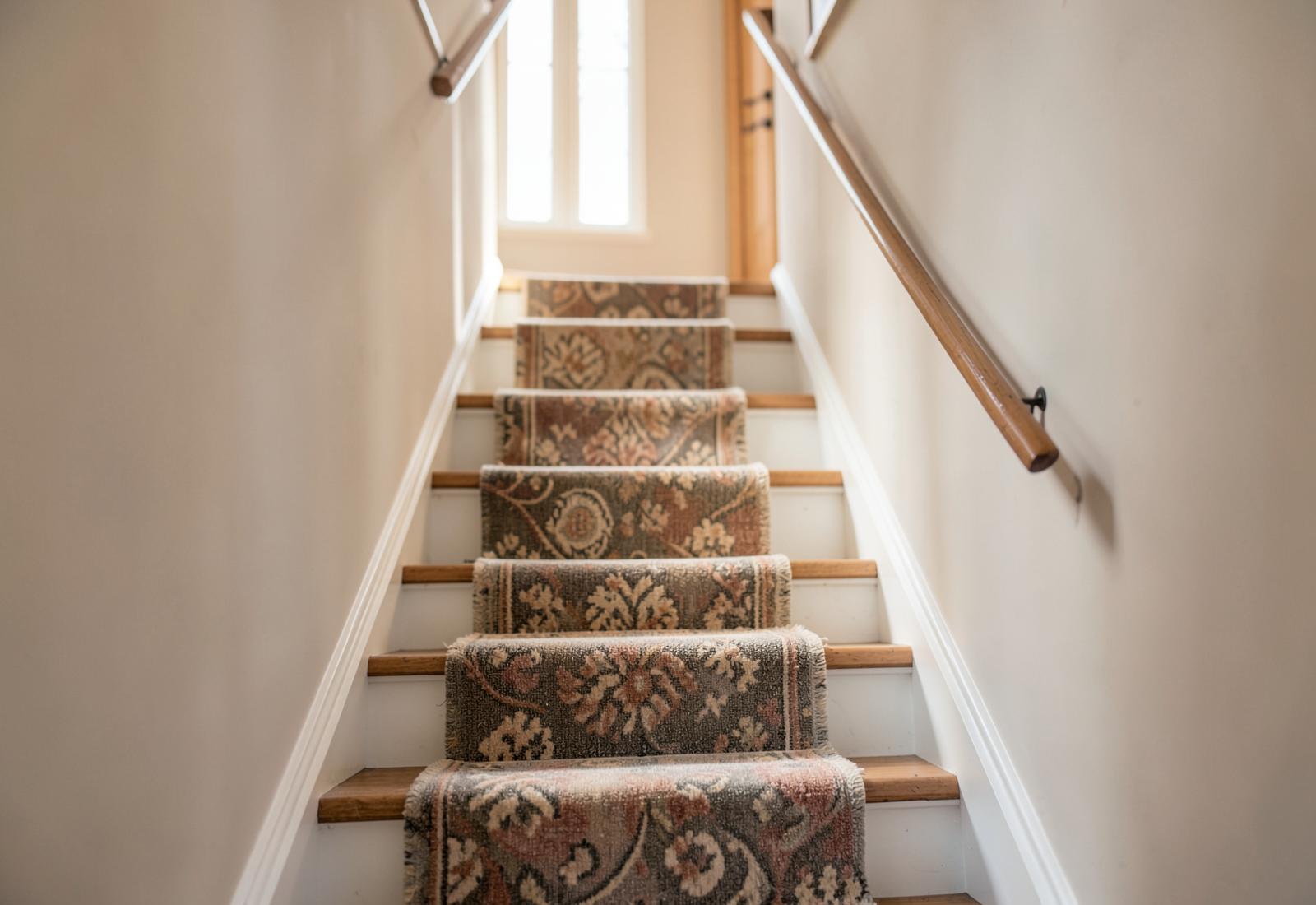 BasicsStair Runners: A Complete GuideWhat a stair runner is, how it differs from full carpet, and how to decide whether one is right for your staircase.
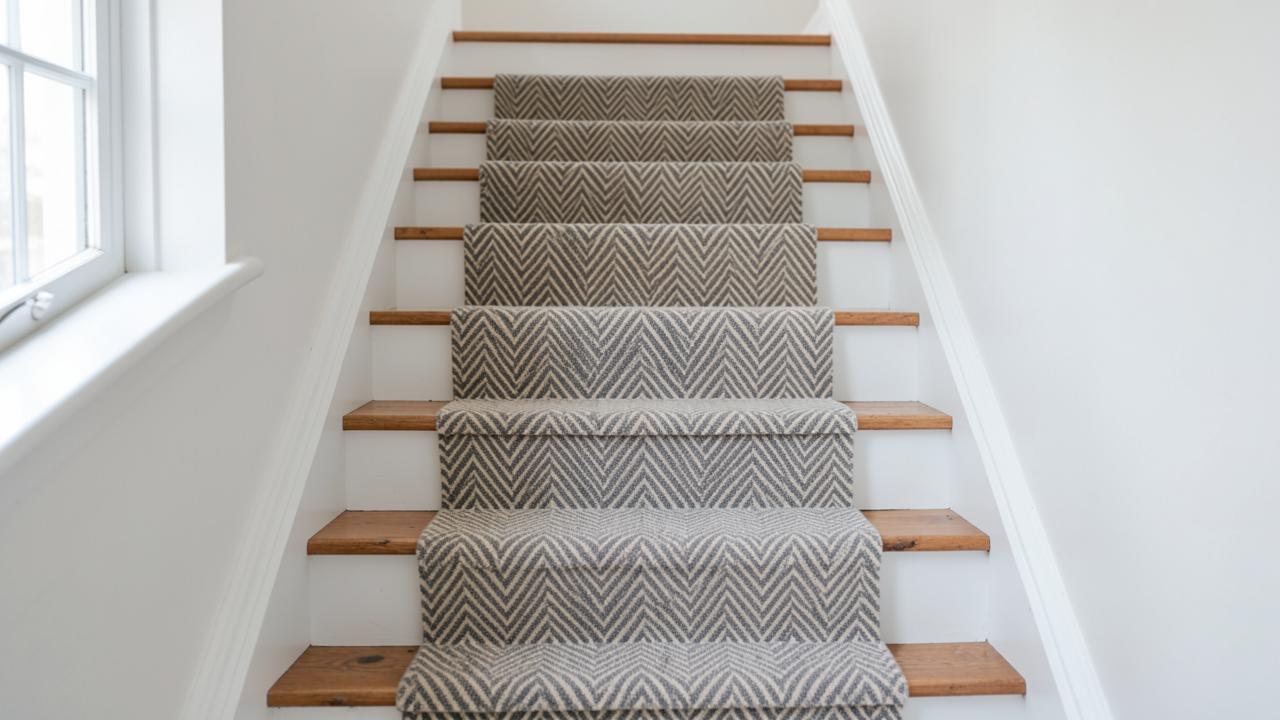 DesignStair Runner Ideas That Actually WorkPattern scale, stripe direction, colour and border choices explained in terms of your staircase, not a mood board.
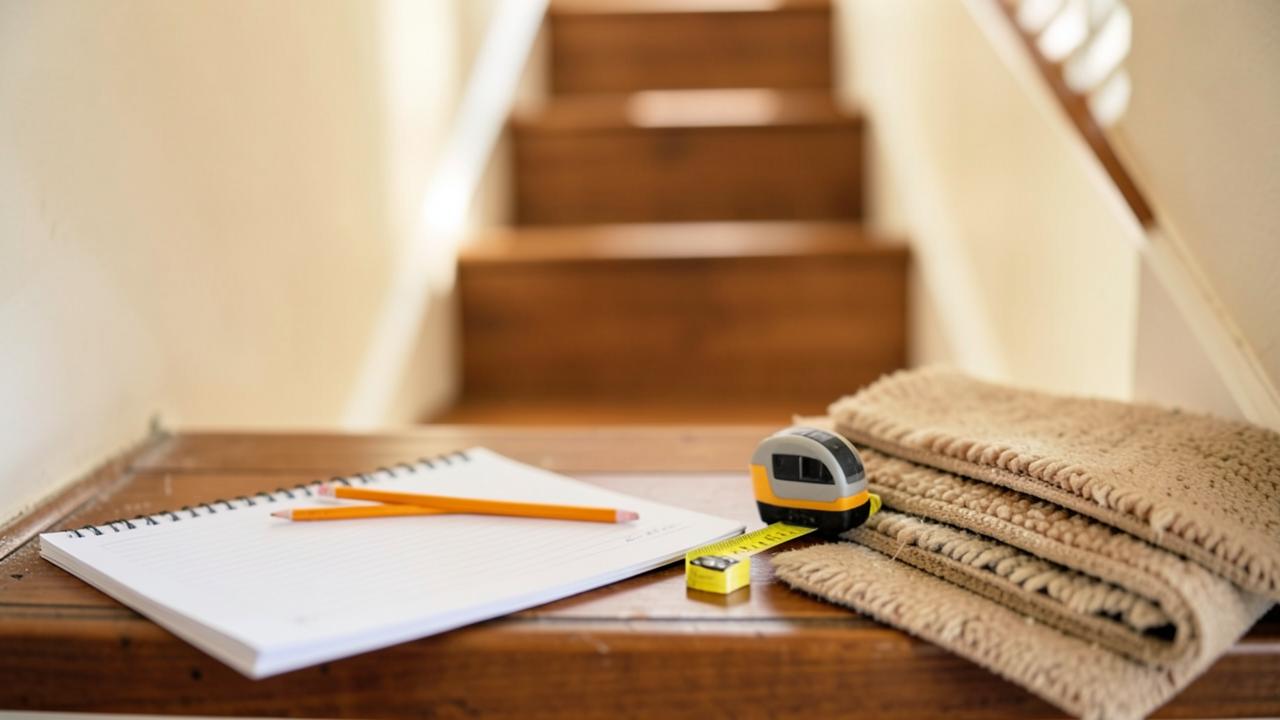 CostWhat Affects Stair Runner CostThe material, labour and complexity variables behind a runner quote, and how to compare estimates fairly.
 CareCleaning and Caring for a Stair RunnerRoutine vacuuming, spill response by fibre type, slipping and fraying, and when to call a professional.