Cost and buying
What actually drives stair runner cost
We do not publish invented averages. Here are the variables that determine your quote, how they interact, and how to compare two estimates properly.
Written by the StairRunner.co editorial team · Updated 4 September 2026
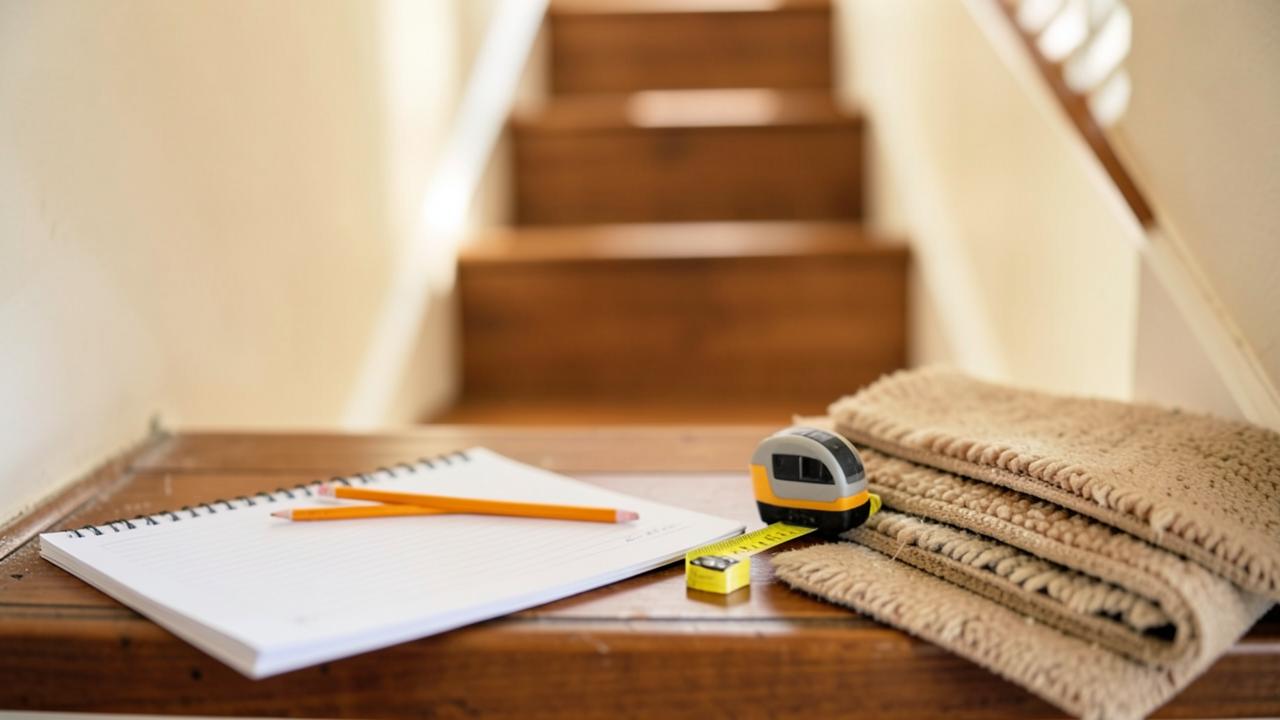
The four components
| Component | How it is priced | What moves it |
|---|---|---|
| Runner material | Per linear foot, yard or metre at a given width | Fibre, construction, width, custom versus stock, pattern repeat waste |
| Underlay | Per stair or per area | Density and thickness; stair-grade pad costs more than general-purpose |
| Fixings and hardware | Per step for gripper and staples; per rod set | Decorative stair rods in brass or bronze can rival the material cost |
| Labour | Per step or per day | Winders, curves, landings, pattern matching, bullnose steps, old carpet removal |
Complexity multipliers
These are the items that turn a modest quote into a large one. None of them are optional extras; they reflect real additional work.
- Winder steps — individually measured, cut and shaped, with waste on every one.
- Landings — additional material, and often a join that must be made invisible.
- Open or floating stairs — both side edges are exposed, so finishing is slower and less forgiving.
- Bullnose bottom step — a separate shaped piece.
- Pattern matching — extra material of up to a pattern repeat per join, plus slower fitting.
- Existing carpet removal — including staples, tack strips and disposal.
Building your own estimate
- Calculate your runner length with the measurement guide and calculator, including waste.
- Get a price per linear unit at your chosen width for two or three materials.
- Multiply length by unit price for the material line.
- Add underlay and fixings, both usually quoted per step.
- Add labour, quoted per step or per day, plus any removal and disposal.
- Ask each supplier which of these are included and which are extra — the difference between two quotes is often scope, not rate.
Where people over- and under-spend
- Under-spending on underlay is a false economy. Pad is a small line item that materially extends the life of the runner.
- Over-spending on hardware is common. Decorative rods are a finish, not a durability upgrade.
- Under-spending on fitting costs the most in the end. A poorly stretched runner needs refitting, and refitting an already-cut runner is harder than fitting it the first time.
- Over-buying material at 25–30% waste when 10–15% is appropriate for a plain runner on a straight flight.
DIY versus professional, in cost terms
Fitting it yourself removes the labour line and adds tool costs — a stapler, knife, stair tool and a stretcher, some of which can be hired. The genuine risk is material: a mis-measured or mis-cut runner is not recoverable, and on expensive wool the loss exceeds the labour you saved. The installation guide sets out which staircases are realistic to fit yourself.
How fibre choice changes the material line
The single biggest lever on the material line is fibre and construction, not width or length. A synthetic fibre such as polypropylene or solution-dyed nylon is priced at the lower end of the market and tolerates the price-per-metre comparisons shoppers instinctively make. Wool and wool-blend runners sit higher because raw material costs more, dyeing and finishing are more involved, and the supply chain for good wool carpet is smaller than for synthetics. None of this tells you which is "worth it" in isolation — that depends on how long each is expected to last in your household, which is the subject of wool versus synthetic.
Construction matters as much as fibre. A dense, tightly woven or tufted pile costs more to produce than a loose, open one, and it also wears more slowly underfoot. When you compare two runners at a similar price per linear metre, check the weight and density specification before assuming they are equivalent — a lighter construction at the same price is not a bargain, it is a shorter lifespan at the same cost.
How staircase geometry changes the whole quote, not just labour
It is tempting to think of complexity as a labour-only cost, but geometry also drives material consumption. A winder step is wider on one side than the other, and a runner crossing it must be cut to a shape rather than a straight strip, which means offcuts that cannot be reused elsewhere on the job. A curved or spiral staircase compounds this further: every step is a slightly different shape, so a fitter effectively templates the whole flight before cutting anything. Expect both the material estimate and the labour estimate to rise together on these staircases, and expect a written quote to explain why, step by step, rather than simply presenting a larger number.
Straight flights are the cost baseline for a reason: every step is close to identical, waste is predictable, and a fitter can move through the job at a steady rate. If your budget is tight and your staircase has any winders, ask whether a straight run only — carpeting the winder section separately in a matching or complementary flat-weave — is a realistic way to contain cost without compromising the whole staircase.
Regional and seasonal variation
Labour rates for flooring trades vary by region for the same reasons other skilled trade rates do: cost of living, density of competing fitters, and demand relative to supply. Demand itself is seasonal in many households — a flurry of home improvement work happens around house moves, before hosting family, or at the start and end of the school year — and fitters who are booked out can and do charge accordingly, or simply have a longer lead time rather than a higher price. If your project is not urgent, asking about quieter periods can be as useful as asking about price directly.
Measuring before you price
A quote is only as good as the measurement behind it. Before contacting suppliers, work through the measurement guide and use the length calculator to arrive at your own estimate of linear length and width. Turning up to a quote conversation with your own numbers does two things: it lets you sanity-check what you are told, and it signals to the fitter that you understand the job, which tends to produce a more precise, less padded quote.
Hidden costs worth asking about up front
- Subfloor repair. Squeaking or damaged treads are often only discovered once the existing covering is lifted, and fixing them is not optional once found.
- Access and disposal fees. Flats with lift-only access, or local waste disposal charges, can add a line that has nothing to do with the runner itself.
- Re-visits for snagging. Ask whether a post-fit check is included, or charged separately if something needs adjusting once you have lived with it for a week.
- VAT and how it is shown. Confirm whether quoted figures are inclusive or exclusive, particularly when comparing a sole trader against a larger company.
Total cost of ownership
Look past the invoice. A durable fibre and construction that lasts twice as long costs less per year even at a higher purchase price. Factor in periodic professional cleaning, and the possibility of replacing a runner alone rather than recarpeting the whole staircase — one of the practical advantages set out in our runner versus carpet comparison.
Comparing quotes line by line
The fastest way to compare two quotes fairly is to lay them side by side under the same headings: material cost per unit length, total length and width, underlay, fixings, labour, removal of any existing covering, and VAT treatment. A lower headline figure that omits removal or underlay is not necessarily cheaper once those items are added back in. Ask each supplier to itemise rather than present a single lump sum, and treat any reluctance to do so as useful information in itself.
What a cheap quote usually signals
- A thinner or absent pad, which shortens the life of even a good carpet considerably.
- A lower-density material sold under a similar-sounding fibre name to a better product.
- Fewer fixing points per tread, which shows up later as edge lift rather than at the point of fitting.
- No allowance for winders, curves or a bullnose step, added later as an unwelcome extra once work has started.
Financing and staging the work
Where budget is tight, it is often possible to stage the work sensibly rather than compromise on quality throughout. Fitting a durable, well-padded runner on the main flight first, and treating a landing or a secondary staircase as a later phase, keeps quality where it matters most — the section used daily — without inflating the total spent in one go. Discuss staging explicitly with a fitter, since some jobs are more efficient done in one visit and the saving from splitting them may be smaller than expected.
Frequently asked questions
- How much does a stair runner cost?
- There is no single figure. Cost is the sum of runner material by the linear foot or yard, underlay, fixings, and labour priced by step or by hour. A plain synthetic runner on a straight DIY-fitted flight and a bespoke wool runner on a winding staircase can differ by an order of magnitude.
- Is a runner cheaper than carpeting the whole staircase?
- Usually on material, because a runner covers less area. Labour is not always cheaper: a runner requires precise centring, even margins and a finished edge, which can take longer than a wall-to-wall fit.
- Why are winder stairs more expensive?
- Each winder is measured, cut and shaped individually, and shaping generates waste. Both labour hours and material consumption rise, and the risk of an error is higher.
- What should a quote include?
- Material with its width and price basis, underlay, fixings or rods, edge binding, labour, removal and disposal of any existing carpet, and whether measuring is charged separately or deducted from the order.
- Should I get more than one quote?
- Yes. Two or three quotes, itemised in the same way, are the fastest way to understand both the going rate in your area and the scope differences that explain why prices differ.
- Does buying the runner and pad separately from the fitter save money?
- Sometimes, but check first whether the fitter's warranty depends on supplying the material themselves, and whether they charge more for fitting material they did not sell you.
Related guides
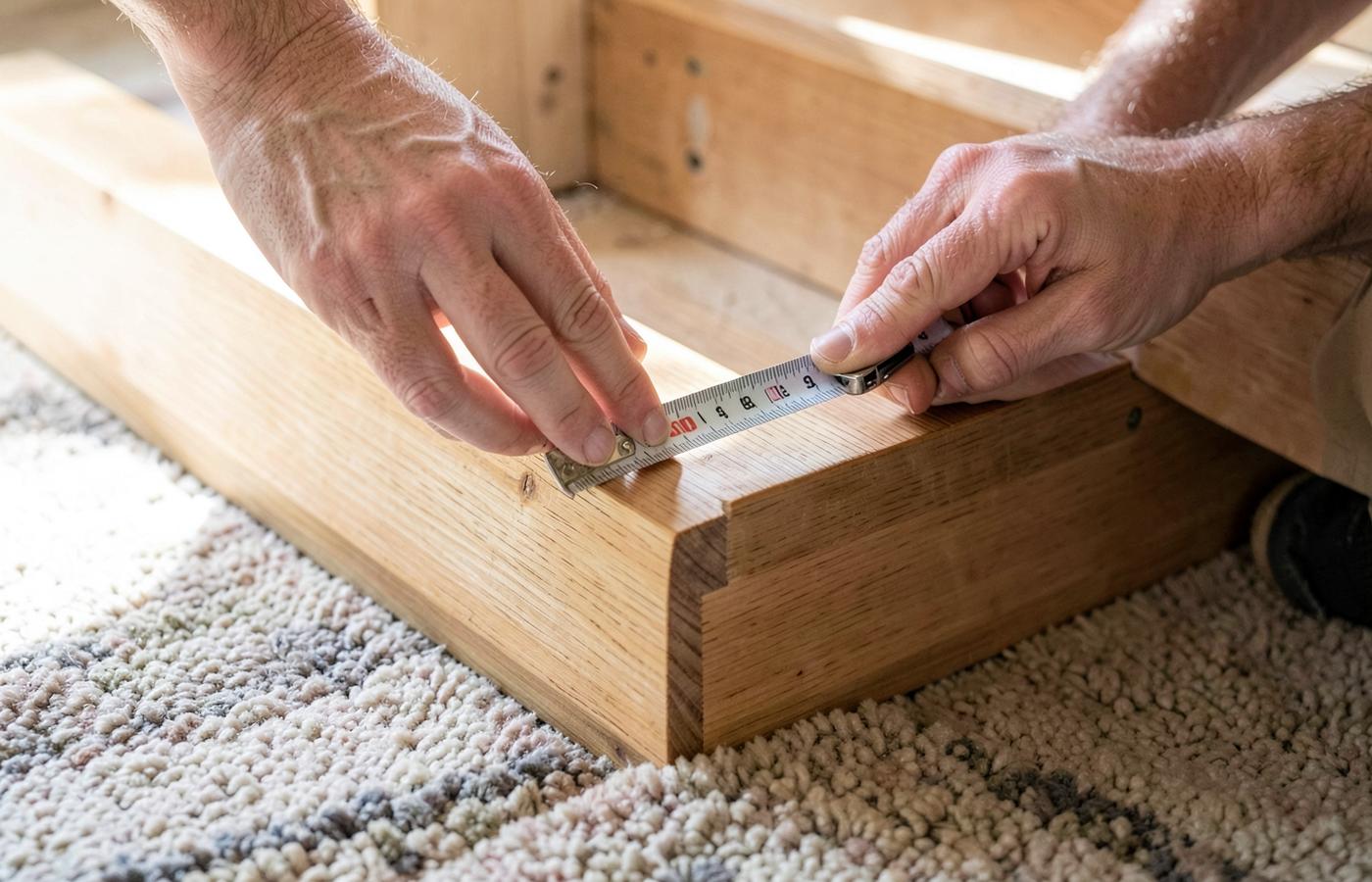 MeasurementHow to Measure for a Stair RunnerThe tread-plus-riser formula, waste allowance, winders and landings, plus a calculator that shows its working.
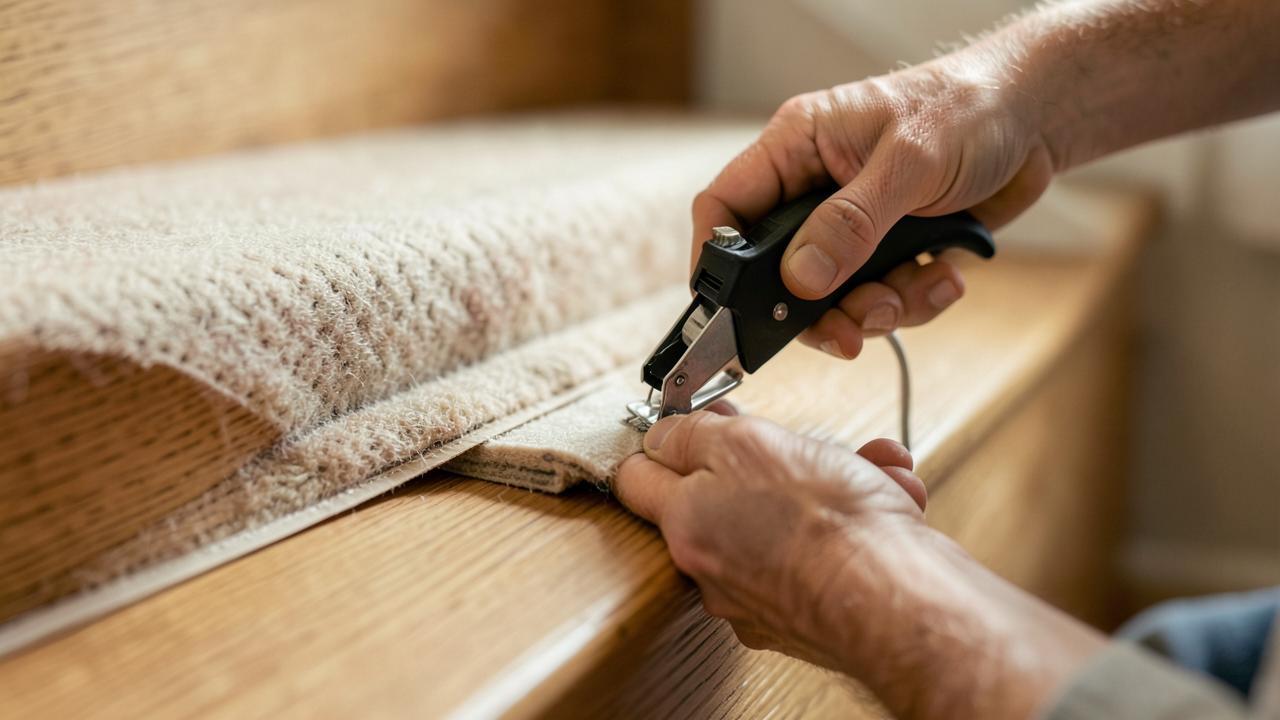 InstallationHow to Install a Stair RunnerWaterfall and Hollywood methods, staples versus rods, tools, sequence and quality checks.
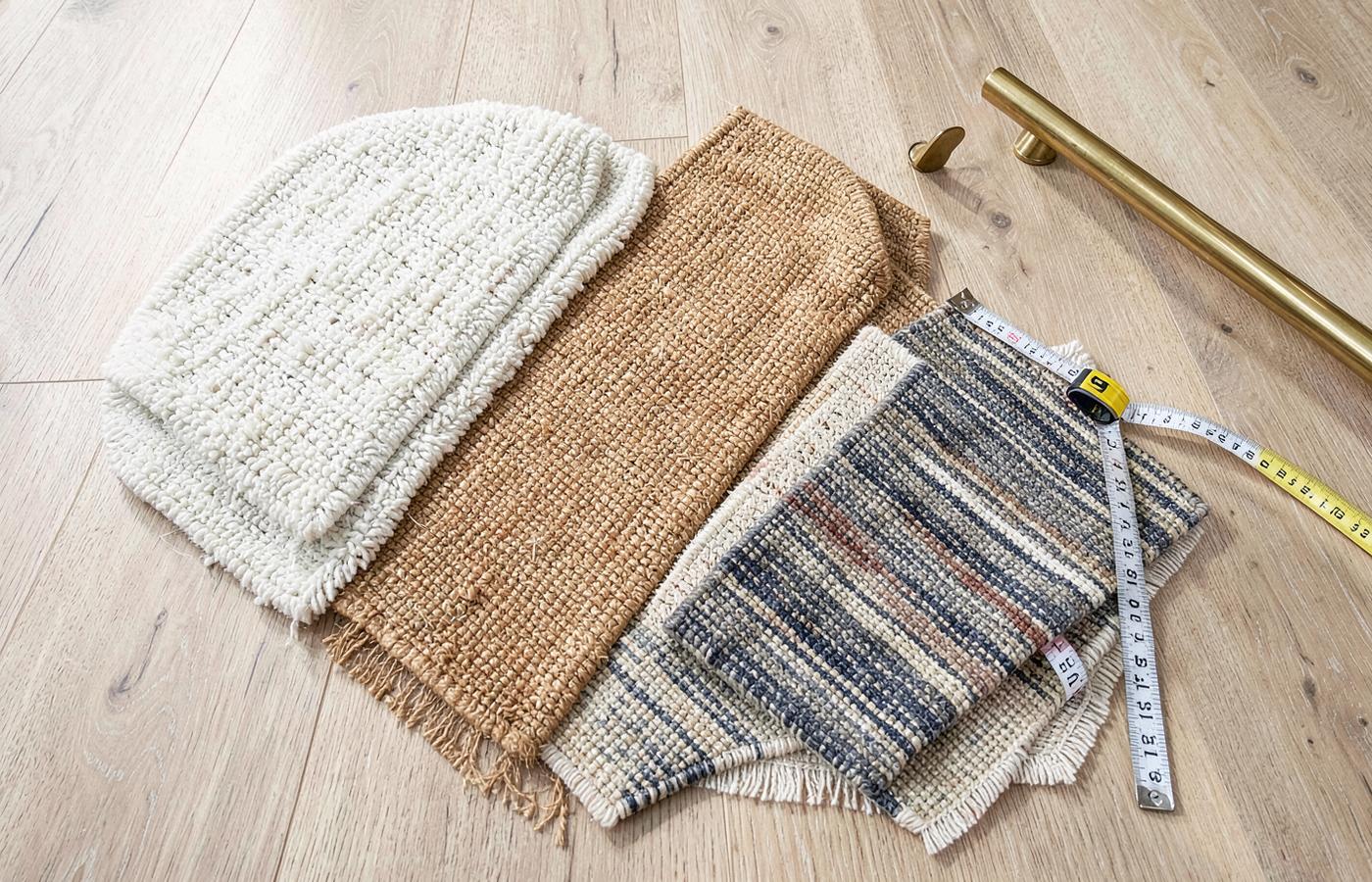 MaterialsStair Runner Materials ComparedWool, nylon, polypropylene, sisal and jute judged on stair-specific wear, comfort, cleaning and safety.
 ComparisonsStair Runner vs Full CarpetA side-by-side comparison of appearance, safety, noise, cleaning, cost and resale considerations.