Materials
Viscose stair runners: The beauty and the risk
Viscose, often sold as 'bamboo silk' or 'art silk', offers a stunning aesthetic, but its performance on a staircase is notoriously difficult. This guide explains why.
Written by the StairRunner.co editorial team · Updated 4 September 2026
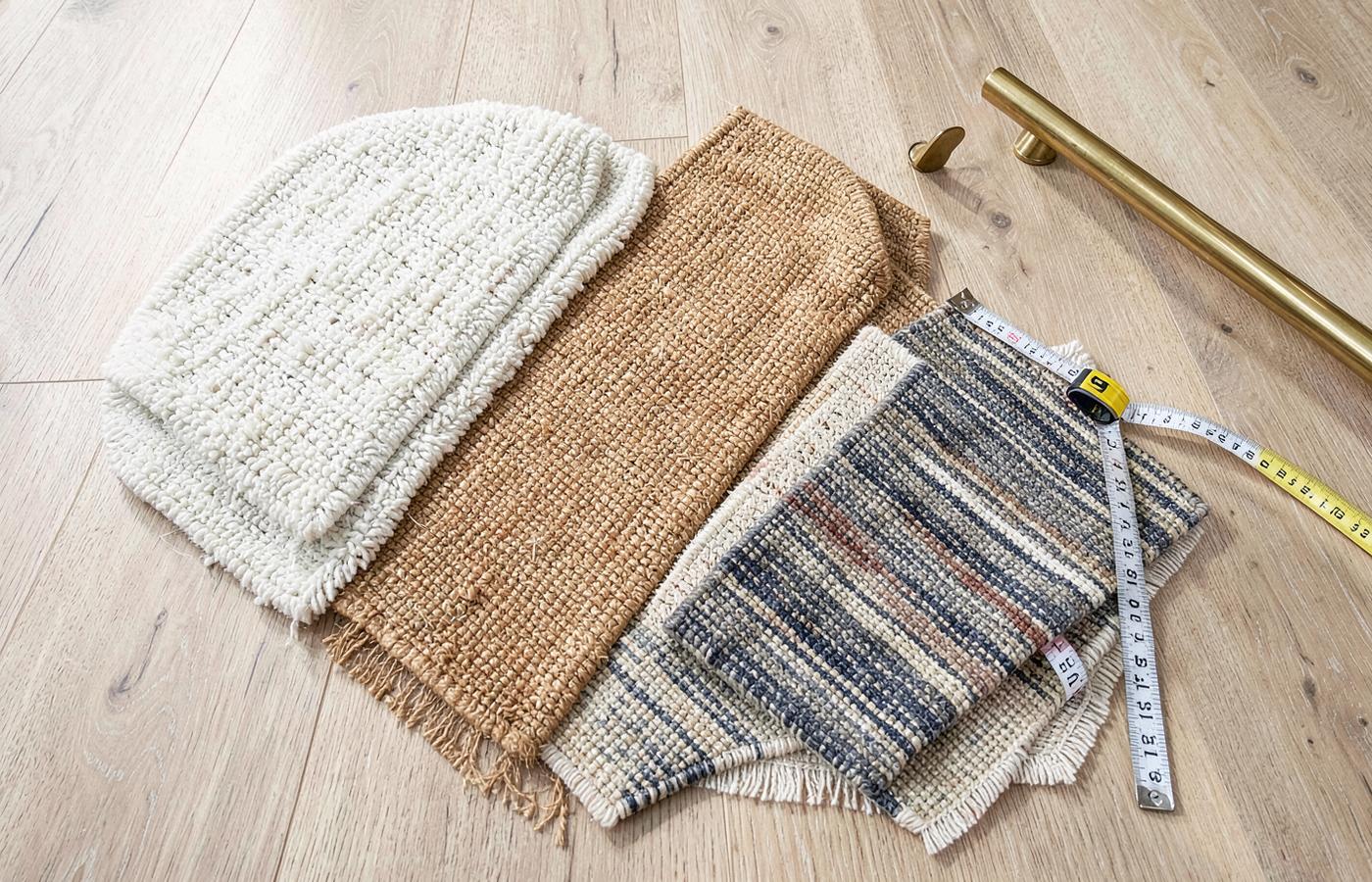
The allure of the sheen
Viscose is the siren song of the flooring world. It is soft, incredibly lustrous, and reflects light in a way that creates a sense of deep, luxurious opulence. When you see a high-end, contemporary rug or runner with a dramatic, shifting pile that looks almost like liquid silver, there is a high probability it contains viscose.
It is frequently rebranded to sound more natural—'art silk', 'bamboo silk', 'banana silk', or 'cellulosic fibre'—but at its core, it is a synthetic, chemically-processed fibre. The process involves taking plant-based cellulose (usually from wood pulp or bamboo), dissolving it in a chemical vat, and then extruding it through a spinneret to create a smooth, silk-like filament. While the source is natural, the resulting fibre is much weaker than its plant-based ancestors.
The Molecular Weakness of Viscose
To understand why viscose struggles on stairs, we have to look at its molecular structure. Unlike wool, which has a natural crimp that acts like a spring, or nylon, which has high tensile strength, viscose is a relatively linear and weak polymer. It has very low "elastic recovery." This means that when a viscose fibre is bent or crushed, it doesn't have the internal strength to pop back to its original position.
On a staircase, where every footfall represents a significant mechanical load, these fibres are flattened repeatedly. Because they lack resilience, they simply stay flattened. This leads to the "matting" that is so common in viscose runners, where the high-traffic areas look like felted cardboard while the edges still look silky and new. This contrast makes the wear and tear extremely visible.
The Achilles heel: Moisture sensitivity
The primary reason viscose is problematic for staircases is its relationship with moisture. Viscose is essentially pure cellulose, and it is highly hydrophilic (it loves water). When a viscose fibre absorbs liquid, it swells, and the molecular structure changes.
This results in the fibre losing up to 50% of its strength when wet. Furthermore, as the water evaporates, it can pull tannins from the carpet backing to the surface, resulting in a dull, brownish-yellow stain known as "cellulosic browning." Even a small drop of spilled water can ruin a section of the runner instantly. The texture also changes; once wet, viscose often becomes stiff and "crunchy" to the touch, losing the very softness that makes it desirable.
Visual Shimmer vs. Practical Reality
The shifting light on a viscose runner is caused by the way the flat, ribbon-like fibres reflect light. When the pile is brushed in one direction, it looks light and shiny; in the other, it looks dark and matte. This is known as "shading" or "pooling."
While beautiful, this effect is exacerbated on stairs. Because the runner is bent over the nosing of each step, the light hits it at different angles, which can make the runner look like it has different colours on each step. In a domestic setting, this can look stunning, but if you are a perfectionist who wants a uniform appearance, the unpredictable nature of viscose shading will be a source of constant frustration.
Why it 'uglies out' on stairs
On a staircase, a carpet is subjected to concentrated pressure every time you take a step. As discussed, viscose fibres are soft and have almost no resilience. After just a few weeks of use, the pile in the traffic lane will begin to 'mat'.
This isn't just an aesthetic problem—it changes the grip characteristics of the carpet. The smooth, matted surface can become unexpectedly slippery, which is a major safety concern on a flight of stairs. The 'beautiful' runner that looked perfect in the showroom can look like a worn-out, matted mess after only a few months on a main family staircase.
| Factor | Performance | Impact |
|---|---|---|
| Resilience | Very Low | Crushes permanently underfoot. |
| Moisture | Very Poor | Absorbs instantly; stains permanently. |
| Wear | Poor | Mats in traffic lanes rapidly. |
| Cleaning | Difficult | Requires professional dry-cleaning. |
A high-maintenance lifestyle
If you absolutely must have a viscose runner, you are committing to a high-maintenance lifestyle. You cannot use a standard vacuum with a beater bar (this will tear the fibres and cause premature balding). You must keep the stair flight strictly dry—this means no wet shoes, no carrying drinks up the stairs, and no pets that might have an accident.
Furthermore, you must be prepared to replace it far sooner than any other fibre. Many interior designers treat viscose runners as 'disposable luxury'—they look incredible for a photo shoot or a low-traffic party, but they aren't built for the daily grind of a busy family home. If you are comfortable replacing your runner every 2-3 years, then viscose might be for you. If you want a product that lasts a decade, it is definitely not.
Professional Specialist Cleaning
When it comes time to clean a viscose runner, the standard rules of carpet cleaning do not apply. You cannot use a steam cleaner, and you cannot use a wet-extraction machine. These methods involve high heat and water, both of which are fatal to viscose.
You must hire a specialist cleaner who understands "Dry Solvent Cleaning." This involves using a chemical solvent that doesn't contain water to break down dirt and oils. It is a more expensive and less effective cleaning method than wet cleaning, which means a viscose runner will never be as "clean" as a wool or synthetic one. This is a critical consideration for those with allergies or young children who spend time playing on the stairs.
The Professional's Verdict: Blends Are the Answer
We see the aftermath of viscose installations frequently. Usually, it is a homeowner who was sold a 'luxury silk' look, only to find that it has aged five years in five months. If you love the silky aesthetic, please consider a wool-silk blend instead.
A blend of 70% wool and 30% viscose is the "sweet spot." The wool provides the structural integrity, crush resilience, and natural stain resistance, while the 30% viscose adds that beautiful, shifting sheen. This allows you to get the 'viscose look' without the heartache of seeing it deteriorate before your eyes. In a blend, the wool supports the weaker viscose fibres, preventing them from matting as easily.
Environmental Impact: The "Bamboo" Marketing Trap
Viscose is often marketed as an eco-friendly choice, especially when it is called "bamboo silk." While bamboo is a fast-growing, sustainable plant, the process of turning it into viscose is anything but green. It requires a heavy chemical cocktail, including carbon disulfide, which is toxic to both workers and the environment if not managed in a closed-loop system.
If sustainability is your primary driver, look for "Lyocell" or "Tencel" instead of generic viscose. These are similar fibres made using a much more environmentally friendly, closed-loop process. However, be aware that Lyocell still suffers from many of the same durability and moisture-sensitivity issues as viscose when used on a staircase.
Failure Modes
| Issue | Cause | Mitigation |
|---|---|---|
| Cellulosic Browning | Water exposure | Keep strictly dry; use professional dry cleaning only. |
| Crushing/Flattening | Mechanical pressure | Choose a wool blend to provide structural support. |
| Fibre Shedding | Low fibre strength | Vacuum regularly with suction only; avoid beater bars. |
| Slippery Pile | Extreme matting | Replace the runner once the texture changes significantly. |
Deep dive: long-term performance metrics
When investing in a stair runner, it is essential to consider the lifecycle of the product. Viscose is arguably the shortest-lived fibre in the flooring market. In a high-traffic hallway, the "useful life" of a viscose runner is often measured in months rather than years.
One metric to look for is the "martindale" or abrasion rating, though this is rare for carpets. Instead, look for the "Tretford" or "Hexapod" tumble test results. Viscose typically fails these tests much earlier than wool. The fibres literally break down under the friction of the test, turning into a fine dust. This is why you see so much "fluff" from a viscose runner; it's the material itself disintegrating.
The importance of edge finishing
The finish at the edge of your runner is where the most visible wear occurs first. For viscose, the edge is a major vulnerability. A standard whip-stitch (overlocking) done in viscose yarn will fray and break very quickly.
We strongly recommend using a high-quality cotton or polyester binding for the edges of a viscose runner. This provides a "frame" that protects the delicate viscose pile from the side-impact of footsteps. Without a robust edge, the runner will begin to unravel from the sides, leading to a ragged look that cannot be repaired. Even then, the binding itself may become soiled, and as we know, cleaning the edge of a viscose runner without getting the viscose wet is an almost impossible task for a homeowner.
Final thoughts
Viscose is a beautiful material, but it is fundamentally mismatched for the mechanical demands of a staircase. It is a product of aesthetic luxury, not practical utility. By all means, use it for a bedroom runner where you walk in bare feet or socks once a day, or an occasional landing piece that serves as an architectural accent.
However, keep it away from your main, high-traffic flight. The emotional and financial cost of seeing a beautiful investment deteriorate so quickly is rarely worth the initial shimmer. There are far more durable, forgiving, and long-lasting options available that can still offer a touch of luxury without the fragility. See our guide on stair runner materials to help make an informed decision.
Frequently asked questions
- Is viscose a durable fibre?
- No. Viscose is a weak, absorbent regenerated cellulose fibre that crushes easily and has poor resilience. It is not recommended for high-traffic areas.
- Why is viscose popular if it is fragile?
- It offers an unparalleled, silky aesthetic that is much cheaper than real silk, providing a high-end look at a fraction of the cost.
- Can I use viscose in a family home?
- We strongly advise against it for high-traffic stairs due to its extreme sensitivity to moisture and wear. It is best suited for low-traffic decorative areas.
- What happens if viscose gets wet?
- It stains, mats, and can lose its sheen permanently. Even a small spill of water can cause a yellow or brown 'cellulosic browning' stain.
- Is viscose the same as Rayon?
- Yes, they are different names for the same material—a regenerated cellulose fibre usually made from wood pulp.
- How should I clean a viscose runner?
- Only through professional specialist dry cleaning. Never use water-based shampoos or steam cleaners on viscose, as they will cause permanent damage.
- Can I vacuum a viscose runner with a beater bar?
- No. The stiff bristles of a beater bar can pull and shred the delicate viscose fibres. Use a suction-only setting or a soft-bristled floor tool.
- Does viscose shed?
- Yes, new viscose runners often shed significantly for the first few months. This is a normal characteristic of the fibre, but it can be annoying in a hallway where the 'fluff' is tracked into other rooms.
Related guides
- MaterialsStair Runner Materials ComparedWool, nylon, polypropylene, sisal and jute judged on stair-specific wear, comfort, cleaning and safety.
 CareCleaning and Caring for a Stair RunnerRoutine vacuuming, spill response by fibre type, slipping and fraying, and when to call a professional.
 BuyingHow to Choose a Stair RunnerA decision order that starts with the staircase and ends with colour, not the other way round.
- MaterialsWool Stair RunnersWhy wool holds its shape on stairs: crimp, twist, blends, staining, moths, shedding and honest limitations.