Buying
How to choose a stair runner, in the order that avoids regret
Most disappointing runners are not badly made. They were chosen in the wrong order, with the decision that should have come last driving everything else.
Written by the StairRunner.co editorial team · Updated 4 September 2026
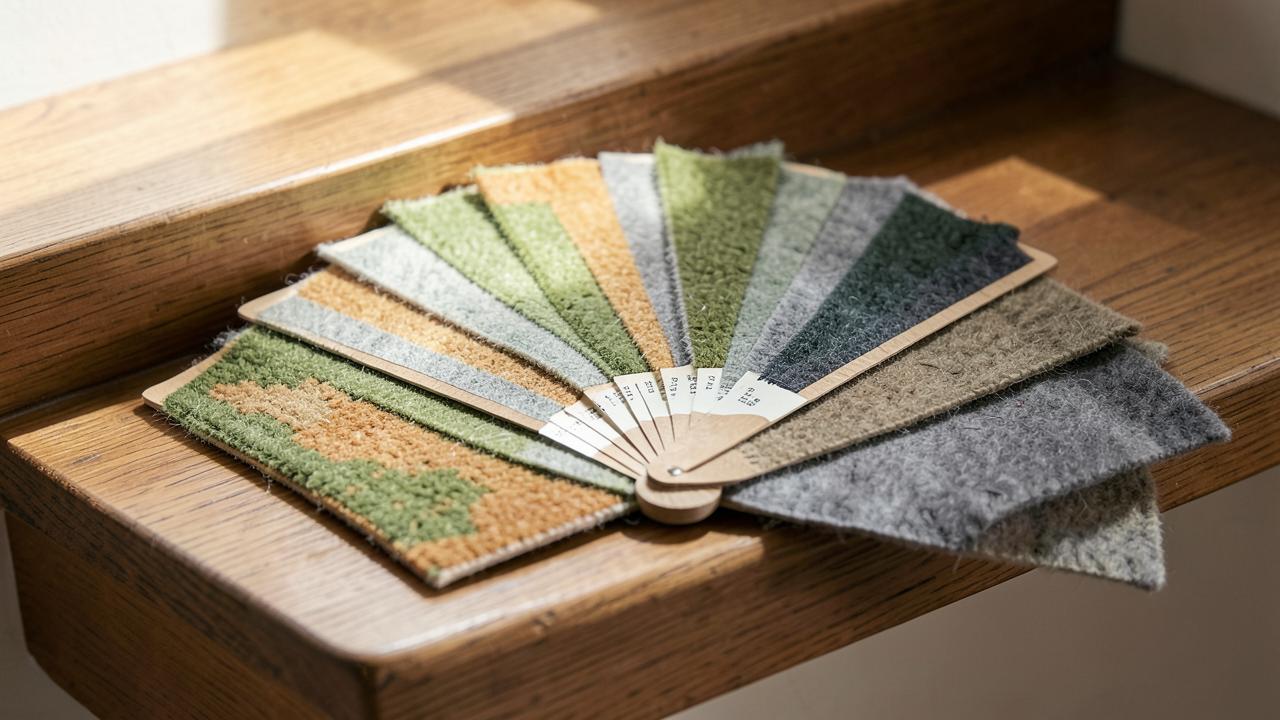
Step one: read the staircase
Before any product enters the conversation, write down what your staircase actually is. Six facts do most of the work.
- Traffic. How many people use it, how often, and whether that includes children, pets or outdoor shoes. This is the single strongest determinant of material.
- Geometry. Straight, winders, half landing, or a genuine curve. Turns restrict which materials will follow the shape — see fitting around a corner.
- Light. A staircase under a window shows soil and fade very differently from one in a dark hall.
- Width and tread depth. These set the realistic range of runner widths and margins.
- What the treads look like. If the timber is the feature, the margin matters as much as the runner.
- Permanence. Owned or rented; forever home or two more years. This decides the fixing method and therefore some product choices.
Step two: choose the material
Material decides how the runner ages, how it cleans, how it feels and how it behaves on a turn. It is the decision with the longest consequences and the one most often made last.
The main families are wool, synthetics such as nylon, polypropylene and polyester, blends of the two, and plant fibres such as sisal, jute, seagrass and coir. Each has a characteristic set of trade-offs on resilience, stain behaviour, comfort underfoot, moisture tolerance and how it takes a turn. Our materials guide compares them in full, and wool vs synthetic covers the comparison people ask about most.
Construction matters as much as fibre. A dense, low, tightly-constructed pile handles a nosing far better than a long, loose one, whatever it is made of. Density is the key; the closer the tufts, the less the backing is exposed when the carpet is folded over a nosing.
Step three: settle the width
Width is where the runner meets the staircase visually. Too narrow and the staircase looks mean and the runner looks like a strip of tape; too wide and the exposed margin disappears. The margin either side is a real design element and should be consistent.
Width also has a practical dimension: a narrow runner concentrates traffic and wears faster, and on a turning staircase the margins change as the steps change shape. Our width guide covers how to arrive at a figure that suits your particular treads.
Step four: pattern
Pattern does three jobs on a staircase: it disguises soil and wear, it adds character, and it creates constraints. Strong geometrics and stripes have to line up step to step and across any seam, which increases waste and demands more of the fitter. Small-scale textures and plains are the most forgiving and hide fixings best.
A staircase also views differently from a flat floor — you see the risers from below and the treads from above, and a design that reads well flat can look chaotic when broken over fifteen edges. Our pattern guide covers which designs survive that transformation.
Step five: colour
Colour last, because by this point the field is small and the decision is genuinely a preference. Two practical notes. Very pale runners show every mark on the treads that get most use. Very dark runners show lint, dust and pet hair instead. Mid-tones with some variation in them are the most forgiving.
Detailed Decision Rules for Specific Homes
A period home with original timber treads often demands a different choice than a modern conversion. In a Victorian property, a traditional wool runner with a border is often the most sympathetic choice. The width should be chosen to reveal enough of the original wood to acknowledge the history of the house, usually leaving a margin of 10-15cm.
In a modern apartment, a minimalist flat-weave runner in a neutral grey or oatmeal can provide a clean, architectural finish. Here, the margin might be narrower to create a sense of continuity. For rentals, the priority is reversibility. A polypropylene runner is often best as it is durable, stain-resistant, and relatively inexpensive, making the inevitable wear and tear easier to manage.
If you have pets, particularly cats that like to scratch, avoid loop-pile carpets (like Berbers or sisal) which can be easily snagged. A cut-pile wool or synthetic is much more resilient to claws. For dogs, choose a material with a high degree of "grip" – a very slippery synthetic can be a hazard for a running pet.
The Lighting Factor: Daytime vs Evening
Do not choose a runner based solely on a daytime viewing. Staircases are often the transition between lit and unlit areas. A colour that looks vibrant in the morning sun under a window can look muddy and dark in the evening under artificial hallway lights. Check your samples at all times of day.
The direction of light also matters. Light raking across a runner from the side will highlight the texture and any imperfections in the fitting. Light coming from the front will emphasize the colour and pattern. If your stairs are sidelit, prioritize a material with a very consistent, dense pile.
Maintenance Appetite: A Reality Check
Be honest about how much time you will spend cleaning the stairs. A pale, high-pile runner needs regular professional cleaning to stay looking fresh. If you are a "vacuum once a week" household, choose a mid-toned, low-profile synthetic or wool blend that is naturally soil-hiding.
Consider also the "sprout" factor. Natural fibres like wool and sisal will occasionally produce small tufts or loops that pop up. If this will annoy you, a high-quality synthetic might be a better psychological fit.
Step six: supplier and order
Only now does the question of where to buy arise. The sources differ in choice, price and who carries the risk if something is wrong. Confirm the length with allowances, the width, the binding, the dye lot and the returns position before paying.
Summary Decision Matrix
| Priority | Material Recommendation | Pattern/Colour Recommendation |
|---|---|---|
| Ultimate Durability | 80/20 Wool/Nylon Blend | Mid-tone flecked or small texture |
| Budget-Friendly | Polypropylene | Plain or simple stripe |
| Eco-Friendly | Sisal or Jute | Natural earthy tones |
| Luxury & Softness | 100% Pure Wool | Rich solids or traditional borders |
The Impact of Staircase Orientation on Wear Patterns
The direction your staircase faces and its position within the home's layout significantly impact how a runner will age. A staircase that leads directly from a front door will experience "first-contact" wear, where outdoor grit and moisture are most concentrated on the bottom three steps. For these staircases, choosing a material with high soil-hiding properties and a dense, short pile is non-negotiable. Conversely, a staircase located in the centre of the home, used primarily for access between bedrooms, can afford to be made of softer, more delicate materials like a higher-pile wool or even a luxury blend.
Consider also the "pivot points." If your staircase requires a sharp turn at the bottom or top, the runner in that specific area will be subjected to twisting forces as people change direction. This leads to "pilling" or "fuzzing" in certain materials. If your layout has these pivot points, look for a "high-twist" yarn construction, which is specifically designed to resist the untwisting of fibres under lateral pressure. This level of detail in the choosing phase prevents the frustration of a runner that looks "worn out" in just one or two specific spots while the rest remains pristine.
Acoustics and Sound Dampening Properties
One of the most overlooked functions of a stair runner is noise reduction. A bare timber staircase acts as a giant sounding board, amplifying the sound of footfalls and carrying it throughout the house. When choosing a runner, consider the acoustic impact. A thick, dense wool runner with a high-quality rubber or felt underlay can reduce the sound of footsteps by as much as 25-30 decibels. This is a life-changing improvement in busy family homes or narrow Victorian terraces where noise travels easily through walls.
Flatweave materials like sisal or thin synthetics provide significantly less sound insulation than cut-pile wool. If acoustics are a priority, you should prioritize "bulk"—not just in the runner itself, but in the underlay. A heavy-duty "crumb rubber" underlay is the gold standard for sound dampening on stairs. It absorbs the energy of the footfall before it can reach the timber treads, creating a much quieter, more peaceful environment in the hallways above and below.
Coordinating with Hallway Flooring and Decor
A stair runner does not exist in a vacuum; it is the visual bridge between two floors. When choosing a colour or pattern, look at the flooring in both the lower hall and the upper landing. A common design mistake is to choose a runner that perfectly matches the hall carpet but clashes with the landing, or vice versa. The goal should be "complementary contrast." If you have a busy, patterned tile in the hallway, a plain, textured runner in a neutral tone will provide a resting point for the eyes. If your flooring is plain, the runner is your opportunity to introduce a bold stripe or a classic geometric design.
Don't forget the walls. The "riser-view"—what you see as you look up the stairs—means that the runner will be seen against the backdrop of the staircase walls and the woodwork. If you have dark, period-appropriate panelling, a light-coloured runner can make the space feel less claustrophobic. If your walls are a bright, modern white, a dark or richly coloured runner can provide the necessary weight and grounding to the space. Always view your samples vertically against the stairs, not just flat on the floor, to get a true sense of how they will interact with your decor.
Sustainability and Lifecycle of Different Fibres
For the environmentally conscious homeowner, the choice of material has long-term implications. Wool is a renewable, biodegradable resource that naturally resists fire and soil, making it a highly sustainable choice despite its higher initial cost. Plant-based fibres like sisal, jute, and seagrass are also excellent sustainable options, though they are harder to clean and have a shorter overall lifespan on a high-traffic staircase. When these materials eventually reach the end of their life, they can be disposed of with minimal environmental impact.
Synthetics like polypropylene are made from petroleum products and are not biodegradable. However, they are often made from recycled plastics and their extreme durability means they may not need to be replaced as often as natural fibres. When choosing a synthetic, look for manufacturers that offer "take-back" schemes or use a high percentage of recycled content. Understanding the "total cost of ownership"—including the environmental cost—is an increasingly important part of the modern decision-making process.
The Safety Implications of Runner Choice
Safety should always be the final filter for any runner choice. A runner that is too thick can create a "tripping edge" if the transition at the top is not managed correctly. A material that is too slippery—such as some low-quality polyesters—can be a hazard, especially for those wearing socks. The "slip resistance" of a runner is a combination of the fibre's natural grip and the texture of the weave. A ribbed flatweave or a dense, low cut-pile provides excellent traction.
Visibility is also a safety factor. In a poorly lit hallway, a very dark runner can make it difficult to see where one step ends and the next begins. This is particularly dangerous for the elderly or those with visual impairments. If your staircase is dark, consider a runner with a contrasting border or a pattern that clearly defines the edge of each step. This "visual cueing" helps the brain subconsciously map the staircase as you climb, reducing the risk of a misstep.
Understanding Dye Lots and Batch Consistency
Once you have chosen your perfect runner, the final hurdle is ensuring you get what you saw in the sample. As mentioned in our other guides, dye lots are critical. A sample in a showroom may have been there for months, and the current batch being produced at the factory might be a half-shade different. This is rarely a problem for a single flight of stairs, but if you are ordering multiple runners for different parts of the house, you must ensure they all come from the same batch. Ask your supplier to confirm the "batch number" before the material is cut. This small check can save you from a very expensive and visible mistake.
Frequently asked questions
- Is a border necessary for a stair runner?
- A border is a stylistic choice, not a functional one. In traditional or Victorian settings, a contrasting border defines the runner and adds a formal touch. In modern interiors, a borderless flatweave or a simple whipped edge creates a cleaner, more minimalist aesthetic. However, borders can help disguise slight variations in the margin width on older staircases.
- How does pile height affect safety on stairs?
- Pile height is a critical safety factor. A very deep, plush pile can obscure the edge of the nosing, making it harder to judge where to place your foot. It can also be more slippery. A low-profile, dense pile (around 6-9mm) is generally considered the safest balance between comfort and stability on a staircase.
- How do you choose a stair runner?
- Work from constraints to preferences. Start with what the staircase demands — its geometry, traffic, light and whether it turns. Then choose a material that survives that. Then width, then pattern and colour, then supplier. Choosing a colour first and forcing the rest to follow is how people end up with a runner that looks right for a year.
- What is the best choice for a stair runner?
- The one that matches your traffic and your tolerance for maintenance. A busy family staircase with pets needs a dense, forgiving construction in a colour that hides soil. A quiet staircase in an adult household can carry a finer, plainer, paler runner. There is no single best product.
- Should I choose the material or the pattern first?
- Material. It determines how long the runner lasts on the steepest wear points, how it cleans, and how it behaves on turns. Pattern is chosen from within the materials that survive your staircase, not the other way around.
- How do I know if a runner is suitable for stairs?
- Ask whether the product is rated for stairs specifically, not just for floors. Stairs concentrate wear on the nosing of every step, and some constructions that perform well flat fail quickly on an edge. A supplier who cannot answer that question directly is telling you something.
- What order should I do things in?
- Measure, decide width, shortlist materials, order samples, view them on your own staircase, confirm the length with allowances, check dye lot and binding, then order. Book the fitter around the lead time rather than assuming immediate availability.
Related guides
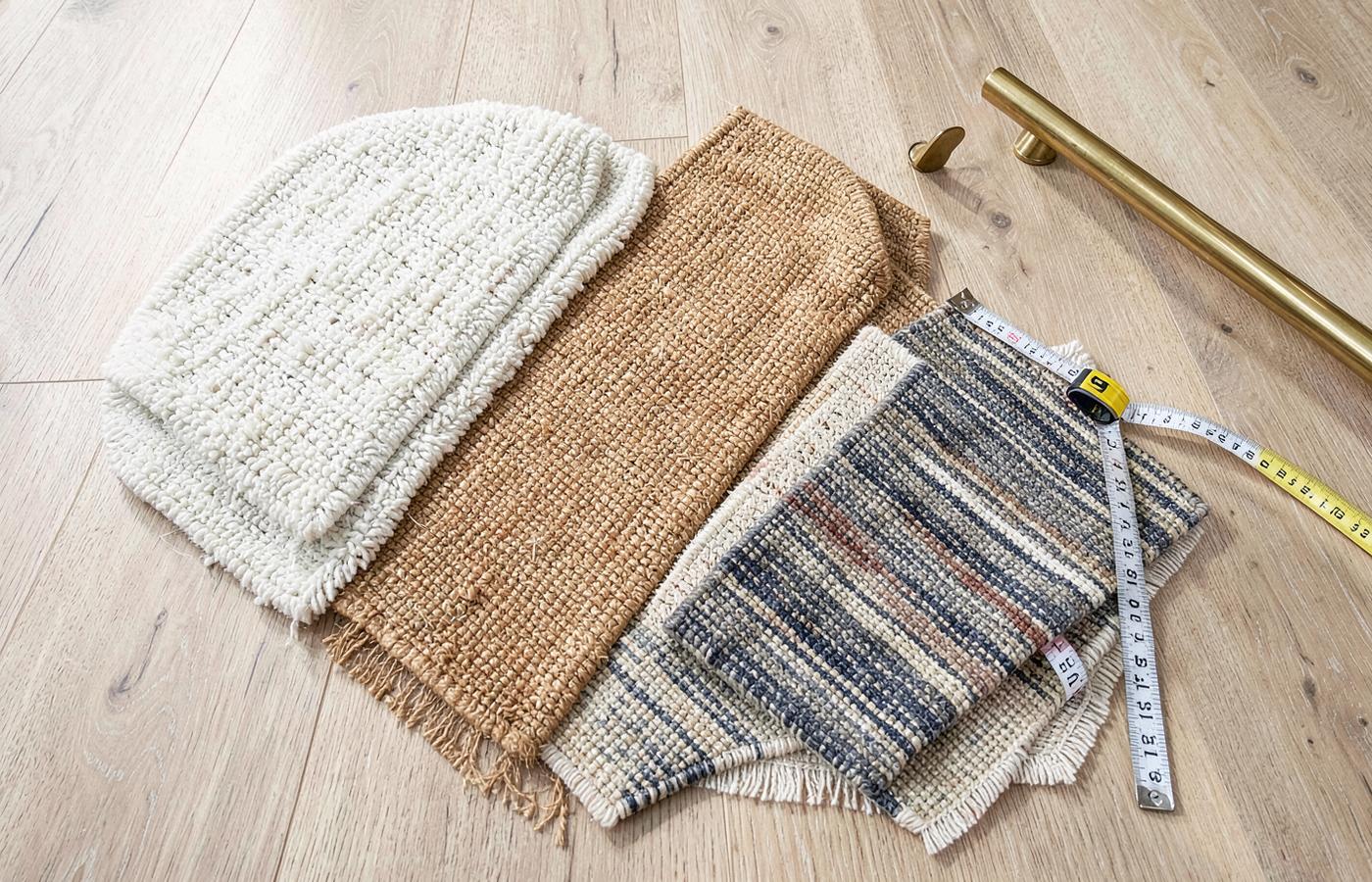 MaterialsStair Runner Materials ComparedWool, nylon, polypropylene, sisal and jute judged on stair-specific wear, comfort, cleaning and safety.
- DesignChoosing a Stair Runner ColourHow light, adjacent flooring, trim colour, traffic and dirt should drive the colour decision.
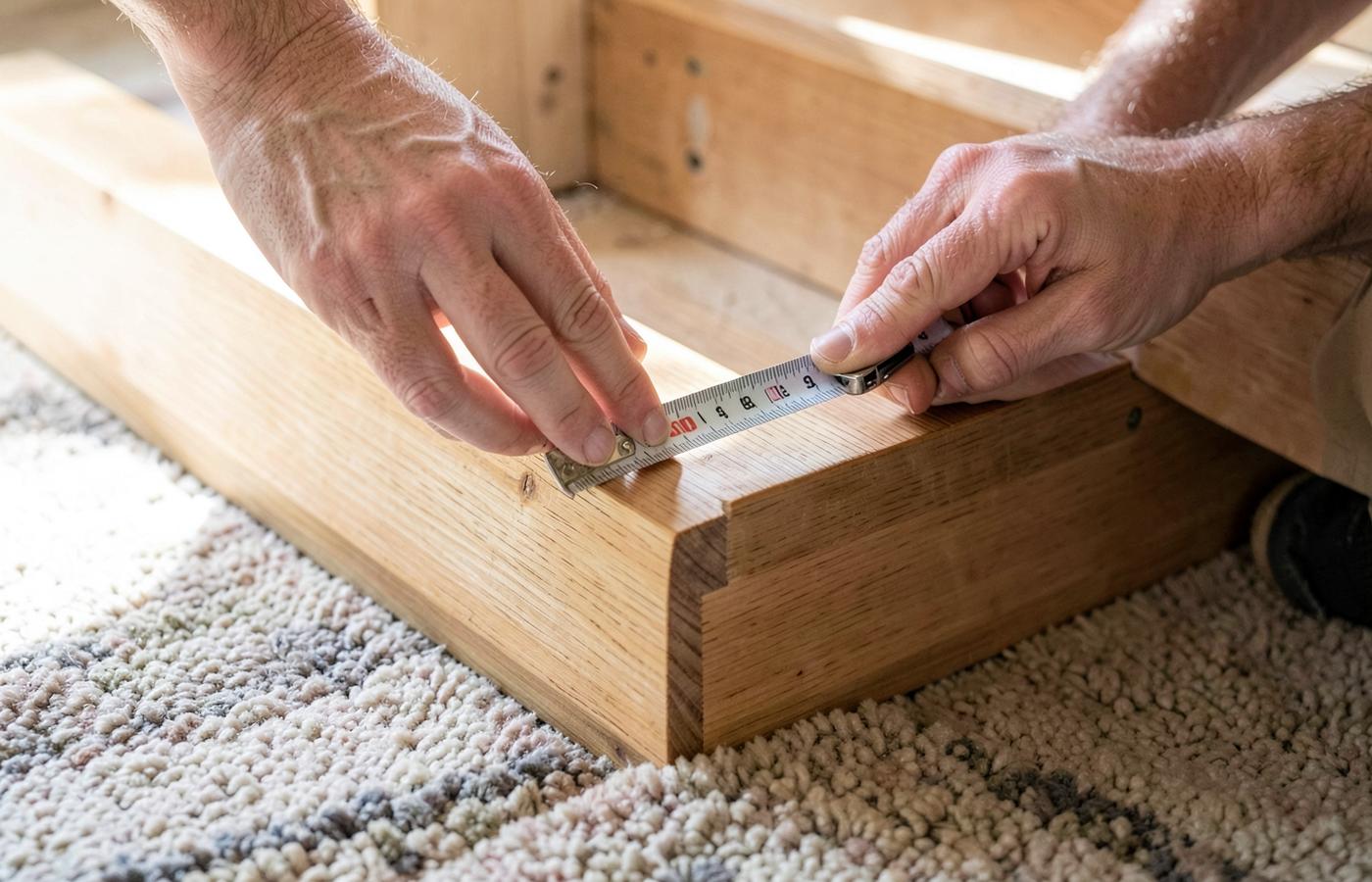 MeasurementWhat Width Should a Stair Runner Be?How to set runner width and side margins from your stair width, stringers, balusters and pattern.
- BuyingWhere to Buy a Stair RunnerRetailers, specialists, online sellers and remnants compared, with what to confirm before paying.