Materials
Woven stair runners: Axminster, Wilton and the art of the loom
The distinction between 'woven' and 'tufted' is the most significant indicator of carpet quality. For a staircase—the hardest-working part of a home—a woven runner offers unparalleled structural stability and longevity.
Written by the StairRunner.co editorial team · Updated 4 September 2026
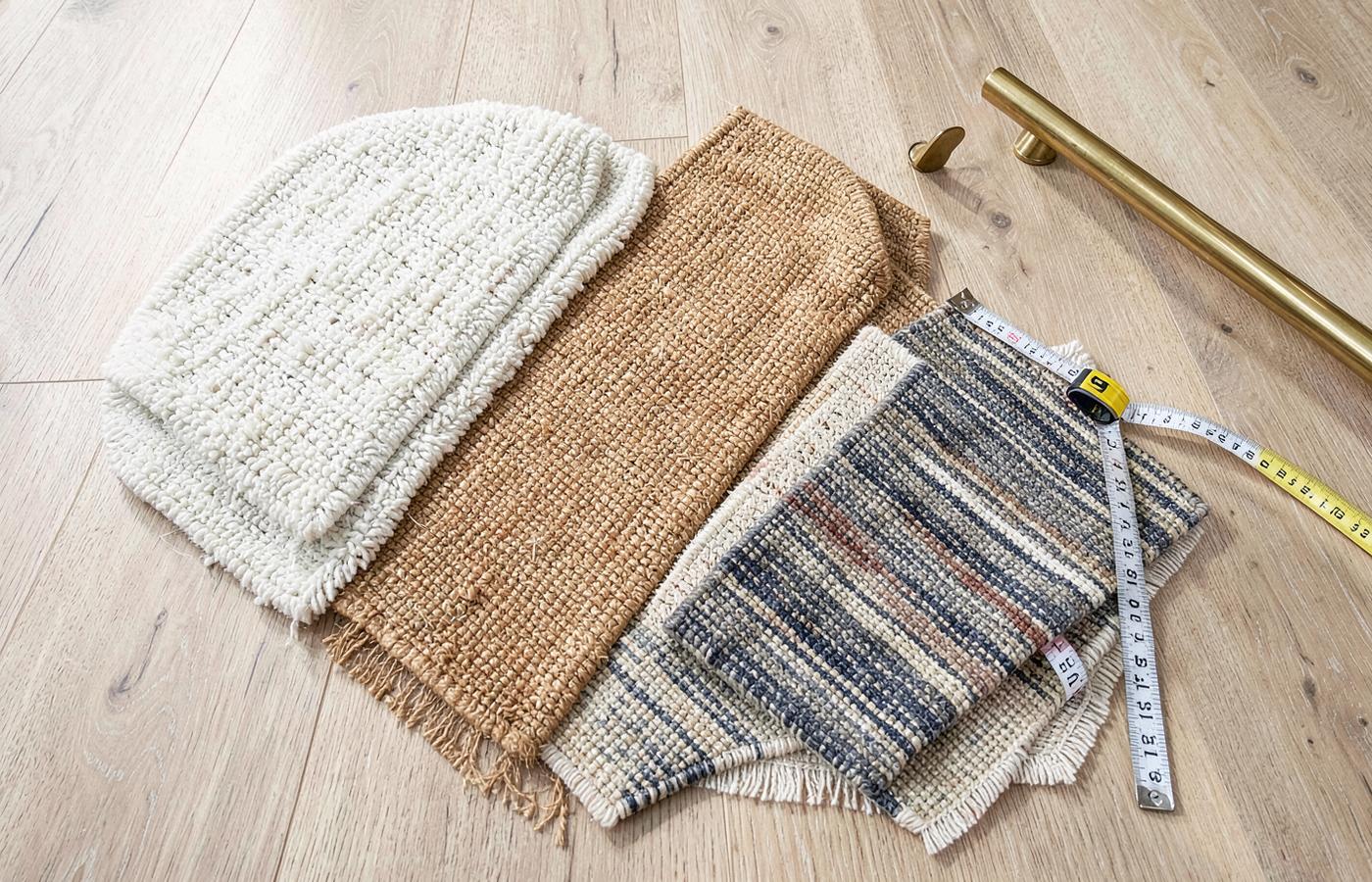
The Woven Advantage
Most modern carpet is tufted—a process akin to a sewing machine punching loops into a pre-made backing. Woven carpet is different; the pile and the backing are created simultaneously on the loom. This means that every single fibre is mechanically locked into the structure of the carpet. On a staircase, where the carpet is under constant tension from being stretched over nosings, this mechanical lock prevents the backing from delaminating or the pile from shifting, common issues in cheaper tufted alternatives.
The History of the Axminster and Wilton Looms
The names Axminster and Wilton refer not to brands, but to historic weaving technologies developed in the south of England. The Wilton loom, patented in 1741, was a development of the Brussels weave, allowing for a cut pile. It is a 'continuous thread' system, which gives the carpet incredible dimensional stability.
The Axminster loom, developed later, was designed to mimic the hand-knotted carpets of the Orient. Unlike the Wilton, which weaves the yarn continuously, the Axminster inserts individual 'U' shaped tufts of yarn into the weave. This was a revolution, as it allowed for hundreds of colours to be used in a single design without the carpet becoming impossibly thick. Today, these looms are computer-controlled, but the fundamental principle of 'weaving the carpet as one' remains the gold standard for durability.
Axminster vs. Wilton: Choosing your weave
Both are woven, but they are created with different loom technologies, leading to different characteristics.
| Feature | Axminster | Wilton |
|---|---|---|
| Pattern Capability | High; virtually unlimited colours | Lower; usually simpler designs |
| Construction | Individual tufts inserted | Continuous thread weaving |
| Best For | Bold, detailed patterns | Classic, dense, textured looks |
Identifying Quality: Pitch and Rows Per Inch
When shopping for a woven runner, you may encounter technical terms like 'pitch' and 'rows'. These are the metrics of quality. 'Pitch' refers to the number of warp threads across the width of the carpet, while 'rows' (or beats) refers to the number of tufts per inch along the length.
A high-quality Axminster for domestic use is typically '7-row' (7 tufts per inch) or '8-row'. Commercial-grade carpets found in luxury hotels might be '10-row' or even '12-row'. The higher the row count, the denser the pile and the more detailed the pattern can be. On a staircase, a higher density is always preferable as it prevents the 'grinning' of the carpet (where you see the backing) when it is bent over the nose of the stair.
Performance on the Staircase
A staircase puts specific demands on a carpet: it must remain secure, retain its shape under constant foot impact, and remain visually appealing over years of wear. Because woven carpets are incredibly dense and structurally stable, they do not 'walk' or ripple once correctly installed. They also handle the 'waterfall' installation—curving over the nose of the stair—with ease, maintaining a crisp, clean appearance that won't sag over time.
Woven Runners and the 'Waterfall' vs 'Hollywood' Fitting
Woven runners are particularly suited to the 'Hollywood' (or upholstered) fitting method. In this style, the carpet is tucked tight under the nosing of the step, following the exact profile of the tread and riser. Because woven backings are so stable, they hold this tight shape perfectly for decades.
The 'Waterfall' method, where the carpet simply flows from the nose of one step down to the back of the next, is also popular and easier to maintain. However, because woven carpets are so thick, a waterfall installation can sometimes look a bit 'bulky'. If you have a woven runner, we often recommend the Hollywood method to emphasize the quality of the weave and the craftsmanship of the installation.
The Materiality of Longevity
Woven runners are almost exclusively made from wool, or a high-percentage wool blend (such as 80/20 wool/nylon). This is for good reason. Wool is naturally resilient, fire-resistant, and—critically—it holds its memory. If you walk on a wool woven runner, the fibres will naturally 'bounce' back to their original position, whereas many synthetics will slowly crush and flatten in the high-traffic centre of the stair. See wool stair runners for more on the benefits of this material.
The Sustainability of Heritage Weaving Processes
In an era of disposable fashion and fast interiors, the woven runner is a bastion of sustainability. Because they are made primarily of wool and natural jute or cotton backings, they are largely biodegradable. More importantly, their lifespan is measured in decades, not years.
Many of the UK's heritage weaving mills operate with a zero-waste policy, recycling yarn offcuts into underlay or felt. By choosing a woven runner, you are supporting a traditional industry that prioritizes quality and longevity over mass consumption. A product that lasts 30 years is inherently more sustainable than three products that last 10 years each.
Maintaining Your Woven Investment
A woven runner should be viewed as a heritage piece. With simple, regular maintenance, it will outlast any tufted runner in the house.
- Vacuuming: Use a suction-only vacuum. Avoid rotating brushes, as they can cause 'fuzzing' on the surface of the wool pile.
- Spills: Blot immediately. Because the backing is woven, it is less porous than synthetic backings, buying you time. Do not rub, as this damages the weave structure.
- Professional Care: Periodic professional cleaning is recommended, but only by technicians experienced in heritage or high-end woven wool products.
When to choose a woven runner
You should choose a woven runner when:
- You want a complex, intricate pattern that requires high-resolution detail.
- You are looking for a 'forever' runner that will be in the house for 15+ years.
- You prefer the natural texture and hand of high-quality wool.
- You want the best possible structural performance on your staircase.
Failure Modes
Even with the highest quality weave, misuse will cause issues.
| Sign | Cause | Mitigation |
|---|---|---|
| Pattern distortion | Incorrect tensioning during installation | Ensure the fitter is experienced with pattern matching. |
| Fuzzing | Use of rotating brush vacuum | Switch to a suction-only setting immediately. |
| Edging unraveling | Heavy side-traffic/impact | Ensure the binding (whipping) is high-quality. |
Deep Dive: Long-Term Performance Metrics
When investing in a stair runner, it is essential to consider the lifecycle of the product. Most runners are replaced not because they are worn out, but because they have become visually tired or impossible to clean. By understanding the specific failure modes of each fibre—from the snagging of loops to the crushing of pile—you can make a decision that aligns with your household intensity.
A woven runner is a key architectural feature of a hall, often being the first thing visitors see. It defines the flow, the light, and the acoustic quality of your entrance. Take the time to order samples, test them in your specific lighting conditions, and consult with your installer about the best fixing method for your specific staircase geometry. Whether you choose the structural longevity of a woven runner, the cleanability of a synthetic, or the raw texture of a natural fibre, the goal remains the same: a secure, beautiful, and functional flight that stands up to the reality of your daily life.
The Importance of Edge Finishing
The finish at the edge of your runner is where the most visible wear occurs first. Whether you choose a traditional whip-stitch, a broad binding, or a hidden edge, this finishing detail must be robust. On a high-traffic staircase, an poorly-finished edge will fray within months, leading to a ragged look that is impossible to repair without replacing the runner entirely. Discuss your edge-finishing options with your supplier to ensure it matches the traffic intensity of your home.
Concluding Thoughts
Choosing a woven runner is a commitment to quality. You are moving from a 'floor covering' to a structural, aesthetic element of your home. The upfront costs are higher, but the return in performance, beauty, and years of life is significant. When paired with a high-quality underlay, the feel underfoot is unmatched, and the visual impact is timeless. If you are starting your search, compare it against nylon runners to understand the fundamental differences in material behaviour.
Frequently asked questions
- Why are woven runners considered superior?
- Woven runners—specifically Axminster and Wilton constructions—are manufactured on traditional looms where the pile and backing are woven together. This integration provides exceptional stability, structural integrity, and long-term durability that tufted carpets often cannot match.
- What is the difference between Axminster and Wilton?
- Axminster allows for complex, multi-coloured patterns because each tuft is inserted individually during the weave. Wilton is a continuous-thread weave, which typically offers fewer colour options but provides incredible density and structural strength, often used for classic, timeless designs.
- Do woven runners need specific installation?
- Yes. Because they are structurally dense and often contain a high percentage of wool, they require precise tensioning. A skilled installer will ensure the pattern alignment is perfect and that the runner is secured firmly to handle the natural weight and 'body' of the woven material.
- Are woven runners suitable for heavy traffic?
- Absolutely. Woven carpets are the industry standard for high-traffic commercial and residential applications. Their construction resists crushing and retains its appearance remarkably well over decades.
- Are woven runners expensive?
- They represent a significant investment compared to tufted products, due to the complexity of the manufacturing process and the quality of materials typically used. However, their longevity often makes them better value over time.
- Do woven runners require special grippers?
- Standard grippers work, but for heavy Axminster or Wilton runners, fitters often use 'dual-pin' or 'extra-long pin' grippers. Because the woven backing is so thick and stiff, it requires a stronger mechanical grip to hold the tension during installation.
- Can woven runners be repaired if damaged?
- Yes. Because the pile is woven into the backing, a skilled carpet restorer can 're-weave' small areas by hand. This is a specialized skill, but it means a high-quality woven runner is a truly sustainable, lifelong product.
Related guides
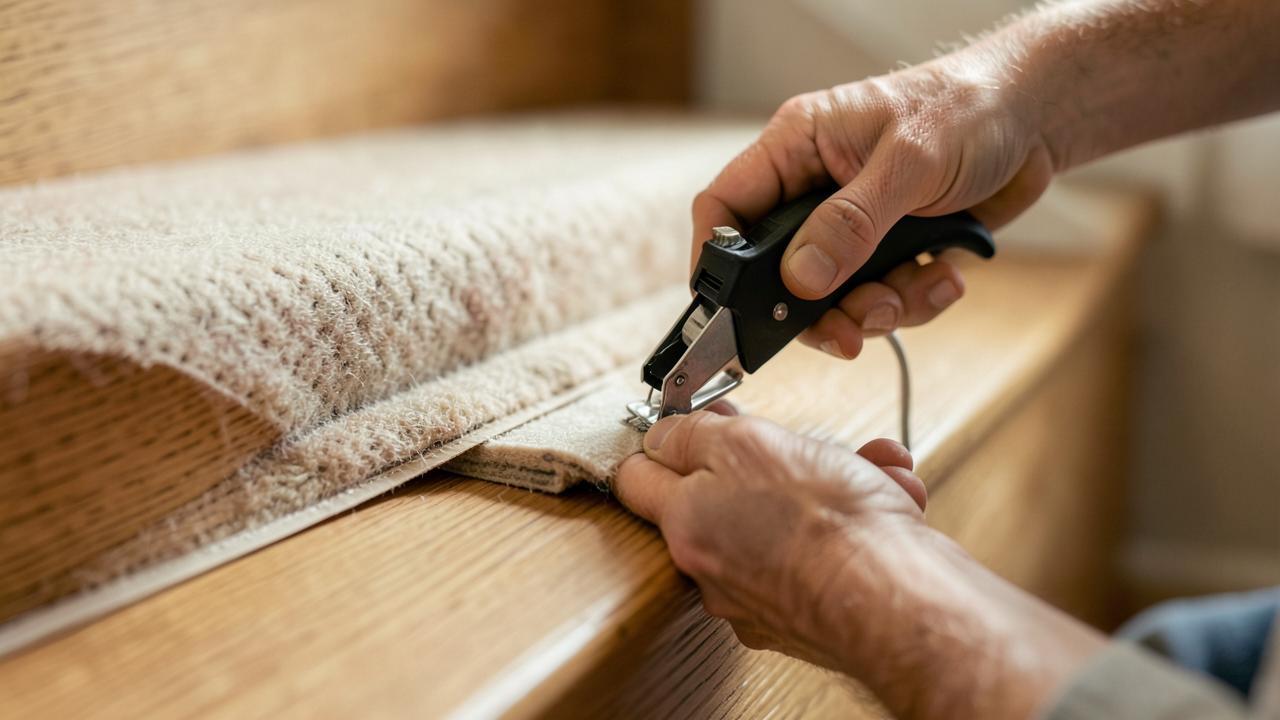 InstallationHow to Install a Stair RunnerWaterfall and Hollywood methods, staples versus rods, tools, sequence and quality checks.
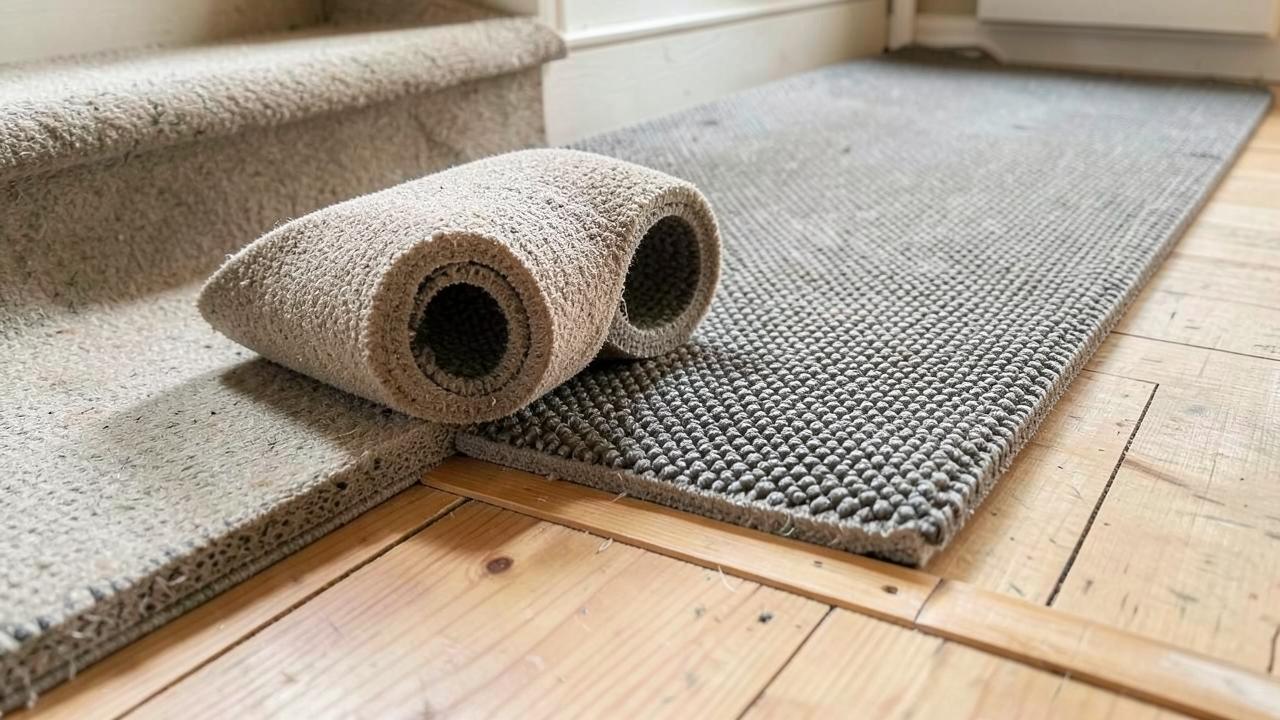 MaterialsStair Runner Underlay and PaddingWhy pad choice matters more on stairs than anywhere else, and how to specify density, thickness and cut.
- MaterialsWool Stair RunnersWhy wool holds its shape on stairs: crimp, twist, blends, staining, moths, shedding and honest limitations.