Materials
Stair runner underlay and padding
The pad is invisible, cheap relative to the carpet, and the single biggest influence on how long the runner lasts. It is also the component most often specified wrongly.
Written by the StairRunner.co editorial team · Updated 4 September 2026
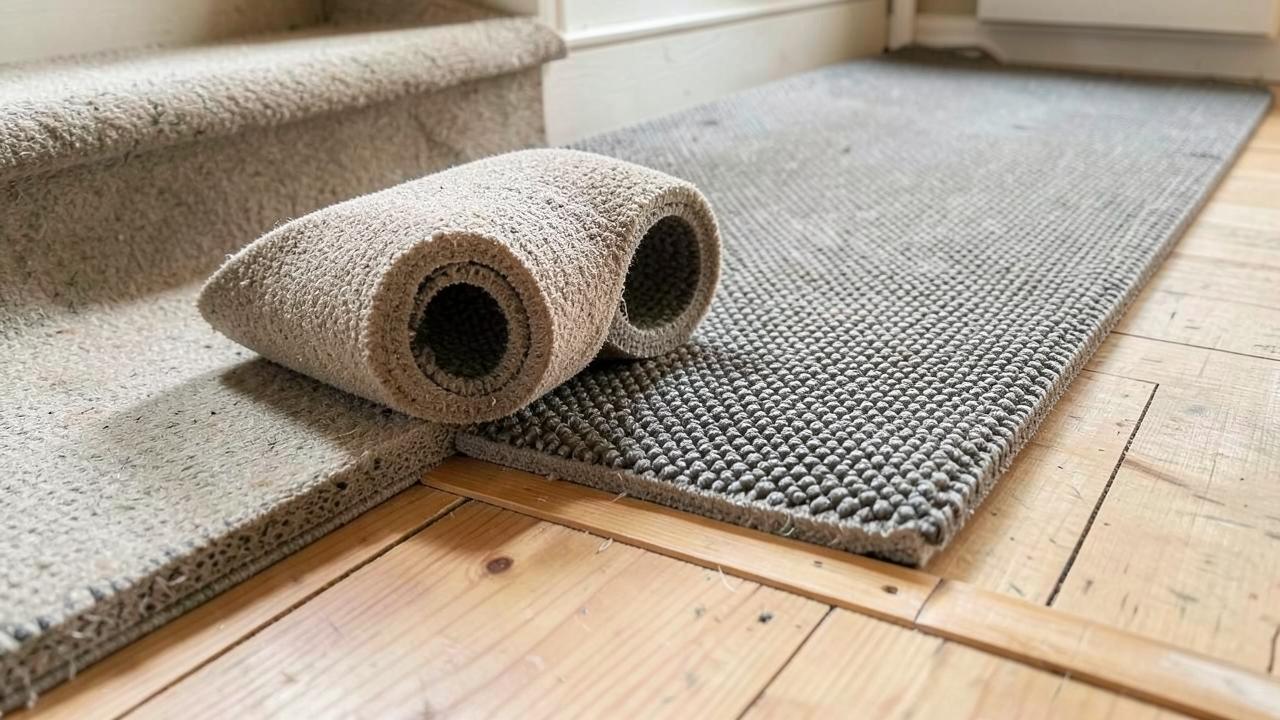
What the pad is doing
- Absorbing abrasion. Every footfall grinds the carpet backing against the timber nosing. The pad takes that load instead.
- Keeping the pile upright. A firm base lets the pile recover; a soft base lets it crush flat.
- Reducing noise and impact. A meaningful comfort gain on a hard staircase.
- Evening out minor surface faults in the treads — though it will not hide a real defect.
Pad types compared
| Type | Character | Stair suitability |
|---|---|---|
| Bonded / rebond foam | Chipped foam bonded into a sheet; widely available | Good if a high-density stair grade is specified, poor in soft grades |
| Prime polyurethane foam | Uniform foam sheet | Only in dense, low-thickness grades |
| Rubber (sponge or waffle) | Heavy, resilient, holds shape well | Very good; a long-standing stair choice |
| Felt / fibre | Dense, firm, low profile, quiet | Excellent on stairs, especially with wool |
| Memory foam | Soft, luxurious in a bedroom | Generally unsuitable — too much give at the nosing |
How the pad is cut and fixed
- Cut one piece per tread, to the runner width or very slightly narrower.
- Wrap it over the nosing and down a short way, with the setback the installer or maker specifies — the pad should not run the full riser.
- Staple or tack it firmly so it cannot shift; loose pad causes runner ripples.
- Keep the pad clear of the tack strip line so the runner can be gripped by the strip properly.
Pad and safety
A pad that is too soft is a safety issue, not just a comfort preference: it makes the front edge of each tread feel indistinct, which is precisely where people need certainty. This is covered further in non-slip stair runners and stair safety.
Where it fits in the budget
Pad is a small share of the project cost and one of the highest-return decisions in it. Trading down on pad to afford a more expensive carpet is a poor exchange — it shortens the life of the thing you spent the money on. See what affects stair runner cost.
Why stairs need a different pad from the rest of the house
Underlay specified for a living room or bedroom is chosen mainly for comfort: a thick, soft pad feels luxurious underfoot and is rarely subjected to sharp bending or edge abrasion. None of those conditions apply on a staircase. Every tread bends the carpet and pad together around a hard nosing, and every footfall lands close to that edge with a shearing motion rather than a flat impact. A soft, thick pad that performs beautifully in a bedroom will compress unevenly on a stair tread, feel spongy right at the point where a foot needs certainty, and accelerate wear in the backing above it. This is the single most common underlay mistake in stair installations: treating stair pad as a smaller version of room pad rather than a distinct product with its own rules.
How manufacturers actually grade stair pad
Underlay is generally described by two figures: density, usually expressed as weight per unit area, and thickness. For stairs, the rule of thumb among fitters and manufacturers is to favour a higher density at a lower thickness than you would choose for a flat floor. A dense, thin pad supports the carpet fibre firmly and resists permanent compression at the nosing; a thick, low-density pad does the opposite, giving initially but then collapsing under repeated point loading. If a supplier cannot describe their stair pad's density figure, treat that as a sign to look elsewhere or to ask more specific questions before buying.
Matching pad to carpet type
| Carpet type | Pad guidance |
|---|---|
| Wool or wool-blend cut pile | Dense felt or rubber pad, thin profile, to support crush recovery |
| Solution-dyed nylon | Dense foam or rubber; nylon's own resilience means pad choice is slightly less critical |
| Polypropylene | Dense pad helps offset polypropylene's weaker natural recovery |
| Sisal, jute and other natural fibre | Often fitted with minimal or no pad, following the manufacturer's specific instructions — check before assuming a pad is needed |
| Very thin flat weaves | A thin firm pad, or direct fixing, to avoid an unstable feel underfoot |
Signs the wrong pad has been used
- A visible dip or spongy feel right at the front edge of a tread.
- Rippling or a loose, baggy feel across the width of the runner.
- Faster than expected flattening of the pile in the walking lane, within a year or two.
- A creaking or shifting sound underfoot that was not present when the runner was new.
- Visible backing wear on the underside during a routine lift-and-check, well ahead of the carpet's expected life.
Fitting sequence in practice
A competent fitter cuts pad per tread rather than running one continuous length down the flight, because each tread needs the pad to wrap the nosing by a specific amount and stop short of the riser at a specific line, and a continuous run cannot do that cleanly at every step. The pad is then stapled or tacked so it cannot creep, kept clear of the tackless strip along the back of the tread and the base of the riser, and checked tread by tread before the runner itself goes down. If you are having work done as part of a wider stair runner installation, ask to see this step rather than assuming it has been done to a stair-specific standard.
Underlay and noise reduction
A dense pad meaningfully reduces the drumming sound of footsteps on a hard staircase, particularly in houses with an open stairwell that carries sound to bedrooms above or a hallway below. This is a secondary benefit rather than the primary reason to fit one, but it is worth mentioning to your fitter if noise is a specific concern, since some rubber and felt pads perform better acoustically than standard bonded foam at the same density.
Cost and false economy
Underlay is one of the smallest line items in a stair runner project relative to the carpet and labour, yet it has an outsized effect on how long the finished job looks good. Choosing the cheapest available pad to offset the cost of a better carpet is a common but poor trade, because it shortens the useful life of the more expensive material sitting on top of it. See what affects stair runner cost and installation cost specifically for how pad fits into the wider budget.
Underlay terminology explained simply
- Density: the mass of pad material per unit area, generally the strongest predictor of how well a pad resists long-term compression on stairs.
- Thickness: the physical height of the pad; on stairs kept low so the nosing stays well-defined underfoot.
- Rebond foam: foam offcuts bonded together into a sheet, the most common general-purpose pad material, available across a wide range of densities.
- Waffle rubber: a textured rubber pad, historically popular on stairs for its resilience and grip.
How to check existing pad condition before reusing it
If you are replacing a worn runner but considering keeping the existing pad, examine it closely rather than assuming it is still serviceable. Press firmly into the centre of a tread's pad and compare how it feels against an area near the tack strip that has taken less direct load — a noticeable difference indicates permanent compression. Look at the pad's edges for tearing or crumbling, common in older foam pads, and check that it is still securely fixed rather than shifted out of position. In most cases the cost of new pad is small enough relative to the rest of the project that reuse is a false economy, but this check at least makes the decision an informed one rather than a default.
Underlay in period and heritage staircases
Older properties sometimes have staircases with non-standard tread depths, uneven nosings, or historic fixings that affect how pad should be cut and fitted. In these cases a stock, off-the-shelf approach to pad sizing can leave gaps or overlaps that show through the finished runner. A fitter experienced with period staircases will typically template each tread individually rather than cutting a single standard size repeatedly, which takes longer but produces a far more consistent result across a flight where no two steps are quite the same.
Storing and buying pad ahead of fitting
Pad is usually bought at the same time as the carpet and cut on site, so there is little need to source it separately in advance. Where a household is supplying its own materials for a fitter to install, confirm the exact density and thickness required before ordering, since returning bulky pad is often impractical and getting the specification wrong wastes both money and the fitter's time on the day.
Frequently asked questions
- Do you need underlay under a stair runner?
- In nearly all cases yes. The pad protects the carpet backing from abrasion over the nosing, improves comfort and sound, and extends the life of the runner substantially. The exception is thin flat-woven or natural-fibre runners where the maker specifies direct fixing.
- How thick should stair runner underlay be?
- Thinner and denser than you would use in a bedroom. Many manufacturers cap stair pad thickness around 10 mm (3/8 in) or less, because a thick soft pad makes the nosing feel vague underfoot. Follow the specific carpet maker's recommendation — exceeding it can void a warranty.
- Should the pad cover the whole tread?
- It normally covers the tread and wraps over the nosing, stopping short of the riser, with the exact setback specified by the installer or maker. Continuous pad down the whole flight is not standard practice; pieces are cut per step.
- Can I reuse the old underlay?
- Rarely worth it. Pad compresses permanently in the traffic lane, and stair pads take the hardest use in the house. Reusing it puts a new runner on a foundation that has already failed where it matters most.
- What density of underlay should I ask for?
- Ask the supplier or fitter for a stair-specific grade, since these are made denser and thinner than standard bedroom or living room underlay. Density is usually quoted as a weight per unit area; a higher figure generally means a firmer, longer-lasting pad on stairs.
- Does underlay affect how a runner is fixed?
- Yes. Most stair installations use a tackless strip at the back of the tread and the base of the riser, and the pad must sit clear of that strip so the carpet can grip it properly. A pad cut too large or fitted over the strip line can cause the runner to work loose over time.
Sources and further reading
Where guidance differs between manufacturers, trade bodies or local building regulations, we say so rather than presenting one position as universal.
Related guides
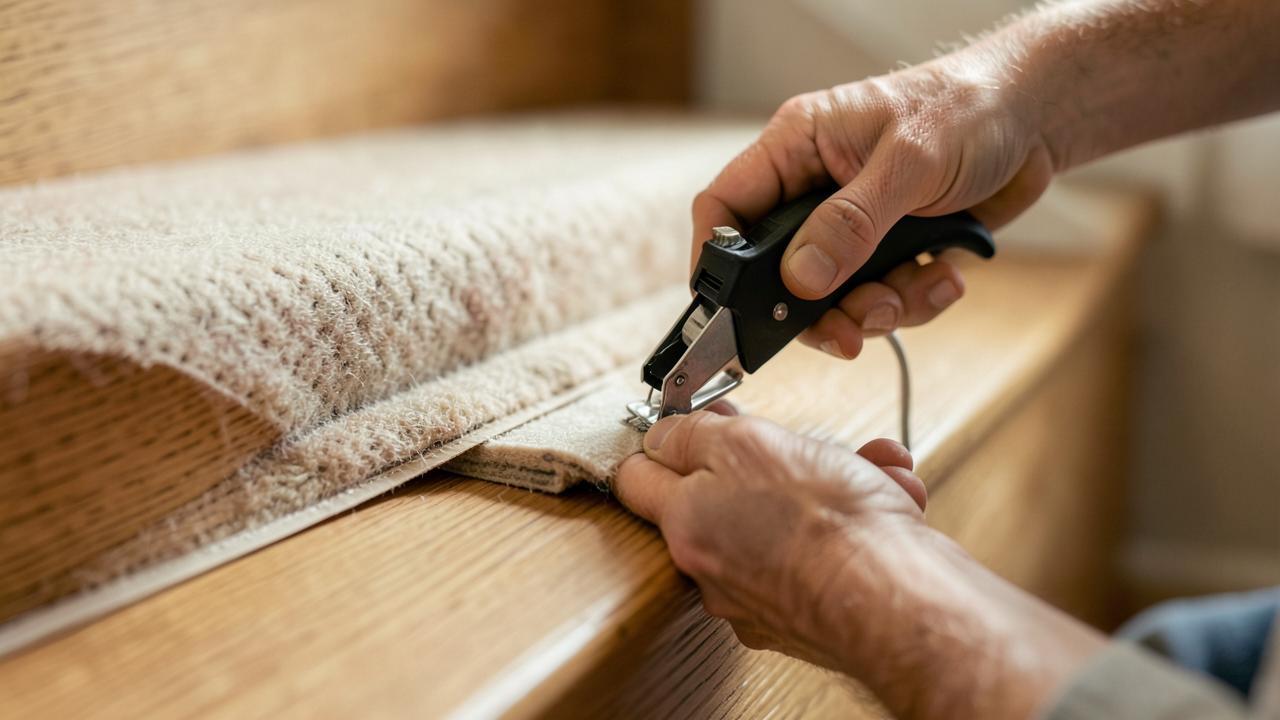 InstallationHow to Install a Stair RunnerWaterfall and Hollywood methods, staples versus rods, tools, sequence and quality checks.
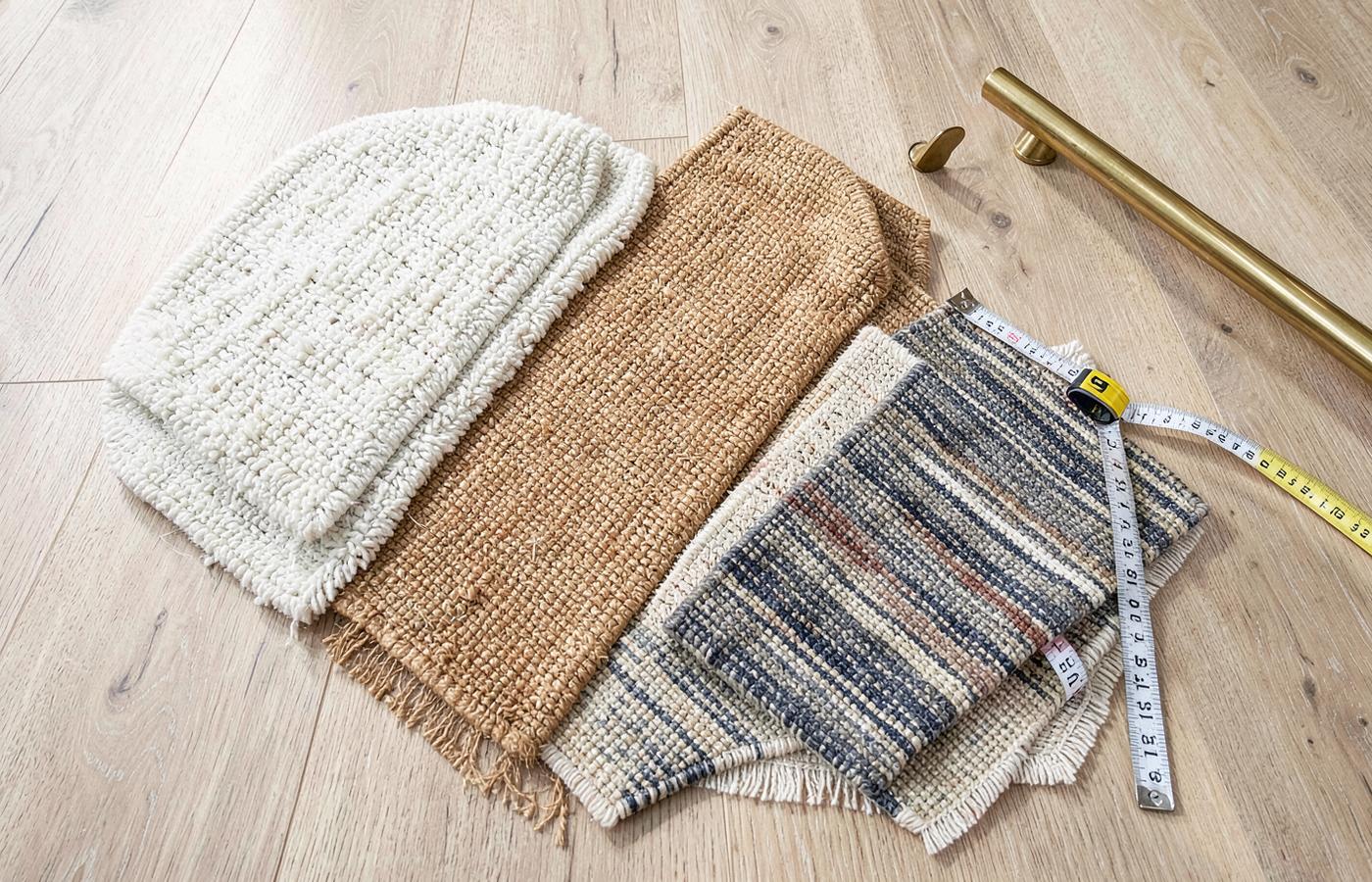 MaterialsStair Runner Materials ComparedWool, nylon, polypropylene, sisal and jute judged on stair-specific wear, comfort, cleaning and safety.
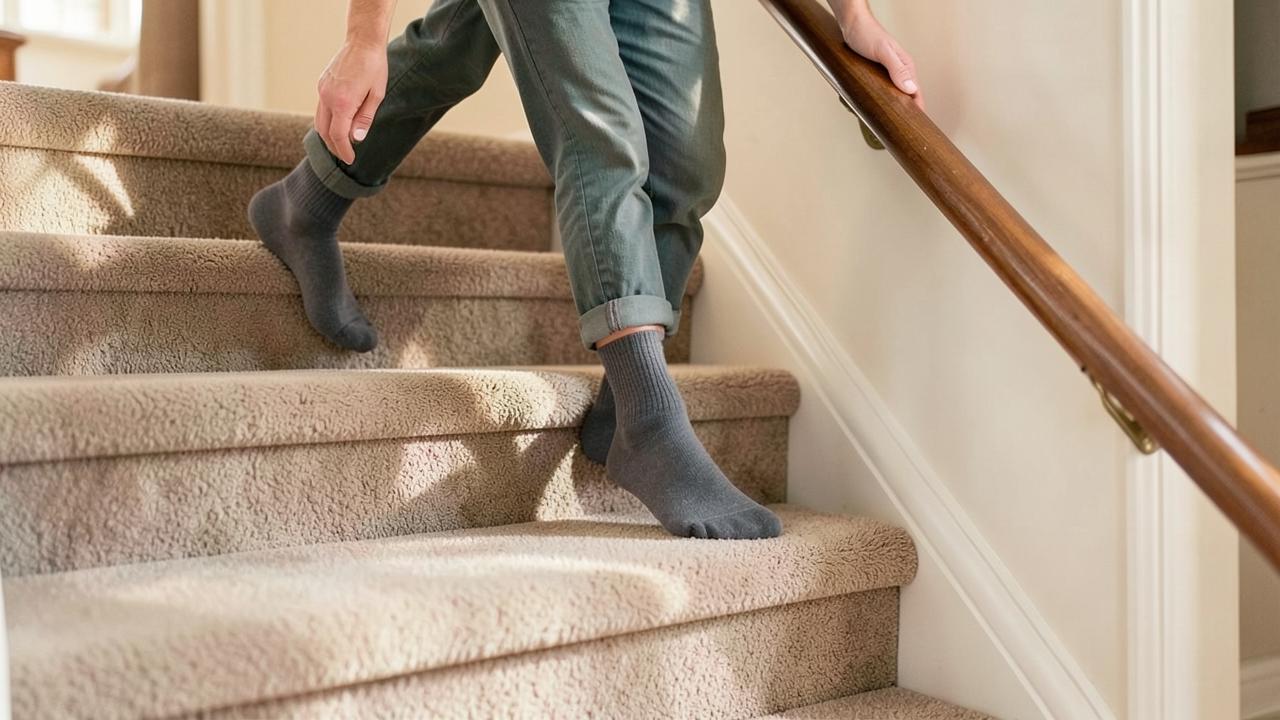 SafetyNon-Slip Stair Runners and Stair SafetyWhat actually makes a stair covering grippy: fitting tension, pile, pad and nosing coverage.
- BuyingBest Carpet for a Stair RunnerThe specification checklist — fibre, pile, density, backing, width and pattern repeat — for stair-worthy carpet.