Brass Rods
Solid brass stair runner rods: The definitive guide
An expert guide to selecting and specifying Brass Rods for your home, covering style, safety, and technical requirements.
Written by the StairRunner.co editorial team · Updated 4 September 2026
The Timeless Appeal of Brass in the British Home
Brass has been the mainstay of the luxury UK hallway for centuries. Its warmth, its weight, and its ability to take a range of finishes make it the perfect material for stair runner rods. Unlike other metals that can feel cold or industrial, brass has a natural richness that complements the organic textures of wool and sisal runners. In this guide, we will delve into the science and art of brass hardware, helping you choose the right specification for your project.
Historically, brass was chosen for its durability and its relative ease of casting. Today, we value it for its 'living' qualities. Even the most modern home can be grounded by the addition of solid brass hardware, providing a sense of history and permanence. When you walk into a hallway with gleaming brass rods, there is an immediate perception of quality and attention to detail. This isn't just about fashion; it's about the inherent value of the material itself.
Understanding Brass Finishes: From Polished to Antique
Not all brass looks the same. The way the surface is treated can radically change the appearance of the hardware. Polished brass is the most traditional, offering a high-shine, golden look that was popular in Victorian and Georgian interiors. It is usually lacquered to prevent tarnishing, making it a bright, consistent choice for formal spaces. However, in recent years, we have seen a shift towards 'softer' brass tones.
Antique brass is perhaps the most popular choice for current UK renovations. It is treated with a chemical process to pre-age the metal, resulting in a darker, more mellow tone with hints of brown and gold in the recesses. This finish is perfect for homes that want to look established rather than brand new. Satin brass, by contrast, is a modern development. It is brushed to create a matte, velvet-like texture that diffuses light rather than reflecting it. This is an excellent choice for contemporary 'Scandi-luxe' or industrial-themed interiors.
Solid Brass vs. Brass-Plated Hardware
For the discerning homeowner, the choice between solid brass and brass-plated hardware is one of the most important. Solid brass rods are made entirely of a copper and zinc alloy. They are heavy, non-magnetic, and will never rust. If the surface is scratched, the metal underneath is the same colour. Brass-plated hardware, however, usually consists of a steel or zinc core with a microscopically thin layer of brass on top. While much cheaper, the plating can wear through in high-traffic areas, revealing a grey or silver metal underneath that can eventually rust.
| Criteria | Solid Brass | Brass-Plated Steel |
|---|---|---|
| Lifespan | Decades or even centuries | 5–10 years before plating wears |
| Maintenance | Can be fully restored by polishing | Cannot be restored once plated wears |
| Weight | Heavy and substantial | Lighter; may feel 'tinny' |
| Price Point | Premium investment | Budget-friendly |
The Anatomy of a Brass Stair Rod
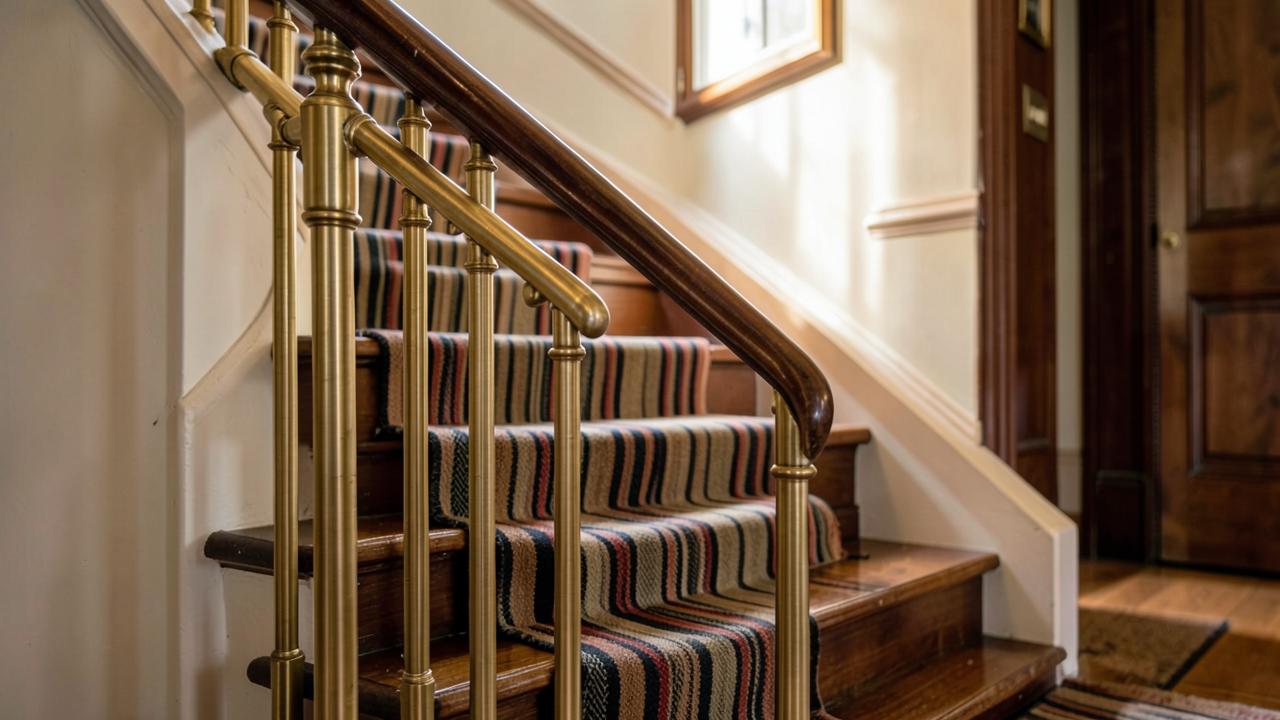
A standard brass rod set is comprised of three main components, each of which can be customized to suit your design. The first is the rod itself, which can be smooth, reeded (with vertical grooves), or even hammered for a more rustic look. The diameter of the rod is a key design choice: 12mm is standard for domestic stairs, while 16mm or 19mm provides a much grander, more substantial presence on wide, formal flights.
The second component is the bracket. Brackets are the hardware that actually fix the rod to the staircase. They are usually designed to be either 'riser-fix' (screwing into the vertical face) or 'tread-fix' (screwing into the horizontal face). For brass hardware, it is essential that the screws provided are also made of solid brass or high-quality steel with a matching head, as cheap screws will often snap when driven into the hardwood treads of an older home. For more on the technical side of fixing, visit stair runner rods.
Finials: The Decorative Flourish
The third component is the finial—the decorative end-piece that screws into the rod. This is where you can truly express the character of your home. The 'ball' finial is the timeless classic, working in almost any setting. The 'acorn' is a quintessentially British design, perfect for Victorian homes. For a more contemporary feel, 'flat' or 'button' finials offer a clean, architectural finish. When choosing finials, consider the scale of your hallway; a large, ornate pineapple finial might look out of place in a small cottage, but will feel perfectly at home in a grand manor house.
Installation: The Precision of Brass
Installing solid brass hardware requires a higher level of care than cheaper alternatives. Brass is a relatively soft metal, which means it can be easily scratched by a slipped screwdriver or a rough drill bit. A professional installer will use a template to mark the bracket positions, ensuring perfect symmetry across the entire flight. They will also drill pilot holes for every screw to prevent the timber from splitting and the screw heads from stripping. The goal is an installation where every rod sits perfectly parallel to the nosing, creating a rhythmic, orderly look that draws the eye up the staircase.
Acoustic Damping and the 'Solid' Feel
One of the hidden benefits of solid brass is its weight. When you walk on a staircase with a wool runner and solid brass rods, the stairs feel 'deadened' in a way that is very desirable. The heavy metal helps to pin the carpet and underlay into the crease, reducing the amount of air space that can act as a sound chamber. This results in a 'thud' rather than a 'clatter' when people move between floors. This acoustic quality is one of the hallmarks of a high-end interior and is a significant upgrade from a standard carpeted staircase.
Maintenance: Keeping the Shine (or Embracing the Age)
The maintenance of your brass hardware depends on whether it is lacquered or unlacquered. Lacquered brass needs only an occasional dusting with a soft cloth. You must never use abrasive cleaners or polishes on lacquered brass, as this will scratch the coating and allow the metal underneath to tarnish unevenly. Unlacquered brass, on the other hand, will darken naturally over time. If you prefer the aged look, simply leave it alone. If you want to keep the golden shine, you will need to use a specialist brass polish once or twice a year. For more general cleaning advice, see our stair runner cleaning guide.
Matching Brass with Runner Colours
Brass is incredibly versatile when it comes to colour pairing. It looks particularly stunning against navy blue, deep green, or charcoal grey runners, where the golden tones provide a sharp, luxurious contrast. For a more subtle, tonal look, brass pairs beautifully with natural jute, sisal, or beige wool runners. In these cases, the metal provides a warm accent that doesn't distract from the texture of the fibre. When selecting your runner, consider how the metal finish will interact with the pattern; a busy, multi-coloured runner might be best paired with a simple, smooth brass rod, while a plain runner can carry a more ornate, reeded rod.
The 'Patina' Philosophy: Why Unlacquered Brass is Trending
In the past, the goal of brass hardware was perfection: a permanent, golden mirror-shine. This is why so much brass was heavily lacquered. However, there has been a profound shift in interior design towards the 'wabi-sabi' aesthetic—the appreciation of things that show their age and history.
Many UK homeowners are now specifically choosing unlacquered brass rods. They want the metal to age, to pick up fingerprints, to darken in the recesses, and to develop a unique patina that tells the story of the home. This requires a shift in mindset: you have to stop seeing tarnish as 'dirt' and start seeing it as 'character'. It is a deeply personal design choice that makes your staircase truly yours, as the patina will develop differently depending on how frequently, and where, you step on the stairs.
The Importance of 'Weight' as a Quality Indicator
If you are shopping for brass rods, the simplest way to test quality is weight. Pick up the rod. If it feels as light as an empty cardboard tube, it is likely a thin-walled, brass-plated steel rod. If it feels heavy, cold, and solid in your hand, you are holding a piece of solid brass hardware.
This is not just about the feeling of luxury; it is about physical integrity. A heavy rod resists vibration, meaning it is less likely to rattle or shift over time. It has a 'gravity' to it that matches the solid nature of a well-built home. When you are looking at different suppliers, never be afraid to ask about the weight per meter or the thickness of the brass wall—these are the technical specifications that separate a fleeting purchase from a lifetime investment.
Integrating Brass with Other Metallics
A common design question is: "Can I mix metals?" The answer is a definitive yes, but it must be done with intention. If your hallway has polished chrome light switches and handles, you don't *have* to use chrome stair rods. You can use brass rods, but you should ensure they feel like an intentional 'accent' rather than a mismatch.
Try to tie the brass in with at least one other element—perhaps a gold-framed mirror or a brass-based lamp. When the brass rods aren't the only brass element in the hallway, the 'mixed metal' look feels sophisticated and curated. This is the difference between a house that feels like a showroom and one that feels like a home.
Design Synergy: Brass Rods and Lighting
The interplay between brass hardware and hallway lighting is a powerful design tool. Because brass has a warm, reflective surface, it interacts beautifully with warm-toned LED bulbs. When light hits a polished or satin brass rod, it creates a subtle glow that adds depth to the staircase.
Consider the placement of your hallway pendant or wall sconces. Lighting that washes down the staircase will highlight the top of the rods and the finials, emphasizing the rhythm of the flight. For a truly high-end look, consider using low-level wall lights that skim the surface of the runner; this creates long, dramatic shadows from the rods, making the staircase look like a work of architectural art during the evening hours.
Summary: The Gold Standard
In the world of staircase design, brass remains the gold standard for a reason. Its combination of beauty, durability, and historical resonance is unmatched by any other material. Whether you choose the gleaming shine of polished brass or the mellow depth of antique bronze, you are making a choice that will add value and character to your home for a lifetime. By investing in solid brass hardware and ensuring a professional installation, you create a staircase that is a true centerpiece of your interior design.
Frequently asked questions
- What is the difference between stair rods and stair bars?
- While the terms are often used interchangeably, 'bars' frequently refers to flat or triangular profiles, whereas 'rods' are traditionally cylindrical. Both serve the same decorative purpose in modern stair runner installations.
- Can stair bars be used on winders?
- Fitting bars to winders is technically challenging as the step width varies. Most professionals either omit them on turns or use shorter, custom-fitted bars to maintain a consistent aesthetic without creating a hazard.
- How do I choose the right finish for my bars?
- Match the finish to existing metalwork in your hall, such as door handles or light fittings. Popular UK choices include antique brass for period homes and brushed chrome for contemporary spaces.
- Are solid metal bars better than hollow ones?
- Solid bars are more durable and provide better acoustic damping, whereas hollow bars are lighter and more cost-effective. For high-traffic areas, solid bars are generally recommended.
- How many bars do I need for a standard flight?
- You typically need one bar per step where a crease exists. For a standard 13-step flight, this usually means 12 or 13 bars depending on whether you include the bottom step.
- Do stair bars require regular cleaning?
- Yes, they should be dusted regularly. Depending on the finish, a specialized metal cleaner may be used occasionally to maintain the shine or manage the patina.
- Can I use brass rods with a synthetic runner?
- Yes, brass rods work exceptionally well with both natural and synthetic runners. The metallic glint of the brass can elevate a simple polypropylene runner, giving it a more premium, curated appearance.
- Are brass rods a trip hazard?
- When correctly installed, stair rods are not a trip hazard. They are tucked into the 'crotch' of the step where your foot does not typically land. However, it is essential they are fitted securely into their holders.
Related guides
- InstallationHow to Install a Stair RunnerWaterfall and Hollywood methods, staples versus rods, tools, sequence and quality checks.
 InstallationStair Rods, Clips and Runner HardwareHow stair rods, clips, brackets and bars actually work, when they hold a runner and when they are decorative.
- InstallationStair Runner Hardware: Rods, Clips, and FixingsExpert guide to stair runner hardware: from structural grippers and staples to decorative rods, clips, and finishes for a safe, high-end UK home.