Installation Details
Four ways to finish your stair runner at the bottom
The final step is often the most visible part of the installation. How you terminate the runner determines the entire look and feel of the entrance to your staircase. Here is a comprehensive guide to the best finishing techniques.
Written by the StairRunner.co editorial team · Updated 4 September 2026
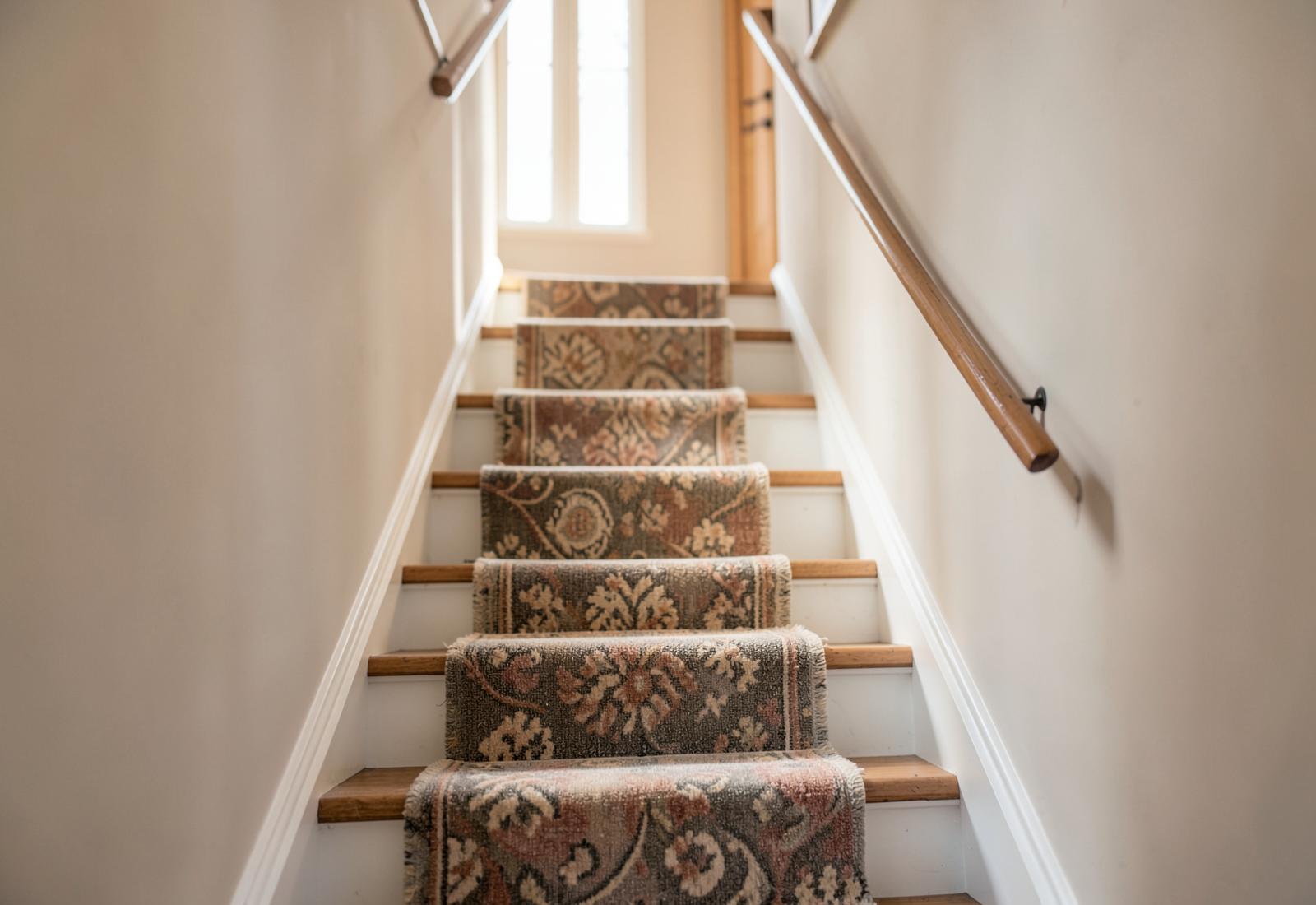
Option 1: The Riser Termination (The 'Flush' Finish)
In this classic approach, the runner covers the final tread and then drops down the final riser, ending exactly where the riser meets the floor. This is the most common choice when the hallway is a different material, such as wood, tile, or stone. It provides a definitive 'end' to the carpeted area.
The key to a successful riser termination is a perfectly straight cut and a secure fixing at the base. Any gap or fraying here will be immediately noticeable as you approach the stairs. Fitters often use a 'tuck and pin' method here, where the carpet is slightly oversized, tucked into the floor junction, and secured with staples that are hidden by the carpet pile.
This method is particularly effective in homes with high-contrast flooring. For example, a charcoal runner ending flush against a light oak floor creates a sharp, modern line that emphasizes the structure of the staircase. It also makes cleaning the hallway floor easier, as there is a clear boundary where the carpet ends and the hard surface begins.
Option 2: Wrapping the Bottom Nosing (The 'Architectural' Finish)
If you want to highlight the architecture of your stairs, you might choose to wrap the carpet over the final nosing and terminate it underneath the overhang of the last step. This leaves the bottom riser completely exposed, showing off the wood or paint.
However, this method requires the bottom nosing to be in excellent condition. If the wood is chipped or the paint is worn, the "wrapped" look will draw attention to these flaws. Additionally, this style is less suitable for very thick runners, as the bulk of the carpet wrapping under the nose can look clumsy. It works best with flatweaves or low-pile wool runners that can conform tightly to the shape of the wood.
Option 3: Continuing onto the Floor (The 'Pathway' Finish)
For a seamless look, the runner can continue past the last riser and extend onto the hallway floor. This is often done when the runner is made from the same carpet as the landing or hallway, or if you want to create a "pathway" effect that leads the eye into the next room.
When extending onto the floor, you must decide how far the carpet should go. A standard 'overlap' is usually 50cm to 100cm. The edges of this extension must be professionally bound to match the rest of the runner. This method is excellent for protecting high-traffic hallway floors from the impact of people 'landing' at the bottom of the stairs.
This "pathway" finish also serves a functional safety purpose. It provides a transition zone where the user's brain can adjust from the rhythmic stepping of the stairs to the flat walk of the hallway. In households with elderly residents or young children, this extra bit of carpeted floor can prevent slips that occur when a person steps off the final riser too quickly onto a slippery hard surface.
| Finish Type | Best For | Installation Difficulty | Maintenance |
|---|---|---|---|
| Riser Terminate | Hardwood/Tile floors | Medium | Easy (vacuum only) |
| Wrapped Nose | Showcasing painted risers | High | Moderate (riser scuffs) |
| Floor Extension | Seamless transitions | Low | Moderate (floor cleaning) |
| Feature Step | Grand entrance halls | Expert | Difficult (edges) |
Option 4: The Feature Step Transition (Bullnose & Scrolls)
Many older homes have a "bullnose" or "curtailed" bottom step that is wider than the rest of the flight and often curved. Finishing a runner here is the most complex task in the entire installation. The carpet must be expertly cut and bound to follow the curve, or a specific "landing" piece must be created.
For a bullnose step, you have two choices: a 'partial wrap' where the runner maintains its width and simply follows the curve of the nose, or a 'full wrap' where the carpet fans out to cover the entire width of the feature step. The latter requires expert template-making and custom binding. If you have a complex bottom step, we highly recommend consulting a professional. For more on complex shapes, see our guide on make your own stair runner.
A curtailed step is a major architectural feature, and the carpet should respect that. A "fanned" installation, where the carpet fibres are subtly stretched and compressed to follow the curve of the scroll, is the hallmark of a master carpet fitter. If done correctly, it creates a sense of grandeur and craftsmanship that elevates the entire entrance hall.
Managing Height Differences
A common challenge when finishing a runner at the bottom is the difference in height between the carpet (including its underlay) and the hallway floor. If you are using a thick 11mm underlay and a 10mm wool runner, you have a 21mm "step" at the bottom. This can be a significant trip hazard.
To manage this, fitters often "ramp" the underlay. This involves thinning out the underlay as it approaches the final floor junction, so the carpet meets the floor at a shallower angle. This requires careful cutting and skill with a utility knife to ensure the transition is smooth and doesn't feel like a "hump" underfoot. Always ask your installer how they plan to manage the height transition to ensure safety and comfort.
The Aesthetic Impact of Threshold Bars
The choice of threshold bar—the metal or wood strip that secures the edge of the carpet where it meets the floor—can significantly impact the final look. For a traditional home, a solid brass bar provides a classic, high-end feel. For modern interiors, a slim profile "z-bar" in brushed chrome or matt black is often more appropriate.
Alternatively, you can opt for a "hidden" finish. This involves using a specialized gripper that allows the carpet to be tucked and pinned directly into the floor without a visible metal strip. While this is the most aesthetically pleasing option, it is also the most difficult to execute perfectly and may not be suitable for very high-traffic areas where the edge needs the extra protection of a metal bar.
Transition Bars: The Functional Detail
Where the runner meets a hard floor, a transition bar (threshold) is often used. These bars serve two purposes: they protect the raw edge of the carpet and they provide a smooth ramp between different floor heights.
- Z-Bars: The most common for carpet-to-floor transitions. They grip the carpet and hide the edge under a metal or wood strip.
- Single Bar: A simple flat strip that sits on top of both surfaces. Best for very low-profile runners.
- Custom Timber Strips: A piece of matching oak or walnut can be used to create a more integrated, high-end look.
The 'Hollywood' Bottom: A Step-by-Step Guide
The Hollywood finish at the bottom of the stairs is a favourite for its clean, tailored look. Here is how to achieve it:
- Tension the Final Tread: Ensure the carpet is pulled perfectly tight across the last tread.
- Staple Under the Nose: Use a row of staples every 2 inches directly under the overhang of the last step.
- Fold and Tuck: Fold the remaining carpet down the riser. If terminating at the floor, ensure the fold is crisp.
- Secure the Base: Use the bolster tool to drive the carpet into the crotch where the riser meets the floor.
- Hidden Pins: Secure the very bottom edge with specialized 'rex' pins or staples that are driven deep into the pile.
Common Mistakes at the Bottom
The most frequent error is leaving the bottom edge too loose. Because the bottom step is where people often 'pivot' as they turn into the hallway, the lateral stress is much higher than on other steps. If the runner isn't secured with extra staples at the base, it will eventually 'creep' forward, creating a bulge on the final tread.
Another mistake is ignoring the floor level. If your hallway floor is uneven, the runner will look crooked at the bottom. You may need to 'scribe' the carpet or use a slightly thicker underlay on one side to level out the visual line.
Material-Specific Finishes
Different materials require different bottom treatments. Sisal and Seagrass are very stiff and cannot be 'tucked' easily. They almost always require a bound edge and a heavy-duty transition bar. Wool Twist carpets are very forgiving and can be manipulated into tight corners. Polypropylene runners are durable but can show 'white lines' if folded too sharply; always warm the carpet slightly with a hairdryer to make the backing more flexible before doing complex folds at the bottom.
Tools for a Professional Bottom Finish
Achieving a professional finish at the bottom of the flight requires more than just a hammer and nails. A master installer will use a range of specialized tools:
- Stair Bolster: A wide-bladed, blunt tool used to "tuck" the carpet into the junction between the riser and the floor.
- Knee Kicker: Used to provide the necessary tension to ensure the carpet is drum-tight across the final tread.
- Electric Tacker: For driving staples deep into the pile, ensuring they reach the subfloor without being visible on the surface.
- Awl: For teasing the carpet fibres over the heads of pins or staples, making the fixings truly invisible.
Maintenance of the Bottom Transition
The transition between carpet and floor is a natural dust trap. Furthermore, the bottom step takes the most impact from shoes. We recommend:
- Regular Edge Cleaning: Use a crevice tool on your vacuum to clean the junction between the runner and the floor.
- Threshold Inspection: Check that your transition bar remains tight. A loose screw on a metal bar is a significant safety hazard.
- Spot Cleaning: Keep a bottle of mild carpet cleaner handy for the 'landing zone' where people first step onto the runner.
Expert Tips for a Professional Finish
To make your bottom finish look like it was done by a master fitter, focus on the 'capping'. If you are ending at the riser, the top of that final riser should be perfectly flat. If the carpet is 'humped' over the nose, it means your tension is wrong or your underlay is too thick at the edge.
Also, consider the light. Light often hits the bottom of the stairs from the front door. This highlights every imperfection. If you are struggling to get a clean edge, a darker threshold bar or a slightly darker binding can help mask small inconsistencies in the timber or the floor level.
Related guides
 CareCleaning and Caring for a Stair RunnerRoutine vacuuming, spill response by fibre type, slipping and fraying, and when to call a professional.
 InstallationFinishing a Stair Runner at the TopThe four ways to end a runner at the top step, and how to pick the one your staircase allows.
 BuyingMaking Your Own Stair RunnerCutting a runner from broadloom or a remnant, and finishing the edges so it does not look homemade.
Methodology and Architectural Integrity
Our approach to finishing is based on 'architectural respect'. We believe that the runner should enhance, not obscure, the original features of your staircase. For historic homes with original hardwood, we always advocate for the 'Wrapped Nose' finish, as it allows the craftsmanship of the timber risers to remain visible.
For modern builds where the stairs might be made of utility-grade softwood or MDF, the 'Riser Termination' is often the better choice, as it provides a clean, full-coverage look that hides the less attractive structural elements.
In conclusion, finishing your stair runner at the bottom is the 'signature' on your project. It requires the most precision and the most creative thinking. Whether you choose a classic riser tuck or a complex bullnose wrap, take the time to plan the transition. A well-finished bottom step transforms a simple floor covering into a permanent architectural feature that adds value and beauty to your home.
Remember, the goal is a transition that is both safe and stylish. By considering the floor material, the traffic patterns, and the style of your home, you can choose a finish that will stand the test of time and provide a welcoming entrance for everyone who enters your home.
Frequently asked questions
- Should the runner end on the last tread or the floor?
- It depends on your floor covering. If you have a matching rug or the same carpet in the hallway, continuing to the floor is common. If you have timber or tile, terminating at the final riser usually looks cleaner.
- What is a 'wrapped' bottom finish?
- This is where the carpet wraps over the very last nosing and is tucked into the final riser, leaving the bottom riser exposed. It is a very clean, modern look.
- Can I just stop the runner at the bottom step?
- Yes, but the edge must be professionally bound or tucked. An unfinished carpet edge will fray and look unsightly within weeks.
- How do I handle a runner meeting a hard floor?
- Usually, you use a threshold bar or a neat 'tuck and pin' method where the carpet meets the floor, ensuring there is no trip hazard and a clean transition.
- What if my bottom step is a feature 'curved' step?
- Feature steps require custom work. The carpet often needs to be cut and bound to follow the curve of the step, which is significantly more complex than a straight finish.
- What is a 'bolster' tuck at the bottom?
- This is a technique where the carpet is pushed firmly into the junction between the riser and the floor using a stair tool (bolster), then secured with hidden staples. It creates a crisp, 90-degree angle.
- Can I use a transition strip on a curved bottom step?
- Standard metal transition strips are rigid, but you can find flexible PVC or rubber versions that can follow a gentle curve. For sharp curves, a bound edge without a strip is usually the best aesthetic choice.
- How do I fix a runner that has started to lift at the bottom?
- If the runner is lifting, it likely needs re-tensioning. You should call a professional to lift the bottom section, check the grippers, and re-fix it securely. Attempting to just 'glue' it down is rarely a permanent fix.
- Can I change the finish type later?
- It is difficult but possible. If you want to change from a floor extension to a riser termination, you will need to cut the carpet and have the new edge professionally bound, which may require taking the runner off the stairs temporarily.