Technical Guide
Flat-weave stair runners: Practicality, durability, and style
Flat-weave runners are the darling of interior designers. Sleek, architectural, and incredibly tough, they offer a low-profile aesthetic that pile carpets simply cannot match.
Written by the StairRunner.co editorial team · Updated 4 September 2026
The Anatomy of a Flat Weave
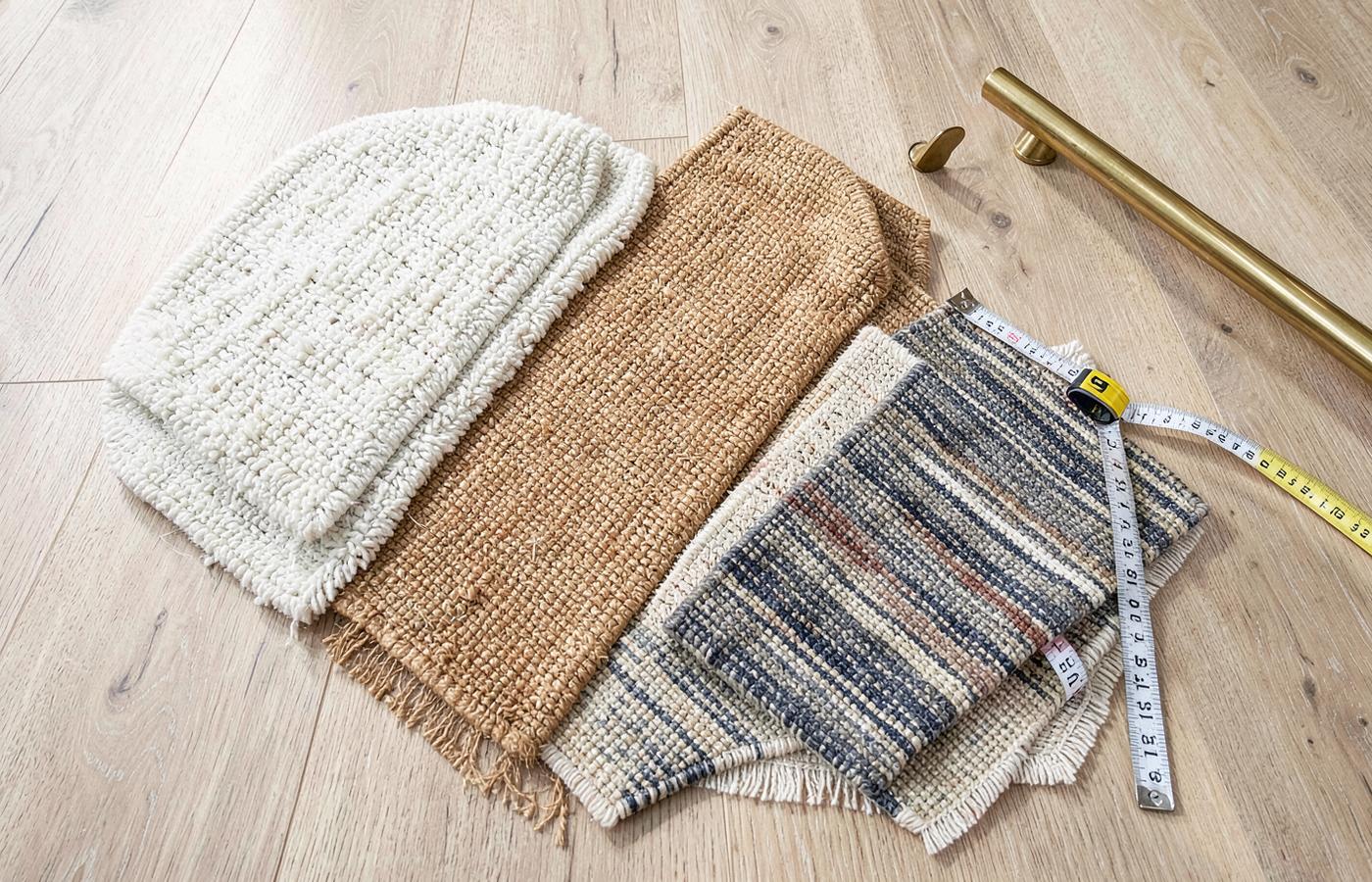
To understand why flat-weaves are so popular for stairs, you first have to understand how they are made. A traditional 'tufted' or 'woven' carpet has a vertical pile—thousands of little upright fibres. Over time, these fibres get crushed by foot traffic, leading to the familiar 'worn' look in the middle of the stairs.
A flat-weave has no vertical pile. It is constructed much like a piece of heavy fabric, with horizontal and vertical threads (the warp and the weft) tightly interlaced. Because there is nothing to 'crush', the carpet looks exactly the same after five years as it did on day one. This makes it the ultimate choice for high-traffic entryways and stairs.
This construction also allows for a much thinner profile. While a luxury wool carpet might be 15mm thick, a flat-weave is often only 5mm to 8mm. On a staircase, this means the runner follows the exact contour of the wood, resulting in sharp, clean lines that emphasize the architecture of the flight.
Material Options: Wool, Sisal, and Beyond
The material of your flat-weave will determine how it feels and how it wears.
| Material | Tactile Feel | Durability Rank |
|---|---|---|
| Wool Flat-Weave | Soft but firm, warm, naturally non-slip. | Excellent. The gold standard for stairs. |
| Sisal / Jute | Rough, tactile, organic, can be scratchy. | High (Sisal) to Medium (Jute). Sisal is very tough but prone to water staining. |
| Cotton / Chenille | Very soft, lightweight, prone to shifting. | Low. Best for low-traffic decorative stairs. |
| Synthetic (Polypropylene) | Firm, smooth, can be a little 'plasticky'. | Very High. Excellent for pet owners and outdoor-to-indoor transitions. |
The Physics of Flat-Weave Acoustics
One common misconception about flat-weave runners is that they are 'louder' than pile carpets. While it is true that a 15mm thick wool pile absorbs more airborne sound, the acoustic performance of a flat-weave on stairs is primarily about 'impact noise'—the thud of a heel hitting a wooden tread.
Because a flat-weave is dense and is fitted tight to the stair, it effectively 'dampens' the vibration of the wooden step. However, to achieve true quietness, you must use a high-density rubber crumb underlay. This acts as a shock absorber between the weave and the wood. Without it, a flat-weave can indeed sound quite 'slappy' underfoot. In a large, echoey hallway, a flat-weave provides the structural definition of a hard floor but with the acoustic softening of a textile.
Weave Patterns and Their Specific Wear Characteristics
Not all flat-weaves are created equal. The pattern of the weave itself dictates how the runner will age.
- Herringbone: The 'V' shape of the weave provides excellent multi-directional stability. It is very resistant to 'skewing' (where the runner starts to look diagonal on the flight).
- Basketweave: A larger, more tactile weave. While beautiful, it can be more prone to 'snagging' if you have pets with long claws, as the loops are larger.
- Bouclé: This weave features small, tight knots. It is incredibly tough and is the best choice for commercial-level traffic. It hides small particles of grit exceptionally well.
- Panama Weave: A simple, over-under grid. This is the most honest weave and shows the texture of the material clearly, but it can show 'path-wear' more quickly than more complex patterns.
Flat-Weave Runners in Minimalist 'Japandi' Interiors
The 'Japandi' trend—a fusion of Japanese minimalism and Scandinavian functionality—has led to a massive resurgence in flat-weave popularity. The aesthetic relies on natural textures, clean lines, and a lack of 'fuss'. A flat-weave runner fits this perfectly.
By choosing a wool flat-weave in a neutral tone like 'stone' or 'linen', you add warmth to a minimalist space without introducing visual clutter. The thin profile of the runner ensures the architectural integrity of the staircase remains the hero of the room. This 'quiet luxury' approach is what makes flat-weaves the primary choice for modern, high-end interior designers.
Design Styles: From Stripes to Scandi
Flat-weaves are famous for their stripes. Because of how they are woven, creating crisp, linear patterns is part of their DNA.
- The 'Roger Oates' Style: Multi-tonal stripes that run the length of the runner. This is a classic British look that adds immense energy and height to a staircase.
- Monochrome Minimalist: A single solid colour (usually grey or sand) with a simple 'herringbone' or 'basketweave' texture. This suits modern, Scandi-inspired homes perfectly.
- Bordered Chic: A plain centre with a contrasting woven border. This provides a formal, 'tailored' look that works well in Georgian and Victorian properties.
The Challenge of Installation
Installing a flat-weave runner is not a DIY job. Unlike pile carpets, which are somewhat 'squishy' and can hide minor fitting errors, flat-weaves are incredibly honest. If the tension is off by a few millimetres, the weave will look distorted.
Mitring Winders: On winder stairs, a flat-weave cannot be 'folded' like a traditional carpet because it is too thin and stiff. Instead, it must be cut and 'mitred'—joined at an angle so the stripes or weave patterns align. This requires surgical precision and a deep understanding of pattern matching.
Fixing Methods: Flat-weaves are usually fixed using a combination of heavy-duty gripper and high-quality adhesive or double-sided tape. This prevents the 'creep' that can happen when a thin material is subjected to the downward force of people walking down the stairs. Visit installation methods for a deep dive.
The Role of the Selvedge in Flat-Weave Longevity
A 'selvedge' is the self-finished edge of a woven fabric. In high-quality flat-weave runners, the side edges are woven, not cut and whipped. This woven edge is significantly stronger than a whipped edge. When assessing a flat-weave, look at the sides. If you can see the threads looping back into the weave, it's a true selvedge. This edge will resist the fraying that often occurs on the high-traffic margins of a staircase. Cheap, 'cut from a roll' flat-weaves will always be more prone to edge failure than bespoke, woven-to-width runners.
Underlay: The Secret to Comfort
Because flat-weaves are thin, they can feel hard underfoot if installed directly onto the wood. The underlay is what provides the 'luxury' feel. However, you cannot use a thick, bouncy underlay, as this will cause the flat-weave to stretch and ruck.
The correct choice is a high-density, low-profile underlay (usually 6mm to 8mm) made from rubber or felt-and-rubber crumb. This provides acoustic dampening and a firm but comfortable step while maintaining the runner's sharp profile. Learn more in stair runner underlay.
Cleaning and Maintenance
Flat-weaves are generally easier to vacuum because there is no pile for grit to fall into. However, dust can accumulate in the 'valleys' of the weave.
- Suction-Only Vacuuming: For many flat-weaves (especially natural fibres), a suction-only vacuum is better than one with a beater bar, which can cause the threads to fray or 'fuzz'.
- Spot Cleaning: Use a dry-cleaning spray or a specialized foam for natural fibres. Never saturate a flat-weave, as the horizontal threads can shrink or distort when wet.
- Edge Care: The 'selvedge' or bound edge of a flat-weave is its weakest point. Avoid catching it with vacuum attachments.
For more detailed care instructions, see cleaning and caring for a stair runner.
Safety and Flat Weaves
One concern often raised about flat-weaves is their slipperiness. A smooth, tightly woven synthetic can be less 'grippy' than a wool pile. To ensure safety:
- Choose Wool: Wool has a natural 'scale' on the fibre that provides excellent traction.
- Herringbone Texture: The zigzag pattern of a herringbone weave provides multi-directional grip for the foot.
- Proper Nosing: Ensure the runner is fitted tightly around the nosing to provide a secure edge for the foot to find.
Cost and Value
Flat-weaves are often more expensive than mid-range tufted carpets, both in terms of the material itself and the cost of the specialist installation. However, their lifespan is significantly longer. A wool flat-weave in a residential home can easily last 15-20 years without losing its shape or aesthetic appeal. In the long run, they often represent better value than a cheaper pile carpet that needs replacing every 7 years. You can check our cost guide for more details.
Flat Weaves and Pet Households
If you have pets, a flat-weave is a double-edged sword. On one hand, the lack of pile means that pet hair doesn't get 'ground' into the carpet; it sits on top and is easily vacuumed away. Furthermore, flat-weaves do not hold onto odours as strongly as deep-pile carpets.
On the other hand, the interlaced threads of a flat-weave can be vulnerable to cat scratching. If a cat manages to hook a thread in a bouclé weave, it can pull a long loop out, which is difficult to repair. If you have cats, we recommend a very tight, fine-gauge herringbone wool flat-weave, which offers fewer 'hooking' points than a loose basketweave.
Conclusion: Why Choose Flat Weave?
If you value architectural clarity, hate the look of 'crushed' carpet, and want a runner that will stand up to decades of use, the flat-weave is the undisputed winner. It is a sophisticated, high-performance choice that turns your staircase into a masterpiece of woven design.
Frequently asked questions
- What is a flat-weave stair runner?
- Unlike traditional carpets with a pile, flat-weaves are created on a loom by interlacing warp and weft threads. They are thin, incredibly dense, and have a firm, non-spongy feel underfoot. Common materials include wool, sisal, and cotton.
- Is a flat-weave runner durable enough for stairs?
- Extremely. Because they have no pile to crush or mat, flat-weaves maintain their appearance far longer than pile carpets in high-traffic areas. They are the standard for busy households and commercial settings.
- Are flat-weave runners slippery?
- They can be, especially those made from smooth synthetics or cotton. However, wool flat-weaves have a natural 'grip', and all flat-weaves must be installed over a high-quality, non-slip underlay to ensure safety.
- Can I install a flat-weave runner myself?
- It is difficult. Flat-weaves have no 'give' and are prone to rucking if not tensioned perfectly. They require specialist tools and experience, especially on winder stairs where they must be mitred.
- How do I clean a flat-weave runner?
- Vacuuming is easy because there is no pile for dirt to hide in. However, liquid spills must be dealt with instantly, as the weave can absorb stains quickly. For sisal or jute, dry-cleaning methods are required.
- Do flat-weave runners stretch over time?
- They are less prone to stretching than tufted carpets, but they can 'creep' if not fixed correctly. A professional fitter will use double-sided tape and heavy-duty grippers to prevent any movement.
- Is a flat-weave runner suitable for basement stairs?
- Yes, but material choice is key. Basements can be prone to dampness, so we recommend a synthetic flat-weave (polypropylene) rather than natural sisal or wool, which can absorb moisture and develop a 'musty' smell.
- Does the thickness of a flat-weave affect its quality?
- Not necessarily. In flat-weaves, quality is determined by the density of the weave (the number of threads per centimetre) rather than the thickness. A thin but very tightly woven runner will often outlast a thicker, looser weave.
Related guides
- MaterialsStair Runner Materials ComparedWool, nylon, polypropylene, sisal and jute judged on stair-specific wear, comfort, cleaning and safety.
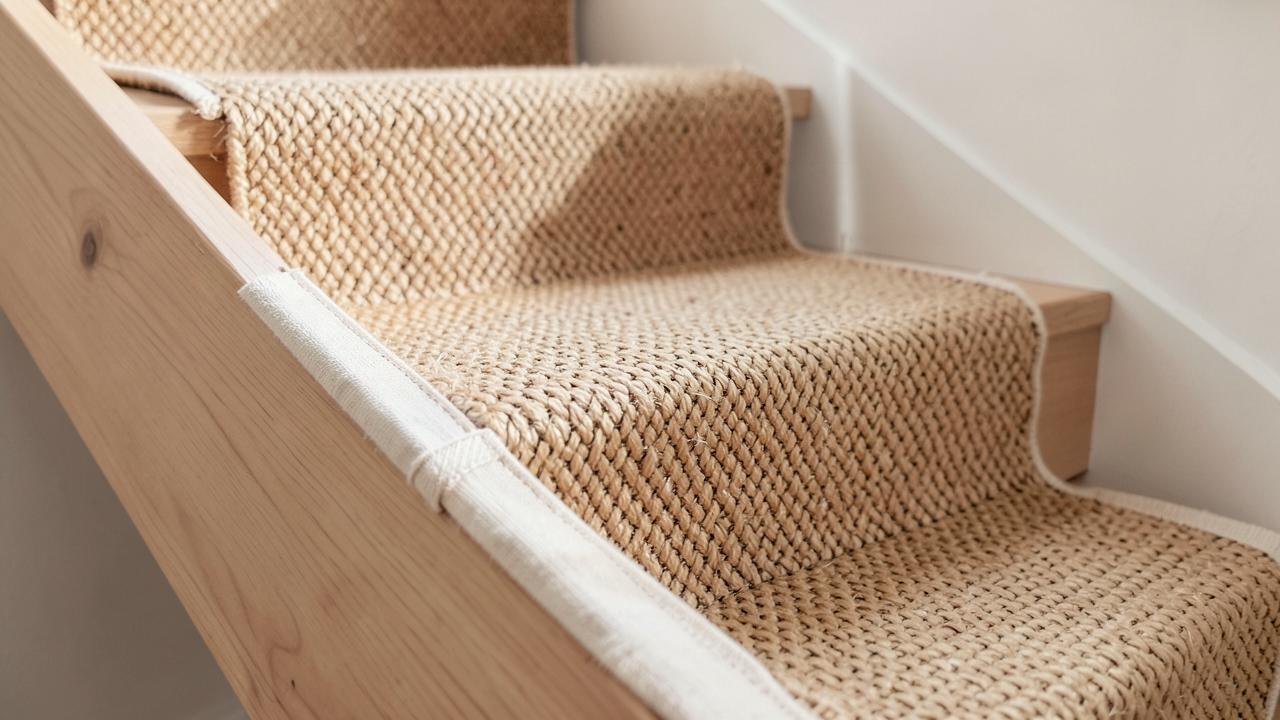 MaterialsSisal and Jute Stair RunnersNatural plant-fibre runners on stairs: durability, texture, moisture behaviour, borders and honest limitations.
- MaterialsWool Stair RunnersWhy wool holds its shape on stairs: crimp, twist, blends, staining, moths, shedding and honest limitations.
The future of flat-weave design
As modern homes become more multi-functional, the demand for flat-weave runners that balance aesthetic appeal with extreme durability is growing. We are seeing a move towards smart weaves that incorporate recycled materials and advanced stain-repellency without sacrificing the organic look of natural fibres. Furthermore, the ability to custom-weave patterns to specific stair dimensions is becoming more accessible, allowing homeowners to create bespoke runners that perfectly mirror the geometry of their winder or spiral stairs. The flat-weave is no longer just a functional choice; it is becoming a canvas for custom, structural design that will continue to evolve alongside our changing living spaces.