Installation
Adhesives for stair runner installation
While mechanical fixings are the gold standard for safety, adhesives play a crucial supporting role in a professional stair runner installation.
Written by the StairRunner.co editorial team · Updated 4 September 2026
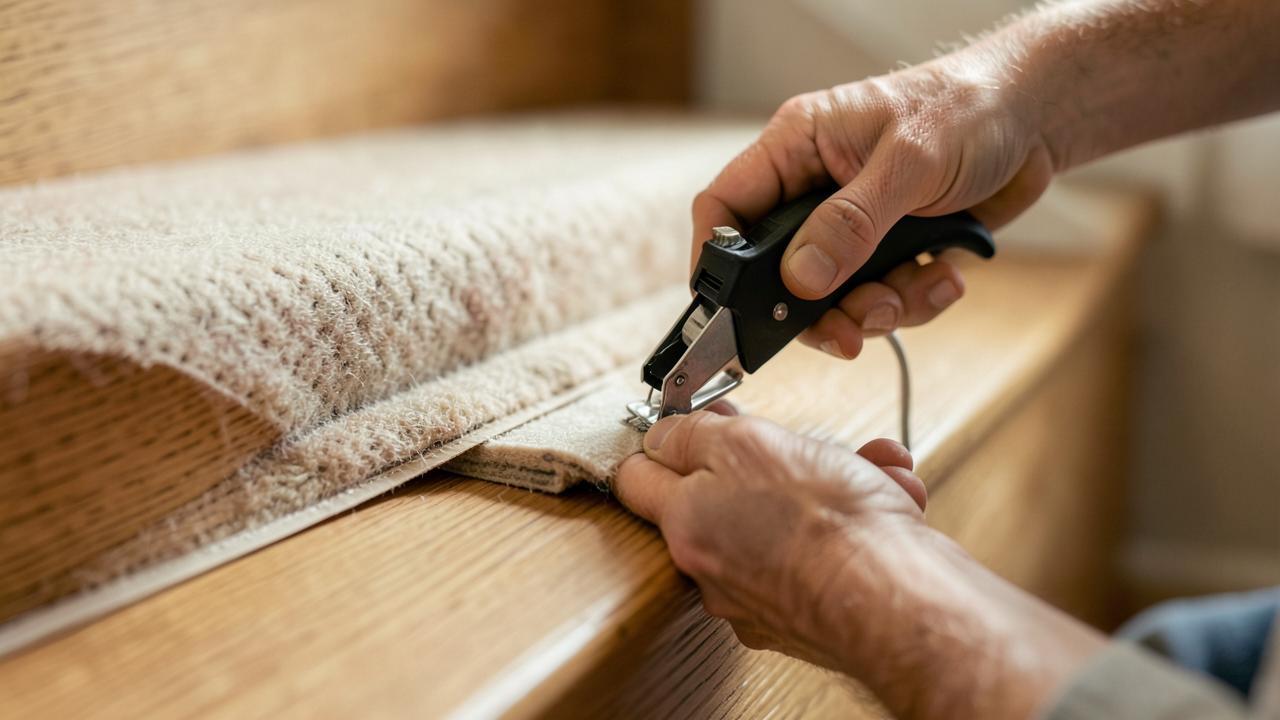
The role of adhesive in stair runner fitting
In the world of carpet fitting, adhesives are often seen as a shortcut, but in professional stair runner installation, they are a precision tool. A staircase is a dynamic environment; every step applies shear force to the floor covering. While a room carpet can rely on gravity and perimeter tension, a stair runner must be locked down to every individual step. Adhesive helps bridge the gap where mechanical fixings might be visually intrusive or structurally insufficient.
The primary use case for adhesive on stairs is not the runner itself, but the underlay. By bonding the underlay to the tread, the installer ensures that the padding doesn't shift or 'bunch up' under the runner. This creates a stable foundation for the carpet above. Without adhesive, the underlay can gradually migrate forward over the nosing, leading to a rounded, unsafe step edge.
Furthermore, adhesives are essential for finishing details. When a runner is cut to fit a landing turn or a winder, the raw edges must be sealed to prevent fraying. A small amount of specialist textile adhesive or hot glue can lock the fibers in place, ensuring the runner maintains its crisp appearance for years to come. This is particularly important for woven materials like sisal or jute, which are prone to unraveling if not properly secured at the cut points.
Types of adhesives used on stairs
| Adhesive Type | Primary Use | Pros | Cons |
|---|---|---|---|
| Spray Contact Adhesive | Bonding underlay to treads | Fast drying, easy application | Residue is difficult to remove |
| Double-Sided Tape | Renter-friendly installs | No fumes, immediate bond | Can lose grip in high humidity |
| Textile Glue | Sealing cut edges/frays | Clear finish, very strong bond | Can be messy if over-applied |
| Hot Melt Glue | Securing bindings/borders | Instant set, high strength | Visible if applied too thickly |
| Epoxy Resin | Bonding grippers to stone | Permanent, incredible strength | Non-reversible, requires mixing |
Adhesive and Stair Nosings: The High-Stress Zone
The nosing—the protruding front edge of each step—is where the most significant physical stress is applied. As a person descends the stairs, their weight is concentrated on this narrow point, pushing the runner forward and down. Relying solely on adhesive in this area is a recipe for disaster. Over time, the constant friction and pressure will cause the adhesive bond to fail, leading to what installers call "creep."
Professional fitters use adhesive on the nosing only to ensure the carpet conforms tightly to the shape of the wood. The actual strength comes from staples or grippers located just beneath the nosing or at the base of the riser. If you are using a "waterfall" installation method, the tension is held at the top and bottom of each step, but even then, a light application of spray adhesive on the nosing can prevent the runner from billowing or shifting laterally.
It is also important to consider the type of carpet backing. A latex or rubber-backed runner will interact differently with adhesives than a traditional jute-backed wool carpet. Always ensure your adhesive is compatible with the specific backing of your runner to avoid chemical reactions that could degrade the material or the bond itself.
When to avoid adhesives entirely
The biggest downside to adhesives is their permanence—or rather, the permanent damage they can do to the substrate. If you are installing a runner on high-quality hardwood stairs that you may wish to reveal again in the future, adhesive is your enemy. Most spray adhesives contain solvents that can strip the finish off oak, walnut, or pine. Even 'removable' tapes often leave a gummy residue that requires aggressive sanding to remove, potentially thinning the timber of the treads.
In these scenarios, a purely mechanical installation is preferred. By using grippers and staples, you are only leaving small holes in the wood, which are much easier to fill and blend than a large surface area of glue residue. This is a critical consideration for homeowners who view their stairs as a long-term architectural feature rather than just a functional pathway.
Additionally, adhesives should never be used as the primary fixing on the 'nosing' of the step. The nosing is where the highest amount of pressure and friction occurs. Adhesive alone will eventually succumb to the 'creep' of the carpet fibers, leading to a loose fit. Always ensure the nosing is secured by the mechanical tension provided by the gripper system.
Professional techniques: The 'Dusting' method
Expert fitters often use a technique called 'dusting' when applying spray adhesive. Instead of saturating the surface, they apply a light, even mist to both the underlay and the stair tread. They then wait for the adhesive to become 'tacky'—it should stick to a finger but not leave residue behind—before pressing the two surfaces together. This provides a strong bond without the adhesive soaking into the carpet fibers or the timber grain.
Another professional tip is to avoid spraying directly near the edges of the runner. By keeping the adhesive a few centimeters away from the visible edge, you reduce the risk of glue 'bleeding' through the weave or being visible if the runner shifts slightly. This is particularly important for light-colored or loosely woven runners like sisal.
For risers, a few small 'dabs' of hot glue can be used to hold the runner flush against the vertical surface while the installer staples the bottom into the gully. This prevents the 'hollow' sound that can occur if there is an air gap between the carpet and the riser, improving both the acoustic properties and the visual crispness of the installation.
Environmental Impact: VOCs and Sustainable Alternatives
In recent years, there has been a significant shift towards more environmentally friendly flooring products. Traditional carpet adhesives are often high in Volatile Organic Compounds (VOCs), which can contribute to poor indoor air quality and cause headaches or respiratory issues during and after installation. For families with young children or pets, choosing a low-VOC or solvent-free adhesive is a wise move.
Water-based adhesives are the most common alternative. While they take longer to dry and may not have the same "instant grab" as solvent-based sprays, they are significantly safer to use in enclosed hallways. Some installers also use specialized double-sided tapes that are designed to be low-emission, though these must be selected carefully to ensure they can handle the mechanical stresses of a staircase.
If sustainability is a priority, you might also consider mechanical-only installations. By relying entirely on high-quality grippers and staples, you eliminate the need for chemical bonding agents altogether. This not only improves air quality but also makes the eventual removal and recycling of the carpet and underlay much simpler, as they won't be contaminated with glue residue.
Seasonal Considerations: Humidity and Bond Strength
The environment in your home changes with the seasons, and these fluctuations can affect the performance of adhesives. In high-humidity environments, such as during a British summer or in poorly ventilated hallways, moisture in the air can interfere with the drying process of water-based glues. This can lead to a weaker bond or even cause the adhesive to remain tacky for far longer than expected.
Conversely, in very dry, cold winters, some adhesives can become brittle. If the wood of the staircase shrinks slightly due to the lack of moisture, and the adhesive isn't flexible enough to accommodate this movement, the bond may fail. This is why professional installers often prefer high-quality, flexible contact adhesives that are designed to withstand the natural expansion and contraction of timber.
Before beginning an installation, it is advisable to let your runner and underlay acclimate to the temperature and humidity of the hallway for at least 24 to 48 hours. This ensures that the materials are at their stable dimensions when the adhesive is applied, reducing the risk of tension issues later in the year.
DIY vs. Professional Grade Adhesives
If you are tackling a stair runner as a DIY project, you might be tempted to use whatever spray adhesive is available at your local hardware store. However, there is a significant difference between general-purpose craft sprays and professional-grade carpet adhesives. Professional products are formulated with a higher solids content, providing a stronger bond with less material.
Professional adhesives also tend to have better "tack" and a shorter "open time," which is crucial when you are trying to hold a piece of underlay in place on a vertical riser. They are also designed to be heat-resistant, which is important if your stairs are located near a radiator or in direct sunlight, where temperatures can rise significantly.
Using the wrong adhesive can lead to a variety of problems, from the runner sliding out of place to the glue failing and causing the underlay to bunch up. If you are unsure, it is always worth consulting a flooring specialist or purchasing your supplies from a dedicated carpet fitting supplier rather than a general DIY warehouse.
The History of Adhesives in Flooring
The use of adhesives in flooring has evolved dramatically over the last century. In the early 20th century, carpets were almost exclusively held down with nails or heavy tacks. The introduction of synthetic adhesives in the mid-century period revolutionized the industry, allowing for faster and more versatile installations. However, early adhesives were often incredibly difficult to remove, frequently requiring the replacement of the floorboards underneath.
Today, the focus has shifted towards "smart" adhesives that provide high strength during use but are designed to be removed more easily when the carpet's life cycle is over. Modern polymer-based glues offer a balance of flexibility and grip that was previously impossible. This evolution reflects a broader trend in interior design towards flexibility and the ability to update a home's look without causing permanent structural damage.
Understanding this history helps to appreciate why mechanical fixings remain so important. Despite all the chemical advances, the physics of a person walking down a flight of stairs hasn't changed. The sheer force applied to the runner still requires the absolute certainty of a steel staple or a wooden gripper strip to ensure safety.
The risks of 'Bleed-Through'
Bleed-through occurs when liquid adhesive is absorbed by the carpet backing and travels up through the pile to the surface. This results in hard, crusty patches on your runner that are almost impossible to clean. It is most common with thin, synthetic-backed runners and when installers use too much adhesive in an attempt to make it 'extra secure'.
To prevent this, always choose a high-tack, low-soak adhesive. These are formulated to stay on the surface of the materials rather than being absorbed. Testing a scrap piece of your runner with the adhesive before you start the main installation is the only way to be certain that your specific carpet and glue combination won't result in unsightly staining. This is particularly vital for expensive natural fibre runners where a single mistake can be a very costly error to correct.
Safety and Longevity
A runner that relies too heavily on adhesive is a liability. Over time, all adhesives degrade. Factors like temperature fluctuations, humidity, and the physical stress of foot traffic all contribute to the breakdown of the chemical bond. If you haven't used mechanical fixings, you may wake up one morning to find a section of your runner has come loose, creating a dangerous trip hazard.
For this reason, building codes in many regions and industry best practices always dictate the use of mechanical fasteners on stairs. Adhesive should be viewed as an 'extra'—a way to improve the feel and sound of the runner, but never the thing that keeps you safe. A belt-and-braces approach, using both high-quality adhesive for the underlay and robust mechanical fixings for the runner, is the only way to ensure a result that lasts for decades.
Removal and Restoration
If you inherit a house with a glued-down runner and want to remove it, you're in for some work. The first step is to carefully peel back the carpet. If it's stuck fast, a heat gun can sometimes soften the adhesive, but be extremely careful not to scorch the wood or melt synthetic carpet fibers. Use a wide putty knife to gently pry the material away, working slowly to minimize damage to the timber below.
Once the runner and underlay are gone, you'll likely be left with a patch of residue. There are specialist 'adhesive removers' available, but these are often harsh chemicals. Always test them in a hidden corner first. Sometimes, the only solution is a professional floor sander to remove the top layer of wood along with the glue, followed by a full refinishing of the staircase. This is a labor-intensive process, which is why professionals always advise caution when applying adhesive to high-quality timber stairs in the first place.
Summary: The Expert Approach
- Use for underlay: Adhesive is great for keeping padding in place and preventing it from migrating forward over the nosing.
- Never use alone: Always pair with grippers or staples for safety; adhesive lacks the structural tension required for stairs.
- Watch the residue: Consider the long-term impact on your wooden stairs and the difficulty of eventual removal.
- Seal the edges: Use small amounts of glue or textile adhesive to prevent fraying on cut edges, especially on winders.
- Ventilate well: Spray adhesives produce fumes that can be dangerous in the confined space of a stairwell.
- Test first: Check for bleed-through on a scrap piece of carpet to ensure the adhesive doesn't ruin the pile.
- Avoid the nosing: Let mechanical fixings handle the highest-stress areas to prevent the runner from shifting over time.
- Acclimatize materials: Let the runner and underlay sit in the hallway for 48 hours before fitting to reduce seasonal movement.
Adhesive is a valuable part of the installer's toolkit, but it must be used with discretion. By understanding its strengths and limitations, you can achieve a stair runner installation that is not only beautiful and quiet but, most importantly, safe for everyone in your home. For more on the mechanical side of fitting, explore our comprehensive installation guide or learn about the importance of choosing the right underlay.
Frequently asked questions
- Can I install a stair runner using only adhesive?
- It is not recommended for safety reasons. Adhesive provides surface bonding but cannot provide the structural tension that gripper and fixings offer. On stairs, a runner needs mechanical anchoring to prevent sliding.
- Will spray adhesive damage my wooden stairs?
- Yes, most contact or spray adhesives leave a sticky residue that is difficult to remove without damaging the timber finish. If you plan to return to bare wood later, avoid adhesives on the treads.
- Where is adhesive most useful on a staircase?
- Adhesive is best used to secure the underlay to the tread, or to provide extra stability on the vertical risers where tensioning is less critical but flushness is key.
- Is there a 'renter-friendly' adhesive for stair runners?
- Double-sided specialized carpet tapes exist, but they still carry a risk of residue. For a truly reversible install, mechanical fixings like staples or rods are often cleaner than adhesives.
- How long does stair runner adhesive take to dry?
- Most contact sprays are 'tack-ready' within minutes, but full bond strength can take 24 to 48 hours. During this time, minimize traffic on the stairs if possible.
- Can I use hot glue for stair runner edges?
- Hot glue is often used by professionals to secure the very edges of the runner or to bond bindings, but it should not be the primary fixing for the runner itself.
- Are there low-VOC adhesives suitable for stair runners?
- Yes, many modern water-based adhesives offer lower volatile organic compound (VOC) emissions, making them safer for indoor air quality, though they may have longer drying times than solvent-based sprays.
- Does humidity affect how well the adhesive bonds?
- High humidity can slow the drying process and affect the tackiness of contact adhesives. It is best to install your runner in a stable, dry environment to ensure the strongest possible bond.
Related guides
- InstallationHow to Install a Stair RunnerWaterfall and Hollywood methods, staples versus rods, tools, sequence and quality checks.
 MaterialsStair Runner Underlay and PaddingWhy pad choice matters more on stairs than anywhere else, and how to specify density, thickness and cut.
 InstallationPreparing Stairs for a RunnerRepairs, old fixings, decorating and curing times before anything is fitted.