Comparison
Waterfall vs Hollywood installation
Two ways of getting the same runner over the same nosing, with different consequences for how the staircase looks and how long the carpet lasts.
Written by the StairRunner.co editorial team · Updated 4 September 2026
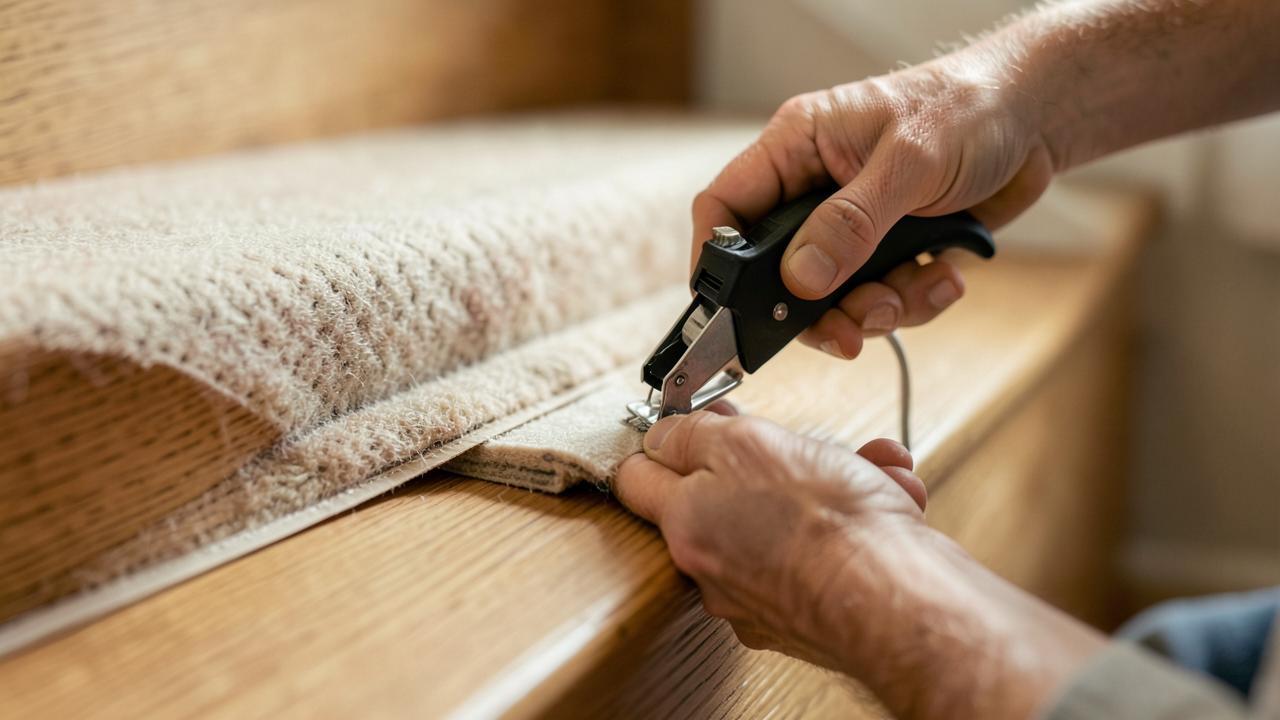
How they differ
| Factor | Waterfall | Hollywood (cap and band) |
|---|---|---|
| Profile | Soft, rounded drop from the nosing | Carpet follows the exact shape of every step |
| Support at the nosing | Unsupported span at the front edge | Fully supported against the timber |
| Material used | Marginally less | Marginally more |
| Fitting time | Faster | Slower and more skilled |
| Wear behaviour | Can crush or sag at the drop | Wear concentrates on the nosing but is evenly supported |
| Pattern behaviour | Pattern can distort across the drop | Pattern stays aligned to each step face |
| Works with rods? | Poorly | Yes |
When waterfall is the right call
- Thick, stiff carpets that resist being forced tightly into a crease.
- Casual, contemporary schemes where a softer edge suits the house.
- Square-edged treads with little or no nosing projection to wrap.
- Budget-conscious jobs where fitting hours are the constraint.
When Hollywood is the right call
- Traditional or formal staircases, and period houses.
- Any installation with stair rods or a defined crease detail.
- Patterned runners, where alignment to each step face matters.
- Pronounced bullnose or rounded nosings that benefit from being expressed.
Effect on measurement
The per-step calculation is the same in principle: tread depth plus riser height plus an allowance for the nosing. Hollywood consumes a little more at the nosing because the carpet follows a longer path around the curve, so it is sensible to keep the nosing allowance generous. Work the numbers through our length calculator and read the method in the measuring guide.
What "waterfall" and "Hollywood" actually describe
Both terms describe the same basic problem solved two different ways: how does a flat length of carpet negotiate the right-angle change of direction at every tread nosing? A runner is not stretchy in the way a woven pattern of yarns can absorb a curve, so at each step the fitter has to decide whether the carpet follows the full profile of the nosing or simply spans past it. That single decision, repeated at every step in the flight, is what gives the two methods their entirely different character from top to bottom.
The name "waterfall" comes from the visual effect: the carpet appears to fall like a sheet of water from the edge of one tread to the face of the next, without following the in-between shape of the nosing. "Hollywood", by contrast, is a decorators' term borrowed from the tailored, close-fitted look associated with older glamour interiors, where the carpet is dressed onto the stair the way fabric is dressed onto a body — following every contour rather than skimming past it.
Why the nosing is the whole story
A stair nosing is the projecting front lip of a tread, and it exists for good practical reasons: it increases the usable tread depth without lengthening the stringers, and its rounded or bullnosed shape reduces wear on the tread edge itself. But that same lip is what makes running a runner over it difficult. A rigid nosing meeting a semi-rigid carpet backing creates a crease behind the lip and a curve over the top of it, and every installation method is really just a different answer to how tightly the carpet should follow that crease and that curve.
Hollywood forces the carpet into the crease and over the curve so the tread's silhouette reads clearly through the pile. Waterfall skips the crease altogether: the carpet leaves the tread at the nosing and travels in a straight diagonal line down to the next tread, bridging the gap rather than tracing it. Neither approach is wrong; they simply produce different silhouettes and different mechanical behaviour over years of foot traffic.
How the two methods behave under foot traffic
Every staircase covering eventually shows wear, and where that wear shows first depends on how the carpet is supported. In a Hollywood installation, the carpet is backed by solid timber (or by the pad over timber) at every point along its length, including at the nosing itself. Foot pressure is transferred straight through the carpet into the structure beneath it, so while the nosing does see concentrated wear — it is, after all, where most of the foot's weight lands mid-stride — the carpet is never asked to support its own weight over a gap.
A waterfall installation is different at exactly that point. The diagonal span between one tread and the next is, by definition, not resting on anything. It is held only at its top and bottom edges, by the fixing at the crease behind and the grip of the pad on the tread below. Over time, particularly with footfall concentrated near the centre of the stair rather than the edges, that unsupported span is the part most likely to crush flat, ripple, or begin to sag away from a true diagonal. A dense, closely woven pile with a stiff backing resists this for longer than a soft, deep pile, which is one reason waterfall is often paired with firmer carpet constructions.
Reading the two methods on an existing staircase
If you are trying to work out which method was used on a runner you did not fit yourself — useful when buying a house, or when matching a repair to existing work — look closely at the nosing on a few steps. If the carpet clearly rises, wraps the rounded front edge and dips into a crease before running flat along the next tread, that is Hollywood. If instead the carpet appears to leave the tread at a fairly sharp angle and travel in a straight diagonal without touching the intervening nosing shape, that is waterfall. It is often easier to see from the side, standing a few steps back, than by looking straight down at the stairs.
Cost and labour, realistically
Neither method changes the price of the carpet itself, since both consume broadly the same width of runner. Where they diverge is in length and labour. Hollywood's wrap around each nosing takes a slightly longer path than a straight diagonal, so across a long flight the cumulative extra length can be meaningful, and a quote that assumes waterfall will under-order if the fitter later switches to Hollywood on site. Labour differs more sharply: working the carpet cleanly into a crease at every step, keeping the wrap even and the tension consistent, takes longer and rewards experience, whereas a waterfall drop is close to the same repeated action at every step and is more forgiving of a slightly uneven pull.
Matching the method to the staircase style
Beyond wear and cost, the two methods simply look different, and the right choice often comes down to the character of the house rather than any technical argument. A grand, traditional staircase with turned balusters, a polished handrail and painted stringers generally calls for Hollywood: the crisp definition at each nosing echoes the formality of the joinery around it, and it is the finish most associated with period townhouses. A contemporary staircase with a simple open string, or a house with a pared-back, informal feel throughout, can suit the softer waterfall line, especially where the runner itself is plain rather than patterned.
Colour and pile also play a part. A short, dense pile in a solid colour reads well either way. A long or textured pile tends to disguise the sharper geometry that Hollywood produces and can look slightly untidy pulled tightly into a crease, so it often suits waterfall better. Consult our guide to runner materials and pattern choice before settling the installation method, since the three decisions are genuinely linked rather than independent.
Common myths
- "Waterfall is the budget option and Hollywood is the premium one." Not reliably true — the difference is mostly labour time and slightly more material for Hollywood, not a quality tier. Plenty of expensive runners are fitted waterfall by design.
- "You can always switch methods later without refitting." You cannot. Changing method means unpicking the fixings at every crease and refitting from scratch; it is effectively a new installation.
- "Hollywood always looks better." It looks more tailored, which is not the same as better for every house. On some contemporary schemes a crisp Hollywood edge can look fussier than the staircase calls for.
Questions worth asking a fitter
- Which method is priced in this quote, and is that reflected in the material allowance?
- How will the chosen method handle any winders or the landing at the top of the flight?
- What pad thickness and firmness do they recommend for the method being used?
- Can they show a photograph of the same method on a staircase with a similar nosing profile?
Frequently asked questions
- Can I change from waterfall to Hollywood later?
- Only if you have enough excess length. Because Hollywood uses more material to wrap the nosing, a runner fitted waterfall will be too short to be refitted as Hollywood unless there was a significant amount (usually 30-50cm) left at the top or bottom.
- Does one method show dirt more than the other?
- The Hollywood method creates a crease where dust and pet hair naturally collect, requiring more targeted vacuuming. The waterfall method has no such trap, but dirt can accumulate on the unsupported underside of the drop if it is not cleaned occasionally.
- What is a waterfall stair runner?
- In a waterfall installation the runner runs off the edge of the tread and drops straight down to meet the next tread, without being pressed into the crease behind the nosing. It creates a soft, rounded edge and uses slightly less material.
- What is the Hollywood method?
- In a Hollywood — or cap-and-band — installation the runner is wrapped tightly over the nosing and pushed into the crease at the back of each tread, so the shape of every step reads clearly through the carpet. It is the more tailored and more common professional finish.
- Which lasts longer?
- Hollywood generally wears better because the carpet is held firmly against the substrate everywhere, so there is no unsupported span to flex. A waterfall drop is unsupported at the front edge and can crush or sag over time, particularly with a soft pile.
- Can you use stair rods with either?
- Rods suit Hollywood installations, where there is a defined crease for the rod to sit in. On a waterfall the runner does not enter the crease in the same way, so rods look and fit awkwardly.
- Does the method affect padding or underlay choice?
- Not directly, but a firmer pad suits Hollywood because it supports the carpet right up to the nosing, while a slightly softer pad can help a waterfall drop feel cushioned rather than stiff. See our underlay guide for the trade-offs.
- Is one method more expensive to buy carpet for?
- Material cost per metre is the same; what changes is how much length the job consumes. Hollywood's wrap around each nosing uses a touch more length per step, which on a long flight can add up to a visible difference in the total order.
- Can a fitter mix the two methods on one staircase?
- It is possible but rarely advisable. A change of method partway down a flight is visible and reads as inconsistent. If a transition is unavoidable — for example where a straight flight meets a landing with a different nosing profile — plan it deliberately rather than letting it happen by default.
Related guides
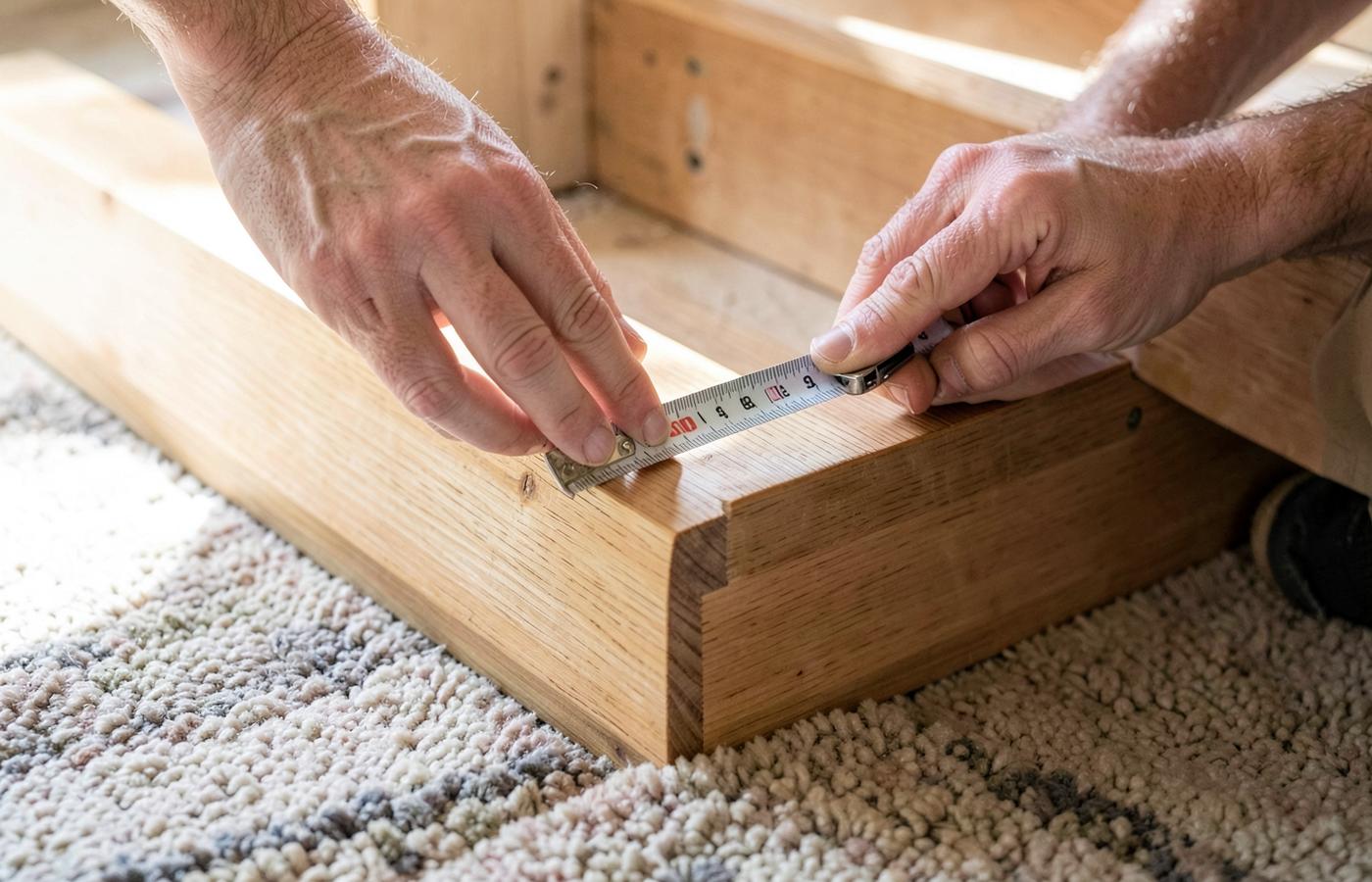 MeasurementHow to Measure for a Stair RunnerThe tread-plus-riser formula, waste allowance, winders and landings, plus a calculator that shows its working.
- InstallationHow to Install a Stair RunnerWaterfall and Hollywood methods, staples versus rods, tools, sequence and quality checks.
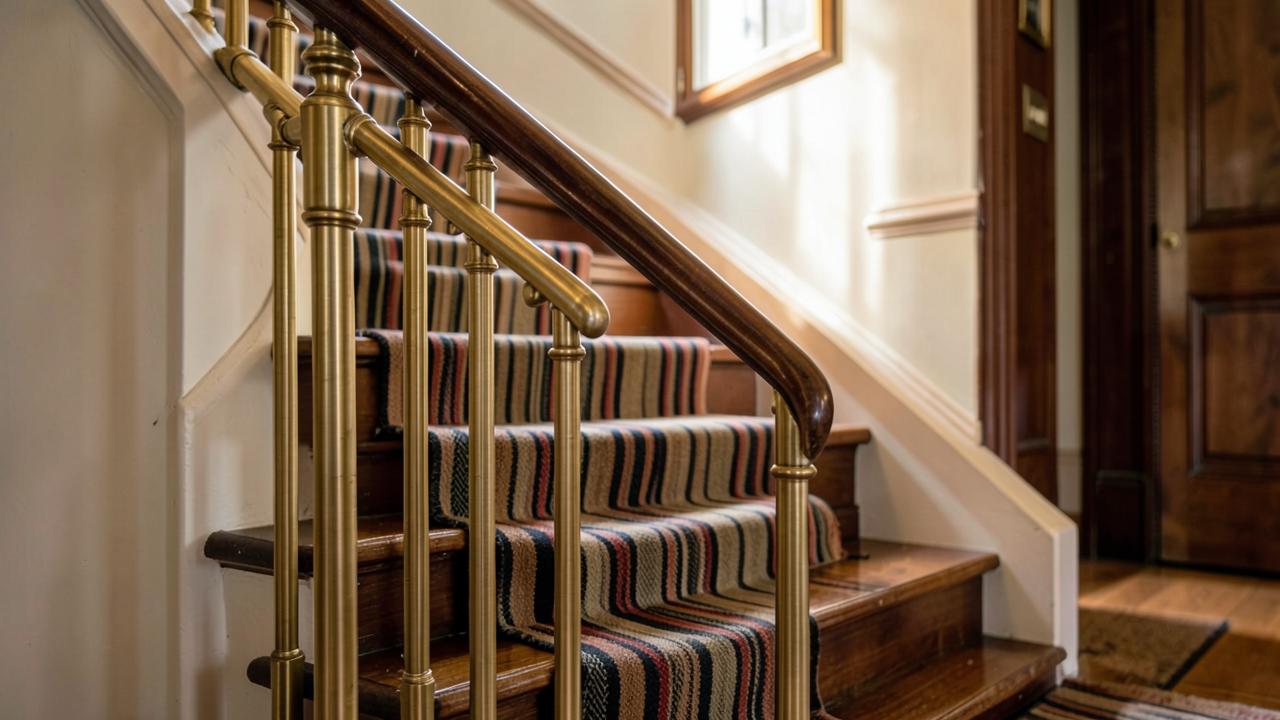 InstallationStair Rods, Clips and Runner HardwareHow stair rods, clips, brackets and bars actually work, when they hold a runner and when they are decorative.
- InstallationDIY Stair Runner InstallationAn honest assessment of doing it yourself: skills, tools, time, safety and the jobs worth handing over.
Impact on stair geometry and clearance
A factor often overlooked when choosing between these two methods is "toe clearance." On staircases with shallow treads, every centimetre of space matters. The Hollywood method, by wrapping the carpet tightly back under the nosing, preserves the original geometry of the step. The waterfall method, however, creates a diagonal "bridge" that effectively cuts off a small triangle of space behind the nosing. While this rarely affects the safety of a descent, it can occasionally lead to toes catching the back of the carpet during a fast ascent. If your stairs are already on the limit of building regulations for tread depth, the Hollywood method is the safer choice to maintain maximum usable space.
Cleaning the crease: A maintenance perspective
The "crease" created by a Hollywood installation is the primary site for dust and grit accumulation. Over time, this grit can act like sandpaper, wearing down the carpet fibres at the point where they are under the most tension. Maintaining a Hollywood runner requires a vacuum with a specialized crevice tool or a handheld stair cleaner to ensure the junction is kept clear. The waterfall method is significantly easier to maintain with a standard upright vacuum, as the brush roll can easily reach the entire walking surface without being blocked by the nosing. For high-traffic households with pets, the ease of cleaning a waterfall runner can often outweigh the aesthetic benefits of a Hollywood wrap.
A note on pile direction and light
The way light hits a staircase changes depending on the installation method. Because Hollywood changes the angle of the carpet twice (once at the nosing and once at the crease), it creates distinct bands of light and shadow on every step. This can make a plain runner look much more textured and interesting. Waterfall installations provide a much more uniform reflection of light, which can sometimes make a staircase look "flatter" or less defined. If you have chosen a runner with a slight sheen or a velvet-like pile, the Hollywood method will emphasize the "shimmer" of the material as you move past it, whereas waterfall will maintain a more consistent, matte appearance.