Introduction
What is a stair runner?
A stair runner is more than a narrow strip of carpet. It is a calculated intersection of architecture, safety, and textile design that transforms a utilitarian flight into a focal point.
Written by the StairRunner.co editorial team · Updated 4 September 2026
The anatomy of a stair runner
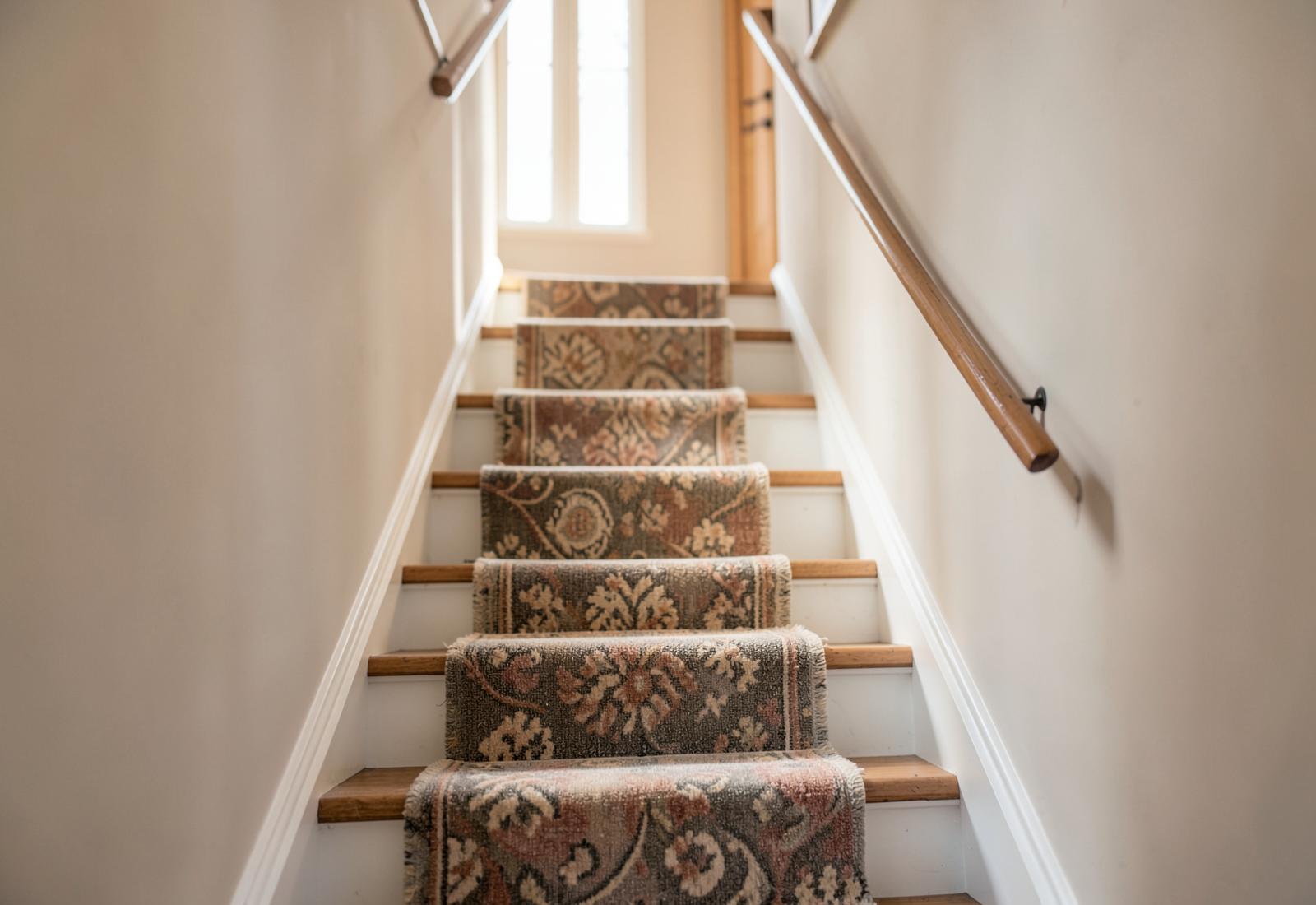
To understand what a stair runner is, one must first understand the anatomy of the staircase it inhabits. A runner is a textile system designed to navigate a series of horizontal treads and vertical risers. Unlike a rug, which sits flat on a floor, a runner is a three-dimensional installation. It flows over the nosing—the protruding edge of the tread—and tucks into the crotch, which is the 90-degree angle where the riser meets the next tread.
The width of a runner is its most defining characteristic. While a standard staircase might be 90cm to 100cm wide, a runner typically occupies between 60cm and 75cm of that space. This creates the "reveal"—the visible portion of the staircase structure that frames the carpet. This reveal is essential to the aesthetic; it allows the craftsmanship of the timber or the crispness of a painted finish to complement the texture of the fabric.
A runner is also defined by how it ends. At the top of the flight, it might finish flush with the top nosing, or it might transition into a matching landing carpet. At the bottom, it can end in a simple "turn and tack" against the bottom riser, or flow out onto the floor in a "puddle" or a shaped mitre. Each of these choices changes the definition of what the runner is within the context of the room.
Defining characteristics and terminology
| Component | Definition | Function |
|---|---|---|
| The Reveal | The exposed area of the stair tread on either side of the runner. | Aesthetic framing and showing off the staircase material. |
| Binding/Border | The finished edge of the runner, often in a contrasting fabric. | Prevents fraying and adds a decorative accent. |
| Nosing | The front edge of the step where the carpet bends. | The highest wear point of the runner. |
| Waterfall vs Hollywood | Methods of installation over the nosing. | Determines the visual silhouette of the carpet on the steps. |
| Selvedge | The self-finished edge of a woven runner. | Ensures durability without needing additional binding. |
| Crotch | The internal angle where a riser meets a tread. | Where the runner is most securely fastened. |
The historical context of the runner
Historically, stair runners were a mark of status and practicality in grand Victorian and Edwardian homes. In an era before central heating, large stone or timber staircases were notoriously cold and noisy. The runner was introduced to dampen the sound of heavy boots and provide a layer of insulation. Because the stairs in these homes were often made of high-quality hardwoods like oak or mahogany, owners did not want to hide the expensive timber entirely under wall-to-wall carpet. The runner allowed the wood to be seen while providing comfort where the foot actually landed.
Throughout the 20th century, the popularity of the runner waxed and waned with the trends of interior design. In the mid-century period, wall-to-wall carpeting became the symbol of modern luxury and comfort, often hiding beautiful original staircases. However, the last two decades have seen a significant resurgence in the stair runner. This is driven by a renewed appreciation for original architectural features and a move toward more flexible, layered interior design.
In modern interior design, the runner has evolved from a purely functional necessity into one of the most powerful tools for defining the character of a hallway. It serves as a visual bridge between the ground floor and the upper levels, often acting as the first piece of "art" a visitor sees when entering a home.
Why choose a runner over full-width carpet?
The decision between a runner and full-width carpet usually comes down to three factors: aesthetics, architecture, and maintenance. From an architectural perspective, a runner highlights the structure of the stairs. If you have spent time and money restoring original floorboards or painting your stairs in a bold color, a runner is the only way to enjoy that work while still having the benefits of carpet.
Full-width carpet, by contrast, can often "blunt" the architectural impact of a flight of stairs. It hides the stringers (the sides of the staircase) and the nosing profile. A runner celebrates these details. Furthermore, a runner allows for more adventurous design choices. A bold pattern that might feel overwhelming on a full room of carpet often feels "contained" and sophisticated when used as a runner framed by wooden margins.
In terms of maintenance, runners offer a unique advantage. The edges of a staircase are rarely walked upon; all the wear happens in the center. By using a runner, you are placing the durable material exactly where it is needed. Furthermore, because a runner is narrower, it can often be easier to deep-clean or even replace than a full-width carpet that is tucked under the skirting boards. For more on the comparison, see stair runner vs carpet.
Materials commonly used for runners
Because runners are subject to intense vertical pressure and "scuffing" on the risers, the choice of material is critical. Not all carpets are suitable to be cut into runners.
- Wool: The gold standard. It is naturally resilient, fire-retardant, and has a "bounce back" quality that prevents the pile from flattening permanently. Wool is also naturally soil-resistant due to the lanolin in the fibres.
- Sisal and Jute: Plant-based fibres that offer a rustic, architectural look. They are incredibly tough but can be slippery if not treated, and they are less forgiving under bare feet. They are excellent for creating a "natural" or "organic" aesthetic.
- Polypropylene: A synthetic alternative that is highly stain-resistant and cost-effective. Ideal for households with pets or small children where spills are frequent. Modern versions can mimic the look of wool remarkably well.
- Nylon: Perhaps the most durable synthetic, often used in commercial settings but increasingly popular in busy homes for its wear resistance and ability to hold vibrant colours without fading.
- Flatweave: A construction method rather than a fibre, flatweaves have no pile. This makes them extremely low-profile and stable, but they require a very high-quality underlay to provide comfort.
The role of decorative borders
One of the defining features of a custom stair runner is the border. Unlike standard carpet, which ends at a wall, a runner has two exposed edges. These edges must be finished. "Whipping" is a process where yarn is wrapped tightly around the edge to seal it. This is often done in a matching colour to make the edge disappear.
However, many homeowners opt for a "taped" or "bound" edge. This involves sewing a strip of fabric—cotton, linen, leather, or even faux-suede—over the edge. This border usually adds about 1cm to 3cm of width to each side of the runner and provides a crisp, tailor-made finish.
A contrasting border can completely change the look of a runner. A neutral wool runner with a slim black cotton border creates a modern, graphic look. The same runner with a wide, patterned border can lean towards a traditional or bohemian style. This customisation is what makes the runner a favourite of interior designers. It allows for the coordination of the runner with other elements in the home, such as the colour of the walls or the finish of the bannister.
Safety and sound: The practical side
Beyond the looks, a runner is a safety feature. Bare wooden stairs, especially when polished or waxed, can be incredibly slippery. This risk is amplified for children, the elderly, or pets. A runner provides a high-friction surface that makes the ascent and descent much safer. The presence of a runner also provides a clear visual path, which can help those with visual impairments navigate the stairs more confidently.
Acoustics are the other major practical benefit. A staircase acts like a drum; the hollow space beneath the treads amplifies the sound of footsteps. In a busy house, the "thud-thud-thud" of people moving between floors can be disruptive. A runner, combined with a high-quality underlay, acts as a silencer, absorbing the impact energy before it can resonate through the house structure. This is particularly noticeable in older houses with thinner floorboards.
The impact of installation styles
How a runner is fitted determines its final character. The "Waterfall" method is the most common: the carpet flows from the nosing down to the next tread without being fastened to the riser. This creates a clean, modern look and is often easier to install. It also allows for the runner to be "shifted" slightly over time to distribute wear on the nosings.
The "Hollywood" (or contoured) method involves wrapping the carpet tightly around the nosing and stapling it to the riser before continuing to the tread. This emphasizes the shape of the stairs and is often considered more traditional and tailored. It is more time-consuming to install and requires a very skilled fitter to ensure the tension is even across the whole flight.
Then there are stair rods. Historically, these held the runner in place. Today, they are decorative, but they add a layer of luxury and "finish" that few other interior details can match. They come in brass, chrome, wood, and black iron, allowing you to match them to your door hardware or lighting fixtures. A stair rod acts as the "jewellery" of the staircase.
Design considerations for small spaces
Many homeowners worry that a runner will make a narrow hallway feel smaller. In reality, the opposite is often true. Because a runner creates long, vertical lines, it can draw the eye upward, making the ceiling feel higher and the flight feel longer. A striped runner is particularly effective at this, creating a sense of momentum and direction.
Choosing the right width is essential here. Too wide, and the runner looks like a poorly fitted carpet; too narrow, and it looks like a ribbon. The general rule of thumb is to leave a 5cm to 10cm margin on either side, but this can be adjusted based on the specific proportions of your flight. A very narrow staircase might benefit from a wider runner to provide more walking surface, while a grand, wide staircase might look better with a more generous margin to show off the wood. For more on this, see choosing the right width.
Longevity and wear patterns
A stair runner is perhaps the hardest-working piece of textile in your home. Every time you walk up the stairs, your heel strikes the nosing with significant force. Over time, this can lead to flattening or "shading." Understanding this is part of understanding what a runner is. It is a living part of the home that will develop a patina of use.
To maximise longevity, one should look for a high "tuft density." This refers to how closely the individual loops or cut fibres are packed together. The denser the carpet, the less the fibres can move and rub against each other, which is the primary cause of wear. Regular maintenance, including vacuuming with the correct attachments, is also vital. You can read more about this in our maintenance guide.
Environmental and health factors
In the modern home, the materials we bring inside matter. Many wool runners are naturally sustainable and biodegradable. They also act as natural air filters, trapping dust and allergens in the fibres until they are vacuumed away, rather than letting them circulate in the air as they would on a hard wooden surface.
However, synthetic runners have their own benefits, particularly regarding moisture resistance and ease of cleaning. When choosing a runner, consider the VOC (Volatile Organic Compound) emissions of the backing and the adhesives used during installation. A high-quality installation will prioritise health as much as durability, ensuring that the home remains a healthy environment.
The importance of lighting the runner
What a runner "is" changes depending on how it is lit. Because a runner is a textured surface, side-lighting from wall lights or integrated tread lights can cast beautiful shadows, highlighting the weave of a sisal or the plushness of a wool pile. Conversely, strong overhead light can wash out the details of a subtle pattern.
When planning a runner, consider how the natural light hits the flight at different times of day. A dark runner in a poorly lit hallway can create a "black hole" effect, whereas a runner with a light-reflecting fibre (like a high-quality nylon or a wool-silk blend) can help to bounce light around the space.
Psychology of the staircase
The staircase is a transitional space. It is the "non-place" between the public area of the home (the ground floor) and the private area (the bedrooms). A runner defines this transition. By adding texture and comfort, it signals a move towards the more intimate parts of the home. The softness underfoot as one climbs towards bed is a psychological cue that the day's work is over.
This is why runners are often more daring in design than the carpets in the rooms themselves. Because you only spend a few seconds on the stairs, you can afford to be more playful or dramatic. It is a space for personality that might feel too "loud" in a living room where you sit for hours.
Summary of the runner's role
In summary, a stair runner is a specialised floor covering that balances the rugged durability required for a high-traffic zone with the delicate aesthetics of interior design. It is a bridge between floors, a silencer of footsteps, and a protector of architecture. Whether it is a simple jute weave or a complex bespoke wool pattern, it is one of the most effective upgrades you can make to a home's interior.
If you are considering an installation, the next logical step is to understand the costs involved, which we cover in detail in our UK stair runner cost guide, or to start looking at material options in stair runner materials.
Frequently asked questions
- How does a stair runner differ from a standard stair carpet?
- A stair runner is a narrow strip of carpet that covers the centre of the staircase, leaving the timber or painted stairs visible at the edges. Standard stair carpet covers the entire width of the flight from wall to wall.
- What are the main components of a stair runner?
- A runner consists of the carpet body, often a decorative border or binding, the underlay (or pad) beneath it, and the fixings—which include staples, grippers, and sometimes decorative stair rods.
- Is a stair runner purely decorative?
- No, while they are a major design statement, they serve vital functions including noise reduction, protecting the wood underneath from wear, and providing essential grip to prevent slips on polished timber.
- Can any carpet be made into a runner?
- Most carpets can be cut to width and finished with a whipped or bound edge to create a runner, though some materials like sisal or flat-weaves are specifically manufactured in runner widths with finished selvedges.
- Do I need stair rods for a runner to be functional?
- No, stair rods are purely decorative in modern installations. The runner is held securely by grippers and staples; the rods are added for aesthetic reasons to bridge the junction between the tread and riser.
Related guides
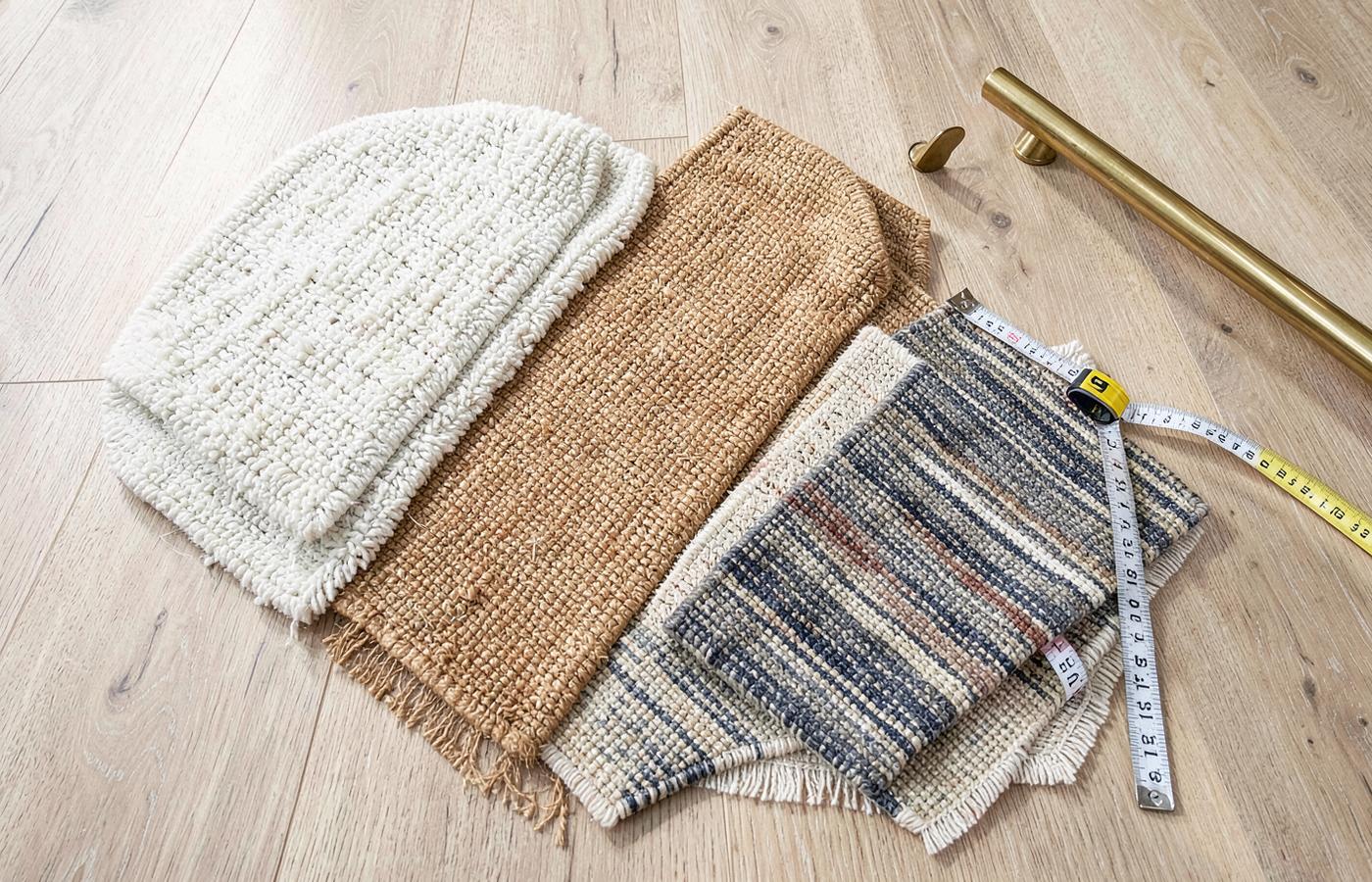 MaterialsStair Runner Materials ComparedWool, nylon, polypropylene, sisal and jute judged on stair-specific wear, comfort, cleaning and safety.
- ComparisonsStair Runner vs Full CarpetA side-by-side comparison of appearance, safety, noise, cleaning, cost and resale considerations.
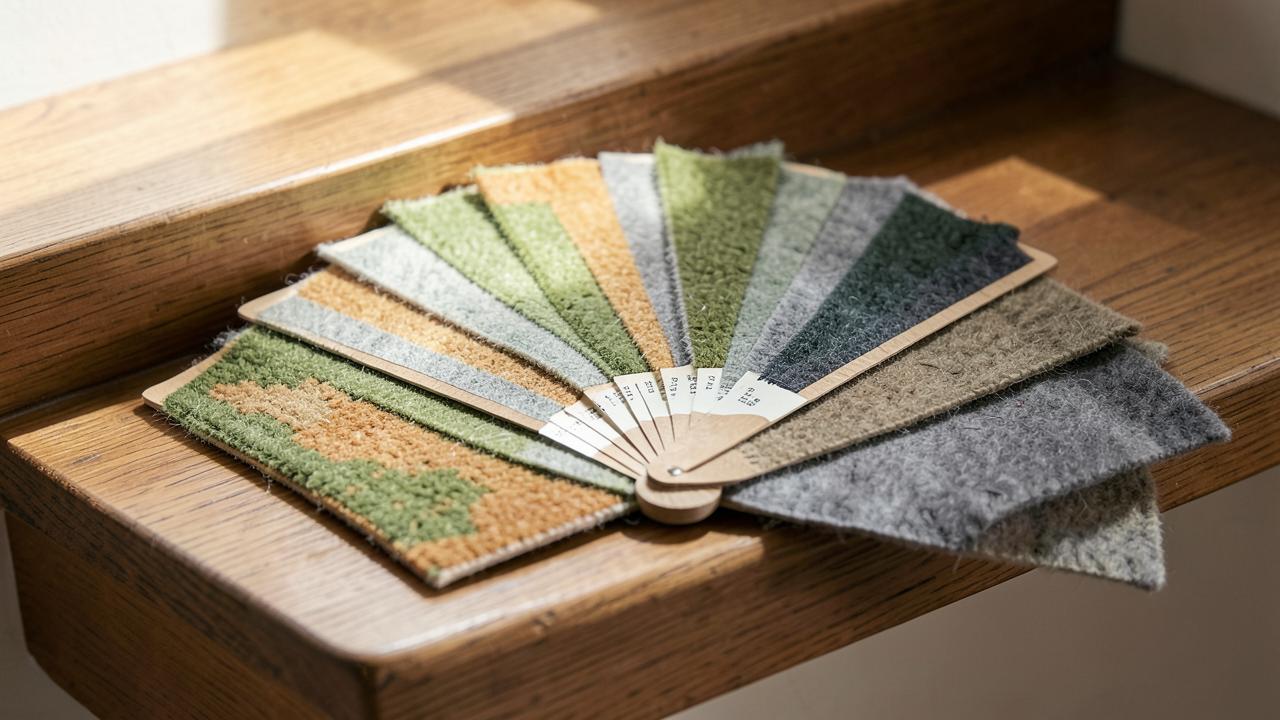 BuyingHow to Choose a Stair RunnerA decision order that starts with the staircase and ends with colour, not the other way round.