Colour Guide
The ultimate guide to blue stair runners
Blue is a colour of depth, stability, and calm. From the authoritative presence of navy to the modern edge of slate and teal, a blue stair runner can define the character of your entire entryway.
Written by the StairRunner.co editorial team · Updated 4 September 2026
The appeal of blue in transitional spaces
Blue is globally the most popular colour, and for good reason. It evokes the sky and the sea, creating a sense of expansiveness and serenity. In the context of a staircase—a space often characterised by movement and height—blue provides a stabilizing influence. It is a colour that feels permanent and reliable.
From a design perspective, blue is often treated as a "new neutral." Darker blues like navy or midnight can be used in place of black or grey to add depth without the harshness. Lighter blues can replace beige or cream to add personality without overwhelming the space. On stairs, where the runner is a long, continuous ribbon of colour, blue creates a strong architectural statement that can tie together disparate rooms.
Choosing your shade: Navy, Slate, and Teal
The performance and 'vibe' of a blue runner change dramatically depending on the specific shade and its undertones.
Navy Blue: The Timeless Classic
Navy is the most requested blue for staircases. It is professional, traditional, and incredibly practical. It hides mud, scuffs, and most spills with ease. In a Victorian or Edwardian home, a navy runner with a red or cream border is a classic look that never dates. The only downside to navy is its tendency to show light-coloured debris—think white cat hair or dried mud—which stands out against the dark background.
Slate and Steel Blue: The Modern Neutrals
These blues have a significant amount of grey in them. They are perfect for modern, minimalist, or industrial-style interiors. Slate blue is particularly effective at masking the "grey" soil that comes from everyday foot traffic. It feels cooler than navy and works beautifully with chrome or brushed steel stair rods.
Teal and Petrol: The Statement Makers
Teal (blue with a green undertone) is a vibrant, sophisticated choice. It adds a splash of colour that feels grown-up and luxurious. Teal runners look stunning against dark wood or rich terracotta walls. However, teal can be more difficult to match with other elements of the decor, so it's a choice for those who want their stairs to be a focal point.
| Shade | Dirt Hiding | Lint Showing | Best Wood Pairing |
|---|---|---|---|
| Navy | Excellent | High | Light Oak / White Paint |
| Slate | Very Good | Low | Medium Oak / Grey Paint |
| Sky Blue | Moderate | Low | Pine / White Paint |
| Teal | Good | Moderate | Walnut / Mahogany |
Light and Temperature: Avoiding the 'Cold' Hallway
The biggest risk with a blue runner is that it can make a north-facing or windowless hallway feel cold and uninviting. Blue is a cool colour by nature, and in the low, blue-ish light of a British winter, a slate or powder blue runner can look somewhat bleak.
To counter this, look for blues with "warm" undertones—those that lean slightly towards red or purple (like indigo) rather than green. Alternatively, ensure your hallway lighting uses "warm white" bulbs (around 2700K to 3000K). This adds a golden hue to the space that balances the coolness of the blue carpet.
Material Choice: How Blue Behaves in Different Fibres
The fibre of your runner will determine the 'flatness' or 'depth' of the blue.
- Wool: Wool is the gold standard for navy runners. It absorbs light, giving the blue a deep, velvety appearance. Wool also hides dirt naturally within the structure of the fibre. Check out our wool guides.
- Nylon: Nylon is excellent for vibrant blues (like royal blue or bright teal) because it can take on highly saturated dyes. It is also incredibly hard-wearing, making it perfect for the heavy traffic of a staircase. See nylon stair runners.
- Polypropylene: A cost-effective choice. Because it is plastic-based, the blue is often 'locked in' during manufacture (solution dyeing), meaning it won't fade or bleed when cleaned. Learn more at polypropylene runner benefits.
Pairing with Timber and Rods
Blue is a natural partner for wood. The orange tones in many timbers are the direct complement to blue on the colour wheel, creating a pleasing visual harmony.
With Light Oak/Pine: A navy or slate blue runner provides a sharp, modern contrast that highlights the grain of the wood.
With Dark Stains: A lighter blue or a blue with a pattern can lift a dark staircase, preventing it from feeling too heavy.
Stair Rods: For a classic look, use brass or gold-toned rods with a navy runner. The warm metal pops against the dark blue. For a contemporary look, chrome or black rods with a slate blue runner look exceptional. See stair rod options.
Patterns and Textures in Blue
If a solid blue feels too formal, consider a pattern.
Stripes: Blue and white stripes are the hallmark of the coastal or 'Hamptons' style. They are fresh and timeless. Blue and grey stripes are a more subtle, urban alternative. Explore striped designs.
Herringbone: A blue herringbone weave adds texture and interest without the busyness of a traditional pattern. It's a great way to introduce blue into a modern home.
Borders: A grey or beige runner with a navy border is a very popular "safe" way to use blue. It provides the durability of a dark edge where feet land, with the light-reflecting benefits of a pale centre.
Safety: Visual Contrast at the Nosing
One of the most important aspects of a stair runner is safety. You must be able to see where one step ends and the next begins.
A dark navy runner on dark wood can be dangerous in poor light, as the edge of the step (the nosing) disappears. If you are using a dark blue runner, consider a lighter-coloured binding or border at the edges. This creates a visual "frame" for each step, making it much easier to navigate safely. Learn more about stair safety.
Cleaning and Long-term Care
Blue runners are generally easy to live with, but they do require specific care.
- Avoid 'Optical Brighteners': Some carpet cleaners contain optical brighteners that can make blue carpet look patchy or 'neon' under certain lights. Use a pH-neutral cleaner.
- Immediate Blotting: Blue dyes, especially in wool, can sometimes 'bleed' if they get too wet. Always blot spills with a dry white cloth immediately.
- Vacuuming: If you have a dark blue runner, you may need to vacuum more often than with a beige one, simply because light-coloured dust shows up more clearly. See our cleaning advice.
Conclusion
A blue stair runner is a sophisticated, practical, and beautiful addition to any home. Whether you choose the deep authority of navy or the soft calm of slate, you are investing in a colour that offers longevity and style. By paying attention to light levels, fibre choice, and safety contrast, your blue runner will serve as a stunning focal point for years to come.
Frequently asked questions
- Is navy blue a good colour for stairs?
- Navy is one of the most popular choices for stair runners because it is incredibly durable and hides almost all dark soiling. However, it will show light-coloured lint and pet hair more than a mid-tone blue.
- What goes well with a blue stair runner?
- Blue is exceptionally versatile. It pairs perfectly with white woodwork for a nautical or crisp modern look. It also works well with grey walls or, for a bolder look, mustard yellow accents.
- Does blue carpet fade on stairs?
- If the stairs are in direct sunlight (e.g., under a large window), blue can be prone to UV fading. Choose a solution-dyed synthetic or a high-quality UV-stabilised wool to mitigate this.
- Can I use a blue runner in a small hallway?
- Yes. Lighter blues like sky or powder blue can make a space feel more open and airy. If using navy in a small space, keep the walls light to prevent the area from feeling cramped.
- How do I clean a blue stair runner?
- Regular vacuuming is key. For stains, use a cleaner appropriate for the fibre. Avoid harsh chemicals on wool as they can cause 'bleeding' of the blue dye.
- Will a blue runner fade in a sunny hallway?
- Blue pigments are traditionally more light-sensitive. To prevent fading, look for 'solution-dyed' synthetics or high-quality wools with a lightfastness rating of 5 or higher. You might also consider UV-protective film for any nearby windows.
- Can I pair a blue runner with green walls?
- Yes, this is known as an 'analogous' colour scheme. It creates a very calm, harmonious feel. The key is to ensure the tones match—for example, a teal-blue runner works beautifully with a sage-green wall, as they both share a hint of green.
Related guides
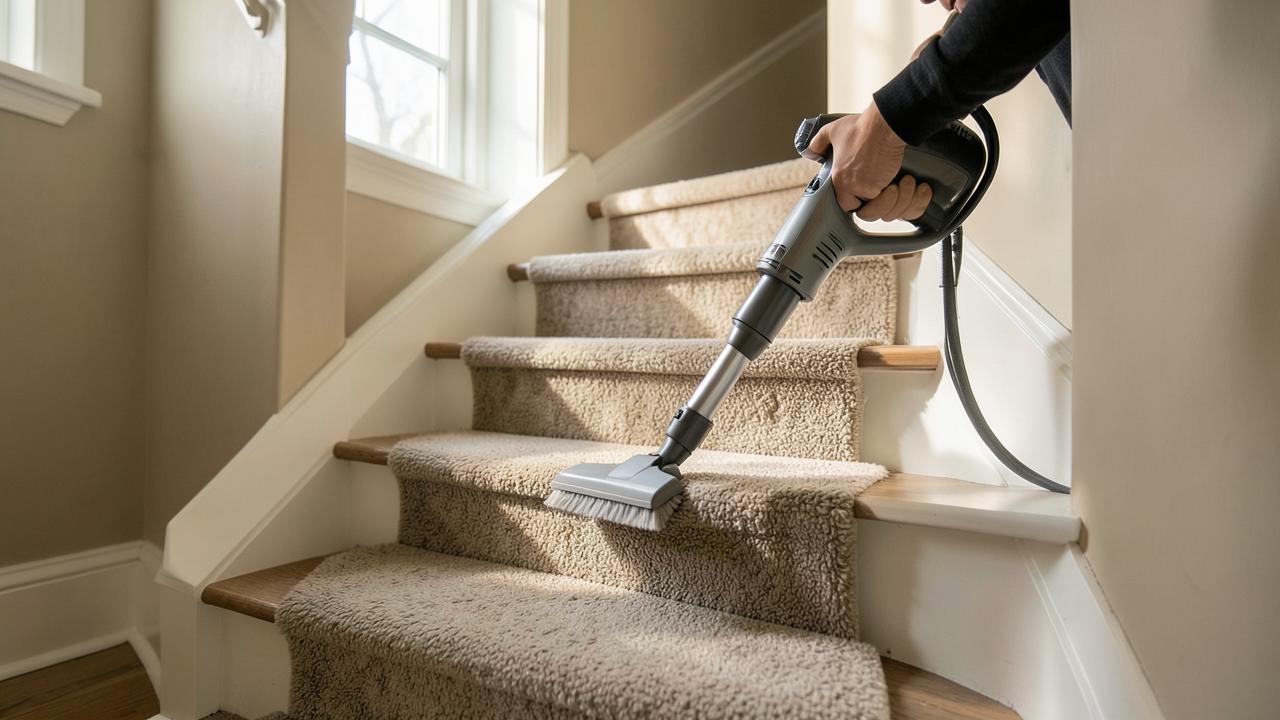 CareCleaning and Caring for a Stair RunnerRoutine vacuuming, spill response by fibre type, slipping and fraying, and when to call a professional.
- DesignChoosing a Stair Runner ColourHow light, adjacent flooring, trim colour, traffic and dirt should drive the colour decision.
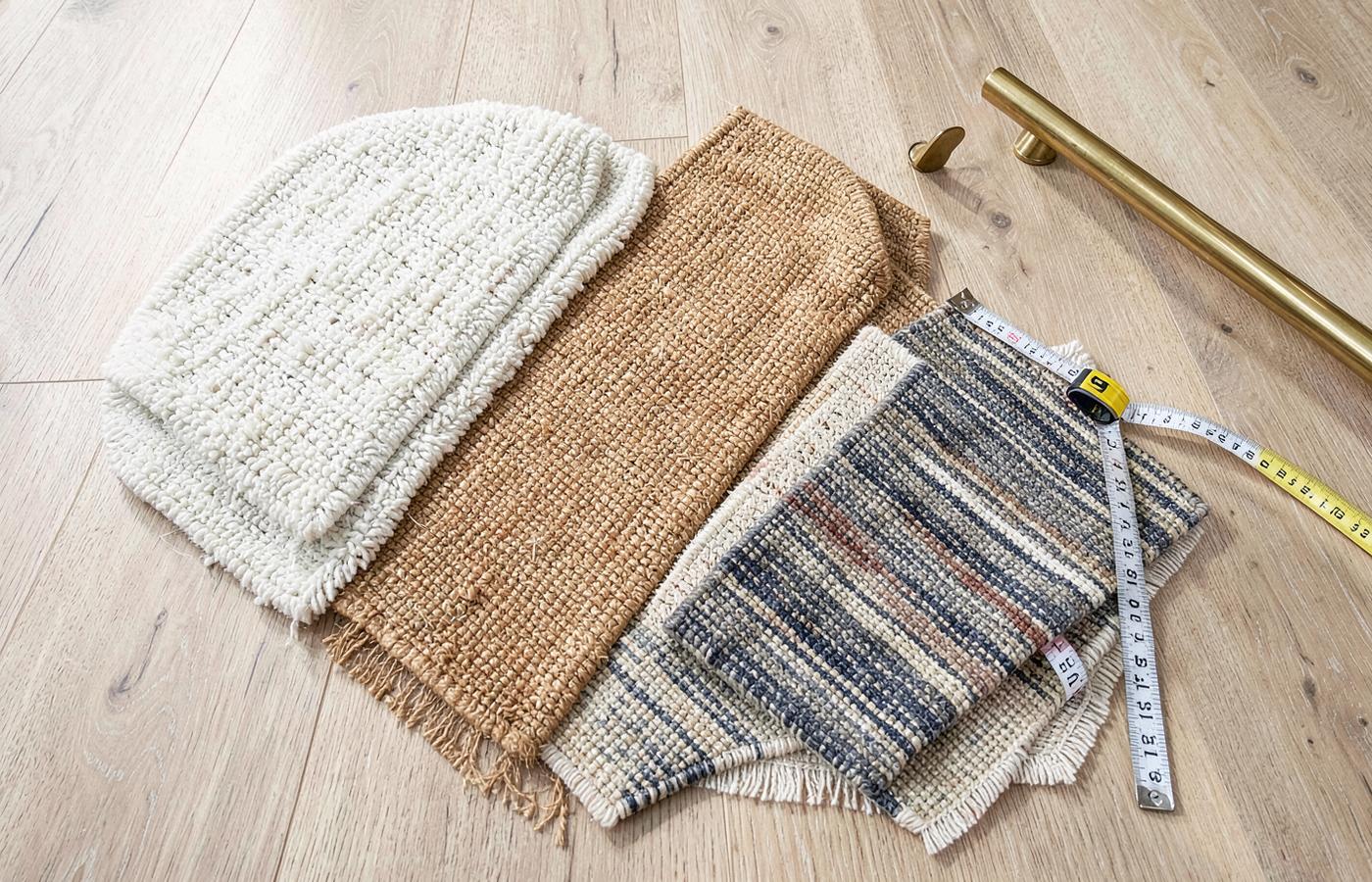 MaterialsWool Stair RunnersWhy wool holds its shape on stairs: crimp, twist, blends, staining, moths, shedding and honest limitations.
Advanced technical considerations for stair performance
Beyond colour and aesthetic, the physical performance of a runner on a staircase is a matter of engineering. The nosing (the edge of the tread) is the highest-wear point of any flight. When specifying a runner, the pile density at the nosing is what determines how long the appearance remains uniform. A high-density, low-profile weave is always superior to a loose, high-pile one, regardless of colour.
Furthermore, the interaction between the runner and the underlay is a critical, often overlooked variable. A dense, firm underlay prevents the carpet from 'ballooning' over the nosing, which not only causes premature wear to the carpet backing but also creates a trip hazard. Always pair your runner with a dedicated stair-specific underlay, never a generic 'room' underlay.
Finally, consider the 'tensile' requirements of a runner. It must be stretched tight enough to remain flat but not so tight that it places undue stress on the staples or rods. The backing material itself—whether jute, action back, or felt—will determine how well the runner retains its tension over the life of the installation. A synthetic backing generally offers better stability than a natural jute backing, which can be sensitive to humidity changes.
By focusing on these technical layers—the subfloor preparation, the nosing durability, and the tensioning strategy—you ensure the runner is not just a visual choice but a long-term architectural investment in the home.
The science of blue pigments and light absorption
Blue is a unique colour in the visible spectrum because of how it absorbs light. Darker blues, such as navy and indigo, absorb a high percentage of incoming light, which is why they look so rich and deep. However, this also means they can make a space feel smaller if not balanced with enough ambient light. The 'depth' of a blue runner is actually a result of the light being trapped within the pile. This is why wool is so successful for blue runners; the natural scales on the wool fibre diffuse the light, preventing a 'shiny' or plastic look and giving the blue a matte, velvety quality that feels sophisticated and permanent.
Blue as a functional safety feature
In many commercial and public buildings, blue is used on stairs not just for aesthetics but for safety. Blue provides a high level of visual contrast against most other building materials like concrete, stone, and wood. In a domestic setting, a blue runner—especially one with a lighter-coloured border—creates a very clear 'track' for the eyes to follow. For individuals with visual impairments or for children who are still developing depth perception, the clear boundaries of a blue runner against a wooden staircase provide vital information that helps prevent missteps. It is a rare example of a design choice that is both high-fashion and highly functional.
The 'Coastal Modern' aesthetic in British homes
The 'Coastal Modern' look has become a staple of British interior design, especially in the South and East of England. A blue stair runner is the cornerstone of this style. It evokes the feeling of a seaside retreat without the clichés of anchors and seashells. The key is in the pairing: a navy runner with a simple white or cream border, paired with light oak treads and pale grey walls. This creates a fresh, breezy atmosphere that feels clean and uplifting. It works particularly well in homes that have a lot of natural light, where the blue can truly sing rather than receding into the shadows.
Managing 'Shading' and 'Watermarking' on blue runners
Blue runners, particularly those with a plush or velvet pile, are prone to a phenomenon known as 'shading' or 'watermarking.' This occurs when the pile is pushed in different directions, causing light to reflect off the sides of the fibres rather than the tips. This creates light and dark patches that can look like water stains. While some people find this adds to the character of the carpet, others find it distracting. If you want a perfectly uniform blue, choose a low-profile loop pile or a flatweave runner, where the fibres are held more tightly in place and cannot 'shade' as easily.
Advanced styling: Blue and the 'Warm Metal' trend
One of the most effective ways to style a blue runner is through the use of metal hardware. While chrome and silver are 'safe' choices, the trend in high-end UK interiors is moving towards 'warm metals' like brushed brass, antique gold, and copper. These metals sit opposite blue on the colour wheel, creating a vibrant, high-energy contrast. A navy runner held down by heavy brass rods is a classic, 'London townhouse' look that exudes quality. The warmth of the metal prevents the blue from feeling too cold, especially in winter months, and adds a touch of metallic shine that catches the eye.