Design & Style
Striped stair runners: The definitive guide to direction, scale, and fitting
Stripes are the most transformative pattern you can put on a staircase. They can lengthen a short hall, add rhythm to a long climb, and provide a sharp, architectural focus—but they are also the most technically demanding to get right. From vertical alignment to the complexity of winder mitring, this guide covers the engineering and aesthetics of the striped stair.
Written by the StairRunner.co editorial team · Updated 4 September 2026
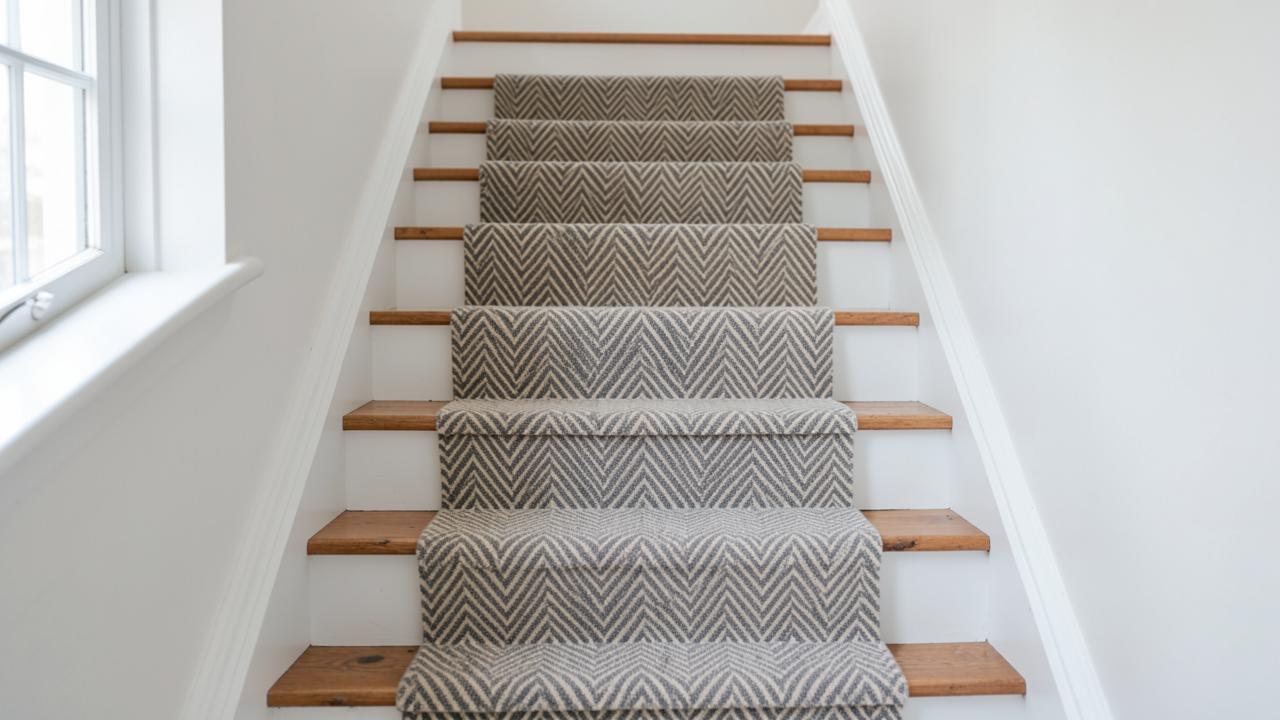
The Psychology of the Stripe in Interior Design
The appeal of the stripe is timeless and rooted in how the human eye processes information. A stripe is essentially a vector—a line with direction. On a staircase, these lines provide a subconscious map of the climb. From the classic 'ticking' stripe that evokes a heritage coastal feel to the bold, oversized architectural stripes used in modern interior design, this pattern brings a sense of order and movement to a vertical space. However, because the staircase is a series of three-dimensional planes—treads, risers, and nosings—the way a stripe behaves is far more complex than it is on a flat room carpet.
In a narrow Victorian hallway, stripes can be the difference between a space that feels cramped and one that feels elegantly tall. By leading the eye upward, stripes break the horizontal plane of the floor and connect the levels of the home with a single, continuous visual thread.
The visual impact of stripe scale
The width of the stripes—known as the scale—dictates the 'mood' of the staircase. Small-scale stripes (pinstripes or multi-stripes) tend to read as a texture from a distance. They are energetic and can hide small marks or lint effectively. Large-scale, bold stripes are statement pieces; they define the staircase as the primary architectural feature of the home.
| Stripe Width | Visual Effect | Best Suited For | Maintenance Level |
|---|---|---|---|
| Pinstripe (1-5mm) | Reads as a textured solid; very subtle. | Quiet, sophisticated spaces. | Low - hides lint well. |
| Multi-stripe (various) | High energy, rhythmic. | Busy family homes. | Very Low - hides everything. |
| Mid-scale (2-5cm) | The classic runner look; balanced. | Traditional townhouses. | Moderate. |
| Bold/Block (10cm+) | Highly architectural; creates a focal point. | Modern, open-plan homes. | High - shows misalignment. |
Direction and Flow: Why vertical is king
In almost every installation, stripes run vertically—straight up the flight. This is not just a matter of tradition; it is a practical necessity. Carpet is manufactured in long rolls, and the pattern typically runs the length of the roll (the warp). To have stripes running horizontally across the stairs would require cutting the carpet into many small strips, resulting in hundreds of seams and a very high risk of the pattern looking 'broken' at every nosing.
Vertical stripes act like a visual ladder. They draw the eye upward, which can be particularly effective in dark or low-ceilinged hallways. By emphasizing the verticality of the climb, they make the space feel more significant. You can learn more about how pattern affects perception in our guide to stair runner patterns.
Furthermore, vertical stripes are safer. They provide a clear visual indicator of the direction of travel. Horizontal stripes can sometimes create a 'false floor' effect where the depth of the tread is harder to judge, particularly for those with impaired vision or in low light.
Dealing with Winders and Turns: The Fitter's Challenge
The most significant challenge with striped runners occurs when the staircase turns. On a standard straight flight, the stripes simply run from top to bottom. On a winder (a triangular step used to turn a corner), the inner edge of the carpet is shorter than the outer edge. This creates a geometric impossibility: you cannot have the same length of stripe on the left as on the right without the pattern distorting.
There are three main ways professional fitters handle this complex geometry:
1. The Fanned Pivot
The carpet is slightly fanned across the winder. This means the stripes stay continuous but will 'kick' at an angle where the straight flight meets the winder. The stripes will no longer be parallel to the stair strings on the winder itself, but they will remain unbroken. This is the most common method and is generally acceptable for multi-stripes.
2. The Mitre (Pattern Matching)
The carpet is cut and joined at a specific angle (usually where the winder meets a landing or another step) to create a sharp corner where the stripes meet at a 90-degree or 45-degree angle. This looks incredibly professional—similar to how a picture frame is joined—but it requires significant extra material and a master fitter. It is the gold standard for bold, block stripes.
3. The Landing Break
The runner stops at a half-landing and restarts on the next flight. This avoids the need to match stripes around a curve but requires a clean finish at the landing edge. This is often the best choice for DIYers or for very complex 'kite' winders where a mitre is physically impossible.
For more on managing corners, see our detailed guide on installing runners around corners.
Materials and Texture: Choosing the Right Weave
While you can find striped patterns in almost any carpet type, the construction of the carpet significantly affects how the stripes look and wear.
Wool Flatweave: The Designer's Choice
Flatweave is the 'pure' choice for stripes. Because it has no pile (the loops or cut ends of the yarn), the pattern is created by the structure of the weave itself—the intersection of the warp and weft. This results in incredibly sharp, crisp lines that do not 'blur' over time. Wool flatweave is naturally resilient, fire-retardant, and sustainable. However, flatweave provides less 'cushion' than pile carpets, so a high-quality, high-density underlay is essential to prevent the carpet from feeling 'thin' and to protect the weave from the hard edges of the stairs.
Wilton and Axminster Woven Pile
These are traditional 'luxury' carpets where the pattern is woven into a cut pile. Stripes in pile carpets are slightly softer at the edges—the 'bleeding' of the yarn ends means you don't get the razor-sharp definition of a flatweave, but you do get a much softer feel underfoot. This is often preferred in homes where people walk in socks or barefoot, as it provides more warmth and sound insulation.
Polypropylene and Synthetic Blends
For high-traffic areas or homes with pets, synthetic striped runners offer excellent stain resistance and durability. Modern synthetics can mimic the look of wool flatweave very closely but are 'bleach cleanable'. The trade-off is often a slightly more 'plastic' sheen, though high-end versions have overcome this.
Colour Theory for Striped Runners
When choosing colours for a striped runner, you are not just choosing one colour, but a relationship between colours.
- High Contrast (e.g., Black/White, Navy/Cream): Very dramatic and architectural. It creates a strong 'graphic' look. However, it shows every speck of dust and lint. It works best in homes with a minimalist or 'Hamptons' aesthetic.
- Tonal (e.g., Grey/Charcoal, Beige/Tan): Different shades of the same colour. This is the most sophisticated and forgiving option. It provides the rhythm of a stripe without the visual 'noise' of high contrast. It hides soil and wear exceptionally well.
- Multi-Coloured (e.g., The 'Rainbow' or 'Zebra' stripe): Using multiple vibrant colours. This is a bold choice that can tie together different rooms. It is excellent for busy family homes as the variety of colours hides almost any stain.
For a broader look at colour choices, visit our guide on stair runner colours.
Installation Considerations: Getting it Straight
A striped runner is not a DIY project for the faint-hearted. The alignment requirements are extreme.
- Subfloor Preparation: Any lumps, old staples, or unevenness in the stairs will distort the stripe as it passes over them. Stairs must be clean and level. See preparing stairs.
- Underlay: Use a firm, high-density underlay (e.g., 9mm or 11mm crumb rubber or high-density foam). Soft underlay allows the carpet to move too much, which can cause the stripes to shift out of alignment over time as people walk on them. Check out our underlay guide.
- Gripper Placement: Grippers must be perfectly parallel to the risers to ensure the carpet starts and ends straight. If a gripper is off by just 2mm, the stripe will look crooked against the side of the stair.
- Width Consistency: When ordering a striped runner, ensure the width is consistent throughout the roll. Handmade or natural fibre runners can sometimes vary by a few millimetres. See choosing the right width for more tips.
The 'Nosing' Problem
The most visible part of a stair runner is the nosing (the front edge of the step). On a striped runner, the stripes must pass over this edge perfectly vertically. If the runner is slightly twisted, the stripes will appear to 'lean' as they go over the edge. A good fitter will use a 'bolster' tool to firmly tuck the carpet into the crook of the stair (where the tread meets the riser) to ensure the vertical lines are locked in place.
Maintenance and Longevity of Striped Runners
Stripes require a specific vacuuming approach. To prevent the pile from flattening in a way that distorts the pattern, vacuum 'with' the stripes (vertically) rather than across them. This helps keep the lines crisp and prevents the yarn from 'shading' in a way that makes the stripes look blurry.
If a spill occurs, blot it immediately. On a striped runner, a stain that crosses two different colours can be harder to hide than on a mottled or plain carpet. Avoid using harsh chemicals that might cause one colour to bleed into its neighbour—this is particularly a risk with high-contrast wool runners. For detailed cleaning advice, see how to clean a stair runner.
Common Design Mistakes to Avoid
- Ignoring the landing: If you have a striped runner on the stairs and a plain carpet on the landing, the transition needs to be handled carefully. Using a matching border on the landing carpet can bridge the gap.
- Scale Mismatch: Using a tiny pinstripe on a massive, grand staircase can make the runner look 'busy' or 'fuzzy'. Match the scale of the stripe to the scale of the architecture.
- Poor Lighting: Stripes create shadows. If your lighting is only from one side, the stripes on that side may look different from the other. Ensure even, overhead lighting.
- Skipping the rods: While not strictly necessary for modern fitting, stair rods can help 'lock' the visual line of a striped runner at each step, adding a sense of luxury. See stair rods guide.
- DIYing without a plan: Attempting to fit a stripe without a chalk line or laser level often results in a 'snaking' runner that ruins the aesthetic of the hall.
Budgeting for a Striped Runner
Expect to pay a premium for a striped runner. This is due to three factors:
- Material Cost: High-quality striped flatweaves are often more expensive to manufacture than plain tufted carpets.
- Wastage: You will need to order more 'wastage' (usually 15-20% extra) to ensure the patterns can be matched at turns and landings.
- Labour: A fitter will likely charge 20-50% more for a striped installation than a plain one, especially if there are winders involved, as the time required to align each step is significantly higher.
Summary of Benefits and Drawbacks
| Feature | Pros | Cons |
|---|---|---|
| Visual Impact | High; creates a strong architectural focal point. Lengthens halls. | Can be 'too much' in very small, cluttered halls. |
| Maintenance | Multi-stripes hide soil very well. Clear paths for vacuuming. | High-contrast stripes show lint and dust. |
| Installation | N/A | Difficult; requires professional expertise and laser-level precision. |
| Versatility | Works in both modern and period homes. Timeless. | Hard to match with other patterns in the hall (e.g., wallpaper). |
Final Thoughts: Why Stripes Endure
Ultimately, a striped stair runner is a design statement that rewards the bold. It is one of the few patterns that successfully bridges the gap between traditional heritage and modern minimalism. By paying close attention to the scale, the material, and the quality of the installation, you can create a feature that not only looks stunning but also stands up to the rigours of daily life. Whether you choose a classic navy and cream wool flatweave or a modern multi-coloured synthetic, the rhythm of the stripe will transform your climb into a design experience. Remember: measure twice, fit once, and never underestimate the value of a perfectly aligned vertical line.
Frequently asked questions
- Do stripes make stairs look wider or narrower?
- Vertical stripes (running up the flight) tend to lead the eye upwards, creating a sense of height and length. They don't significantly widen a stair unless the stripe pattern itself has a broad, horizontal repeat, but they provide a strong linear path that makes narrow stairs feel more intentional and structured.
- How do you match stripes on a corner or winder?
- Matching stripes on winders is the most difficult task in stair fitting. It involves 'mitring' the carpet or carefully pivoting the material so the stripes align as closely as possible at the junction. For complex turns, a smaller, multi-stripe pattern is often more forgiving than a broad, bold stripe which shows every millimetre of misalignment.
- Are striped runners harder to install?
- Yes. Unlike plain or mottled carpets, any slight deviation in tension or alignment is immediately visible. If the runner is pulled slightly harder on one side than the other, the stripes will 'wiggle' or curve across the tread. It requires a high level of skill to keep the lines perfectly parallel to the stair strings.
- Which direction should the stripes run?
- On a stair runner, stripes almost always run vertically (parallel to the length of the runner). This is partly due to how carpet is manufactured on the roll and partly because horizontal stripes would be extremely difficult to align across the nosings without creating a 'stutter' effect.
- Can you have a border on a striped runner?
- Yes, many striped runners are manufactured with a solid border, or can be finished with a whipped or taped edge. A solid border helps to 'frame' the stripes and can make a bold pattern feel more contained and sophisticated, especially in traditional hallways.
- What is the best material for a striped runner?
- Flatweave (often wool or sisal) is the classic choice for stripes because the structure of the weave naturally supports crisp, clean lines. A high-quality wool flatweave offers the best balance of stripe clarity and long-term durability on a busy staircase.
- Will stripes make me feel dizzy on the stairs?
- For most people, no. However, very high-contrast, narrow stripes (like a 'dazzle' pattern) can create a strobe-like effect under certain lighting. If you are sensitive to this, choose a multi-tonal stripe with softer transitions between colours to reduce the high-frequency visual noise.
- How do I calculate how much striped carpet I need?
- You need more than for a plain carpet. Because you must match the pattern at turns, you often lose length in 'pattern repeats'. A general rule is to add 15-20% to your measurement for waste, compared to the usual 10%. See our stair runner calculator for base measurements.
Related guides
- DesignStair Runner Patterns ExplainedHerringbone, chevron, stripes, plaid, geometrics and animal prints judged by how they behave on a staircase.
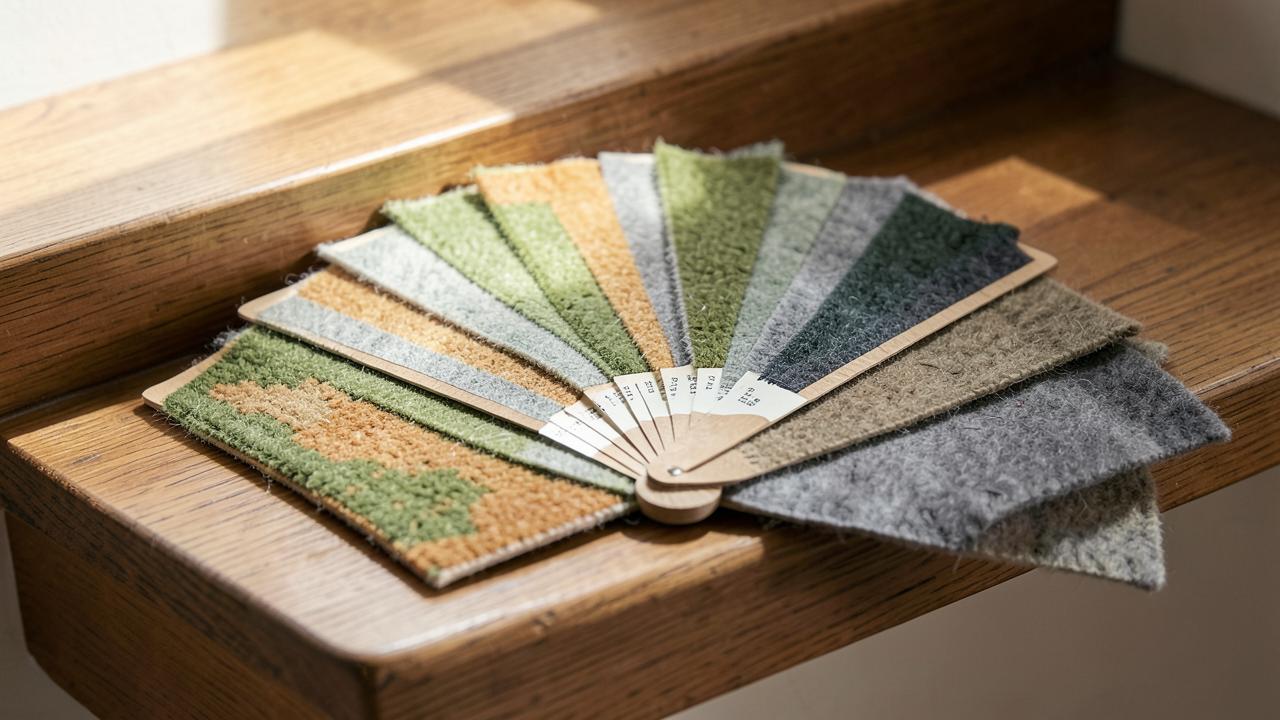 DesignChoosing a Stair Runner ColourHow light, adjacent flooring, trim colour, traffic and dirt should drive the colour decision.
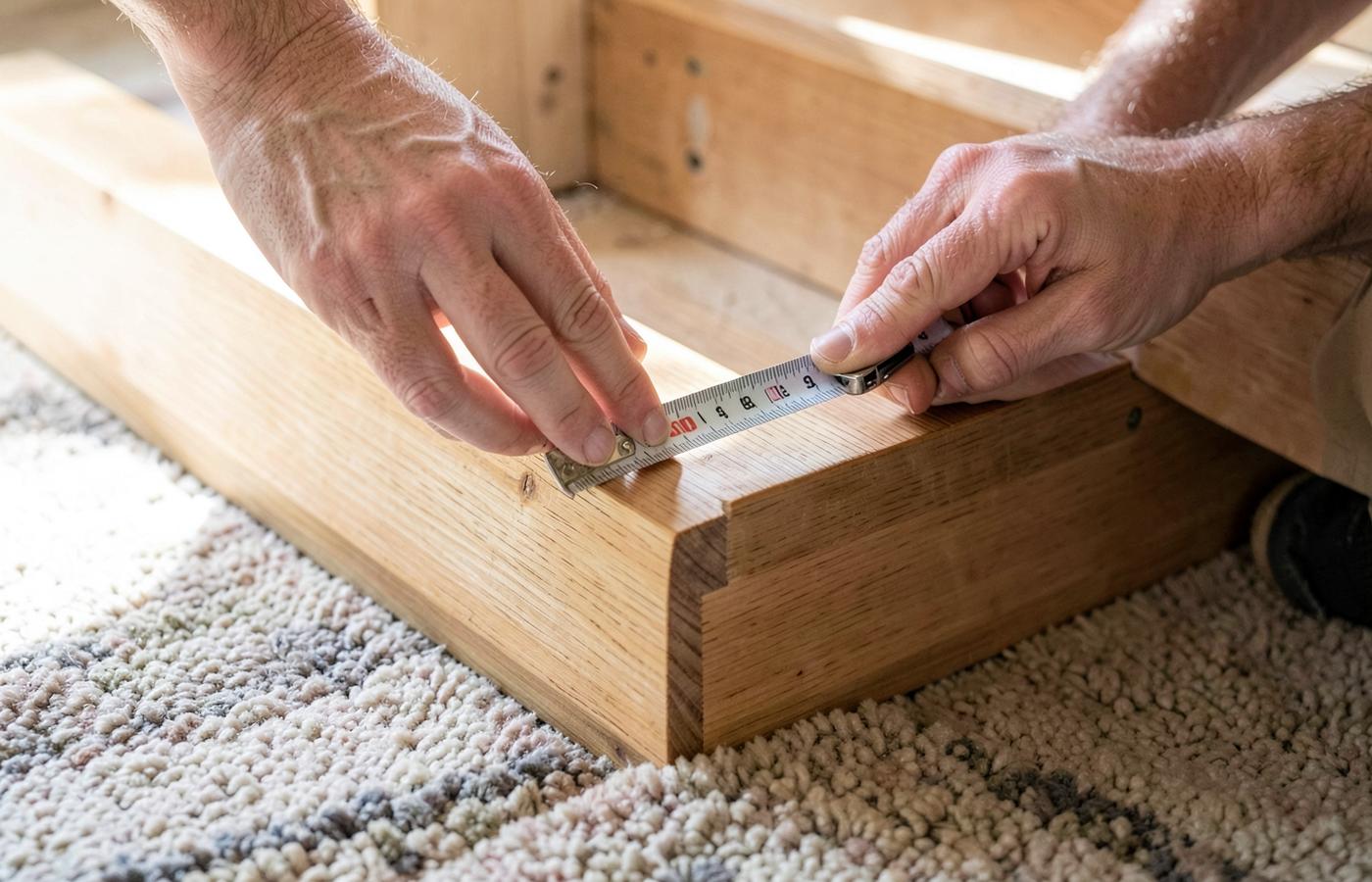 MeasurementWhat Width Should a Stair Runner Be?How to set runner width and side margins from your stair width, stringers, balusters and pattern.
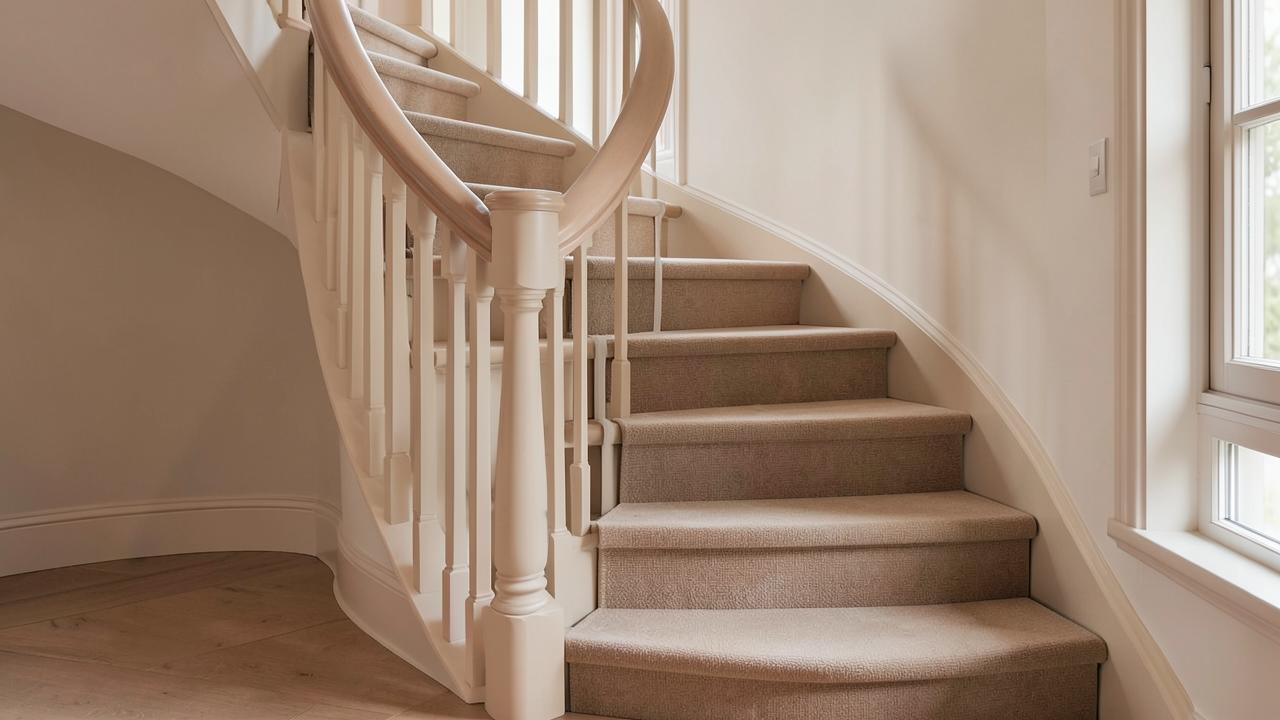 InstallationRunners Around Corners and TurnsQuarter turns, pie steps and bends: where seams go and why the inner edge governs the job.