Buying & DIY
Achieving a high-end runner on a budget
A stair runner does not need to cost a fortune. By understanding the cost drivers—labour, materials, and finishing—you can make smart choices that deliver the look you want without breaking the bank.
Written by the StairRunner.co editorial team · Updated 4 September 2026
Understanding the cost structure
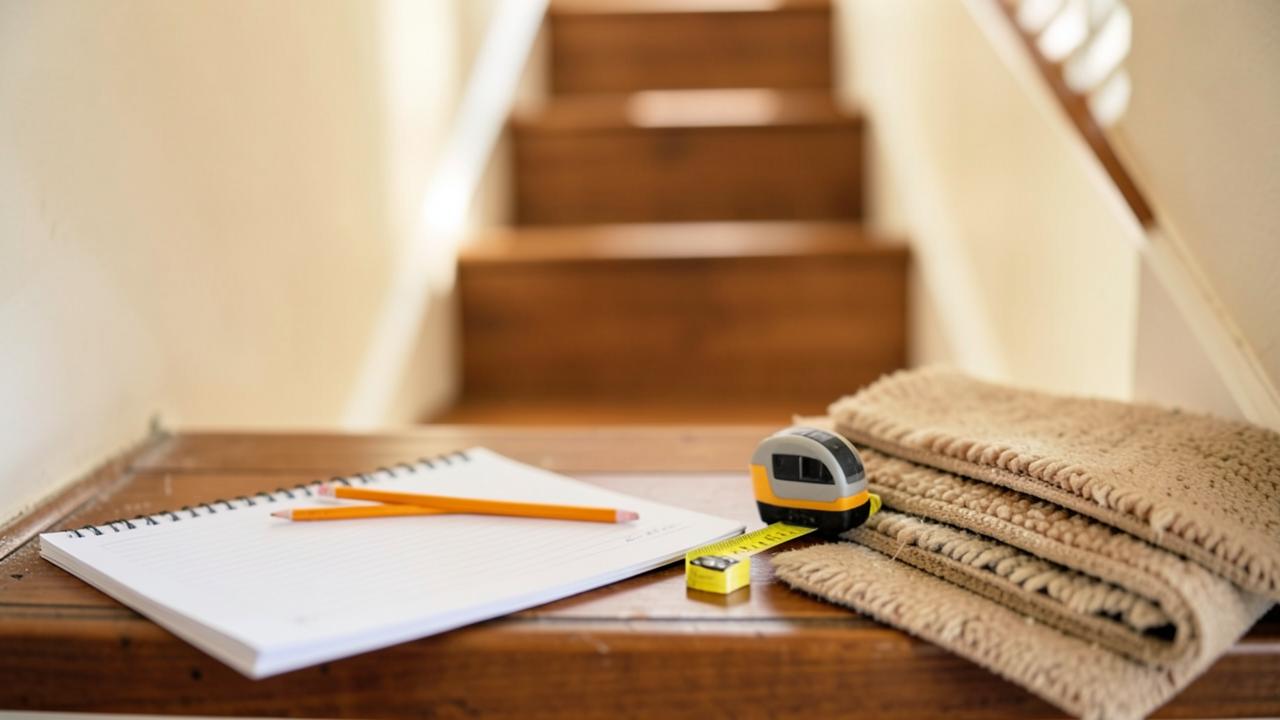
The total cost of a stair runner project is a combination of three factors: materials (carpet + underlay + fixings), labour (fitting), and finishing (binding + installation details). To save money, you must address each of these pillars without sacrificing the overall safety or longevity of the project.
| Element | Budget-friendly tip | Estimated Saving |
|---|---|---|
| Carpet | Search for high-quality remnants or offcuts. | 40-60% |
| Underlay | Do NOT compromise; buy the best firm, dense pad you can afford. | 0% (Essential) |
| Labour | Consider a DIY installation if you are confident with tools. | £150 - £400 |
| Edge Finish | Look for self-finished or simple bound edges rather than hand-stitching. | 20-30% |
Smart savings: Sourcing the materials
Carpet remnants are the ultimate 'insider secret' for budget runners. Because a runner typically only requires a strip between 55cm and 70cm wide, a remnant that is far too small for a standard bedroom is often more than enough for a flight of stairs. Visit local independent carpet retailers rather than large chains, as they are more likely to have a 'bargain bin' or offcut section that isn't advertised online.
When choosing a budget material, polypropylene is your best friend. Modern polypropylene (often marketed as 'stain-free') has improved significantly in texture and appearance. It is naturally resistant to bleaching and staining, making it ideal for the high-traffic environment of a staircase. While wool is the traditional choice for luxury, a high-density synthetic can often provide 90% of the look for 40% of the price.
DIY Tools: Buy, Rent, or Improvise?
A significant portion of a professional fitting fee goes toward the specialist tools required. To keep your budget low, you need to decide which tools you truly need to buy.
- Stair Tool (Bolster): Essential for tucking the carpet into the crotch of the stair. You can buy a basic one for under £15. Do not try to use a screwdriver, as you will likely tear the carpet or damage the wood.
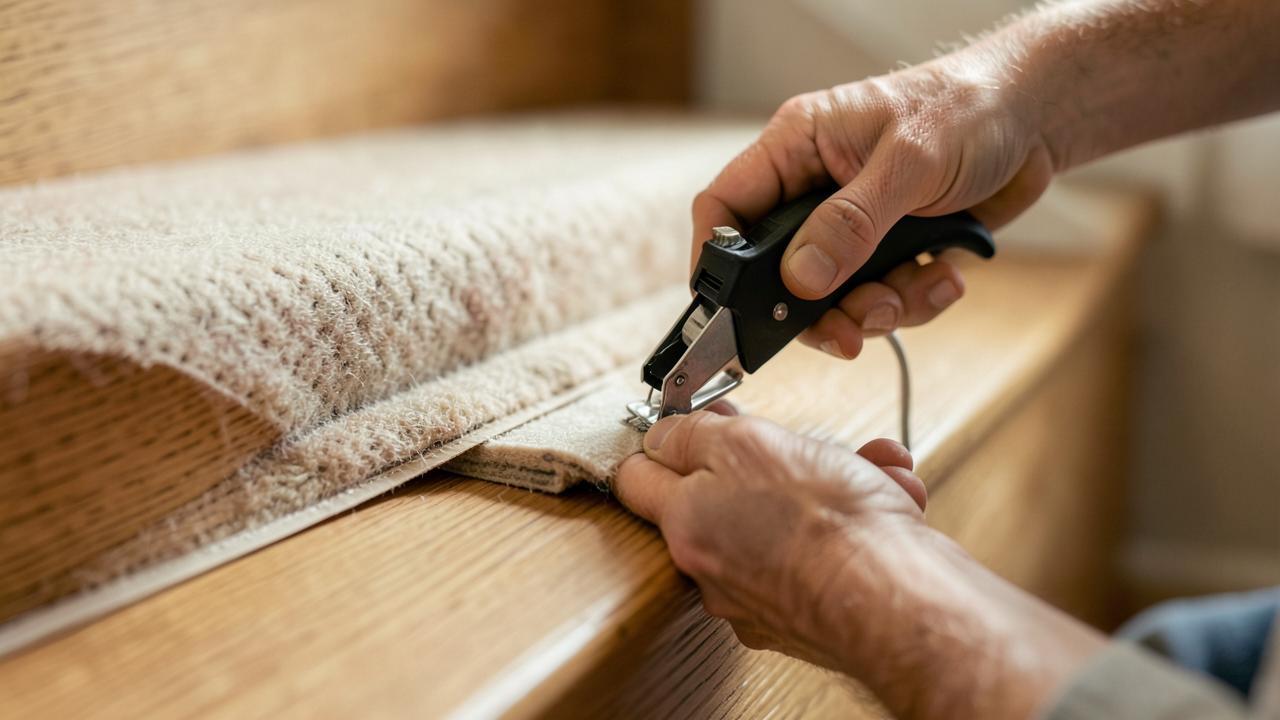
- Heavy-Duty Stapler: A manual staple gun may not have enough 'drive' for dense carpet and hardwood. Consider renting an electric or pneumatic stapler, or buying a mid-range hammer tacker if you are confident.
- Carpet Knife: Do not use a standard utility knife with a retractable blade; they are too flexible. A fixed-blade dolphin knife is the industry standard and relatively inexpensive.
- Measuring Tape and Chalk Line: Essential for ensuring the runner is perfectly centred. These are standard household tools you likely already own.
Alternative materials: Thinking outside the box
If traditional carpet remnants aren't providing the look you want, consider flat-weave materials like sisal or seagrass. While these can be expensive when custom-bound, you can sometimes find 'runners on a roll' in these materials at discount outlets. Sisal is incredibly durable but can be tricky for a DIYer to install because it is stiff and requires very precise cutting.
Another budget-friendly option is the 'narrow runner' strategy. By painting a wider border on your stairs (see our painting guide), you can use a narrower strip of carpet. Since carpet is often priced by the linear metre at fixed widths, choosing a narrower product or cutting a standard width in half can double your coverage for the same price.
Environmental Considerations: Sustainability on a Budget
Budget-friendly doesn't always mean environmentally unfriendly. While synthetic fibres like polypropylene are derived from plastics, many manufacturers are now incorporating recycled materials into their budget lines. Furthermore, sourcing a remnant is one of the most sustainable choices you can make, as you are essentially 'rescuing' material that might otherwise end up in a landfill.
When you eventually replace your runner, check if your local authority has a carpet recycling scheme. Many modern carpets can be ground down for use in underlay or even road surfacing. By choosing high-quality components and maintaining them well, you extend the life of the product, which is the most effective way to reduce the environmental footprint of your home renovation.
The 'Mistake' of going too cheap
There is a point where 'budget' becomes 'bad value'. Cheap, thin felt underlay will flatten in weeks. Lightweight double-sided tape will fail, leading to a runner that 'walks' or bunches up, creating a dangerous trip hazard. Furthermore, avoid very 'loopy' carpets if you have pets; cats and dogs will snag the loops, and the runner will look tatty very quickly. In these cases, spending 10% more upfront saves you the 100% cost of replacing the runner in two years.
Step-by-Step: The Budget Installation Sequence
- Preparation: Strip the old floor covering and remove all staples/nails. Sand and paint the edges of the stairs now—it is much cheaper to paint than to buy a wider runner.
- Measurement: Measure every tread and riser. Add them up and add 15% for wastage. If you are using remnants, make sure the grain (pile direction) is consistent across all pieces.
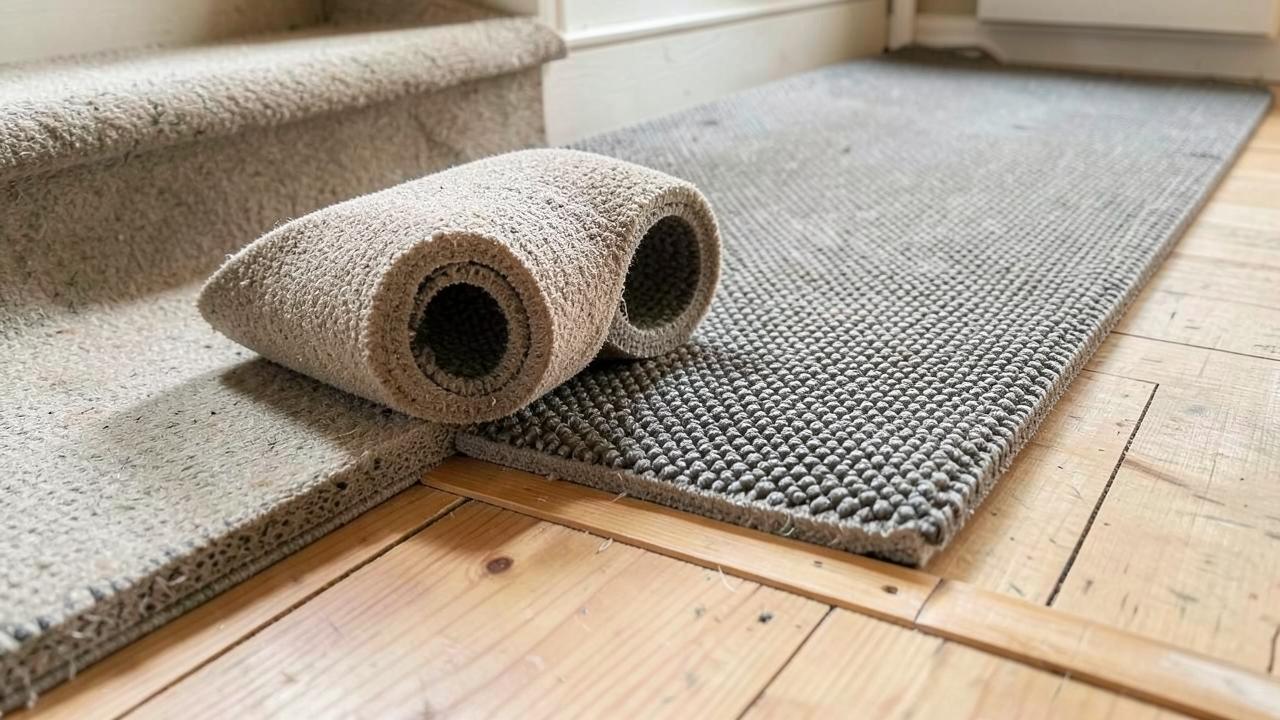
- Underlay: Cut pads for each tread that are slightly narrower than the runner itself. Secure them firmly.
- Centering: Mark the centre of every stair. This is the most critical step for a professional look. A misaligned budget runner looks like a mistake; a perfectly centered one looks like a design choice.
- Fixing: Start from the bottom and work up (the 'Waterfall' method is often easier for beginners). Secure at the base of the riser, over the nose, and into the crotch.
- Finishing: Use a small amount of carpet adhesive or extra staples at the very top and bottom to ensure the edges never lift.
Maintenance: Protecting your investment
A budget runner will last twice as long if it is cared for correctly. Regular vacuuming prevents grit from getting into the fibres and acting like sandpaper on the backing. If you have chosen a synthetic material, most spills can be cleaned with a simple solution of water and white vinegar. Avoid harsh chemicals that can strip the factory-applied stain resistance.
Consider a 'no shoes' policy for the stairs. The grit and oils from outdoor footwear are the primary cause of the 'dark path' that develops on runners over time. By keeping shoes at the door, you maintain the 'as-new' look of your budget runner for years. This simple habit can double the life of a budget carpet.
Advanced DIY: Self-Binding and Edge Work
One of the biggest costs in a custom runner is the professional binding. If you are using a remnant, the edges will be raw. You can buy 'instant binding' tape—a clever DIY product that adheres to the edge of the carpet to create a clean, finished look. It requires only a hot glue gun or a strong adhesive and a bit of patience.
Alternatively, if you are using a very flat-weave carpet, you can sometimes 'turn' the edges under and staple them for a 'self-finished' look. This is more advanced and requires a very sharp knife and precise folding, but it costs absolutely nothing in extra materials. Practice on a small offcut before attempting it on the main flight.
Expert Tips for a Luxury Look on a Shoestring
To make a budget project look expensive, focus on the details. Use a chalk line to ensure your staples are in a perfectly straight line. If you are using stair rods, ensure they are perfectly level. These small markers of precision are what the human eye associates with professional, high-end work.
Additionally, consider the 'ending' of the runner. A runner that simply stops at the bottom can look unfinished. If you have enough material left over, create a small 'return' or wrap the bottom nose for a more architectural finish. These small flourishes cost nothing but time and a few extra staples, but they elevate the entire project from a DIY job to a designer feature.
Related guides
 InstallationDIY Stair Runner InstallationAn honest assessment of doing it yourself: skills, tools, time, safety and the jobs worth handing over.
 MaterialsStair Runner Underlay and PaddingWhy pad choice matters more on stairs than anywhere else, and how to specify density, thickness and cut.
- ToolsStair Runner Length CalculatorWork out runner length from your step count, tread, riser and nosing, with the formula shown in full.
 SafetySecuring a Stair RunnerWhy runners creep, lift and curl, and how to hold one properly or re-fix a loose one.
Methodology and Long-term Value
Our approach to budget home improvement is rooted in the principle of 'selective investment'. We believe that by understanding the mechanics of how a stair runner wears and functions, you can identify the specific components where quality is non-negotiable. For a staircase, this is safety and foundation. By investing in the best underlay and the most secure fixings, you create a platform that allows even a modest carpet to perform at its peak.
We have spent years analyzing the failures of DIY projects. Most often, a project fails not because of the materials used, but because of a lack of patience in the preparation phase. Taking the extra hour to ensure your stairs are perfectly clean and your measurements are exact costs you nothing, yet it adds more value to the final result than an extra £200 spent on premium wool.
Ultimately, a budget stair runner is a triumph of skill over spending. It represents a homeowner's ability to navigate the trade-offs of the renovation market and emerge with a result that is both beautiful and functional. Whether you are prepping a house for sale or making a long-term home for your family, these budget strategies ensure that your staircase remains a highlight of your interior design rather than a financial burden.
In conclusion, the path to a high-end look on a budget is paved with research and precision. By sourcing remnants, choosing durable synthetics, and mastering the basic tools of the trade, you can transform your hallway. Remember that the goal is not just to save money, but to create a safe, durable, and stylish feature that enhances your home for years to come. The effort you put into the planning and execution will pay dividends every time you walk through your front door.
Frequently asked questions
- Can you use remnants for a stair runner?
- Absolutely. Many carpet retailers have high-quality offcuts that are perfect for a runner. Just ensure the remnant is long enough for your entire flight, including the extra length needed for the nose and wastage.
- Where is it safe to cut costs on a stair runner?
- You can save on the choice of carpet material—polypropylene is often cheaper than wool and very durable. You can also save by doing the installation yourself if you have the patience and tools.
- Where should you never economize?
- Never skimp on the underlay. A cheap underlay will fail quickly, causing the carpet to move and wear prematurely. Also, ensure your fixings are robust; safety is paramount.
- Is DIY a viable budget strategy?
- Yes, but be realistic. It requires specialized tools (a stair tool, a heavy-duty stapler, a good knife) and a methodical approach to pattern matching and tensioning.
- What is the most expensive part of a runner installation?
- Usually, the labour and the binding/finishing of the edges. Doing your own measurements and choosing a 'pre-finished' or simple edge can significantly reduce costs.
- Can I use second-hand stair rods?
- Yes, second-hand rods can be a great way to save money, provided they are in good condition and all the brackets are present. Often, a bit of metal polish can restore them to a high-end look for a fraction of the retail price.
- Does a budget runner decrease home value?
- Not necessarily. A well-installed, clean, and stylish budget runner (like a high-quality polypropylene) can enhance the aesthetic appeal of a hallway just as much as a wool one. The quality of the installation is often more important for 'kerb appeal' than the material cost.
- Is it cheaper to buy a pre-made runner or have one cut?
- Pre-made runners (standard lengths) are almost always cheaper because they are mass-produced with finished edges. However, they may not fit your specific staircase perfectly. If you have a standard straight flight, a pre-made runner is a fantastic budget option.