Materials
Coir stair runners: Durable coconut fibre guide
Rugged, rustic, and remarkably resilient, coir is the workhorse of natural floor coverings. But behind its tough exterior lies a complex material that requires a specific touch.
Written by the StairRunner.co editorial team · Updated 4 September 2026
The origins of coir: From husk to hallway
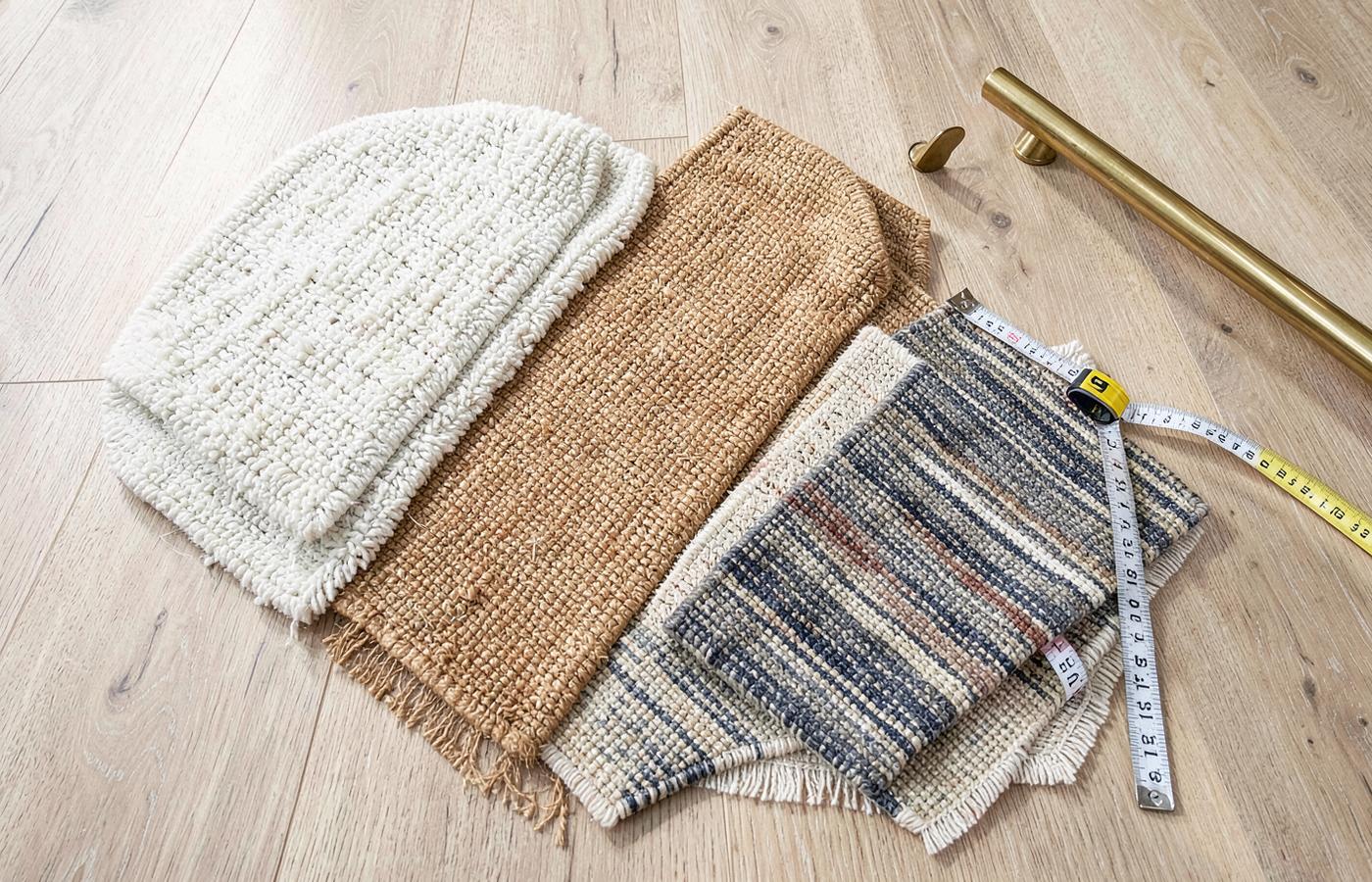
Coir is one of the most traditional flooring materials used in the UK, with a history stretching back to the Victorian era. It is harvested from the fibrous outer husk of the coconut (Cocos nucifera). The husks are soaked in water—a process known as 'retting'—to soften the fibres, which are then beaten, cleaned, and spun into yarn. The result is a material that is incredibly tough, naturally water-resistant, and entirely renewable.
In the context of a stair runner, coir offers a distinct 'country cottage' or 'period townhouse' aesthetic. It is most commonly seen in its natural, golden-brown state, but it can also be bleached to a pale cream or dyed into a range of earthy tones. Unlike its more delicate cousin,jute, coir is built to take a beating. It is the material of choice for entrance mats and heavy-duty hallways for a reason: it is almost impossible to wear out.
The 'Prickle Factor': Texture and Comfort
The most important thing to know about coir before you buy is how it feels. Unlike wool, which is soft and inviting, coir is stiff and prickly. If you are a 'shoes-off' household and spend a lot of time walking up and down the stairs in bare feet or thin socks, coir might not be the right choice for you. It can feel abrasive, and some people find it downright uncomfortable.
However, this texture is also a benefit. It provides a natural 'scrubbing' action that removes dirt and grit from the soles of shoes, preventing it from being carried further into the house. It also provides excellent traction for anyone wearing rubber-soled shoes or for pets with long claws. For older dogs who struggle with slippery timber treads, a coir runner can provide a much-needed sense of security.
| Property | Rating | Notes |
|---|---|---|
| Durability | Exceptional | One of the most hard-wearing natural fibres available. |
| Softness | Very Low | Can be prickly and abrasive on bare skin. |
| Slip Resistance | Moderate | Fibres are grippy, but the surface can be 'slick' when dry. |
| Sustainability | High | Fully biodegradable and a byproduct of food production. |
| Cleanability | Moderate | Hides dirt well but sensitive to water saturation. |
Safety and Slip Risks
While coir fibres themselves are not inherently slippery, a coir runner can become slick over time as the fibres are flattened and polished by foot traffic. This is particularly true of the cheaper, less dense weaves. On a staircase, a slip can be dangerous, so it is vital to specify a runner with a high-quality latex backing. The latex helps to hold the weave together and provides a non-slip surface against the underlay or the stairs.
Another safety consideration is the 'tripping' risk. Coir is a thick material, and the transition between the runner and the exposed timber tread can be quite significant. Ensure that the nosings are fitted tightly and that there are no loose loops that could catch a heel. If you are concerned about safety, consider a non-slip stair runner specification that includes additional grip strips or a lower-profile weave.
Shedding and 'The Bedding-In Period'
New coir runners will shed. It is an unavoidable fact of natural fibre flooring. As the runner is walked on, small fragments of fibre that were trapped during the weaving process will work their way to the surface. In the first few weeks, you may find 'coconut dust' accumulating along the edges of the runner.
Don't panic—this is not the runner falling apart. It is simply the material settling. Regular vacuuming with a suction-only head will quickly manage this. Do not use a heavy beater-bar vacuum on coir, as the aggressive brushes can pull more fibres loose and exacerbate the shedding. After a few months, the shedding will subside significantly, and the runner will enter its 'stable' phase.
Installing Coir on Stairs
Coir is a stiff, unforgiving material to install. Unlike wool, which can be easily stretched and manipulated around winders and corners, coir requires a firm hand and specialized tools. It is highly recommended to use a professional fitter who has experience with natural flatweaves.
One of the biggest challenges with coir is 'shrinkage'. Because it is a natural cellulose fibre, it can react to changes in humidity. If the runner is not properly acclimatized to the room before installation, it may shrink slightly once fitted, leading to gaps or tension issues. A good fitter will leave the runner in the hallway for 48 hours before fitting it to allow it to reach equilibrium. For more on the fitting process, see stair runner installation.
Moisture and Staining
Coir is naturally resistant to rot, which is why it was historically used for ship's ropes. This makes it a better choice for damp UK hallways than many other fibres. However, 'rot-resistant' does not mean 'stain-resistant'. Coir is highly absorbent. If you spill red wine or coffee on it, the liquid will be sucked into the core of the fibre almost instantly.
Water itself can be an issue. If coir gets too wet, it can develop brown 'tide marks' as the natural oils (tannins) in the fibre are brought to the surface. If you need to clean a spill, use as little water as possible and blot, blot, blot. Never use a steam cleaner on coir; the heat and moisture will almost certainly cause it to shrink and distort. For detailed advice, seecleaning and caring for your runner.
Design Variations: Weaves and Borders
Coir runners come in several different weaves, each with its own character. The most common is the 'bouclé'—a series of small, tight loops that give a uniform, textured look. There is also the 'herringbone' weave, which offers a more formal, patterned appearance, and the 'panama' weave, which is a simple over-under pattern.
Because coir is a natural material, it looks best when paired with other natural finishes. A cotton or linen binding in a contrasting colour (such as black or navy) can provide a sharp, modern edge to a rustic coir runner. Alternatively, a 'self-bordered' runner, where the edges are woven into a tighter pattern, offers a more seamless look.
Sustainability: The Greenest Choice?
If your primary concern is the environment, coir is hard to beat. Most coir is produced in India and Sri Lanka using traditional methods that have changed little in centuries. It is a byproduct of the coconut industry—if the husks weren't used for flooring and brushes, they would mostly be discarded as waste.
Coir is also fully biodegradable. When your runner eventually reaches the end of its long life (which could be 20 years away), it will return to the earth without leaving behind microplastics or toxic residues. It is a truly 'circular' product. However, do check the backing; a natural latex backing is biodegradable, but some cheaper runners use synthetic SBR (Styrene-Butadiene Rubber) which is not.
Cost and Value
Coir is generally one of the most affordable natural fibre options. It is significantly cheaper than high-end wool or sisal, yet it offers superior durability. In terms of 'cost per year of life', coir is arguably the best value flooring material on the market.
However, don't forget to factor in the installation cost. Because it is harder to fit than standard carpet, you may pay a premium for a specialist fitter. And as always, a good underlayis a necessary investment to protect both the runner and your stairs.
Is Coir right for your home?
Coir is not a material for everyone. It is a choice for those who value longevity, sustainability, and a rugged, natural aesthetic over plush comfort. It is perfect for a busy family home where the stairs lead directly from a front door, or for a rustic property where a bit of texture is welcomed.
If you have young children who spend a lot of time crawling or playing on the stairs, or if you simply crave the softness of wool under your feet, coir will likely disappoint you. But if you want a runner that will stand up to decades of traffic and only look better with age, the humble coconut fibre is an excellent candidate.
Summary of Care
- Vacuum at least twice a week with a suction-only tool.
- Deal with spills instantly—seconds matter!
- Keep the area well-ventilated to prevent moisture build-up.
- Trim any loose sprouts with scissors; never pull them.
- Enjoy the fact that you've chosen one of the most eco-friendly floors on the planet.
Beyond the basics: The architectural potential of coir
While coir is often pigeonholed into the "rustic/coastal" category, it has significant architectural potential in modern design. The rigid, vertical lines of a bouclé weave can act as a counterpoint to the soft, curved lines of contemporary furniture or the stark, minimalist architecture of a modern staircase. The key is in the detailing. By choosing a wide, architectural binding—perhaps a deep, charcoal-grey canvas or a leather-look edge—you can transform a humble coir runner into a bold design statement that frames the staircase as a sculptural element of the home.
Furthermore, because coir has such a distinctive texture, it can be used to delineate spaces. If your staircase opens directly into a hallway or living space, a coir runner creates a clear "path" that visually guides the eye and defines the transition between zones. This is particularly useful in open-plan homes where you want to maintain a sense of flow while still grounding the main circulatory artery of the house.
Dealing with the unavoidable: Common coir problems and fixes
| Issue | Cause | Fix |
|---|---|---|
| Loose loops | Fibre breakage or snagging | Trim flush with scissors; never pull. |
| Brown marks | Tannin bleed from moisture | Dry immediately; consult professional if persistent. |
| Edges curling | Inadequate fixing or humidity change | Re-tension or add extra fixings/tape. |
| Excessive shedding | Initial bedding-in | Vacuum regularly; will subside in 4-6 weeks. |
Ultimately, coir rewards those who understand it. It is not a material that will do the work for you—it requires maintenance, careful cleaning, and an acceptance of its natural, rustic character. But for the homeowner who values authenticity, sustainability, and unparalleled durability, it is a choice that will continue to perform, and look good, for many years.
Frequently asked questions
- Is coir suitable for stairs?
- Yes, coir is extremely durable and excels in high-traffic areas. However, its coarse texture can be harsh on bare feet, and it can be slippery if not installed with a proper non-slip backing or nosing grip.
- How do you clean a coir stair runner?
- Coir should be vacuumed regularly to remove grit. For spills, blot immediately with a dry cloth. Avoid saturating coir with water, as it can shrink and stain. Professional dry cleaning is recommended for deep cleans.
- Does coir shed fibres?
- Yes, all natural coir will shed some short fibres, especially when new. This is normal and will decrease over time with regular vacuuming. It is more common in 'bleached' or dyed coir.
- Can coir be used in damp areas like basements?
- Coir is naturally rot-resistant, making it better suited for damp-prone areas than jute or wool. However, it still needs good ventilation to prevent mould growth in the backing.
- Is coir more sustainable than synthetic runners?
- Coir is highly sustainable. It is made from coconut husks, a byproduct of the coconut industry, and is fully biodegradable. It requires very little chemical processing compared to synthetics.
- Is coir uncomfortable for pets?
- Most dogs and cats adapt well to coir, but some may find the 'prickly' texture unpleasant at first. It provides excellent grip for claws, which can help older pets stay stable on the stairs.
Related guides
- MaterialsStair Runner Materials ComparedWool, nylon, polypropylene, sisal and jute judged on stair-specific wear, comfort, cleaning and safety.
 MaterialsSisal and Jute Stair RunnersNatural plant-fibre runners on stairs: durability, texture, moisture behaviour, borders and honest limitations.
- MaterialsJute Stair RunnersJute on stairs: soft underfoot but the weakest natural fibre for traffic — weaves, moisture and where it works.