Materials
Jute stair runner: softness against durability
Jute is the softest natural fibre commonly sold for flooring, and also the weakest. On a staircase, where every fibre in the traffic lane is folded, flexed and walked on at an angle, that trade-off matters more than it does on a flat floor.
Written by the StairRunner.co editorial team · Updated 4 September 2026
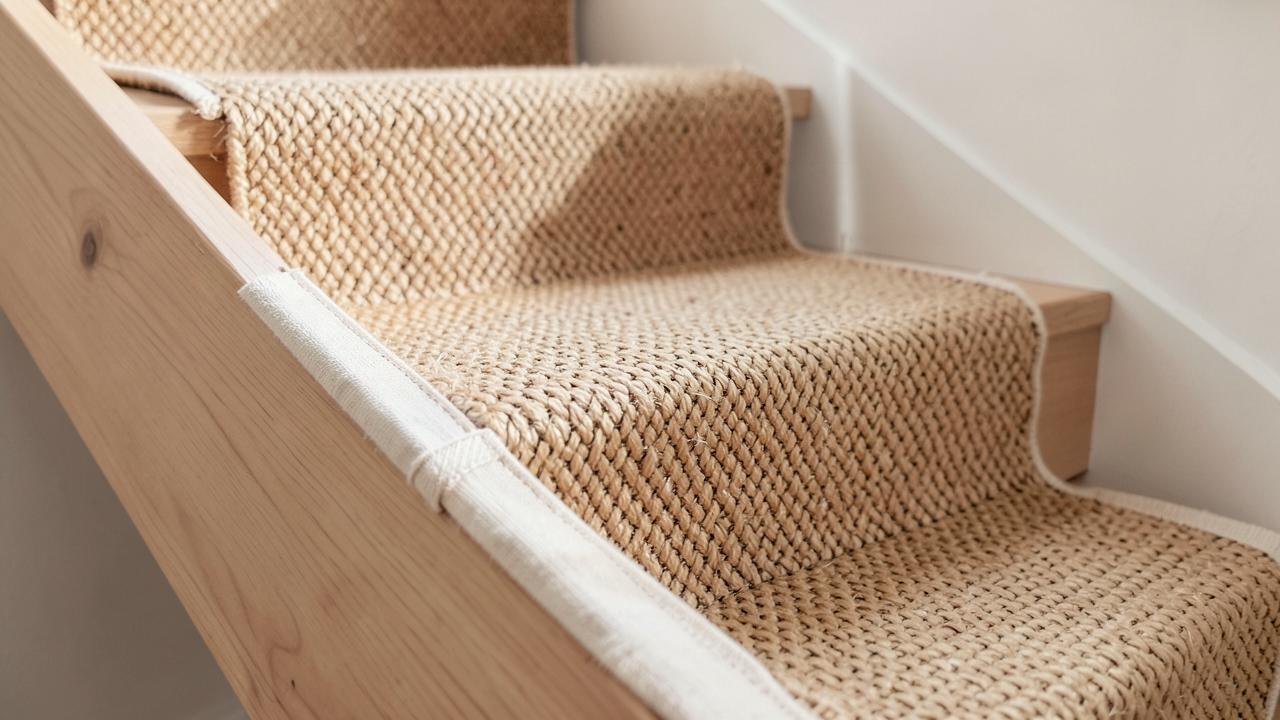
What jute actually is
Jute is a bast fibre, taken from the stem of the jute plant rather than a leaf like sisal or a grass like seagrass. Bast fibres are generally finer and softer than leaf fibres, which is why jute feels noticeably gentler underfoot than sisal straight out of the box, closer in hand to a coarse cotton than to the wiry texture most people expect from a "natural fibre" floor covering. That same fineness is what makes it structurally weaker: the individual fibre strands have less inherent tensile strength than sisal's leaf fibre, and a rope made of weaker strands is a weaker rope, however it is spun or woven.
This is worth stating plainly because jute is often marketed alongside sisal, seagrass and coir as though the four were interchangeable "natural fibre" options that differ mainly in colour and price. They are not interchangeable in performance. Manufacturers and flooring specialists who rank natural fibres by durability consistently place jute at or near the bottom of that list, with sisal and coir considered notably more hard-wearing and seagrass valued for its resistance to moisture rather than its softness. Jute's strength is comfort and appearance, not longevity.
Why jute is the weakest natural fibre for stair traffic
Three separate issues compound on a staircase specifically, more than they would on a flat floor.
- Fold stress at the nosing. Every step forces the runner to wrap over an edge and down the riser. A weaker fibre fatigues faster at that constant fold line than it would lying flat, so the nosing on a jute stair runner is typically the first place visible wear appears — thinning, flattening or fraying — well before the same fibre would show comparable wear on an equivalent flat floor.
- Point-load and pivoting pressure. Feet do not simply press down on stairs as they do on a flat floor; they push off at an angle on the way up and brace at an angle on the way down. That twisting, shearing action abrades fibre faster than straight vertical pressure, and jute has less reserve strength to absorb it.
- Concentrated traffic lane. On a staircase almost everyone's foot lands in more or less the same narrow band down the centre of each tread, so wear concentrates rather than spreading out the way it can across a wider floor area. A fibre with limited durability shows the effect of that concentration sooner.
None of this means jute cannot survive on stairs at all. It means the honest expectation should be a shorter service life than the same budget spent on sisal or a synthetic, and a need to inspect the nosings periodically rather than assuming the fibre will simply hold.
Moisture, staining and why it matters more on stairs
Jute absorbs moisture readily and dries slowly compared with harder fibres such as sisal or seagrass. In practice this shows up in two distinct ways. First, ordinary spills — a dropped drink, a wet umbrella brushed against the bottom step, a damp shoe — are absorbed into the fibre quickly rather than sitting on the surface long enough to blot away cleanly. Second, and more distinctively, jute can develop a visible water stain even from clean water: a darkened tide-mark or discoloured patch where moisture penetrated and dried unevenly, quite separate from any dirt or residue the liquid may have carried. This is a known characteristic of the fibre rather than a fault with a particular product, and it is one of the main reasons jute is a poor choice near an entrance hall, a bathroom-adjacent landing, or any staircase that gets damp shoes, umbrellas or pet paws on a regular basis.
Because stairs are walked on continuously through the day, a spill on a step is also harder to isolate and treat than one on an open floor — foot traffic keeps arriving before the mark has been dealt with, working moisture further into the pile. If jute is chosen for a staircase, a fast, disciplined blotting routine is not optional; it is the main defence against permanent marking. See cleaning and caring for a stair runner for method by fibre.
Shedding: what to expect and why it happens
All natural fibre floor coverings shed some loose fibre when new, as short, broken strands left over from spinning and weaving work their way to the surface and are picked up by the first weeks of vacuuming. Jute sheds more noticeably than sisal, seagrass or coir, and for longer, because the fibre itself is finer and more prone to breaking into short lengths during processing. Expect visible fine fibre in the vacuum cleaner canister for weeks rather than days after installation, and expect a lower level of ongoing shedding to continue for the life of the runner rather than stopping completely. This is not a fault to complain about to a supplier; it is a structural feature of the fibre. It is, however, a genuine consideration for households sensitive to fine airborne fibre, or for anyone who dislikes the maintenance of frequent vacuuming.
Boucle and herringbone weaves: how weave changes behaviour
| Weave | Character | Stair suitability |
|---|---|---|
| Boucle | Small, tight loops giving a nubbly, textured surface | Reasonable grip when dry; loops can pull if snagged by a heel, claw or vacuum head |
| Herringbone | A flat, angled twill-style weave with a visible chevron pattern | Smoother underfoot, shows a soiled traffic lane more distinctly against the pattern |
| Basketweave / panama | A flatter, plain over-under weave | Simple and hard-wearing relative to other jute weaves, though still soft by comparison with sisal |
Boucle jute is the more commonly recommended weave for stairs because the looped texture offers more underfoot grip than a flat weave, and its irregular surface disguises everyday soiling and minor wear better than a smooth herringbone will. Herringbone jute reads as more refined and tailored, which suits a formal hallway or a lightly used stair, but its flatter surface both shows wear in the traffic lane sooner and offers less texture for grip, particularly once dust or polish residue accumulates on the surface.
Backing and binding: where jute runners fail structurally
A jute runner's face fibre is only part of the story; the backing and binding often determine how long it survives being handled as a fitted stair product. Backings for natural fibre runners are typically a latex or jute-scrim backing that holds the woven face together and gives it enough body to be gripped, stretched and stapled. A lightweight or brittle backing on a fibre that is already comparatively weak compounds the durability problem: it is the backing failing at a staple or gripper line, not just the face fibre wearing, that ends the life of many natural-fibre stair runners.
Binding — the tape or fabric edge finishing the runner's sides — matters more with jute than with a tougher fibre because a fraying edge exposes bare fibre ends that continue to shed and unravel once the binding starts to lift. A well-bound edge, ideally in a durable tape rather than a decorative but flimsy trim, is worth insisting on. For how binding and backing choices interact with fitting method more generally, see stair runner installation.
Where jute genuinely works
- A secondary staircase used occasionally — to a guest bedroom, a loft office, or a rarely visited part of the house — where low traffic volume is the main reason the fibre's weakness will not be tested hard.
- A short flight where replacement, if it becomes necessary sooner than with a tougher fibre, is a modest job rather than a major one.
- A household prioritising the softest possible natural-fibre underfoot feel and colour palette, and willing to accept a shorter lifespan and more careful maintenance as the price of that softness.
- A design scheme where jute's warm, muted natural tones suit the interior better than sisal's coarser, more rustic look, and the compromise is a considered one rather than an accident of not knowing the alternatives.
Where jute is a poor choice — the honest warnings
- Main family staircases with daily heavy traffic. This is the single biggest mismatch: jute's durability profile is least suited to exactly the situation where most households want a stair runner to work hardest.
- Any staircase near an entrance, bathroom or kitchen. Moisture exposure and jute's tendency to water-stain make this combination a recurring source of disappointment.
- Households with pets or young children. Accidents happen, claws snag loops, and jute has less resilience to absorb either than sisal, wool or a synthetic.
- Anyone expecting a decade-plus lifespan. Jute is rarely the fibre that delivers the longest service life among the natural-fibre options; if longevity is the priority, sisal or a wool blend is the more realistic choice, discussed in sisal stair runners and wool versus synthetic.
Comparing jute with the other natural fibres
| Fibre | Relative durability | Moisture behaviour | Underfoot feel |
|---|---|---|---|
| Jute | Lowest of the four | Absorbent; can water-stain | Softest, warmest |
| Sisal | High | Absorbent but stronger when wet than jute | Coarse, firm |
| Seagrass | Good | Naturally water-resistant, non-absorbent surface | Smooth, can feel slick |
| Coir | High but coarse | Moderately absorbent | Very coarse, bristly |
Seagrass is covered in detail, including why its non-absorbent surface creates a different set of safety considerations, in seagrass stair runners.
Living with a jute stair runner: a realistic maintenance routine
- Vacuum gently and regularly using suction only where possible; aggressive beater-bar action pulls at boucle loops.
- Blot spills the moment they happen, working from the outside of the mark inward, and expect that some water-based marks will leave a faint trace regardless.
- Keep the flight away from direct sources of moisture — do not use it as the base for a boot rack or umbrella stand.
- Check the nosings every few months for early thinning or fraying, since this is where wear shows first.
- Have any professional cleaning carried out by someone experienced with natural fibres; jute reacts poorly to over-wetting during cleaning.
Cost thinking: is jute actually the cheaper option once you account for lifespan?
Jute is often positioned as an affordable natural-fibre entry point, and the material cost per metre can indeed be lower than sisal or wool. The comparison that matters, though, is cost over the years the runner is actually expected to last. If jute needs replacing in a fraction of the time a tougher fibre would survive in the same position, the cheaper upfront price can end up costing more across a decade of ownership, once the labour of a second installation is factored in. This is not an argument against jute so much as an argument for doing the sum honestly rather than comparing sticker prices alone. General cost frameworks for stair runners, including how to think about cost per year rather than cost per metre, are set out in stair runner cost.
Common mistakes when choosing jute for stairs
- Choosing jute for a main, heavily used staircase purely on the strength of its low material price.
- Assuming all "natural fibre" runners perform the same way, without checking which specific fibre is being quoted.
- Skipping a quality underlay to save money, which removes one of the few mitigations for jute's weaker structure.
- Fitting jute near an entrance or bathroom without accounting for its moisture sensitivity.
- Expecting a factory stain treatment to solve jute's water-staining tendency; a treatment slows absorption, it does not eliminate the characteristic.
Frequently asked questions
- Is jute a good stair runner material?
- Jute is soft, quiet underfoot and inexpensive relative to other natural fibres, but it is the weakest of the natural fibres used in flooring. On a heavily used staircase it is one of the riskier choices; on a lightly used or secondary staircase it can work well if you accept a shorter lifespan.
- How long does a jute stair runner last?
- Considerably less than wool, sisal or seagrass in the same position. On a busy family staircase, visible wear in the traffic lane can appear within a couple of years. On a low-traffic flight, jute can look presentable for much longer.
- Does jute stain easily?
- Yes. Jute absorbs liquid quickly and the fibre itself can react to water by leaving a ring or a darkened patch even after the moisture has evaporated, sometimes called a water stain rather than a dirt stain. Spills need to be dealt with immediately and even then a mark can remain.
- Does jute shed a lot?
- Jute sheds more than most other natural fibres, particularly when new and in the first months of vacuuming. Shedding usually settles down but rarely stops completely, and it is worth expecting fine fibre in the vacuum canister for the life of the product.
- Can jute be used on stairs at all, or only on floors?
- It can be used on stairs, but the nosing and tread edges are where a weak fibre fails first under folding and abrasion stress. A jute runner on stairs should be treated as a lower-durability, higher-maintenance choice than the same fibre laid flat on a floor.
- What is the difference between jute and sisal for stairs?
- Sisal is coarser, stiffer and considerably more abrasion-resistant, making it the more common natural-fibre choice for stairs. Jute is softer and gentler underfoot but trades away a large amount of that durability, which matters more on stairs than on a flat floor.
- Is jute safe on stairs in terms of slipping?
- A boucle or herringbone jute weave has reasonable texture underfoot when dry, but jute becomes noticeably slicker when damp, and its moisture sensitivity means it is not a fibre to choose near an entrance, bathroom or kitchen stair run.
Related guides
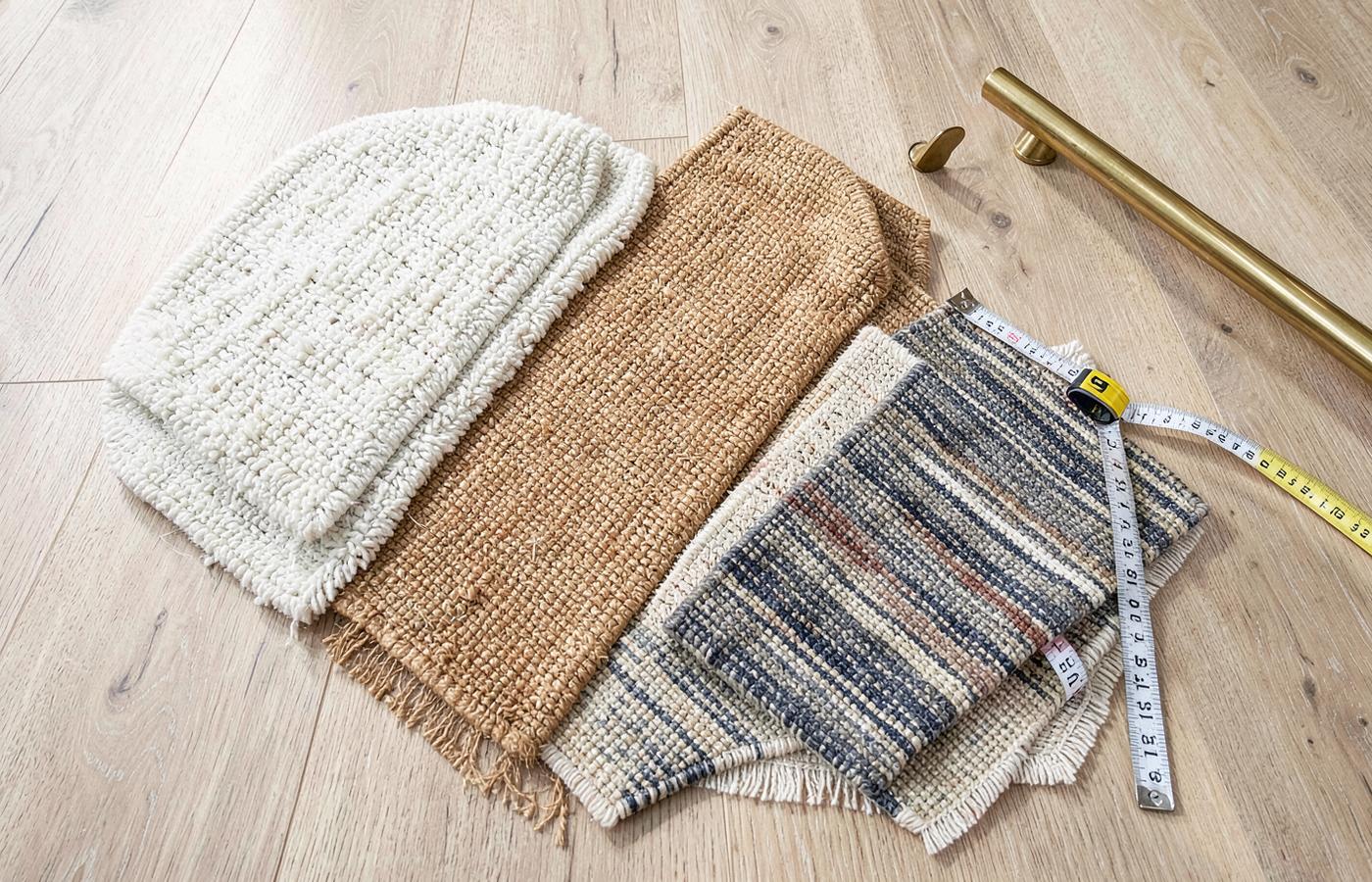 MaterialsStair Runner Materials ComparedWool, nylon, polypropylene, sisal and jute judged on stair-specific wear, comfort, cleaning and safety.
- MaterialsSisal and Jute Stair RunnersNatural plant-fibre runners on stairs: durability, texture, moisture behaviour, borders and honest limitations.
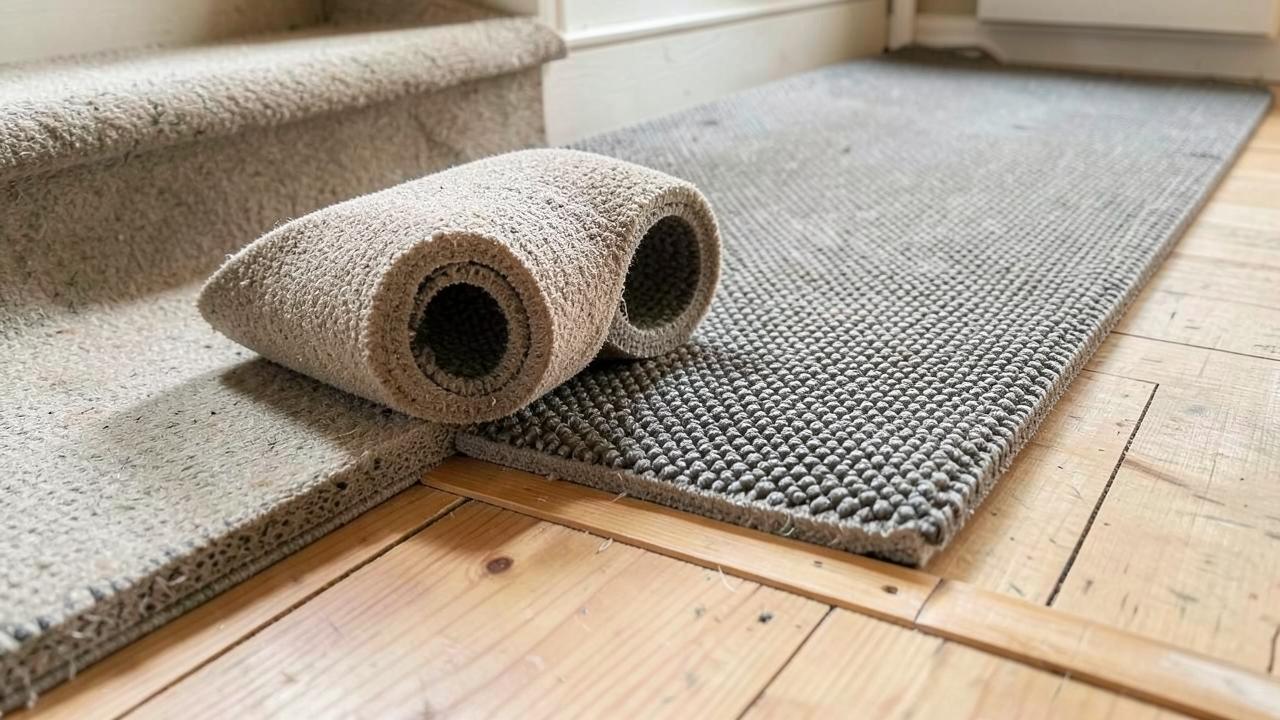 MaterialsStair Runner Underlay and PaddingWhy pad choice matters more on stairs than anywhere else, and how to specify density, thickness and cut.
- MaterialsSeagrass Stair RunnersSeagrass on stairs: a hard, non-absorbent fibre with real grip questions, plus backing, cleaning and cautions.