Buying
Custom stair runners and carpet by the foot
Most 'custom' runners are a standard carpet, cut to your width and finished at the edges. Knowing exactly what you are paying to customise keeps the decision straightforward.
Written by the StairRunner.co editorial team · Updated 4 September 2026
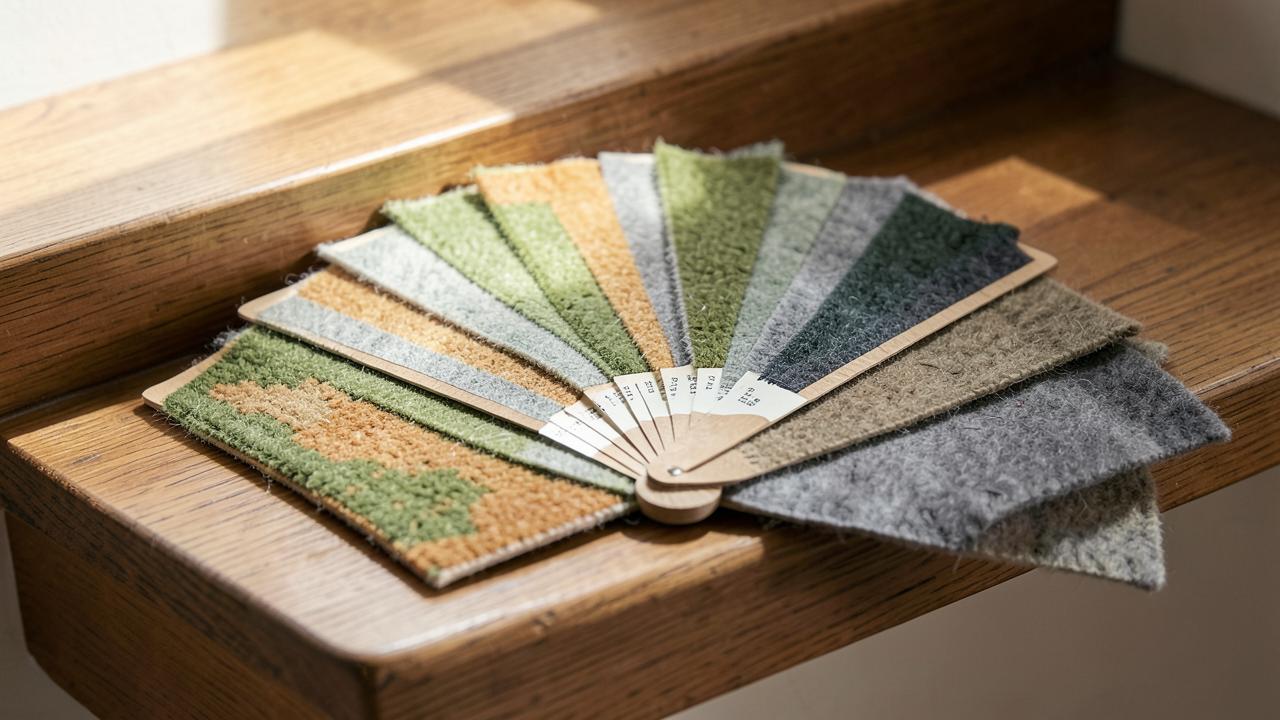
The three ways to buy
| Route | How it works | Best for |
|---|---|---|
| Pre-made runner roll | Fixed width, finished edges, sold by the linear foot or metre | Straight flights where a standard width suits |
| Broadloom cut and bound | A strip cut from wide carpet, edges finished to order | Unusual widths, wider choice of carpet, patterns |
| Made-to-measure / bespoke | Woven or tufted to your specification, sometimes with a woven border | Period restorations, curved stairs, specific colourways |
Edge finishes
- Binding. A fabric tape stitched around the edge — cotton, linen, faux leather. The most visible and most decorative option; adds a defined line down the flight.
- Serging. A dense overstitched yarn edge that looks like a hand-finished rug. Subtle, and it suits wool.
- Latex or tape edge. The cheapest, effectively invisible. Fine on a fitted runner where the edge sits tight to the margin, less durable to repeated vacuuming.
- Woven selvedge. Only available where the carpet was woven at runner width; the most durable of all.
When custom genuinely earns its premium
"Custom" is sometimes used as a marketing word for what is really just a standard cut from a standard roll. It is worth being clear about the situations where paying for a bespoke process actually buys you something a stock runner cannot provide.
- Non-standard width. Most pre-made runner rolls come in a small set of widths. A staircase that needs something between those sizes, or unusually wide or narrow, needs a custom cut from broadloom.
- A specific colourway that does not exist ready-made. Many workrooms can dye or source carpet in a colour to match an existing scheme, at a cost, where a catalogue runner cannot.
- An unusual edge treatment. Leather binding, a contrast double-piped edge, or a specific braid are custom finishing decisions applied after the base carpet is chosen.
- Complex geometry. Curved treads, winders and staircases with several landings often need the runner planned as individual pieces rather than one continuous roll length, which is inherently a bespoke process.
- A carpet not normally sold as a runner. Some broadloom ranges intended for rooms are visually right for a staircase but only come in wide rolls; cutting one down is the only way to use that carpet on stairs.
Where none of these apply, a pre-made runner roll in the right width and a close colour match is usually the more economical route, and it typically arrives faster too.
The custom ordering process, step by step
- Survey the staircase. Full step count, tread depth, riser height, nosing projection, total rise, any winders or landings, and the finished width you want either side of the runner. See how to measure stairs.
- Choose the base carpet. Fibre, construction, pile height and colour, with durability suited to the household's traffic — see best carpet for a stair runner.
- Specify the width. Confirmed against your measured margins, not against a generic "standard" figure.
- Choose the edge finish and colour. Binding, serging, latex or a woven selvedge, in a colour that has been checked against the carpet in person.
- Confirm piece breaks. Where the run will be split, typically only at landings, and how those breaks will be finished so they do not become a visible seam mid-flight.
- Get a written specification and lead time before booking a fitter, so the two are never scheduled independently of each other.
Comparing custom quotes fairly
Custom quotes are notoriously difficult to compare directly because suppliers itemise differently — some bundle fitting into the price per foot, others quote materials and labour separately. Ask every supplier for the same breakdown: carpet cost per linear measure, cutting and finishing labour, edge treatment cost, and fitting cost, plus the waste allowance included for any pattern matching. Only once you have that breakdown in a consistent format is a straight comparison meaningful. General pricing context, independent of any one supplier, is in what affects stair runner cost and installation cost.
What customisation actually costs
The premium comes from three places: cutting and finishing labour, the extra material lost when a wide roll is cut into a narrow strip, and pattern matching. On a plain carpet the first is modest. On a large two-directional pattern, the second and third can outweigh the carpet itself. Ask for the price broken down that way — a supplier who can do this is usually the one worth using. Wider context is in what affects stair runner cost.
Terminology worth knowing before you call a supplier
Suppliers use a handful of terms loosely, and knowing them precisely saves time on the phone. Broadloom means carpet woven or tufted in wide rolls, typically well beyond runner width, intended to be cut down for rooms or stairs. Runner goods or runner-width carpet means carpet manufactured directly at a narrow width, so no cutting-down is needed, only edge finishing at most.Piece dyed and solution dyed describe how colour is applied, which affects whether a workroom can realistically match your colour outside the standard range. Waste allowance is the extra length or width a workroom adds to a cutting plan to accommodate pattern repeat, so the pattern lines up correctly at every step rather than drifting.
Failure modes specific to custom orders
Most disputes with a custom runner trace back to one of a small number of avoidable errors, and it is worth checking your own order against each of them before it is cut.
| Failure | Cause | How to prevent it |
|---|---|---|
| Runner arrives too narrow or too wide | Width specified verbally, or measured at only one step | Confirm width in writing and measure several treads, not just the top one |
| Edge colour does not match | Binding tape chosen from a small swatch under different lighting | Request a binding sample stitched to an offcut of the actual carpet |
| Pattern misaligned at a join | Waste allowance not costed into the original quote | Ask explicitly whether the price includes pattern-matching waste |
| Fitting delayed by weeks | Fitter booked before the workroom confirmed a cutting date | Only book fitting once the supplier gives a written dispatch date |
| Pile runs the wrong way after fitting | Pile direction not marked on the cut piece | Ask the workroom to mark the top of each length clearly before dispatch |
Custom runners on curved and winder staircases
A curved or winder staircase changes the maths of a custom order considerably, because each tread on the curve or turn is a slightly different shape and the runner cannot simply continue at a fixed width and angle. On a winder, most workrooms cut the runner as individual shaped pieces rather than one continuous strip, joining them at the back of each tread where the join is least visible and least walked on. On a true curve, the runner may need to be specifically shaped and eased around the turn, which is a more specialist job than a straight cut-and-bind order. If your staircase includes either feature, say so at the first enquiry rather than after a quote has already been given for a straight flight, since it changes both the process and the price materially. See fitting a runner on winders for how the geometry is usually handled on site.
Custom runners in period and listed properties
Older staircases are one of the strongest cases for a custom order, because their proportions rarely match a modern standard width, and their existing joinery — turned balusters, a painted or stained margin, decorative stringers — often deserves a runner that acknowledges it rather than a generic off-the-shelf strip. A narrower width than today's typical stock size, paired with a traditional edge finish such as serging or a contrast binding, and genuine stair rods rather than a purely adhesive fix, tends to sit more comfortably in these settings. Where the property is listed, check whether any consent is needed for fixing methods that involve drilling into original stringers, since some rod brackets and gripper fixings count as an alteration.
Questions to ask before ordering
- Is this one continuous piece, and if not, where will the joins fall?
- What waste allowance is included for pattern matching?
- Which edge finish is quoted, and in what colour?
- Is the pile direction marked, so the fitter runs it consistently down the flight?
- What is the return policy on a cut-to-order piece? Usually there is none.
Frequently asked questions
- What does 'stair runner by the foot' mean?
- It means the supplier cuts a continuous length from a roll of runner-width carpet and charges by linear foot or metre. You choose the length; the width is fixed by the roll. It is the usual way to buy a runner for a straight flight.
- Is a custom runner just broadloom cut down?
- Often, yes. A fitter or workroom cuts a strip from wide broadloom carpet to your chosen width, then finishes the two long edges by binding, serging or taping. That is what makes it 'custom' — the width and the edge treatment, not usually a bespoke weave.
- Should I order one continuous piece or separate lengths?
- One continuous piece per flight if the roll allows it, because every join is a potential wear point and a visible line. Separate pieces are normal where a landing interrupts the run, and joins are best placed at the back of a tread rather than on a nosing.
- How long does a custom runner take to arrive?
- Lead times vary widely by supplier and by whether the carpet is in stock, so ask for a written date before you book a fitter. Booking installation before the material is confirmed is the most common scheduling mistake.
- Is a custom runner worth it for a standard straight flight?
- Often not, if a pre-made roll in a suitable width and colour already exists. Custom cutting earns its cost where the width, pattern, colourway or edge finish genuinely cannot be bought off the shelf.
- Can a custom runner be ordered without seeing it fitted first?
- You can and often must, since most workrooms cut and finish off site. Mitigate the risk by requesting a large sample, confirming the exact width and edge colour in writing, and asking whether the supplier will visit to check the actual staircase before cutting.
- What happens if the staircase is not a simple straight run?
- Winders, curves and half-landings all need to be surveyed individually, because a single fixed width rarely suits every step on an irregular flight. A custom order lets the width and piece breaks be planned around the actual geometry, which a pre-made roll cannot do.
Related guides
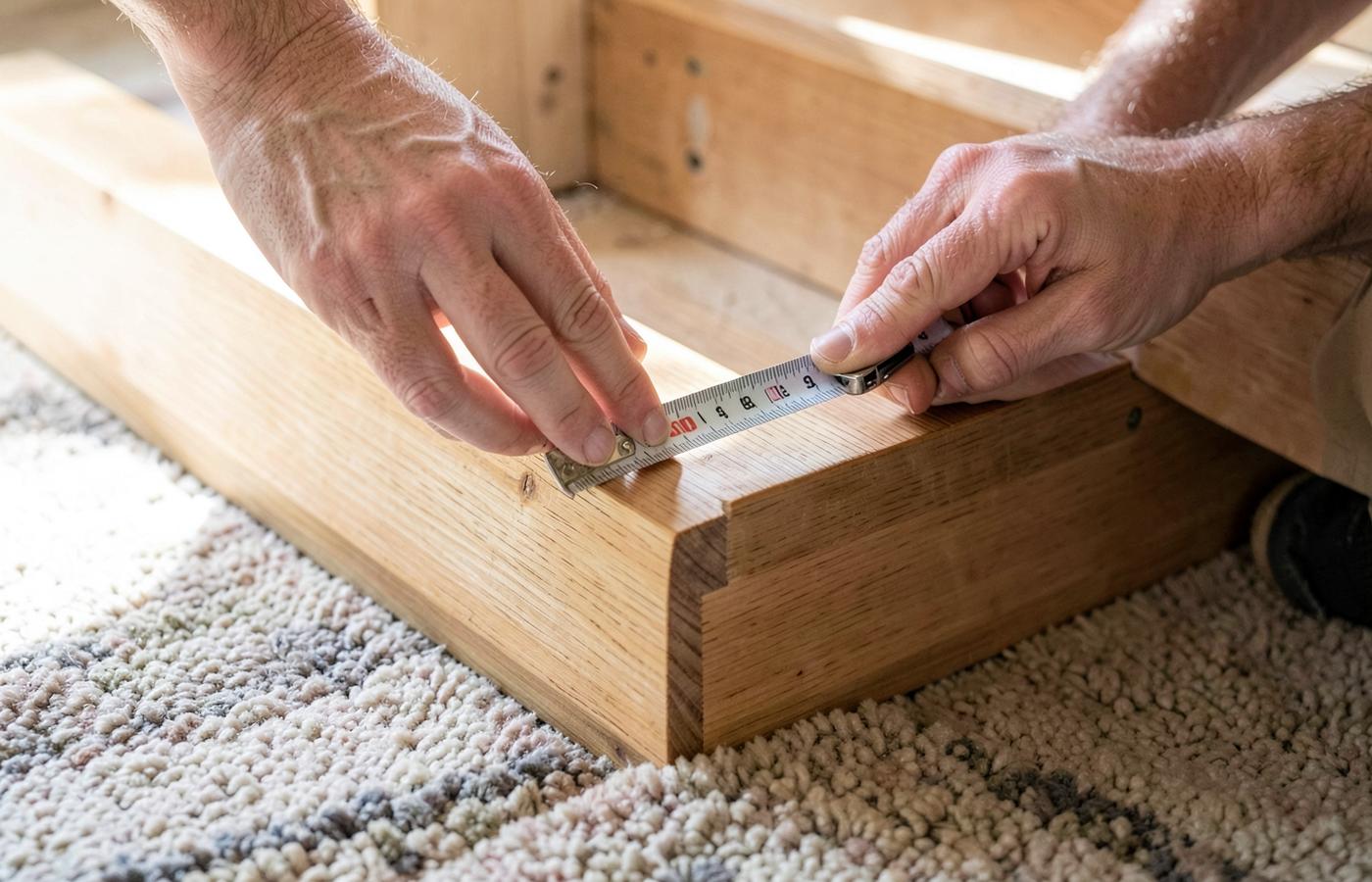 MeasurementHow to Measure for a Stair RunnerThe tread-plus-riser formula, waste allowance, winders and landings, plus a calculator that shows its working.
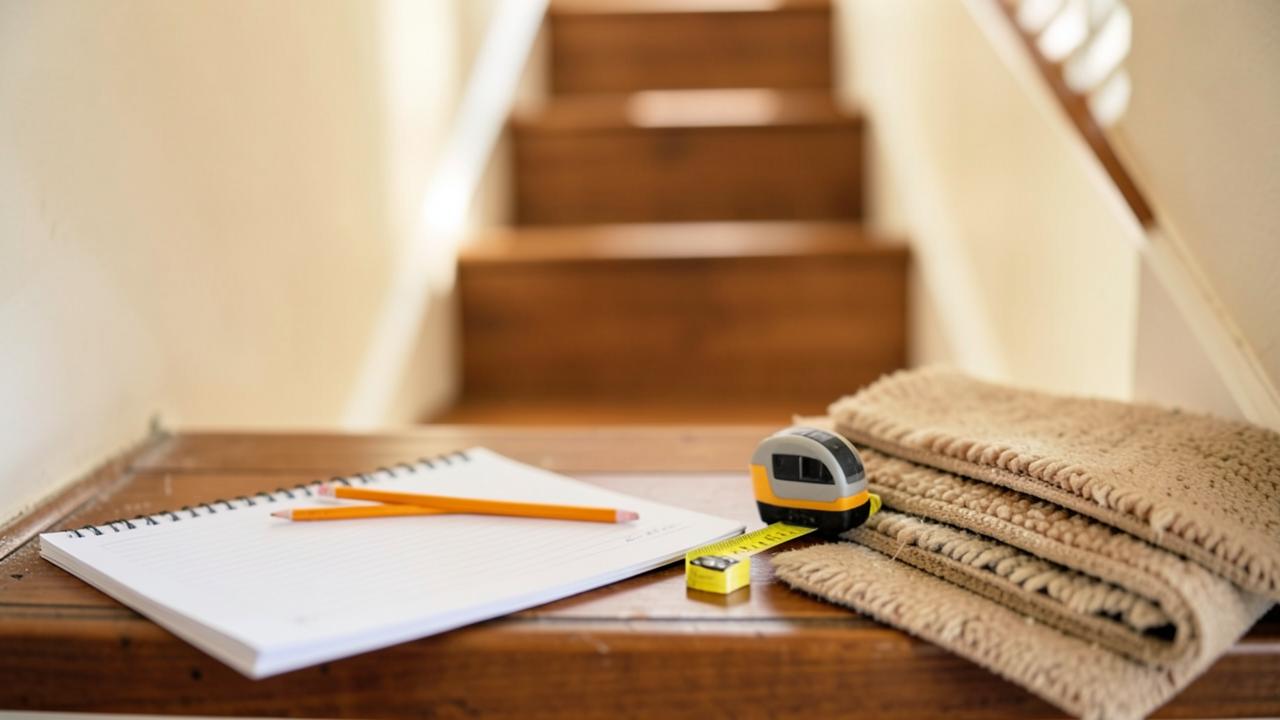 CostWhat Affects Stair Runner CostThe material, labour and complexity variables behind a runner quote, and how to compare estimates fairly.
- MeasurementWhat Width Should a Stair Runner Be?How to set runner width and side margins from your stair width, stringers, balusters and pattern.
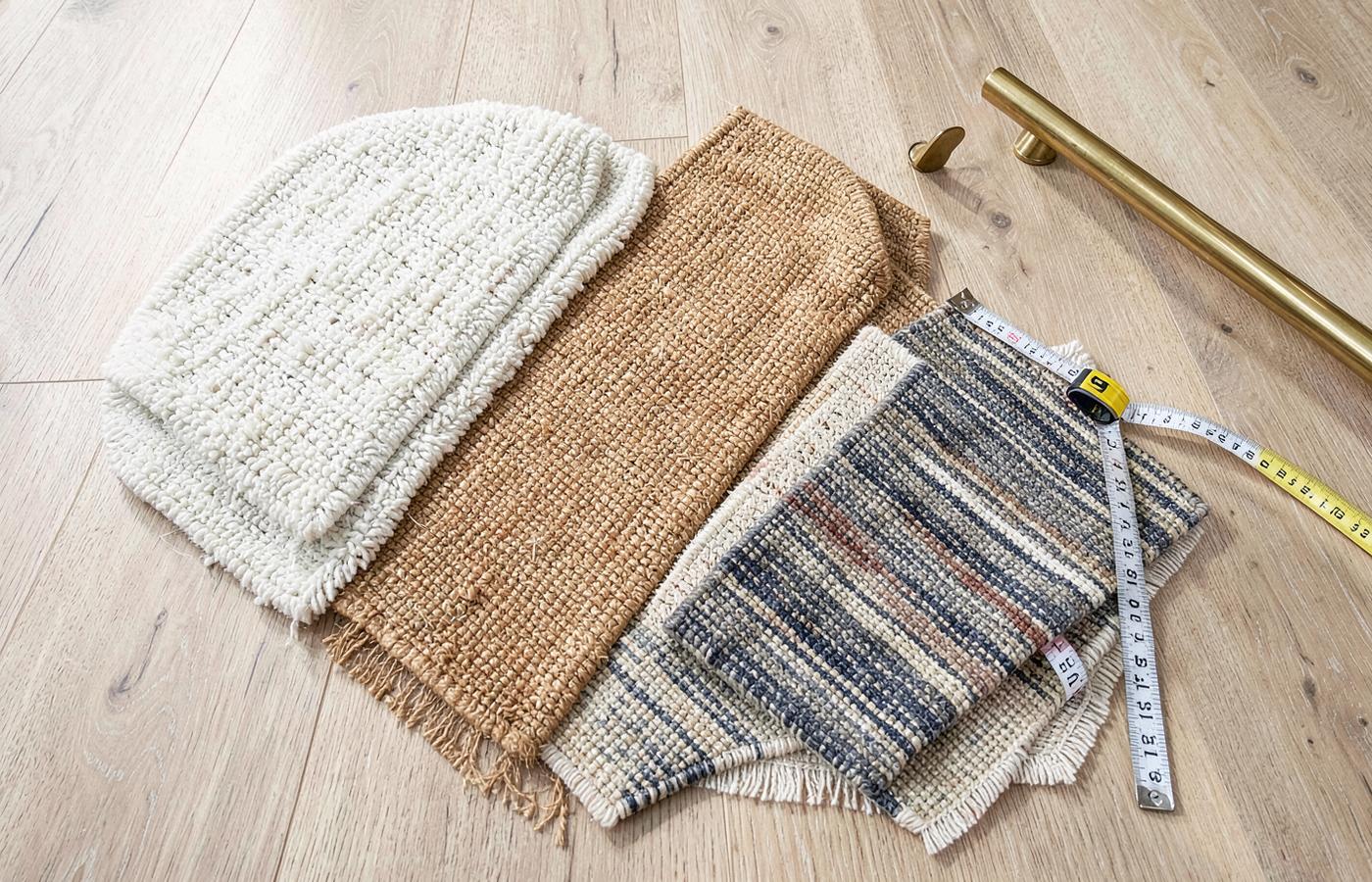 BuyingBest Carpet for a Stair RunnerThe specification checklist — fibre, pile, density, backing, width and pattern repeat — for stair-worthy carpet.