Design & Planning
Unified Flooring: Planning Your Hall, Stairs, and Landing Scheme
Coordinating the floor coverings across the hall, stairs, and landing is one of the most effective ways to create a sense of space and flow in a home. This guide explains how to plan, sequence, and execute a unified scheme.
Written by the StairRunner.co editorial team · Updated 4 September 2026
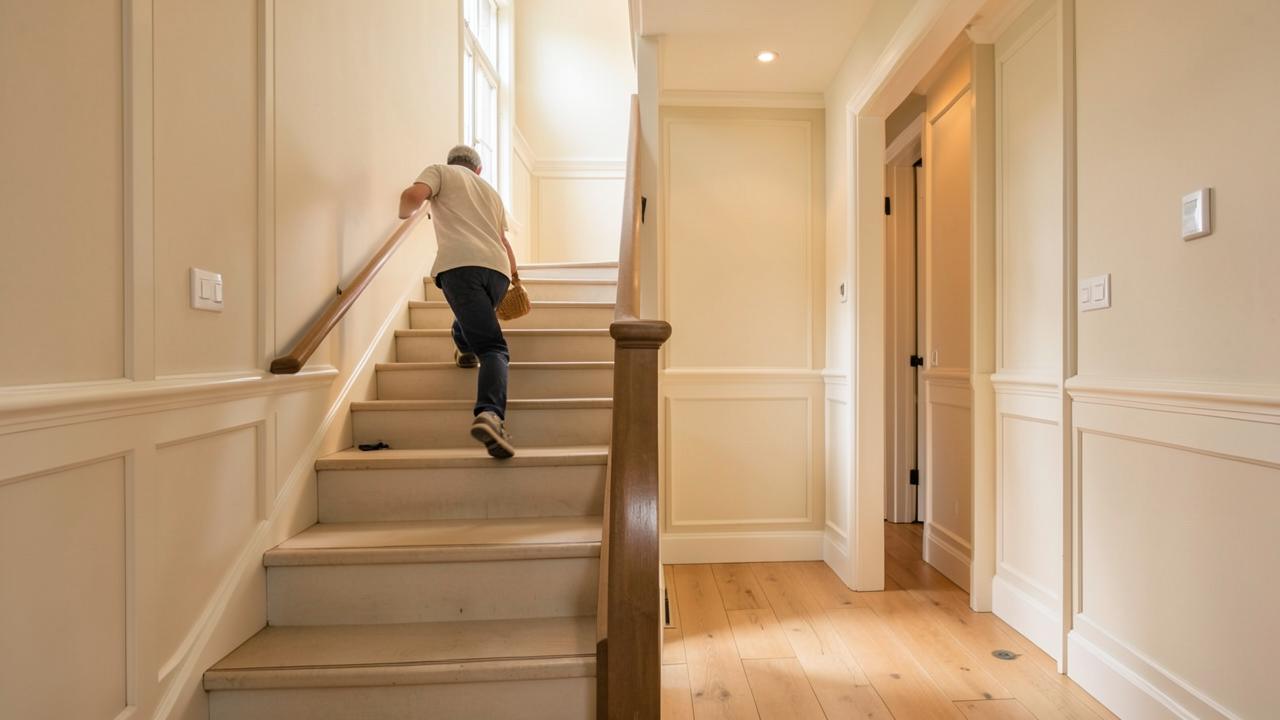
The Concept of the 'Flow'
In interior design, the 'flow' refers to the visual and physical transition between different spaces. The hall, stairs, and landing represent the literal backbone of your home's flow. Because these areas are physically connected and often visible from one another, treating them as separate projects is a common mistake. A disjointed approach—using three different carpets or installation styles—can make a house feel fragmented and smaller than it actually is.
By planning a unified scheme, you are not just choosing a carpet; you are defining the architectural character of your home. A single, consistent floor covering acts as a calm backdrop that allows other design elements, like wall art or furniture, to stand out. Alternatively, a well-planned coordinated scheme (matching colours but different textures) can add depth and interest without sacrificing the sense of unity.
Continuity vs. Contrast: Making the Choice
The first major decision is whether you want an identical look throughout or a coordinated contrast. Both have their merits depending on the style of your home and your practical needs.
The Case for Identical Continuity
Using the exact same carpet and installation style (e.g., all wall-to-wall or all runner) throughout the hall, stairs, and landing is the most effective way to maximize the sense of space. It removes visual boundaries, making the floors appear as one large, continuous surface. This is particularly effective in smaller homes or in hallways with low natural light. It also simplifies the buying and installation process, as you are dealing with a single material and one set of specifications.
The Case for Coordinated Contrast
Many homeowners prefer a 'best of both worlds' approach. A popular configuration is a patterned runner on the stairs (which adds a decorative 'wow' factor) linked to a plain carpet in a matching base colour on the hall and landing. This allows the staircase to become a focal point while the flatter areas remain more neutral. The key to success here is ensuring the 'link' is strong—the plain carpet should perfectly match one of the colours in the patterned runner, and the textures should be compatible.
| Aspect | Identical Scheme | Coordinated Scheme |
|---|---|---|
| Visual Impact | Calm, expansive, seamless. | Dynamic, focal point on stairs. |
| Space Perception | Makes small areas feel larger. | Defines areas more clearly. |
| Maintenance | Simple (one cleaning method). | Requires attention to different materials. |
| Installation | Straightforward transitions. | Complex junctions at transitions. |
Technical Planning: Sequencing the Installation
The order in which these three areas are installed is not just a matter of convenience; it directly affects the quality of the finish. A professional fitter will almost always follow a specific sequence to ensure clean lines and secure fixings.
1. The Landing First
The landing is often the most complex area because it connects to multiple rooms and the top of the stairs. By fitting the landing first, the fitter can ensure that the carpet is perfectly tensioned and correctly finished at all bedroom and bathroom thresholds. The 'nosing' of the top step—the edge where the landing floor becomes the staircase—is the most critical transition point. Having the landing carpet in place allows the stair runner to be neatly terminated or integrated at this edge.
2. The Hallway Second
Similar to the landing, the hallway should be fitted before the stairs. This establishes the baseline for the entire flight. The alignment of the hall runner (if you are using one) will dictate the alignment of the stair runner. If the hall runner is slightly off-center, the stair runner will look crooked by comparison. Fitting the hall first allows the fitter to 'aim' the stair runner perfectly at the hallway's central axis.
3. The Stairs Last
The stairs are the most labour-intensive part of the installation. Fitting them last allows the fitter to focus on the intricate work of stretching the carpet over each step and ensuring the alignment with the already-installed hall and landing is perfect. It also means that the most heavily handled piece of carpet is not walked on by the fitters while they work on the other areas. For more on the specifics of stair fitting, see our full installation guide.
Managing Complex Junctions and Transitions
The junctions between the hall, stairs, and landing are where the quality of the planning truly shows. A common challenge is managing the transition between different flooring types or installation styles.
The Stair-to-Landing Junction
At the top of the stairs, the runner can either wrap over the top nosing and join the landing carpet with a hidden seam, or it can terminate under the lip of the top nosing. The best method depends on whether you are using a runner or wall-to-wall carpet. If the landing is also a runner, a 'mitred join' at the corner where the stairs meet the landing is the most professional finish. You can read more about this in our guide to stair runner landings.
Threshold Management
Every doorway leading off the hall or landing requires a transition. Do not simply end the carpet at the door. Use high-quality thresholds that match your home's hardware (e.g., brushed brass, chrome, or oak). These thresholds serve three purposes: they protect the carpet edge from fraying, they provide a clean visual break, and they ensure there is no trip hazard between different floor heights.
Material Selection for a Multi-Area Scheme
Because the hall, stairs, and landing all experience high traffic, the material must be durable enough for the most demanding of the three—usually the stairs. A material that is 'just okay' for a landing will quickly fail on the sharp edges of stair treads.
We recommend a high-quality wool-mix (80% wool, 20% synthetic) or a premium solution-dyed synthetic. These materials offer the necessary resilience to handle the crushing and abrasive forces of stair traffic while remaining comfortable and attractive in the hall and landing areas. Avoid materials that are too thick or have a very long pile, as these can be unstable on stairs and will show 'tracking' very quickly in the narrow hallway traffic lane. For a deeper dive into materials, see stair runner materials.
Underlay: The Consistent Foundation
It is tempting to use a thicker, softer underlay on the landing for extra comfort and a cheaper, thinner one elsewhere to save money. This is a mistake. Continuity of underlay is essential for a safe and professional finish. A change in underlay thickness creates a subtle but noticeable 'step' or 'dip' at the transition points. In a high-traffic area, this is not just an aesthetic issue; it's a safety hazard that can cause trips. Always specify a high-density, high-quality underlay for the entire scheme. A dense 8mm or 10mm underlay is usually the ideal compromise between comfort and stability. Learn more in our underlay guide.
Budgeting and Ordering
When planning a multi-area scheme, the way you order can affect the cost and the final look.
- Measurement: Have a professional measure the entire space. Hallways and stairs are notorious for 'hidden' measurements like the height of the risers and the depth of the landing turns. Small errors here lead to large shortfalls in carpet.
- Wastage: Expect a higher percentage of wastage in a hall-stairs-landing project than in a simple rectangular room. Fitting around corners and through multiple doorways requires more material to ensure grain direction is consistent.
- Labour: Fitting stairs is significantly more expensive than fitting a flat room. When getting a quote, ensure the labour for the stairs is broken down separately so you can see the true cost of the installation.
Maintenance for a Unified Scheme
A unified carpet scheme requires a unified maintenance routine. The stairs will always wear the fastest, so they need the most frequent vacuuming.
- Regular Vacuuming: Use a high-quality vacuum with a brush bar to lift the pile in all three areas. Pay extra attention to the 'traffic lanes' in the hall and the 'nosings' on the stairs.
- Rotation (if possible): While wall-to-wall carpet cannot be rotated, some landing runners can. Doing so every six months can help even out the wear.
- Professional Cleaning: Schedule a professional deep clean for all three areas at the same time every 12-18 months. This ensures the colour remains consistent and the fibres stay resilient. See cleaning and care for more details.
Common Pitfalls in Integrated Planning
Avoiding these common mistakes will ensure your hall-stairs-landing project is a success:
- Ignoring Light Levels: A carpet that looks great in a bright hallway might look dark and dreary on a landing with no windows. Test samples in all areas.
- Poor Transition Choice: Using cheap, plastic thresholds between beautiful carpets ruins the effect. Invest in high-quality metal or wood finishes.
- Inconsistent Widths: If you are using runners, ensure the width of the hallway runner and the stair runner are identical, or that the difference is large enough to look intentional. A 5cm difference often just looks like a mistake.
- Mismatched Pile Direction: This is the most common cause of a project looking 'off'. Ensure all pieces are laid with the pile running in the same direction—usually 'down' the stairs and 'away' from the entrance.
Planning an integrated flooring scheme is an investment in your home's design and functionality. By focusing on continuity, correct sequencing, and high-quality materials, you can create a space that is both beautiful and built to last. For further inspiration, explore our stair runner ideas or learn how to choose the right width for your specific layout.
Frequently asked questions
- Should the hallway, stairs, and landing carpet all match exactly?
- While matching everything creates a seamless and expansive feel, it is not a strict rule. Many successful designs use a coordinating rather than an identical approach—for example, a patterned runner on the stairs linked to a plain, matching colour on the hall and landing. The key is to maintain a common thread, such as colour or material, to ensure the spaces feel connected.
- What is the best order for installing carpet across these three areas?
- Professional fitters generally recommend installing the landing and hallway carpet first, and then fitting the stair runner. This allows for a much cleaner transition at the 'nosings' (the edges of the steps) where they meet the flat floor. It also ensures that the alignment of the stair runner can be perfectly centered relative to the already installed hall and landing pieces.
- How do I handle a landing with multiple doorways and different floorings?
- Complexity on a landing is managed through professional 'finishing'. Where the landing carpet meets other rooms (like a bedroom with different carpet, or a bathroom with tiles), use high-quality transition thresholds. If you are using a runner rather than wall-to-wall carpet on the landing, ensure the border of exposed floor is consistent around all doorways to maintain the 'framed' aesthetic.
- Can I use a different underlay for the stairs than for the landing?
- It is possible, but usually not recommended. The transition between different underlays can create a noticeable change in height and 'feel' underfoot, which can be a tripping hazard. For consistency and safety, it is best to use a high-quality, dense underlay throughout the entire scheme. If you must change, ensure the transition happens at a natural break, like a doorway threshold.
- Is it better to have one continuous piece of carpet or separate sections?
- For a wall-to-wall installation, minimizing joins is always preferable as it creates a cleaner look and reduces weak points. However, for a runner scheme, separate sections are the norm. The hall, the flight of stairs, and the landing will each be fitted as distinct pieces, allowing for the specific requirements of each area (like stretching on the stairs) to be managed effectively while maintaining a unified appearance.
- How do I choose a colour that works for all three areas?
- The lighting in a hallway, on a staircase, and on a landing can vary significantly. A colour that looks bright in a sun-lit hall might look muddy on a dark landing. Always test your carpet samples in all three locations and at different times of the day. Generally, mid-tones are the most versatile, as they hide soil in the high-traffic hall while remaining light enough to keep a landing from feeling claustrophobic.
- What should I do if my stairs have winders or turns?
- Winders (triangular steps that turn a corner) require specialized fitting. You cannot simply run a straight piece of carpet around a curve. The carpet must be carefully cut and manipulated (often with mitred joins) to follow the turn. This is a highly skilled task and is another reason why planning the entire scheme simultaneously is essential for a professional finish.
Related guides
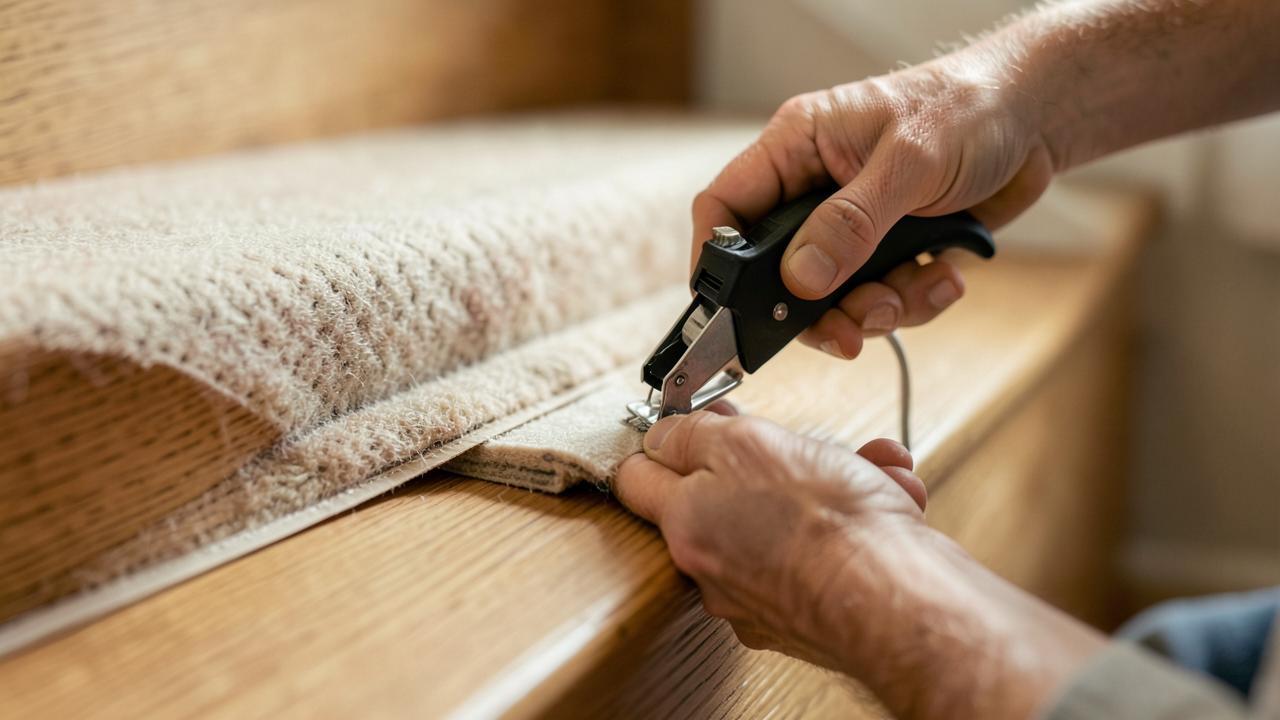 InstallationHow to Install a Stair RunnerWaterfall and Hollywood methods, staples versus rods, tools, sequence and quality checks.
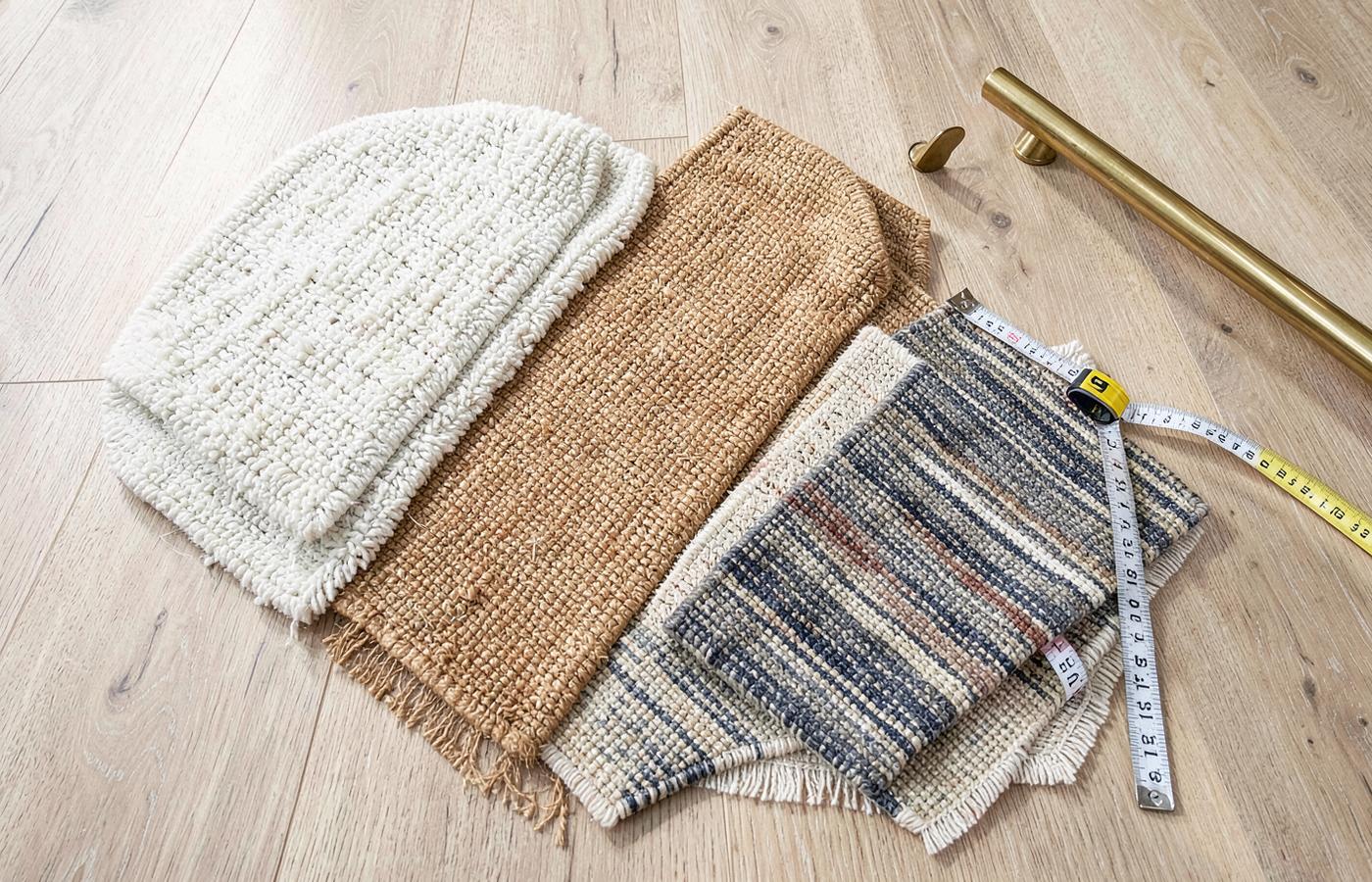 MaterialsStair Runner Materials ComparedWool, nylon, polypropylene, sisal and jute judged on stair-specific wear, comfort, cleaning and safety.
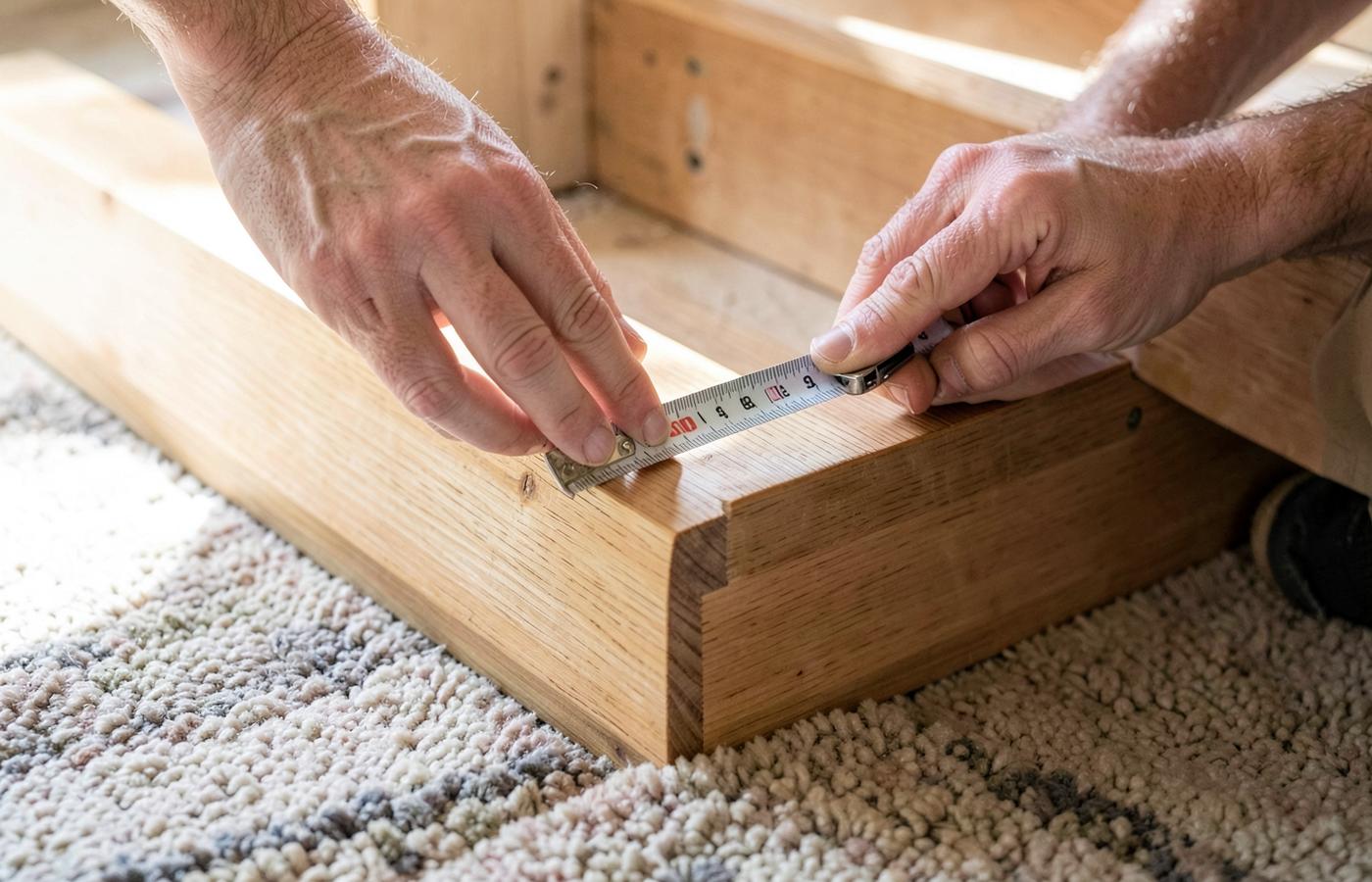 MeasurementWhat Width Should a Stair Runner Be?How to set runner width and side margins from your stair width, stringers, balusters and pattern.
- InstallationJoining a Runner to Landing CarpetFour ways to handle the junction at the head of a flight, and the safety rules that apply there.