Style
Herringbone stair runners: a complete buying guide
Herringbone brings texture and quiet movement to a staircase without relying on strong colour, which is why it has remained a consistently popular choice across very different styles of house. Here is how to choose the right scale, fibre and fit.
Written by the StairRunner.co editorial team · Updated 4 September 2026
What herringbone actually is
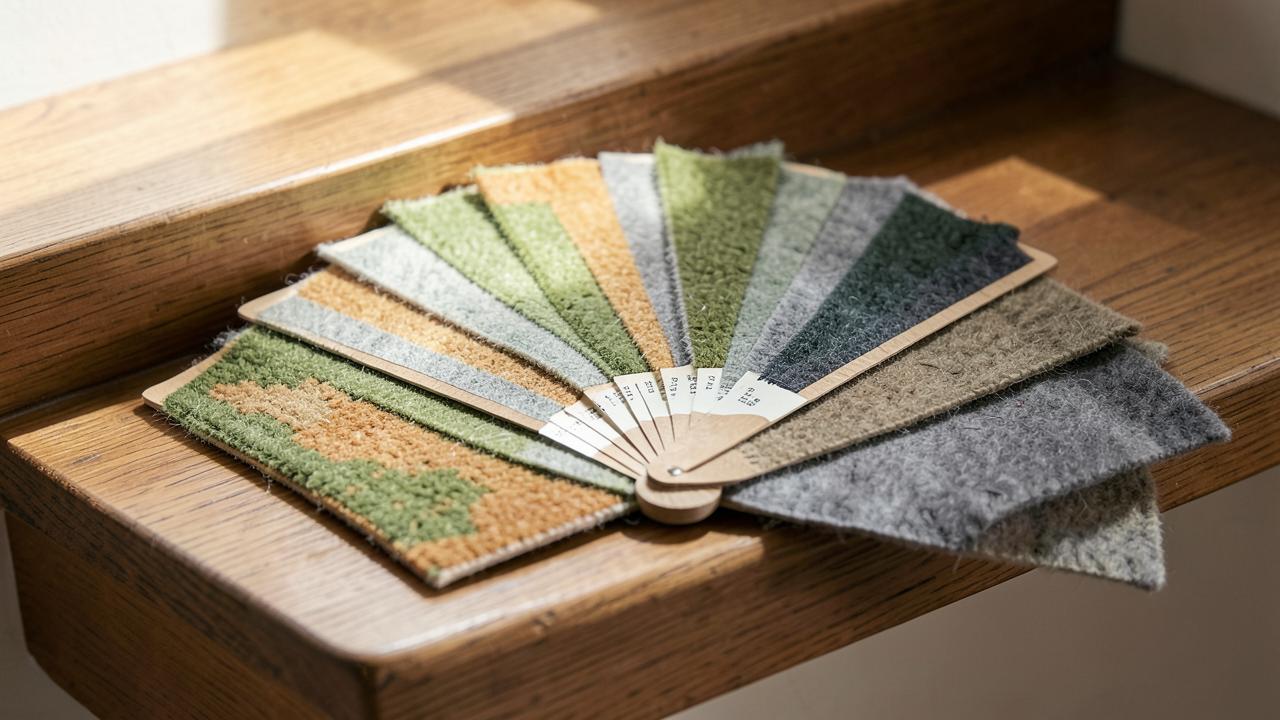
Herringbone describes a weave in which short, rectangular sections of yarn or block are laid at an angle, with each row offset from the one before so the ends interlock in a broken zigzag. The name comes from the resemblance to the skeleton of a herring, with each "spine" of the pattern flanked by short angled ribs. On a stair runner, this produces a surface with genuine physical texture as well as visual pattern, since the weave itself creates small ridges and directional changes in the pile that catch the light differently depending on the angle you view them from. This gives herringbone a depth that a flat, single-direction weave cannot replicate, even in the same colour.
Herringbone versus chevron
| Feature | Herringbone | Chevron |
|---|---|---|
| Construction | Short blocks offset row to row, ends do not meet exactly | Continuous strips mitred to meet precisely at a point |
| Visual effect | Broken zigzag with visible texture and movement | Clean, unbroken V shape, more graphic |
| Character | Traditional, tactile, slightly informal | Sharp, contemporary, precise |
| Best suited to | Period hallways, natural fibre schemes | Contemporary staircases, bold colour pairings |
The two are often confused because both create a zigzag effect, but once you know what to look for the difference is easy to spot: herringbone has a slightly broken, textured appearance where the pattern does not quite meet at a sharp point, while chevron is crisp and continuous. If your priority is a graphic, geometric look rather than texture, it is worth also reading chevron stair runners before deciding between the two.
Choosing the right scale for your staircase
Herringbone is available in a range of scales, from a fine, tight weave where the individual blocks are barely a few centimetres long, to a bold, oversized herringbone where each block is clearly visible from a distance. The right scale depends heavily on the width of your treads. A fine herringbone sits comfortably on almost any staircase, including narrow cottage stairs, because the repeat is small enough that the pattern reads correctly even when only a modest width of runner is used. A bold, large-scale herringbone needs a wider runner and a wider staircase to do it justice; on a narrow flight, the pattern can be cut off at the edges in a way that looks unintentional rather than deliberate.
Fibre choices for herringbone
Wool remains the classic choice for herringbone stair runners, and for good reason: its natural fibre structure takes dye with a depth and variation that highlights the subtle directional changes in the weave, giving genuine dimension to the pattern rather than a flat printed effect. Wool blends, combining wool with a small proportion of a synthetic fibre such as nylon, offer a similar appearance with added durability and a lower price point, which is worth considering for a busy family staircase. Solution-dyed synthetic herringbone weaves are also available and can be a sound choice where cleaning resilience matters more than the precise depth of colour that wool offers. For a broader comparison of how these fibres perform under stair traffic specifically, see wool versus synthetic stair runners.
Colour and herringbone
Because herringbone already carries visual interest through its texture, it does not need a strong or unusual colour to make an impact, which is part of why it suits such a wide range of hallways. A neutral herringbone in oatmeal, grey or a soft heather tone reads as understated and versatile, letting the weave itself provide the visual interest. A herringbone woven in two closely related tones, rather than one flat colour, accentuates the pattern further, since the eye can follow the direction changes more easily where there is some tonal contrast between adjacent rows. Herringbone in a bold, saturated colour is less common but can work well in a contemporary setting, particularly paired with a plain contrasting border. General guidance on colour choice is covered in choosing a colourful stair runner.
Fitting herringbone: what makes it different
A plain runner can be fitted with relatively little concern for how the material's own pattern behaves as it turns a corner or crosses a winder, because there is no directional pattern to keep aligned. Herringbone is different: the zigzag has a clear direction, and a competent fitter needs to plan carefully how that direction continues, or is deliberately broken, at any point where the staircase changes shape. On a straight flight this is straightforward, but on a staircase with a half-landing, a turn, or winders, the fitter has to decide whether to interrupt the pattern with a clean break at a natural point such as a landing, or to attempt a continuous run, which is more difficult and not always possible depending on the specific product's weave.
- Ask to see previous herringbone stair installations specifically. A fitter experienced with herringbone on flat floors has not necessarily solved the same problems on a turning staircase.
- Agree where pattern breaks will fall before work begins. A half-landing is usually the most natural place to break the pattern cleanly, rather than trying to force continuity through a turn.
- Check how offcuts and joins are planned. Herringbone's directional weave means offcuts cannot always be reused elsewhere on the same flight without disrupting the pattern direction.
- Confirm the pile direction is consistent up the flight. Even without a change in physical direction, herringbone can look subtly different depending on which way the pile is brushed, so consistency step to step matters.
General fitting principles that apply to any patterned runner, including how flights with turns and winders are approached, are covered in how a stair runner is installed.
Herringbone in period versus contemporary staircases
Herringbone has genuine historical roots in flooring and textiles, and a woven herringbone stair runner sits naturally in a period property, particularly one with parquet flooring elsewhere in the house, since the two patterns share a common visual language. In this setting, a natural wool herringbone in a muted, traditional colour paired with brass stair rods is a dependable, long-lasting choice that rarely looks out of place. In a contemporary house, herringbone can be used just as effectively, particularly in a finer scale and a more restrained neutral palette, where its texture provides interest without introducing an overtly traditional character. The pattern adapts to the surrounding architecture more readily than many other stair patterns because it reads as texture first and pattern second.
How herringbone performs under everyday wear
One practical advantage of herringbone is how it behaves as it wears. Because the weave already breaks up the surface into many small angled sections, early wear and light soiling in the traffic lane tend to blend into the existing pattern rather than standing out as a stark, obvious patch the way they can on a flat, solid-coloured runner. This does not mean herringbone is immune to wear — the centre of each tread will eventually show flattening and soiling like any other runner — but the visual transition tends to be more gradual and less noticeable, which is one reason it remains popular for busy family staircases as well as more formal ones.
Borders and edging with herringbone
A plain, single-colour border is generally the most successful pairing with a herringbone field, since it gives the busy, textured weave a calm, defined edge without introducing a second competing pattern. The border colour can either pick out one of the tones already present in the herringbone weave, for a subtle, cohesive look, or introduce a contrasting colour for a sharper, more defined edge. A patterned border alongside herringbone is possible but requires a confident hand, since two active patterns running the length of the same flight can easily overwhelm the staircase rather than complementing it. See bordered stair runners for more on how border choice affects the finished look generally.
A short checklist before ordering
- Match the weave scale to your tread width, favouring a finer weave on a narrow staircase.
- Choose wool or a wool blend if you want the deepest, most tactile version of the pattern.
- Confirm your fitter has specific experience with herringbone on a staircase with turns or winders, not just flat floors.
- Agree in advance where the pattern will break, if your staircase is not a single straight flight.
- Decide on a plain rather than patterned border to keep the finished look coherent.
Frequently asked questions
- What is the difference between herringbone and chevron?
- Herringbone is made from short rectangular blocks laid at an angle so they interlock in a broken zigzag, with a visible offset between rows. Chevron is continuous, with each strip mitred to meet its neighbour at a point, producing an unbroken V shape. Herringbone has more texture and visual movement; chevron looks cleaner and more graphic.
- Does herringbone work on a narrow staircase?
- Yes, provided the scale of the weave is chosen carefully. A fine herringbone weave suits a narrow flight well, since the pattern repeat is small enough to sit comfortably within the tread width. A very large-scale herringbone can look cramped or cut off awkwardly on a narrow runner.
- Is herringbone harder to fit than a plain runner?
- It takes more care, mainly around keeping the pattern's angle consistent as it turns corners, winders or a half-landing, but a competent fitter manages this routinely. Ask to see examples of a fitter's previous herringbone work on stairs specifically, since a flat-floor herringbone installation does not involve the same challenges.
- What fibre is best for a herringbone stair runner?
- Wool is the traditional choice and shows the woven texture of herringbone particularly well, with a natural depth of colour in each block. Wool-blend and solution-dyed synthetic options are also available and can offer a similar visual effect with different durability and budget trade-offs.
- Can herringbone be used with a border, or does it look too busy?
- A plain, contrasting border generally works well with herringbone, since the border gives the eye a clean edge and the busier woven pattern a defined frame. A second patterned border alongside a herringbone field usually is competing for the same visual attention and tends to look overworked.
- Does herringbone show wear differently to a plain weave?
- The broken, textured surface of herringbone disguises early wear and light soiling better than a flat, solid colour of the same fibre, since the pattern's own texture already breaks up the light reflecting off the surface. Wear will still show eventually in the centre of the traffic lane, but later and less obviously than on a plain runner.
Related guides
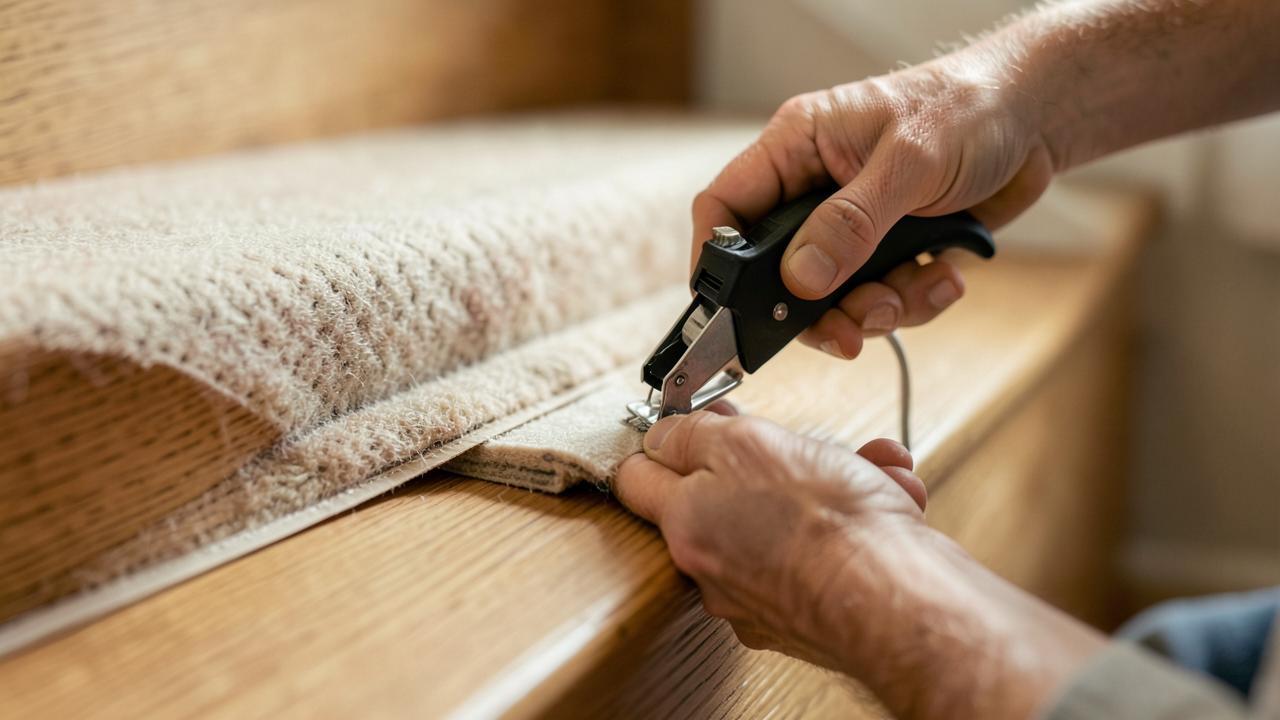 InstallationHow to Install a Stair RunnerWaterfall and Hollywood methods, staples versus rods, tools, sequence and quality checks.
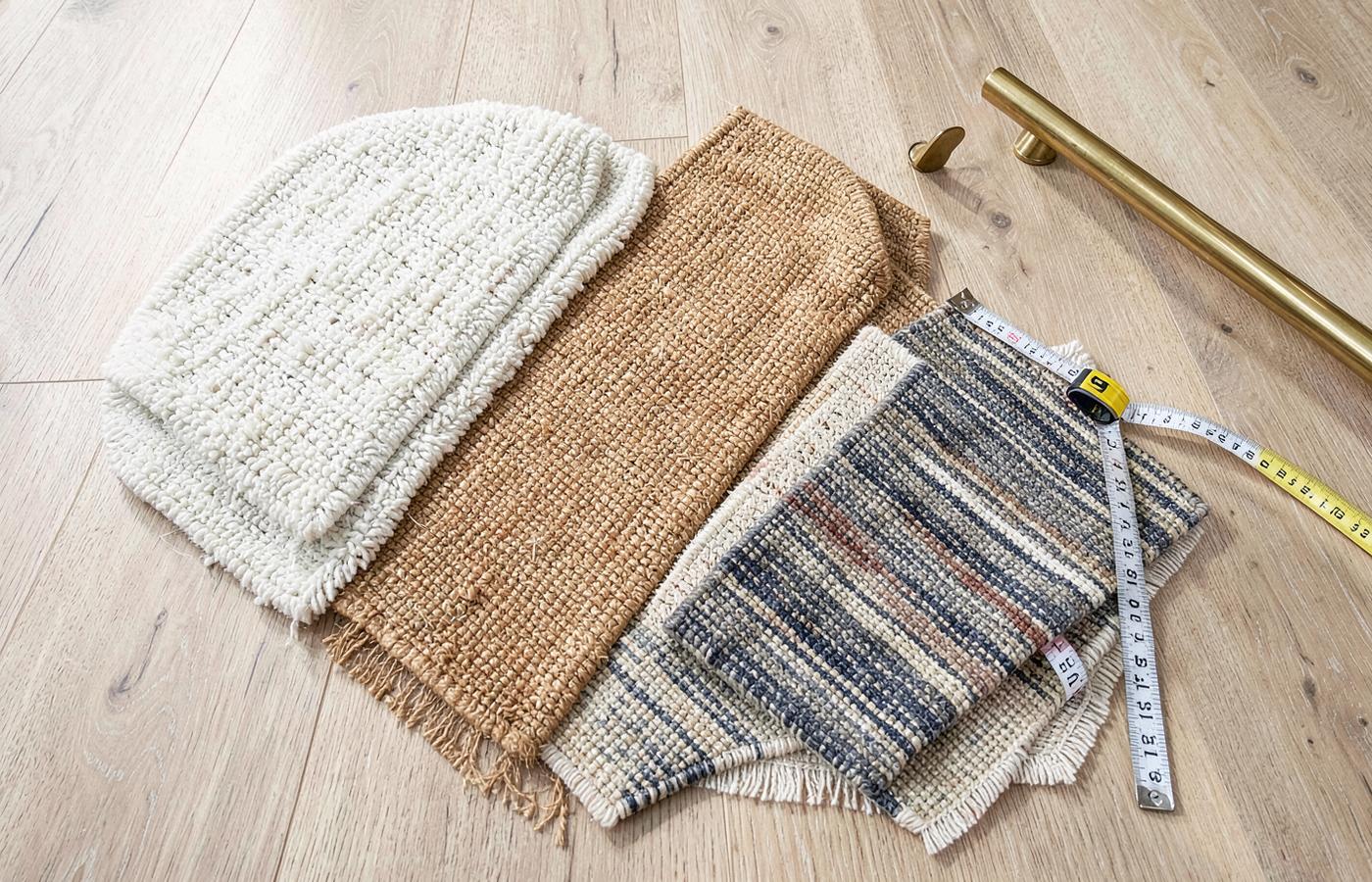 ComparisonsWool vs Synthetic Stair RunnersWool, nylon, polyester and polypropylene compared on stair-specific wear, cleaning, comfort and price.
- DesignBordered Stair Runners: Design & Fitting GuideA complete guide to bordered stair runners, covering whipped vs taped edges, width ratios, winder mitring, and how to choose the right contrast for your hallway.
- DesignChevron Stair Runner Ideas & Fitting GuideMaster chevron patterns on stairs: how to align points, manage winders, choose scale, and ensure a seamless look from top to bottom.