Design
Bordered stair runners: The definitive guide to edges and framing
The border is what transforms a simple strip of carpet into a bespoke architectural feature. Understanding the interplay between the field, the frame, and the exposed timber is key to a successful installation.
Written by the StairRunner.co editorial team · Updated 4 September 2026
The aesthetic function of a border
In the world of interior design, a border acts much like a frame does for a painting. It provides a definitive start and end point for the eye, which is particularly important on a staircase where the repetitive nature of treads and risers can otherwise feel visually monotonous. A bordered runner creates a strong vertical line that draws the eye upward, accentuating the height of the hallway and the craftsmanship of the joinery.
Beyond mere decoration, borders serve a practical structural purpose. Many of the most popular materials for runners, such as sisal and jute, are flatweaves. Because these are woven on a loom and then cut to width, the edges are naturally prone to fraying. A border—whether it is a simple whipping or a heavy-duty cotton tape—encapsulates these raw edges, ensuring the runner remains stable under the high-tension environment of a fitted staircase.
Whipped edges vs. taped borders
| Feature | Whipped Edge (Overlocked) | Taped Border (Bound) |
|---|---|---|
| Visual Profile | Low profile, subtle, looks like part of the carpet | Prominent, architectural, creates a distinct frame |
| Width Options | Fixed (usually around 10-15mm) | Variable (typically 50mm to 120mm) |
| Material | Wool or synthetic yarn | Cotton, linen, leather, or faux-suede |
| Winder Complexity | Easier to navigate tight turns | Requires expert mitring at every angle |
| Cost Factor | Generally more affordable | Premium due to material and labour intensity |
Design rules for border widths and ratios
One of the most common mistakes in specifying a bordered runner is choosing a border width that is out of proportion with the stairs. A border that is too narrow (under 40mm) can look 'stringy' and fail to provide the necessary visual weight to ground the design. Conversely, a border that is too wide (over 100mm) can squeeze the central 'field' of the carpet, making the runner look like three separate strips rather than a unified piece of flooring.
For a standard UK staircase, which is usually between 850mm and 950mm wide, a runner width of 600mm to 700mm is common. Within that runner, a border of 60mm to 70mm is generally considered the 'golden ratio'. This leaves enough of the central material to showcase its texture or pattern while providing a substantial enough frame to be noticed from the bottom of the flight. If you are dealing with an exceptionally wide grand staircase, you can scale the border up accordingly, but rarely should a domestic border exceed 120mm.
Material choices for taped borders
If you opt for a taped border, the material you choose will dictate the 'vibe' of the installation as much as the carpet itself.
- Cotton Herringbone: The classic choice. It is durable, comes in hundreds of colours, and has a matte finish that complements both wool and natural fibres.
- Linen: Offers a softer, more relaxed look. Ideal for coastal or country house styles, though it can show creases and soil more easily than cotton.
- Leather & Faux-Leather: Provides a very high-end, masculine, or industrial feel. Leather is exceptionally durable but requires specialist fitting as it is less flexible around nosings.
- Faux-Suede (Alcantara style): Offers a soft, tactile contrast to the ruggedness of a sisal or seagrass runner. It is surprisingly easy to clean but can show 'shading' when touched.
The technical challenge: Mitring winders and landings
On a straight flight of stairs, a bordered runner is relatively straightforward to install. However, most British homes feature at least one 'winder'—a set of triangular steps that turn a corner. This is where the skill of the fitter is truly tested.
A taped border cannot simply be bent around a corner; it must be 'mitred'. This involves cutting the tape at a 45-degree angle (or whatever angle the turn requires) and stitching or bonding the two pieces together so the border remains a constant width even as the carpet underneath changes shape. If this isn't done correctly, the border will appear to widen or narrow as it goes around the turn, breaking the visual flow.
When planning for winders, you must also consider the 'pattern match' of the border. If the tape has a visible weave, like a herringbone, the direction of that weave will change at the mitre joint. For more information on navigating these architectural quirks, see our guide on winder stair runners.
Bordered runners and stair rods
Should you use stair rods with a bordered runner? While not strictly necessary, they add a layer of traditional elegance. The key is to ensure the rod is wide enough to span the entire runner, including the borders. The 'bracket' of the rod usually sits just outside the edge of the border.
Visually, the rod acts as a horizontal anchor that intersects the vertical lines of the border. This creates a grid-like stability that feels very 'finished'. If you are using a bold, contrasting border, choose a rod finish that doesn't compete for attention. A matte black rod with a monochrome border is a timeless modern combination. Explore the options in our stair rods guide.
Maintenance and longevity of bordered edges
A common concern is whether the border will become a 'dirt trap'. Because the border is often a different material and height than the carpet field, dust can accumulate at the seam. Regular vacuuming with a crevice tool along the edge of the border is essential.
If you choose a light-coloured cotton tape, be aware that it will be the first place to show liquid spills or muddy footprints. Unlike the carpet pile, which can hide soil deep within the fibres, a flat cotton tape presents soil right on the surface. We recommend treating taped borders with a fabric protector during installation to buy you time to blot away any accidents. For deep cleaning advice, refer to cleaning and caring for a stair runner.
Visual impact: Narrow vs. wide hallways
The choice of border can actually change the perceived proportions of your hallway.
- Narrow Hallways: A runner with a border that is very close in colour to the carpet field (a 'tonal' border) will make the space feel wider. A high-contrast border in a narrow space creates two strong vertical lines that can make the hallway feel longer but also more constricted.
- Grand Entrance Halls: Here you can afford to be bold. A wide, dark border on a light runner creates a 'red carpet' effect that feels ceremonial and grand.
- Dark Hallways: Avoid dark borders if your hallway lacks natural light, as the border will simply disappear into the shadows of the tread/riser junction. A light, reflective border can help define the steps and improve safety.
Troubleshooting common border issues
| Problem | Cause | Solution |
|---|---|---|
| Tape lifting at the nosing | Insufficient adhesive or poor tension during fitting | A professional fitter can re-bond the tape; avoid pulling it yourself |
| Mitre joints opening up | Natural movement of the timber or carpet shrinkage | Usually a sign of poor initial stitching; may require the section to be refitted |
| Fraying at the seam | High traffic or vacuum cleaner agitation | Trim loose threads carefully; do not pull. Consider a protective treatment |
| Border looking 'wavy' | Uneven tension across the width of the runner | Often happens with DIY installs; requires re-stretching by a professional |
The 'Hidden' Border: Inset installations
An alternative to the traditional bordered runner is the 'inset' or 'wall-to-wall' runner. This is where the carpet is fitted into a recessed area of the tread, or where the 'border' is actually a painted section of the stairs rather than a fabric attachment. While this guide focuses on applied borders, the design principles of contrast and ratio remain the same. If you are considering a more integrated look, check out custom stair runner options.
Cost considerations
Adding a border to a runner typically increases the cost in two ways. First, there is the material cost of the tape or yarn. Second, and more significantly, there is the labour cost. Whipping is usually charged per linear metre. Taping is more complex and is often priced per step, especially if there are winders involved that require mitring. While it is a more expensive option than a standard hemmed or raw edge, the increase in durability and the massive upgrade in aesthetics usually make it a worthwhile investment for a primary staircase.
Sustainability and Borders
For the environmentally conscious, the choice of border material matters. Natural cotton and linen tapes are biodegradable and renewable. However, the adhesives and synthetic yarns used in some whipping processes are less so. If you are choosing a wool runner for its natural properties, ensure your border and underlay choices reflect that same commitment to sustainability.
Conclusion of Choice
Selecting a bordered runner is an exercise in balancing geometry and texture. By following the 60-70mm width rule, choosing a material that complements your hallway's light levels, and ensuring your fitter is capable of high-quality mitring, you will create a staircase that isn't just a way to get upstairs—it's a central design feature of your home.
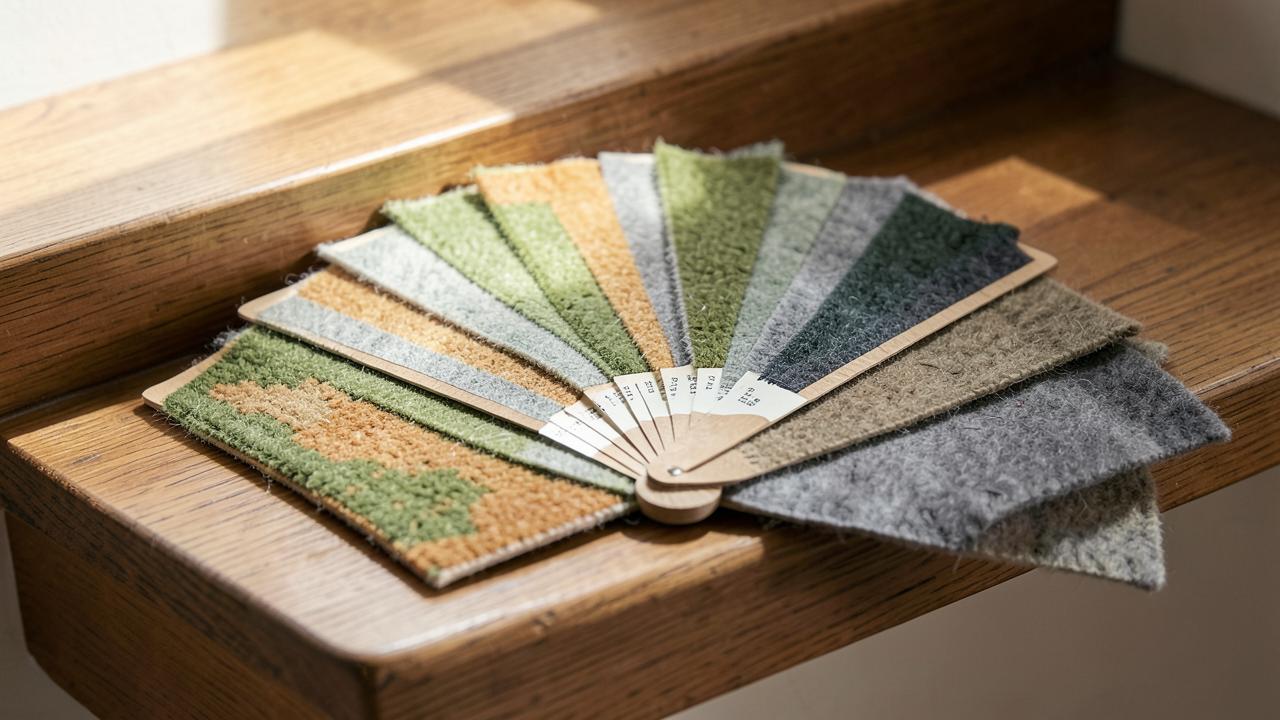
Before you make your final decision, we recommend ordering samples of both the carpet and the border tape. Lay them on your stairs at different times of the day to see how the shadows cast by the balustrade interact with the 'frame' you are creating. For further inspiration on how to combine colours and textures, see our stair runner ideas.
Frequently asked questions
- What is the difference between a whipped and a taped border?
- A whipped edge uses a yarn overlocked around the carpet edge, providing a low-profile, matching or contrasting finish. A taped border uses a fabric (linen, cotton, or leather) stitched over the edge, creating a wider, more distinct frame that adds significant visual weight and structural stability.
- How wide should the border be on a stair runner?
- For standard domestic stairs (approx. 900mm wide), a border of 50mm to 80mm is typical. If the border is too narrow, it can look like an afterthought; if too wide, it can make the central 'field' of the runner look cramped. The goal is to frame the treads, not overwhelm them.
- Can you border a runner on winder stairs?
- Yes, but it requires skilled mitring. The border must be cut and joined at precise angles to follow the tapering shape of the winder treads. Taped borders are harder to mitre than whipped edges because the fabric bulk can create bumps at the joints if not handled expertly.
- Do borders show wear faster than the centre?
- The border itself doesn't necessarily wear faster, but the stitching or adhesive on taped borders can occasionally fail under heavy traffic if not properly applied. Taped borders in light colours will also show 'tracking' or soil marks more clearly than the textured field of the runner.
- Can I add a border to any carpet material?
- Most materials can be bordered, but flatweaves like sisal and jute are the most common candidates because they require an edge finish to prevent fraying. Soft wool piles can be whipped, but thick shags are generally unsuitable for taped borders as the pile interferes with the fabric laying flat.
- Should the border match the stair rods?
- It isn't a requirement, but coordinating the two can create a cohesive look. For example, a dark grey taped border looks excellent with pewter or chrome rods, while a natural linen border pairs beautifully with antique brass or wood.
Related guides
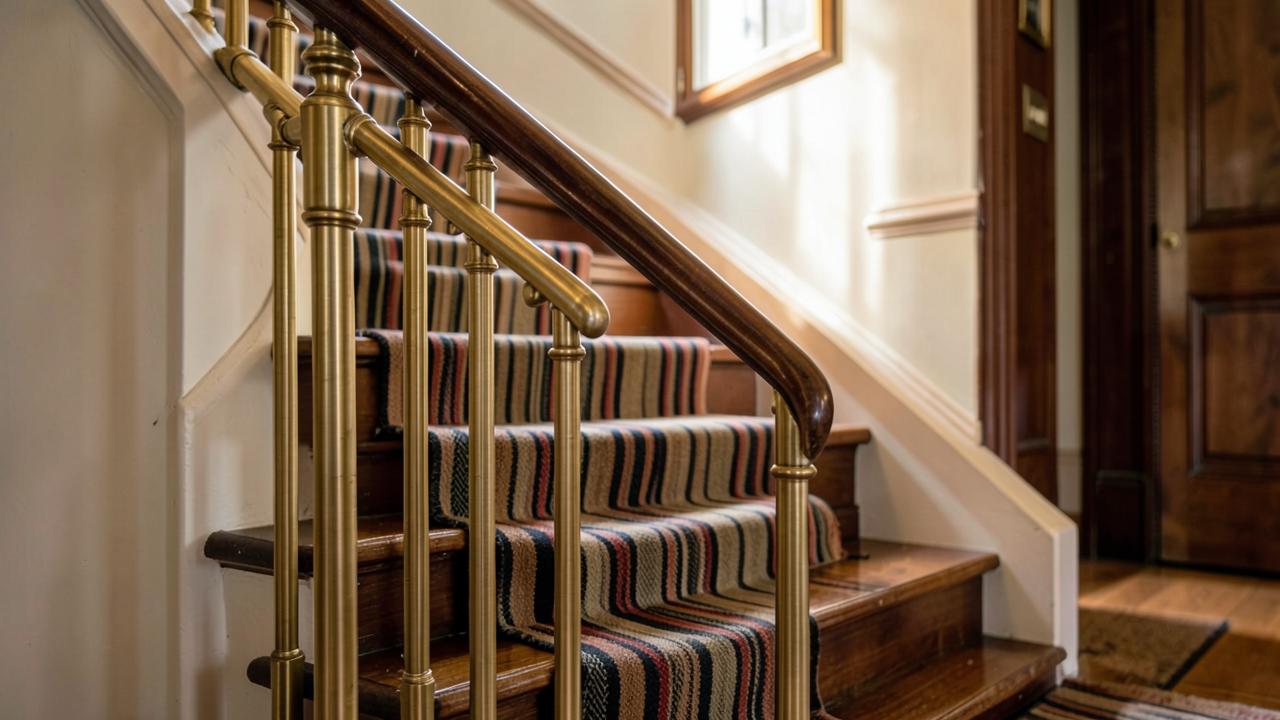 InstallationStair Rods, Clips and Runner HardwareHow stair rods, clips, brackets and bars actually work, when they hold a runner and when they are decorative.
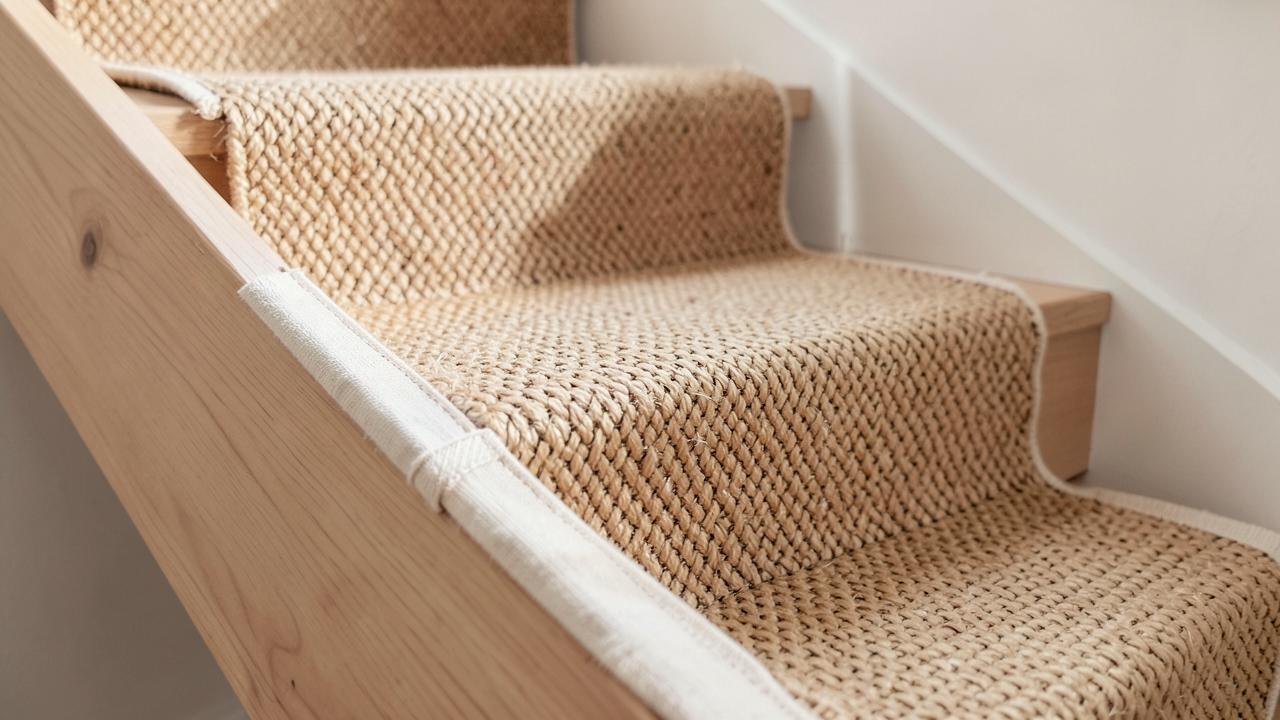 MaterialsSisal and Jute Stair RunnersNatural plant-fibre runners on stairs: durability, texture, moisture behaviour, borders and honest limitations.
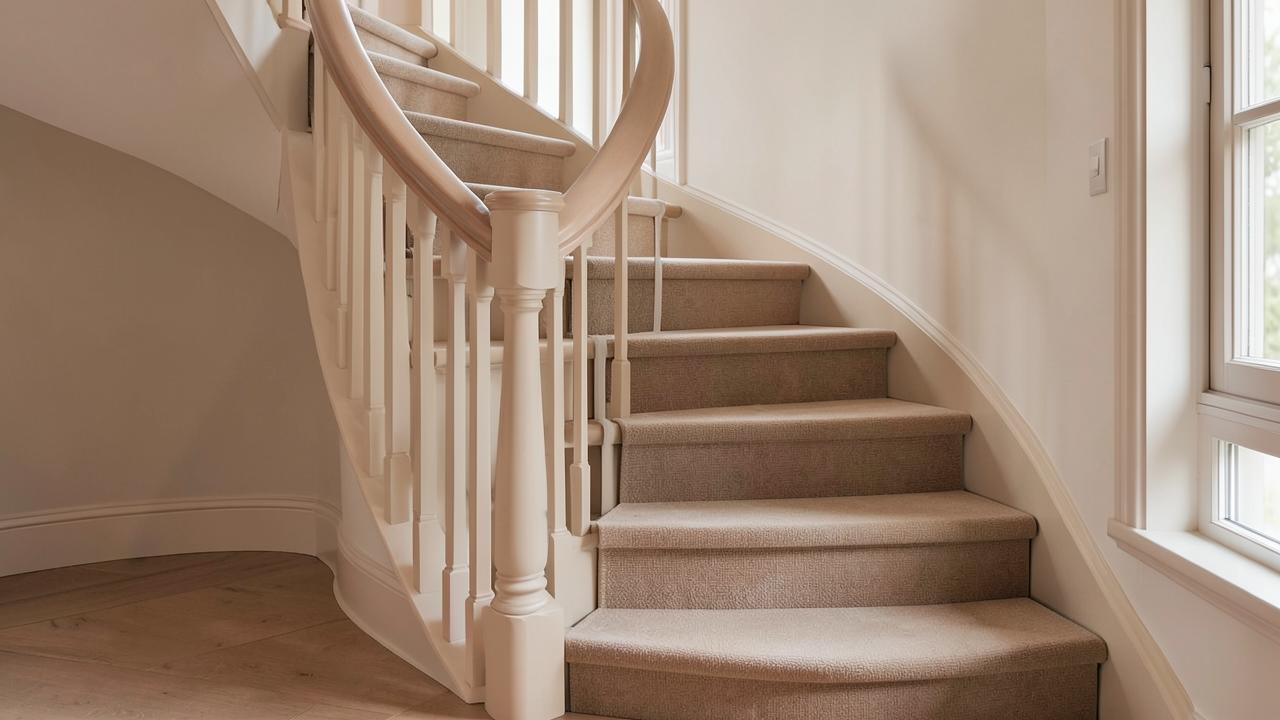 MeasurementRunners on Winder, Curved and Open StairsMeasuring and fitting where treads are not rectangles: winders, pie steps, curves and open-sided flights.