Materials
Seagrass stair runner: grip, moisture and honest safety notes
Seagrass is the most water-resistant of the common natural stair fibres, which makes it attractive for busy households. It is also naturally smooth and low-grip, which is exactly the wrong characteristic to underplay on a staircase.
Written by the StairRunner.co editorial team · Updated 4 September 2026
What seagrass actually is
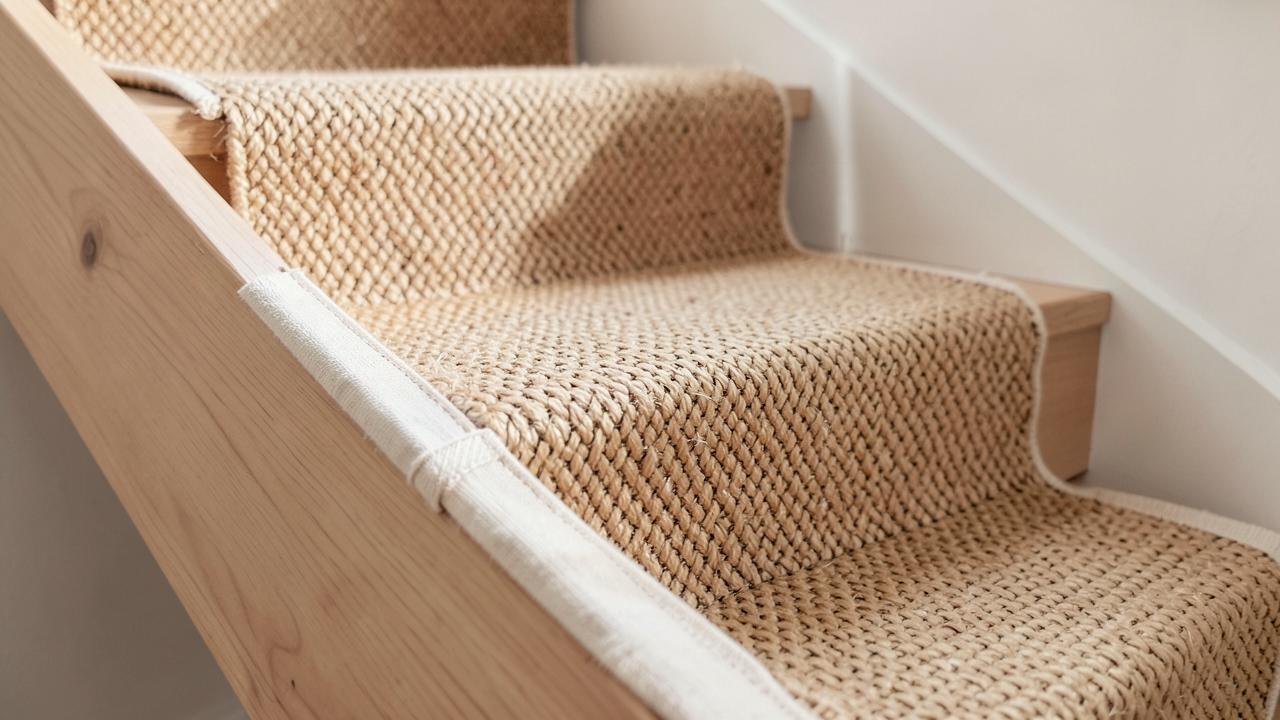
Seagrass is a fast-growing marine or wetland grass, harvested and dried before being spun into a yarn and woven into flooring. Unlike sisal (a leaf fibre) or jute (a bast fibre), seagrass grows in a wet environment and its fibre structure reflects that: it is naturally non-porous, with a hard, smooth surface that does not readily absorb water or dye in the same way as the other natural fibres. This is the source of both its main strength and its main weakness as a stair covering. The non-porous surface is why seagrass resists staining and moisture damage better than jute, sisal or wool. The same smoothness is why it offers less natural grip than a more textured, absorbent fibre, and why it does not take dye evenly, which is why seagrass is typically sold in a narrower, more muted natural colour range than sisal or wool.
Why the non-absorbent surface matters on stairs specifically
On a flat floor, a hard, non-absorbent fibre is close to an unambiguous advantage: spills sit on the surface rather than soaking in, everyday soiling wipes off more easily, and the flooring tolerates a slightly damp mop far better than jute ever could. On a staircase, the same physical property that gives seagrass its moisture resistance also reduces the friction between a shoe or sock and the fibre surface. A textured, absorbent fibre such as wool grips a shoe sole partly because the fibre surface itself has some texture and the pile can flex slightly under load; a hard, smooth fibre offers less of that mechanical grip, and this matters far more on an incline where a slip has real consequences than it does on a flat floor where a slip is rarely more than a stumble.
This is not a reason to rule seagrass out for stairs altogether, but it is a reason to treat grip as the central design decision rather than a secondary one behind colour or budget. For the wider principles of stair safety and traction that apply regardless of fibre, see non-slip stair runners.
Slipperiness in practice: when it is worse, and when it is manageable
| Factor | Effect on grip |
|---|---|
| Flat, tight weave | Lower grip; smoothest surface, most likely to feel slick |
| Chunkier basketweave or herringbone | Somewhat better grip from surface texture and visible weave relief |
| Socks or smooth-soled slippers | Significantly reduces friction on any seagrass weave |
| Worn, polished traffic lane | Grip decreases further as fibres flatten and smooth with age |
| Anti-slip backing treatment | Can meaningfully improve traction where fitted, though it does not change the face fibre's own texture |
| Secure, taut fitting with no give | Reduces the chance of the runner itself shifting underfoot, which is a separate but related risk |
The practical takeaway is that seagrass is at its most workable on stairs used mainly in shoes or bare feet with reasonable grip, in a household without very young children or elderly residents for whom a slip carries higher risk, and where the weave and fitting have both been chosen with traction specifically in mind rather than as an afterthought.
Latex backing and why it matters for seagrass
Because seagrass yarn itself does not felt or bind together as readily as wool, almost all seagrass floor coverings rely on a latex backing, sometimes reinforced with a jute or cotton scrim, to hold the weave stable and give the material enough body to be gripped, stretched and stapled during fitting. This backing does more work in a seagrass product than in some other natural fibres, because it is largely what determines dimensional stability, resistance to fraying at cut edges, and — where an anti-slip variant is specified — a meaningful share of the actual grip underfoot. When comparing seagrass products for a stair application, ask specifically whether a stair-rated or anti-slip backing option exists, rather than assuming a standard flooring-grade backing is adequate for an inclined, high-traffic application.
It is worth noting that the backing, not just the face fibre, is also the layer most vulnerable to moisture damage. A spill that is not dealt with promptly can seep through a non-absorbent face fibre to a latex or scrim backing that behaves quite differently under sustained damp, so seagrass's water resistance at the surface should not be mistaken for complete indifference to moisture through the whole construction.
Colour variation and mellowing: what to expect
Seagrass is typically sold in a limited palette of natural, muted tones — pale straw through to a deeper khaki-green — because the fibre does not take synthetic dye as readily as wool or sisal. Within that natural palette, expect genuine variation: colour can differ visibly between production batches, and even within a single roll there can be subtle striping or tonal shifts that reflect the natural variation in the harvested grass. This is a feature of buying a natural, largely undyed product, not a manufacturing defect, but it has one practical consequence worth planning for: order all the material needed for a full staircase from a single batch wherever possible, since a batch change partway up a flight can be visible.
Seagrass also mellows with age, typically darkening slightly and losing a little of its initial sheen as it is exposed to light and foot traffic over months and years. This is a slow, even change across the whole flight rather than a patchy one, and most households find it a natural part of how the material settles in rather than a fault. It is a different process from the fading a dyed synthetic experiences in direct sun, and it does not need correcting or treating.
Weaves: how the pattern affects both grip and appearance
- Herringbone. A diagonal twill-style weave that shows the fibre's natural colour variation attractively and offers a modest amount of surface texture, making it one of the more sensible choices for stairs among seagrass weaves.
- Basketweave. A chunkier, more visibly woven pattern with slightly more surface relief, which can translate into marginally better grip than a flatter weave, though the difference should not be overstated.
- Fine flat weave. The smoothest and often the most refined-looking option, but also the one where the slip characteristic of the fibre is most pronounced; the least suited of the common weaves to a busy staircase.
Weave choice interacts with pattern and border design too; a bordered runner with a contrasting edge can help with visual step definition on stairs, which supports safety in a different way by making each nosing easier to see, a point covered more generally in non-slip stair runners.
Cleaning a seagrass stair runner
- Vacuum regularly with suction to lift grit before it works into the weave and abrades the fibre.
- Blot any spill immediately; the non-absorbent surface buys you time compared with jute, but the backing beneath is still vulnerable if liquid sits.
- Avoid saturating the fibre during any deeper clean; use as little moisture as the method allows and ensure it dries quickly and fully.
- Address the traffic lane specifically, since this is where fibres polish smooth and grip reduces fastest.
- Have periodic professional cleaning carried out by someone experienced with natural fibre backings, and confirm in advance that the method suits a latex-backed product.
General method and product guidance by fibre type is set out in cleaning and caring for a stair runner.
Comparing seagrass with the other natural fibres for stairs
| Fibre | Grip on stairs | Moisture resistance | Colour range |
|---|---|---|---|
| Seagrass | Lower; smooth, hard surface | High; non-absorbent fibre | Narrow, natural tones only |
| Jute | Moderate when dry, worse when damp | Low; absorbs readily and can water-stain | Warm natural tones, some dyeing possible |
| Sisal | Good; coarse, textured surface | Moderate | Wide, dyes well |
| Wool | Good; naturally textured fibre | Moderate, resists staining reasonably well | Widest range, dyes excellently |
Jute's contrasting weaknesses — absorbency and low structural strength rather than low grip — are covered in detail in jute stair runners, and sisal's firmer, higher-grip profile is covered in sisal stair runners.
Where seagrass genuinely works well on stairs
- A secondary staircase or a straight flight without a change of direction, where visibility of each step and consistent, predictable footing reduce the practical slip risk.
- Households in shoes with reasonable grip most of the time, rather than habitually in socks or smooth-soled slippers.
- Areas prone to occasional damp — a boot room stair, a coastal property, a hallway stair near a frequently used door — where moisture resistance is a genuine priority.
- Interiors built around a natural, muted colour palette where seagrass's narrow tonal range and gentle mellowing suit the design intent.
Where seagrass is a poor or risky choice on stairs
- Households with young children, elderly residents, or anyone with mobility concerns. The reduced grip is precisely the wrong trade-off where a slip has serious consequences.
- Winding or turning staircases. Any twist in the stair adds a lateral component to footing that a low-grip surface handles worse than a straight flight.
- Households that go up and down stairs mainly in socks. This removes much of the grip a shoe sole would otherwise provide, and seagrass has the least fibre texture of the common natural options to compensate.
- Anyone expecting a wide colour choice. If the design brief calls for a specific dyed colour rather than a natural tone, seagrass will not meet it; wool or a synthetic will.
Fitting and underlay considerations specific to seagrass
Because grip is already a concern with the face fibre, fitting quality matters more with seagrass than with a naturally higher-friction material. A runner that is not tensioned correctly, or fixed with gripper that has begun to loosen, adds a second layer of instability on top of the fibre's own smoothness. A firm, well-fitted underlay also helps by giving the runner a stable, non-shifting base and by reducing the slight give that can make a smooth surface feel less secure underfoot. See underlay and padding and installation methods for how these choices interact with fibre selection.
Common mistakes when choosing seagrass for stairs
- Choosing seagrass mainly for its moisture resistance without weighing the grip trade-off that matters specifically on an incline.
- Fitting a fine, flat-weave seagrass on a winding staircase where lateral stability matters most.
- Ordering material for one staircase across multiple batches and being surprised by visible colour variation partway up the flight.
- Assuming any latex-backed seagrass product is automatically "stair-rated"; not all backings include an anti-slip treatment.
- Over-wetting the runner during cleaning on the assumption that a non-absorbent fibre cannot be damaged by moisture; the backing beneath can still suffer.
Frequently asked questions
- Is seagrass safe for stairs?
- It can be, but with real caveats. Seagrass fibre is naturally smooth and non-absorbent, which gives it excellent moisture resistance but also means it offers less inherent grip underfoot than a textured wool or sisal weave, particularly when the surface picks up dust, polish residue or is worn smooth by traffic. A staircase is the least forgiving place to make this trade-off, so treat the weave choice and any anti-slip backing as essential rather than optional.
- Does seagrass get slippery?
- The fibre itself has a naturally smooth, almost waxy surface, and a flat or tightly woven seagrass can feel slick underfoot, especially in socks or smooth-soled shoes and especially once the surface fibres are polished by months of foot traffic. This is the single biggest safety consideration with seagrass on stairs.
- Does seagrass stain or absorb spills?
- Seagrass fibre itself is largely non-absorbent, so liquid tends to sit on the surface for longer rather than soaking in immediately, which gives you more time to blot a spill than you would have with jute. However, standing liquid can still seep to the backing and the tread beneath if not dealt with, and staining can occur where a spill dries and leaves residue on the fibre surface.
- Why does seagrass carpet change colour over time?
- Seagrass fibre naturally mellows and can darken slightly with age and light exposure, and colour can vary noticeably between batches or even within a single weave because it is a natural product rather than a uniform dyed material. This is expected behaviour, not a fault, and it is worth choosing all the material for one staircase from a single batch.
- What backing does a seagrass stair runner need?
- Most seagrass floor coverings are backed with latex to hold the weave stable and give it enough body to be handled and fitted. On stairs specifically, ask whether an additional non-slip or high-grip backing treatment is available, since the face fibre alone often does not provide enough traction for safe stair use.
- How do you clean a seagrass stair runner?
- Regular dry vacuuming with suction, prompt blotting of any spill before it can seep through to the backing, and avoiding excessive wetting during any deeper clean, since seagrass's backing and jute-based scrim (where used) can be damaged by saturation even though the face fibre itself resists moisture.
- Is seagrass better than sisal for stairs?
- They serve different priorities. Seagrass is more moisture-resistant and easier to keep clean day to day; sisal generally offers better underfoot grip and a wider range of dyeable colours. For a staircase specifically, many specialists lean towards sisal or wool over seagrass precisely because grip matters more on stairs than on a flat floor.
Related guides
 MaterialsStair Runner Materials ComparedWool, nylon, polypropylene, sisal and jute judged on stair-specific wear, comfort, cleaning and safety.
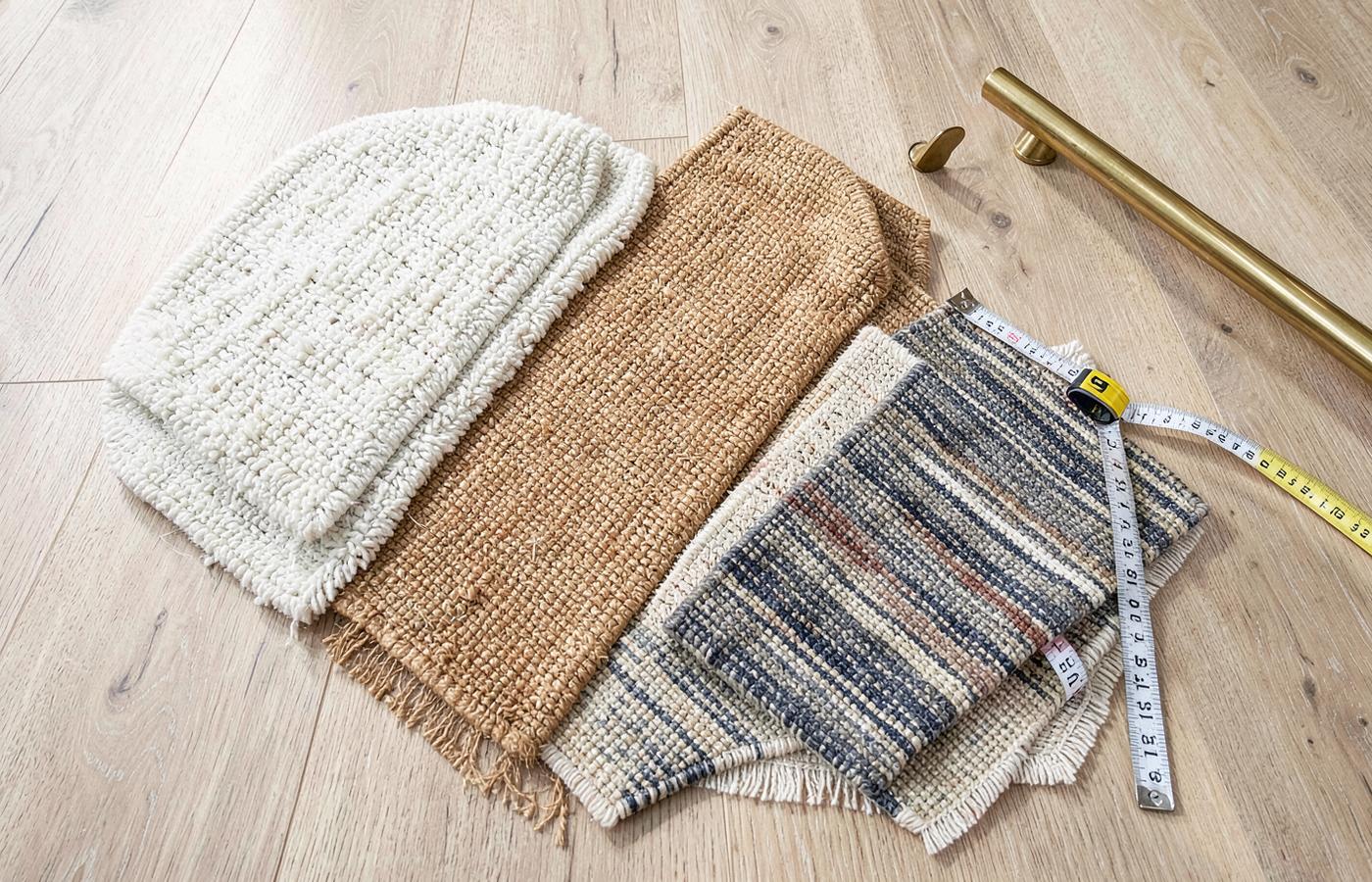
- MaterialsSisal and Jute Stair RunnersNatural plant-fibre runners on stairs: durability, texture, moisture behaviour, borders and honest limitations.
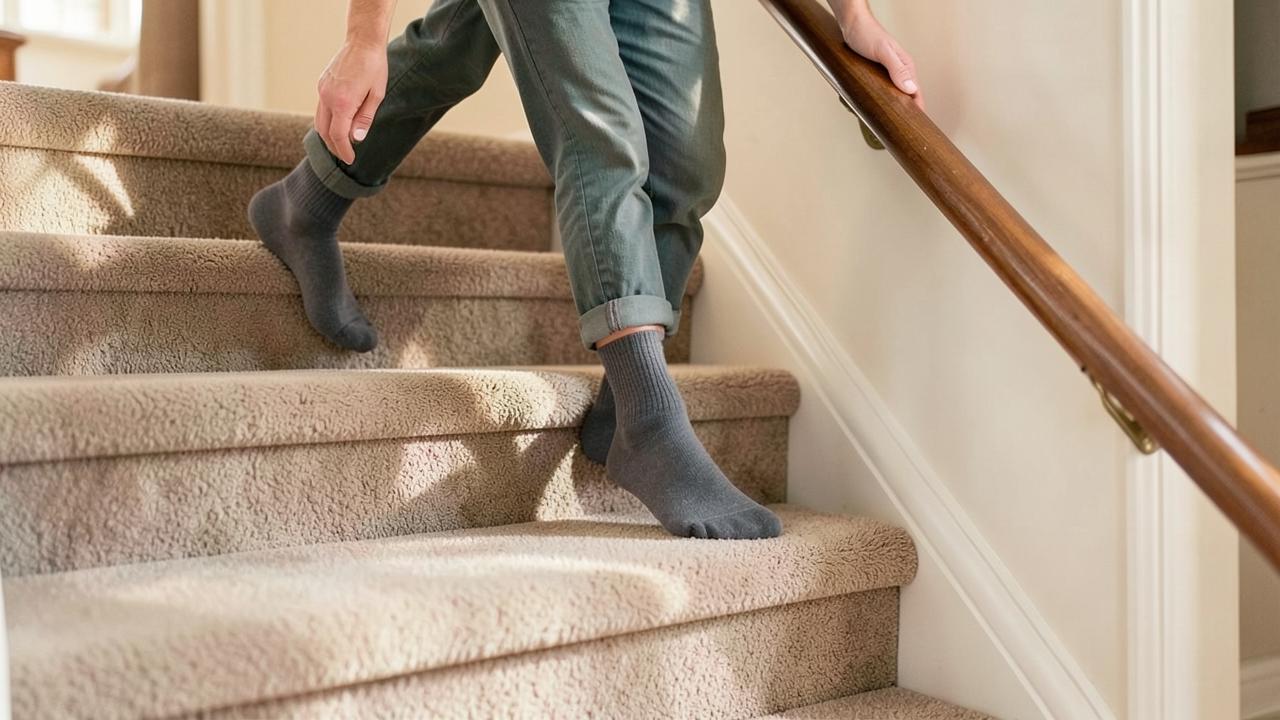 SafetyNon-Slip Stair Runners and Stair SafetyWhat actually makes a stair covering grippy: fitting tension, pile, pad and nosing coverage.
- MaterialsJute Stair RunnersJute on stairs: soft underfoot but the weakest natural fibre for traffic — weaves, moisture and where it works.