Safety First
Stair Runner Safety: Enhancing Security for Older People
For older adults, the stairs can be the most dangerous part of the home. A well-chosen stair runner is not just a design choice; it is a critical safety intervention that improves grip and visibility.
Written by the StairRunner.co editorial team · Updated 4 September 2026
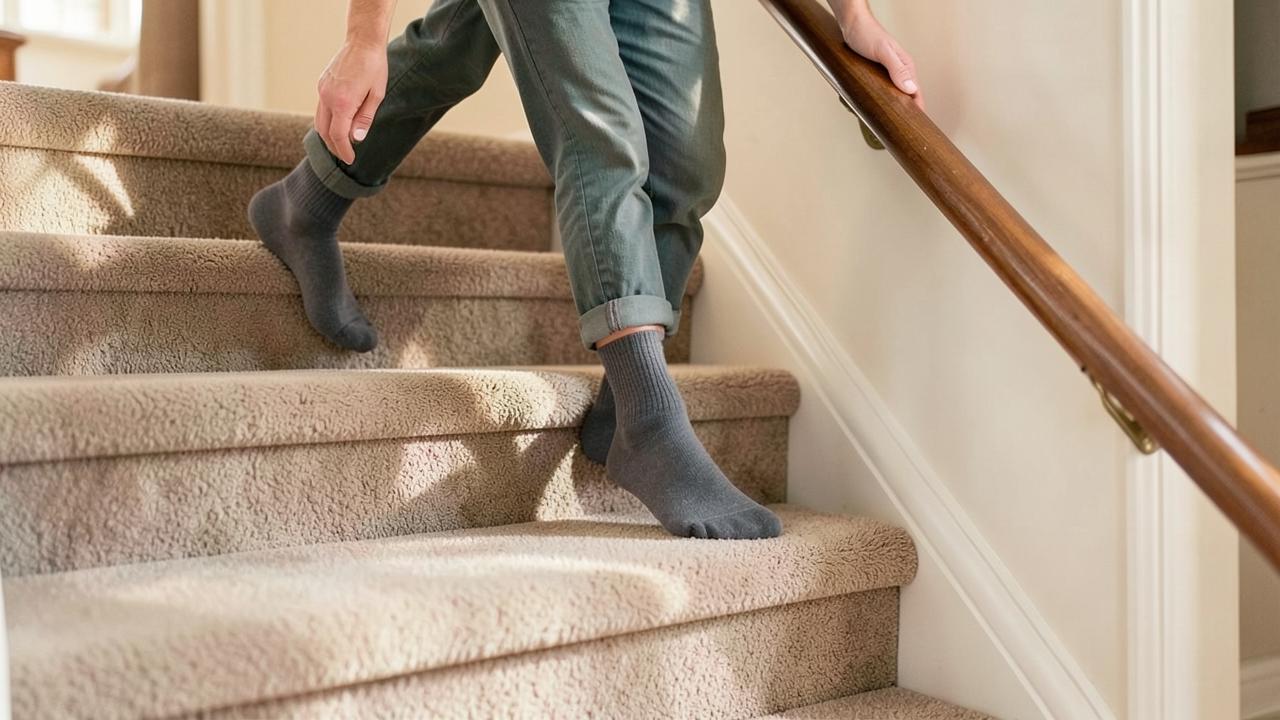
The Importance of Stair Safety in Aging
Falls are the leading cause of injury among older adults, and a significant proportion of these falls occur on stairs. As we age, changes in balance, vision, and muscle strength can make navigating a staircase more challenging. Traditional wooden stairs, while beautiful, are often slippery and can lack the visual clarity needed for safe passage. A stair runner addresses these issues directly by providing a high-traction surface and a visual guide for each step.
However, not all runners are created equal. In fact, a poorly chosen or badly installed runner can actually increase the risk of a fall. It is essential to understand the specific needs of older people when selecting and fitting a stair carpet.
The cumulative effect of these changes is a reduction in the body's 'proprioception'—the ability to sense the position of your limbs in space. On a staircase, this is critical. A runner that provides a uniform, predictable surface helps to compensate for these physiological shifts. By reducing the physical effort required to maintain balance, a runner can give older adults the confidence to continue using their staircase independently and safely, preserving their mobility and autonomy within their own home.
Visibility and Visual Contrast
One of the most common causes of falls on stairs is a misstep resulting from poor depth perception. Older eyes often find it difficult to distinguish where one step ends and the next begins, especially in low-light conditions or where the stairs and the surrounding area are similar in colour.
The Power of Contrast
The most effective way to improve stair visibility is through high-contrast design. If your stairs are a dark wood (like oak or walnut), choose a lighter runner. If your stairs are painted white or a light colour, choose a darker or patterned runner. The goal is to create a clear visual 'break' at the edge of each step. A runner with a distinct border along its edges is particularly effective, as it provides a clear line for the eye to follow.
Managing Patterns
While patterns can be decorative, they must be chosen carefully. A very 'busy' or small-scale repetitive pattern can be visually confusing and might mask the edge of the step. Larger, simpler patterns or solid colours with a contrasting border are generally safer choices. The goal is to enhance, not hinder, the eye's ability to judge distance and depth.
Be aware that some modern 'geometric' patterns can create a disorienting effect, making the stairs appear to 'move' or 'warp' underfoot. When viewing samples, place them on the stairs and observe them from both the top and bottom of the flight. If you feel even a moment of confusion or vertigo, the pattern is not suitable for a staircase.
| Safety Feature | Impact on Safety | Recommendation |
|---|---|---|
| High Contrast | Improves depth perception. | Lighter runner on dark stairs, or vice versa. |
| Contrasting Border | Defines the edges clearly. | Choose a runner with a distinct, solid-coloured border. |
| Consistent Pattern | Avoids visual confusion. | Avoid busy, small-scale patterns that hide step edges. |
Stability and Pile Height
The 'feel' of the carpet underfoot is just as important as how it looks. A common misconception is that a thicker, softer carpet is safer because it provides more cushioning in the event of a fall. In reality, the opposite is true.
The Danger of Deep Pile
A thick, plush, or 'shaggy' carpet can be very unstable. When a person steps onto a deep-pile carpet, the foot 'sinks' into the fibres, which can cause the ankle to wobble and lead to a loss of balance. Furthermore, a thick pile can round off the sharp edge of the stair nosing, making it harder to feel exactly where the step ends with the foot. This is particularly dangerous for those who rely on their sense of touch as much as their sight when climbing stairs.
The Ideal Specification
For maximum safety, specify a low, dense cut-pile carpet. A low pile ensures that the foot is always in contact with a firm, stable surface. A high density (lots of fibres packed closely together) prevents the carpet from flattening and provides a consistent level of grip over the entire life of the runner. Flatweave carpets are also an excellent choice, as they are naturally thin and very stable. For more on different constructions, see stair runner materials.
The density is also key to preventing the runner from shifting underfoot. A high-density carpet has a heavier backing and holds its shape better, which is vital for the long-term integrity of the installation. A loose or 'flimsy' runner will eventually develop ripples or 'bubbles', which are major trip hazards. Invest in a high-quality product, and it will pay dividends in safety and reliability over many years.
Grip and Slip Resistance
The primary function of a stair runner for the elderly is to provide traction. Polished timber is notoriously slippery, especially if the person is wearing socks or slippers. A runner provides the necessary friction to prevent the foot from sliding forward on the 'tread' (the flat part of the step).
Look for materials with a natural 'bite'. Wool is excellent because its fibres are naturally textured and offer good resistance. High-quality synthetics with a textured finish are also effective. It is also vital to ensure the runner is kept clean and free of dust, as a buildup of fine particles can act like a lubricant and reduce the carpet's grip over time. See cleaning and care for maintenance advice.
Additionally, consider the orientation of the pile. Some carpets have a 'nap'—the direction the fibres lean. A carpet installed so the nap is 'down' the stairs can sometimes feel slightly more slippery than a carpet where the nap resists the direction of movement. A good fitter will understand this and install the runner in a way that maximizes grip for the user.
Professional Installation for Safety
A runner that is not perfectly fitted is a major trip hazard. In a home with older residents, the installation must be flawless.
- No Loose Edges: Every edge and corner must be fixed securely. There should be no chance of a toe catching on a loose piece of carpet.
- Perfect Tension: The runner must be stretched tightly across the flight. Any 'ripples' or loose sections can cause a trip.
- Secure Grippers: Use high-quality, heavy-duty grippers and ensuring they are fixed firmly to the subfloor. For more details, see our installation guide.
- Nosings: The carpet must be fitted tightly over each nosing. The 'Hollywood' method, where the carpet is stapled under the lip of each step, provides a very secure and defined edge. Compare this to the 'waterfall' method in our comparison guide.
Beyond the Runner: A Holistic Approach
While a stair runner is a powerful tool, it is only one part of a safe staircase. To truly minimize risk for the elderly, consider these additional factors:
- Lighting: Ensure the entire flight is brightly lit. Install two-way switches at both the top and bottom of the stairs. Consider motion-activated LED strips under the handrail or along the stringers for night-time safety.
- Handrails: There should be a continuous handrail on at least one side of the stairs, and ideally on both. The handrail should be at a comfortable height and easy to grip securely.
- Eliminate Clutter: Never leave items on the stairs, and ensure the top and bottom of the flight are kept clear of rugs or other trip hazards.
- Maintenance: Regularly check the runner for signs of wear or loosening. A small problem fixed early can prevent a major accident later.
The Psychology of Stair Safety
For many older adults, the biggest hurdle is psychological. The fear of a fall can be just as debilitating as the fall itself. A well-designed, securely installed stair runner can significantly boost this confidence. By providing a clear, grippy, and predictable surface, the runner acts as a physical 'anchor', transforming the staircase from a source of anxiety into a manageable feature of the home.
This psychological boost is important, but it should not lead to overconfidence. It is still essential to maintain safe habits—using handrails, carrying only one item at a time, and ensuring clear vision while navigating. A runner supports these habits but does not replace them. Promoting a culture of cautious, mindful navigation, supported by a well-specified and maintained runner, is the most effective approach to long-term stair safety.
Stair Runner vs. Anti-Slip Tapes
You may encounter 'anti-slip tapes' or 'treads' as a lower-cost alternative to a full runner. While these can provide some grip, they are rarely the best choice for a residential staircase. Anti-slip tapes can be abrasive, difficult to keep clean, and—if applied poorly—can themselves be a trip hazard, especially if the edges start to lift. Furthermore, they provide none of the acoustic dampening or visual contrast benefits of a full stair runner.
A full runner covers the entire tread and, when installed correctly, provides a uniform experience from top to bottom. It is a much more comprehensive and aesthetically pleasing solution. If you are considering alternatives, weigh the long-term safety, durability, and comfort of a runner against the limited and often short-lived benefits of tapes or small, individual tread covers.
Maintenance Schedules for Safety
A safety feature is only as good as its maintenance. To ensure your runner remains a reliable safety tool, incorporate these checks into your routine:
- Monthly Check: Gently tug on the edge of the runner at the nosings to ensure it is still perfectly tight.
- Annual Inspection: Consider having a professional assess the condition of the runner and the grippers. This is particularly important for homes where the runner sees heavy, daily use.
- Immediate Repair: If you notice any fraying, loose edges, or ripples, address them immediately. These are not just aesthetic issues; they are active trip hazards.
Conclusion: Empowerment Through Design
Designing for the elderly is about empowering them to live independently for longer. A well-thought-out staircase is a cornerstone of this goal. By selecting the right runner—low pile, dense, high contrast, and securely installed—you are making a lasting investment in safety and peace of mind. It’s an intervention that balances aesthetic beauty with hard-nosed safety requirements, proving that you never need to choose between style and security.
Remember, each home is different. Consult with professional fitters and, if possible, consider the specific needs and habits of the person using the stairs daily. Whether it is adding extra lighting, ensuring the handrails are optimal, or choosing the perfect contrast for the runner, every small detail counts when building a home that is truly safe and accessible for everyone.
Frequently asked questions
- What is the safest type of stair runner for older people?
- The safest option is a low, dense cut-pile runner that provides a firm and stable surface. It should offer high visual contrast against the stair treads and have a clear, distinct border to help with depth perception.
- Why is visual contrast important for stair safety?
- As we age, our depth perception and ability to distinguish between similar colours can decline. A runner that contrasts sharply with the wood or paint of the stairs helps the eye identify the 'nosing' or edge of each step, significantly reducing the risk of a misstep or fall.
- Can a runner be too thick for safety?
- Yes. A very deep or plush carpet can feel 'unstable' or 'mushy' underfoot, which can be disorienting and cause a loss of balance. It can also hide the exact position of the step edge. A thinner, denser carpet over a firm underlay is far safer.
- Do I need handrails if I have a stair runner?
- Absolutely. A stair runner is an important safety feature for grip and visibility, but it does not replace the need for secure, continuous handrails on both sides of the flight if possible.
- How does lighting affect stair safety for the elderly?
- Good lighting is essential. It works in tandem with the visual contrast of the runner. Ensure the entire flight is brightly and evenly lit, without creating harsh shadows that can be mistaken for the edge of a step.
- Are pattern-free runners safer?
- Not necessarily, but simple patterns are often best. The most important thing is that the pattern doesn't camouflage the edges of the steps, which could be dangerous.
- Can I use anti-slip backing on the runner?
- While a runner itself provides grip, the underlay is what truly prevents movement. For maximum safety, ensure the runner is installed with a high-friction, dense underlay and is securely fixed at every step.
Related guides
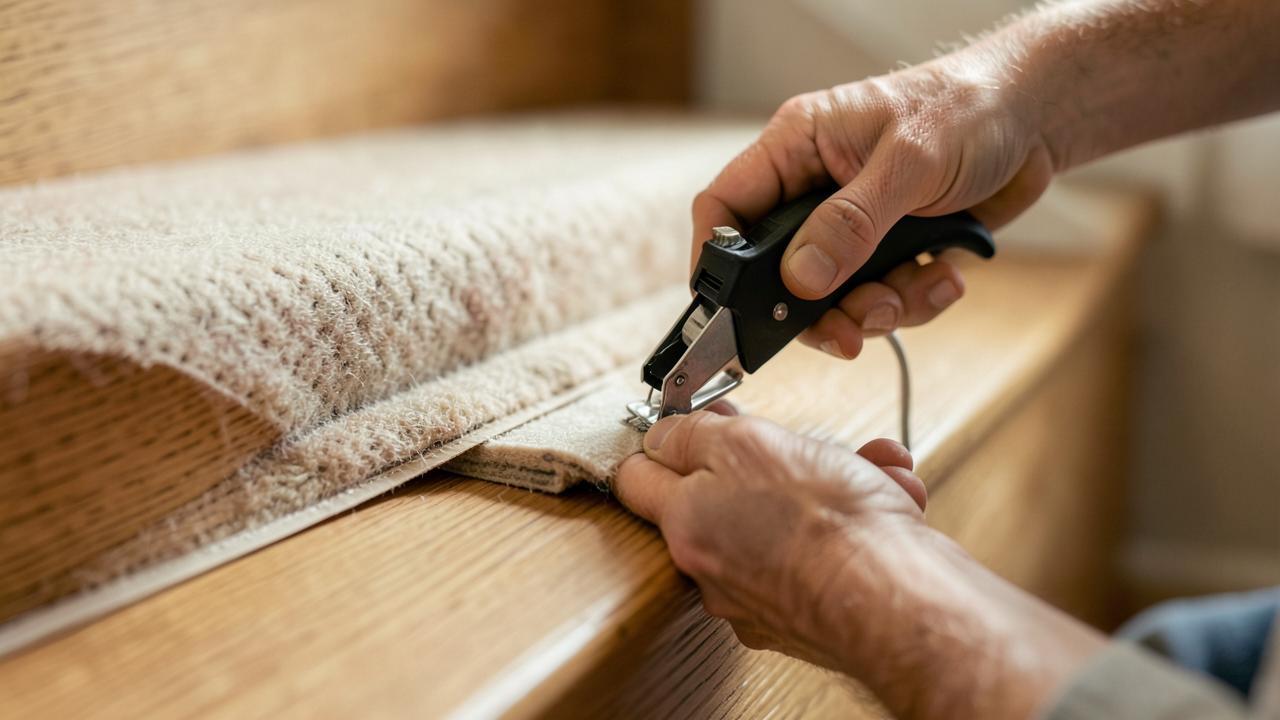 InstallationHow to Install a Stair RunnerWaterfall and Hollywood methods, staples versus rods, tools, sequence and quality checks.
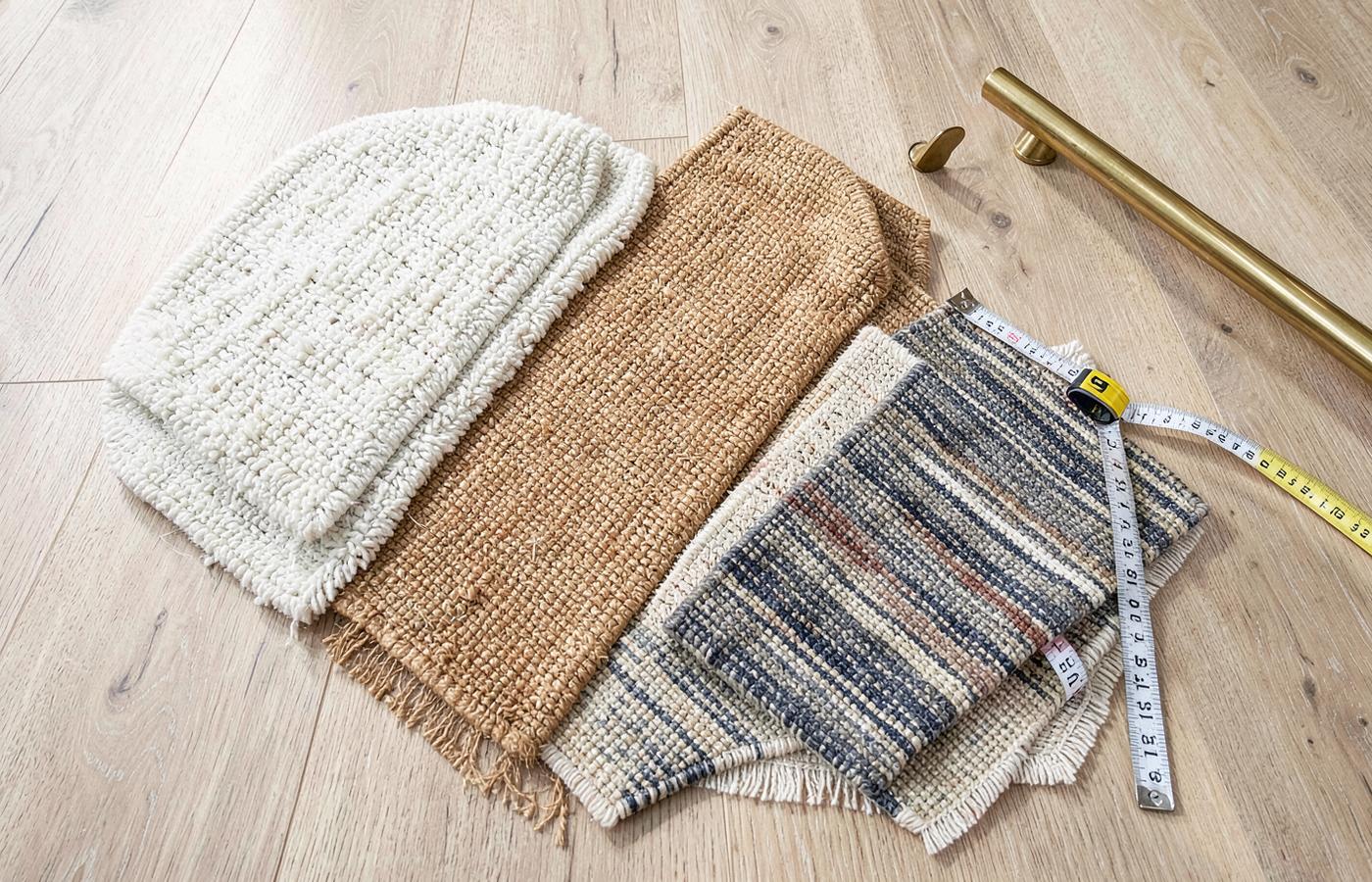 MaterialsStair Runner Materials ComparedWool, nylon, polypropylene, sisal and jute judged on stair-specific wear, comfort, cleaning and safety.
- SafetyNon-Slip Stair Runners and Stair SafetyWhat actually makes a stair covering grippy: fitting tension, pile, pad and nosing coverage.
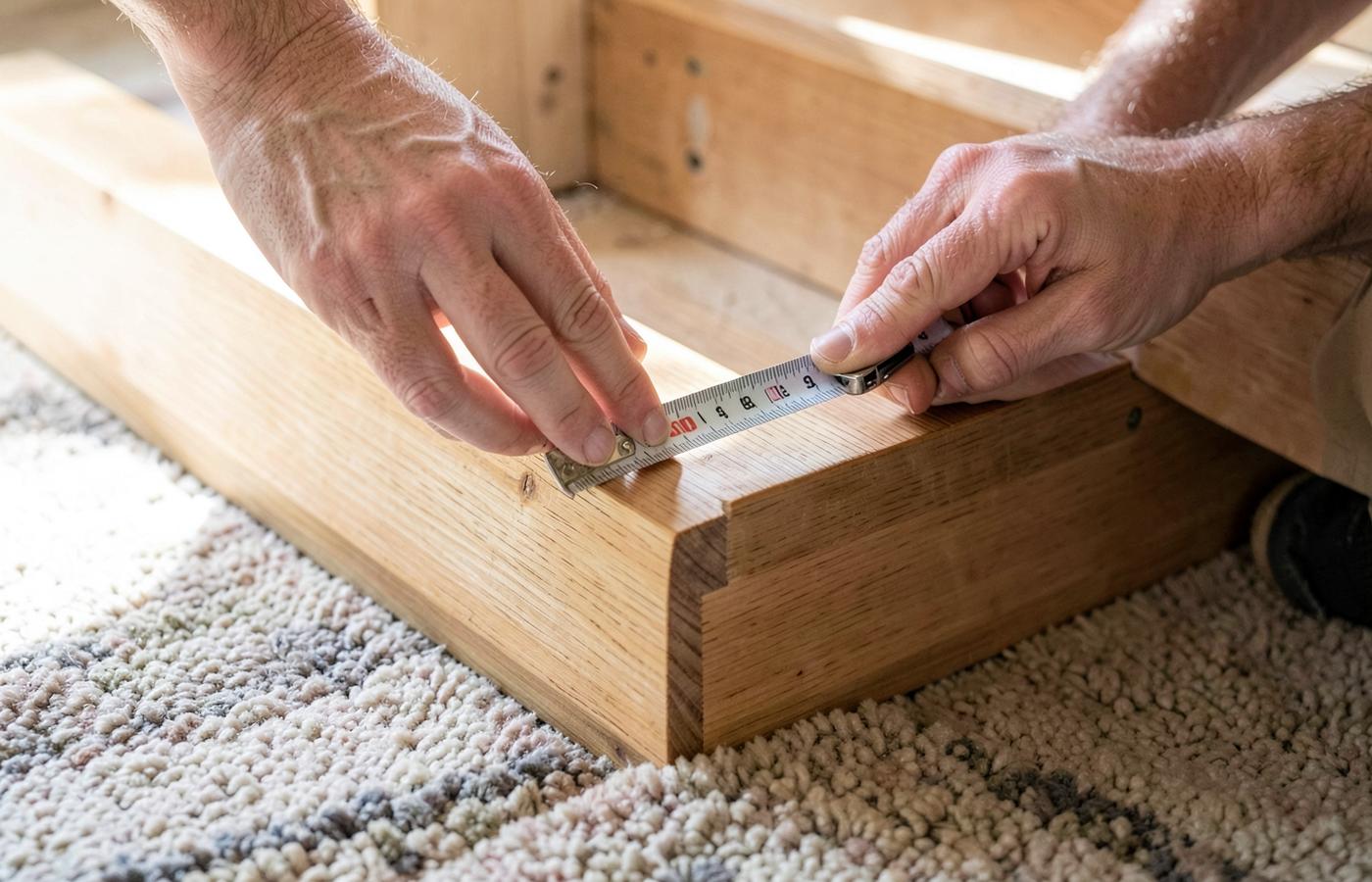 MeasurementWhat Width Should a Stair Runner Be?How to set runner width and side margins from your stair width, stringers, balusters and pattern.