Colour Choice
White stair runners: Elegance, light, and commitment
A white stair runner is a dramatic interior choice that transforms a hallway, but it demands a different relationship with cleaning and maintenance than a neutral or patterned alternative.
Written by the StairRunner.co editorial team · Updated 4 September 2026
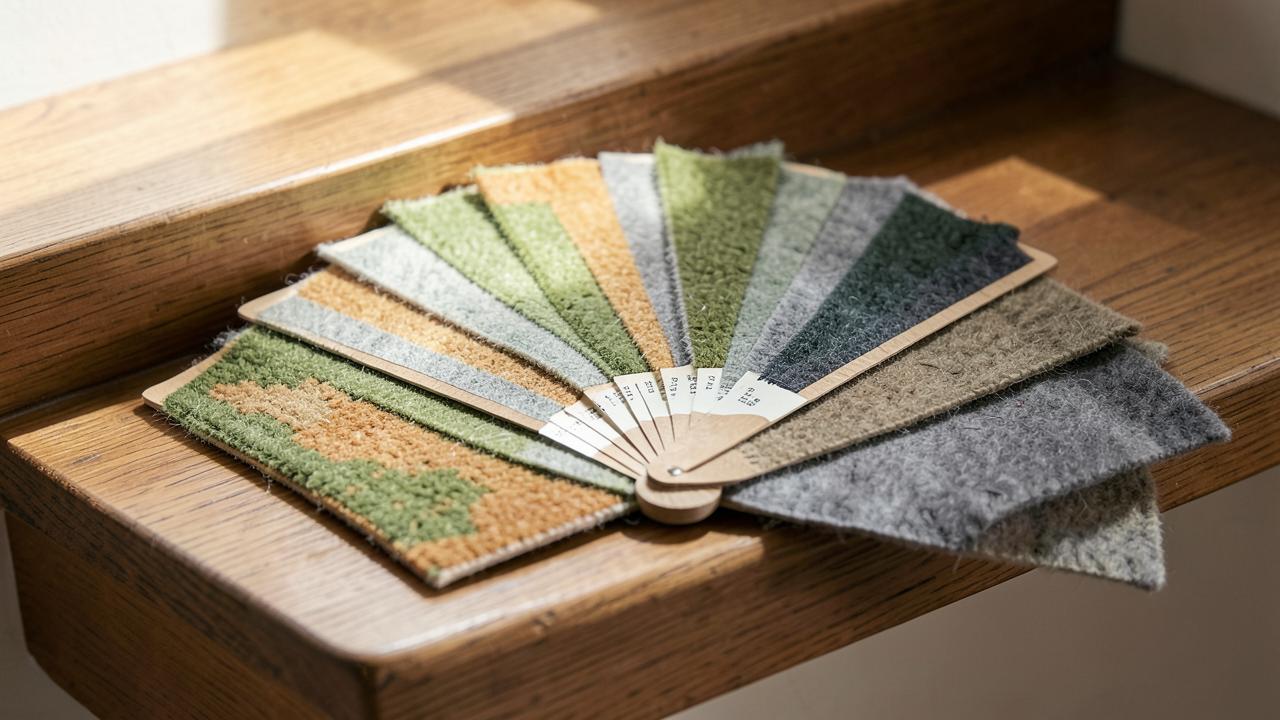
The aesthetic appeal of white on a staircase
White is more than just a colour; it is a design tool. In the context of a staircase—which is often the most significant architectural feature in a home's entryway—white serves to deconstruct the visual weight of the stairs. Where a dark or heavy wood staircase can feel imposing, a white runner introduces a sense of lightness and height. It acts as a primary light reflector, bouncing illumination from hallway windows or light fixtures into the shadowed areas of the steps. This is particularly valuable in narrow Victorian or Edwardian hallways where natural light is a scarce commodity. By drawing the eye upward with a bright, continuous line, a white runner can make a low-ceilinged hallway feel significantly more expansive and open.
The choice of white also provides a versatile foundation. It complements both traditional panelling and modern minimalist glass balustrades. It allows for high-contrast designs, such as a white runner against black-painted treads, or a soft, monochromatic look when paired with white-washed timber. However, this aesthetic triumph comes with the reality of domestic life. White shows everything: the fine grit of outdoor dust, the lint from socks, the oils from skin, and the inevitable spills of daily transit. Choosing white is a commitment to a specific lifestyle and maintenance regime. It is the choice of the purist, the minimalist, and the homeowner who views their interior space as a curated gallery rather than just a functional thoroughfare.
Comparing white fibre types for stairs
When selecting a white runner, the fibre chemistry is your first line of defence. Not all white carpets are created equal, and on a staircase, where the pile is subjected to high-pressure foot traffic and stretching over nosings, the differences are magnified. You must balance the 'hand' (the feel of the carpet) with its technical ability to reject soil and survive the mechanical stresses of a curved installation.
| Material | Visual Quality | Stain Performance | Traffic Resilience |
|---|---|---|---|
| Pure Wool | Exceptional; natural matte finish; 'true' white possible. | Moderate; natural lanolin offers some protection, but absorbs liquids. | Excellent; high 'bounce back' prevents early tracking. |
| Solution-Dyed Nylon | Good; modern blends mimic natural fibres well. | Excellent; non-porous fibre resists bonding with stains. | High; durable and handles tension well. |
| Polypropylene | Functional; can have a slight synthetic sheen. | Outstanding; often bleach-cleanable for extreme marks. | Moderate; can flatten in the traffic lane over time. |
| Cotton/Chenille | Soft and luxurious; very bright whites. | Poor; acts like a sponge for spills and oils. | Low; strictly for low-traffic or bedroom stairs. |
Managing the traffic lane and 'greying'
The 'traffic lane' is the central path where feet land on every step. On a white runner, this area is prone to a phenomenon called 'greying' or 'soiling'. This is not necessarily caused by large spills, but by the accumulation of microscopic dirt particles. Every time someone walks on the runner, their weight grinds these particles deeper into the pile. Over time, this creates a visible grey stripe down the center of your beautiful white staircase. This is particularly noticeable at the 'pivot points'—the bottom three steps and the areas where the stairs turn, where the shearing force of a turning foot is greatest.
To mitigate this, you must focus on prevention. High-quality, multi-stage doormats at every entrance to the house are the most effective way to reduce the amount of soil entering the home. Furthermore, a strict 'shoes-off' policy is almost mandatory for white runner owners. Even so, the oils from bare feet can eventually attract dust, so wearing clean socks or house slippers is the gold standard for preservation. When greying does begin to appear, avoid the temptation to scrub it with domestic cleaners; this often just spreads the soil. Instead, plan for a professional hot water extraction clean every 12 to 18 months to deep-clean the fibre base and lift the trapped particulates that vacuuming alone cannot reach. See stair runner installation for details on how the fixing method can affect accessibility for cleaning.
White vs. Off-White: The designer's dilemma
Choosing between a stark, 'optical' white and a softer off-white (like cream, ivory, or bone) is a critical decision. Stark white is modern and high-impact but highlights every imperfection, from a stray hair to a tiny piece of fluff. It can also look cold or blue-ish in certain lighting conditions, especially in north-facing hallways. Off-white is generally more forgiving. The slight yellow or grey undertones in an off-white runner help to mask the initial signs of dust and lint, making it a more practical choice for most households that want the white aesthetic without the extreme upkeep.
Lighting plays a huge role here. A white runner that looks perfect in a showroom can look blue-ish in a north-facing hallway with cool LED bulbs, or yellow-ish in a south-facing hall with warm incandescent light. Always request a large sample and view it on your own stairs at different times of the day—morning, noon, and evening—before committing to the full installation. See our advice on choosing the right runner for more tips on sampling and colour matching in situ.
The maintenance regime: A daily commitment to purity
If you choose white, your vacuum cleaner becomes your best friend and your primary tool for aesthetic preservation. Loose dry soil is the primary enemy of white carpet. If left in the pile, it acts like sandpaper, shredding the fibres at a microscopic level and making them more absorbent to future stains. You should aim to vacuum the traffic lane at least three to four times a week, if not daily. Use a vacuum with a high-quality HEPA filter and a powered brush bar to ensure you are lifting the dust from deep within the weave rather than just redistributing it across the surface.
For spot cleaning, never use harsh supermarket chemicals that aren't specifically rated for your fibre type. Wool, in particular, can be ruined by high-pH cleaners which 'burn' the natural protein fibres. Keep a professional-grade, pH-neutral spot cleaner on hand, along with a supply of clean, white microfibre cloths. Remember the golden rule: blot, never rub. Rubbing pushes the stain deeper into the backing and can 'fuzz' the pile, creating a permanent texture change that is just as visible as the stain itself. Refer to stair runner materials to understand your specific fibre's limits and vulnerabilities.
Installation and detailing: The precision of white
A white runner demands precision during installation. Any unevenness in the stretch, any misalignment of the edges, or any 'shadowing' from an uneven subfloor will be cast in sharp relief by the light-coloured material. Ensure your installer uses clean tools and, ideally, wears clean overshoes or works in socks to avoid marking the carpet before you've even used it. The choice of finish also matters; a simple turned edge is clean and modern, while a contrasting black or grey linen binding can frame the white and help to hide the edges where dust often accumulates. Check out installation methods to see how different fixings look and how they affect the longevity of the install.
Consider the use of stair runner rods. In a white-on-white scheme, brass or chrome rods add a layer of metallic detail that breaks up the expanse of white and adds a sense of luxury. They also help to hold the runner firmly in the 'crook' of the stair, preventing the subtle shifting that can lead to premature wear on the nosing. A black rod against a white runner is a classic, high-contrast look that defines each step clearly—a benefit for both style and safety.
Seasonal care and environmental factors
White runners behave differently across the seasons. In winter, the primary threat is mud and road salt; in summer, it is fine dust and pollen. During wet months, consider placing a temporary 'walk-off' mat at the base of the stairs to catch the final remnants of moisture from socks or slippers. Humidity also plays a role; wool runners can expand and contract slightly with atmospheric moisture, which may be more visible in a light colour if the tension isn't perfectly set. Ensure your hallway is well-ventilated to prevent the build-up of stale air which can contribute to the 'yellowing' of natural fibres over time.
Environmental and health factors are also worth noting. White runners can actually help with indoor air quality in a counter-intuitive way: they force you to clean more. Because the soil is visible, you are more likely to remove it, leading to a lower overall dust load in the home. Furthermore, pure white wool runners are often produced with fewer dyes and chemicals than their highly patterned counterparts, which can be a consideration for those sensitive to VOCs or seeking a more 'natural' home environment. However, ensure that any stain treatments used are low-toxicity and environmentally responsible, and that the underlay is likewise 'clean' in its composition.
Texture and weave: Adding depth to the white void
Because white lacks colour contrast, texture becomes the primary way to add visual interest and break up the 'void' of a flat white surface. A 'loop' pile white runner (often called a Berber) creates a rhythmic, architectural look that hides small shadows and minor pile crushing better than a flat cut pile. A 'velvet' or 'plush' cut pile, on the other hand, offers a smoother, more formal appearance but is more prone to 'shading'—where the pile leans in different directions and creates light and dark patches (sometimes called 'watermarking'). A flatweave white runner, often made from synthetic sisal-look materials, provides a rugged, textured feel that is excellent for coastal or rustic interiors. Each of these options is discussed in detail in our patterns and textures guide.
Psychology of colour and visual balance
In interior psychology, white represents clarity, renewal, and order. Choosing a white stair runner can set a calm, purposeful tone for the rest of the home. However, too much white can feel sterile. When designing around a white runner, consider the 'rule of three'. A white runner works best when its tone is echoed in at least two other places in the hallway—perhaps the skirting boards, a piece of artwork, or the ceiling. This integrates the runner into the room rather than letting it look like a floating white stripe. Conversely, if you want the runner to be the sole focus, keep the surrounding walls in a deep, saturated tone like navy or forest green. This creates a 'path of light' effect that is incredibly dramatic and directs the eye naturally up the stairs. For more design inspiration, visit our ideas gallery.
Safety and white runners
There is a distinct safety benefit to white runners: visibility. In low-light conditions, the edges of the steps are much easier to see on a white runner than on a dark brown or black one. This can be a significant advantage for elderly residents or those with impaired vision who may struggle with depth perception on darker stairs. However, the runner must be perfectly fitted; any loose material or 'bubbling' is a trip hazard, regardless of colour. Ensure your underlay is of high quality and that the runner is tensioned correctly during installation to prevent movement. See non-slip stair runners for more on safety and how to secure your flooring effectively.
Final considerations for the white runner owner
It is important to be realistic: a white stair runner will not look brand new for twenty years in a family home. While high-quality wool or nylon will last structurally, the aesthetic life of a white runner is typically shorter than that of a patterned or darker alternative. You are trading longevity of appearance for immediate, high-impact style. For many, the joy of a bright, welcoming hallway is worth the need to replace or deep-clean the runner more frequently. If you are concerned about long-term costs, check our cost guide to budget for future maintenance or replacement. A white runner is a luxury choice, not just in its look but in the ongoing investment of time and resources required to keep it at its best.
In summary, a white stair runner is a high-reward, high-maintenance choice. It requires the right material, a professional installation, and a disciplined approach to cleaning. For the homeowner who values light, elegance, and a sense of space above all else, there is no better choice. But for the busy household with muddy boots, active pets, and little time for daily vacuuming, it may be a choice that leads to frustration. Consider your daily reality carefully before choosing the white path, and ensure you have the tools and the mindset to maintain the purity of your choice.
Frequently asked questions
- Is a white stair runner practical for a busy home?
- White runners are high-maintenance. They show every speck of dust, lint, and soil. They are best suited for low-traffic areas, adult-only households, or those willing to commit to a rigorous cleaning schedule.
- What is the best material for a white runner?
- Wool is excellent for a crisp, natural white, but it absorbs stains. A solution-dyed synthetic (nylon or polypropylene) is more forgiving as it resists staining and can be cleaned more aggressively.
- How often will I need to clean a white runner?
- Expect to vacuum daily to keep it looking clean. Professionally cleaning the runner once or twice a year is standard to manage cumulative greying in the traffic lane.
- Will a white runner make my hallway look bigger?
- Yes, white or very pale flooring reflects light and creates an airy, expansive feeling, which can make a narrow hallway appear significantly more spacious.
- Should I use a stain protector treatment?
- Yes, always. A professional-grade stain protector is essential on white runners to buy you critical time to blot spills before they set permanently into the fibres.
Related guides
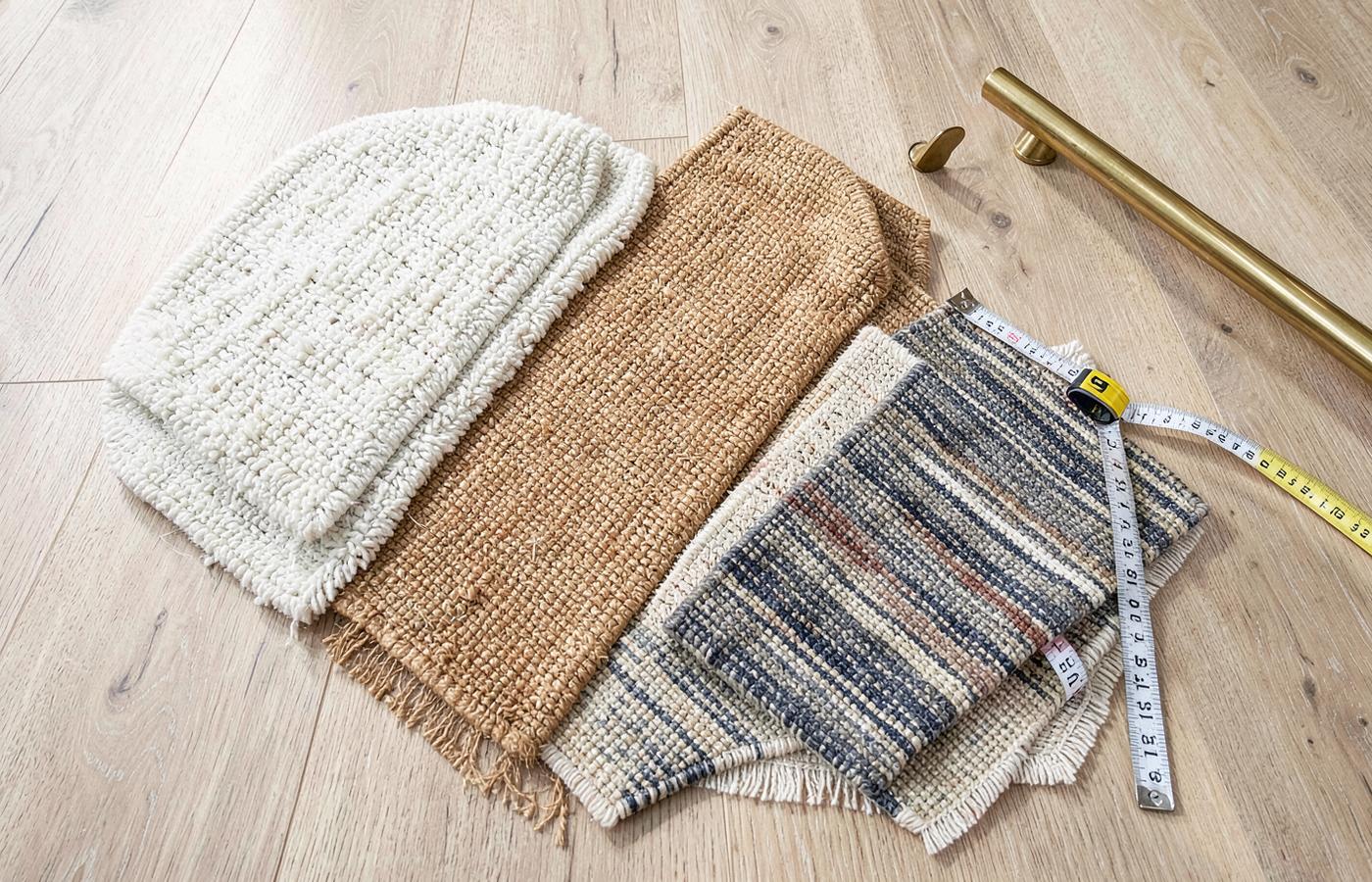 MaterialsStair Runner Materials ComparedWool, nylon, polypropylene, sisal and jute judged on stair-specific wear, comfort, cleaning and safety.
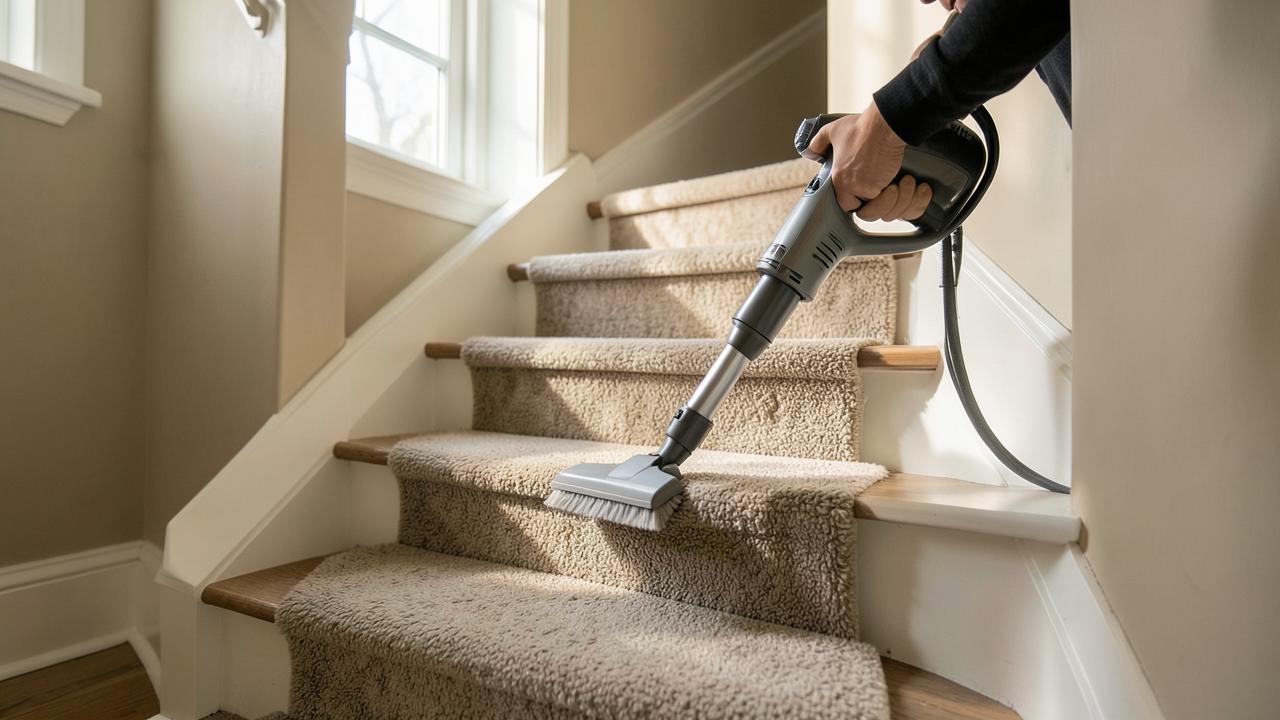 CareCleaning and Caring for a Stair RunnerRoutine vacuuming, spill response by fibre type, slipping and fraying, and when to call a professional.
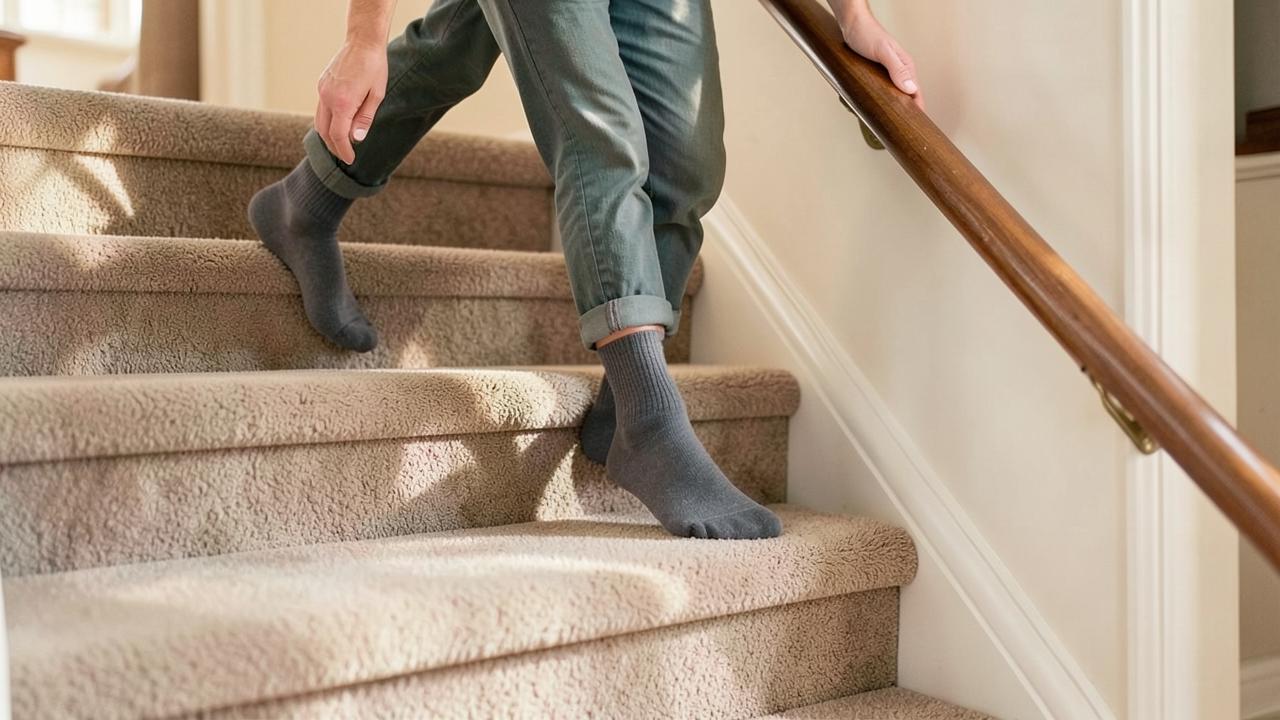 SafetyNon-Slip Stair Runners and Stair SafetyWhat actually makes a stair covering grippy: fitting tension, pile, pad and nosing coverage.