Construction
Wilton stair runners: The architect's choice for durability
Renowned for their immense structural strength and clean aesthetic, Wilton runners offer a level of architectural precision that tufted carpets simply cannot match.
Written by the StairRunner.co editorial team · Updated 4 September 2026
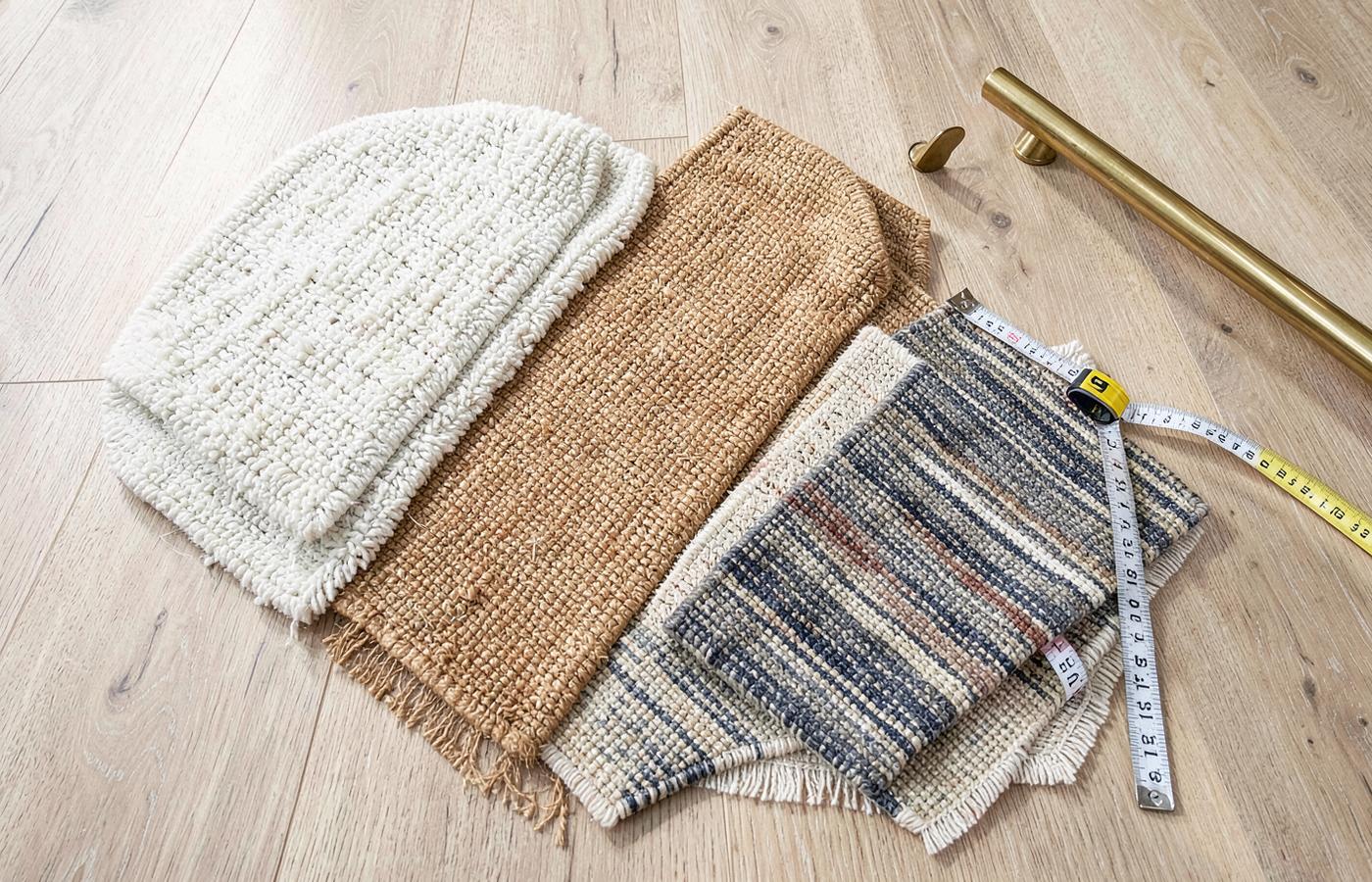
The Wilton Weave: Understanding the Process
The Wilton loom, named after the town of Wilton in Wiltshire, England, has been a cornerstone of the British textile industry for over 300 years. While Axminster weaving is often compared to knitting (where individual tufts are placed), Wilton weaving is more like a continuous process where the yarn is woven in a single strand.
One of the most distinctive features of a Wilton weave is how it handles colour. If a design uses three colours, all three strands of yarn are woven into the carpet. When a colour isn't showing on the surface, it is 'buried' in the back of the carpet. This is why Wilton runners often feel so heavy and substantial—you are literally walking on the hidden yarns that provide extra cushioning and strength.
The complexity of the Wilton loom lies in its "Jacquard" mechanism, which controls which coloured yarn is lifted to the surface at any given point in the weave. Because the non-active yarns are carried through the backing, the resulting carpet has a 'sandwich' of wool throughout its thickness. This is why a 3-frame or 5-frame Wilton (referring to the number of colours used) has such incredible dimensional stability. It resists stretching, bunching, and the 'walking' that can plague cheaper runners on a high-traffic staircase.
Face-to-Face vs. Traditional Wilton Weaving
In modern production, there are two primary ways a Wilton is made. Traditional Wilton looms weave one carpet at a time. However, many modern Wilton runners are made using a 'face-to-face' method. This involves weaving two layers of backing with the pile yarns shuttling between them. A knife then passes through the middle, slicing the pile and creating two identical carpets simultaneously.
For the homeowner, the result is the same: a dense, woven product of exceptional quality. However, traditional Wilton looms are often still used for specific textures, such as the Brussels loop, where the loop is formed over a wire. This wire-weaving process allows for incredible precision in loop height and density, which is why a Brussels weave Wilton has such a distinct, architectural look.
Cut Pile vs. Loop Pile Wilton
Unlike many other weaving methods, the Wilton loom is exceptionally versatile in terms of texture.
Wilton Velvet (Cut Pile)
A cut pile Wilton has a smooth, luxurious finish often referred to as a velvet or plush pile. It looks incredibly elegant on a staircase, especially in solid, deep colours. However, like all velvet-style carpets, it can show 'shading' or 'pooling'—areas where the pile has been brushed in different directions, reflecting light differently. This is a natural characteristic of the material and not a defect. In fact, many designers appreciate this 'lived-in' elegance, as it adds depth and movement to the stairs.
Brussels Weave (Loop Pile)
A loop pile Wilton, or Brussels weave, is the ultimate choice for durability. Because the yarn is kept in loops, it resists crushing far better than a cut pile. This makes it ideal for the 'traffic lane' on a staircase where people tend to walk in exactly the same spot every day. The look is clean, modern, and very structured. It is particularly effective in industrial or minimalist interior schemes where the texture of the material is meant to be the focus.
Why Wilton is perfect for Modern Staircases
While Axminster is the king of the floral, Wilton is the master of the modern.
- Crisp Stripes: If you want a striped runner where the lines are perfectly straight and the colours don't bleed into each other, Wilton is the specification you need. The tension of the loom ensures the stripes remain true throughout the length of the roll. This is vital for stairs, where any slight deviation in a stripe is magnified by the sharp edges of the steps.
- Textured Plains: Many Wiltons use a 'high-low' technique where different pile heights or combinations of cut and loop pile create a subtle pattern in a single colour. This adds visual interest without the busyness of a multi-colour design, perfect for creating a calm, sophisticated entryway.
- Extreme Density: A high-quality Wilton can have over 100,000 tufts per square metre. This density is what prevents the 'grin' on the nosings of the stairs, where you might see the backing on a less dense carpet. It also means that dirt and grit have a harder time penetrating deep into the weave, making the runner easier to keep clean with regular vacuuming.
| Feature | Wilton (Woven) | Tufted Carpet |
|---|---|---|
| Construction | Pile and backing woven as one | Pile punched into a pre-made backing |
| Stability | Exceptional; won't delaminate | Good, but can suffer from 'bubbles' over time |
| Pattern Detail | Excellent for stripes and geometrics | Best for plains or printed designs |
| Longevity | 20+ years in domestic use | 7-12 years depending on quality |
| Feel | Substantial, firm, and supportive | Varies from soft to firm |
| Edge Finishing | Usually self-finished or whipped | Requires binding or whipping |
The Role of Fiber in a Wilton Runner
Most high-end Wilton runners are made from a blend of 80% wool and 20% nylon. This blend is specifically chosen for stairs:
- Wool for Resilience: Wool fibres have a natural 'crimp' that acts like a spring. When you step on it, it bounces back. This prevents the runner from looking flat and lifeless after a few months. Wool also has a natural lanolin coating that resists liquid spills, giving you time to blot them up.
- Nylon for Abrasion: Nylon is incredibly tough. It prevents the fibres from breaking when subject to the heavy friction of shoes on the edge of the step. In an 80/20 blend, the nylon provides the 'armour' that protects the softer wool.
- Natural Fire Safety: Both fibres, particularly wool, are safer on stairs than 100% polypropylene, which can melt in a fire. Wool is self-extinguishing and produces less toxic smoke, which is why it is often the only material allowed in high-traffic commercial buildings and public stairwells.
For more on these blends, see our guide on wool vs synthetic stair runners.
Acoustics and Thermal Insulation
A often-overlooked benefit of a Wilton stair runner is its impact on the home's environment beyond just aesthetics. Because of the density of the weave and the extra yarns carried through the back, Wilton runners are exceptional at sound dampening. Stairs can often act as a 'drum', amplifying the sound of footsteps throughout the house. A heavy Wilton runner absorbs this impact energy, making the hallway a much quieter space.
Furthermore, the high wool content provides excellent thermal insulation. Staircases are frequently prone to draughts, especially in older period properties. A thick Wilton runner acts as a thermal barrier, helping to keep heat in the hallway and reducing the chill that can rise from the ground floor.
Installation Considerations for Wilton
Wilton runners are stiffer than tufted carpets. This means they require a bit more 'muscle' and skill to install correctly.
The Importance of Stretching
A Wilton must be stretched correctly onto the grippers to ensure it stays taut. If not stretched properly, the weight of people walking down the stairs will eventually cause the carpet to shift, leading to ripples. These ripples are not just unsightly; they are a trip hazard. A professional installer will use a power stretcher or a knee kicker with significant force to ensure the runner is locked into the pins of the gripper.
Fitting to Winders
Because of its stiffness, a Wilton can be challenging to 'manipulate' around a turn. An expert fitter will use a technique called 'bolstering' to ensure the carpet sits tightly into the crotch of each step (the junction where the tread meets the riser). If you have a complex staircase with multiple turns, always ensure your fitter has experience with woven products. See our full installation guide for more.
Design Trends: What's hot in Wilton
Current interior design trends have seen a massive resurgence in Wilton runners, particularly in 'Modern Heritage' homes where traditional quality is paired with contemporary styling.
- Deep Navy and Charcoal: These dark, moody tones look incredible in a Wilton velvet. They provide a sophisticated foundation for the hallway and are surprisingly practical at hiding light dust and lint.
- Herringbone and Chevrons: The precision of the Wilton loom makes it perfect for these sharp, repeating patterns which elongate the staircase and add a sense of directionality to the space.
- Earth Tones and Naturals: Terracotta, sage, and sand colours in a textured Wilton loop provide an organic, 'Scandi' feel that is still very hard-wearing. This look is often paired with painted stairs for a high-contrast effect.
Maintenance: Keeping your Wilton Looking New
A Wilton runner is an investment, and like any investment, it needs care.
Vacuuming: Regularity is key. You should vacuum your runner at least twice a week, and more if you have a busy household. Use a vacuum with a brush head (beater bar) for a cut pile Wilton, as this helps to lift the pile and remove the grit that settles at the base. For a loop pile (Brussels) Wilton, be careful with overly aggressive beater bars as they can occasionally 'fuzz' the loops over time. A suction-only vacuum or a gentle brush setting is often better for loops.
Professional Cleaning: Even with regular vacuuming, fine dust and oils will settle into the base of the weave. We recommend a professional clean using hot water extraction every two years. This not only maintains the vibrancy of the colours but also 're-sets' the wool fibres, helping them to maintain their natural spring. Learn more in our cleaning guide.
Comparing Wilton with Sisal and Jute
Many homeowners are torn between the natural look of sisal and the durability of a Wilton.
Sisal (made from agave plants) has a beautiful texture but is very hard underfoot and can be slippery. It is also notoriously difficult to clean; a single drop of water can leave a permanent mark. A Wilton loop pile can offer a very similar aesthetic but with the warmth, 'give', and cleanability of wool. If you have children or elderly family members, a Wilton is generally the safer and more comfortable choice. Compare these in our treads vs runner guide.
Environmental Impact and Sustainability
Wilton runners are a relatively sustainable choice in the world of floor coverings. The primary material is wool, which is renewable and biodegradable. The backing is usually made from jute or cotton, which are also natural plant fibres. Because a Wilton is designed to last for 20 years or more, it avoids the 'fast fashion' cycle of cheap synthetic carpets that end up in landfills every few years. Choosing quality is often the most sustainable choice you can make.
Cost Analysis: Why Quality Costs More Upfront
Expect to pay more for a Wilton than a tufted runner. The complexity of the loom, the slower weaving speed, and the sheer amount of yarn used (including the yarn 'hidden' in the back) makes production more expensive. However, when you consider that a Wilton may last twice as long as a budget alternative, the 'annualised' cost is often lower. It is the difference between buying a well-made pair of leather boots that can be resoled, versus a pair of cheap trainers that wear out in six months. Check our UK price breakdown for more.
Conclusion: Is a Wilton Right for You?
If you value structural integrity, crisp design, and a firm, substantial feel underfoot, the Wilton runner is an excellent choice. It is the architect's favourite for a reason—it performs as well as it looks and holds its shape under the most demanding conditions.
Whether you choose a classic velvet pile for a formal entry or a rugged Brussels loop for a busy family hub, a Wilton runner will provide beauty and safety to your stairs for many years to come. The key is to ensure it is fitted over a high-quality underlay by an installer who understands the nuances of woven carpet.
For more information on finding the right style, browse our stair runner ideas or learn more about the materials in stair runner materials.
Frequently asked questions
- What is a Wilton stair runner?
- A Wilton runner is a woven carpet made on a Wilton loom. Unlike Axminster, which can use many colours, a Wilton typically uses a limited number of yarn colours (usually up to 5 or 8) which are carried through the back of the carpet when not in use on the surface, making it exceptionally thick and stable.
- Is Wilton better than Axminster for stairs?
- Neither is 'better', but they suit different needs. Wilton is superior for plains, stripes, and simple patterns where a very dense, stable structure is required. Axminster is better for highly complex, multi-coloured floral or oriental designs.
- Can I get a Wilton runner in a loop pile?
- Yes, Wilton looms can produce both cut pile (velvet look) and loop pile (Brussels weave). Loop pile is very popular for its clean, contemporary look, but be cautious if you have pets as claws can snag the loops.
- What is a 'Brussels' weave?
- A Brussels weave is a specific type of Wilton weave that results in a loop pile. It is exceptionally hard-wearing and has been used in high-traffic public buildings for centuries. It's an excellent choice for a busy family staircase.
- Do Wilton runners need a specific type of underlay?
- Because Wilton runners are very stable and somewhat stiff, they require a firm, high-quality underlay to prevent the 'internal' wear of the carpet backing. A high-density rubber or wool felt underlay is recommended.
- Are Wilton runners expensive?
- They are a premium product. The cost is high due to the weaving process and the amount of yarn used (especially in 'face-to-face' Wilton weaving). However, their longevity makes them a cost-effective choice over many years.
Related guides
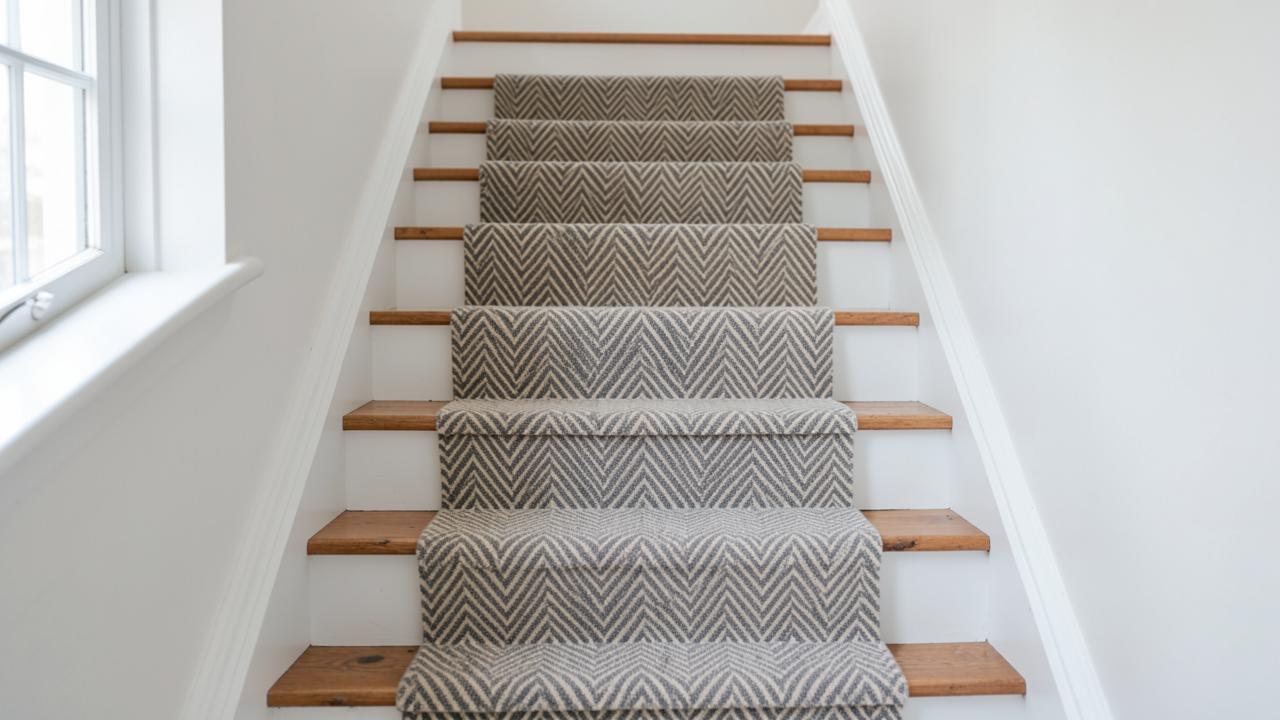 DesignStair Runner Patterns ExplainedHerringbone, chevron, stripes, plaid, geometrics and animal prints judged by how they behave on a staircase.
- MaterialsWool Stair RunnersWhy wool holds its shape on stairs: crimp, twist, blends, staining, moths, shedding and honest limitations.
- MaterialsAxminster Stair Runners: A Guide to Woven QualityExplore the heritage, durability, and intricate patterns of Axminster stair runners. Learn why woven construction remains the gold standard for high-traffic British homes.