Heritage
Axminster stair runners: The ultimate guide to woven excellence
When it comes to the combination of intricate pattern, structural longevity, and sheer underfoot luxury, the Axminster weave remains the undisputed benchmark for the British staircase.
Written by the StairRunner.co editorial team · Updated 4 September 2026
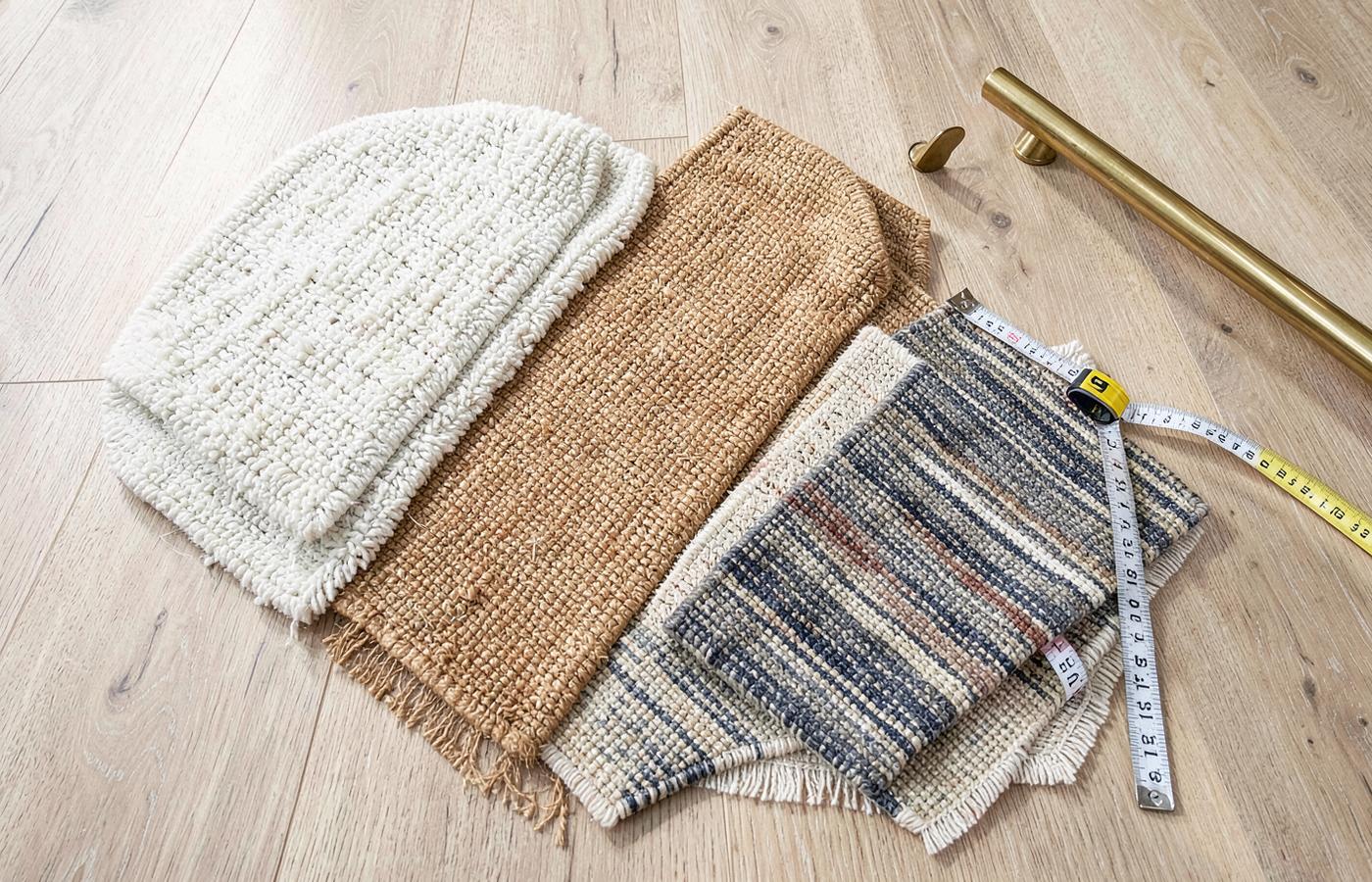
The history and heritage of the Axminster weave
The name Axminster is synonymous with quality, but it refers to a specific weaving process rather than a single brand. Originating in the Devon town of Axminster in the 18th century, Thomas Whitty began weaving carpets that rivalled the quality of imported Turkish rugs. The key innovation was the ability to use a vast palette of colours and create complex, non-repeating patterns that were structurally part of the carpet itself.
In the modern context, Axminster weaving is done on sophisticated power looms, but the fundamental principle remains: the pile is inserted as individual tufts of yarn and locked into the backing as the weave progresses. This differs fundamentally from tufted carpets, which dominate the mass market. In a tufted carpet, the yarn is looped into a backing fabric and then glued in place with a secondary backing. On a staircase, where the carpet is under constant tension and subject to the shearing forces of feet turning on steps, the structural integrity of a woven Axminster provides a significant advantage.
Why Axminster is the preferred choice for stairs
Stairs are the most demanding environment for any floor covering. The material is stretched over the nosing (the front edge of the step), compressed by the weight of a person, and subjected to lateral forces as people turn. Axminster runners excel here for several reasons:
- Dimensional Stability: Because the backing and pile are woven together, the runner is incredibly stable. It doesn't 'walk' or stretch over time as easily as tufted products might.
- Pattern Precision: If you want a traditional Persian design, a bold floral, or a complex geometric to line up perfectly on your staircase, Axminster is often the only way to achieve it with the necessary detail.
- Wear Resistance: The 80/20 wool/nylon blend is specifically engineered for high-traffic areas. The wool provides resilience (the ability to bounce back), while the nylon provides abrasive strength to resist the 'baldness' that can occur on the nosings.
- Flame Retardancy: Wool is naturally flame retardant, a critical safety consideration for the primary escape route in your home.
Technical Specifications: Pitch, Rows, and Pile Height
| Specification | What it measures | Stair relevance |
|---|---|---|
| Pitch | The number of tufts per inch across the width | Higher pitch allows for finer, more detailed patterns |
| Rows (Beat) | The number of tufts per inch along the length | More rows mean a denser, harder-wearing surface for the nosings |
| 80/20 Blend | Percentage of wool to nylon fibre | The "gold standard" for balancing comfort with durability |
| Pile Weight | The weight of the yarn per square yard/metre | Indicates the amount of material; higher isn't always better for stairs |
| Woven Backing | Integrated jute and cotton yarns | Provides the grip and stiffness required for a secure installation |
Axminster on winding stairs: The installer's challenge
Fitting a patterned Axminster on a straight flight is relatively straightforward for a professional, but winders (the steps that turn a corner) require a different level of craftsmanship. When a runner turns, the pattern must be handled carefully.
There are two main ways to handle a turn with an Axminster:
- The Mitre: The runner is cut and joined at an angle (usually 45 degrees) on a landing. For an Axminster, this requires a perfect pattern match at the seam. This is where the quality of the weave helps; the stability of the backing allows for a very tight, nearly invisible seam when done by a pro.
- The Wedge (or Fan): Each winder step is fitted individually. Because the runner is narrower on the inside of the turn than the outside, the installer must 'lose' some of the material in the crotch of the step. With a patterned Axminster, this can be complex, as the pattern will naturally want to distort. A master fitter will use hand-stitching and careful tensioning to keep the design looking intentional.
For more on these techniques, see our guide on fitting runners to winding stairs.
Comparing Axminster to other materials
If you are deciding between Axminster and other popular options, consider the following trade-offs:
- Axminster vs. Sisal: Sisal is incredibly popular for its natural, organic look, but it is notoriously difficult to clean and can be slippery. Axminster offers far more comfort and better stain recovery if treated promptly. See sisal stair runners for the comparison.
- Axminster vs. Wilton: Both are woven, but they use different looms. Wilton is generally better for plain, textured, or simpler patterns (like stripes), whereas Axminster is the king of complex multicolour designs. We compare them in detail below.
- Axminster vs. Tufted Synthetic: A synthetic runner is cheaper and often bleach-cleanable, but it will never have the 'heirloom' feel or the 20-year lifespan of a woven wool Axminster.
Design Considerations: Choosing the right pattern for your hall
The staircase is often the first thing people see when they enter a home. An Axminster runner allows you to make a bold statement.
The Classic Panel Design
Many Axminster runners feature a central pattern with a distinct border. This is a traditional look that frames the staircase beautifully. It requires precise measurement to ensure the border remains a consistent distance from the edge of the treads.
All-over Florals and Medallions
Common in Victorian homes, these patterns are excellent at hiding the inevitable soiling that occurs in a hallway. The complexity of the design masks footmarks and minor spills between professional cleans.
Modern Geometrics
Modern Axminster looms can produce sharp, crisp lines that look stunning in a contemporary hallway. The advantage of a woven geometric over a printed or tufted one is the crispness of the colour boundaries; there is no 'bleeding' between the shapes.
The importance of the right underlay
You should never install a high-quality Axminster runner directly onto the timber. The underlay acts as a shock absorber. Without it, the abrasive force of feet would grind the back of the carpet against the hard wood, destroying the weave from the bottom up.
For Axminster, we recommend a firm, high-density crumb rubber or a very high-quality felt and rubber combination. Avoid the cheap, soft foam underlays often used in bedrooms; they are too 'bouncy' for stairs and will allow the carpet to move, eventually leading to the stretching we want to avoid. Detailed advice can be found in our underlay guide.
Maintenance and longevity
A common misconception is that wool is hard to care for. In fact, the natural oils (lanolin) in wool provide a degree of natural stain resistance.
Daily Care
Vacuuming is the single most important thing you can do. On stairs, use the nozzle attachment to get into the 'crotch' of the step (where the riser meets the tread), as this is where dust and grit accumulate. Grit acts like tiny saws, cutting through the wool fibres as you walk on them.
Dealing with Spills
If you drop something on your Axminster, act fast. Blot—never rub. Rubbing will distort the pile and can permanently 'fuzz' the surface of the wool. Use plain lukewarm water first; only move to detergents specifically designed for wool if necessary.
For more detailed instructions, see our stair runner cleaning guide.
The Cost of Axminster: Why it's an investment
There is no escaping that Axminster is at the higher end of the price spectrum. The cost reflects the raw materials (high-grade British or New Zealand wool), the slow and complex weaving process, and the design heritage involved.
However, when calculating the cost, consider the 'cost per year'. A cheap synthetic runner might need replacing every 5 years as it flattens and looks tired. An Axminster will still look magnificent in 15 years. It is a long-term investment in the fabric of your home. You can explore the broader context of pricing in our UK cost guide.
What to look for when buying
When you are presented with samples, check the back of the carpet. On a true Axminster, you will see the pattern faintly mirrored on the underside because the yarns are woven through. This is the mark of a genuine woven product.
Feel the density. Press your thumb into the pile; it should feel firm and resistant, not soft and airy. The more resistance you feel, the more yarn has been packed into the weave, and the longer it will last on your stairs.
Installation: Gripper and Rods
Axminster runners are usually installed using a combination of carpet grippers (the wooden strips with sharp pins) and sometimes stair rods.
The gripper should be placed about 15-20mm away from the riser. This creates the 'gulley' where the runner is tucked in, creating that sharp, tailored look that Axminster is famous for. If you are using rods, remember that in most modern installations, the rods are decorative—the gripper is doing the actual work of holding the carpet in place. See our guide on stair rods and brackets for more.
Sustainable Choice
In an era where we are all conscious of our environmental impact, wool Axminster is a compelling choice. Wool is a renewable resource, shorn from sheep every year. It is biodegradable at the end of its long life, and its excellent insulation properties can even help with the acoustics and thermal retention of your hallway.
Summary of Axminster Benefits
- Unrivalled Beauty: The only choice for truly intricate, multicoloured patterns.
- Structural Integrity: Woven construction prevents stretching and delamination.
- Natural Resilience: Wool blend bounces back after compression.
- Safety: Naturally flame retardant and provides excellent grip underfoot.
- Longevity: A 20-30 year lifespan is common with proper care.
Final Thoughts on Choosing Axminster
Choosing an Axminster stair runner is a decision to prioritise quality over convenience. It requires a bigger initial budget and a professional installer who understands woven products, but the result is a staircase that feels substantial, looks elegant, and stands up to the rigours of family life for decades. Whether you are restoring a Victorian villa or adding character to a new build, the Axminster weave remains the gold standard for a reason.
For more information on finding the right style, browse our stair runner ideas or learn more about the materials in stair runner materials.
Frequently asked questions
- What makes an Axminster runner different from a standard carpet?
- Unlike tufted carpets where the pile is punched into a pre-existing backing, an Axminster is woven as a single unit. The pile yarns and the backing yarns are intertwined during the weaving process, creating a structural integrity that prevents delamination and allows for incredibly complex patterns.
- Are Axminster stair runners always made of wool?
- Traditionally, yes, usually an 80% wool and 20% nylon blend. This '80/20' mix is the industry standard for stairs because it combines the natural resilience and flame retardancy of wool with the abrasive strength of nylon, ensuring the nosings don't wear through prematurely.
- Can Axminster runners be installed on winding stairs?
- Yes, but they require a skilled installer. Because the patterns are woven into the structure, the installer must carefully manage the 'pattern match' across winders and landings. This often involves 'wedge' cuts and expert hand-stitching to ensure the design flows naturally around the turn.
- How long should an Axminster stair runner last?
- In a domestic setting with correct underlay and maintenance, a high-quality Axminster can easily last 20 to 30 years. Its woven construction means it retains its shape and appearance far longer than tufted alternatives, which can suffer from pile crush or secondary backing failure.
- Is an Axminster runner suitable for a modern home?
- While often associated with traditional Victorian or Edwardian patterns, modern Axminster looms can produce contemporary geometrics, abstracts, and subtle textures. The benefit is the quality of the weave, regardless of whether the aesthetic is heritage or ultra-modern.
- How do I clean an Axminster stair runner?
- Regular vacuuming with an upright cleaner that has a beater bar is essential to remove grit from the base of the weave. For spills, blot immediately with a clean cloth. Because of the high wool content, professional hot water extraction is recommended every 18-24 months.
Related guides
 InstallationHow to Install a Stair RunnerWaterfall and Hollywood methods, staples versus rods, tools, sequence and quality checks.
- MaterialsStair Runner Materials ComparedWool, nylon, polypropylene, sisal and jute judged on stair-specific wear, comfort, cleaning and safety.
- MaterialsWilton Stair Runners: Structural Integrity and StyleEverything you need to know about Wilton stair runners. From the unique weaving process to the choice between loop and cut pile for your staircase.