Colour Guide
The complete guide to beige stair runners
Beige is the quintessential neutral. It is the colour of sand, stone, and raw wool. A beige stair runner offers a light, airy, and sophisticated foundation that works with almost any interior style.
Written by the StairRunner.co editorial team · Updated 4 September 2026
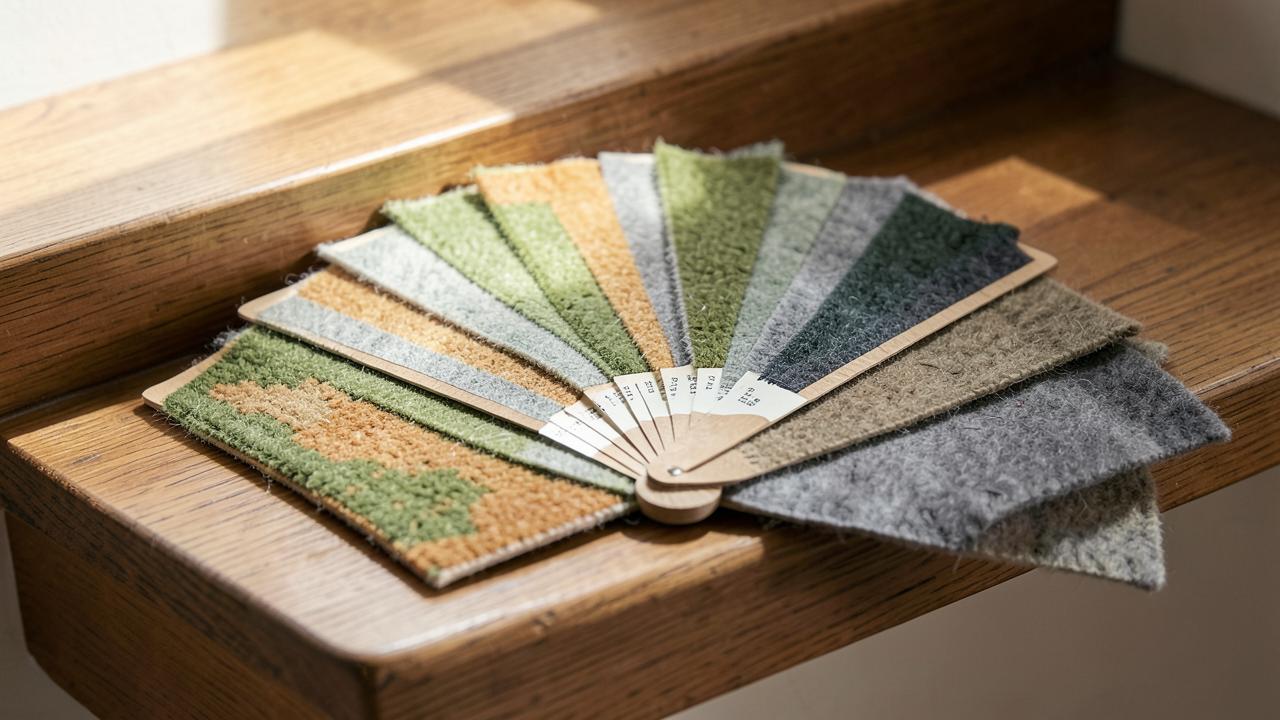
The timelessness of beige: Why it remains a favourite
Beige has often been criticised for being the "default" choice, but its enduring popularity is no accident. In the world of staircases, which are often narrow and lack natural light, beige is a transformative tool. It has a high Light Reflectance Value (LRV), meaning it bounces light around the space, making small hallways feel larger and more welcoming.
Furthermore, beige is a "chameleon" colour. It doesn't compete with other design elements. If you have bold wallpaper, a gallery wall of art, or an intricate tiled floor in the hallway, a beige runner provides the necessary visual "quiet" to let those elements shine. It is a long-term investment; while trends in bold colours come and go, a high-quality beige runner will look relevant for decades.
The psychological impact of beige is one of calm and cleanliness. It evokes a sense of order and serenity. However, to keep that feeling, the runner must be kept clean—a challenge we will address in detail below.
Navigating the beige spectrum: From Sand to Stone
"Beige" is a broad term that covers a wide variety of tones. Choosing the wrong one can lead to a staircase that looks "yellowed" or "dirty" even when new.
Warm Beiges: Honey, Biscuit, and Creamy-Beige
These have yellow or pink undertones. They are excellent for adding warmth to a home. They pair beautifully with traditional timbers like pine and warm oak. However, in certain artificial lights, warm beiges can look a little dated.
Cool Beiges: Stone, Putty, and Greige
These have grey or green undertones. They are the modern standard for beige. "Greige" (a mix of grey and beige) is particularly popular because it works well with both warm wood and cool-toned modern paints. These tones feel sophisticated and urban.
Heathered and Multi-Tonal Beiges: Oatmeal and Pepper
If you take one piece of advice from this guide, let it be this: for a staircase, a multi-tonal beige is always better than a solid one. An "oatmeal" carpet is made of fibres in three or four different shades of beige and brown. This "flecked" look is a master at hiding the small marks, lint, and hairs that a solid beige would highlight instantly.
| Shade | Undertone | Atmosphere | Maintenance Requirement |
|---|---|---|---|
| Oatmeal | Multi-tonal | Natural / Rustic | Low-Moderate |
| Sand | Yellow / Warm | Coastal / Bright | Moderate-High |
| Greige | Grey / Cool | Modern / Minimal | Moderate |
| Stone | Grey / Neutral | Urban / Sophisticated | Moderate |
The maintenance reality of beige on stairs
Let's be honest: a beige runner in a house with three dogs and a rugby team is a challenge. But it is not impossible. The key is in the specification.
Avoid "Flat" Piles: A smooth, light beige velvet carpet on stairs will show every footprint. Instead, choose a texture. A loop pile or a low, dense twist is much more forgiving.
Specify the Fibre: Wool is naturally resilient and has a protective waxy coating (lanolin) that helps repel spills. However, for a beige runner, a solution-dyed synthetic (like nylon or polypropylene) is arguably even better because it can be cleaned more aggressively without losing its colour. Learn about choosing the right carpet.
Stain Protection: If you choose wool, ensure it is treated with a stain-repellent finish. This buys you time to blot up a spill before it penetrates the fibre.
Styling Beige: The power of the border
A plain beige runner can sometimes look a little unfinished. The addition of a border can transform it from "standard" to "bespoke."
Black or Navy Borders: This is a high-fashion look. The dark tape provides a sharp frame that makes the beige look intentional and structured. It's a great way to tie the runner in with black stair rods or a dark-painted handrail.
Tonal Borders: A beige runner with a slightly darker brown or tan border is a more subtle approach. It adds interest without the high contrast of black.
Herringbone Weaves: Many beige runners come in a herringbone weave. This adds a level of sophistication and texture that makes the colour feel much more expensive. See pattern ideas.
Safety and Contrast
Safety on a staircase is largely about visual information. Beige is excellent for safety when paired with dark wood or dark-painted stairs, as the contrast between the light carpet and the dark tread is very high.
However, if you have very light pine or white-painted stairs, a light beige runner can "disappear," making the edges of the steps hard to see. In this scenario, a contrasting border is not just a style choice—it's a safety requirement. It provides the visual "break" the brain needs to judge the steps accurately. For more, see safety guides.
Long-term care for beige runners
- Daily Vacuuming: In high-traffic homes, a quick daily vacuum of the stairs will prevent dirt from being ground into the pile.
- Professional Deep Clean: Budget for a professional hot-water extraction clean every 12 months. This is the only way to remove the deep-seated grey soil that eventually makes beige look "tired."
- Entrance Mats: The best way to keep a beige runner clean is to stop dirt at the front door. Use a heavy-duty coir mat.
Refer to our cleaning guide for more details.
Summary
A beige stair runner is a choice for those who value light, space, and timeless style. While it requires a commitment to maintenance, the rewards are a hallway that feels perpetually fresh and sophisticated. By choosing a heathered tone, a durable fibre, and considering a contrasting border, you can enjoy the beauty of beige without the stress.
Frequently asked questions
- Does a beige stair runner show dirt quickly?
- Yes, more so than darker colours. However, by choosing a 'heathered' or multi-tonal beige (oatmeal), you can hide significantly more soil than a flat, solid beige. Regular maintenance is essential.
- What is the best material for a beige runner?
- For durability and stain resistance, a high-quality wool-synthetic blend or a solution-dyed synthetic is best. If you want a natural look, sisal or seagrass in their natural beige tones are incredibly tough.
- How do I make a beige runner look modern?
- Use a contrasting border, such as black or dark grey tape. This adds a graphic edge that prevents the beige from looking dated or 'boring.' Pairing it with minimalist stair rods also helps.
- Will beige go with dark wood stairs?
- Absolutely. In fact, beige on dark wood is a classic, high-contrast look that is very popular. It makes the runner pop and provides excellent safety by clearly defining the steps.
- Is beige better than grey for stairs?
- Beige is 'warmer' than grey. If your hallway feels cold or north-facing, beige will add a much-needed sense of warmth. Grey is better for a more clinical, ultra-modern aesthetic.
- Can I get a beige runner that won't show footprints?
- Yes. Look for a 'loop pile' or a 'berber' weave. Because the fibres are looped rather than cut, they don't 'lean' when you step on them, meaning they don't show the shading or 'vacuum tracks' that a cut-pile carpet would.
- How do I remove a red wine stain from a beige runner?
- Speed is key. Blot (don't rub) the spill with a dry white cloth to absorb as much as possible. Then use a mixture of sparkling water and a tiny drop of wool-safe detergent. If it's a wool runner, avoid 'Oxy' style cleaners as they can bleach the natural cream tones of the wool.
Related guides
 CareCleaning and Caring for a Stair RunnerRoutine vacuuming, spill response by fibre type, slipping and fraying, and when to call a professional.
 InstallationStair Rods, Clips and Runner HardwareHow stair rods, clips, brackets and bars actually work, when they hold a runner and when they are decorative.
- DesignChoosing a Stair Runner ColourHow light, adjacent flooring, trim colour, traffic and dirt should drive the colour decision.
 MaterialsWool Stair RunnersWhy wool holds its shape on stairs: crimp, twist, blends, staining, moths, shedding and honest limitations.
Advanced technical considerations for stair performance
Beyond colour and aesthetic, the physical performance of a runner on a staircase is a matter of engineering. The nosing (the edge of the tread) is the highest-wear point of any flight. When specifying a runner, the pile density at the nosing is what determines how long the appearance remains uniform. A high-density, low-profile weave is always superior to a loose, high-pile one, regardless of colour.
Furthermore, the interaction between the runner and the underlay is a critical, often overlooked variable. A dense, firm underlay prevents the carpet from 'ballooning' over the nosing, which not only causes premature wear to the carpet backing but also creates a trip hazard. Always pair your runner with a dedicated stair-specific underlay, never a generic 'room' underlay.
Finally, consider the 'tensile' requirements of a runner. It must be stretched tight enough to remain flat but not so tight that it places undue stress on the staples or rods. The backing material itself—whether jute, action back, or felt—will determine how well the runner retains its tension over the life of the installation. A synthetic backing generally offers better stability than a natural jute backing, which can be sensitive to humidity changes.
By focusing on these technical layers—the subfloor preparation, the nosing durability, and the tensioning strategy—you ensure the runner is not just a visual choice but a long-term architectural investment in the home.
The 'Greige' revolution: Why beige and grey merged
For decades, interior design was split between the 'warm' camp (beige) and the 'cool' camp (grey). The 'greige' revolution changed everything. Greige is a sophisticated blend of both, offering the warmth of beige with the modern, clean edge of grey. A greige stair runner is perhaps the most versatile flooring choice available today. It works perfectly in homes that are transitioning between styles. If you have grey walls but want to introduce warmer wooden furniture, a greige runner is the 'bridge' that ties the two together. It adapts to the light; in the cool morning light, it looks grey, and in the warm evening lamplight, it looks beige, ensuring your hallway always feels current.
Specifying 'Undyed' wool for the ultimate beige
The most luxurious beige runners are not dyed at all. They are made from a blend of fleeces from different breeds of sheep—some white, some brown, some grey. By blending these natural wools, manufacturers can create a stunning range of beiges that have a depth and 'heathered' quality that synthetic dyes can never quite match. These undyed runners are also more environmentally friendly, as they require no chemical dyes and less water in the manufacturing process. Furthermore, natural wool contains lanolin, which provides a built-in stain resistance that is superior to many aftermarket treatments, making a natural beige runner surprisingly practical.
Visual ergonomics: Beige and the aging eye
As we age, our ability to distinguish between subtle shades decreases, and our need for light increases. Beige is a fantastic choice for 'visual ergonomics' on a staircase. Because it reflects so much light, it makes the stairs easier to see in low-light conditions. However, to make it truly safe for older residents or those with impaired vision, it is vital to use a contrasting border. A beige runner on a light wood staircase can be a 'vision hazard' because the edges of the steps blur together. The addition of a 5cm dark brown or navy border provides the 'high-contrast' edge that the brain needs to safely judge the depth of each step.
The 'Showroom' look: Maintaining the 'New' feel
The reason beige is so popular in show homes is that it looks incredibly clean and fresh when new. To maintain that 'showroom' look in a real home, you need a two-pronged strategy. First, use a 'high-twist' yarn; this prevents the fibres from fraying and looking 'fuzzy' over time, which is what makes beige look old. Second, consider a 'low-profile' installation. Instead of a thick, bouncy underlay that allows the carpet to move (which causes wear), use a firm, dense underlay that holds the beige runner tight. This reduces the friction between the carpet backing and the floor, extending the 'as-new' appearance of the runner by several years.
Pairing beige with architectural 'Black' accents
One of the strongest trends in UK architecture right now is the use of 'Crittall' style black-framed glass doors and black ironmongery. A beige stair runner is the perfect partner for these black accents. The contrast is sharp and modern, but the beige provides the softness that a purely black-and-white scheme lacks. It prevents the hallway from feeling too 'industrial.' Designers often pair a stone-coloured beige runner with black stair rods and a black-painted handrail to create a look that is both grounded and airy. The beige acts as a neutral canvas that allows the graphic lines of the black metal to stand out.