Materials
Berber stair runners: construction, performance and pitfalls
Berber is a style of construction defined by its loops, not its fibre. On a staircase, where the physics of walking and cleaning are most punishing, understanding how those loops behave is the key to a runner that lasts.
Written by the StairRunner.co editorial team · Updated 4 September 2026
Defining the Berber construction: more than just a look
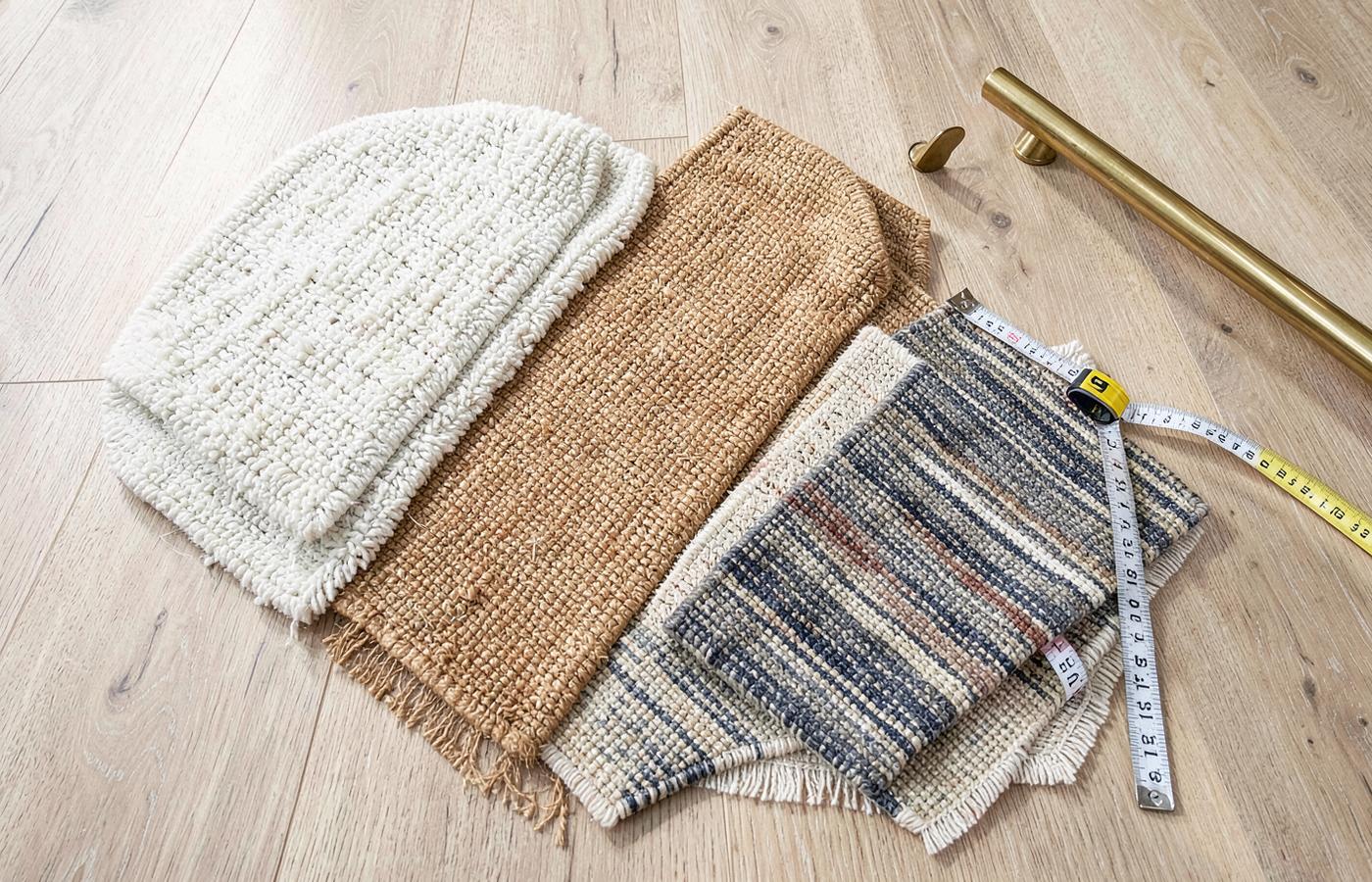
"Berber" is frequently misused in retail to describe a specific style of flecked carpet. In technical terms, it refers to a loop pile construction. These loops can be level—where all loops are the same height—or multi-level, where loops vary to create texture or pattern. On a flat floor, these variations might look decorative; on stairs, they dictate how the carpet touches the foot, how much dirt it traps, and how easily it wears down at the nosing. The history of this weave traces back to the Berber people of North Africa, who used similar techniques for hand-woven rugs. Today, the term has been industrialised, but the core principle remains: a continuous yarn that loops through the backing rather than being cut flush.
The density of these loops is the primary determinant of quality. A 'high-density' Berber means there are more loops per square inch, which translates to better support for each footfall. On a staircase, this support is critical. If the loops are too sparse, the weight of a person walking will cause the loops to tilt sideways, leading to premature wear and a 'matting' effect that is impossible to reverse. When shopping, always look at the 'gauge' of the carpet—a measure of how many needles per inch were used in its creation.
| Type | Stair Performance | Maintenance |
|---|---|---|
| Level Loop | High stability, consistent nosing wear | Good, easy to vacuum |
| Multi-Level | Uneven tread, higher snag risk | Traps dirt in lower loops |
| Small Loop | Best for durability and resistance | Excellent, less surface area |
| Large Loop | High comfort, high snag risk | Difficult, prone to fuzzing |
| Textured Loop | Good visual interest, varying wear | Medium, requires careful vacuuming |
The snagging risk: a reality of loops on stairs
The defining feature of a Berber runner—the loop—is also its greatest vulnerability. Unlike a cut pile, where individual fibres stand independently, a Berber is a series of continuous stitches. If a single loop is caught and pulled, it can trigger a 'run' that pulls the carpet taut and disrupts the entire alignment of the runner on the step. This is not just an aesthetic issue; it creates a trip hazard. The physics of a stair nosing makes this even more acute; the tension at the edge of the stair means a snagged loop will pull tighter and faster than it would on a flat floor.
Common culprits for snagging include pets, especially those with unclipped claws, and standard household vacuums. If you use a rotating beater bar or a power head, you are essentially brushing your stair runner with a mechanical claw. Always use a suction-only setting or a specialist upholstery attachment when cleaning a Berber runner to keep the loops intact. Even high heels or furniture legs being moved can catch a loop if they have a sharp edge. It's a trade-off: you get incredible durability and crush resistance, but you must be mindful of the physical integrity of the surface.
Crush resistance in high-traffic lanes
Berber loops are naturally more resistant to crushing than many cut-pile carpets because they offer a supported, structured surface. In a high-traffic home, a well-specified Berber will show less 'flattening' in the middle of the stair than a plush cut pile would. However, this relies on the density of the weave. A 'loose' Berber will allow the loops to tilt and eventually crush, leading to a permanent change in texture. When assessing a sample, push down on the loops with your thumb; they should feel firm and offer immediate resistance.
The way the foot interacts with a loop is fundamentally different from a cut fibre. In a cut pile, the ends of the fibre are exposed, and they can 'splay' out over time. In a loop, the arch of the yarn distributes the pressure more evenly across the backing. This is why Berbers are often chosen for commercial spaces like hotel hallways or offices. On your home stairs, this means the 'path' that everyone walks will take much longer to become visible. You won't see that characteristic 'shading' where the most-used parts of the carpet look darker or flatter than the edges.
Installation challenges: the rigidity factor
Berber is often a stiffer, more structural material than a traditional cut-pile Wilton or Axminster. This is because the backing and the loop structure are designed to work together to hold the shape. This can make the 'waterfall' installation style—where the carpet curves over the nosing without being stapled to the riser—trickier. If the carpet is too stiff, it will 'bridge' the nosing rather than hugging it, leaving a hollow gap that will be crushed and damaged within weeks.
Ask your installer about the flexibility of the specific Berber you have chosen. Sometimes, a slightly lower-density backing is required to ensure the carpet can be properly tensioned and secured at every step. If you are unsure, look at our stair runner installation guide to discuss the trade-offs between fitting styles. A 'Hollywood' or 'bolster' wrap—where the carpet is stapled under the nosing—is often better for stiffer Berbers as it forces the material to follow the contour of the stair, reducing the chance of air gaps and structural failure.
Material choice: wool vs. synthetic
Berber can be made from wool or synthetics like polypropylene or nylon.
- Wool: Offers a soft, natural hand and excellent inherent resilience. It holds its shape well but is more sensitive to moisture and needs immediate blotting if spills occur. Wool is naturally flame-retardant and has a higher 'memory', meaning it will bounce back from pressure better than most synthetics.
- Synthetic (Polypropylene): A common choice for budget-friendly or high-traffic settings. It is inherently stain-resistant and holds its colour well, but it can be more prone to 'shading' or static accumulation over time. Modern polypropylene can be very soft, but it lacks the natural elasticity of wool.
- Nylon: The strongest of the synthetic fibres. A nylon Berber is incredibly tough and holds its loops very well, but it is typically more expensive than polypropylene. It is often treated for stain resistance to compete with the inherent properties of polypropylene.
If your stairs are in a hallway that receives direct, intense sunlight, consider the lightfastness of the fibre. Some synthetics are solution-dyed, making them significantly more fade-resistant than natural fibres. Learn more in our stair runner materials overview.
Designing with Berber: light, shadow, and texture
Berber is a texturally driven material. Because the visual interest comes from the loops and the weave rather than the pile length, it works beautifully in more structured or minimalist interior designs. A natural-coloured, level-loop Berber runner can look incredibly elegant against dark timber or painted stairs. Just ensure that the runner width is calculated accurately; because of its structure, Berber doesn't 'ease' or stretch as much as other carpets, so your measurement needs to be precise.
One often-overlooked aspect of Berber is how it interacts with light. Because the loops create a series of small shadows, the runner will have a different 'depth' depending on the time of day and the placement of your hallway lighting. A multi-level Berber can look almost three-dimensional under the right conditions. However, this also means that any dirt or debris trapped in the loops will be more visible when the light hits it at an angle. Regular, careful vacuuming is the only way to maintain that crisp, architectural look.
Long-term wear and tear: what to expect
Even the most robust Berber will eventually show signs of use. The most common failure modes are:
| Issue | Cause | Fix |
|---|---|---|
| Loose loops | Snagging | Carefully trim flush with scissors; do not pull. |
| Flattening at nose | Constant foot traffic | Rotate the runner or use a firmer underlay. |
| Staining | Delayed cleanup | Use appropriate fibre-safe cleaner. |
| Fuzzing | Aggressive vacuuming | Switch to a suction-only nozzle immediately. |
| Shading | Pile reversal/crushing | Professional cleaning/grooming can help temporarily. |
Safety and slip resistance
Safety is a paramount concern on stairs. Berber runners offer a unique profile for traction. The loops provide a textured surface that is generally less slippery than a very smooth, flat-weave synthetic. However, because the surface is not as 'grippy' as a soft cut pile, it's important to ensure that the user's footwear is appropriate. Bare feet or socks can sometimes feel a bit 'slicker' on a high-density synthetic Berber compared to a wool one.
The height of the loops also plays a role in safety. A very tall loop can slightly obscure the edge of the stair, which can lead to missteps. A low, tight-loop Berber is the gold standard for stair safety, as it provides clear visual and physical feedback of where the stair ends. This is especially important for households with elderly residents or young children. See our guide on non-slip stair runners for a deeper dive into the physics of stair safety.
The role of the underlay
You cannot talk about Berber performance without talking about underlay. A looped carpet is only as good as the support beneath it. If you use a soft, spongy underlay, the loops will be pushed down into the padding every time you step on them, which will cause the backing to flex and eventually crack. For Berber, you need a high-density, firm underlay—often a rubber crumb or a high-tog felt. This provides a solid foundation that prevents the carpet from moving and protects the loops from excessive flexing.
A good underlay also helps with sound insulation. Berber, being a more structural and often thinner carpet than a deep pile, can sometimes be noisier when walked upon. A high-quality underlay will absorb that impact sound, making your staircase much quieter. This is a crucial consideration if your stairs are located near bedrooms or a home office. Check out our stair runner underlay guide for specific recommendations by carpet type.
Environmental and sustainability factors
In today's market, the environmental impact of your flooring choice is a significant factor. Wool Berbers are a fantastic sustainable choice; they are renewable, biodegradable, and often produced with lower chemical inputs than synthetics. They also have excellent thermal properties, helping to insulate your hallway and reduce energy costs.
Synthetics, while made from petroleum products, are increasingly being produced from recycled materials. Many high-quality polypropylene and nylon runners now incorporate a percentage of recycled content. Furthermore, their extreme durability means they don't need to be replaced as often as cheaper alternatives, which reduces their overall lifecycle impact. When choosing, ask about the manufacturer's environmental policies and the recyclability of the product at the end of its life.
Professional vs. DIY installation
While we have a guide on DIY stair runners, we generally advise professional installation for Berber. The reason is the precision required. Because a loop run can happen so easily, one wrong staple or one misplaced cut can ruin the entire piece. A professional installer has the tools to tension the carpet correctly without stressing the loops, and they know exactly where to place fixings to ensure they are hidden and secure.
If you are determined to do it yourself, ensure you have a high-quality stair tool and a very sharp knife. You'll also need to be extremely careful when cutting around the nosings and spindles. The structural nature of Berber means it won't hide mistakes as well as a plush carpet will. Every cut and every staple will be visible if not done with absolute precision.
Cleaning protocols for every spill
How you clean your Berber depends heavily on the fibre. For a wool Berber, you must avoid any cleaner with a high pH or any bleach-based product. These will permanently damage the wool fibres, causing them to become brittle and lose their colour. A neutral, wool-safe detergent is essential. For synthetic Berbers, you have more flexibility, but you should still avoid over-saturating the carpet, as this can lead to watermarks and damage to the backing.
The most important cleaning rule for Berber is to blot, never rub. Rubbing a looped carpet will cause the fibres to 'frizz', creating a fuzzy patch that will permanently stand out from the rest of the runner. Use a clean, white cloth and apply pressure to soak up the spill, working from the outside in to prevent it from spreading. For more detailed advice, refer to stair runner cleaning.
Final considerations for your flight
A Berber stair runner is a long-term investment. Its durability is one of its greatest assets, provided you treat it with respect. Choose a dense, level loop to minimise snagging, use a high-quality underlay to support the nosing, and be diligent about your vacuuming settings. If you can do this, the clean, structural look of a Berber runner will remain a sophisticated feature of your staircase for many years. To ensure the installation is perfect, pair it with the right stair runner underlay and perhaps consider stair rods to add a final touch of polish and to help maintain tension on the risers. The combination of texture, durability, and classic style makes Berber one of the most enduringly popular choices for a reason.
Frequently asked questions
- Is Berber carpet a good choice for stairs?
- Berber is a construction style, not a material. While its dense loops can handle high traffic, stairs pose a unique risk of snagging. Choose a low, tight-loop Berber to minimise catch points, or a cut-pile alternative if your household includes pets.
- Why do Berbers snag on stairs?
- The continuous loop structure is vulnerable to sharp objects. A pet claw, a heavy vacuum head, or even a rough heel can pull a loop. Once a loop is pulled, it can create a run that travels down the entire length of the tread and riser.
- Does Berber carpet crush in the traffic lane?
- Because Berber is usually a looped pile, it is generally more crush-resistant than a cut pile. However, over time, the loops will compress under constant foot traffic. A higher density of loops helps maintain the runner's look for longer.
- How do I choose between wool and synthetic Berber?
- Wool Berber offers a natural texture and resilience but requires careful spill management. Synthetic Berber—often polypropylene—is easier to clean and moisture-resistant, making it a common choice for high-traffic or family homes.
- Can I use a multi-level Berber on stairs?
- Multi-level (or patterned) Berbers look interesting, but they are often more prone to uneven wear on stairs. The varying height of the loops can create inconsistent points of impact, making them harder to keep clean and more prone to crushing compared to a level-loop Berber.
- How does the pile height affect safety on stairs?
- A lower pile height is generally safer on stairs as it provides a more stable and predictable surface for each footfall. Taller loops can feel slightly more cushioned but may obscure the exact edge of the nosing, which is a key factor in preventing trips and falls.
Related guides
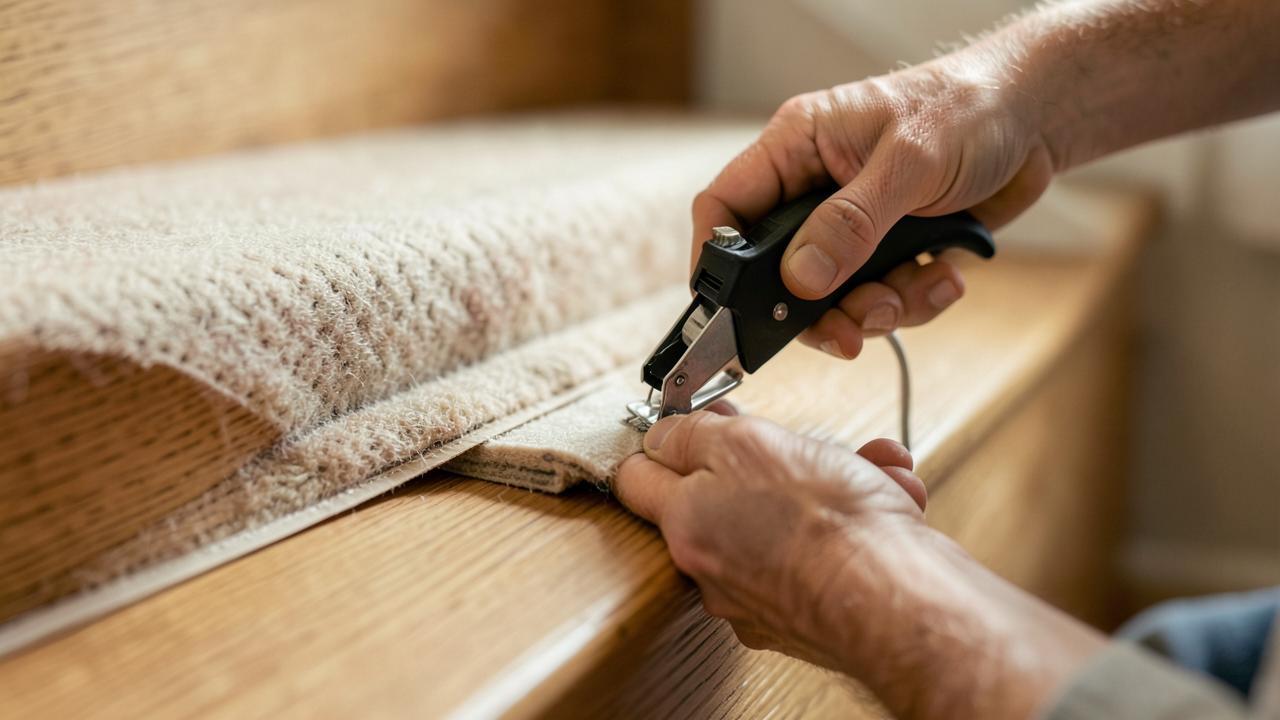 InstallationHow to Install a Stair RunnerWaterfall and Hollywood methods, staples versus rods, tools, sequence and quality checks.
- MaterialsStair Runner Materials ComparedWool, nylon, polypropylene, sisal and jute judged on stair-specific wear, comfort, cleaning and safety.
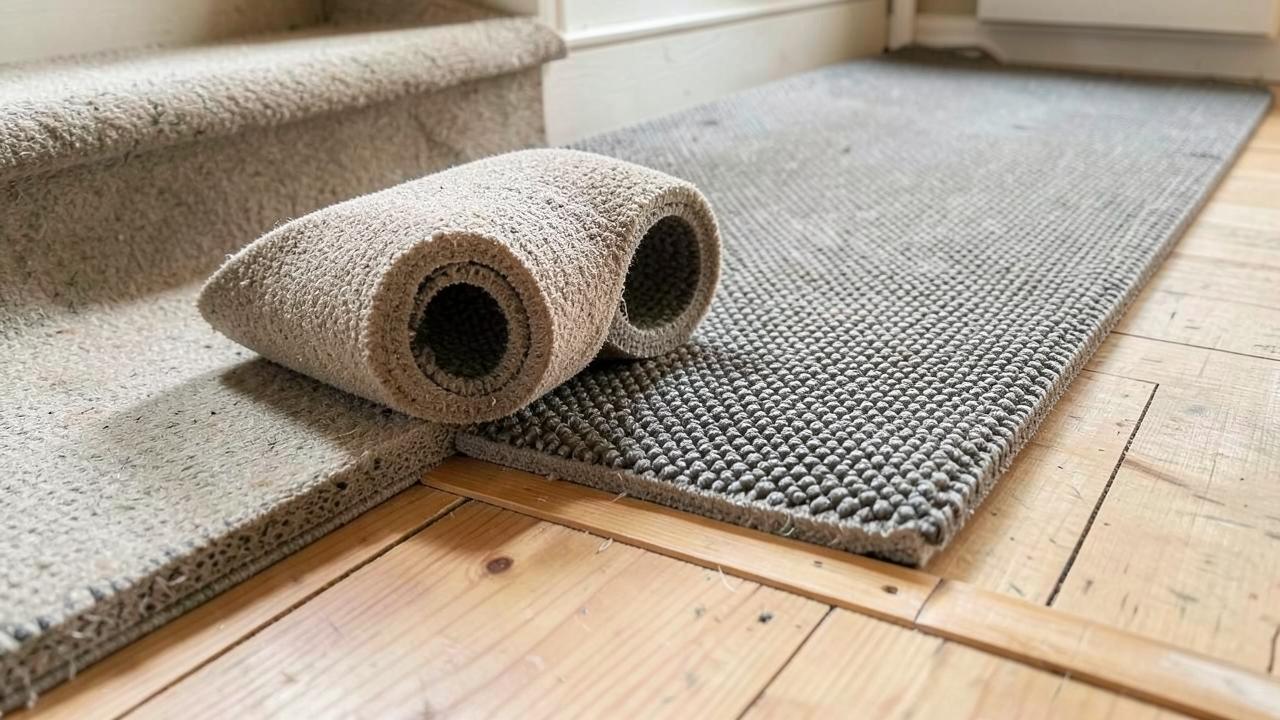 MaterialsStair Runner Underlay and PaddingWhy pad choice matters more on stairs than anywhere else, and how to specify density, thickness and cut.