Design Style
Dark stair runners: Creating drama and depth
A dark stair runner is a bold architectural choice. It anchors the space, provides a sense of luxury, and can transform a standard hallway into a moody, sophisticated gallery.
Written by the StairRunner.co editorial team · Updated 4 September 2026
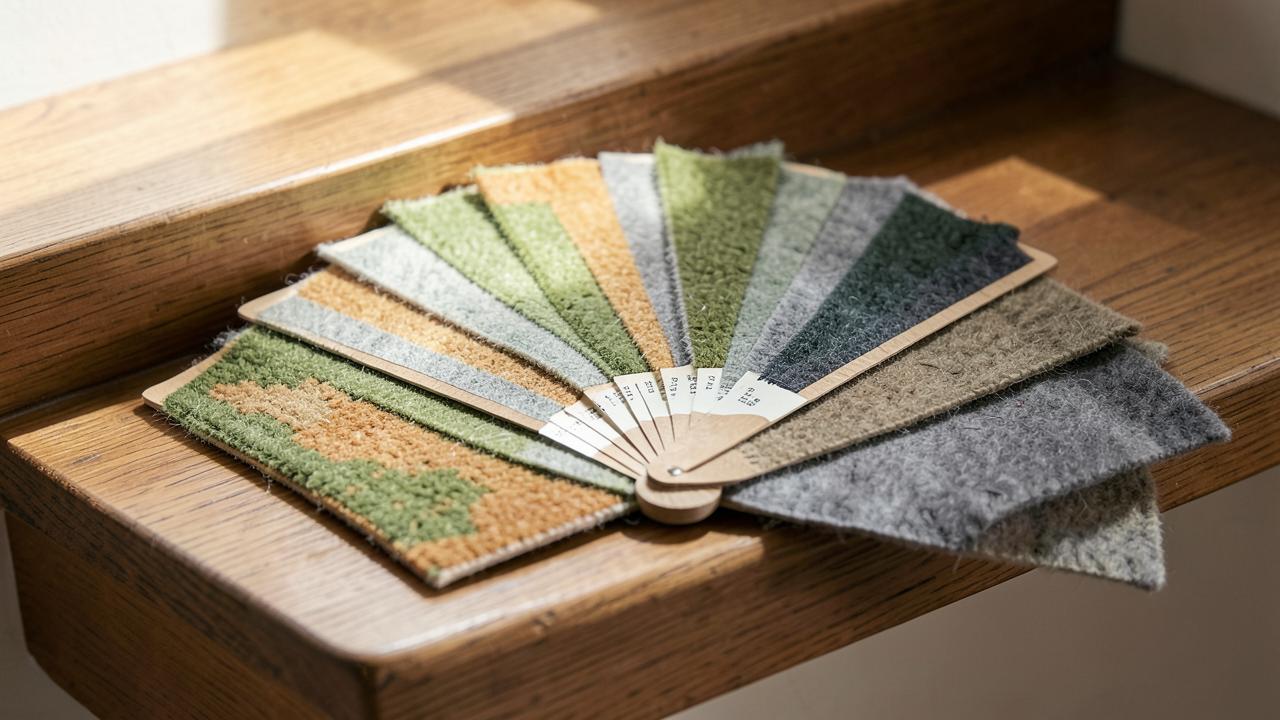
The Allure of Dark Runners
There is an undeniable sense of gravity and 'quiet luxury' associated with dark flooring. In a world of safe neutrals, a dark stair runner makes a definitive statement. It suggests a home that is confident in its aesthetic and unafraid of drama. Whether it’s a deep midnight blue or a rich anthracite grey, a dark runner acts as a visual anchor, drawing the eye and providing a sense of weight to the staircase.
From a design perspective, dark colours are excellent at making a space feel more cohesive. In a large, open-plan house, a dark runner can help 'tether' the different levels together, creating a continuous vertical thread that feels intentional. It also provides a stunning backdrop for metallic accents—chrome rods or brass brackets 'pop' against a dark pile in a way they never can against beige.
Practicality: Hiding Dirt vs Showing Lint
The most common reason people choose dark runners is the assumption that they are 'easier' to keep clean. This is a half-truth. While it is true that a dark navy runner will hide a mud stain or a coffee spill much better than a cream one, dark fibres have their own set of challenges.
Dark carpets are magnets for 'light' debris. Dust, lint, white pet hair, and even small bits of paper will stand out vividly against a black or charcoal background. If you have a white dog or cat, a dark runner may end up being higher maintenance than a mid-tone one. The key is to choose a 'heathered' or multi-tonal dark weave—where the charcoal is blended with a slightly lighter grey—to help mask this everyday debris.
Lighting Challenges and Solutions
Dark surfaces absorb light rather than reflecting it. If you install a dark runner in a narrow, windowless hallway, you run the risk of creating a 'black hole' effect. This not only looks oppressive but can also be a safety hazard.
- Layered Lighting: Don't rely on a single ceiling light. Use wall sconces to provide a wash of light across the flight, and consider 'tread lights' that illuminate each individual step.
- Reflective Surrounding Surfaces: Pair a dark runner with high-gloss white woodwork or pale, reflective wall paints. This 'bounces' the light back onto the stairs, ensuring the runner's texture is visible.
- Accentuate with Metals: Polished metal stair rods act like small mirrors, catching the light and creating rhythmic highlights up the flight. See stair runner rods for options.
Balancing Dark Floors with Wall Colours
The relationship between your runner and your walls will determine the 'temperature' of your hallway.
| Runner Colour | Wall Pairing | Atmosphere Created |
|---|---|---|
| Charcoal Grey | Crisp White | Modern, architectural, and sharp. |
| Midnight Navy | Soft Grey or Silver | Classic, nautical, and sophisticated. |
| Deep Forest Green | Terracotta or Cream | Historic, organic, and grounded. |
| Black / Anthracite | Greige or Stone | High-end, gallery-like, and dramatic. |
| Burgundy / Plum | Antique White or Gold | Victorian-inspired, warm, and regal. |
Material Depth and Colour Retention
Not all dark carpets are created equal. The depth of the colour depends on the fibre and the dyeing process. Wool absorbs dye into the very core of the fibre, resulting in a rich, matte finish that feels expensive. Synthetics, like solution-dyed nylon, are incredibly colour-fast and resistant to fading, which is vital for dark runners in sunny hallways.
A 'velvet' pile in a dark colour will show 'shading'—marks where the pile has been walked on or vacuumed in different directions. In a dark colour, this shading is very apparent and can look like 'watermarks'. Some people love this 'live-in' luxury look; others find it messy. If you want a uniform dark look, choose a 'twist' or a 'flat-weave' instead. Compare these in stair runner materials.
The Drama of the Monochromatic Flight
One of the most striking ways to use a dark runner is the 'monochromatic' look: dark runner, dark stairs, and dark walls. This creates a deeply immersive, 'cocooning' effect. It is a bold choice that works best in houses with high ceilings and interesting architectural details, as the shadows and highlights become the primary decoration.
To make this work, you must vary the textures. A matte wall, a glossy handrail, and a textured wool runner will prevent the dark space from feeling 'flat'. It turns the entire staircase into a sculptural element within the home.
Coordinating with Dark Woodwork
If you have dark oak or mahogany stairs, a dark runner can be a beautiful companion, but you must ensure there is *enough* of a difference between the two. A navy runner on a black stair can look like a mistake. Aim for at least two shades of difference, or use a contrasting edge binding to create a 'break' between the two dark materials.
Conversely, a dark runner on a very light wood (like ash or pine) provides a stark, modern contrast that highlights the shape of the flight. This is a classic 'Scandi-noir' look that remains very popular in contemporary UK homes.
Heat and Light Absorption
It’s a minor point for stairs, but dark colours do absorb more heat. In a conservatory-style stairwell with a lot of glass, a dark runner will feel noticeably warmer underfoot than a light one. More importantly, dark pigments are more susceptible to UV damage. If your runner will be sitting in a sun-drenched atrium, ensure it has a high UV rating or consider installing UV-filtering film on the windows to prevent the deep navy from turning into a dull purple over time.
Safety in Darker Stairwells
We cannot ignore the safety implications of a dark floor. Human eyes struggle to judge depth in low-contrast, dark environments. To keep your stairs safe:
- Use Rods: Metallic rods provide a visual 'break' at the base of each riser, helping the eye count the steps.
- Edge Definition: Ensure the border of the runner is clearly defined against the stair.
- Motion Sensors: Install motion-activated lights that turn on as you approach the stairs, ensuring you never have to navigate a dark flight in the dark.
Maintenance Routine for Dark Fibres
To keep a dark runner looking 'showroom' fresh, your maintenance routine needs to be slightly different from a beige one.
- High-Frequency Vacuuming: You may need to vacuum a dark runner more often—perhaps every other day—simply because the dust is so visible.
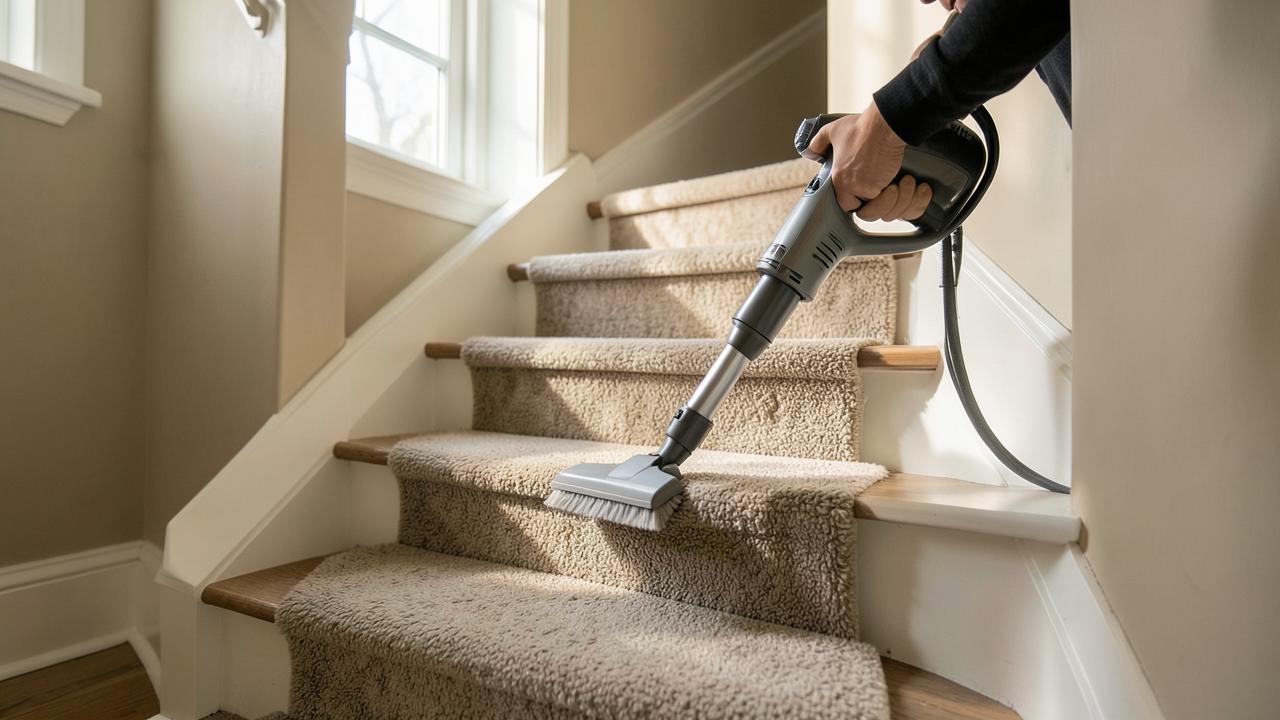
- The Right Attachment: Use a dedicated upholstery or stair tool to ensure you get into the corners where dust 'bunnies' tend to accumulate and show up against the dark pile.
- Damp Dusting: Occasionally 'dust' the runner with a very slightly damp microfibre cloth to pick up fine lint that the vacuum might miss.
For more detailed advice, see cleaning and caring for a stair runner.
Creating a 'Moody' Entryway
A dark runner is the starting point for a 'moody' interior theme. This style, often called 'dark academia' or 'modern gothic', relies on deep colours to create a sense of history and intellectualism. Pair your dark runner with vintage-style rugs on the landings, framed botanical prints on the walls, and warm-toned wood furniture to complete the look.
This approach is especially effective in Victorian terrace houses, which often have narrow, high-ceilinged hallways that naturally suit a darker, more dramatic palette. It turns a cramped space into a 'jewel box' of design.
Border Contrast in Dark Designs
If an all-dark runner feels too intense, a border is your best friend. A dark grey runner with a 5cm black border adds a layer of sophistication and 'tailoring' that makes the installation look custom-made. Alternatively, a dark navy runner with a thin white or silver 'piping' border can look incredibly sharp and nautical.
Borders also serve the practical purpose of hiding the edges of the carpet where it meets the stair, which can sometimes look 'fuzzy' on very dark, high-pile products. A bound edge provides a clean, crisp line that reinforces the runner's architectural presence.
The Impact of Pile Height on Dark Runners
Because dark colours show shadows so well, the pile height of the runner will significantly impact its appearance. A deep, shaggy dark runner will look very different from a flat-weave dark runner. The deep pile will create a lot of internal shadows, making the colour look even darker and more varied. The flat-weave will present a more uniform, 'graphic' block of colour.
For a truly minimalist dark look, go for the flat-weave. For a luxury, 'hotel' feel, go for a dense, low-cut pile wool. Avoid very long shag piles on stairs regardless of colour, as they are a trip hazard and mat very quickly in the traffic lane. You can read more about pile heights in choosing the best carpet.
Underlay for Dark Runners
Finally, consider the underlay. While the colour of the underlay doesn't matter (as it's hidden), the quality does. Dark carpets, especially those with a slight sheen, can show the 'grid' of a poor-quality underlay through the pile over time—a phenomenon known as 'telegraphing'. Use a high-quality, smooth-surfaced rubber underlay to ensure your dark runner remains perfectly flat and beautiful.
Frequently asked questions
- Do dark stair runners show more dust?
- Yes. While dark runners are excellent at hiding mud and dark stains, they show light-coloured debris like lint, dust, and pet hair more readily than mid-tone or light carpets. Regular vacuuming is essential.
- Will a dark runner make my hallway too dark?
- It can if the walls are also dark and there is no natural light. To avoid this, pair a dark runner with light-coloured walls or ensure you have high-quality, layered lighting to illuminate the flight.
- What is the best dark colour for stairs?
- Charcoal grey and navy blue are the most popular. They offer the drama of a dark tone but are slightly more forgiving than pure black, which can look very stark and show every speck of dust.
- Should I use a contrasting border on a dark runner?
- A light-coloured border (like cream or light grey) on a dark runner can help define the edges of the steps, which is both a stylistic choice and a safety feature in low-light conditions.
- Do dark carpets fade in the sun?
- Deep pigments can fade over time if exposed to direct, harsh sunlight. If your stairs are in a very sunny spot, consider a solution-dyed synthetic which holds its colour better than surface-dyed wool.
- What finish of stair rods works best with dark runners?
- Chrome or polished nickel provides a sharp, modern contrast. Brass or antique bronze offers a warmer, more traditional and sophisticated look against dark navys and blacks.
Related guides
 CareCleaning and Caring for a Stair RunnerRoutine vacuuming, spill response by fibre type, slipping and fraying, and when to call a professional.
- DesignChoosing a Stair Runner ColourHow light, adjacent flooring, trim colour, traffic and dirt should drive the colour decision.
- DesignBlack and Dark Stair RunnersWhen very dark runners work: light, dust, lint, contrast and the designs that carry them.