Design Trends
Black and dark stair runners: The practical guide to high-drama design
A black stair runner is one of the boldest interior choices you can make. It offers unparalleled drama and sophistication, acting as a powerful visual anchor in a home. However, it comes with a specific set of maintenance requirements and design rules that differ significantly from lighter options. This guide explores how to balance the theatricality of black with the practicalities of a busy household.
Written by the StairRunner.co editorial team · Updated 4 September 2026
The bold aesthetic of the dark staircase
In the world of interior design, black is often used to 'anchor' a room. On a staircase, a black runner acts as a strong, grounding line that draws the eye through the house. It is a choice that signals confidence and a modern, often monochromatic, aesthetic. It transforms a functional transitional space into a deliberate design statement. But before you commit to the 'Little Black Dress' of floor coverings, you need to understand the realities of living with it every day.
Black is not a single colour; it is an experience of light (or the lack thereof). In different lights, a black runner can look charcoal, midnight blue, or deep velvet. This variability is why it is both so appealing and so tricky to master. Historically, dark stairs were associated with grand Victorian manors where servants kept them pristine; today, they are a hallmark of the 'modern industrial' and 'new minimalist' movements.
The light absorption challenge
The most immediate effect of installing a black runner is the way it handles light. Unlike a cream or light grey runner, which reflects light back into the hall, a black runner absorbs it. This can make a narrow, windowless hallway feel significantly darker and more enclosed.
To mitigate this, you must look at the environment surrounding the runner:
- Contrasting Risers: Painting your stair risers in a bright, crisp white or off-white creates a 'piano key' effect. This not only reflects light but provides clear visual definition for each step, which is vital for safety.
- Wall Colour: Keep walls light. A black runner against dark walls can create a 'tunnel' effect that is oppressive rather than stylish. Light greys, off-whites, or even pale sage greens work well.
- Layered Lighting: Standard overhead lighting often isn't enough for dark stairs. Consider adding wall sconces at stair level or recessed LED strip lighting under the nosings to ensure the texture of the runner is visible and the steps are safe.
Maintenance: The 'Lint' Factor
Many homeowners choose black because they think it will hide dirt. This is a common misconception. While black is excellent at hiding dark soil, mud, or spilled coffee, it is a 'high-contrast' background for almost everything else that naturally accumulates in a home.
| Type of Debris | Visibility on Black | Visibility on Mid-Grey/Beige | Frequency of Cleaning |
|---|---|---|---|
| Dust & Lint | Very High | Low | Daily / Every 2 days |
| Pet Hair (Light) | Extreme | Moderate | Daily |
| Dried Mud | Low | Moderate | Weekly |
| Crumbs / Skin flakes | High | Low | Every 2 days |
If you have a white-haired dog or cat, a solid black runner will look 'dirty' within hours of vacuuming. If you are determined to have a dark look but want more practicality, consider a charcoal grey or a 'peppered' black-and-grey mix (often called 'salt and pepper'). These offer a similar aesthetic but are far more forgiving. See our guide on choosing the right colour for alternatives.
Choosing the right 'Black': Fibre and Finish
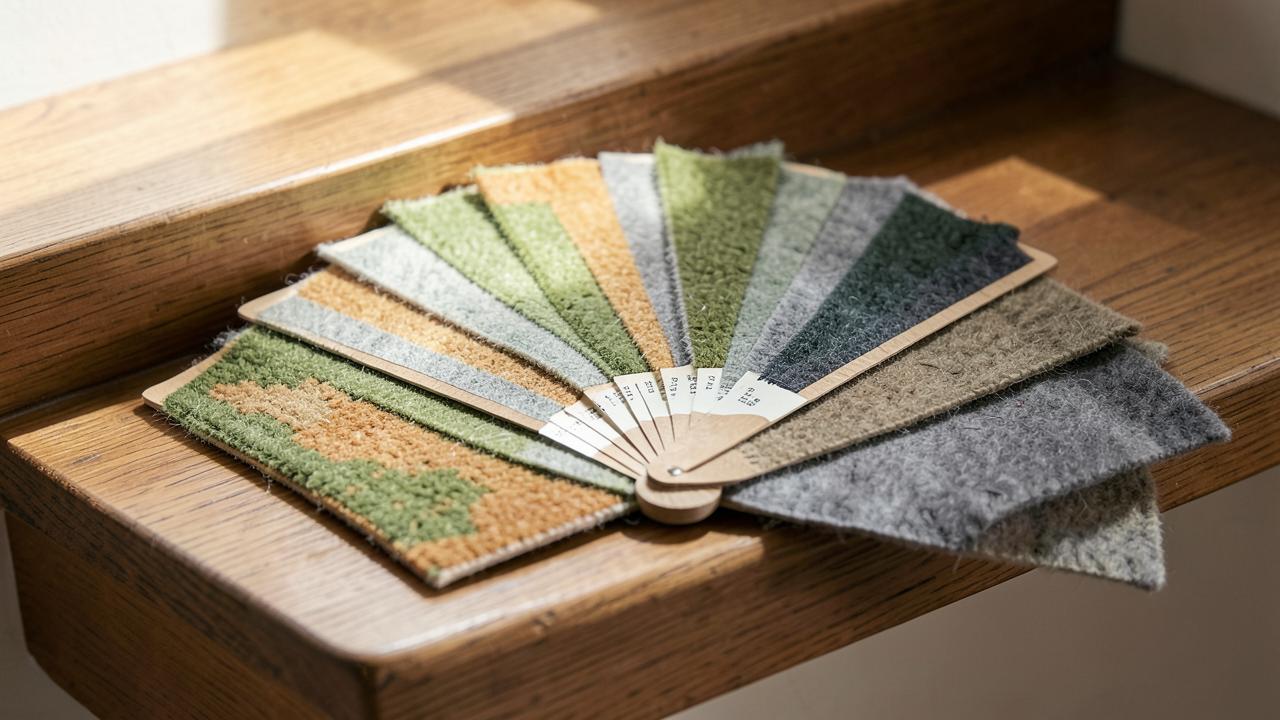
'Black' is rarely just black. When you look at samples, you will see a variety of undertones and finishes that change based on the material:
Wool: The Matte Classic
Wool is the gold standard for black runners. It has a natural matte finish that absorbs light deeply without the 'plastic' sheen found in some synthetics. Wool is also naturally soil-resistant, meaning that while it might show lint, it won't absorb oily dirt as quickly as other fibres. It has a 'depth' that is hard to replicate.
Solution-Dyed Synthetics: The Durable Choice
If your stairs are in a very sunny spot, black wool may fade over a decade. Solution-dyed nylon or polypropylene is coloured all the way through the fibre during manufacture, making it extremely resistant to UV fading and bleach-cleanable. This is the best choice for busy, sun-drenched homes or those with high spill risks.
Sisal and Coir: The Natural Texture
Black-dyed sisal offers an incredible architectural texture. It is very hard-wearing but can be slightly slippery and is not comfortable for bare feet. It also cannot be wet-cleaned, which is a major consideration for a colour that shows lint so clearly.
Design Pairings for Black Runners
The details you choose—hardware, borders, and margins—will define whether the final look is traditional, modern, or industrial.
Stair Rods and Hardware
Black runners look exceptional with metallic hardware. The contrast makes the metal 'pop'.
- Polished Brass or Gold: Creates a classic, high-end 'boutique hotel' look. The warmth of the brass provides a beautiful counterpoint to the coolness of the black.
- Satin Nickel or Chrome: A cooler, more contemporary feel that works well in modern apartments or renovated lofts.
- Black Rods: A minimalist 'stealth' approach where the hardware disappears into the runner, creating a very clean, architectural look that focuses on the shape of the stair.
Borders and Margins
A black runner with a contrasting border—perhaps a mid-grey or even a bold colour like oxblood—can soften the transition to the stairs. The 'margin' (the amount of wood showing on either side) is also critical. With a dark runner, a wider margin (10-12cm) often looks better than a narrow one, as it prevents the stairs from looking like a 'black strip'. See width and margins for help.
Charcoal vs. Jet Black: The Practical Middle Ground
If a true jet black feels too risky, charcoal is the interior designer's secret weapon. Charcoal (a very dark grey) provides 90% of the visual drama of black but is significantly more forgiving. It hides dust better, reflects just a touch more light, and feels slightly 'softer' against natural wood tones. Most 'black' runners sold today are actually very dark charcoals for this reason.
Installation Considerations for Dark Carpets
Installing a black runner requires a meticulous fitter and a very clean workspace. Any dust from drilling for rods or sanding the stairs will show up on the carpet immediately and can be hard to remove from the deep pile.
- Deep Clean the Substrate: Ensure the timber treads and risers are perfectly clean and free of sawdust before the carpet is unrolled.
- Precision Alignment: Because of the high contrast between a black runner and (usually) lighter stairs, the 'straightness' of the fit is paramount. Any slight wobble in the line of the runner will be glaringly obvious against the white stringers.
- Underlay Quality: Use a high-quality, non-crumbly underlay. Avoid cheap rubber underlays that can leave a fine yellow or grey dust, which might work its way through the weave of a dark carpet over time. See underlay guide.
Safety and Visibility: The 'Black Hole' Effect
One serious consideration for black runners is safety, particularly at night. In a dim hallway, a black stair can become a 'black hole' where it is difficult to judge the depth of the treads or see where one step ends and the next begins. This is especially dangerous for children or the elderly.
- Edge Definition: Ensure the nosing of the stair is either visible through a contrast in colour (the wood showing at the sides) or through lighting.
- Non-slip properties: A dark runner that is loose or poorly fitted is a hidden trip hazard. Ensure the carpet is drum-tight. See stair safety for more.
Cleaning Routine for Dark Runners
To keep a black runner looking its best, you need a different routine than for a beige carpet:
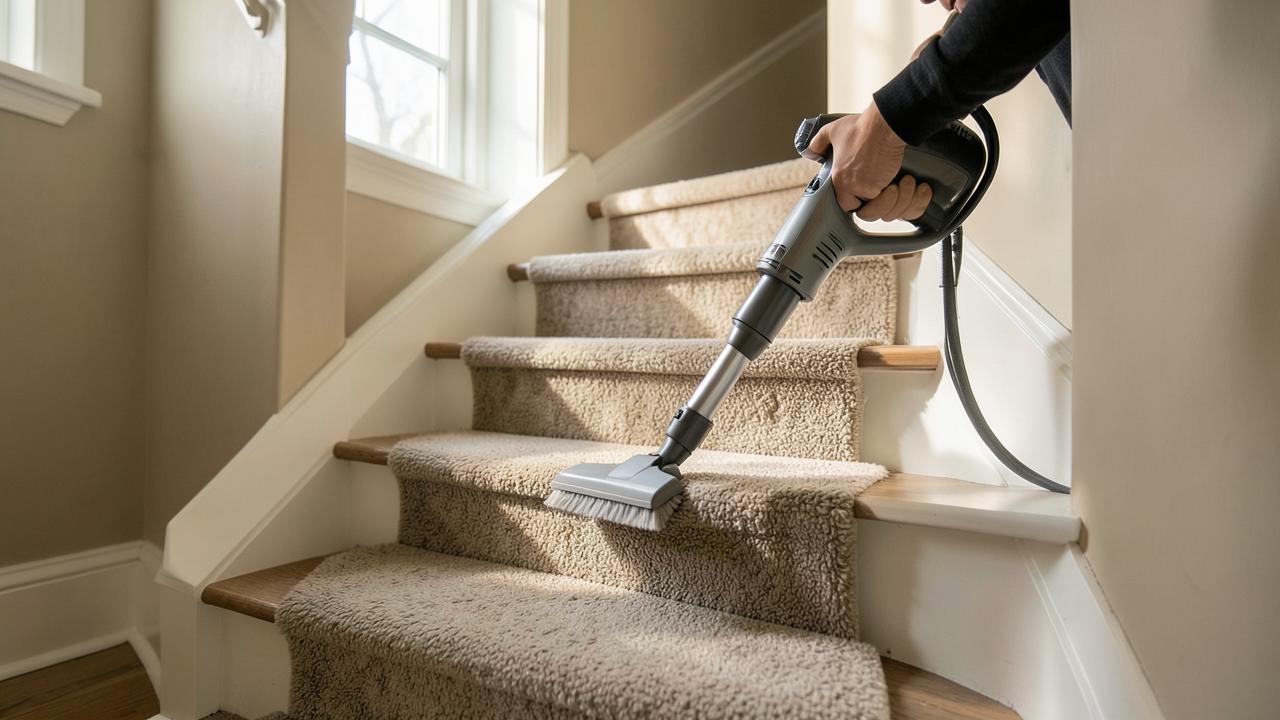
- High-Frequency Vacuuming: You will likely need to vacuum at least twice a week to remove visible lint. A vacuum with a high-quality HEPA filter and a good brush bar is essential for lifting hair from a dark pile.
- Lint Roller: Keep a large adhesive lint roller handy for quick touch-ups between vacuuming sessions, especially if you have pets.
- Avoid Powder Cleaners: Never use 'shake-on' carpet fresheners or powder cleaners on a black runner. The white powder is incredibly difficult to remove entirely and will leave the runner looking dull and grey.
Budgeting for Drama
While the material cost of a black runner is similar to other colours, the 'total cost of ownership' may be higher due to the increased cleaning frequency and the need for better lighting. You should also factor in a slightly higher installation fee if you are asking for extremely precise alignment against white woodwork.
Summary: Is Black Right for You?
A black stair runner is a commitment. It is for the homeowner who values style and drama and is willing to invest the time in maintenance to keep that 'just fitted' look.
| Pros | Cons |
|---|---|
| Incredible visual drama and 'wow' factor. | Shows lint, dust, and light-coloured pet hair immediately. |
| Hides dark stains and heavy soil exceptionally well. | Can make small or dark hallways feel enclosed. |
| Pairs beautifully with almost any metallic finish (Brass, Chrome). | Requires perfect installation; every deviation is visible. |
| Timeless and modern; rarely goes out of fashion. | Safety concerns in low light; needs excellent lighting. |
If you are ready for the maintenance and have a well-lit space, there is arguably no floor covering that makes a more powerful statement than a deep, textured black runner. It transforms a functional staircase into a piece of architectural art that anchors the entire home.
Frequently asked questions
- Does a black runner show more dirt?
- Counter-intuitively, yes. While black hides 'soil' (mud and dark stains), it highlights light-coloured debris like lint, dust, pet hair, and crumbs. A solid black runner requires more frequent vacuuming than a mid-tone or patterned one.
- Will a black runner make my hallway look too dark?
- It can, especially if the hallway lacks natural light. To counter this, pair a black runner with white or light-coloured woodwork (risers and strings) and ensure you have high-quality, layered lighting to define the edges of the steps.
- What is the best material for a dark runner?
- Wool is excellent because it has a natural matte finish that absorbs light beautifully. Synthetics can sometimes have a 'sheen' that makes black look slightly grey or plastic-like under bright lights. For high traffic, a wool-nylon blend offers the best depth of colour and durability.
- How do I stop a black runner from looking 'flat'?
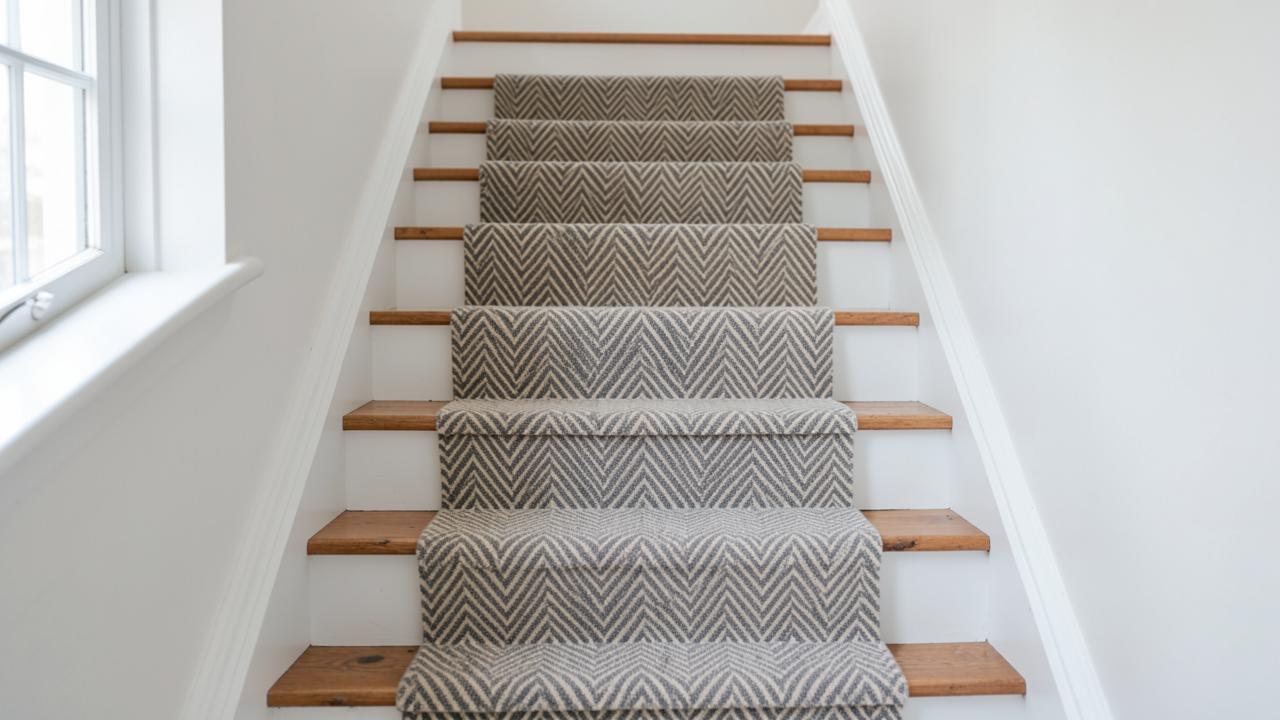
- Texture is the key. Look for a black runner with a weave like herringbone, chevron, or a loop pile. These textures create tiny shadows and highlights that give the black depth and interest, rather than looking like a solid void.
- Do black runners fade in the sun?
- Any dark carpet will eventually fade if exposed to direct, intense sunlight for many hours a day. If your stairs are in a sun-drenched atrium, look for 'solution-dyed' fibres which have the colour built into the fibre itself, making them much more UV-resistant.
- Can I use black rods with a black runner?
- Yes, this creates a very modern, minimalist 'stealth' look where the hardware disappears into the runner. It emphasizes the form and texture of the carpet rather than the luxury of the metal hardware.
- Is black a good choice for a small, narrow staircase?
- It can work if you leave generous margins of wood (10cm+) on either side to prevent the black from overwhelming the width of the stairs. Avoid 'wall-to-wall' black in small spaces.
Related guides
 CareCleaning and Caring for a Stair RunnerRoutine vacuuming, spill response by fibre type, slipping and fraying, and when to call a professional.
 DesignStair Runner Patterns ExplainedHerringbone, chevron, stripes, plaid, geometrics and animal prints judged by how they behave on a staircase.
- DesignChoosing a Stair Runner ColourHow light, adjacent flooring, trim colour, traffic and dirt should drive the colour decision.
 MeasurementWhat Width Should a Stair Runner Be?How to set runner width and side margins from your stair width, stringers, balusters and pattern.