Colour Guide
The comprehensive guide to green stair runners
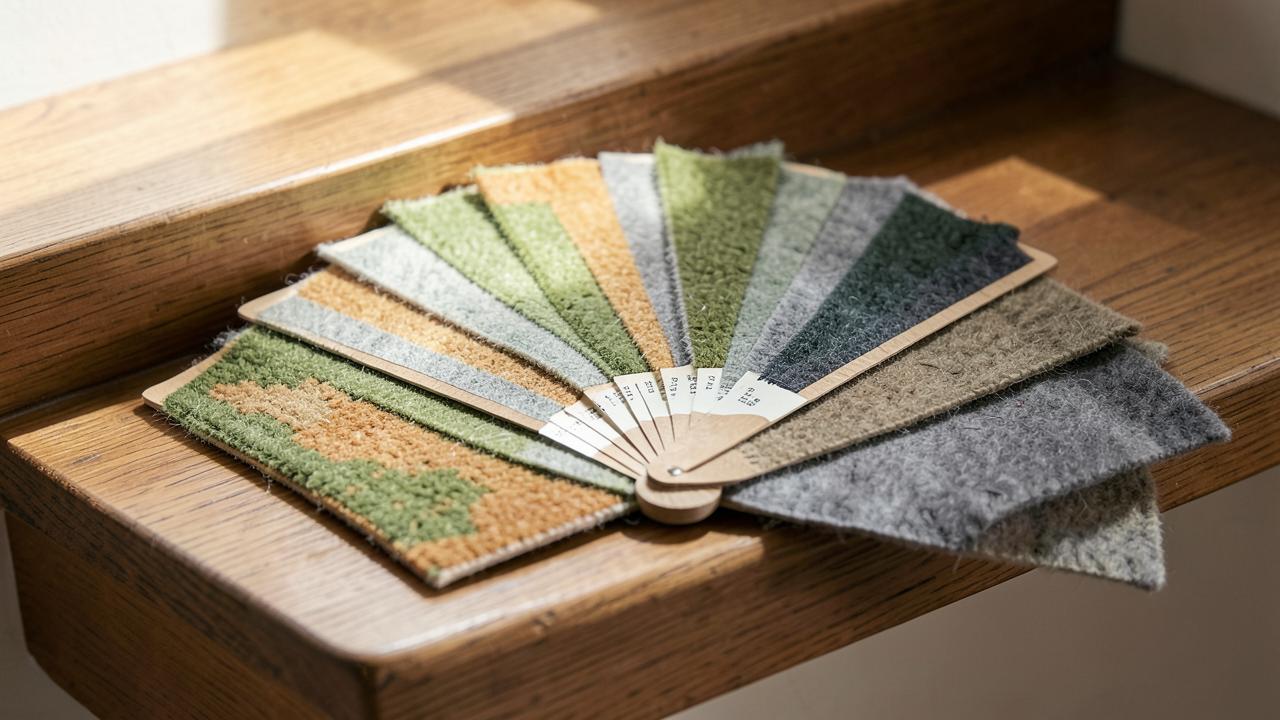
Green is often called 'nature's neutral'. On a staircase, it provides a bridge between the living spaces and the garden, offering a sense of calm while remaining remarkably practical for high-traffic environments.
Written by the StairRunner.co editorial team · Updated 4 September 2026
The psychology and presence of green on stairs
The staircase is the spine of the home, a transitional space that connects the social energy of the ground floor with the private sanctuary of the bedrooms. Choosing a colour for this transit zone requires a balance of visual appeal and psychological comfort. Green is uniquely suited to this role. Unlike high-energy reds or sometimes-clinical blues, green is inherently restful. It is the colour our eyes are most evolved to perceive in all its subtle variations.
In interior design, green acts as a grounding element. On a staircase, a green runner can anchor a large, airy hallway or add a sense of organic life to a darker, enclosed Victorian flight. It suggests a connection to the outdoors, which is particularly effective in British homes where the hallway often looks out onto a garden or leafy street. By bringing that hue onto the stairs, you create a seamless transition that makes the home feel larger and more cohesive.
Beyond the psychological, green is a practical powerhouse. It occupies a mid-point on the spectrum that allows it to mask both light-coloured dust and darker, organic soil. This "chameleonic" quality makes it one of the most forgiving colours for a household with children, pets, or high foot traffic.
Navigating the green spectrum: From Sage to Forest
Not all greens are created equal, and their performance on a staircase varies significantly based on the depth of the hue and the undertones present. Understanding these differences is crucial for selecting a runner that will look as good in five years as it does on installation day.
Sage and Seafoam: The light-reflecting choices
Sage green has become a modern classic. It is a muted, grey-toned green that feels sophisticated and calm. Because it is relatively light, it reflects more ambient light, making it a great choice for narrow hallways or stairs that lack natural light. However, as a lighter shade, it requires more maintenance. It is less forgiving of muddy footprints than its darker cousins, so it is best specified in a high-quality wool or a bleach-cleanable synthetic if the household is active.
Olive and Moss: The earthy workhorses
Olive and moss greens contain yellow and brown undertones. These are the most practical greens for a stair runner. They harmonise beautifully with natural timber (especially oak and pine) and are exceptionally good at hiding the 'grey' soil that typically accumulates in the traffic lane of a staircase. These tones feel traditional yet can look strikingly modern when paired with black stair rods or a minimalist border.
Forest and Hunter: The heritage anchors
Deep, dark greens provide a sense of luxury and permanence. They are often found in heritage properties where they complement original architectural details. On a staircase, a dark green runner creates a strong visual line that leads the eye upward. The primary concern with very dark greens is that they can show light-coloured lint, pet hair, or dust. Regular vacuuming is essential to keep these deep tones looking sharp.
| Green Shade | Best Light Condition | Soil Hiding Ability | Recommended Style |
|---|---|---|---|
| Sage | Low light (adds brightness) | Moderate | Modern, Scandinavian |
| Olive | Any light | High | Rustic, Industrial, Classic |
| Forest | Bright hallways | Very High (hides mud) | Victorian, Traditional |
| Mint | Natural light only | Low | Eclectic, Contemporary |
Light behaviour and the 'Metamerism' effect
One of the most important technical considerations when choosing a green runner is how it reacts to different light sources. Green is notoriously prone to "metamerism"—a phenomenon where a colour looks radically different under different types of light.
In natural daylight, a sage runner might look fresh and organic. Under standard warm-white LED hallway lighting (typically 2700K), that same runner can take on a muddy, brownish tint. Conversely, under very cool, blue-toned office-style lighting, an olive runner might look almost grey.
When choosing your runner, always view the sample on the stairs themselves, at both the top and bottom of the flight. The light at the top of a staircase is often different from the light at the bottom. Check the sample in the morning, in the afternoon, and at night with the hallway lights on. This will ensure you don't end up with a colour that you love by day but dislike by night.
Pairing green with timber and paint
The interaction between your runner and the stair treads (if they are visible) and the risers/stringers is what defines the final look. Green is exceptionally versatile in this regard.
Green and Oak
This is arguably the most successful pairing. The natural tannins and warm tones in oak are the perfect foil for green. A moss or olive green runner on oak stairs feels grounded and timeless. If you have a light oak, a pale sage runner creates a soft, ethereal look. For dark, stained oak, a deep hunter green provides a classic, stately appearance.
Green and Painted White
If your stairs are painted white or off-white, the runner becomes the star of the show. A green runner against white woodwork creates a crisp, clean aesthetic. This is a popular choice for coastal or modern country homes. It also provides excellent visual contrast, which is a key factor in stair safety.
Green and Dark Grey/Black
For a more dramatic, contemporary look, pair a deep green runner with charcoal or black-painted stairs. This combination is moody and sophisticated. It works best in larger hallways where the dark tones won't feel claustrophobic.
Fibre implications: Wool, Sisal, and Synthetics
The material you choose will affect how the green colour is perceived and how it wears.
- Wool: Wool fibres hold dye beautifully, resulting in a rich, matte finish. Green wool runners have a depth of colour that is hard to replicate. Wool is also naturally resilient, meaning the pile will bounce back in the traffic lane, preventing the "faded" look that can occur when pile is crushed. See wool stair runners for more.
- Sisal and Seagrass: These natural fibres often come in "green" variants that are either dyed or have a natural greenish-gold tint. Because these fibres have a sheen, the green can look different from every angle. They are incredibly durable but less soft underfoot. See sisal stair runners.
- Polypropylene and Nylon: Modern synthetics are excellent for green runners because they are often solution-dyed. This means the colour is part of the fibre itself, making it highly resistant to fading and bleach-cleanable. This is ideal for vibrant or very dark greens that might otherwise show wear. Learn about polypropylene options.
Pattern options: Beyond the solid green
If a solid green feels too bold or too plain, patterns offer a way to introduce the colour more subtly.
Striped Green Runners: Stripes are a fantastic way to make a narrow staircase feel wider or a short flight feel longer. A runner with green, cream, and beige stripes is very forgiving of dirt and provides a neutral palette that is easy to decorate around. Explore striped runner ideas.
Herringbone and Flatweaves: A green herringbone pattern adds texture and a sense of craft. It creates a "broken" colour effect that is even better at hiding lint and hair than a solid colour. This is a popular choice for modern renovations.
Borders and Whipping: You can use a neutral runner (like beige or grey) and add a green taped border. This allows you to introduce the colour as an accent without committing to a full green flight. Conversely, a green runner with a black or dark brown border looks very tailored and high-end.
Safety and contrast: The nosing factor
Stair safety is often overlooked in favour of aesthetics, but the choice of colour plays a massive role in preventing falls. The "nosing" (the edge of the step) must be clearly visible so that the eye can easily judge the depth of each tread.
A very dark green runner on dark-stained timber can create a "black hole" effect in low light, where the individual steps become hard to distinguish. If you choose a dark green, ensure the staircase is well-lit, or choose a runner with a lighter border that clearly defines the edge of the flight. For more on this, see stair runner safety.
Maintenance and longevity
To keep a green runner looking its best, a regular maintenance routine is required.
- Vacuuming: Use a vacuum with a brush bar for wool (unless it's a loop pile) and a suction-only setting for natural fibres. Vacuum at least twice a week to prevent grit from grinding into the fibres.
- Spot Cleaning: Deal with spills immediately. Blot, don't rub. Rubbing a green runner can 'fuzz' the fibres, which changes how they reflect light, creating a permanent "watermark" look even if the stain is gone.
- Professional Cleaning: Have the runner professionally cleaned every 12-18 months. This will lift the deep-seated soil that dulls the green hue over time. Refer to our cleaning guide.
Cost considerations for green runners
The cost of a green runner is generally determined by the fibre and construction rather than the colour itself. However, very specific heritage dyes or custom-dyed wools can carry a premium. Most homeowners should expect to pay more for high-density wool or complex woven patterns like Wiltons. Synthetic options are generally more budget-friendly and offer excellent durability for the price. For a breakdown, see stair runner costs.
Conclusion: Why green is a top-tier choice
Choosing a green stair runner is a decision that rewards the homeowner with a blend of beauty, practicality, and psychological comfort. Whether you opt for a muted sage to brighten a Victorian terrace or a deep forest green to add gravity to a modern build, you are choosing a colour that is designed to last. By considering light behaviour, fibre type, and safety contrast, you can ensure your green runner remains a standout feature of your home for years to come.
Frequently asked questions
- Does a green stair runner show dirt easily?
- Mid-to-dark greens like olive and forest are excellent at hiding organic soil and dust. Lighter shades like sage or mint are more prone to showing marks and require a higher-specification synthetic or a well-protected wool fibre.
- What wall colours pair best with a green runner?
- Green is a 'neutral of nature.' It pairs beautifully with off-whites, warm greys, and terracotta. For a heritage look, deep navy or burgundy walls create a classic contrast with a sage or olive runner.
- How does green look under artificial hallway lighting?
- Green is highly sensitive to light temperature. Warm LEDs can make olive look muddy, while cool bulbs can make sage look grey. Always test samples under both daylight and your specific evening lighting.
- Is a green runner suitable for a dark hallway?
- Yes, but choose a green with a yellow undertone (like moss) to add warmth, or a lighter sage to reflect more light. Avoid very dark forest greens in windowless halls unless you have high-quality accent lighting.
- Which timber tones work best with green?
- Oak and green are a timeless pairing. The orange-yellow warmth of oak complements the cool or earthy tones of green. Dark walnut also works well with deep forest greens for a library-style aesthetic.
Related guides
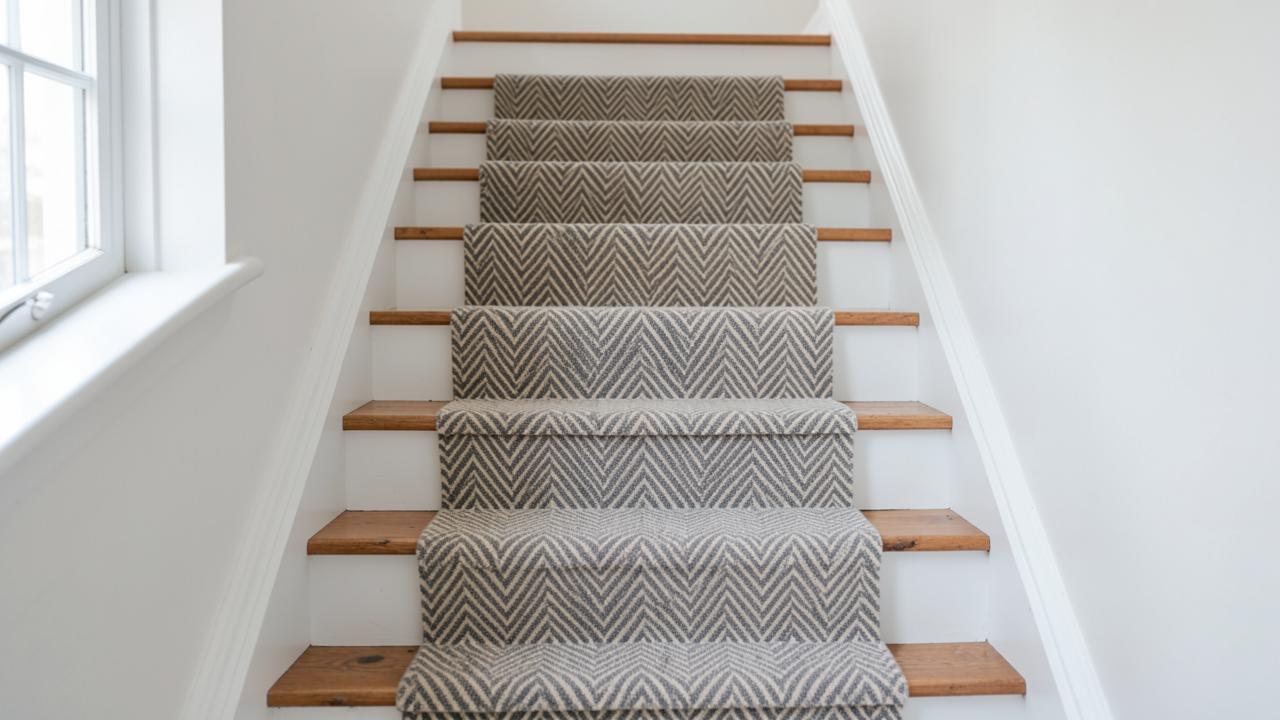 DesignStair Runner Patterns ExplainedHerringbone, chevron, stripes, plaid, geometrics and animal prints judged by how they behave on a staircase.
- DesignChoosing a Stair Runner ColourHow light, adjacent flooring, trim colour, traffic and dirt should drive the colour decision.
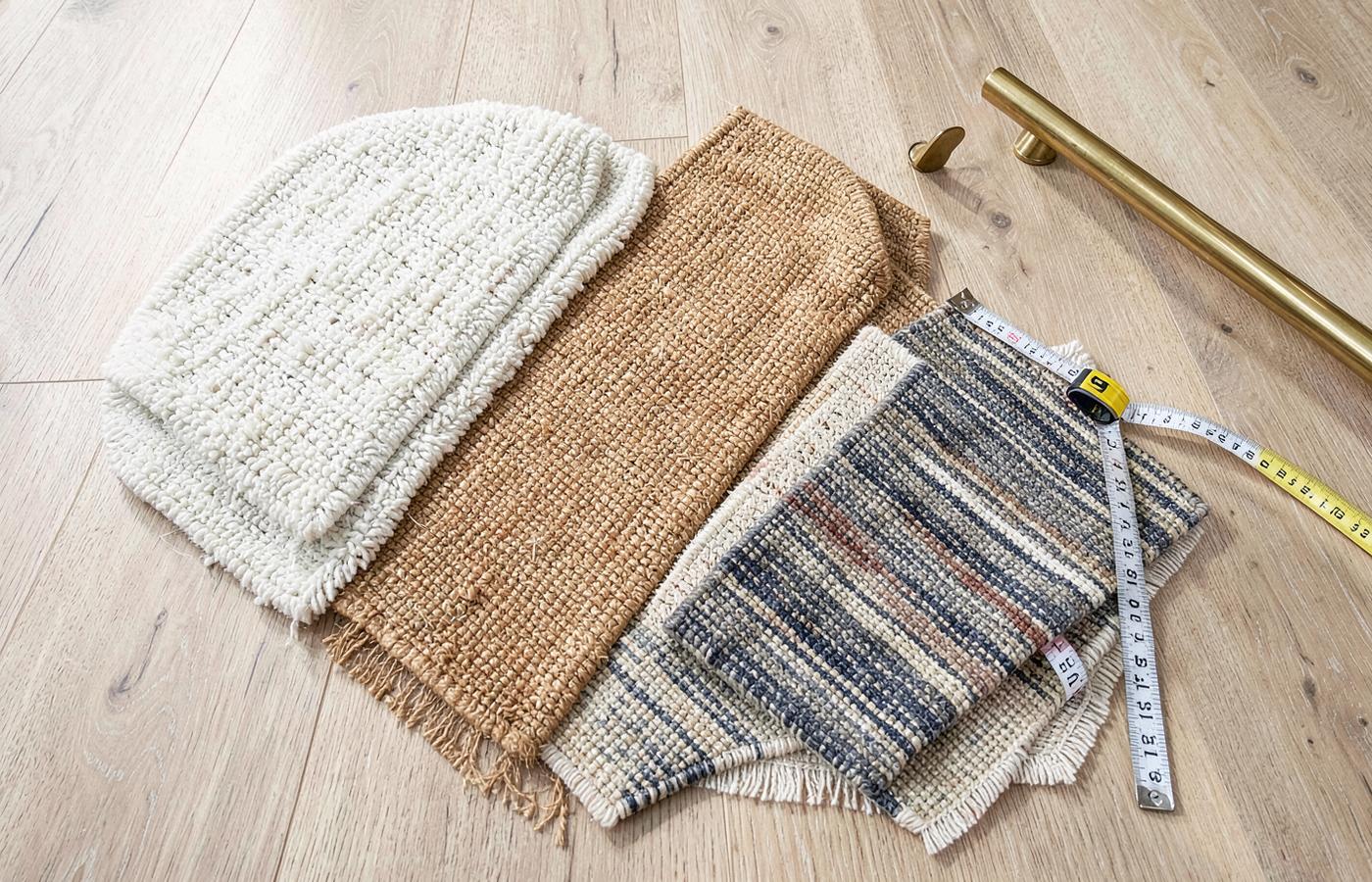 MaterialsWool Stair RunnersWhy wool holds its shape on stairs: crimp, twist, blends, staining, moths, shedding and honest limitations.