Buying Guide
Stair runner by the foot: A guide to linear length ordering
Buying a stair runner by the foot allows for precision and waste reduction, but it requires a clear understanding of your staircase's geometry and the logistics of roll widths.
Written by the StairRunner.co editorial team · Updated 4 September 2026
The logic of linear length ordering
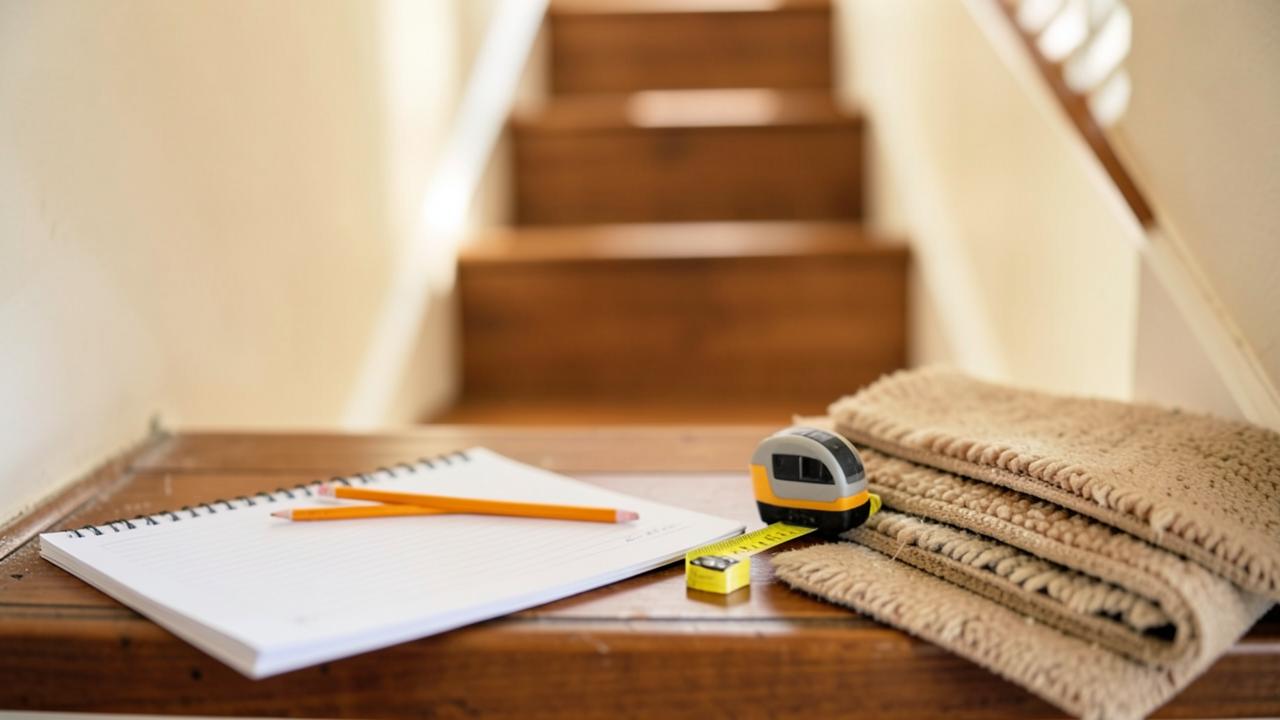
Ordering a stair runner by the linear foot (or metre) is the most common way to purchase off-the-roll products that have already been manufactured to a specific width. Unlike broadloom carpet, which is typically sold in 4-metre or 5-metre widths, runner-specific rolls are pre-finished or pre-woven at widths suitable for domestic staircases. This method of purchasing is highly efficient for straight flights because you are only paying for the length you actually need, rather than paying for a wide roll that will result in significant offcuts. The industry term for this is "narrow goods," and it represents a specialized segment of the flooring market that prioritizes the aesthetic of the "runner" over full-coverage carpeting.
When you buy by the foot, you are essentially buying a ribbon of carpet. This ribbon has two finished 'selvedge' edges that do not require further binding, which is a significant cost saving compared to custom-cutting a runner from a larger piece. However, the limitation is that you are restricted to the manufacturer's standard widths. If your staircase is unusually wide or narrow, the 'by the foot' model may not provide the perfect border-to-carpet ratio you desire. For example, a grand Georgian staircase might dwarf a standard 60cm runner, while a narrow cottage stair might be overwhelmed by it.
The heritage of this buying method dates back to the early 20th century when carpets were woven on much narrower looms. Before the advent of wide broadloom machinery, all carpet was essentially "by the foot" and had to be seamed together to cover a room. For stairs, this meant the edges were always woven-in, providing a level of durability that modern overlocked edges struggle to match. Today, high-end wool runners still use these traditional weaving techniques, creating a product that is both structurally sound and visually distinct.
Calculating your requirements with precision
The most critical step in buying by the foot is the initial measurement. A common mistake is simply measuring the floor-to-floor height; this does not account for the 'snaking' of the carpet over every nosing. To get an accurate figure, measure one tread (the flat part you step on) and one riser (the vertical part). Add these together. For a standard UK staircase with 13 steps, you would multiply this sum by 13. However, this is just the baseline. You must also account for the thickness of the pad (underlay) which adds a small but cumulative amount to every step.
Crucially, you must add the 'hidden' lengths. You need enough material to wrap over the top nosing and secure it under the lip of the landing floor, and enough to reach the floor at the bottom. We typically recommend adding a 'safety foot' (approx 30cm) to the total. This extra length serves two purposes: it allows for minor measurement errors, and it provides enough "overage" to allow for a "turn and tack" finish at the bottom. If you are using a professional fitter, they will often ask for an extra 50cm to ensure they have enough material to work with during the tensioning process.
If you have winders—triangular steps that turn a corner—the calculation becomes significantly more complex. You must measure the longest point of the winder (the outside edge) to ensure the runner covers the full distance of the turn. Winders cannot be covered by a single straight piece of carpet without creating dangerous bunches or gaps. Instead, the runner must be cut into "pie slices" or the turn must be managed through a series of angled cuts and seams. This is why we always recommend ordering an additional 15-20% for any flight that isn't perfectly straight.
| Stair Type | Calculation Method | Waste Allowance |
|---|---|---|
| Straight Flight | (Tread + Riser) x Number of steps + 30cm | 5% |
| Single Winder (3 steps) | Measure outer stringer length for all 3 steps | 15% |
| Half Landing | Add tread depth of landing + 2 risers | 10% |
| Spiral / Helical | Professional survey mandatory | 25%+ |
Material choices for linear runners
Not all materials are available by the foot. Most commonly, you will find wool-mix twists, flatweave sisal, and modern polypropylene options. Wool is the gold standard for stair runners due to its natural resilience and ability to 'bounce back' after being stepped on. If you are buying wool by the foot, ensure it has a high enough 'stair rating'—this is a specific industry test that measures how the pile handles the concentrated pressure of a foot on a nosing. A wool runner will naturally resist the "crushing" effect that occurs in the center of the stairs over time.
Synthetic options like polypropylene are increasingly popular for 'by the foot' purchases because they are often 'bleach cleanable'. This is ideal for high-traffic households with pets or children. However, synthetics can sometimes be more slippery than wool, so the quality of the backing is paramount. Look for a runner with a firm, stable backing that won't stretch over time, as any elongation will cause the runner to become loose and dangerous. Polypropylene is also generally more affordable, making it a great choice for those on a budget.
Natural fibres like sisal and jute are also widely available by the foot. These offer a unique, organic texture that fits perfectly in coastal or rustic interiors. However, they come with caveats. Sisal is notoriously difficult to clean and can be harsh underfoot. Jute is softer but less durable. When buying natural fibres by the foot, ensure the edges are properly bound at the factory, as these materials fray significantly more than wool or synthetics once cut.
Understanding roll widths and proportions
The most common widths for runners sold by the foot in the UK are 60cm (approx 2ft), 66cm (26 inches), and 70cm (approx 2ft 4in). The choice of width depends on how much of your wooden staircase you wish to leave exposed. A standard staircase is about 80-90cm wide, so a 60cm runner leaves a generous 10-15cm of timber visible on either side. This "margin" is what creates the visual appeal of a runner, framing the carpet with the natural beauty of the wood.
If you opt for a wider runner, say 70cm, you get a more 'carpeted' feel, but you lose the aesthetic of the wood. When ordering by the foot, you cannot change the width—you are buying a fixed-width product. If you need a custom width, you will likely need to move away from the 'by the foot' model and towards a custom stair runner service where a wider carpet is cut and bound to your exact specifications. It is also important to consider the "taper" of your stairs. If your stairs narrow towards the top, a fixed-width runner will leave uneven margins, which can be visually jarring.
In larger homes with grand entrance halls, a narrow runner can look disproportionate, like a thin strip of tape. In these instances, 80cm or even 90cm runners are sometimes available by the foot, though they are harder to find and often come with a premium price. Conversely, in very narrow terrace houses or cottages, you might need to hunt for a 50cm wide runner. Always measure the width of your stairs at several points—top, middle, and bottom—to ensure your chosen width will fit comfortably throughout the entire run.
The importance of edge finishing and selvedges
One of the greatest benefits of buying a runner by the foot is that the long edges are usually finished at the factory. This can be a 'selvedge' (a woven edge that won't fray) or a pre-stitched overlocked edge. This makes the runner ready for immediate installation. A woven selvedge is particularly desirable as it is part of the carpet's structural integrity, rather than a secondary treatment added later. It is flatter, stronger, and more resistant to the "kicking" that occurs at the edge of the steps.
However, the two ends—the very top and the very bottom—will be raw cuts. For the top end, this is rarely an issue as it is tucked under the landing nosing or a door bar. For the bottom end, you have a choice. You can have the end professionally bound to match the sides, or you can 'turn and tack' it so the raw edge is hidden underneath. If you want a truly polished look, especially if the runner ends in the middle of a hallway, requesting a bound end from your supplier is essential. Some high-end suppliers will offer a "serged" end, which uses a thick thread to create a rounded, durable finish.
Beyond functional durability, the edge finish is a major design element. A contrasting border can draw the eye and emphasize the line of the staircase. When buying by the foot, you are often limited to the borders that come pre-manufactured. If you want a bespoke leather or cotton tape border, you will usually need to buy a plain runner and have it sent to a specialist binder, which negates some of the cost-saving benefits of the 'by the foot' model.
Installation considerations for linear runners
Installing a runner bought by the foot is a popular DIY project, but it requires specific tools and a steady hand. You will need a good quality underlay (or pad), carpet gripper, and a staple gun or tacks. Because the runner is a long, continuous piece, keeping it perfectly straight is the biggest challenge. A deviation of just a few millimetres at the top will result in the runner being visibly 'off-centre' by the time you reach the bottom. We recommend using a chalk line or a laser level to mark the center of the stairs before you begin.
Using stair rods is a popular way to enhance the look of a linear runner. While rods are largely decorative today (the carpet is held by grippers and staples), they provide a classic, high-end finish that complements the 'ribbon' look of a by-the-foot runner. Ensure that if you are using rods, you order them at a width slightly wider than your runner (usually 10cm wider) to allow the 'finials' to sit on the exposed wood. Rods also help to "seat" the carpet into the crotch of the stair, giving it a more permanent, architectural appearance.
The choice between "Waterfall" and "Hollywood" installation styles is also relevant here. A waterfall installation simply lets the carpet fall from the nosing down to the next tread, whereas a Hollywood installation wraps the carpet around the nosing and staples it under the lip. For linear runners, the Hollywood style is often preferred as it highlights the profile of the stairs, but it requires more material. If you choose the Hollywood style, be sure to add another 5-10cm per step to your total linear footage calculation.
Cost comparisons: Foot vs Roll
Is it actually cheaper to buy by the foot? Generally, yes, if you are looking at a mid-range product. For example, if you buy 10 linear feet of a 60cm wide runner, you are paying for exactly 6 square metres of carpet. If you were to buy the same product from a 4-metre wide broadloom roll, you would have to buy a piece that is 4m x 1m (4 square metres) just to get the length, but you would be wasting more than half of it. The 'premium' you pay per foot covers the cost of the factory finishing the edges and the convenience of the smaller roll.
For very high-end wool carpets, the 'by the foot' price can actually be quite high, sometimes equalling the cost of a custom-cut runner. In these cases, the choice comes down to whether you prefer the factory-woven edge or a bespoke bound edge using leather or cotton tape. You should also factor in the cost of shipping. A 10-metre roll of runner is much easier and cheaper to ship than a 4-metre wide broadloom roll, which often requires a two-man delivery team and specialized vehicles.
Another hidden cost to consider is the "cutting fee." Many retailers charge a flat fee for each cut they make from a master roll. If you are buying a single 7-metre run, this fee is negligible. However, if you are buying several smaller pieces for landings and winders, these fees can add up. Always ask for a "total project price" rather than just the price per foot to get a true understanding of the costs involved.
Maintenance and longevity
A runner bought by the foot will last as long as any other quality carpet, provided it is installed correctly. The most common point of failure is the 'nosing'—the front edge of the step. This is where the foot exerts the most pressure and where the carpet is stretched most tightly. Because a linear runner is one continuous piece, if the nosing wears through on one step, the entire runner may eventually need replacing. To extend the life of your runner, ensure you use a high-quality, high-density pad underneath.
Regular vacuuming is essential, especially in the 'traffic lane' (the centre of the runner). Grit and dirt act like sandpaper on the fibres, especially when pressed into the nosing. If you have chosen a natural material like sisal or seagrass by the foot, be aware that these are more susceptible to water damage and staining than wool or synthetics. We recommend a professional clean every 12-18 months to remove deeply embedded soil that a domestic vacuum cannot reach. See cleaning and caring for a stair runner for specific maintenance routines.
Over time, the tension in the runner may slacken, leading to small ripples or "bags" in the carpet. This is more common in cheaper synthetic runners or those installed without proper grippers. If this happens, it is important to have the runner re-stretched by a professional as soon as possible. Loose carpet on stairs is a major trip hazard. A well-installed linear runner should remain taut for at least a decade.
Environmental impact and waste reduction
One of the environmental benefits of the 'by the foot' model is the significant reduction in carpet waste. The carpet industry is a major contributor to landfill, often due to large offcuts from broadloom installations that cannot be easily reused. By ordering exactly the length you need, you minimize this waste. Furthermore, many suppliers of linear runners are now using recycled backings or natural, biodegradable fibres like jute and wool, making it a more sustainable choice for the eco-conscious homeowner.
When your runner eventually reaches the end of its life, a linear runner is also easier to remove and dispose of than a full-width carpet. It can be rolled up and transported easily, and if it is made of 100% natural fibres, it may even be compostable in industrial facilities, though you must check the specific backing material used. Some manufacturers now offer a "take-back" scheme where they will recycle your old runner into new flooring products, which is a great way to close the loop on your interior design project.
In addition to material waste, consider the "carbon footprint" of the manufacturing process. Narrow looms used for runner production often consume less energy than the massive wide-format looms used for broadloom. By choosing a product that is designed for its specific purpose rather than cut down from a larger one, you are supporting a more efficient manufacturing ecosystem.
Final checklist before ordering
- Did you measure every single step, including the riser and the tread? Do not assume all steps are identical.
- Did you add a 'safety foot' (30cm) for the top and bottom fixes? More if you plan a Hollywood wrap.
- If you have winders, did you measure the longest possible path the runner will take at the outer edge?
- Is the width you've chosen compatible with your stair rods (if using)? Rods should be 10cm wider than the carpet.
- Does the supplier offer a sample so you can check the colour against your hallway lighting? Colours look different in north-facing halls.
- Have you confirmed whether the price is per linear foot or per linear metre? (A common source of confusion in the UK market!)
- Check the stair rating of the specific material. Is it 'Heavy Domestic' or 'Contract' grade?
- Confirm the delivery time—custom lengths often take longer to dispatch than standard rolls.
Choosing the right width for your space
The aesthetic balance of a stair runner is determined by the ratio of carpet to exposed wood. A common designer rule is the 'two-thirds' rule: the runner should cover approximately two-thirds of the stair width. For a standard 90cm wide staircase, a 60cm runner is ideal. This provides enough coverage for safety and comfort while leaving enough wood visible to create that classic runner look. This margin also provides a convenient place for the eye to rest, making the staircase feel more architectural and less like a solid block of color.
However, in very narrow cottages, a 60cm runner might feel too wide, leaving only a few centimetres of wood on either side. In these cases, searching for a 50cm or 55cm runner by the foot is worth the extra effort. Conversely, in grand Victorian hallways with wide stairs, a 70cm or even 80cm runner may be necessary to prevent the carpet from looking like a 'thin strip' in a large space. Consider also the width of your hallway carpet; a runner that is significantly narrower or wider than the hallway rug can create a disjointed feeling.
Don't forget the impact of the wood finish. A dark oak staircase can handle a bold, colorful runner, whereas a light pine or painted white staircase might look better with a neutral or pastel tone. The width of the runner also dictates how much of this wood finish is "framed." If you have spent a lot of money restoring your treads, you will naturally want to show more of them off by choosing a narrower runner.
Common pitfalls and how to avoid them
The biggest pitfall is under-ordering. Unlike a broadloom installation where a fitter might be able to 'find' a bit of extra carpet from an offcut, with a by-the-foot runner, you have what you have. If you are 10cm short, you cannot simply bridge the gap without a visible and potentially dangerous seam. Always round up your measurements. It is far better to have a small roll of leftover carpet in the loft than to be one step short on installation day.
Another pitfall is ignoring the pattern repeat. If you have chosen a striped runner by the foot, you want the stripes to align perfectly as they go down the stairs. While most linear runners are designed for this, always check the 'pattern match' details. If you have a complex turn, the stripes will inevitably 'v' or 'mismatch' unless you use a landing to reset the pattern. This is why we often recommend plain or subtly textured runners for complex staircases. This is discussed further in stair runner patterns and stripes.
Finally, consider the transition at the top and bottom. A runner that starts abruptly at the top step can look unfinished. Ideally, the runner should start from the landing floor, wrapping over the first nosing. At the bottom, it should either end flush with the floor or continue into the hallway as a matching rug. Planning these transitions before you order your linear footage will ensure a professional, cohesive look.
Summary of trade-offs and decision rules
Buying by the foot is the ultimate middle ground between off-the-shelf rugs and bespoke carpet installations. It offers the professional look of a finished runner with the flexibility of custom lengths, all while keeping costs manageable and waste to a minimum. By understanding your measurements, material needs, and the specific geometry of your flight, you can transform your staircase into a focal point of your home. Whether you choose a classic wool twist or a modern synthetic, the linear foot model provides a level of precision that makes it the preferred choice for most modern renovations.
Remember that the success of a by-the-foot runner depends 50% on the product and 50% on the installation. Even the most expensive wool runner will look poor if it is crooked or loose. If you are not confident in your DIY skills, hiring a professional who specializes in runners is worth every penny. They will know how to handle the unique challenges of linear goods and ensure your investment lasts for many years to come.
Frequently asked questions
- How do I calculate linear feet for my stairs?
- Measure the tread depth and riser height for one step, add them together, and multiply by the number of steps. Add an extra foot for the top wrap and additional length for any winders or landings.
- Is buying by the foot cheaper than a full roll?
- It is often more cost-effective if you have a standard straight flight, as you avoid paying for the full width of a broadloom carpet roll. However, per-foot pricing often includes a cutting premium.
- Can I get a runner by the foot with bound edges?
- Yes, many suppliers offer pre-bound runners by the foot. Ensure you specify if the ends need binding as well as the long sides.
- What is the standard width for runners sold by the foot?
- Standard widths are typically 60cm, 66cm, or 70cm. Custom widths are rarer when buying by the linear foot unless you are cutting from broadloom.
- How do I handle corners when buying by the foot?
- Winders require more material than straight steps. You must calculate the widest point of the winder and ensure your linear run accounts for the turn, often requiring a separate landing piece.
- Does buying by the foot affect the warranty?
- Usually not, provided the installation follows manufacturer guidelines. Check if the 'by the foot' service includes a specific wear rating for stairs.
Related guides
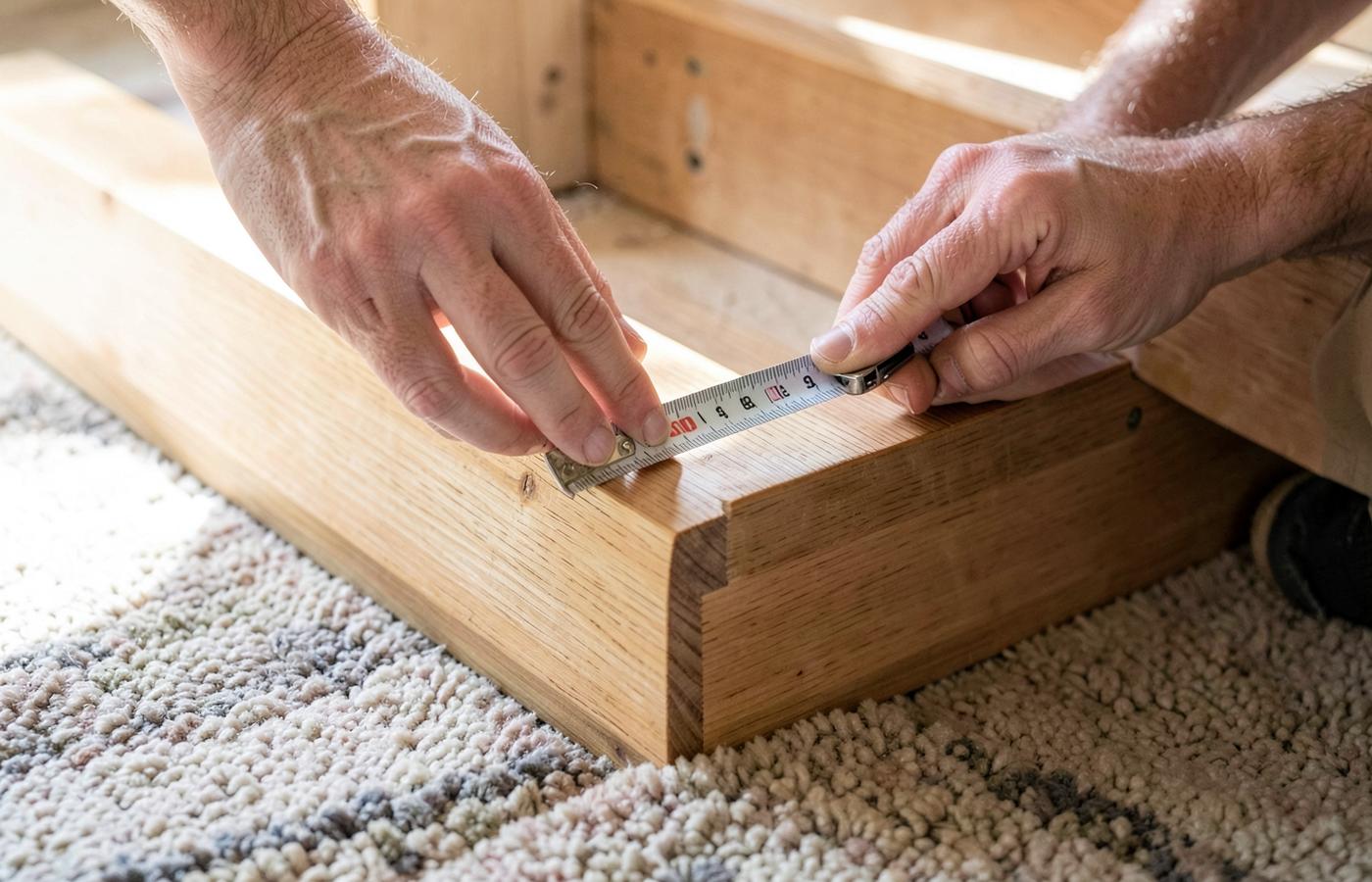 MeasurementHow to Measure for a Stair RunnerThe tread-plus-riser formula, waste allowance, winders and landings, plus a calculator that shows its working.
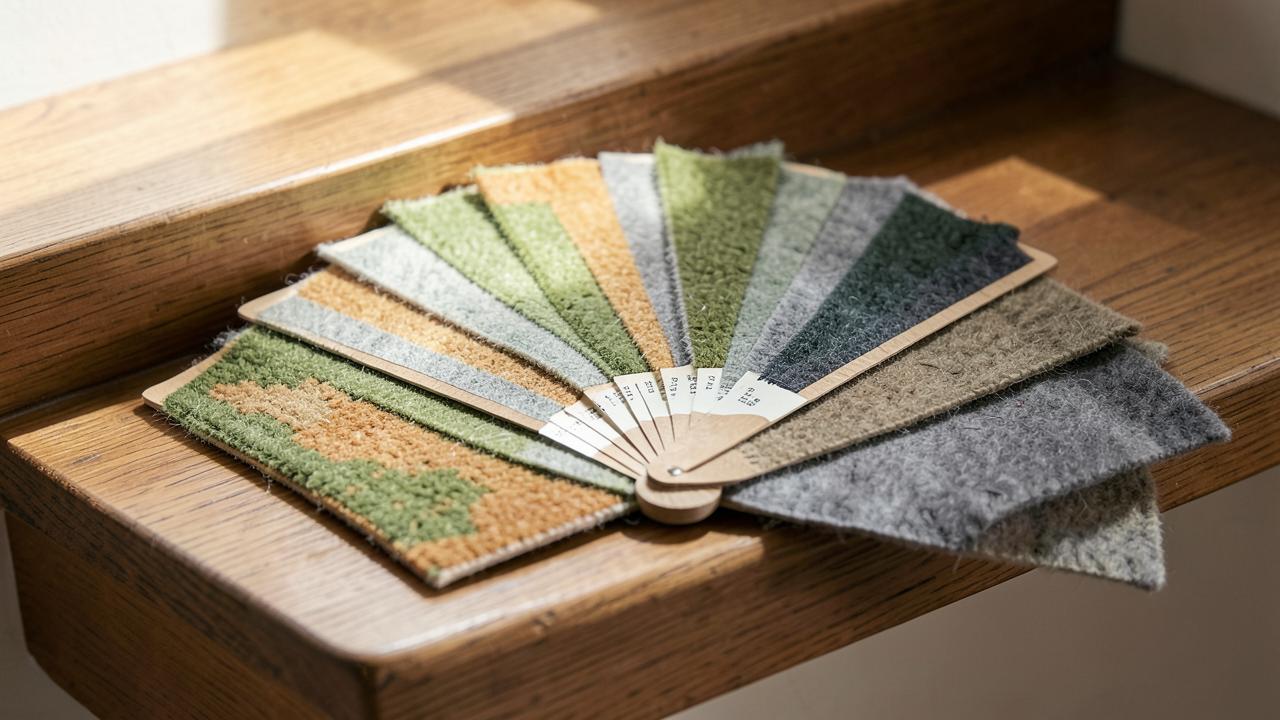 BuyingHow to Choose a Stair RunnerA decision order that starts with the staircase and ends with colour, not the other way round.
- CostStair Runner Cost in the UKHow a UK quote is assembled line by line, and how to compare two quotes honestly.