Hardware
Stair runner holders: The engineering behind the elegance
While the stair rod gets the glory, the holder does the work. Choosing the right bracket is essential for both the security of your hardware and the final look of your staircase.
Written by the StairRunner.co editorial team · Updated 4 September 2026
The crucial role of the holder
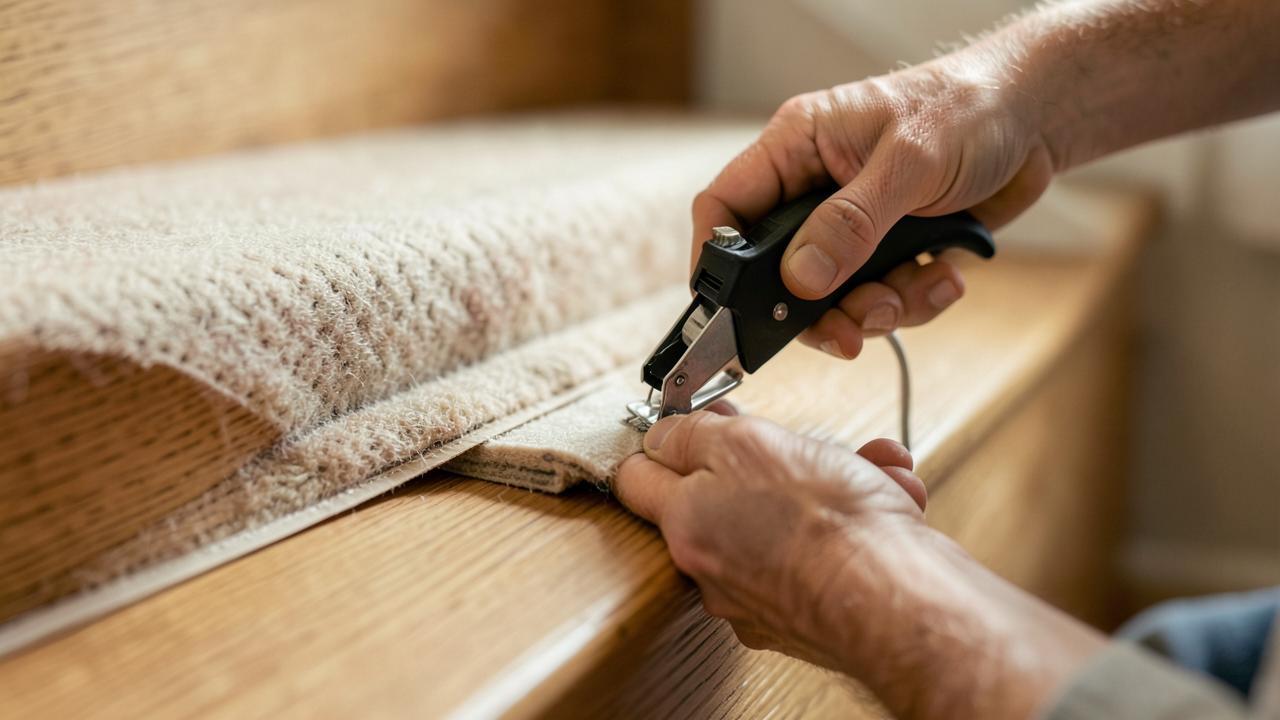
In the hierarchy of stair runner components, the holder is often overlooked. However, it is the only part of the decorative hardware that is actually physically attached to the house. A stair rod is merely a passenger; it sits within the holders. If the holders are poorly made or incorrectly installed, the entire system fails.
The primary job of the holder is to provide a secure 'cradle' for the rod. It must be strong enough to withstand the vibrations of the staircase and the occasional accidental kick from a shoe. Furthermore, it must hold the rod at a consistent distance from the carpet, ensuring that the hardware looks intentional and high-end rather than an afterthought. For more on the rods themselves, see stair runner rods.
Types of Stair Rod Holders
| Holder Type | Mounting Point | Best For | Visual Style |
|---|---|---|---|
| Side-Fix | Stair Stringer (Side) | Standard wooden stairs | Traditional / Formal |
| Front-Fix | Tread or Riser | Stairs without stringers | Modern / Discrete |
| Universal | Multiple points | Irregular or historic stairs | Versatile |
| Hinged | Stringer | Frequent cleaning needs | Functional / Retro |
Side-Fix vs. Front-Fix: Which to choose?
The choice between side-fix and front-fix is usually determined by the architecture of your stairs rather than personal preference.
Side-Fix Holders: These are the most common in UK homes. They screw into the 'stringer'—the thick piece of timber that runs along the side of the steps. Because the screws go in horizontally, they are very resistant to the vertical 'pull' of the carpet. Visually, they frame the runner beautifully, creating a clear boundary between the carpet and the wood.
Front-Fix Holders: These are used when the staircase doesn't have a traditional stringer, or when the stringer is made of a material that cannot be easily screwed into (like glass or thin metal). They screw directly into the flat part of the step (the tread) or the vertical face (the riser). These are often more discrete and are popular in minimalist or ultra-modern renovations.
Matching Holders to Rod Shapes
Stair rods aren't always round. In fact, many high-end runners use triangular or even square rods for a more architectural look.
- Round Holders: The standard. They feature a circular aperture that precisely matches the diameter of the rod (usually 9mm, 12mm, or 16mm). A 'rattle-free' fit is essential.
- Triangular Holders: These have a V-shaped cradle. They are designed so that one flat face of the rod sits against the carpet, providing a very low profile.
- Square/Rectangular Holders: Often found in Art Deco or Industrial designs. They require perfect alignment, as even a tiny tilt will be immediately obvious.
Always ensure your holders and rods come from the same manufacturer to guarantee a perfect fit. Even a 0.5mm difference in diameter can result in a rod that won't fit or one that slides around dangerously.
Finishes and Materials
Like stair clips, holders are available in a vast array of finishes. Because they are the 'anchor' point, the quality of the finish is vital.
- Solid Brass: The gold standard. It has a natural weight and a depth of colour that plated metals cannot match. Over time, it will develop a beautiful patina, or it can be polished to a mirror shine.
- Chrome/Nickel Plating: Provides a crisp, clean look. Ensure the plating is 'high-micron' quality; cheap plating will eventually flake off at the edges of the screw holes.
- PVD Coating: A modern industrial process (Physical Vapour Deposition) that creates an incredibly hard, scratch-resistant finish. This is ideal for holders in homes with children or pets where scuffs are inevitable.
- Wrought Iron: Perfect for cottage-style homes or rustic interiors. Usually finished with a black beeswax or oil, these holders have a handmade, artisanal feel.
Installation Precision: The 1mm Rule
Installing holders is a game of millimeters. If one holder is 2mm higher than its partner on the other side of the runner, the rod will look crooked.
The Jig Method: Professional fitters often use a 'jig'—a small wooden block cut to a specific size—to ensure every holder is placed at the exact same height and depth on every step. For a DIYer, we recommend making your own jig rather than relying on a tape measure for every single step.
Centering: The holders define where the rod sits, and the rod defines where the runner *looks* like it sits. Ensure your runner is perfectly centered on the flight before you begin drilling for your holders. We discuss measurement in more detail in our measurement guide.
Holders for Special Staircases
Not all stairs are straight and wooden.
- Stone Stairs: Requires 'expansion' holders or specialized masonry fixings. Drilling into stone (especially marble or granite) is high-risk and should be handled by a specialist.
- Concrete Stairs: Usually requires the use of rawlplugs. Ensure the holder has a large enough base plate to cover the plug for a clean finish.
- Spiral Stairs: Because of the tight radius, standard rods and holders often won't work. You may need custom-curved rods or individual stair clips instead.
Replacing Old or Damaged Holders
If you are moving into a period home, you might find old stair rod holders already in place. Before you reuse them, check for two things:
- Structural Integrity: Brass can become brittle over 100 years. Check for hairline cracks, especially around the screw holes.
- Lead Content: Very old hardware may have lead-based finishes. If you plan to sand or polish them, wear appropriate protection.
- Screw Thread Match: If the original screws are missing, finding a modern match for the old imperial threads can be difficult. You may need to fill the old holes and redrill for modern metric screws.
Visual Balance: The 'Reveal'
The 'reveal' is the amount of wood showing between the edge of the runner and the start of the holder.
Generally, you want a 'tight' reveal (0.5cm to 1cm) for a modern look, or a 'generous' reveal (2cm to 4cm) for a more traditional look. The choice of holder style will affect this; a chunky side-fix holder requires more space than a slim front-fix one. Consider how this interacts with the overall width of your runner.
Safety and the 'Trip Factor'
While holders are small, they are located exactly where people place their feet.
Profile Height: Choose a holder with a 'low profile' if your staircase is particularly narrow. A bulky holder that sticks out too far into the walking path can be a trip hazard or a 'toe-stubber'.
Smooth Edges: High-quality holders have 'radiused' (rounded) edges. Cheap ones can have sharp 'burrs' from the manufacturing process that can snag expensive wool socks or, worse, cause a cut if someone slips and catches their hand on the hardware.
Future-Proofing your Hardware
When you buy your holders, buy two extra pairs. Hardware designs are discontinued frequently. If a vacuum cleaner breaks a bracket or a heavy item dropped down the stairs dents one, having an exact match in the cupboard will save you from having to replace the hardware for the entire flight.
Similarly, keep the original Allen key (if your holders use grub screws). These small tools are easily lost, and you will need it if you ever want to lift the runner for deep cleaning.
The Engineering Challenge of the Staircase 'Crotch'
The junction between the horizontal tread and the vertical riser—known as the 'crotch'—is one of the most structurally demanding areas of a staircase. It is where the runner is subjected to the greatest amount of stress as people exert downward and forward pressure during each step.
The rod holder, therefore, is not just a decorative cap; it is a structural point of load distribution. In high-traffic scenarios, the holder helps to secure the carpet at the point of greatest wear. This is why it is so crucial that the holder is not merely 'glued' or 'taped' in place, but physically anchored into the structural timber of the stair. A properly installed holder acts as an extension of the staircase's own structure, ensuring that the runner remains tight and safe year after year.
Aesthetic Harmony: The 'Proportion' Rule
Interior design is governed by the rule of proportions. When choosing holders, consider the scale of your staircase. On a grand, wide staircase (over 100cm wide), small, delicate holders can look out of place, as if the hardware is 'lost' on the stairs. Conversely, on a narrow Victorian staircase, massive, ornate holders can feel suffocating and cluttered.
Generally, the holder should occupy a visual space that feels balanced with the width of the runner. A simple guideline: if your runner is wide, select a holder with a more substantial base plate. If your runner is narrow, opt for a slim, low-profile holder. This visual balance creates a sense of harmony that you might not be able to name, but you will certainly notice when you walk past.
The Role of Holders in 'Acoustic Control'
Sound management is often an ignored aspect of hallway design. A bare wooden staircase can act like a drum, echoing every footfall through the house. An underlay and runner go a long way to dampening this, but the hardware has a part to play too.
A properly fitted rod and holder system acts like a clamp. By tensioning the runner into the crotch of the stairs, the holder prevents the runner from 'slapping' against the wood when you walk down the stairs. If you notice a 'clacking' sound on your stairs, it is often because the holders are loose, allowing the rod to lift and strike the tread. Tightening your holders isn't just about safety; it is about creating a quieter, more tranquil home.
Professional Advice: When to Upgrade Your Holders
If you are planning a significant renovation, don't reuse the existing hardware just to save a few pounds. Older holders often have worn screw threads or weakened metal that will struggle with the tension of a modern, heavy-weight runner.
Upgrading to modern, solid brass holders ensures that your investment in a new runner is protected. It is also an opportunity to refresh the finish of the staircase. If you are changing your banister from painted white to natural oak, swapping your old chrome holders for antique brass ones will unify the new look and make the entire project feel professionally designed.
Final Summary: The Holder Selection Checklist
- Determine if you need side-fix or front-fix based on your stair construction.
- Match the holder aperture shape and size to your chosen rod.
- Select a finish that complements your hallway's existing metalwork.
- Ensure the material (e.g., solid brass vs plated) matches your budget and durability needs.
- Order 2 extra sets for future repairs.
- Plan for a precise installation using a jig for consistent alignment.
With the right holders in place, your stair runner will look like a permanent, high-end architectural feature. For more inspiration on the finished look, visit our modern ideas gallery or check out our guide to choosing the right carpet.
Frequently asked questions
- What is a stair runner holder?
- A holder (or bracket) is the hardware that secures a stair rod to the staircase. They are typically installed in pairs—one on each side of the runner—and are designed to support the weight of the rod and keep it perfectly horizontal.
- Are holders sold separately from rods?
- Usually, stair rods are sold as a complete set including the rod, two holders, and the necessary screws. However, you can buy holders separately if you are repurposing vintage rods or if a bracket has become damaged and needs replacement.
- What is the difference between a side-fix and a front-fix holder?
- A side-fix holder is screwed into the 'stringer' (the vertical wood on the side of the stairs). A front-fix holder is screwed directly into the 'tread' or 'riser' of the step. Side-fix is generally considered more traditional and secure for most domestic flights.
- Can I use holders on stone or concrete stairs?
- Yes, but it requires specialist installation. You will need to drill into the stone and use appropriate wall plugs. This is a job best left to a professional to avoid cracking the masonry.
- Do I need different holders for different rod shapes?
- Absolutely. Holders are precision-engineered to fit specific rod diameters and shapes (e.g., round, triangular, or square). You cannot use a round holder for a triangular rod, as it will not provide a secure or aesthetically pleasing fit.
- Are there holders for very thick carpets?
- Yes, some manufacturers produce 'deep' holders specifically designed for high-pile luxury carpets or runners with thick underlay. These ensure the rod clears the surface of the carpet without compressing the fibres too much.
- How do I prevent my holders from tarnishing?
- If the holders are lacquered, simply dust them with a soft cloth. If they are unlacquered solid brass, they will naturally develop a patina. To keep them shiny, use a specialized brass polish once or twice a year.
Related guides
 MeasurementHow to Measure for a Stair RunnerThe tread-plus-riser formula, waste allowance, winders and landings, plus a calculator that shows its working.
 InstallationStair Rods, Clips and Runner HardwareHow stair rods, clips, brackets and bars actually work, when they hold a runner and when they are decorative.
- InstallationStair Runner Clips: Decorative & Functional HardwareA detailed look at stair runner clips. Discover the difference between clips and rods, how to install them, and their role in modern stair design.