Hardware
Stair runner clips: The minimalist alternative to rods
For those who want the metallic glint of hardware without the visual weight of a full rod, stair clips offer a refined, architectural finish to any staircase.
Written by the StairRunner.co editorial team · Updated 4 September 2026
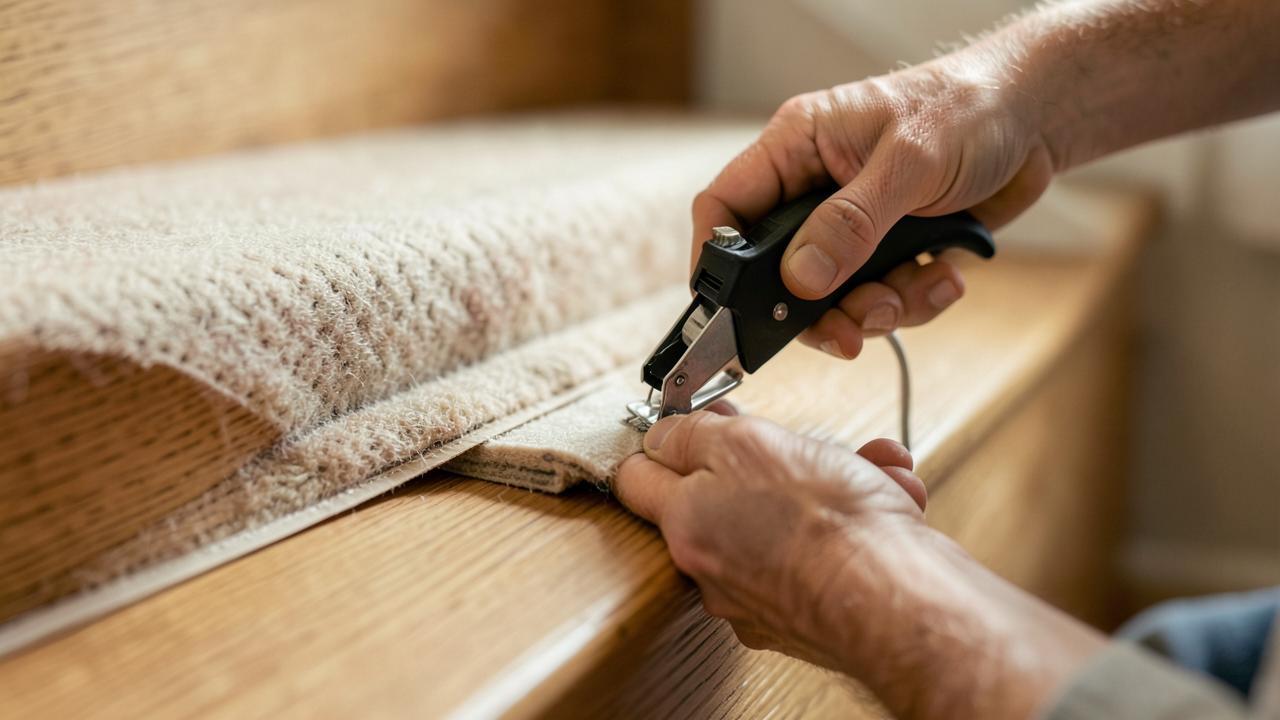
The history and evolution of the stair clip
To understand the stair clip, one must first look at the history of stair hardware. In the Victorian era, stair rods were a necessity. Before the invention of modern adhesives and tack strips, a heavy brass rod was the primary way to hold a carpet in place. As installation technology advanced, the rod became a symbol of status rather than a tool of utility.
The stair clip emerged as a mid-century response to the desire for cleaner lines. Designers wanted to maintain the 'finished' look that metalwork provided but felt that a full horizontal bar cluttered the visual flow of the staircase, especially in narrower hallways. By focusing the hardware only on the edges, they allowed the pattern and texture of the runner to take center stage.
Today, clips are enjoying a resurgence in the UK, particularly in refurbished period homes where the owners want a nod to tradition without the 'fussy' feeling of a traditional brass rod.
Clips vs. Rods: A design comparison
| Feature | Stair Clips | Stair Rods |
|---|---|---|
| Visual Impact | Minimalist / Architectural | Grand / Traditional |
| Cost | Usually lower (less metal) | Higher |
| Winder Suitability | Excellent | Difficult/Complex |
| Installation Time | Fast (two screws per step) | Moderate (measurement critical) |
| Width Flexibility | Infinite (independent of width) | Limited by rod length |
The anatomy of a stair clip
A standard stair clip consists of two main components: the base plate and the cover.
- The Base Plate: This is the functional part that is screwed directly into the timber of the stair. It is usually L-shaped to fit perfectly into the 'crotch' where the riser meets the tread.
- The Cover (or Face): This is the decorative piece that clips or screws onto the base plate. It is designed to sit over the edge of the runner, hiding the cut edge of the carpet and providing that signature metallic accent.
High-quality clips are usually made from solid brass. Cheaper versions may be made from zinc alloy or even plastic with a metallic finish, but these lack the weight and durability needed for a high-traffic area like a staircase. We always recommend solid metal for longevity.
Choosing the right finish for your home
The finish of your clips should complement the other metalwork in your hallway, such as door handles, light switches, and even the hardware on your front door.
- Polished Brass: The classic choice. It works beautifully with warm-toned woods like oak and traditional wool runners.
- Satin Nickel/Chrome: Ideal for modern interiors or homes with a cooler colour palette. These finishes look exceptional against dark painted stairs (see painting stairs).
- Antique Bronze: Offers a more 'aged' and understated look. It is excellent for concealing dust and fingerprints, making it a practical choice for busy family homes.
- Matte Black: A very contemporary choice that creates a high-contrast 'industrial' look, especially when paired with a light-coloured or striped runner.
Installation: A DIY-friendly project?
Unlike a full runner installation, which often requires a professional (see installation costs), fitting clips is a relatively straightforward DIY task. Because they are decorative, the 'stakes' are lower, provided the runner itself is already securely fitted.
Step 1: Marking. Precision is key. Use a template or a spacer to ensure every clip is positioned exactly the same distance from the edge of the runner on every step. Even a 2mm discrepancy will be visible when looking up the flight.
Step 2: Pilot Holes. Never screw directly into hardwood stairs without drilling a pilot hole first. This prevents the timber from splitting and ensures the screw goes in straight.
Step 3: Securing the Base. Screw the base plate in firmly. It should be tight enough that it doesn't wiggle but not so tight that you strip the screw head.
Step 4: The Cover. Most modern clips have a snap-on or hidden-screw cover for a seamless finish. Ensure it 'clicks' into place to avoid it being kicked off by a passing foot.
Maintenance and care of metal clips
Because they are located at foot level, stair clips are subject to a lot of dust, pet hair, and the occasional scuff from a shoe.
Cleaning: For most finishes, a soft, dry microfibre cloth is all that is needed. Avoid using harsh chemical cleaners or abrasive pads, as these will scratch the lacquer and lead to tarnishing. For polished brass that has begun to dull, a specialized (non-abrasive) brass cream can be used, but be careful not to get any on the carpet fibres.
Inspection: Every few months, check that the clips haven't worked themselves loose. The vibration of people walking up and down the stairs can occasionally cause screws to back out slightly. A quick turn with a screwdriver will keep them secure.
Design Theory: When to use clips over rods
Interior design is often a game of 'visual weight'. A stair rod creates a strong horizontal line on every step. This can be used to make a narrow staircase feel wider, but it can also make a short staircase feel 'chopped up'.
Clips, however, create a vertical rhythm. Because your eye follows the clips up the side of the runner, they tend to emphasize the height and length of the flight. If you have a beautiful, long staircase with high ceilings, clips can accentuate that sense of grandeur in a subtle, sophisticated way.
Furthermore, if your runner has a very intricate border, a stair rod will 'break' the pattern of the border on every step. Clips sit on the very edge and leave the beauty of the border untouched. This is discussed further in stair runner patterns.
The 'Hidden' Clip: A ultra-modern solution
For the ultimate in minimalist design, some manufacturers now offer 'hidden' or 'under-fit' clips. these are small brackets that sit beneath the edge of the runner, providing a slight 'lift' or 'definition' to the edge without any visible metalwork. While technically not 'clips' in the traditional sense, they fall into the same category of edge-finishing hardware. They are perfect for achieving the 'floating runner' look often seen in high-end architectural magazines.
Cost Analysis: Investing in quality
Stair clips are usually sold in pairs. A high-quality pair of solid brass clips can cost anywhere from £15 to £40. While this might seem expensive for a small piece of metal, remember that you are buying something that should last as long as the house itself.
Cheaper alternatives (zinc alloy with a brass plating) may only cost £5-£10 per pair, but the plating will often wear off in the high-friction environment of a staircase, leaving the clips looking dull and 'pitted' within a year or two. For a one-time investment, solid brass is always the better value. See more on hardware costs in our cost guide.
Compatibility with Different Materials
Not every clip works with every runner. The 'depth' of the clip—the space between the base and the cover—is designed for a certain thickness of carpet.
- Flatweaves: Because they are thin, flatweave runners work with almost any clip. See sisal or jute.
- Deep Pile Wool: Very thick carpets (12mm+) may require 'deep' clips. If you try to force a thick carpet into a standard clip, the cover won't sit flush, and you risk the clip snapping.
- Bound Edges: If your runner is cut from a larger carpet and has a thick fabric binding on the edge, ensure the clip is wide enough to bridge the binding without distorting it.
Sustainability: Metalwork and Longevity
In the quest for a more sustainable home, we often focus on the materials of the runner itself—wool, sisal, or recycled PET—but the hardware plays a crucial role as well. Choosing cheap, plated metal hardware that will corrode or tarnish after a few years leads to a cycle of replacement and waste.
Solid metal clips, conversely, represent a 'fix it once' approach. Because they are durable, they can last for generations, and many can be refinished or polished if they lose their lustre. When you buy solid brass or high-grade steel clips, you are investing in a product that doesn't need to be sent to landfill, which is the hallmark of truly sustainable interior design.
The Architectural 'Z-Axis' of the Hallway
We often think of interior design in terms of floor area or wall space, but a staircase is a vertical element—an 'architectural feature' in the Z-axis. Clips are the punctuating points that allow the eye to ascend this feature.
When you place a clip at the junction of the tread and riser, you are creating a point of interest that breaks up the vertical run. This is particularly effective in townhouses with high ceilings, where a long, unbroken stretch of runner can feel somewhat monotonous. By using clips, you are adding rhythm, creating a sense of tempo as you climb. It is a subtle design choice, but it transforms the act of climbing the stairs into a more considered, rhythmic experience.
Beyond the Standard: Custom-Finish Clips
For those who want something truly unique, the world of architectural hardware goes beyond what is found in high-street catalogues. There are specialists who can create bespoke finishes—think brushed copper, blackened steel, or even custom-painted clips that match the colour of your stair paint perfectly.
This level of customisation is perfect for high-end renovations. Imagine a dark grey runner on matte black-painted stairs, finished with matching matte black clips that completely disappear into the design, or a classic, rich wool runner finished with hand-burnished copper clips that add a subtle, metallic glint. These details are what elevate a 'renovated house' to a 'designed home'.
The Impact of Clip Spacing on Design
Where you place the clip relative to the edge of the runner is a critical design decision. Most fitters aim for a 'balanced' look, placing the clip roughly 1cm to 2cm in from the outer edge of the carpet. This creates a clear metallic line that defines the boundary of the runner.
However, you can experiment with this. Placing the clips further out, almost at the very edge of the carpet, can make the runner feel wider and more expansive. Placing them further in creates a 'pinched' effect that can look very high-end and tailored, similar to the detailing on luxury leather goods. We recommend testing a few positions on the bottom step before you commit to drilling the entire flight.
Final Checklist for buying clips
- Count your steps twice (don't forget the very top and bottom transitions).
- Match the metal finish to existing hallway hardware.
- Ensure the 'depth' of the clip matches your carpet + underlay thickness.
- Check if the clips come with matching screws (nothing looks worse than a brass clip with a silver screw).
- Decide on the positioning: usually 1cm-2cm in from the edge of the carpet is the standard look.
Adding clips is the final 'flourish' that turns a simple carpet into a piece of designed furniture. If you're still deciding on the runner itself, take a look at our comprehensive guide to choosing a runner.
Frequently asked questions
- What is the difference between a stair clip and a stair rod?
- A stair rod is a single bar that spans the entire width of the runner. A stair clip is a pair of small, discrete metal fasteners that only secure the edges of the runner at the junction of the tread and riser. Clips offer a more minimalist, 'industrial' or 'modern-classic' look compared to the grander statement of a rod.
- Do stair clips actually hold the runner in place?
- No. Like stair rods, clips are primarily decorative hardware. They do not provide the mechanical tension required to keep a runner safe. The runner must first be secured with staples, gripper strips, or adhesive. The clips are then fitted over the top to enhance the aesthetic.
- Can I use clips on a winder staircase?
- Yes, and they are often easier to use on winders than rods. Because each clip is independent, you can position them precisely even when the runner is mitred or turned at an angle, whereas a long rod can be difficult to fit into the varying angles of a winder step.
- What materials do stair clips come in?
- The most common are solid brass, chrome, satin nickel, and antique bronze. Some modern designs also use matte black steel or even clear acrylic for a ultra-minimalist 'floating' effect.
- How many clips do I need?
- You need one pair (two clips) for every step. If you have a standard UK flight of 13 steps, you will need 13 pairs. Don't forget to account for any landing steps where the runner might also be featured.
- Are stair clips easy to clean?
- Yes, they require minimal maintenance. A quick dust with a microfibre cloth is usually sufficient. Because they are smaller than rods, they have less surface area to collect dust, making them a practical choice for busy households.
- Can I retro-fit clips to an existing runner?
- Absolutely. As long as the runner is securely fastened to the stairs, you can add clips at any time. This is a popular way to refresh the look of a hallway without undergoing a full re-installation of the carpet.
Related guides
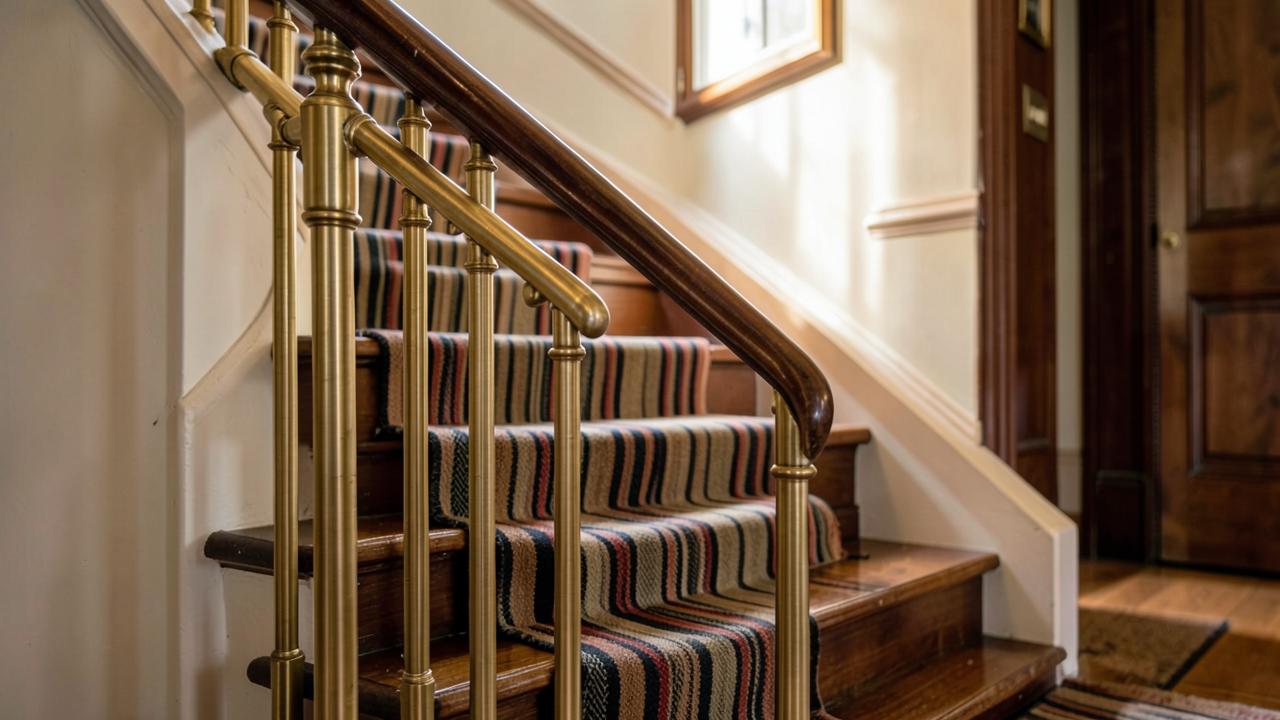 InstallationStair Rods, Clips and Runner HardwareHow stair rods, clips, brackets and bars actually work, when they hold a runner and when they are decorative.
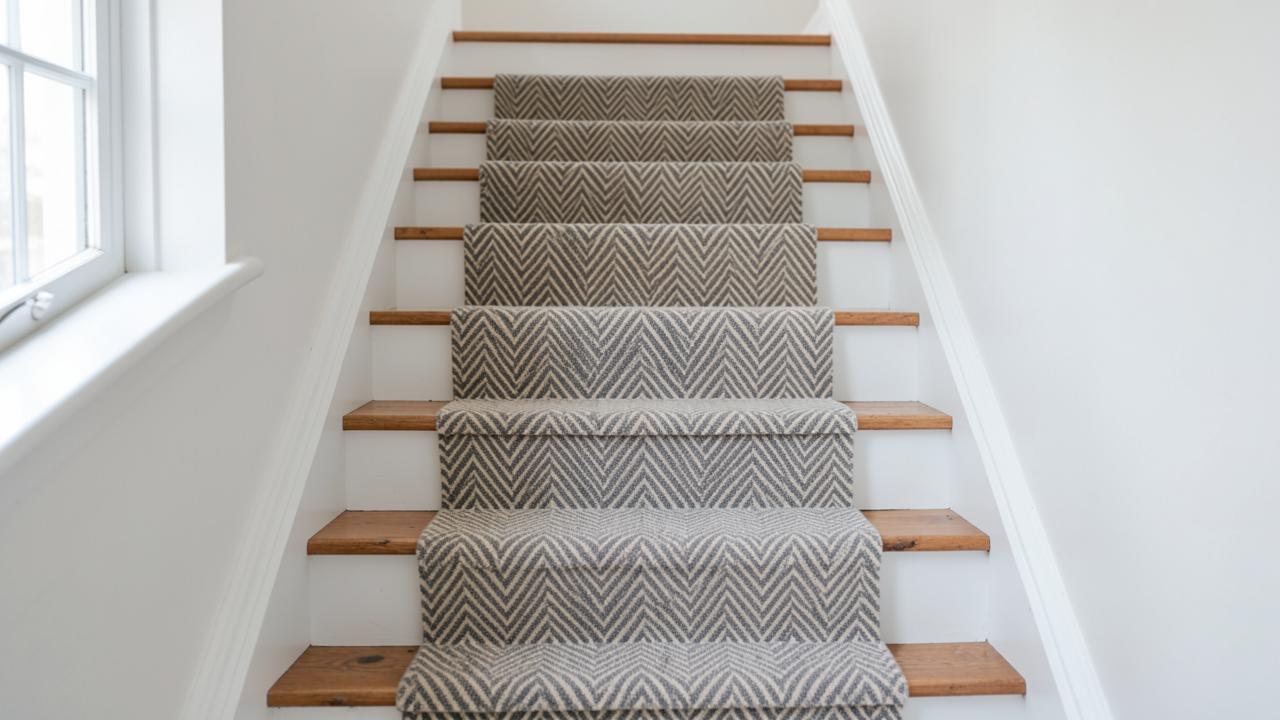 DesignStair Runner Patterns ExplainedHerringbone, chevron, stripes, plaid, geometrics and animal prints judged by how they behave on a staircase.
 CostStair Runner Cost in the UKHow a UK quote is assembled line by line, and how to compare two quotes honestly.