Buying
Washable and pet-friendly stair runners
Washable is one of the most stretched words in floor covering. On a staircase, the useful question is not whether it can go in a machine but how easily it recovers from real household life.
Written by the StairRunner.co editorial team · Updated 4 September 2026
What the labels actually mean
| Term | What it usually means | Stair relevance |
|---|---|---|
| Machine washable | A loose, thin, unbacked piece that fits a domestic machine | Applies to treads and small mats, not fitted runners |
| Solution dyed | Colour is in the fibre itself, not applied to the surface | Survives repeated and aggressive cleaning without fading |
| Stain resistant | A treatment that delays absorption | Buys blotting time; wears in the traffic lane |
| Bleach cleanable | Tolerates diluted bleach solutions without colour loss | Almost always a synthetic; never assume it for wool |
| Waterproof backing | A barrier layer stopping liquid reaching the substrate | Genuinely useful with pets; check it stays flexible enough to fit |
Specifying for pets
- Cut pile, not loops. Claws pull loops, and a pulled loop runs down the flight.
- Solution-dyed synthetic. You will clean it more often than you expect.
- Enough grip for older animals. Dogs with hip problems need traction; a hard flat weave gives them very little.
- Colour that forgives hair. Choose a mid-tone in the same family as your pet, rather than a high contrast.
Specifying for children
Softness matters more here — a fall on stairs is the risk being mitigated — but not at the cost of a vague nosing. A dense, low cut pile over a firm pad is the compromise that gives cushioning without instability. Avoid pale solids in the drink-carrying years, and keep the step edges visually clear, which is covered in stair safety.
Why "washable" is the wrong question for a fitted runner
Marketing language borrowed from rugs and small mats does not translate cleanly to a staircase. A washable rug is loose, unbacked, and light enough to lift and put through a machine. A stair runner is stretched, fixed with gripper, staples or rods at every step, and often bordered with a separate binding. Undoing all of that to wash the material and then refitting it is not a realistic routine, and doing it repeatedly would shorten the life of the backing and fixings faster than normal wear would. The better question for a fitted runner is not "can this be washed" but "how easily does this recover from a spill, from foot traffic, and from a periodic professional clean".
Building a cleanable specification from the ground up
A specification that performs well against real household life is built in layers, starting below the visible surface.
- Pad first. A moisture-resistant pad limits how far a spill travels once it gets past the pile, protecting the tread underneath and reducing the chance of a lingering odour.
- Fibre second. Solution-dyed synthetics carry colour all the way through the fibre, so repeated cleaning does not lift or fade it the way a surface-dyed fibre can.
- Construction third. A dense, low, cut pile resists both crushing and snagging better than a tall, loose or looped one, and is easier to groom back into shape after cleaning.
- Colour and pattern last. A mid-tone, subtly patterned or multi-tonal colourway hides the everyday soiling that a flat solid, especially a pale one, shows immediately.
What genuinely helps versus what is mostly marketing
| Feature | Assessment |
|---|---|
| Moisture-barrier pad | Genuinely useful; protects the layers below the pile where lasting damage happens |
| Solution-dyed fibre | Genuinely useful; the main reason certain synthetics tolerate repeated cleaning |
| "Stain-proof" branding | Overstated; treat as stain-resistant with a finite window to respond to a spill |
| "Machine washable" on a fitted product | Not applicable once installed; only relevant to loose pieces |
| Antimicrobial treatments | Can help with odour between cleans; not a substitute for addressing contamination at source |
Living with pets on stairs: beyond the material choice
Specification only does part of the work. Claw maintenance matters — long or ragged nails catch a pile far more readily than trimmed ones. Older or arthritic pets benefit from a runner with genuine texture rather than a smooth, dense weave that offers little grip when traction matters most, which overlaps with the wider safety considerations in non-slip stair runners. If accidents are frequent rather than occasional, treat the pad as a consumable: budget to replace the affected section rather than expecting one pad to last the life of the carpet above it.
Living with children on stairs
Young children introduce a different set of risks: dropped food and drink, muddy shoes taken off halfway up, and occasionally being sick on the stairs during illness. None of these are reasons to avoid natural fibres outright, but they do argue for a forgiving colourway and a pad specification that will not need lifting every time something happens. As children get older and the spill risk falls, the same runner should still be doing its main safety job: providing secure, high-traction footing on the steps themselves, and clear visual definition of each nosing so falls are less likely in the first place.
What to check before you commit to a "family and pet friendly" product
- Ask what "solution dyed" or "spun dyed" specifically applies to — the face fibre, or only part of the construction.
- Ask for the density or weight specification, not just a marketing description of durability.
- Confirm the pad specification separately; a good carpet over a poor pad is a poor system.
- Ask what the manufacturer's own cleaning instructions say, and whether following them differs from the marketing claims on the swing tag.
- Request a sample and test it at home with a small, controlled spill before ordering the full flight.
The cleaning routine that keeps it looking new
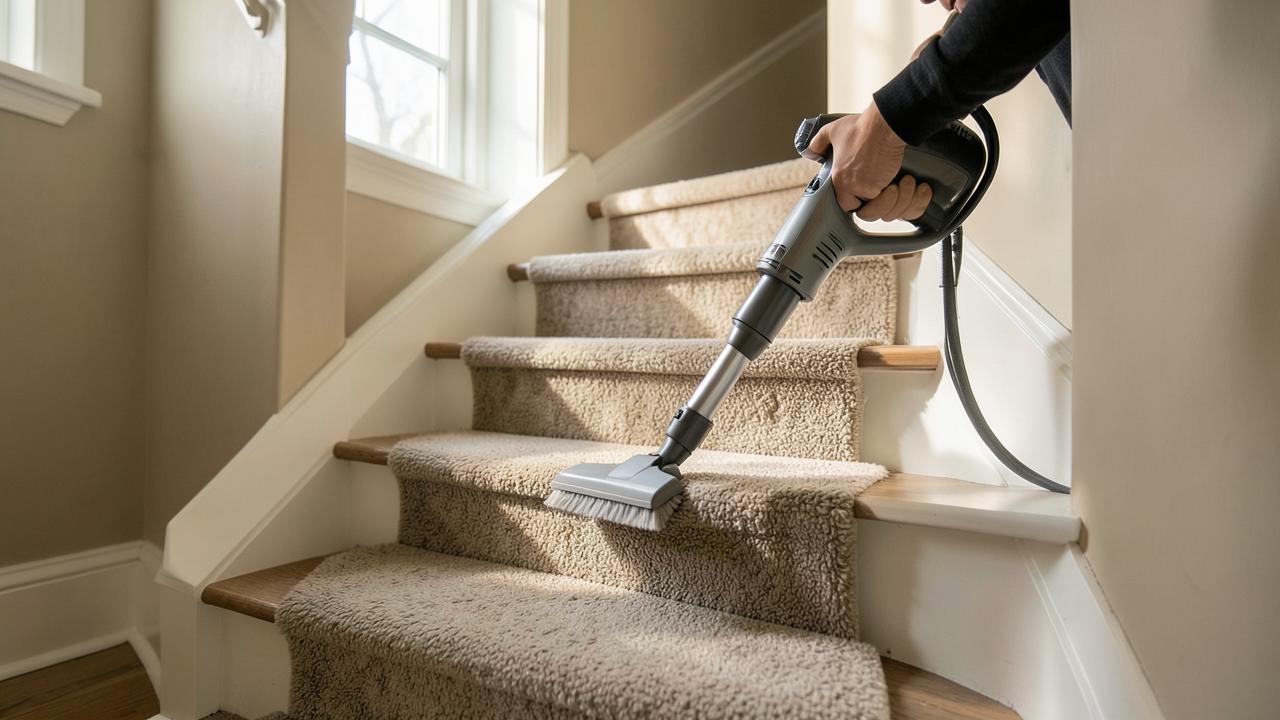
- Vacuum the traffic lane two or three times a week; grit is what wears fibre.
- Blot spills immediately from the outside in, without rubbing.
- Test any product on a hidden section — the bottom riser is usually accessible.
- Have the flight professionally cleaned periodically rather than saturating it yourself.
Method by fibre, and what to avoid, is in cleaning and caring for a stair runner.
Common myths about washable and stain-resistant carpet
- "Stain-proof means nothing can stain it." No commercial treatment makes a fibre immune to every substance. It slows absorption, buying time to blot, and it wears fastest in the busiest part of the flight.
- "A darker colour means fewer cleans needed." A dark colour hides marks visually; it does not reduce how much soil accumulates. The runner still needs the same vacuuming and periodic cleaning regardless of how well it disguises the result.
- "Wool cannot be used with pets." Wool is a perfectly viable pet-household fibre; the caution is around liquid absorption and the cleaning products used, not the fibre's ability to cope with claws or fur.
- "Washable rugs and washable stair runners are the same category." They are not. A washable rug is designed to be lifted, folded and laundered as a whole. A stair runner is fixed in place and finished at the edges; the word "washable" on a stair product usually refers to cleaning in situ, not removal.
Failure modes to watch for over the runner's life
| Sign | Likely cause | Response |
|---|---|---|
| Persistent odour despite regular cleaning | Liquid has reached the pad or subfloor, not just the pile | Lift the affected section and inspect or replace the pad beneath it |
| Pile looks dull despite vacuuming | Cleaning residue building up in the fibre from over-application of product | Have the flight professionally rinsed rather than adding more cleaner |
| Colour patch lighter than surrounding area | A spot treatment or bleach-based product used on a fibre not rated for it | Check the manufacturer's cleaning guidance before treating any further spots |
| Snagged loop running down several steps | A claw, heel or vacuum attachment caught a loop pile fibre | Trim the loop flush rather than pulling it; consider cut pile at replacement |
What to ask a supplier before buying for a pet or family household
- Is the face fibre solution dyed all the way through, or only surface treated?
- What is the pile density, in terms your supplier can quote and compare against another product?
- What pad is recommended, and does it include a moisture barrier?
- What does the manufacturer say about bleach or enzymatic pet-stain cleaners specifically?
- Is stair use covered by the warranty, and does heavy pet traffic count as normal wear?
Renters and short-term households
Where a runner is a temporary fix for a rented property, prioritise ease of removal and low cost over long-term appearance retention. A polypropylene runner fixed with a adhesive-free gripper or a temporary carpet tape can be lifted cleanly at the end of a tenancy without damaging the treads beneath, which matters as much as the fibre itself in a rental context. See installation methods for how fixing choice affects both grip and reversibility.
Frequently asked questions
- Can you get a genuinely washable stair runner?
- Washable products exist, but a fitted runner cannot be removed and laundered without undoing the installation. Washable makes practical sense for individual stair treads and loose landing pieces; for a fitted flight, aim for a cleanable specification instead.
- What is the best stair runner for dogs?
- A low, dense, solution-dyed nylon cut pile. Cut pile avoids the loop-snagging that claws cause, solution dyeing survives repeated cleaning, and low dense pile resists the flattening that heavy paw traffic produces.
- Do pet accidents ruin a runner?
- Not if they are dealt with quickly and the specification anticipates them. The lasting damage usually comes from liquid reaching the pad and the timber underneath, so blot immediately and address the pad if the spill was significant.
- Are stain treatments worth paying for?
- A factory-applied treatment buys you time to blot before a spill sets; it does not make a carpet stain-proof, and it wears in the traffic lane. Treat it as useful insurance rather than a guarantee, and confirm what reapplication involves.
- What is the difference between solution dyed and stain resistant?
- Solution dyeing is how colour is applied to the fibre during manufacture, making it resistant to fading and colour loss during cleaning. Stain resistance is a separate treatment that slows how fast a spill is absorbed. A runner can have either, both, or neither, and they solve different problems.
- Should I choose a lighter or darker colour for a household with pets?
- Neither extreme is ideal. Very pale colours show soiling and hair immediately; very dark colours show dust and lint. A mid-tone with some pattern or fleck hides everyday marks best between cleans.
Related guides
- CareCleaning and Caring for a Stair RunnerRoutine vacuuming, spill response by fibre type, slipping and fraying, and when to call a professional.
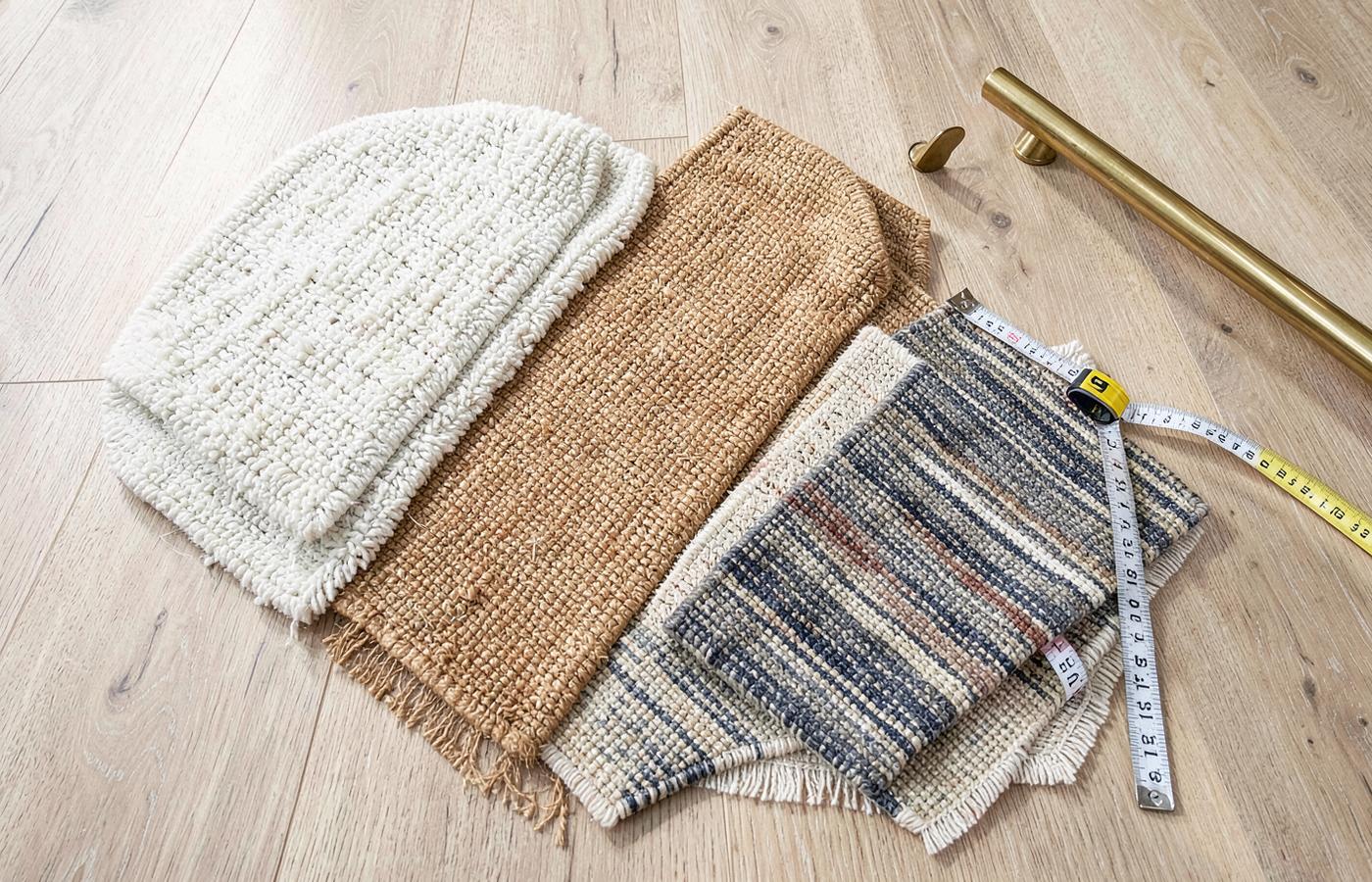 ComparisonsWool vs Synthetic Stair RunnersWool, nylon, polyester and polypropylene compared on stair-specific wear, cleaning, comfort and price.
- BuyingBest Carpet for a Stair RunnerThe specification checklist — fibre, pile, density, backing, width and pattern repeat — for stair-worthy carpet.
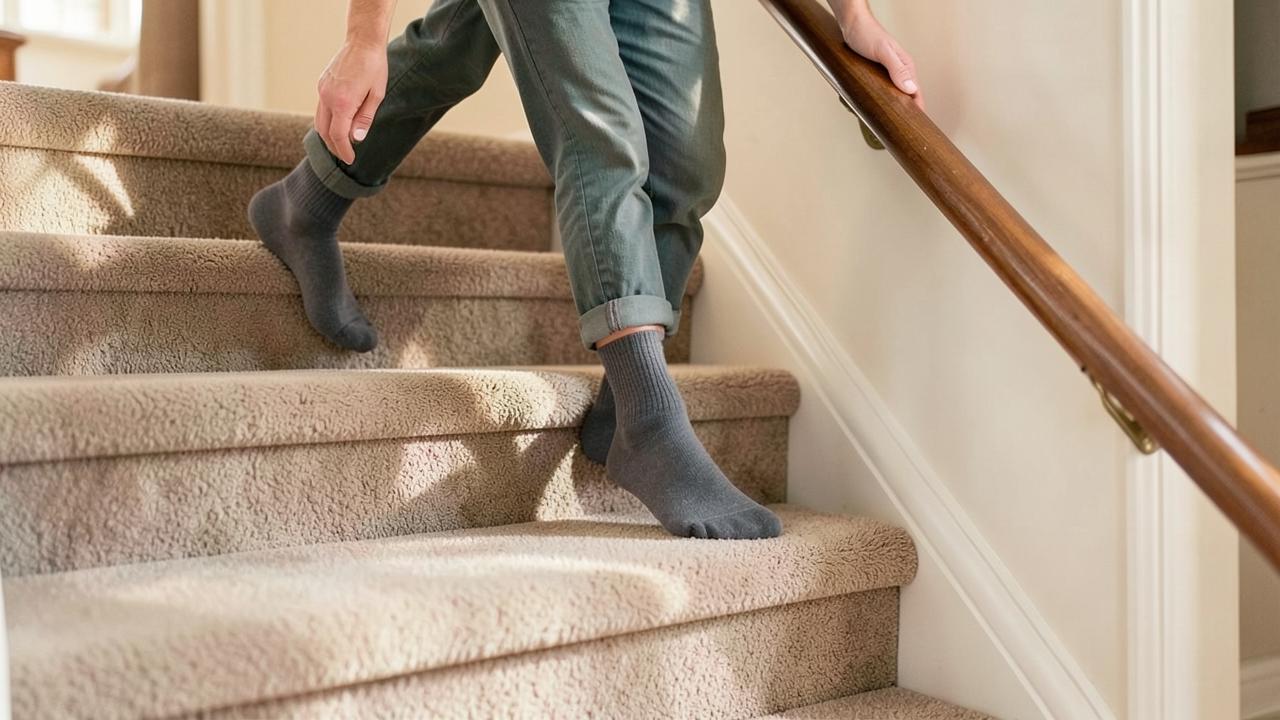 ComparisonsStair Treads vs a Continuous RunnerIndividual carpet treads compared with a single fitted runner on safety, looks, cost and removability.