Buying
Stair runner samples: The essential first step
A stair runner is a significant investment that defines the entrance to your home. Ordering samples isn't just a suggestion; it's the only way to ensure the material performs in your unique environment.
Written by the StairRunner.co editorial team · Updated 4 September 2026
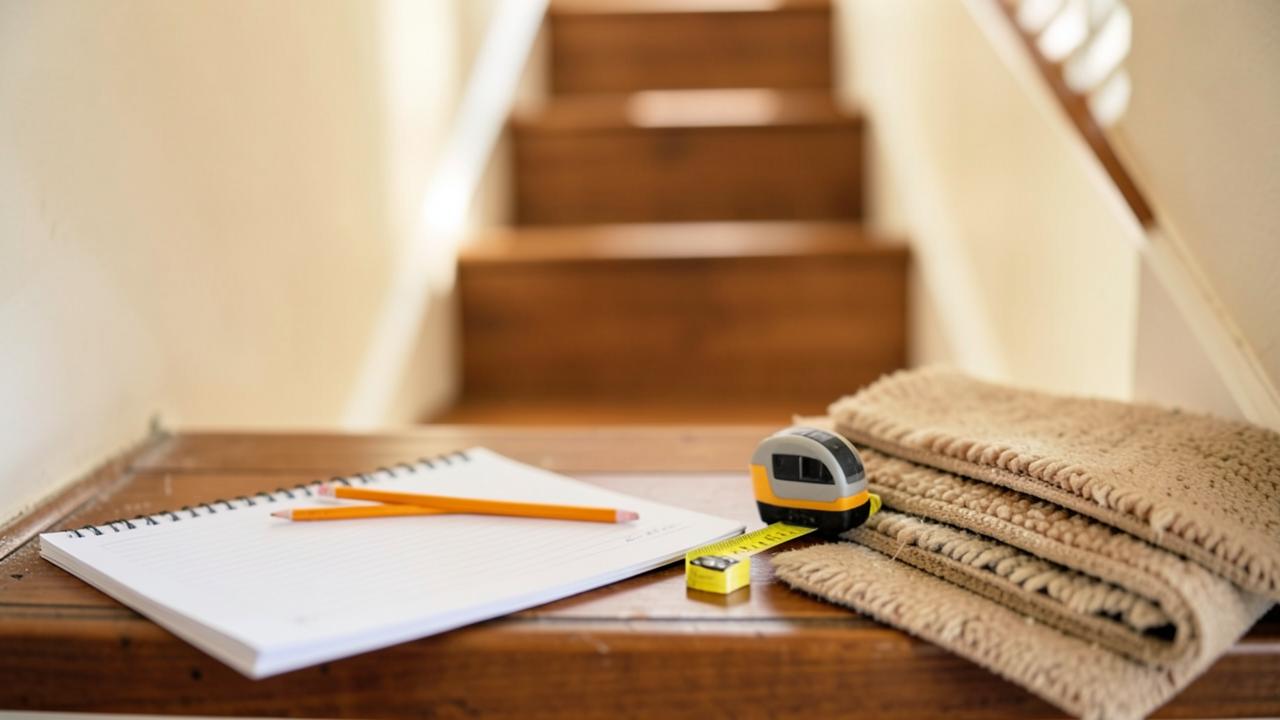
The 'Digital Deception': Why screens aren't enough
In the age of high-definition photography, it's tempting to believe that what you see on your screen is what you'll get in the post. However, flooring is notoriously difficult to photograph accurately. The interaction of light with carpet fibres—especially natural materials like wool or sisal—creates a depth and 'shimmer' that a flat image cannot capture.
Furthermore, every screen (phone, laptop, tablet) is calibrated differently. A runner that looks like a warm 'Oatmeal' on your iPhone might look like a cold 'Stone' on your desktop. A sample is the only 'source of truth' for colour.
The Hallway Lighting Test
Hallways are unique lighting environments. They often lack natural light, relying instead on artificial overhead bulbs, or they may be flooded with direct sun from a front door transom window.
- The 'Metamerism' Effect: This is a phenomenon where two colours appear to match under one light source but look completely different under another. A grey runner might look perfect in a bright showroom but turn an unwanted shade of lilac under your warm-white LED hallway lights.
- Morning vs. Evening: Look at your samples at different times of the day. A dark runner might look sophisticated at noon but become a 'black hole' in the evening if your lighting is insufficient.
- The 'Shadow' Test: Stairs are full of shadows. Place your sample on a middle step where the light is dimmest to ensure the pattern and colour don't get lost in the dark.
The 'Nosing Test': Checking the bend
A stair runner spends its life bent at a 90-degree angle over the edge (nosing) of your steps. A flat sample lying on a table won't tell you how it will look in situ.
Take your sample and drape it firmly over the edge of one of your steps. Look for 'Grinning'—this is when the backing of the carpet shows through the pile because the fibres have opened up too much on the curve. This is common in low-density carpets and is a sign that the runner may not look as plush as you expect once installed. For more on construction, see choosing the best carpet.
Testing for Real Life: The 'Abuse' Trial
Since you only have a small piece, you have the perfect opportunity to see how the material handles the stresses of your household without risking a whole flight.
| Test | Method | What to look for |
|---|---|---|
| The 'Scuff' Test | Rub the sample hard with the sole of a clean outdoor shoe. | Does the pile flatten immediately? Does it 'fuzz' or pill? |
| The 'Pet' Test | Use a fork or a comb to simulate a cat or dog claw snagging the fibre. | Do loops pull out? Does the fibre shred? (Vital for dog owners). |
| The 'Spill' Test | Drop a small amount of water or tea on one corner. | How fast does it soak in? Does the fibre change colour permanently? |
| The 'Vacuum' Test | Use your vacuum cleaner's highest setting on the sample. | Do fibres shed excessively? Is the sample hard to clean? |
Understanding Sample Sizes
Retailers offer different types of samples. Knowing what to ask for can save you time and money.
- Swatches (approx. 10x10cm): Good for basic colour matching against your wall paint, but too small for much else.
- 'Header' or Large Samples (approx. 30x30cm): The gold standard. Large enough to drape over two steps and give a real sense of the pattern repeat.
- Full-Width Offcuts: Sometimes you can buy a 1-meter 'remnant' of the runner you are considering. This is the best way to see the full width and selvedge edge.
- Returnable 'Loans': Some high-end showrooms will let you 'borrow' a full-size display sample for a few days for a small deposit.
Comparing Materials side-by-side
Samples are most powerful when used as a comparison tool. If you are torn between wool and polypropylene, order both. You will immediately notice the difference in 'bounceback' and how the synthetic fibres might have a slightly 'plasticky' sheen in direct sunlight compared to the matte finish of natural wool.
Similarly, compare different weaves. A 'Bouclé' weave (loops) will have a very different texture and shadow-play than a 'Velvet' pile (cut). Seeing them side-by-side in your own hallway will make the choice obvious.
The 'Odour' Factor
Some natural materials, particularly jute and certain treated wools, have a distinct 'earthy' or 'sheepy' smell when new. While this usually fades within a few weeks, ordering a sample allows you to see if the scent is something you (or your sensitive nose) can live with during the initial period.
What to do once you've chosen
Once you've settled on your perfect runner, don't throw the sample away!
- Paint Matching: Take the sample to the DIY store to find the perfect complementary paint for your skirting boards and walls.
- Reference: Keep it to compare against the final delivery. While 'Dye Lot' variations are normal (meaning the final runner might be 2-3% different in shade), the sample acts as your benchmark for quality.
- Cleaning Test: If you ever need to try a new cleaning product, test it on the sample first rather than on your stairs. Check our cleaning guide for more.
Common Sample Mistakes
The biggest mistake is only looking at the sample in your hand. Always put it on the floor. The angle of your head relative to the carpet fibres (the 'pile direction') changes the colour significantly. A runner looked at from 'above' will always look different than a runner looked at from the 'bottom' of the stairs looking up.
Technical Details to check on the sample
| Feature | What to check | Why it matters |
|---|---|---|
| Backing Material | Is it jute, action-back, or felt? | Affects how it grips the underlay and how 'breathable' it is. |
| Edge Finish | Check the selvedge or binding quality. | This is the part that will show most against the timber. |
| Pile Density | Try to push your thumb down to the backing. | Greater density equals longer life and less flattening. |
| Yarn Type | Is it single-ply or multi-ply? | Multi-ply yarns are more durable and resist untwisting. |
The Psychology of Choice: Avoiding 'Decision Paralysis'
One of the biggest hurdles in any interior project is the sheer volume of choices. When you start researching stair runners, you are bombarded with hundreds of textures, colours, patterns, and material compositions. It is easy to reach a point of 'decision paralysis' where you fear choosing the 'wrong' runner will ruin the hallway.
This is exactly where the sample process becomes a tool for mental clarity. Instead of obsessing over dozens of options on a screen, narrow your choice down to three candidates based on what you *think* you want. Order these three samples. By limiting your physical interaction to a small, manageable number, you turn a chaotic search into a rational comparison. You aren't choosing from the entire internet; you are choosing from three proven contenders.
The 'Light Interaction' Deep Dive
We mentioned metamerism, but the interaction of light goes beyond just colour shifting. It is also about the *direction* of light. In many UK hallways, light enters from a side window or a front door, hitting the stairs at a sharp angle.
If you place your sample on the staircase, turn it 180 degrees. You will likely find that the colour looks different. This is because carpet pile has a 'nap'—the direction the fibres lean. Manufacturers often refer to this as the 'look' vs. the 'shade' side. When you install your runner, the fitter must decide which direction the pile will run. The samples allow you to see which way the runner looks best to you as you walk *down* the stairs, which is the perspective from which you will see it most often.
What to Ask the Retailer When Ordering Samples
Don't just fill in the online form. If you call or email the retailer, you can get insights that the website doesn't provide. Ask them: "Which of these three samples has the best 'memory'?" or "Which of these is the most forgiving for pet hair?"
Retailers often have internal knowledge about how a specific batch of runner behaves. They might warn you, for instance, that a specific sisal is known to be very stiff and might be a struggle for a DIYer, or that a specific wool weave is known for its incredible bounce-back even in the highest-traffic hallways. Use your sample order as a conversation starter.
The Role of Samples in Budgeting
It might seem counterintuitive to spend money on samples when you are trying to stick to a budget, but samples are actually a cost-saving tool. A stair runner is a permanent fixture. If you order the wrong one and it has to be replaced after a year because it doesn't wear well or the colour is jarring, you have effectively paid for the project twice.
Samples also allow you to compare high-end wool runners against mid-range polypropylene options. In some hallway lighting, the visual difference between the two might be negligible, allowing you to opt for the more budget-friendly synthetic without sacrificing the aesthetic you want. Without physical samples, you are merely guessing at where your money is best spent.
Organising Your Sample Board
If you are renovating an entire hallway, we recommend creating a physical 'mood board'. Pin your runner samples next to your paint swatches, a piece of the wood finish from your banister, and even a sample of your front door hardware.
This holistic view is vital. A runner doesn't exist in a vacuum; it is the bridge between your flooring and your wall decor. Seeing all the elements together at eye level—and then again on the floor—will give you the confidence to place your final order.
Long-Term Value: Using Samples Post-Installation
The utility of your samples doesn't end once the runner is installed. In fact, they remain one of the most useful items in your home maintenance toolkit. If you ever need to match a new piece of furniture—perhaps a console table or a hallway chair—to your décor, having the runner sample to take with you to the shop is invaluable.
Moreover, samples are the perfect 'test bed' for cleaning products. Before applying a carpet shampoo or a spot cleaner to your expensive installed runner, test it on the sample first. Observe how the fibres react: does the colour bleed? Does the texture change? Using the sample as a sacrificial test piece can prevent permanent damage to your staircase.
Conclusion: Don't rush the process
It's tempting to want the stairs finished by next weekend, but waiting 3 days for samples can save you a 10-year mistake. Hallways are the 'veins' of the house, and the stairs are the most high-traffic part of those veins. If you're still unsure after seeing samples, visit our decision guide or look through our ideas gallery for more inspiration.
Frequently asked questions
- Why should I order a sample instead of just buying?
- Digital screens cannot accurately represent the true colour, texture, or 'hand-feel' of a runner. More importantly, you need to see how the material reacts to the specific lighting in your hallway, which is often very different from a showroom or a website photo.
- How many samples should I order?
- We recommend ordering at least 3-5 samples. This allows you to compare different tones and textures side-by-side, helping you identify undertones (like a grey that looks blue in your light) that wouldn't be obvious in isolation.
- Are samples free?
- Many retailers offer small swatches for free or a nominal shipping fee. Larger 'header' samples or full-width pieces usually require a deposit or a higher fee, which is often refundable if you place a full order.
- What size of sample is best?
- For a stair runner, a small 10cm x 10cm swatch is rarely enough. Ideally, you want a piece at least 20cm long so you can drape it over a stair nosing to see how the backing bends and how the pile 'opens up' on the curve.
- Can I test the sample's durability?
- Yes! In fact, you should. We encourage testing samples against pet claws, dragging a heavy shoe across them, and even performing a small spill test to see how the fibres react to cleaning.
- How long does it take for samples to arrive?
- In the UK, most samples are dispatched via first-class post and arrive within 2-4 working days. If you are ordering samples of bespoke or high-end designer runners, it may take up to a week if the swatches need to be cut from a central warehouse.
- Can I keep the samples?
- Most small swatches are yours to keep. However, larger 'display' samples or 'header' hangers are often expected to be returned, as they are expensive to produce. Always check the retailer's return policy for samples to avoid unexpected charges.
Related guides
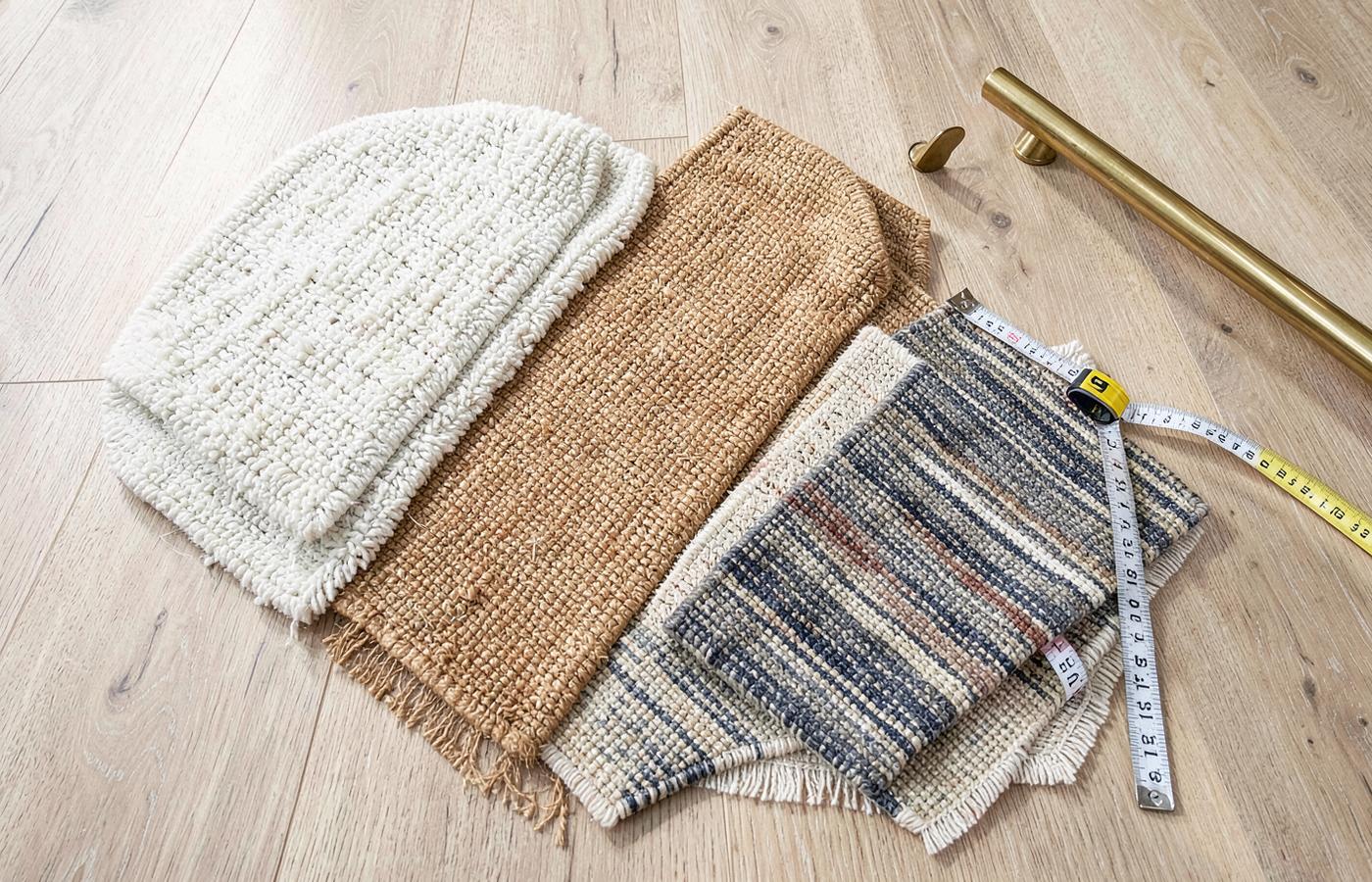 MaterialsStair Runner Materials ComparedWool, nylon, polypropylene, sisal and jute judged on stair-specific wear, comfort, cleaning and safety.
- BuyingBest Carpet for a Stair RunnerThe specification checklist — fibre, pile, density, backing, width and pattern repeat — for stair-worthy carpet.
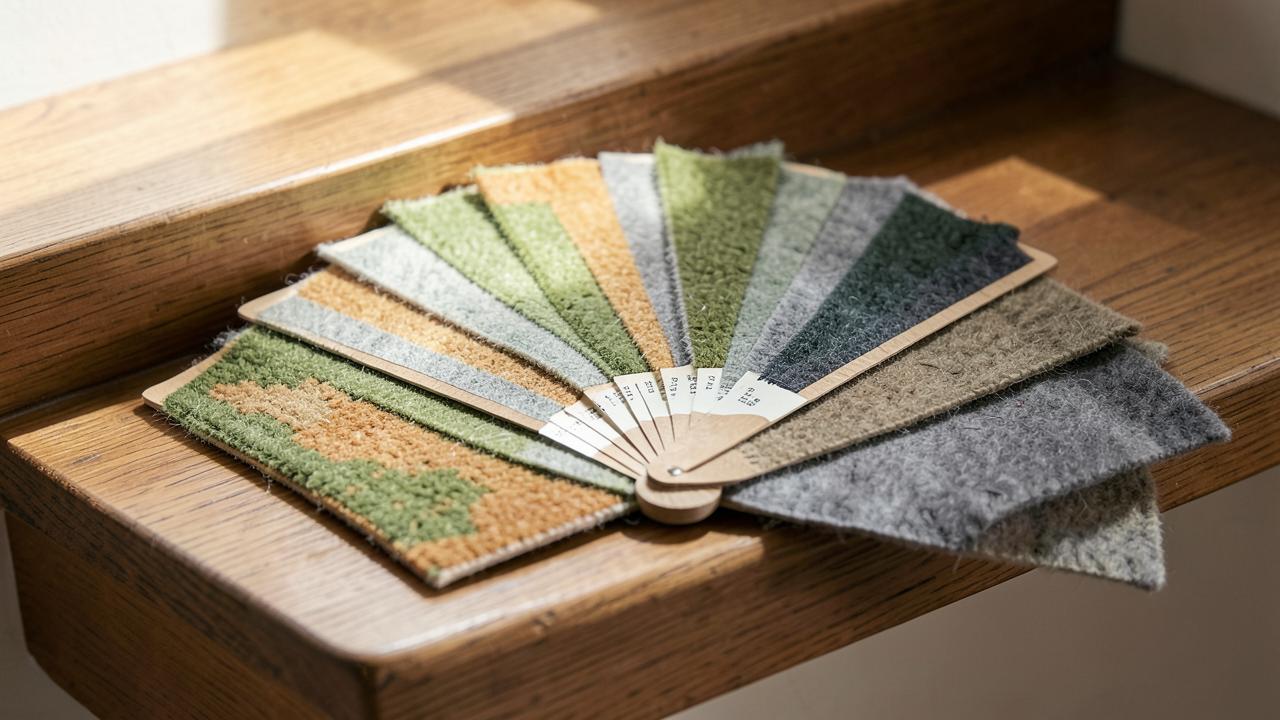 BuyingHow to Choose a Stair RunnerA decision order that starts with the staircase and ends with colour, not the other way round.