Pattern
Tartan stair runner heritage and style guide
More than just a pattern, tartan brings a sense of permanence and warmth to a staircase, using complex color interplays to create a visual depth that masks wear and soiling.
Written by the StairRunner.co editorial team · Updated 4 September 2026
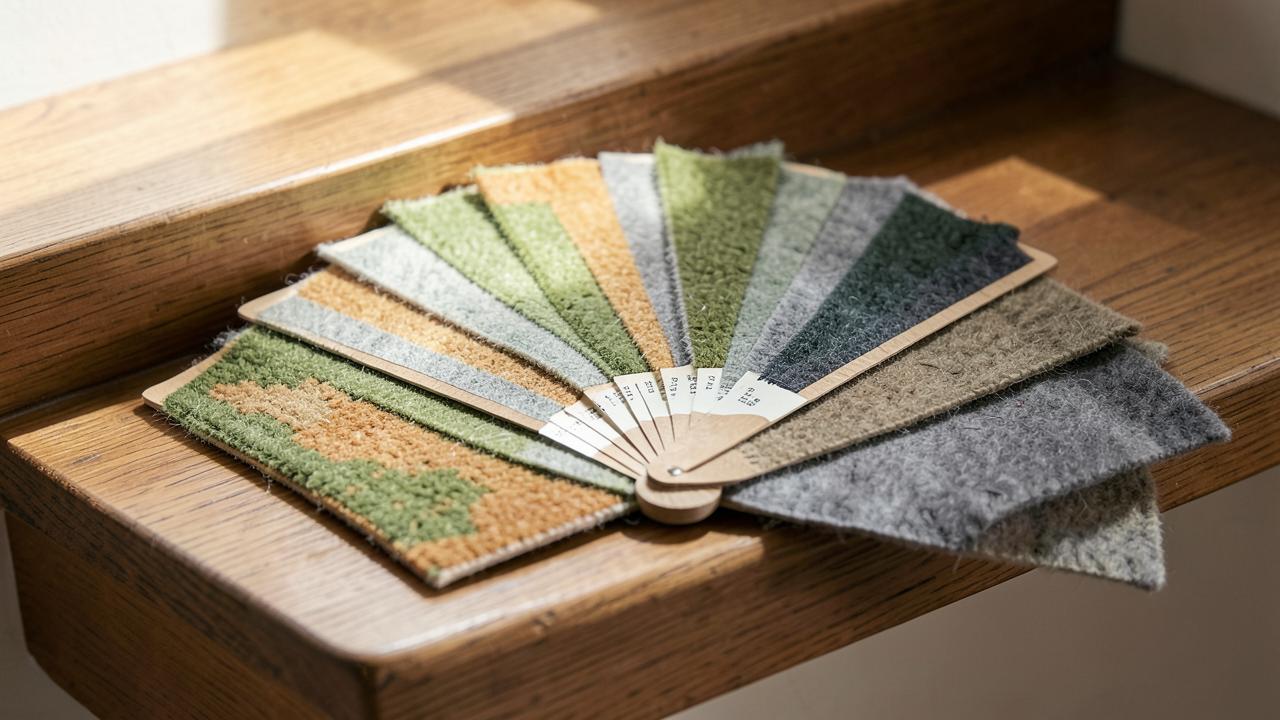
The history and character of tartan on stairs
Tartan is one of the world's most recognizable patterns, steeped in Scottish heritage but now a global symbol of quality and comfort. In the context of interior design, particularly for staircases, tartan serves as an 'anchor'. It is a pattern that feels established, even in a brand-new home. The complexity of the weave—where multiple colors of yarn cross each other at right angles—creates a depth that a simple printed plaid cannot match.
When you place a tartan runner on a flight of stairs, you are doing more than just covering the wood. You are creating a centerpiece. The 'rhythm' of the tartan—the way the lines of different thicknesses and colors repeat—provides a visual structure to the climb. It is both a directional pattern (guiding you up) and a stabilizing one (providing a solid, textured surface).
Understanding the 'Sett' and pattern repeat
In tartan weaving, the 'sett' is the specific sequence of colors and line widths that makes up the pattern. This sett is repeated throughout the length and width of the carpet. For a stair runner, the size of the sett is critical. A very large sett might only repeat once or twice across the width of a standard 60cm or 70cm runner. This can make the pattern look 'cut off' at the edges.
Ideally, you want a sett that allows for at least two or three full repeats across the width, ensuring that the main 'pivot point' of the tartan (the center of the most prominent square) sits comfortably in the middle of the stairs. Vertical repeat is equally important; a consistent match between the tread and the riser ensures the pattern doesn't look like it's 'sliding' down the flight. When measuring, always consult with a specialist who understands how to calculate for pattern matching, as discussed in measuring for a stair runner.
| Tartan Style | Typical Colors | Best Suited For |
|---|---|---|
| Black Watch | Deep green, navy, and black | Traditional homes; hides everything; timeless appeal |
| Royal Stewart | Bright red, green, and blue | Statement staircases; high-energy hallways |
| Neutral/Modern | Grey, taupe, and cream | Contemporary interiors; adds texture without noise |
| Hunting Tartans | Earth tones (browns, greens, ochres) | Country houses; blends with natural wood and stone |
Precision fitting: The grid and the grain
Tartan, like any grid-based pattern, demands a high level of installation skill. If the runner is not installed 'straight to grain', the lines will appear to wander. A professional fitter will spend a significant amount of time 'squaring up' the runner at the start of the flight. They will ensure that the horizontal lines of the tartan are perfectly parallel to each nosing.
One of the biggest challenges is maintaining this alignment over ten, fifteen, or twenty steps. The tension must be even. If the carpet is stretched more on the right than the left, the tartan will 'skew'. Using a high-quality stair runner underlay is non-negotiable with tartan; it provides a stable, high-friction base that prevents the carpet from shifting and distorting the pattern over time.
Matching tartan across winders and turns
Winder stairs (the triangular steps at a corner) present a unique challenge for tartan. Because the inner edge of the runner is shorter than the outer edge on a turn, the grid pattern will naturally 'fan'. The horizontal lines will no longer be parallel to the nosing as you go around the corner.
There are two schools of thought on this. The 'Traditionalist' approach is to allow the pattern to fan naturally, which emphasizes the craftsmanship of the fitting on a complex staircase. The 'Modernist' approach is to use a landing to 'reset' the pattern, starting fresh on the next straight run. In very high-end installations, a 'mitred winder' can be used, where the tartan is cut and rejoined at an angle to keep the lines square. This is an advanced technique that we discuss in detail in our guide to fitting on winder stairs.
Material choice: Why wool is king for tartan
Tartan is almost exclusively associated with wool, and for good reason. Wool's ability to hold deep, complex dyes means the colors in a tartan runner remain vibrant for decades. Furthermore, the natural elasticity of wool means the 'lines' of the tartan stay sharp. A synthetic fibre might 'fuzz' or 'bloom' more easily, which can blur the precise edges of the tartan grid.
For a high-traffic area like a staircase, a wool-nylon blend (usually 80/20) is often the best compromise. It offers the aesthetic and resilience of wool with the extra 'scuff resistance' of nylon. This ensures that the 'path' that develops on the stairs—the central lane where everyone walks—doesn't become a flattened, dull version of the pattern. See wool vs synthetic for a deeper dive.
Scale and the 'Read' from the Hallway
When choosing a tartan, consider how it 'reads' from a distance. A small-scale tartan might look like a solid color or a simple texture from across the room. A large-scale tartan will be immediately recognizable as a bold geometric pattern.
If your hallway is narrow and dark, a large-scale, high-contrast tartan can sometimes feel overwhelming. In these spaces, a 'muted' or 'weathered' tartan colorway—where the colors are softened to look like they've aged—can provide the character you want without closing in the space. Conversely, in a large, open entryway with a grand staircase, a bold, high-contrast tartan can act as the 'wow factor' that defines the whole house.
The practicality of tartan: Hiding the evidence
One of the greatest practical benefits of tartan is its ability to hide soiling. The 'busy-ness' of the pattern and the variety of colors mean that lint, pet hair, and small marks are virtually invisible. This makes it a fantastic choice for families with dogs or young children.
While a plain beige runner might show a single muddy footprint immediately, a tartan runner will swallow it up visually until you have time to clean it. This doesn't mean you should neglect cleaning—regular vacuuming is still essential to prevent grit from wearing down the fibres—but it does mean your stairs will look 'guest-ready' for longer. We provide a full guide in cleaning and caring for your runner.
Pairing tartan with stair rods and borders
Tartan is a 'complete' pattern, so it doesn't strictly need a border. However, a whipped edge in a color that matches one of the darker lines in the tartan (like the navy or black) can provide a very clean finish. Fabric bindings in leather or heavy cotton can also add a 'bespoke' feel.
As for rods, tartan and brass are a match made in heaven. The warm yellow of the brass complements the traditional greens and reds of many tartans. For a more modern look, consider 'pewter' or 'antique silver' rods, which work beautifully with the newer grey and blue tartan colorways. You can explore options in stair rods and accessories.
How tartan reads on different wood types
The color of your stairs themselves will affect how the tartan looks.
- Dark Oak/Walnut: Deep, traditional tartans (greens, reds, burgundies) look very prestigious and 'club-like' against dark wood.
- Light Oak/Pine: Muted, 'heathered' tartans or those with lots of beige and cream work best to keep the look airy and light.
- Painted White Stairs: Almost any tartan works here, but high-contrast monochrome tartans (grey/black/white) look particularly striking and modern.
- Black Stairs: A bright, bold tartan (like a Royal Stewart or a bright yellow-based tartan) creates a dramatic, high-fashion statement.
Environmental and ethical considerations
Since most high-quality tartans are made from wool, they are a relatively sustainable choice. Wool is renewable, biodegradable, and offers excellent thermal and acoustic insulation—essential for keeping a noisy staircase quiet and warm. When selecting your tartan, look for manufacturers who use British wool or hold certifications for ethical farming practices.
Common Tartan Fitting Issues to Avoid
- Not Pattern Matching: If the runner is made of multiple pieces, the horizontal bars must align at every join.
- Twisting: The grid lines must stay parallel to the walls/strings of the stairs.
- Over-stretching: If the fitter pulls too hard to 'make it reach', the squares of the tartan will become rectangles.
- Ignoring the Landing: A landing that is 'out of square' will make a tartan runner look crooked as it crosses onto the straight flight.
Failure modes and what to watch for
| Problem | Likely Cause | Action |
|---|---|---|
| Pattern skewing at the bottom | The start of the runner wasn't squared to the first riser | Requires re-alignment from the base |
| Fuzzy lines in traffic lane | Fibre 'blooming' or flattening due to high foot traffic | Regular vacuuming with a brush head; choose higher wool content |
| Visible joins in the pattern | Poor pattern matching between rolls or sections | Always check the 'dye lot' and 'sett match' before installation |
| Color fading | Direct sunlight from a window hitting the staircase | Consider UV-protective glass or blinds to protect the deep dyes |
Why tartan requires more "wastage" calculation
When you buy a plain carpet, you can usually get away with minimal extra material for the turns and the nosings. With tartan, you must account for the pattern repeat—the "sett"—on every single step and join. If you have a winder staircase with three triangular steps, you will need extra material to ensure the tartan pattern can be "rotated" or "mitred" so the lines look continuous as they go around the corner. A professional fitter will measure the "vertical" and "horizontal" repeat of the tartan and multiply this by the number of steps to calculate exactly how much extra length is needed to keep the pattern from "drifting" off-center. Never skimp on the quantity when buying tartan; it is far cheaper to have a small remnant left over than to have a seam where the pattern clearly does not match. In a high-end installation, the tartan should flow over the nosing as if the carpet were one single, continuous piece, even if it is actually composed of several sections joined together with invisible seams.
A final word on choosing your tartan
A tartan stair runner is a long-term investment in your home's character. It is a pattern that ages gracefully; even when it eventually shows signs of wear, it often takes on a 'distressed heritage' look that remains attractive. My best advice: don't be afraid of the complexity. Tartan is designed to be looked at, to be walked on, and to be a part of a home's history.
Take the time to look at samples in different lights—tartan can look very different in the morning sun than it does under hallway LED lighting. And remember, the most important thing is that it makes you feel 'at home' every time you walk through the door. For more pattern inspiration, see our full guide to patterns.
Frequently asked questions
- Is tartan too busy for a small staircase?
- Not necessarily. While tartans are complex, they often use a 'tonal' palette that can feel more like a texture than a busy pattern. Choosing a smaller-scale tartan or one with a limited color palette (like Black Watch) can make it work perfectly on smaller flights.
- How do you match a tartan pattern on a landing?
- Matching tartan on a landing requires careful 'mitring' if the runner turns a corner, or ensuring the horizontal and vertical lines of the sett (the pattern repeat) align across the threshold. It often requires more material than a plain carpet to achieve a seamless look.
- Are tartan runners durable enough for high-traffic stairs?
- Yes, tartans are typically woven in high-quality wool or wool-blends, which are the most durable materials for stairs. The complex pattern also hides foot traffic and flattening better than almost any other design.
- Can I use tartan with a modern interior?
- Absolutely. Modern 'neutral' tartans in greys, beiges, and soft blues are very popular in contemporary homes. They provide a sense of 'groundedness' and quality that complements modern, clean lines.
- Do I need stair rods with a tartan runner?
- Stair rods are not functionally necessary, but they look exceptional with tartan. A dark bronze or antique brass rod complements the heritage feel of the pattern and adds a final layer of luxury to the flight.
Related guides
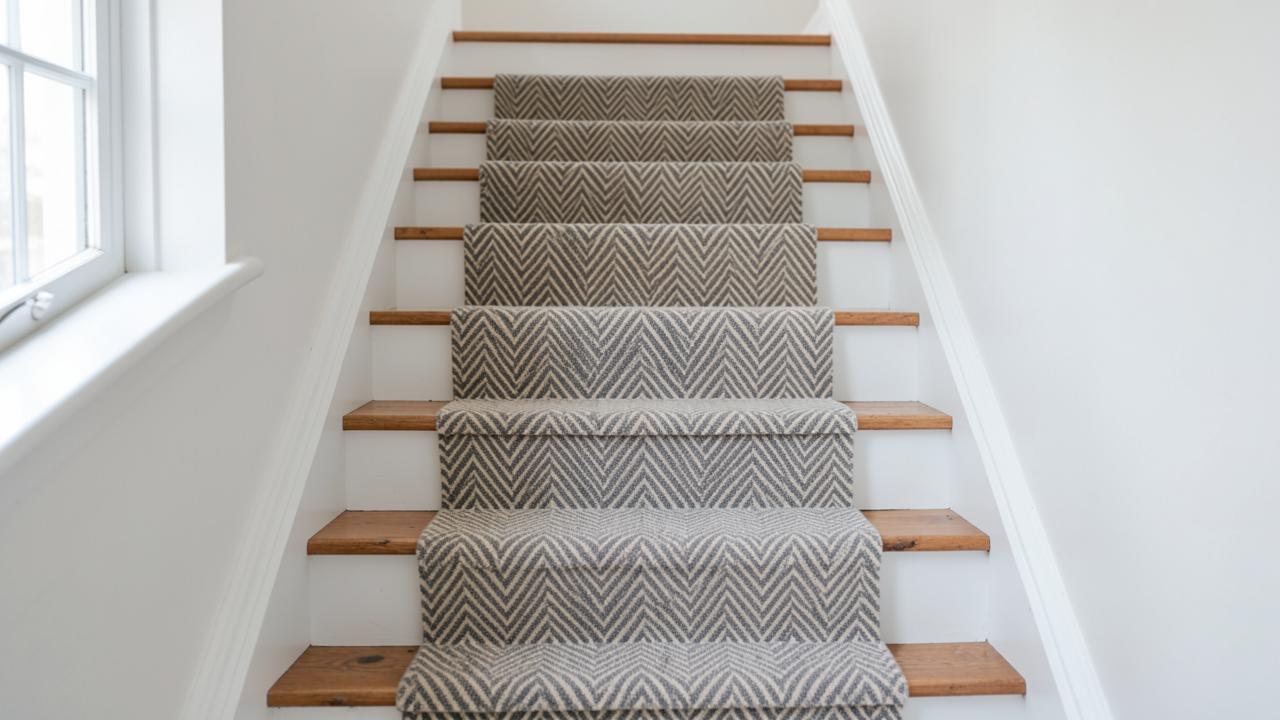 DesignStair Runner Patterns ExplainedHerringbone, chevron, stripes, plaid, geometrics and animal prints judged by how they behave on a staircase.
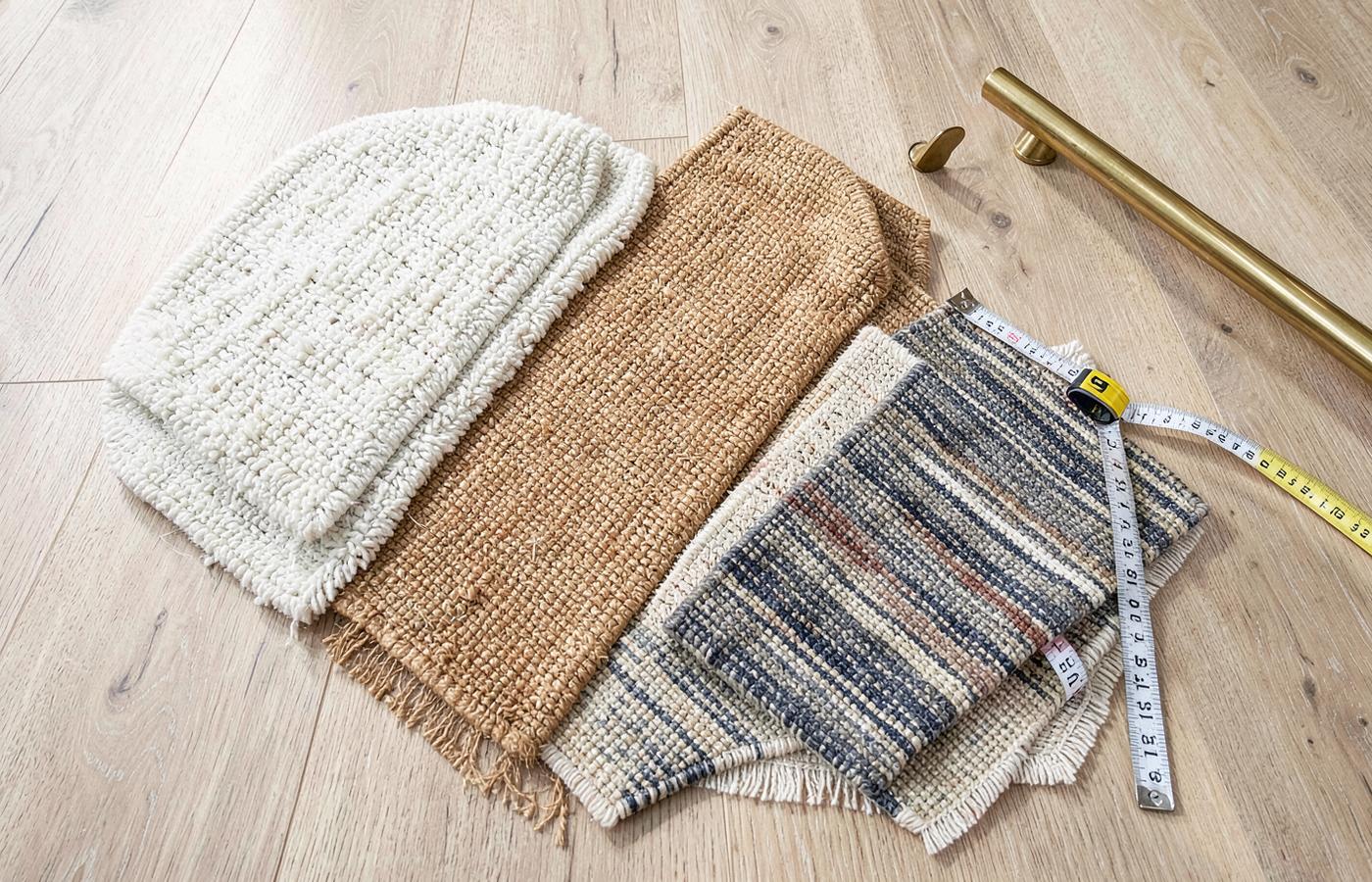 MaterialsWool Stair RunnersWhy wool holds its shape on stairs: crimp, twist, blends, staining, moths, shedding and honest limitations.
- DesignPlaid Stair Runner Design and Installation GuidePlaid offers a structured, heritage feel. Learn how to manage the grid on stairs, align pattern repeats, and choose the right scale for your home.