Construction
Twist pile stair runners: the workhorse of the staircase
Twist pile is the quintessential choice for a busy family home. By combining high-twist engineering with dense construction, these runners provide unmatched resilience against the rigours of vertical foot traffic.
Written by the StairRunner.co editorial team · Updated 4 September 2026
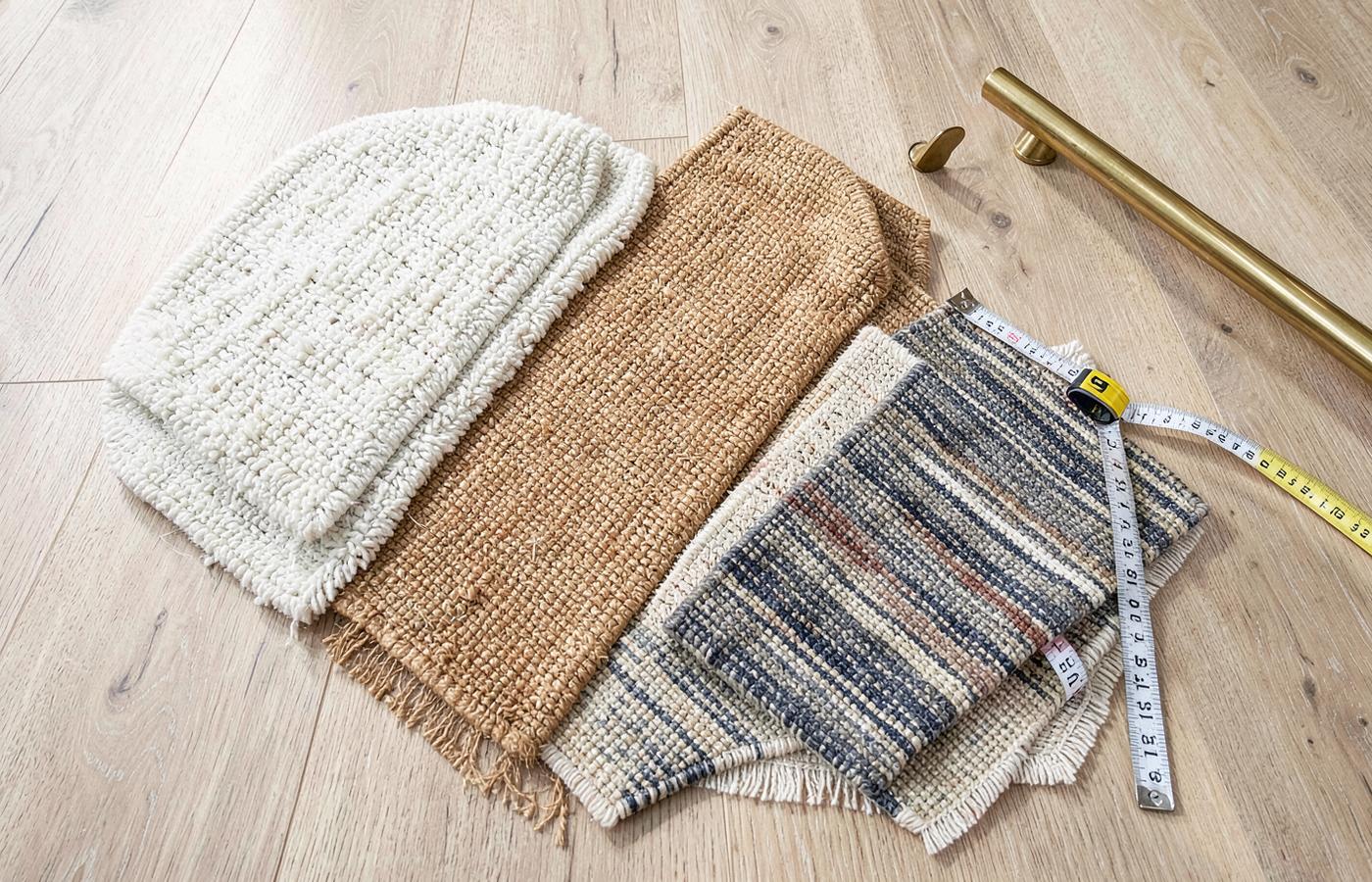
The engineering of the twist
To understand why twist pile is so effective on stairs, one must look at the microscopic level of the yarn. A standard cut pile yarn consists of multiple strands of fibre. In a twist pile, these strands are wound around each other with significant force. This twisting is not just for aesthetics; it stores mechanical energy within the yarn.
Once twisted, the yarn is 'heat-set' using steam or hot air. This process permanently locks the molecules of the fibre into their new, twisted configuration. When you step on a twist pile tuft, you are essentially compressing a tiny, vertical spring. The higher the number of twists per inch (TPI), the more energy is stored, and the more forcefully the fibre will spring back when the weight is removed.
On a staircase, this 'spring-back' is critical. Every step involves a combination of downward pressure and lateral shear force as you push off the tread. A low-twist yarn will simply collapse and stay flattened. A high-twist yarn will resist the shear force and return to its upright position, maintaining the runner's appearance for years rather than months.
Twist Level vs. Pile Density
While twist level is vital, it must be supported by pile density. You can have the most resilient, high-twist yarn in the world, but if the tufts are placed too far apart, the runner will still fail. The tufts will have room to lean over, and the backing will be visible at the stair nosings (grinning).
| Yarn Twist Level | Pile Density | Resulting Performance |
|---|---|---|
| High (7-9 TPI) | High (1/10" gauge) | Exceptional durability; no grinning; excellent for all stairs |
| High (7-9 TPI) | Low (5/32" gauge) | Good resilience but prone to grinning; best for waterfall fit |
| Low (3-4 TPI) | High (1/10" gauge) | Soft and plush but will show tracking and mat in traffic lanes |
| Low (3-4 TPI) | Low (5/32" gauge) | Poor performance; will flatten quickly and show backing |
The 'sweet spot' for a high-traffic domestic stair runner is a high-twist yarn (6-8 TPI) paired with a medium-to-high density (1/8" or 1/10" gauge). This combination provides a surface that is firm enough to support the foot securely, resilient enough to bounce back, and dense enough to hide the backing even on sharp nosings.
Why twist pile hides tracking and shading
'Tracking' (footprints) and 'shading' (light reflecting differently off leaned fibres) are the bane of smooth carpets like velvet or saxony. Because these carpets have straight, upright fibres, any disruption to that uniformity is immediately visible.
Twist pile solves this through 'visual noise'. Because each tuft is twisted and textured, they already point in slightly different directions and reflect light at various angles. When a footstep pushes some tufts down, the change is masked by the existing texture. This makes twist pile the most practical choice for hallways and stairs that lead directly from an entrance, where footprints would otherwise be a constant eyesore.
For those who want the absolute minimum of tracking, a 'frieze' (pronounced free-zay) is the answer. Frieze yarns are twisted so tightly that they curl over at the top. This creates a highly textured, 'bubbly' look that is almost impossible to mark. Frieze is incredibly durable but has a more casual, less formal appearance than a standard twist.
Material choices: wool, polypropylene, and nylons
The fibre you choose will dictate how well the 'twist' holds up over time. Wool is naturally the best material for twist piles. Its protein structure is inherently elastic, meaning it has a natural desire to return to its original shape. A wool twist pile will maintain its 'texture' for much longer than a synthetic equivalent.
Polypropylene twist piles are very common because they are budget-friendly and bleach-cleanable. However, polypropylene is a non-elastic plastic. Once the twist is flattened by heavy traffic, it often stays flattened. To mitigate this, polypropylene twist piles should be kept very short and very dense.
Nylon is a middle ground. It is stronger and more resilient than polypropylene, and many modern nylons are engineered with excellent 'twist retention' properties. An 80/20 wool-nylon blend is often cited by fitters as the perfect specification for a twist pile stair runner, combining the natural beauty and resilience of wool with the 'memory' and strength of nylon. See wool vs synthetic for a deeper dive.
Durability on the nosing: preventing 'Fuzzing'
The stair nosing is the point of maximum wear. As you descend, your heel rubs against the edge of the step. In a twist pile, this friction can eventually cause the yarn strands to untwist and 'fuzz' at the tips. This is not just a cosmetic issue; once the yarn untwists, it loses its structural strength and will wear through much faster.
To prevent this, look for a runner with a 'high-twist' specification. A tighter twist is harder to 'unravel' by friction. Additionally, ensuring the runner is fitted tightly—ideally using the Hollywood method where it is stapled under the nosing—reduces the amount of 'movement' the carpet makes under the foot, which in turn reduces the abrasive friction.
If you notice 'pilling' (tiny balls of fibre on the surface), this is often a sign of a lower-quality twist or a fibre that is shedding. While some initial shedding is normal for wool, persistent pilling on the nosings indicates that the twist level is insufficient for the traffic it is receiving.
Maintenance: keep it upright
The key to maintaining a twist pile runner is to keep the tufts standing upright and free of grit. Grit is the enemy of twist pile; the tiny sharp edges of sand and soil act like saws, cutting through the twisted fibres at their base.
- Vacuuming: Use a vacuum with a rotating beater bar. The brush helps to 'agitate' the twist, lifting it back up and vibrating out the grit that has settled deep in the pile. For a busy staircase, this should be done 2-3 times a week.
- Grooming: For very high-traffic areas, you can use a carpet rake or a stiff brush to manually 'groom' the pile back into an upright position.
- Professional Cleaning: Have the runner professionally cleaned every 12-18 months. Hot water extraction (steam cleaning) is particularly effective for twist piles, as the heat can actually help to 're-set' the twist in wool and nylon fibres.
For more detailed advice, see our cleaning guide.
Installation specifics for twist pile
Twist pile is one of the most 'fitter-friendly' carpets. Because of its textured surface, seams and joins are very easy to hide. A skilled fitter can join two pieces of twist pile so that the seam is completely invisible even to a trained eye. This makes twist pile a great choice for complex staircases with multiple landings and winders.
When fitting around winders, the 'stretch' of the backing is important. A twist pile with a flexible secondary backing (like a soft-fleece or a high-quality jute) will mold to the shape of the step much better than a stiff, budget backing. This ensures that the runner stays flat and secure, reducing the risk of trips. We cover this in winder installation.
Edge finishing is also simpler with twist pile. Whether you choose a whipped edge (overlocked with yarn) or a taped binding, the texture of the pile helps to integrate the edge smoothly. A narrow width runner in a twist pile looks particularly sharp and modern.
Safety: traction and visibility
Safety on stairs is paramount. Twist pile offers a high degree of traction compared to smoother carpet types. The 'bumpy' texture provides more friction for the sole of the foot or a sock, reducing the chance of a slip.
Visibility of the stair edge is also important. Because twist pile doesn't reflect light in a uniform way, it can sometimes be harder to see the exact edge of the nosing in dim light. We recommend choosing a twist pile with a slight colour variation (a 'heathered' look) or ensuring that your stairwell lighting is adequate. For more safety tips, see stair safety.
Environmental impact and longevity
Because twist pile is so durable, it is often a more sustainable choice than cheaper alternatives. A high-quality wool twist runner can easily last 15-20 years if well-maintained. This long lifespan reduces the need for replacement and the associated environmental costs of manufacturing and disposal.
Furthermore, wool is a renewable and biodegradable resource. When a wool twist runner finally reaches the end of its life, it won't linger in a landfill for centuries like a synthetic runner would. If sustainability is a priority for you, look for a wool twist with a natural jute backing and avoid those with heavy latex or plastic components.
The 'Heathered' Look: a practical bonus
Many twist piles are 'heathered'—meaning they are made from yarns of slightly different colours twisted together. This creates a multi-tonal effect that is incredibly practical. A heathered twist pile can hide a surprising amount of lint, dust, and even minor stains. It's the ultimate 'low-maintenance' aesthetic for a home where the stairs are in constant use by children and pets.
When choosing a colour, consider the 'mid-tone' rule. Very dark colours show light-coloured dust and lint, while very light colours show dark soil and mud. A mid-tone heathered twist (like a warm grey, a soft beige, or a muted blue) is the most forgiving option for a busy household.
Technical Summary
- Yarn Type: Look for 'high-twist' and 'heat-set'.
- Gauge: 1/8" or 1/10" for stairs to ensure density.
- Fibre: 80/20 wool-nylon is the gold standard for performance.
- Texture: Choose a standard twist for a formal look, or a frieze for maximum durability and a casual feel.
- Backing: Ensure a stable, high-quality backing to prevent stretching and bagging.
By selecting a twist pile with the right technical specifications, you are investing in a stair runner that will look great and perform reliably for decades. For help choosing the right style for your home, check out our guide on how to choose a stair runner.
Frequently asked questions
- What is a twist pile stair runner?
- A twist pile runner is a type of cut pile where the yarn has been tightly twisted and heat-set to maintain its shape. This creates a textured, 'bumpy' surface that is highly resilient and excellent at hiding footprints and vacuum marks, making it ideal for busy staircases.
- How does twist pile compare to velvet pile?
- Velvet pile has a very low twist and a smooth, uniform surface that shows every footprint (shading). Twist pile has a much higher twist level, creating a more rugged surface that resists shading and matting much better than velvet.
- Is twist pile good for stairs with heavy traffic?
- Yes, twist pile is one of the best choices for high-traffic stairs. The tight twist acts like a spring, helping the fibres bounce back after being stepped on, which prevents the 'crushed' look common in lower-quality carpets.
- Do I need a special underlay for a twist pile runner?
- While you don't need a 'special' underlay, a high-quality, firm underlay (such as high-density rubber or PU foam) will support the twist pile and extend its life significantly by reducing the impact stress on the fibres.
- Can twist pile be cleaned easily?
- Yes. The textured surface of twist pile is very forgiving of minor soiling. Regular vacuuming with a beater bar is effective, and most modern twist piles (especially wool blends) respond well to professional steam cleaning.
- What is a 'frieze' carpet?
- A frieze is an extreme version of a twist pile, where the yarn is twisted so tightly that it actually curls back on itself. Frieze runners are exceptionally durable and provide a very casual, textured look that is nearly immune to tracking.
- Does twist pile 'grin' on stair nosings?
- Like all carpets, it can grin if the density is too low. However, the textured nature of twist pile yarns helps to mask the backing better than a smooth velvet pile of the same density.
Related guides
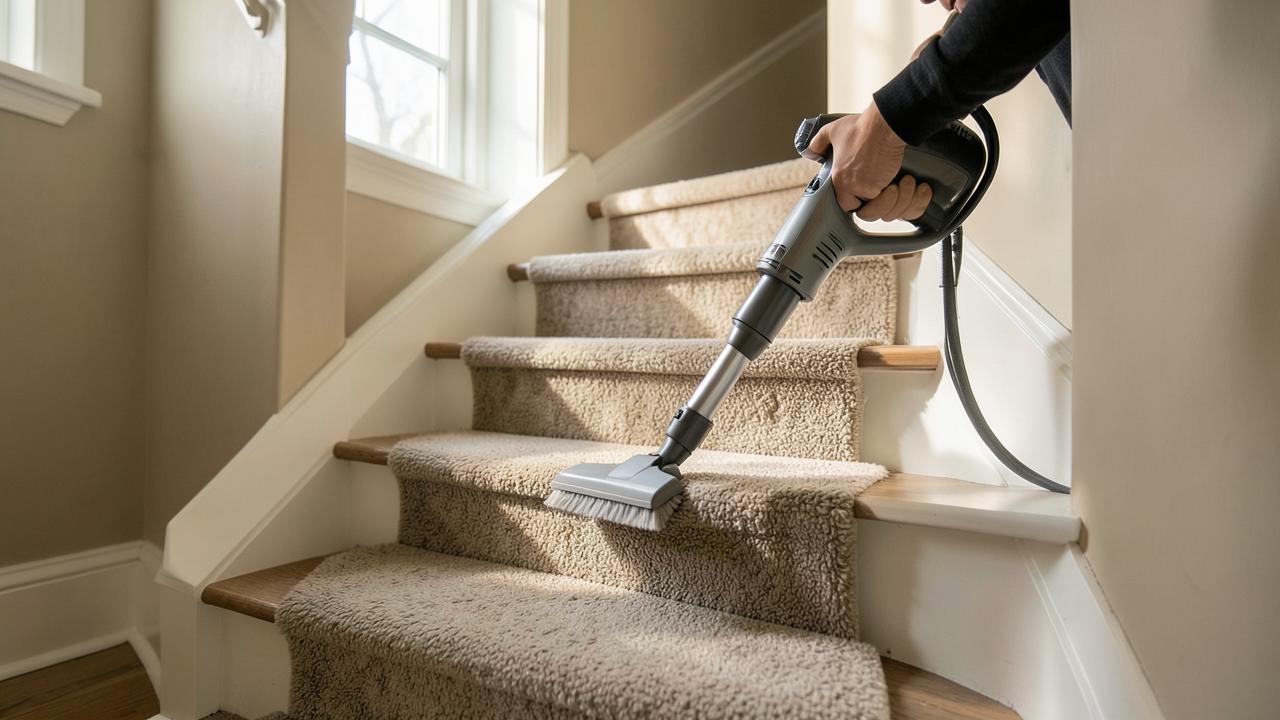 CareCleaning and Caring for a Stair RunnerRoutine vacuuming, spill response by fibre type, slipping and fraying, and when to call a professional.
- ComparisonsWool vs Synthetic Stair RunnersWool, nylon, polyester and polypropylene compared on stair-specific wear, cleaning, comfort and price.
- MaterialsCut Pile Stair Runners: Construction & PerformanceTechnical guide to cut pile stair runners. Learn about twist levels, crush recovery, tracking, and how to choose the right density for high-traffic stairs.