Installation method
The waterfall stair runner, explained
A waterfall installation is the softer, faster alternative to wrapping a runner tightly into every nosing — here is how it works, where it suits a staircase, and how to get it measured and fitted well.
Written by the StairRunner.co editorial team · Updated 4 September 2026
How the waterfall method actually works
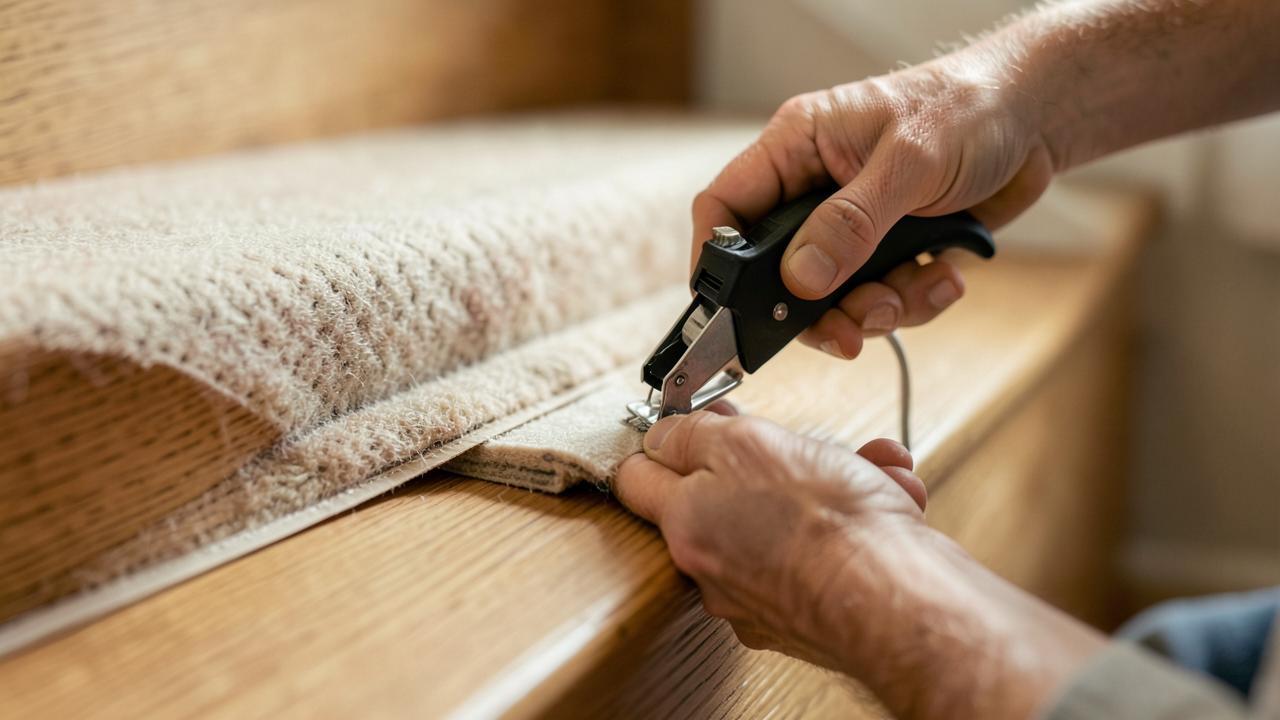
Every runner installation has to solve the same problem at each step: the carpet meets a right-angle change of direction at the tread nosing, and it is not stretchy enough to simply follow that curve without a fold or a fitting decision. In a waterfall installation, the fitter lets the carpet skip that shaping entirely. Rather than being worked into the crease behind the nosing, the runner runs off the edge of the tread and travels in a straight line down to the riser and the next tread, "falling" past the nosing rather than wrapping it. This is where the name comes from — the visual effect resembles a sheet of water falling from a ledge.
The result is a smooth, unbroken diagonal at every step rather than a crisply defined silhouette. It reads as softer and more contemporary than the alternative, tailored Hollywood method, which wraps the carpet over the nosing and into the crease so the shape of the tread is expressed clearly through the pile. We compare the two in detail in waterfall vs Hollywood installation; this guide focuses specifically on getting a waterfall installation right.
Which staircases suit it best
- Square-edged or minimally projecting nosings, where there is little shaping to lose by skipping it.
- Contemporary and pared-back interiors, where a crisp, tailored crease can look fussier than the rest of the house calls for.
- Thick, stiff carpet constructions that resist being forced tightly into a crease without buckling or showing stress marks.
- Straight flights, since a consistent tread depth is what keeps the diagonal drop looking even from step to step.
Where it is less successful
| Situation | Why waterfall struggles |
|---|---|
| Pronounced bullnose nosings | The shaping the nosing was designed to show is skipped over entirely |
| Winders and curved flights | Tread depth changes across the width, making the diagonal drop uneven |
| Very soft, deep pile carpet | The unsupported span at each nosing crushes and sags faster |
| Installations planning stair rods | There is no defined crease for a rod to sit in cleanly |
| Strongly patterned runners | Pattern can distort visibly across the diagonal drop |
Measuring for a waterfall installation
The underlying calculation — tread depth plus riser height, repeated down the flight, plus a nosing allowance and a top and bottom finishing allowance — is the same principle used for any runner. Waterfall typically consumes marginally less length per step than Hollywood because the diagonal path from nosing to nosing is shorter than the path that wraps around the nosing shape, but the difference is small and should not be relied on to significantly reduce a total order. Work through the specifics using our measuring guide and length calculator, and confirm with whoever is fitting the runner which method they have allowed for in their own measurement.
Underlay and pad choice
Standard stair pad is suitable under a waterfall installation, and the choice of thickness and firmness follows the same general guidance as any other stair runner — covered fully in our underlay guide. Some fitters favour a slightly firmer pad specifically at the nosing on a waterfall installation, on the reasoning that it reduces how far the unsupported diagonal span can flex underfoot, though this is a refinement rather than an essential requirement, and a good general-purpose pad will perform perfectly well for most households.
Fixing method
A waterfall runner is fixed in essentially the same way as any other: tack strip or staples secure it at the back of each tread, near the riser junction, and the runner is tensioned down the flight before fixing. The difference from Hollywood is simply that the carpet is not additionally worked into a tight crease at the nosing itself — it is allowed to run past it. The full fixing sequence, including the order of pad, tensioning and fixing, is set out in our stair runner installation guide.
Wear patterns and how to plan for them
Because the diagonal span between treads is not resting on anything solid, it is the part of a waterfall installation most likely to show wear first — typically crushing, a subtle sag away from a true diagonal, or a slightly rippled look developing over years of use, especially in the centre of the stair where footfall concentrates. This is a gradual cosmetic change rather than a safety failure in a properly fixed installation, but it is worth knowing about before choosing the method, particularly if you want the runner to look crisp for as long as possible. Denser, more tightly constructed piles resist this for longer than a soft, deep or loosely constructed one; see our materials guide for how different fibres and constructions behave under this kind of repeated flex.
Cleaning a waterfall runner
A waterfall installation has no defined crease trapping dust and grit the way a Hollywood fit does, which is a genuine practical advantage day to day. What it does have is an unsupported underside at each drop that can collect dust if never checked, since it sits slightly proud of the riser rather than pressed flush against it. An occasional check behind the drop, alongside the routine covered in our stair runner cleaning guide, keeps this from building up unnoticed.
Choosing pattern and pile for a waterfall fit
Because the carpet travels in a straight diagonal rather than following the exact geometry of each step, a strong directional or geometric pattern can appear to shift or distort slightly as it crosses each drop. A plain colour, a subtle tonal texture, or a small, non-directional repeat generally reads more cleanly on a waterfall installation than a large, precisely aligned motif. If a patterned runner is important to the scheme, review choosing a stair runner pattern alongside this guide before finalising the installation method, since pattern and method genuinely interact rather than being independent decisions.
Waterfall installation on landings and turns
A waterfall installation works most cleanly on a single straight flight, but many staircases include a landing or a turn partway up, and the method needs a little more thought at that point. Across a straightforward half-landing, the waterfall drop simply stops at the landing and resumes on the flight above, with the landing section itself fitted flat in the usual way. Where a flight turns using winders rather than a landing, waterfall becomes considerably harder to execute evenly, since the diagonal drop depends on a consistent tread depth that winders do not provide by their pie-shaped nature. In that situation, a Hollywood fit or a change of installation approach specifically through the winder section is usually the more reliable choice, even if the rest of the flight is fitted waterfall. See fitting a runner around winders and stair runners with a landing turn for how these transitions are usually handled.
Cost comparison in practice
Because a waterfall installation typically uses marginally less carpet than a Hollywood fit of the same flight and generally takes a fitter less time to complete, the total cost of a waterfall job is often somewhat lower, though the difference tends to be modest rather than dramatic on an average domestic staircase. The carpet itself costs the same regardless of how it will be installed, so the saving comes entirely from labour and the slightly reduced length required, not from any difference in the material's grade or price. If cost is the deciding factor between the two methods, ask your fitter for a like-for-like quote on both approaches for your specific staircase rather than assuming a fixed percentage saving, since the actual difference depends on the number of steps and the tread and riser dimensions involved.
Choosing a fitter experienced in waterfall installations
Not every carpet fitter works with waterfall installations as often as they work with the more traditional Hollywood method, and the technique benefits from a fitter who understands how to keep the diagonal drop consistent from step to step, particularly on a staircase where tread depth varies slightly. When briefing a fitter, ask to see photographs of previous waterfall installations they have completed, and check that they are confident working with the specific carpet construction you have chosen, since a stiffer or thicker pile behaves differently across the unsupported span than a thinner one. See stair runner installation for what a professional fitting should generally include.
Deciding between waterfall and Hollywood for your own stairs
There is no universally correct answer between the two methods; the right choice depends on the staircase, the carpet chosen, and the character of the house. A period property with a shaped, traditional nosing generally suits the more tailored Hollywood look, while a contemporary staircase with plain, square-edged treads and a simpler overall scheme often suits the softer waterfall line just as well, at slightly lower fitting cost. Read both this guide and waterfall vs Hollywood installation together before briefing a fitter, and ask to see examples of their previous work using whichever method you settle on.
Frequently asked questions
- What exactly is a waterfall stair runner?
- It describes an installation method rather than a product: the runner leaves the front edge of one tread and drops in a straight diagonal line to the face of the next, rather than being pressed into the crease behind the nosing. The runner itself can be any material or pattern; waterfall is simply how it is fitted.
- Is a waterfall runner cheaper than a Hollywood one?
- Material cost is broadly the same, since both methods use a similar width of carpet. Waterfall typically uses marginally less length and takes less fitting time, which can make the total job slightly less expensive, but the difference comes from labour and quantity rather than the carpet being a lower grade.
- Does a waterfall runner wear out faster?
- The unsupported diagonal span at each nosing is more exposed to crushing and sagging than a fully supported Hollywood fit, particularly with a soft, deep pile. A dense, firmer pile resists this for longer, which is why waterfall installations are often paired with sturdier carpet constructions.
- Can any staircase have a waterfall runner fitted?
- Most straight flights can. It is less successful on staircases with a pronounced, deep nosing designed to be seen, since the waterfall drop skips over that shaping entirely, and it does not suit winders well because the diagonal drop needs a consistent tread depth to look even.
- Do I need special underlay for a waterfall installation?
- Standard stair pad works for either method. Some fitters prefer a slightly firmer pad under a waterfall runner specifically at the nosing, to reduce how much the unsupported span can flex, but this is a refinement rather than a strict requirement.
- Can stair rods be used with a waterfall runner?
- Not comfortably. Rods are designed to sit in a defined crease, which a waterfall installation does not create in the same way, so a rod fitted to a waterfall runner often looks and sits awkwardly. Rods suit Hollywood installations far better.
- How do I know if my existing runner is fitted waterfall or Hollywood?
- Look at a few treads from the side. If the carpet clearly wraps the rounded front edge of the nosing and dips into a crease before running flat, that is Hollywood. If it leaves the tread at a fairly sharp angle and travels in a straight line to the next tread without following the nosing shape, that is waterfall.
- Can a waterfall runner be used through winders or a turn in the stairs?
- It works cleanly on straight flights and across simple half-landings, but is much harder to execute evenly through winders, since the diagonal drop depends on consistent tread depth. Many fitters switch approach specifically through a winder section even when the rest of the flight is fitted waterfall.
- How much cheaper is a waterfall installation in practice?
- Usually only modestly cheaper than Hollywood, since the carpet cost is identical either way. The saving comes from slightly reduced length and shorter fitting time, and the actual figure depends on your specific staircase, so ask for a like-for-like quote on both methods if cost matters to your decision.
Related guides
 MeasurementHow to Measure for a Stair RunnerThe tread-plus-riser formula, waste allowance, winders and landings, plus a calculator that shows its working.
- InstallationHow to Install a Stair RunnerWaterfall and Hollywood methods, staples versus rods, tools, sequence and quality checks.
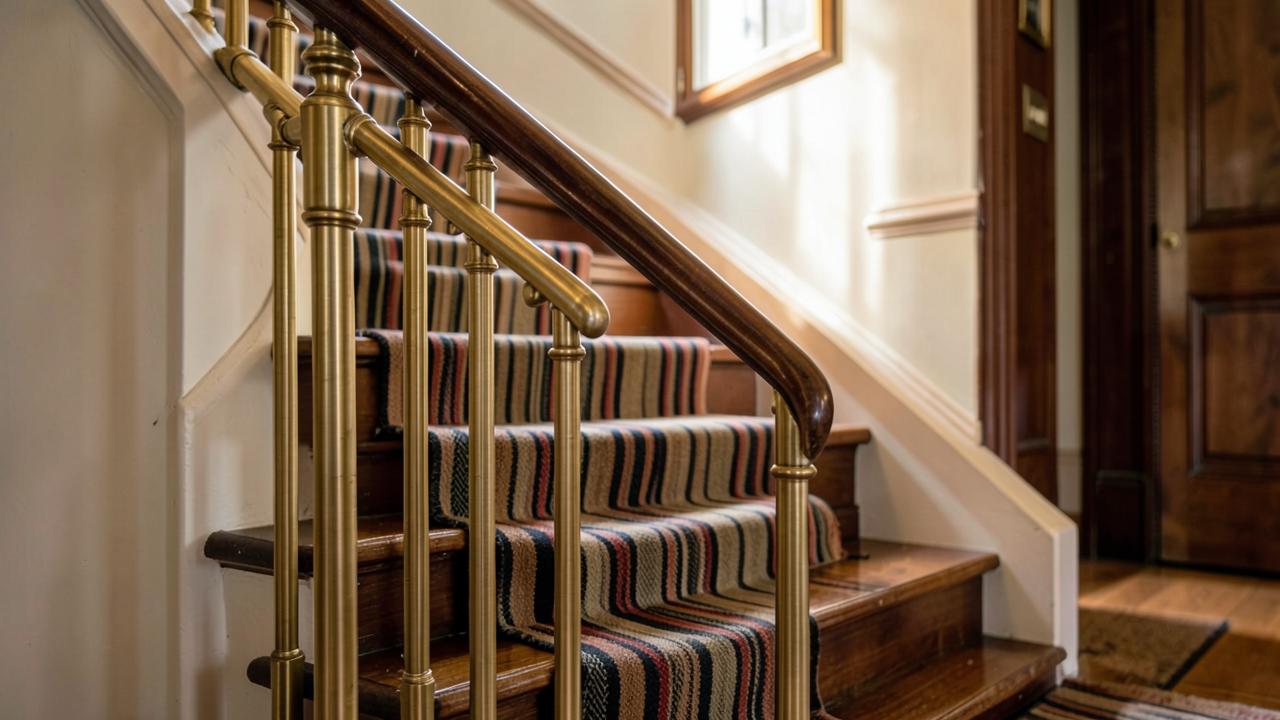 InstallationStair Rods, Clips and Runner HardwareHow stair rods, clips, brackets and bars actually work, when they hold a runner and when they are decorative.
- ComparisonsWaterfall vs Hollywood InstallationThe two ways a runner meets the tread nosing, and what each means for looks, wear and material use.