Style Guide
Art Deco stair runners: A guide to period glamour
The Art Deco movement brought a sense of luxury, geometry, and modernism to the early 20th century. Today, bringing this aesthetic to your staircase creates a powerful first impression that balances historical weight with contemporary sharpness.
Written by the StairRunner.co editorial team · Updated 4 September 2026
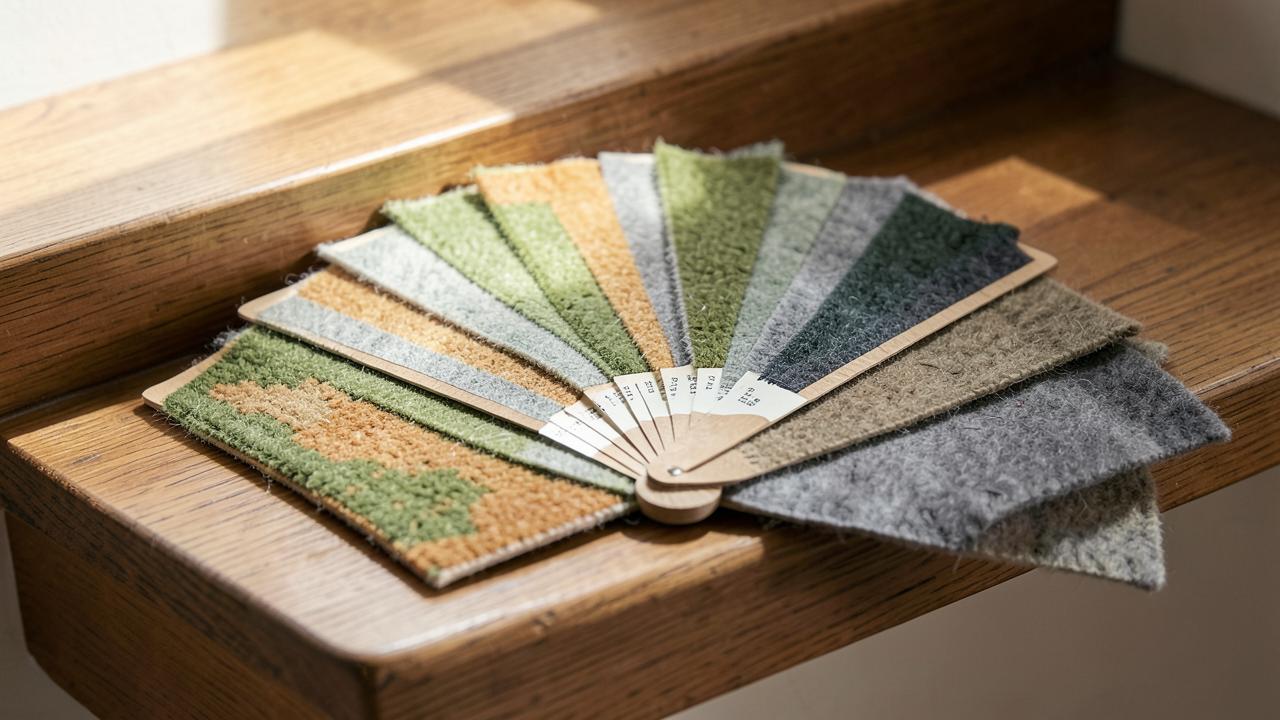
The Art Deco Aesthetic on the Flight
Art Deco is not merely a single pattern; it is a philosophy of design that emerged in the 1920s and 30s, celebrating the machine age through symmetry, repetition, and expensive materials. When applied to a staircase, this style transforms a functional transitional space into a central architectural feature. Unlike the organic curves of Art Nouveau, Deco is about the line and the angle. This makes it particularly suited to the structure of stairs, where the repeated rhythm of treads and risers naturally complements the geometric motifs of the era.
Selecting a runner in this style requires a focus on visual balance. The staircase is often the first thing guests see upon entering a home, and an Art Deco design makes a definitive statement about the property's character. Whether you are restoring a period townhouse or adding character to a modern build, the principles of Deco—glamour, order, and luxury—provide a robust framework for interior design. The verticality of the stairs serves as a perfect canvas for the upward-reaching lines common in Deco architecture, such as the famous ziggurat or skyscraper motif.
Key Pattern Characteristics
The patterns most associated with the Art Deco movement are those that draw from architecture and industry. On a stair runner, these patterns need to be scaled correctly to ensure they are visible on both the horizontal tread and the vertical riser. Small, intricate patterns can sometimes get 'lost' in the shadow of the nosing, while overly large patterns might be cut off awkwardly by the width of the flight.
- Sunbursts and Fans: Perhaps the most iconic Deco motif, these work best on landings or as a central feature on a wide flight. They represent optimism and the dawn of a new age.
- Chevron and Herringbone: These patterns provide a sense of movement and direction, drawing the eye upwards. They are particularly effective at making a narrow staircase feel more dynamic and purposeful.
- Stepped Pyramids: Mirroring the Ziggurat architecture of the time, these geometric repeats add a sense of architectural depth to the carpet, making each step feel like a structural element.
- Parallel Lines and Borders: Sometimes a simple, high-contrast double border on a plain field is all that is needed to evoke the Deco spirit. This mimics the 'streamline moderne' offshoot of the style.
Material Selection for Luxury and Durability
In the original Deco period, luxury was paramount. While we now have to balance aesthetics with the practicalities of modern foot traffic, the choice of material remains crucial. For stairs, durability is the primary concern, as the 'nosing' (the edge of the step) takes the brunt of the wear.
Wool is the gold standard for Art Deco runners. It takes dyes beautifully, allowing for the deep blacks and vibrant golds essential to the palette. A wool Wilton weave is particularly suited to these designs because the weaving process allows for intricate patterns to be created without sacrificing the density of the pile. This density is what prevents the 'grinning' of the carpet—where the backing shows through as the carpet bends over the nosing. You can read more about this in our guide to wool stair runners.
Beyond wool, some modern Deco-style runners incorporate 'art silk' (viscose or lyocell) to add a metallic-like sheen. While beautiful, these should be used sparingly or as accents, as pure viscose lacks the resilience of wool for stair use. A blend of 80% wool and 20% nylon is often the best practical compromise for a busy family home.
The Role of Contrast and Colour
The Art Deco palette is famously bold. In a hallway, where natural light might be limited, the choice of colour can significantly impact the feel of the space. High contrast—pairing a very dark tone with a very light one—is a hallmark of the style.
| Primary Colour | Accent/Border | Visual Effect |
|---|---|---|
| Midnight Black | Antique Gold or Brass | Maximum glamour; works best with warm, theatrical lighting. Highly dramatic. |
| Silver Grey | Charcoal or Black | Sophisticated and cool; suits modern homes with chrome fixtures and monochromatic art. |
| Emerald Green | Cream or Gold | Rich and historic; provides a natural pop of colour in a neutral hall. Evokes the Great Gatsby era. |
| Cream / Ivory | Black or Navy | Classic 'piano key' contrast; opens up small, dark stairwells by reflecting more light. |
| Dusky Pink | Copper or Rose Gold | A modern take on Deco; softer and more feminine while maintaining geometric rigour. |
Finishing with Rods and Brackets
No Art Deco staircase is complete without the hardware. Stair rods in the 1920s moved away from the ornate Victorian styles toward cleaner, more industrial lines. If your runner features silver or grey tones, chrome or polished nickel rods are the natural choice. These metals reflect light and add a 'machine-age' polish to the installation.
For warmer palettes involving golds, creams, or greens, polished brass provides a traditional yet opulent finish. The shape of the finial (the decorative end of the rod) is where you can truly lean into the Deco theme. Look for hexagonal, square, or stepped finial designs rather than the standard ball or acorn. For a deeper dive into hardware, visit our stair runner rods guide. The rods also serve a functional purpose in a Deco setting, as they emphasize the horizontal line of the tread, reinforcing the rhythmic geometry of the pattern.
Installation Considerations for Geometric Patterns
Installing a patterned runner requires significantly more precision than a plain one. With Art Deco designs, the central motif must be perfectly aligned with the centre of each tread. If the pattern is even a few millimetres off, the entire flight will look skewed. This is particularly noticeable with patterns like 'sunbursts' or large central diamonds.
Winder stairs (steps that turn a corner) present a particular challenge. Because the steps are narrower on one side than the other, a continuous pattern will naturally distort as it turns. Professional fitters handle this by 'mitring' the carpet—cutting and joining it at an angle to maintain the pattern's logic. This requires extra material and a high level of skill. When planning your budget, ensure you account for the additional complexity of a patterned installation, which you can estimate using our stair runner cost guide.
Lighting for Dramatic Effect
Art Deco interiors were designed to be seen. On a staircase, the lighting should accentuate the rhythm of the steps and the texture of the runner. Recessed wall lights at floor level can cast dramatic shadows across the treads, highlighting the geometric pattern. Alternatively, a central chandelier in a glass or chrome finish can act as a companion piece to the runner, tying the whole vertical space together.
Consider the reflectivity of your materials. If you have chosen a runner with a slight sheen or metallic-effect yarn, directional lighting will make these elements 'pop'. Conversely, if you have a very dark, matte runner, you will need higher levels of ambient light to ensure the staircase remains safe and the pattern is visible. The goal is to create a 'chiaroscuro' effect—the interplay of light and dark that defines the Deco mood.
Maintaining the Deco Look
Because Art Deco runners often rely on sharp contrasts and deep colours, they can be unforgiving when it comes to lint and dust. A black runner will show every speck of light-coloured fluff, while a cream runner will highlight dark soiling.
- Daily Care: Use a vacuum with a brush bar for wool runners to lift dirt from the base of the pile. This prevents the fibres from looking dull.
- Spot Cleaning: Deal with spills immediately. High-contrast borders can 'bleed' if saturated, so blotting is essential. Never rub, as this can distort the pile direction and ruin the clean lines of the pattern.
- Professional Maintenance: Have the runner professionally cleaned every 12-18 months to maintain the vibrancy of the colours. This is especially important for maintaining the 'pop' of gold or silver accents.
Detailed advice on keeping your investment looking its best can be found in cleaning and caring for a stair runner.
Sizing and Proportions: The Importance of the Margin
The width of an Art Deco runner is critical to its success. Too narrow, and it looks like a strip of tape; too wide, and it loses the 'frame' provided by the exposed timber of the stairs. Typically, leaving 5cm to 10cm of visible stair on either side provides the best balance. This 'margin' acts as a secondary border, framing the geometric pattern of the carpet.
In a period home, the colour of the timber margin should complement the runner. Dark, polished mahogany or oak works beautifully with gold and black runners, while white-painted stairs provide a crisp backdrop for grey or pastel Deco designs. If you have a particularly wide staircase, you might consider a wider runner with a complex multi-stripe border. For narrow cottage stairs, a simpler central motif with a single dark edge binding often works best. Learn how to calculate the perfect dimensions in choosing the right runner width.
Comparing Deco with Other Period Styles
It is worth distinguishing Art Deco from the Victorian and Edwardian styles that preceded it. Victorian runners were often heavily floral or featured small, repeating oriental motifs in reds and navys. Edwardian styles were lighter and more airy but still leaned towards the organic. Deco was a clean break—it was the first truly 'modern' style for the mass market.
When choosing a runner, consider the 'bones' of your house. An Art Deco runner in a strictly Victorian hallway can work if there are other modern elements to bridge the gap, but it is easiest to implement in houses built between 1920 and 1950, or in brand-new builds where the architecture is minimal enough to allow the runner to set the tone.
Transitioning to Landings: A Detailed Approach
One common error is over-complicating the space. If the stair runner is a bold, geometric Art Deco piece, the wallpaper and artwork in the hallway should probably be more restrained. You want the staircase to be the hero of the space, not one of many competing patterns. The landing is the final act of this theatrical installation.
The runner shouldn't just stop abruptly at the top of the flight. It should either transition into a matching landing carpet or be finished with a neat, bound edge that aligns with the architectural lines of the floor. For a seamless look, many people choose to have the same pattern continued as a 'landing runner' that leads to the main doors. This reinforces the sense of direction and luxury. For more on this, see stair runners on landings.
Detailed Material Specifications: Ply and Twist
When looking at Art Deco runners, you will often see terms like '2-ply' or 'twist'. For a Deco look, a 'velvet' or 'smooth' finish is often preferred over a rugged twist, as it allows the geometric lines to appear sharper. A high-density velvet pile in wool provides that distinctive 1920s lustre and feels incredibly soft underfoot.
However, velvet piles can show 'shading' or 'watermarking' where the pile is pushed in different directions. In a Deco context, some people find this adds to the luxury feel, while others prefer the uniform look of a dense Wilton. Ensure you discuss these options with your supplier to match your expectations of how the carpet will look after six months of use.
The Architectural Impact of the Runner
Finally, consider the runner as an architectural tool. An Art Deco design with strong vertical stripes can make a low-ceilinged hallway feel taller. A design with horizontal 'bars' or ziggurats can make a very narrow flight feel wider and more substantial. By choosing the right pattern, you aren't just decorating the stairs; you are actively improving the proportions of your home's entry point.
While Art Deco was at its peak a century ago, its resurgence in modern interior design is due to its versatility. It bridges the gap between the ornate traditions of the past and the minimalism of the future. In a modern home, an Art Deco runner provides 'soul' and architectural interest. In a period home, it feels authentic and grounded. When specifying a runner today, we have the advantage of modern fibres. While wool remains the classic choice, high-quality synthetics can now mimic the look of traditional weaves while offering improved stain resistance. This makes the Deco look accessible for busy family homes. You can compare these options in wool vs synthetic stair runners.
Frequently asked questions
- What defines an Art Deco stair runner?
- Art Deco runners are characterised by bold geometric shapes, symmetry, and high-contrast colour palettes. Look for sunburst patterns, stepped pyramids, zig-zags, and metallic accents, often executed in high-quality wool or silk blends.
- Which stair rods suit Art Deco interiors?
- Chrome, nickel, and polished brass are the primary choices. Look for 'finial' designs that feature stepped or geometric shapes rather than traditional spheres or acorns to maintain the period authenticity.
- Can Art Deco patterns work on winder stairs?
- Yes, but they require expert planning. Geometric patterns can become distorted on turns. A skilled fitter will often use a 'mitred' join on winders to ensure the pattern flows logically rather than becoming a disorienting jumble of lines.
- What colours are typical for this style?
- Deep blacks, rich golds, silver greys, and cream tones are classic. Modern interpretations also include emerald greens, navys, and dusky pinks, usually paired with a sharp, contrasting border.
- Is an Art Deco runner practical for high-traffic areas?
- If specified in a high-grade wool Wilton or Axminster weave, yes. These methods allow for complex patterns while maintaining the structural integrity needed for stairs. Avoid delicate silks in the main traffic lane.
- Do I need a specific type of underlay for a patterned runner?
- A firm, high-density rubber or felt-and-rubber crumb underlay is best. It prevents the runner from shifting, which is vital for keeping geometric patterns aligned and straight.
Related guides
 InstallationStair Rods, Clips and Runner HardwareHow stair rods, clips, brackets and bars actually work, when they hold a runner and when they are decorative.
 DesignStair Runner Patterns ExplainedHerringbone, chevron, stripes, plaid, geometrics and animal prints judged by how they behave on a staircase.
- DesignChoosing a Stair Runner ColourHow light, adjacent flooring, trim colour, traffic and dirt should drive the colour decision.