Patterns
Leopard print stair runners
The leopard print stair runner is a design classic that manages to be both bold and surprisingly practical. Here is how to navigate pattern matching, scale, and long-term wear for your hallway.
Written by the StairRunner.co editorial team · Updated 4 September 2026
The Enduring Appeal of Leopard Print
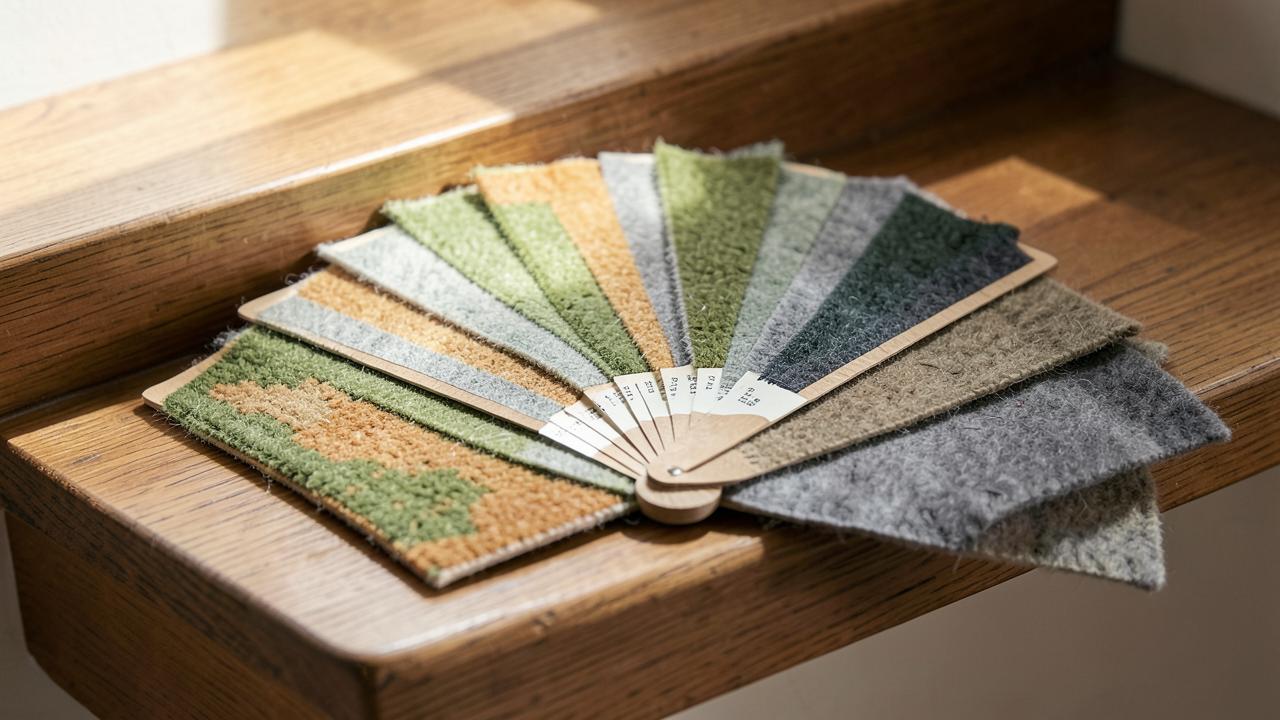
In the world of interior design, few patterns carry the same weight of history and versatility as leopard print. Often referred to as "fashion's neutral," leopard print has transitioned from the wardrobes of the 1950s into the most sophisticated homes of the 21st century. On a staircase, it serves a dual purpose: it acts as a visual focal point that defines the architecture of the flight, and it provides a functional mask for the realities of domestic life.
Unlike a solid-coloured carpet, which can feel flat and uninspiring, a leopard runner adds a layer of texture and complexity. The reason it works so well in hallways is the nature of the space itself. Hallways are transitional zones; they are the connectors between rooms, and they are usually the first thing guests see. A bold choice here sets a tone of confidence and style without the risk of overwhelming a living space where you spend hours resting.
The organic nature of the leopard motif is its greatest strength on stairs. Most staircases in the UK, especially in older Victorian or Georgian properties, are not perfectly straight. Treads might have a slight slope, and risers might not be perfectly vertical. When you install a geometric pattern, like a grid or a precise stripe, these architectural imperfections become glaringly obvious. Leopard print, however, flows over these irregularities, concealing them within its naturally irregular spots.
| Criteria | Leopard Print Runner | Solid Colour Runner |
|---|---|---|
| Dirt Camouflage | Excellent; multi-tonal spots hide mud and dust | Poor; highlights even small amounts of debris |
| Wear Visibility | Low; broken pattern hides pile crushing in the traffic lane | High; "shading" or crushing is immediately visible |
| Installation Forgiveness | High; organic pattern hides minor alignment issues | Low; requires mathematical precision |
| Pet Hair Management | Very High; hides most shades of fur | Very Low; high contrast against most fur colours |
Understanding Pattern Scale and Proportions
Choosing the right leopard print is not just about the colour; it is about the scale. The "scale" refers to the size of the individual spots and the distance between them. This decision is critical because it dictates how the runner will interact with the width of your stairs and the height of your ceilings.
For a standard UK staircase (typically around 80cm to 90cm wide), a mid-scale print is generally the most successful. This means the individual spots are roughly the size of a two-pound coin or slightly larger. If the spots are too small, the runner can look like a solid brown or grey from a distance, losing the impact of the print. If they are too large, you might only see three or four spots across the width of the runner, which can feel clumsy and out of proportion.
In larger, grander homes with wider staircases (120cm or more), you have the freedom to go with a much larger scale. A large-scale leopard print can feel incredibly luxurious and modern, whereas a tiny print on a wide staircase might look under-scaled. Always consider the "white space" or "ground" between the spots as well. A dense print with very little ground showing will hide more dirt, while a sparser print with more background showing can feel more airy and less "heavy."
Fibre Choices: Wool, Nylon, or Polypropylene?
The fibre you choose will determine how the pattern looks and how it wears over the next decade. Leopard prints are available across all major fibre types, each with its own set of trade-offs.
Wool: The Traditional Choice
Wool is the gold standard for patterned carpet. It has a natural elasticity that allows it to spring back after being stepped on, which is vital in the high-pressure environment of a staircase. Wool also absorbs dye deeply and evenly, resulting in rich, sophisticated tones of amber, chocolate, and charcoal. Furthermore, wool is naturally fire-retardant and has a protective outer layer that helps repel liquids. However, wool is more expensive and requires specialist cleaning products.
Solution-Dyed Nylon: The Modern Performer
Nylon is incredibly durable and is often the best choice for very busy households with pets and children. Modern "solution-dyed" nylon means the colour is added to the liquid polymer before the fibre is even created, making it virtually impossible to bleach or fade the pattern. A nylon leopard print will retain its crispness and colour even in the face of aggressive cleaning.
Polypropylene: The Budget-Friendly Option
Polypropylene is a popular choice for those looking for the look of a leopard print at a lower price point. It is highly stain-resistant—often marketed as "bleach cleanable"—which makes it great for dealing with muddy paws. However, polypropylene has less "memory" than wool or nylon, meaning the pile can flatten more quickly in the traffic lane. If choosing polypropylene, look for a dense, low-pile construction to mitigate this.
The Technical Art of Pattern Matching on Stairs
Installation is where a leopard runner either succeeds or fails. Because the runner is a long, continuous strip of carpet, the installer must ensure it stays perfectly centred and aligned.
The most difficult part is the "turn" or "winder" steps. These are the triangular steps found on staircases that change direction. In these areas, the runner must be cut and mitred or carefully folded to follow the curve. A pattern like leopard print requires a steady hand here; the goal is to keep the flow of spots looking natural as the carpet changes angle. A poor installation will show a sharp "break" in the pattern, which can ruin the visual flow.
Even on straight flights, the installer must be careful not to "stretch" the pattern unevenly. If one side of the runner is pulled tighter than the other, the pattern will start to slant. While leopard print is more forgiving than stripes, a significant slant will still be visible to the discerning eye. Always ensure your installer has experience with patterned runners specifically. You can read more about the process in stair runner installation.
Visual Balance: Styling the Hallway
A leopard print runner is a "maximalist" choice, even if the rest of your home is minimalist. To make it work, you need to think about visual balance.
Wall Colours: Neutral walls are the safest and often the most elegant pairing. Soft whites, warm beiges, or even light greys allow the pattern of the runner to speak. If you want to be more daring, consider a dark, moody wall colour like navy, forest green, or charcoal. These colours complement the dark spots in the leopard print and create a high-drama, "jewel-box" effect in the hallway.
Flooring Transitions: How the runner meets the flooring at the top and bottom of the stairs is crucial. If you have wood floors, ensure the stain of the wood doesn't clash with the "ground" colour of the leopard print. If the runner has a lot of orange or yellow tones, a very red-toned mahogany floor might look busy. A neutral oak or a dark walnut usually works best.
Lighting: Lighting can change the appearance of an animal print significantly. In low light, the pattern can become muddy and lose its definition. Use directional spotlighting or a statement chandelier to highlight the texture and depth of the runner. The interplay of light and shadow on the pattern as it moves up the stairs adds a sense of movement to the space.
Practical Longevity: Underlay and Safety
What is under the runner is just as important as the print itself. A high-quality underlay is non-negotiable for stairs. It provides the necessary cushioning to protect the carpet backing from the hard edges of the wooden treads. For leopard runners, a firm, high-density crumb rubber or a premium felt-and-rubber combination is ideal. Avoid cheap, soft foam underlays, as they allow too much movement, which can cause the pattern to distort and the carpet to stretch.
Safety is another concern. Any runner, regardless of the pattern, must be securely fastened. For a leopard print, you might consider adding stair rods. Brass or antique bronze rods look particularly stunning against the warm tones of an animal print, adding a layer of traditional hardware that grounds the bold pattern. For more on this, see stair runner rods and our guide on non-slip stair runners.
Maintaining the Look: Cleaning and Grooming
While leopard print is famous for hiding dirt, that doesn't mean it doesn't need care. The primary enemy of any stair runner is grit. Tiny particles of sand and dirt act like knives, cutting through the carpet fibres as you walk on them.
- Vacuuming: Use a vacuum with a brush bar (beater bar) for wool or synthetic cut-pile runners. This helps to lift the pile and extract the grit from deep within the carpet. Vacuum the stairs at least twice a week.
- Spot Cleaning: Deal with spills immediately. Blot, never rub. Rubbing a leopard print can distort the pile and create a permanent "blurry" spot in the middle of the pattern. Use a cleaning agent recommended by the manufacturer.
- Professional Cleaning: Once every 12 to 18 months, have the runner professionally deep-cleaned using a hot water extraction method (if appropriate for the fibre). This will refresh the colours and lift the pile in the traffic lane.
For more detailed advice on maintaining your runner, visit our cleaning and maintenance section.
Common Myths About Leopard Print Runners
There are several misconceptions that often deter people from choosing this pattern. Let's debunk a few:
- "It will go out of style next year." Leopard print has been a staple of high-end interior design for decades. It is a classic, not a fad. While its popularity peaks and troughs, it never truly disappears.
- "It is only for 'loud' personalities." Leopard print can be surprisingly subtle. A greyscale leopard print (black and grey spots on a white or light grey ground) is very understated and works perfectly in modern, monochrome homes.
- "It is impossible to repair." If a small section of the runner is damaged (e.g., by a pet), a skilled carpet repairer can often "patch" in a new piece. Because the pattern is organic, the repair is usually much harder to spot than it would be on a plain or geometric carpet.
Selecting the "Ground" Colour
The "ground" is the background colour upon which the spots are printed. This colour determines the overall "temperature" of your hallway.
| Ground Colour | Atmosphere | Best Paired With |
|---|---|---|
| Golden Tan/Ochre | Warm, traditional, opulent | Dark wood, brass hardware, warm whites |
| Cool Grey/Silver | Modern, chic, understated | Chrome hardware, cool whites, black accents |
| Cream/Ivory | Light, airy, feminine | Light oak, pastel accents, bright spaces |
| Deep Cocoa/Brown | Moody, cosy, grounding | Antique furniture, moody lighting, copper |
Pattern Matching: The Bottom and Top of the Stairs
A frequent point of confusion is how the pattern should look when it meets the landing. Should the pattern continue across the landing, or should it stop at the top step?
Most designers recommend that if you are using the same carpet for the landing, the pattern should flow seamlessly from the stairs onto the flat surface. This creates a cohesive look and makes the space feel larger. However, if you are transitioning to a different flooring (like wood or a plain carpet) on the landing, the runner should be neatly finished at the top riser. The transition should be clean and secure to prevent tripping. You can learn more about these transitions in our guide to the top of the stairs.
The Impact of Bordering
Some leopard print runners come with a built-in border, while others are "all-over" prints that are finished with a separate binding. A black or dark brown border can help "frame" the leopard print, making it feel more contained and structured. This is a great option if you want to tame the wildness of the pattern. On the other hand, an all-over print that goes right to the edge of the runner feels more modern and expansive.
If you choose to have a custom border added, ensure the binding material is durable. Cotton herringbone tape is a classic choice for borders, but for stairs, a synthetic or wool-mix binding will typically last longer and resist fraying better.
Final Thoughts on the Leopard Choice
Investing in a leopard print stair runner is a commitment to a specific aesthetic, but it is also a very logical choice for the high-traffic reality of a home. It bridges the gap between high design and high utility. By choosing the right scale, the right fibre, and ensuring a professional installation, you create a feature that will serve your home for many years.
Before you make your final decision, take the time to look at your hallway at different times of the day. Consider how much natural light the space gets and how the pattern will look from the top of the flight looking down. If you are still exploring patterns, you might also be interested in our guides on striped stair runners or the more understated general pattern guide.
Ultimately, a leopard runner is about bringing a bit of the extraordinary into the everyday. It is a choice that rewards the brave and simplifies the lives of those who have to clean and maintain the home.
Frequently asked questions
- Does leopard print show dirt on stairs?
- Remarkably little. Because the print is naturally organic and multi-tonal, it camouflages mud, pet hair, and common household dust much better than a solid-coloured carpet ever could. This makes it a prime candidate for high-traffic entrances.
- How do you match leopard print on stairs?
- Professional installers use 'pattern matching' or 'pattern alignment' to ensure the spots line up correctly at each riser and over the nosing. Always allow for an extra 10-15% of material at the ordering stage to ensure there is enough pattern repeat for a seamless transition.
- Is leopard print too bold for a hallway?
- Leopard print functions as a neutral in many classic interiors. When used as a runner, it draws the eye and anchors the space, making it a sophisticated choice rather than an aggressive one, provided the rest of the hallway is relatively restrained in its use of competing patterns.
- What fibre works best for animal print runners?
- Wool or high-quality wool blends are traditional for leopard prints, as they hold the depth of the pattern well. For high-traffic family homes, solution-dyed synthetics like nylon or polypropylene are now available in excellent animal prints, offering better stain resistance and easier cleaning.
- Does the scale of the print matter for small stairs?
- Yes. Larger, more dramatic spots work well in grand, wide staircases, while smaller, more traditional 'oatmeal' style spots are often more forgiving and timeless in narrow, standard flights. A mid-scale print is usually the safest bet for most UK homes.
- How does leopard print handle the stair nosing?
- Because the pattern is non-linear, it is very forgiving at the nosing. Unlike stripes which can appear bent or crooked if the installation is off by a few millimetres, the organic spots of a leopard print flow over the edge naturally.
Related guides
 MaterialsStair Runner Materials ComparedWool, nylon, polypropylene, sisal and jute judged on stair-specific wear, comfort, cleaning and safety.
 DesignStair Runner Patterns ExplainedHerringbone, chevron, stripes, plaid, geometrics and animal prints judged by how they behave on a staircase.
- BuyingHow to Choose a Stair RunnerA decision order that starts with the staircase and ends with colour, not the other way round.