Styling
Wide stair runners: when full-width coverage works
A wide runner trades the framing effect of exposed timber for warmth and coverage. It suits some staircases well and overwhelms others — the difference is mostly about proportion, not taste.
Written by the StairRunner.co editorial team · Updated 4 September 2026
What "wide" means in practice
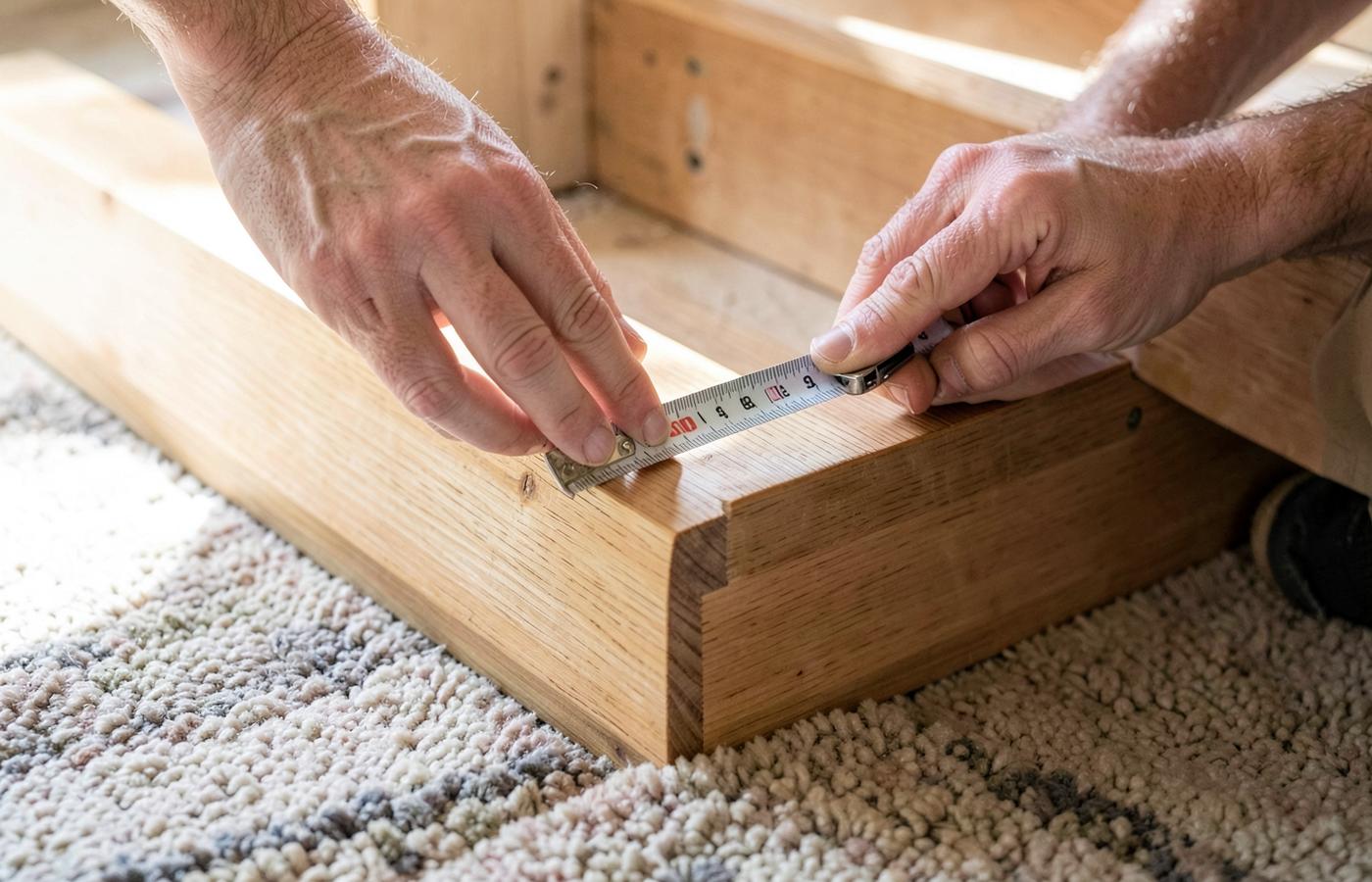
There is no industry-fixed threshold that separates a standard runner from a wide one. In practice, most fitters and suppliers start describing a runner as wide once the margin either side falls to around 75 mm (3 in) or less, because that is roughly the point at which the strip of exposed tread stops reading as a deliberate frame and starts reading as an afterthought. Below about 40–50 mm of margin, many staircases look better with a genuinely full-width fitted carpet than with a runner that is only nominally distinct from one.
A near full-width runner still usually leaves a narrow reveal of timber — sometimes as little as 20–25 mm — because a true edge-to-edge fit needs to be scribed tightly to an irregular string or skirting, which is harder to achieve neatly with a runner's finished edge or binding than with fitted carpet cut to size on site.
Why staircases suit wide runners for different reasons
Three separate motivations tend to push a household toward a wide runner, and it is worth being honest about which one applies, because it changes what else you should prioritise in the specification.
- Proportion. A genuinely wide staircase, especially one with a generous open string or a grand half-landing, can carry a wide runner without looking heavy, because the overall scale of the flight absorbs the reduced margin.
- Comfort and acoustics. More pile coverage means a softer, quieter stair, which matters in a busy household or one with young children learning to use stairs safely.
- Poor-quality treads. Where the exposed treads are an unremarkable softwood, previously painted, or damaged under an old fitted carpet, there is little reason to frame them. Covering more of the tread with carpet hides more of what would otherwise need refinishing.
Where a wide runner works against the staircase
| Staircase type | Wide runner effect |
|---|---|
| Narrow staircase (under ~800 mm) | Removes the margin that stops the flight looking like a corridor; usually better with a standard or narrow margin |
| Wide staircase (over ~1100 mm) | Can look proportionate and generous; the flight has enough scale to absorb a reduced margin |
| Restored period stair with feature timber | Works against the point of the restoration by hiding the timber it was meant to show off |
| Staircase with plain or damaged treads | A genuinely sensible use of a wide runner, since there is little worth exposing |
| Open string with decorative balusters | Can crowd the baluster line if the margin is too tight; check clearance before committing |
How width interacts with pattern and rods
A wide runner changes how a pattern reads across the tread, because a design intended to sit within a generous margin can look cramped once the margin shrinks. Large-scale patterns and borders in particular need to be checked against the actual chosen width rather than assumed to scale automatically — see stair runner patterns for how repeat and border width should be matched to the runner. If you are fitting with visible stair rods, a wider runner needs rods cut closer to the full tread width, and any existing rods from a previous, narrower runner will almost certainly need replacing rather than reusing.
Fitting considerations specific to wide runners
The fixing method for a wide runner is no different in principle from any other runner — gripper rods, staples, or decorative stair rods all still work — but a wider runner puts more material under tension across each tread, and a longer stretch between the two fixed edges means any inaccuracy in tensioning is more visible. On an open string, where one edge has nothing but the string itself to key into, a wide runner also leaves less spare timber to work with if the string is not perfectly straight, so a fitter needs to plan the margin line carefully before the first gripper goes down.
Winders present a particular challenge with wide runners, because the pie-shaped tread narrows sharply toward the newel post. A width that suits the straight flight can leave almost no margin at the narrow end of a winder tread, so it is worth checking the winder section specifically rather than assuming the straight-flight width carries through — see fitting a runner around winders.
Cost implications of going wide
A wider runner uses more carpet across the roll, which increases material cost roughly in proportion to the extra width. On a staircase wide enough that even the widest standard roll does not reach the desired margin, the options are a bespoke wider weave, a seamed installation, or accepting a slightly larger margin than originally planned. Ask a supplier directly what roll widths they can offer before finalising a wide-runner specification, since availability varies and a custom width can carry a lead time a stock width does not. Custom cut-and-bound runners are the usual route when a stock width will not stretch far enough.
Maintenance differences with a wide runner
A wider runner puts more pile in the direct traffic lane relative to the amount of exposed timber framing it, which means wear, flattening and soiling in the centre are proportionally more visible against a smaller amount of clean surrounding timber. This does not mean a wide runner wears out faster in absolute terms, but it does mean the visual consequences of skipping regular vacuuming show up sooner. A dense, durable pile matters at least as much on a wide runner as it does on a narrow one — arguably more, since there is less framing to distract the eye from a flattened traffic lane.
Choosing between wide and standard width: a short checklist
- Measure the actual clear tread width at its narrowest point, not an average.
- Assess whether the exposed timber is worth displaying, or is better mostly covered.
- Check baluster or newel clearance at the tightest point, especially on winders.
- Confirm the roll widths your chosen material is actually available in.
- Decide whether comfort and quiet underfoot, or timber display, matters more to the household.
Once you have settled on wide, standard, or somewhere between the two, work out the running length you will need to order using the stair runner length calculator, and cross-check your margin decision against the fuller method in what width should a stair runner be.
Wide runners and stair safety
A wider runner covers more of each tread's surface, which some households take as an automatic safety improvement. It helps at the margins of the tread where feet sometimes land off-centre, but the bigger safety factors on any staircase remain nosing coverage, secure fixing, and adequate grip underfoot rather than sheer width. A wide runner fitted loosely or without proper attention to the nosing wrap is not safer than a narrower one fitted well. If safety is the primary motivation for going wide, address fixing quality and pile grip first, and treat extra coverage as a secondary benefit rather than the main event.
Combining a wide runner with a landing or hallway run
Where a staircase runner continues onto a landing or into a hallway, a wide runner can make that transition feel more continuous, because the margin either side of the carpet stays narrow and consistent as the flooring changes from stair to level ground. This works well in houses where the hallway floor covering either side of the runner is plain, since a narrow margin draws less attention to any mismatch between the stair timber and the hallway material. See stair runner and landing carpet for how the transition itself should be handled, including where the join sits and how width should be kept consistent across it.
A note on resale and buyer perception
If you are considering the impact on a future sale rather than only your own taste, a wide runner reads as a deliberate, considered choice to most buyers, provided the timber it leaves exposed is in good condition and the fitting is neat. A wide runner over poorly finished or damaged treads reads differently — it can look like an attempt to hide a problem rather than a style decision, particularly if the exposed strip shows signs of the treads underneath needing attention. Where the underlying treads are not in good order, either address them before fitting or choose a genuinely full-width covering rather than a runner that leaves a narrow, unconvincing sliver exposed.
Getting a second opinion before you order
Because a wide runner is harder to reverse than a standard-width one — there is less spare timber margin to fall back on if you change your mind, and any refinishing of exposed treads done in anticipation of a narrow margin will need redoing — it is worth asking a fitter or supplier to look at the staircase in person before committing to a final width. Photographs and measurements convey a great deal, but proportion is genuinely easier to judge standing at the foot of the actual flight. Many suppliers will do this as a matter of course before quoting a bespoke width, and it is a reasonable step to insist on for any wide or near full-width specification, particularly on staircases with winders, unusual balusters, or a half-landing where several sightlines meet at once.
It is also worth revisiting the decision after living with a temporary marker for a few days. Tape or an offcut left in place through normal use, including walking up and down at the times of day the stairs see the most traffic, tends to reveal issues that a static look in daylight does not, such as how the margin appears under evening lighting or how a very narrow reveal of timber collects dust between cleans.
Frequently asked questions
- What counts as a wide stair runner?
- There is no fixed threshold, but a runner is generally considered wide once the margin either side drops below about 75 mm (3 in), and it is close to full width once it approaches the string or skirting with barely a visible strip of timber remaining.
- Does a wide runner make a staircase look bigger or smaller?
- It tends to make a narrow staircase feel more enclosed and cosy rather than bigger, because it removes the visual relief of exposed timber at the edges. On a genuinely wide staircase a wide runner can look proportionate and generous rather than cramped.
- Is a wide runner more expensive than a standard-width one?
- Usually yes, because it uses more material across the roll width and, on a very wide staircase, may need a seam or a wider bespoke weave that costs more than a standard stock width.
- Can a wide runner cover the whole tread edge to edge?
- It can, though a completely edge-to-edge fit is closer to fitted stair carpet than a runner, and it loses the framing effect that makes a runner read as a runner. Most wide runners still leave a narrow reveal of timber, even if it is only 25–40 mm.
- Do wide runners need different fixings?
- The fixing method is the same as any runner — gripper, staples or rods — but a wider runner puts more strain on gripper at the tread edges over a longer stretch, so accurate tensioning matters more, particularly on a wide open-string flight.
- Are wide runners harder to keep looking neat?
- A wide runner shows less contrast between carpet and timber, so any wear, flattening or soiling in the centre is more visible against the reduced amount of clean timber framing it. Regular vacuuming in the traffic lane matters more, not less.
Related guides
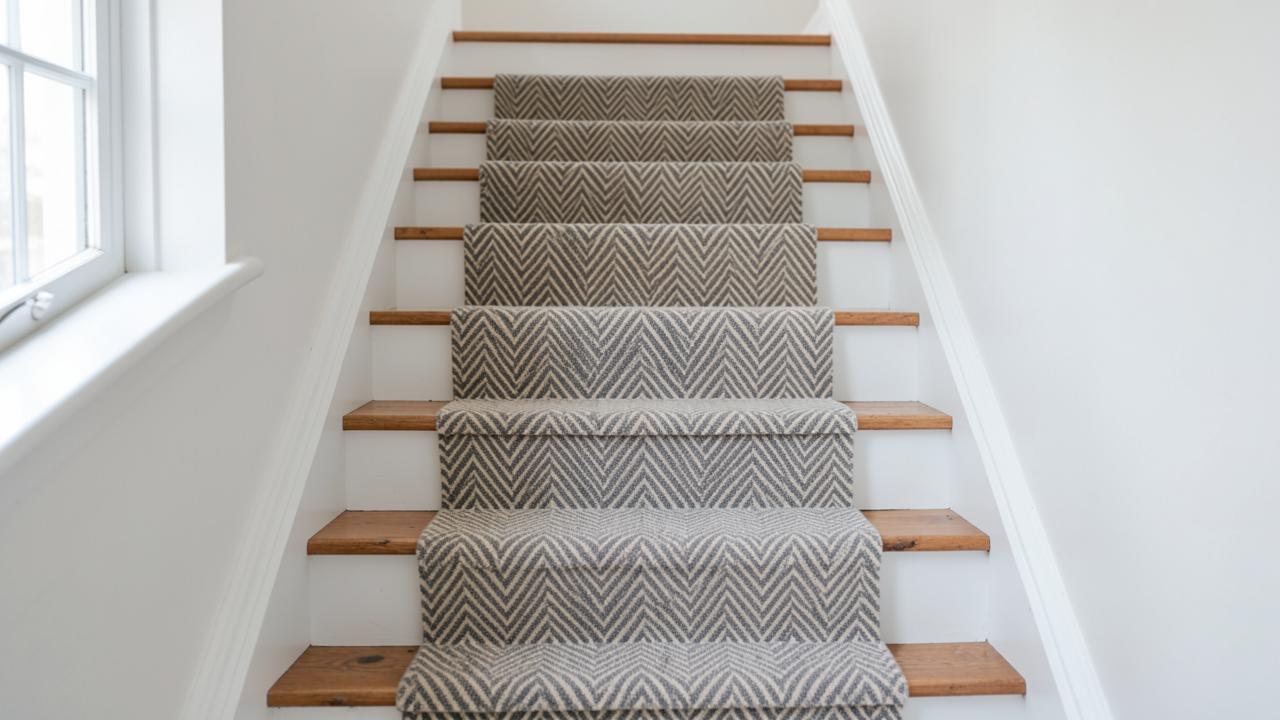 DesignStair Runner Patterns ExplainedHerringbone, chevron, stripes, plaid, geometrics and animal prints judged by how they behave on a staircase.
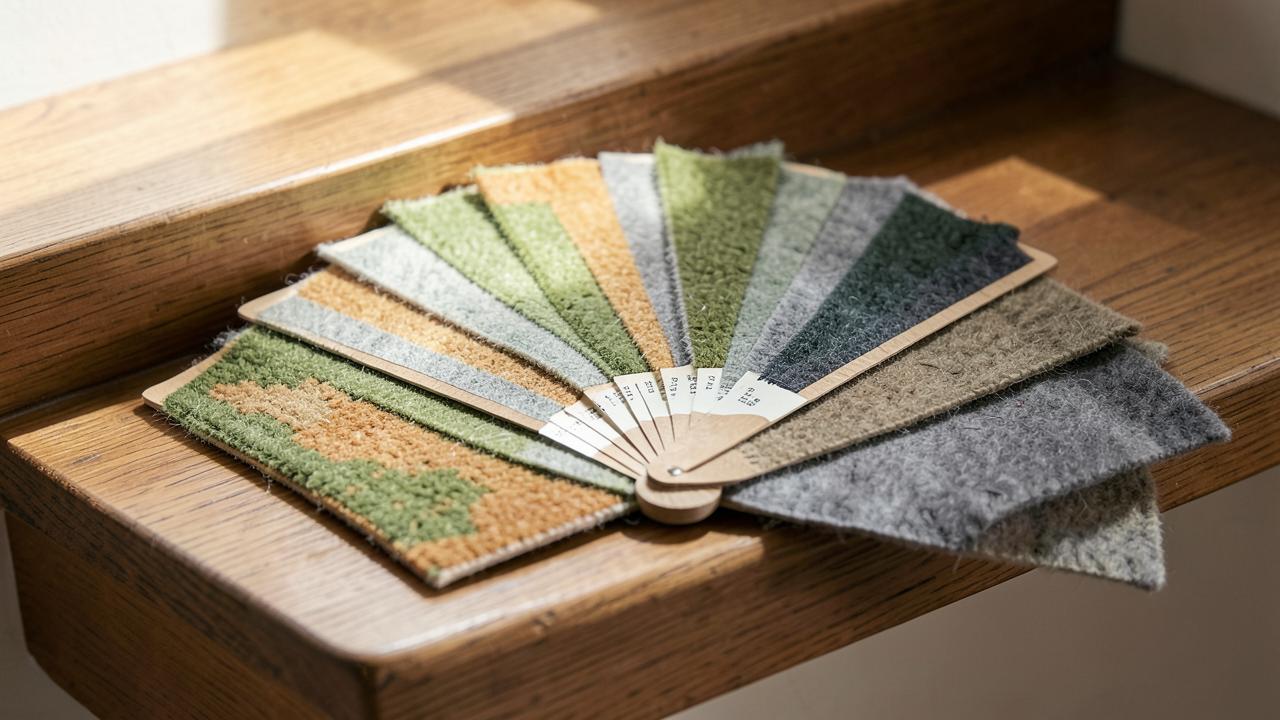 BuyingCustom Stair Runners and Carpet by the FootBroadloom cut to length, edge binding options, made-to-measure runners and what customisation really costs you.
- MeasurementWhat Width Should a Stair Runner Be?How to set runner width and side margins from your stair width, stringers, balusters and pattern.
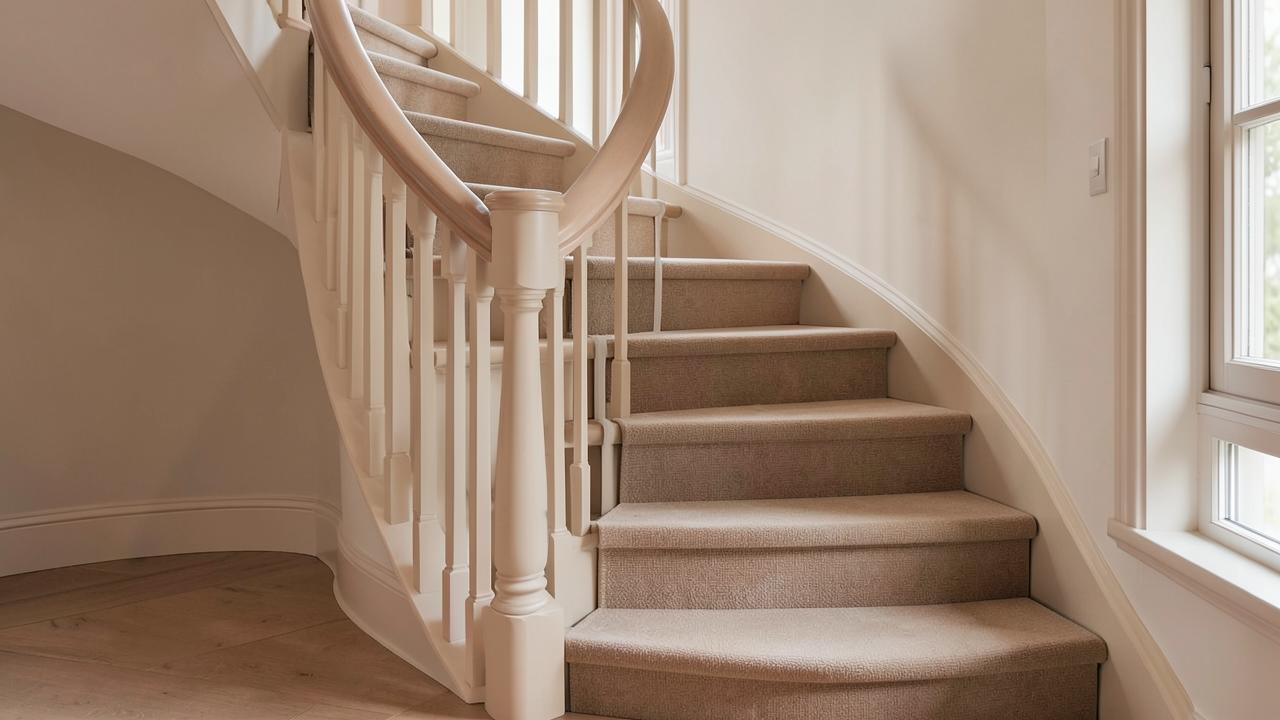 MeasurementRunners on Winder, Curved and Open StairsMeasuring and fitting where treads are not rectangles: winders, pie steps, curves and open-sided flights.
 ToolsStair Runner Length CalculatorWork out runner length from your step count, tread, riser and nosing, with the formula shown in full.