Measuring
How to calculate stair runner length, step by step
The arithmetic behind stair runner length is straightforward once you know what to measure. The mistakes people make are almost always about what gets left out, not about the maths itself.
Written by the StairRunner.co editorial team · Updated 4 September 2026
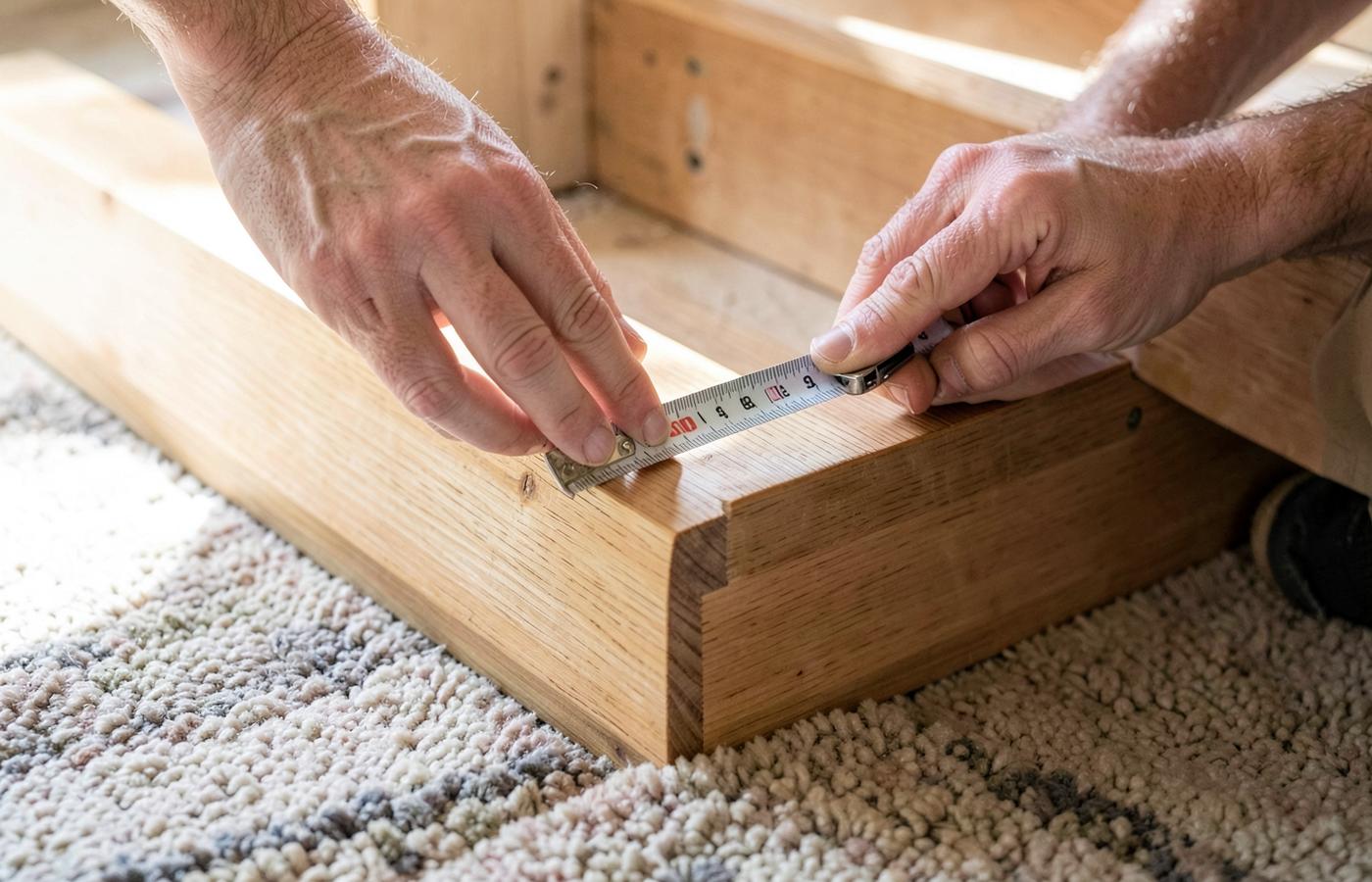
The formula in full
Stair runner length is built up step by step rather than measured as a single continuous run, because a runner does not simply lie flat down a flight — it steps over each tread and down each riser, and wraps slightly around the nosing at the front of every tread. The formula per step is:
Tread depth + riser height + nosing wrap allowance = length used by one step.
Multiply that figure by the number of risers in the flight, add any landing runs, then apply a waste allowance. Each of those inputs deserves its own explanation, because getting one wrong by even a small margin compounds across a full flight of steps.
Measuring tread depth
Tread depth is the horizontal distance from the front nosing edge of one step to the front nosing edge of the step above it — not simply the flat, walkable part of the tread. Measure it directly rather than assuming a standard figure, because tread depth varies meaningfully between houses and even, on older staircases, between steps within the same flight.
Measuring riser height
Riser height is the vertical distance from one tread surface to the next. Like tread depth, measure several risers individually on any staircase that predates modern building regulation consistency, since older flights were often built by eye rather than to a uniform rise. A small, consistent error in riser height, multiplied across a full flight of a dozen or more steps, adds up to a noticeable shortfall in ordered length.
The nosing wrap allowance
The nosing is the rounded or projecting front edge of the tread, and a properly fitted runner wraps down over it before tucking under toward the riser below, rather than simply crossing it in a flat line. This wrap uses extra material that a flat tread-plus-riser sum does not account for, and it is the single most commonly omitted figure in a hand-calculated length, usually because it is easy to overlook when the tread and riser measurements feel like they already describe the whole step. Measure the actual nosing projection and wrap depth on your own staircase, since nosing profiles vary between different tread and stair nosing designs.
Counting steps correctly
Count risers, not treads. A flight of stairs has one more riser than it has visible full treads if the top step meets a landing rather than another tread, and counting the wrong element is a common source of an off-by-one error. Standing at the bottom of the flight and counting each vertical riser face as you go, ending at the landing, is the most reliable way to get an accurate figure.
Adding landing and hallway runs
If the runner continues across a landing, a half-landing, or into a hallway before or after the flight, add that length separately, since it is not covered by the per-step formula at all. Measure landing runs directly along the path the carpet will actually take, including any run that continues past the final riser onto level flooring. Where a runner transitions from stairs onto a landing, the join detail itself can affect exactly how much extra length is sensible to order — see the stair-to-landing transition for how that junction is usually handled.
Handling a flight with a turn
A staircase that turns, whether through a half-landing or a set of winders, needs to be treated as separate sections rather than one continuous calculation. Apply the per-step formula to each straight run individually, measure the landing or winder section on its own terms, and add all the sections together before applying waste. Treating a turning staircase as one long uniform run is a common source of under-ordering, because the geometry at a turn rarely matches the straight-flight assumptions the basic formula depends on.
Worked example: a flight with a half-landing
Measuring winders individually
Winders are pie-shaped treads that turn a corner without a landing, and their depth varies along the width of the tread, so the flat per-step formula does not apply to them directly. Measure each winder along the actual line the runner will follow — usually the centre line of the intended runner width — rather than at the wide or narrow edge of the tread, and add these individual figures to your straight-flight totals. Full detail on planning a runner's path through a set of winders is in fitting a runner around winders.
Applying a waste allowance
| Situation | Effect on waste allowance |
|---|---|
| Plain colour, straight flight | Lower end of the typical range is usually sufficient |
| Patterned carpet requiring step-to-step matching | Higher allowance, and check the pattern repeat length specifically |
| Winders present | Higher allowance, since winder cutting produces more offcuts |
| Bullnose or wrapped bottom step | Additional length for the wrap itself, on top of the general allowance |
| Multiple landings or turns | Higher allowance to cover additional cutting and joining |
Ask your supplier for their recommended allowance for the specific material and pattern you have chosen rather than applying a generic percentage across every project, since pattern repeat length in particular can push the sensible figure well above a simple flat rate.
Common calculation mistakes
- Omitting the nosing wrap allowance entirely, treating each step as flat tread plus riser only.
- Counting treads instead of risers, producing an off-by-one shortfall.
- Measuring one step and assuming it applies uniformly across an older, less consistent flight.
- Forgetting to add a landing or hallway run that the carpet also crosses.
- Applying a flat per-step formula to winders instead of measuring them individually.
- Skipping the waste allowance altogether, or applying too low a figure for a patterned carpet.
Double-checking your figure before ordering
Once you have a total, sanity-check it against a rough rule of thumb: a typical domestic staircase step uses somewhere in the region of 40-50 cm of runner length depending on tread depth, riser height and nosing detail, so a 13-step straight flight landing around 5.5-6.5 m before waste is a reasonable ballpark. A figure far outside that range for a standard domestic flight is worth re-checking before you order, since it usually points to a missed or double-counted input rather than an unusual staircase.
For the full measuring process, including how width and margin are decided alongside length, see how to measure for a stair runner, and for a tool that carries out this exact arithmetic and shows its working, use the stair runner length calculator.
Calculating length for a bottom step wrap
Where a runner is finished with a bullnose or waterfall wrap around the bottom step rather than stopping flush at its edge, add an extra allowance specifically for that wrap on top of the standard per-step total. The amount depends on the exact detail chosen and the bottom step's shape, so measure the actual wrap path directly around the specific step rather than estimating, since bottom step details vary more between staircases than most other parts of the calculation. See finishing a stair runner at the bottom step for the common options and how each affects the length needed.
Calculating length for a runner that continues into a hallway
Many staircases feed directly into a hallway, and if the same runner is intended to continue across that floor rather than stopping at the final riser, measure the hallway run as its own separate length using a straightforward tape measurement along the intended path, then add it to the stair total before applying an overall waste allowance. Treat any rug pads, thresholds or doorway transitions along that hallway run as their own small allowance too, since a runner that has to clear a threshold strip or door swing sometimes needs a slightly different finishing detail than a plain hallway floor. See hallway carpet runners for how a combined stair-and-hallway project is usually planned.
How width affects the overall quantity, not just the length
Length calculations tell you how much runner to order along the direction of travel, but the total area and therefore the total quantity and cost also depend on the width chosen, particularly if you are comparing quotes based on area rather than running length. A wider runner covering more of each tread will naturally cost more per metre of length than a narrower one, and width also interacts with margin either side of the runner, which is usually decided separately from the length calculation covered in this guide. See choosing a stair runner width and stair runner margin for how those decisions are usually made alongside the length figure you calculate here.
When to get a professional measurement
A confident, careful hand measurement is entirely adequate for many straight staircases. Get a professional measurement instead where the staircase has multiple turns, a mix of winders and landings, an unusual nosing profile, or where the carpet chosen has a large pattern repeat that must be centred and matched precisely, since the cost of a measuring visit is small compared with the cost of an incorrectly cut length of patterned carpet.
Frequently asked questions
- What is the basic formula for stair runner length?
- Per step, add tread depth, riser height and a nosing wrap allowance. Multiply that figure by the number of steps, add any landing lengths, then add a waste allowance, typically 10-15 percent, for pattern matching and finishing.
- Do I count treads or risers when calculating length?
- Count risers. Every step in a flight contributes one tread run and one riser rise to the total length the runner has to cover, and the riser count is more reliable because the very top and bottom of a flight can be ambiguous when counting treads.
- How do winders change the calculation?
- Winders cannot be measured with the flat, uniform per-step formula because each pie-shaped tread has a different depth along the runner's path. Measure each winder individually along the line the runner will actually take, then add those figures to the straight-flight total.
- How much should I add for waste?
- A common starting point is 10 percent for a plain runner on a straight flight, rising for patterned material that must repeat consistently step to step, for winders, and for a bullnose or wrapped bottom step. Confirm the figure with your supplier for the specific material.
- What is a nosing wrap allowance and why does it matter?
- It is the extra length needed for the runner to wrap over and slightly under the front edge, or nosing, of each tread. Omitting it is one of the most common calculation errors, because it can under-order by a meaningful amount across a full flight.
- Can I calculate length without measuring every single step?
- You can measure a representative step and multiply if the flight is genuinely uniform, but older staircases are rarely perfectly consistent. Spot-check several steps at minimum, and measure individually wherever the staircase changes direction or width.
- Is it worth using a calculator instead of doing this by hand?
- A calculator saves time and reduces arithmetic slips, but understanding the underlying formula still matters, because it tells you which inputs to check carefully on your own staircase, such as an unusually deep nosing or a tighter-than-average riser.
- How do I calculate length if the runner continues into a hallway?
- Measure the hallway section separately with a straightforward tape measurement along the intended path, then add it to your stair total before applying an overall waste allowance, accounting separately for any threshold or doorway transition along the way.
- Does the width I choose change the length calculation?
- No, length and width are calculated independently. Width affects the total quantity and cost of carpet needed and interacts with the margin either side of the runner, but it does not change the per-step length figure produced by the tread, riser and nosing formula.
Related guides
- MeasurementHow to Measure for a Stair RunnerThe tread-plus-riser formula, waste allowance, winders and landings, plus a calculator that shows its working.
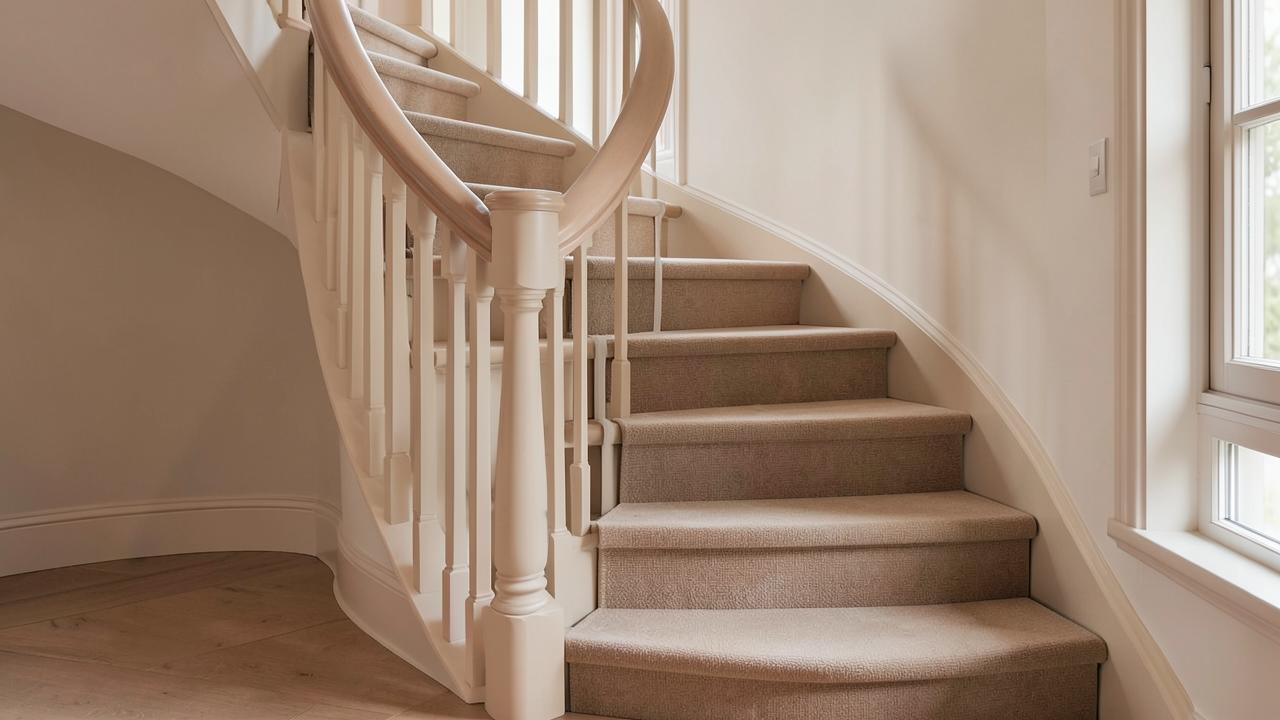 MeasurementRunners on Winder, Curved and Open StairsMeasuring and fitting where treads are not rectangles: winders, pie steps, curves and open-sided flights.
 ToolsStair Runner Length CalculatorWork out runner length from your step count, tread, riser and nosing, with the formula shown in full.
- MeasurementHow Much Carpet You NeedTurning a measurement schedule into an order quantity, with every waste allowance explained.
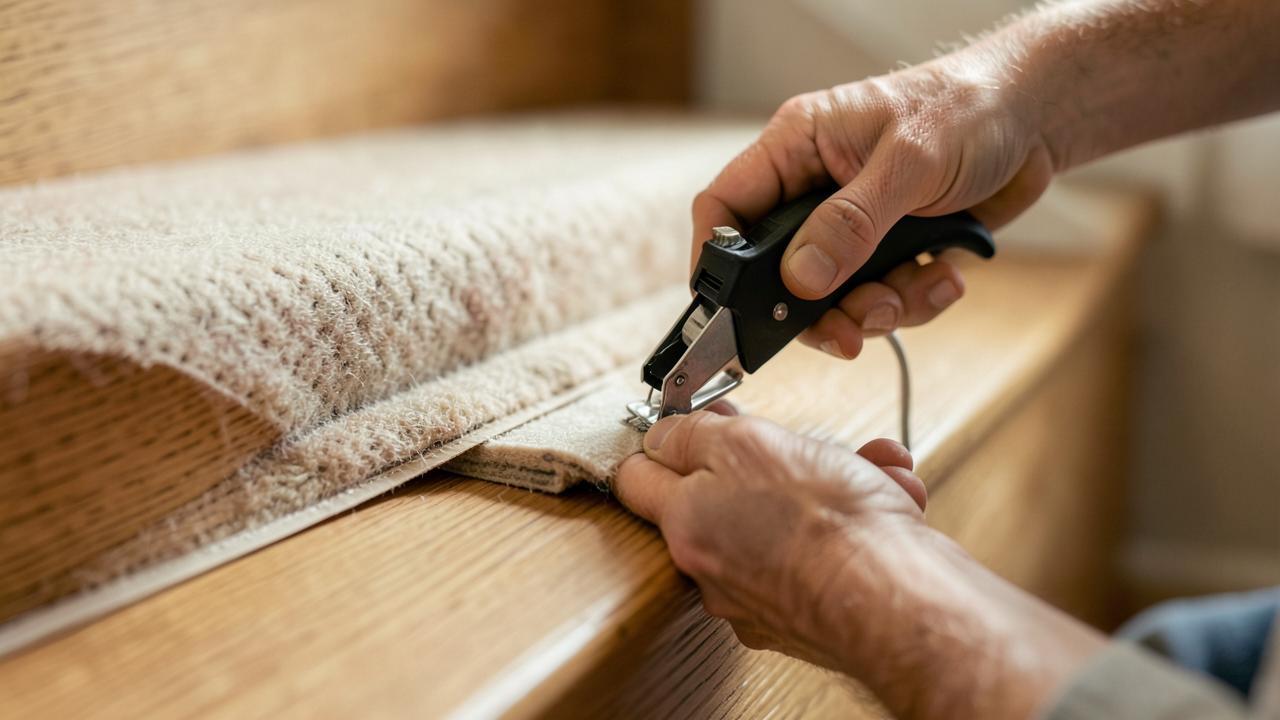 InstallationTransition from Stair Runner to LandingLearn how to achieve a professional transition from your stair runner to the landing carpet, covering finishing techniques, safety, and visual flow.