Heritage Style
Oriental stair runners: A guide to heritage and craftsmanship
Traditional oriental patterns offer more than just aesthetic depth; they provide a practical, durable, and sophisticated solution for the busiest thoroughfare in the home.
Written by the StairRunner.co editorial team · Updated 4 September 2026
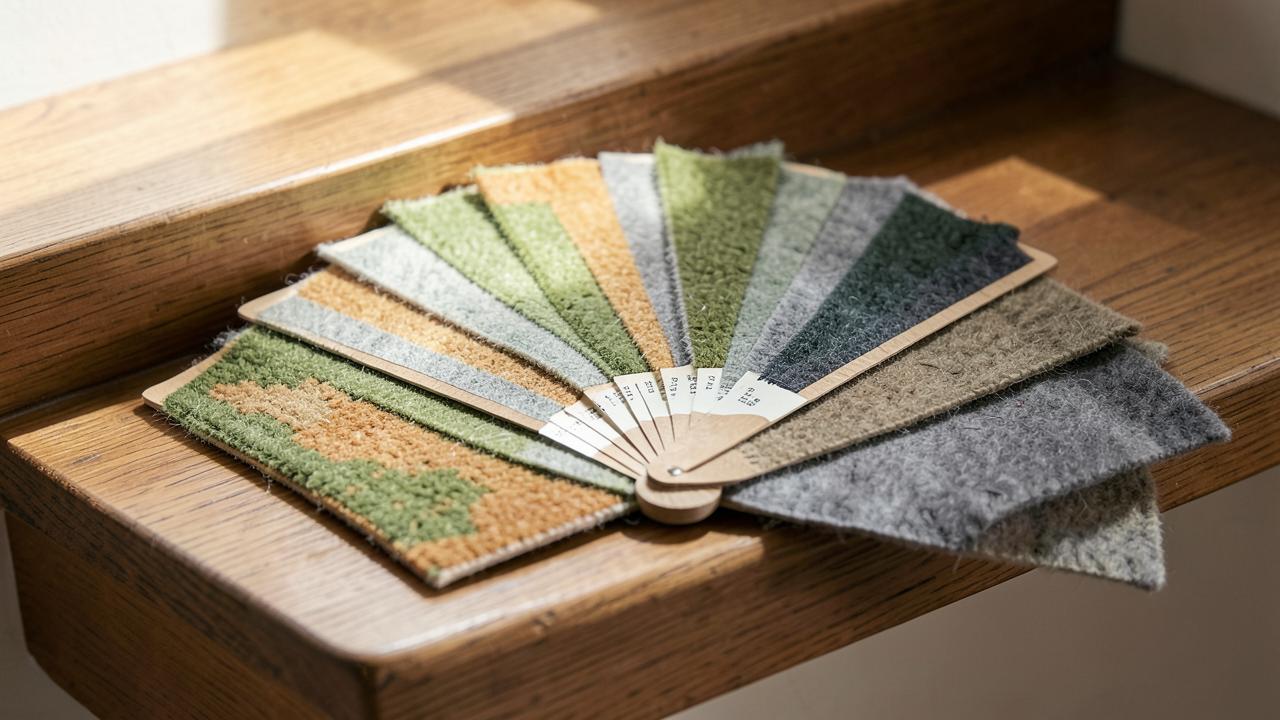
The enduring appeal of oriental design on stairs
Oriental designs have been a cornerstone of interior architecture for centuries, and their application to staircases remains one of the most effective ways to ground a home's design language. The term 'Oriental' traditionally encompasses a vast range of geographic and cultural styles, from the geometric tribal patterns of the Caucasus to the floral, curvilinear motifs of Persian city-weaving centres like Isfahan or Tabriz. On a staircase, these designs serve a dual purpose: they provide a sense of luxury and history, while the complexity of the pattern serves as a masterclass in functional camouflage.
Unlike plain or minimalist runners, an oriental design creates a visual rhythm. As you look up the flight, the repeating medallions and borders create a frame for each step, providing a clear visual cue for the foot—a subtle but important safety benefit. Furthermore, the multi-tonal nature of these carpets means that a single stray thread or a small mark is rarely visible to the casual observer, making them an ideal choice for families who want a formal look without the high-maintenance demands of a solid-colour carpet.
Historically, these patterns were hand-woven by nomadic tribes or in royal workshops, each motif carrying specific symbolic meanings—protection, fertility, or prosperity. While modern stair runners are largely machine-produced for precision and length, they retain these symbolic vocabularies. Bringing this level of detail into a modern hallway creates a bridge between contemporary living and historical craftsmanship, offering a layer of 'soul' that mass-produced, plain flooring often lacks.
Understanding the construction: Hand-knotted vs. Machine-woven
When specifying an oriental runner, the method of construction determines not just the price but how the product will behave over time. Hand-knotted rugs are the pinnacle of the craft, but their use on stairs is fraught with difficulty. Because they are not inherently designed for the high-tension environment of a staircase, they can slip or stretch if not fitted with extreme care.
| Feature | Hand-Knotted | Axminster / Wilton | Tufted / Synthetic |
|---|---|---|---|
| Durability | Exceptional; can last generations | High; engineered for stairs | Moderate; best for low-traffic |
| Pattern Precision | Organic; slight variations | Highly precise and repeating | High, but less depth |
| Cost Factor | Investment; high entry price | Mid-to-high; value for quality | Budget-friendly |
| Repairability | Can be re-knotted by experts | Difficult to spot-repair | Disposable/Replaceable |
| Stair Suitability | Needs expert fitting and lining | Optimised for nosing tension | Good for straight runs |
Key oriental pattern styles for modern stairs
Choosing the right motif depends largely on the architecture of your hallway. A Victorian home with high ceilings and decorative plasterwork can easily handle a large-scale, ornate Persian floral pattern. Conversely, a modern cottage or a contemporary apartment might benefit more from the geometric, tribal simplicity of a Kelim or a Bokhara design.
The Heriz and Serapi Style
These are known for their bold, geometric interpretations of floral motifs. Originating from Northwest Iran, they often feature large, angular medallions. On a staircase, a Heriz-style runner makes a powerful statement. The sharp angles of the pattern complement the linear nature of the stairs, and the typically rich colour palette of terracotta and indigo provides a warm welcome.
The Tabriz Floral
Tabriz patterns are often more delicate and curvilinear, featuring a dense field of flowers (the 'Mahi' or fish pattern is common). These are ideal for homeowners who want a softer, more romantic look. The high detail level in a Tabriz design is particularly effective at hiding dust and small debris, making it one of the most practical choices for busy households.
The Bokhara and Tekke
Perhaps the most recognisable oriental pattern, the Bokhara features repeating rows of octagonal 'guls' (flowers). This is a highly rhythmic pattern that leads the eye up the stairs. Because the motifs are relatively small and consistent, it is one of the easiest patterns to install on winders, as the breaks in the pattern are less jarring to the eye than a large medallion.
Colour palettes and light levels
The traditional oriental palette—madder red, indigo blue, ivory, and ochre—is not just a matter of tradition; these colours are remarkably resilient. Dark reds and blues are excellent at hiding the shadows cast by the stair nosings and the inevitable dust that settles in the corners. When selecting a colour, consider the light levels in your stairwell. Many hallways are windowless and rely on artificial light.
If your hallway is dark, look for an oriental runner with a high proportion of ivory or cream in the border. This 'frames' the darker central pattern and helps define the edge of the stairs in low light. Conversely, if you have a bright, grand entrance, a deep navy or rich burgundy can provide a grounded, sophisticated anchor for the space. See our guide on choosing stair runner colours for more on this.
We also see a rising trend in 'overdyed' oriental runners. These are traditional patterns that have been washed with a single, vibrant pigment (like teal, magenta, or lime) to create a monochromatic, textured look. This is a brilliant way to enjoy heritage patterns in a ultra-modern or eclectic interior where traditional multi-colour palettes might clash.
The importance of the border on a staircase
The border is perhaps the most critical element of an oriental runner. It performs an architectural function, acting as a transition between the carpet and the exposed timber of the stair tread. A well-proportioned border should feel intentional. If the border is too thin, the runner can look like a strip of scrap carpet; if it is too thick, it can overwhelm the central pattern and make the stairs feel claustrophobic.
When measuring for your runner, consider the 'reveal'—the amount of wood showing on either side. An oriental runner usually looks best when the reveal is consistent on both sides, typically between 5cm and 12cm. This creates a high-contrast frame that highlights both the beauty of the timber and the intricacy of the weaving. For more on sizing, visit stair runner width guidelines.
For staircases with varying widths or unusual shapes, the border poses a challenge. In these cases, a 'false border' can sometimes be created by an expert fitter, or the runner can be bound with a coordinating solid-colour tape to mimic the effect of a woven border while allowing for more flexibility in the total width of the runner.
Material matters: Why wool is king
Stairs are the most demanding area of any floor covering. Every time you walk up or down, your body weight is concentrated on the small area of the stair nosing, creating significant friction and pressure. Natural wool stair runners are the preferred choice for oriental designs for several reasons. Wool fibres have a natural crimp, which allows them to spring back after being stepped on. This prevents the 'crushing' that can make synthetic carpets look flat and shiny over time.
Furthermore, wool is naturally flame retardant and has a protective waxy coating (lanolin) that provides a degree of natural stain resistance. While it is an investment, the lifespan of a high-quality wool oriental runner often far exceeds that of a synthetic alternative, making it more cost-effective over the long term. If you are considering a synthetic version, look for high-grade polypropylene which is 'bleach cleanable', making it a practical choice for homes with pets.
It is also worth mentioning silk-blend oriental runners. While silk adds a luxurious sheen and incredible detail to the pattern, it is generally too delicate for stairs. A better alternative is viscose or bamboo silk, which provides a similar lustre but with slightly better durability—though even these should be reserved for low-traffic decorative stairs rather than the main family flight.
Installation challenges: Pattern matching and winders
Installing an oriental runner is more complex than a plain one. The symmetry of the pattern requires a master installer, especially on staircases with turns (winders). On a straight flight, the challenge is ensuring the pattern stays perfectly square to the nosing. If the runner is slightly crooked, the geometric borders will immediately betray the error.
On winders, the pattern must be handled with care. A skilled fitter will use a method called 'mitring' on the landing or the turns, where the carpet is cut and joined at an angle to ensure the border follows the turn of the stairs. Without this, the border would simply run into the wall, breaking the visual flow. This level of craftsmanship is essential for heritage patterns. Detailed technical advice can be found in our installation guide.
Another factor to consider is the 'waterfall' versus 'Hollywood' installation method. For oriental runners, the Hollywood method—where the carpet is tucked tight against the riser—often shows off the pattern better, as it prevents the design from looking like it is just 'draped' over the steps. However, the waterfall method is often preferred for thicker wool runners to prevent the pattern from distorting over the nosing. You can read more about these choices in our guide on waterfall vs Hollywood fitting.
Maintenance and longevity for intricate patterns
To keep an oriental runner looking its best, regular vacuuming is essential. However, avoid using a vacuum with a heavy beater bar on the edges, as this can fray the delicate binding or serging that finishes the sides of the runner. Instead, use the upholstery attachment for the edges and the main head for the central path.
Because of the density of the weave in oriental runners, dust can become trapped deep in the pile. We recommend a professional deep clean every 18 to 24 months. Unlike modern carpets that can be steam-cleaned, traditional wool runners often prefer a dry-extraction method or a low-moisture system to prevent the natural dyes from migrating. For more tips, see cleaning and maintenance.
Sunlight is another factor to consider. Over many years, intense UV exposure can fade the rich vegetable or synthetic dyes in an oriental runner. If your staircase is flooded with sunlight, consider using UV-filtering window film to preserve the vibrancy of the indigo and madder tones that give these carpets their character.
Styling the oriental runner in a modern home
One of the biggest myths in interior design is that oriental runners only belong in traditional homes. In reality, they are a favorite tool for contemporary designers to add soul and texture to minimalist spaces. A crisp, white hallway with a bold, red Persian runner creates a stunning focal point. The key is balance. If your runner is highly ornate, keep the wall art and furniture simple.
Consider the hardware as well. Traditional oriental designs are often paired with stair rods. A brass or antique bronze rod can enhance the heritage feel, while a minimalist black rod or no rod at all can make the same pattern feel surprisingly modern.
You can also layer the look. An oriental runner on the stairs can be paired with a coordinating (but not identical) rug in the hallway. This creates a sense of flow without looking too 'matched', which is a hallmark of a well-designed, evolved home interior.
Technical Specification Check
When ordering your runner, check the following technical details to ensure it is fit for purpose:
- Pitch and Row: In Axminster terms, this refers to the density of the tufts. A higher density means the pattern will be sharper and the carpet will wear better.
- Pile Height: For stairs, a shorter, denser pile is safer and more durable than a long, shaggy one. Aim for 7mm to 9mm.
- Backing: Ensure the backing is flexible enough to be pulled tight over the nosing without cracking. Jute and cotton backings are traditional and effective.
- Yarn Blend: An 80/20 wool/nylon blend is often the sweet spot for oriental runners on stairs, combining the beauty of wool with the extra durability of nylon.
Final considerations before you buy
Before committing to an oriental runner, always request a large sample. Because these patterns are so complex, a small 10cm swatch won't give you a true sense of the scale of the medallion or the depth of the colours. Place the sample on your stairs and look at it at different times of the day—the way the light hits the pile (the 'nap') can significantly change the appearance of the colours.
Remember that an oriental runner is more than just a floor covering; it is a piece of art for your home. By choosing the right pattern, material, and installer, you are creating a feature that will provide beauty and service for many years to come. Whether you opt for a deep-pile Persian floral or a flat-weave tribal Kelim, the oriental runner is a choice that rewards the homeowner with every step.
Frequently asked questions
- Are oriental stair runners out of fashion?
- Oriental patterns are considered 'timeless' rather than trendy. While specific colour palettes may fluctuate in popularity, the intricate motifs and structured borders of oriental designs remain a staple in high-end interior design for their ability to hide wear and add architectural weight.
- Can I use an oriental runner on winder stairs?
- Yes, but it requires skilled installation. Because oriental patterns are highly symmetrical with defined borders, the 'pattern match' at the turn is crucial. Fitters often use a mitred join or a 'turn-and-tuck' method to maintain visual continuity.
- Do authentic oriental runners wear out on stairs?
- Stairs are a high-friction environment. While hand-knotted rugs are durable, a dedicated stair runner (usually Axminster or Wilton woven) is specifically engineered to handle the tension and footfall of a staircase better than a repurposed rug.
- What is the best material for an oriental runner?
- Wool is the gold standard. It takes the deep dyes of oriental patterns beautifully, has natural resilience against crushing, and develops a gentle patina rather than looking 'worn out' over time.
- How do I choose the right border width?
- For oriental designs, the border is a key feature. Ideally, the border should sit entirely on the flat part of the tread, leaving 5-10cm of timber visible on either side. Too wide a border can make the staircase feel narrow.
- Are synthetic oriental runners worth it?
- Modern heat-set polypropylene runners can mimic the look of traditional wool very effectively at a lower price point. They are excellent for high-spill households, though they lack the long-term resilience and 'bounce back' of natural wool.
- How do I deal with the ends of an oriental runner?
- The way a runner starts at the bottom and ends at the top is crucial for oriental designs. A 'finished' look involves wrapping the border around the final riser or using a specific matching landing piece to ensure the pattern doesn't just abruptly stop.
Related guides
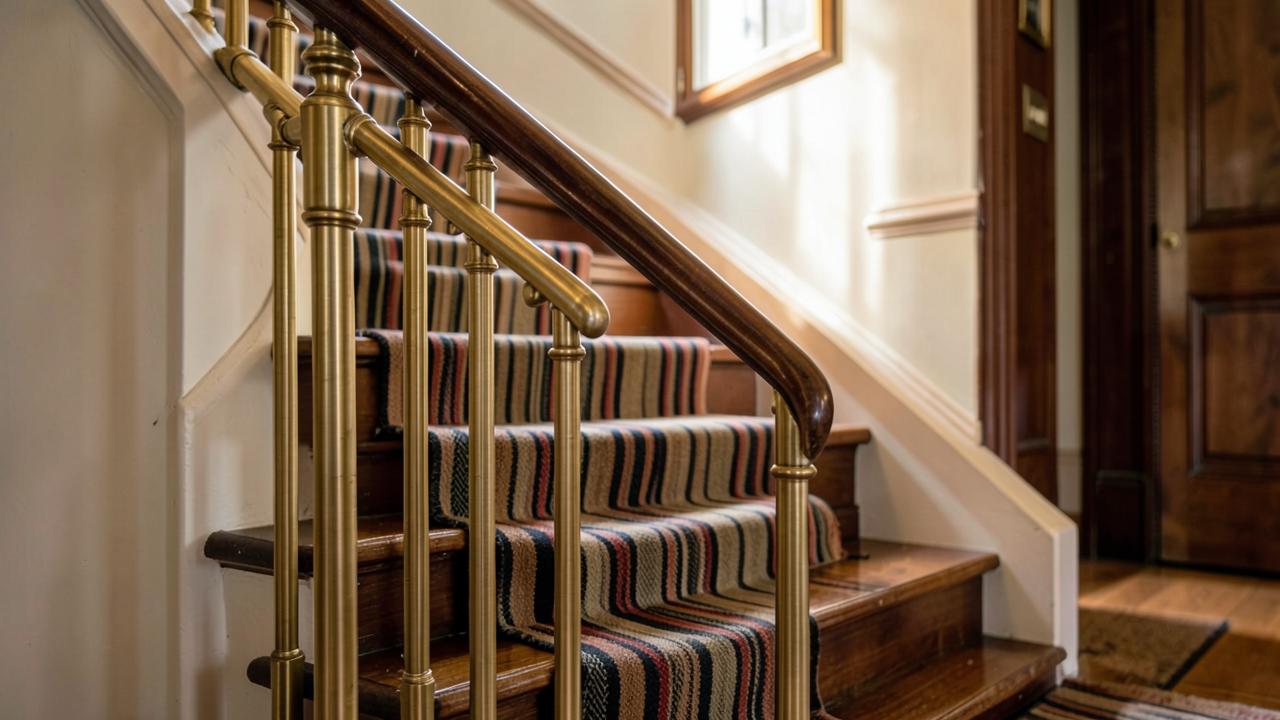 InstallationStair Rods, Clips and Runner HardwareHow stair rods, clips, brackets and bars actually work, when they hold a runner and when they are decorative.
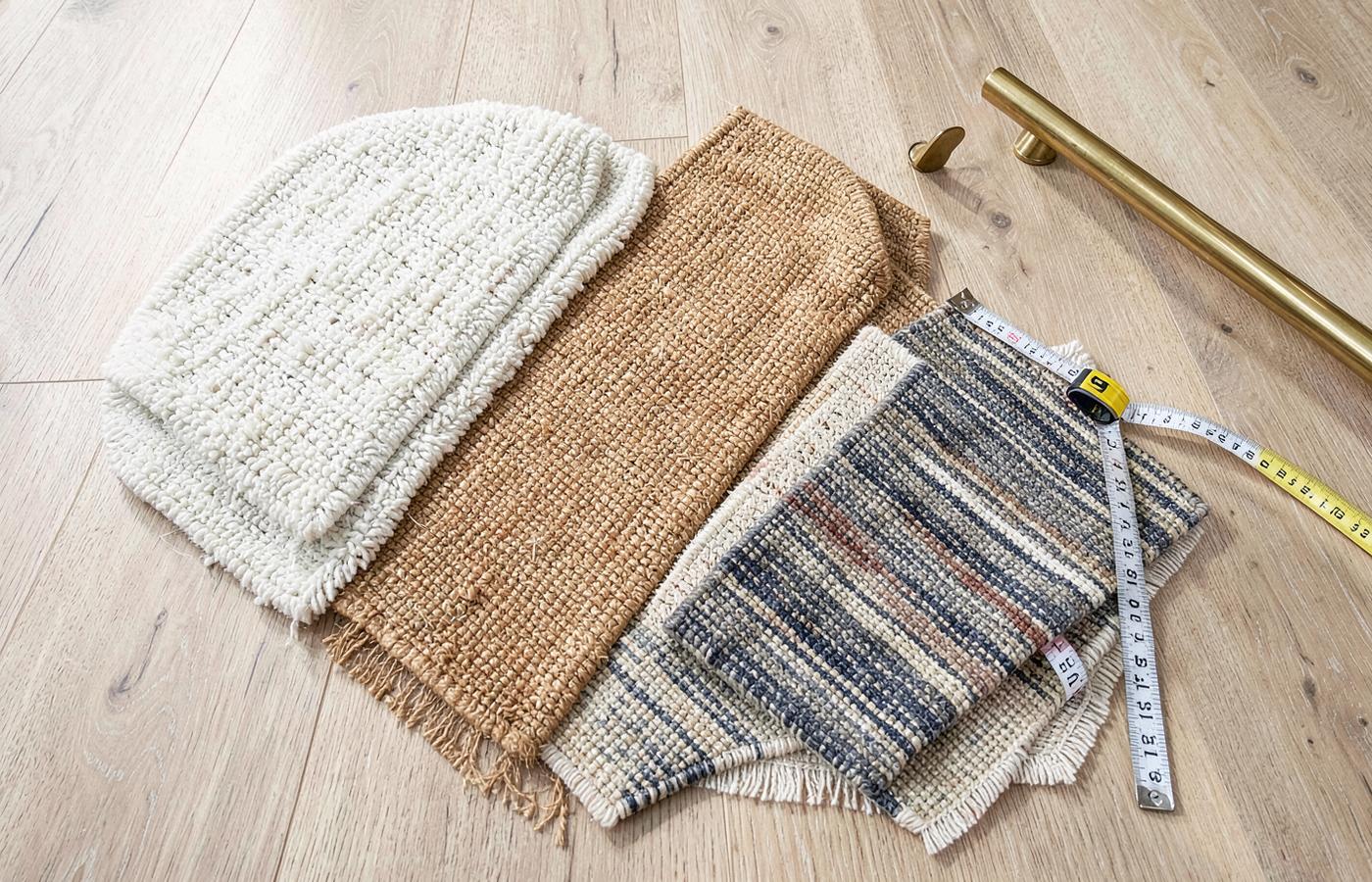 MaterialsAxminster Stair Runners: A Guide to Woven QualityExplore the heritage, durability, and intricate patterns of Axminster stair runners. Learn why woven construction remains the gold standard for high-traffic British homes.
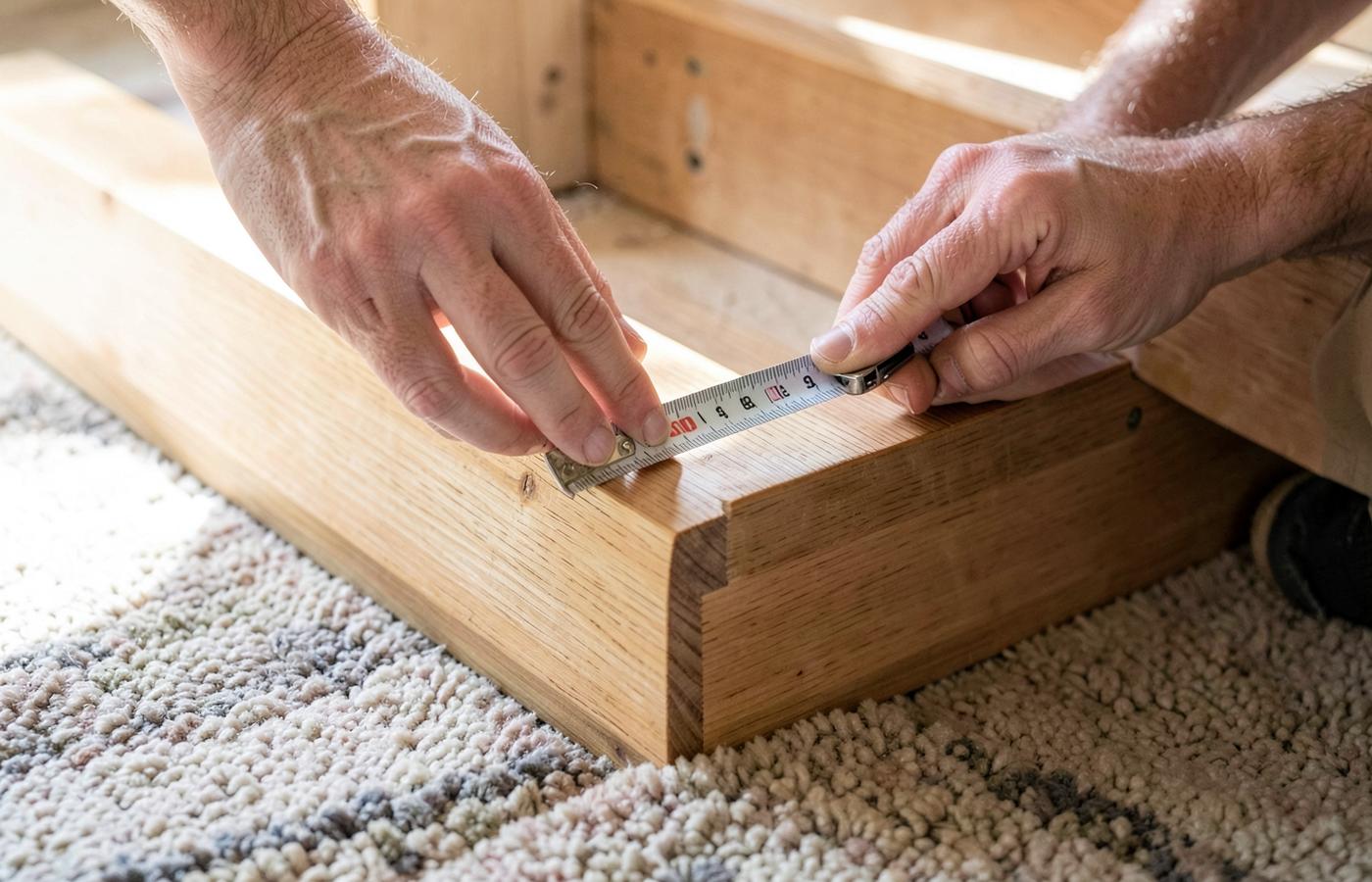 MeasurementHow to Measure for a Stair RunnerLearn how to accurately measure your staircase for a runner. Covers straight flights, winders, landings, pattern repeats, and the 10% waste rule.