Materials
Blended wool stair runners: Why 80/20 is the professional's choice
The 80/20 wool-to-nylon blend is more than just a manufacturer's preference; it is a time-tested formula for the most demanding floor in the house. Discover how this hybrid material delivers longevity, beauty, and safety.
Written by the StairRunner.co editorial team · Updated 4 September 2026
The anatomy of a classic: The 80/20 blend
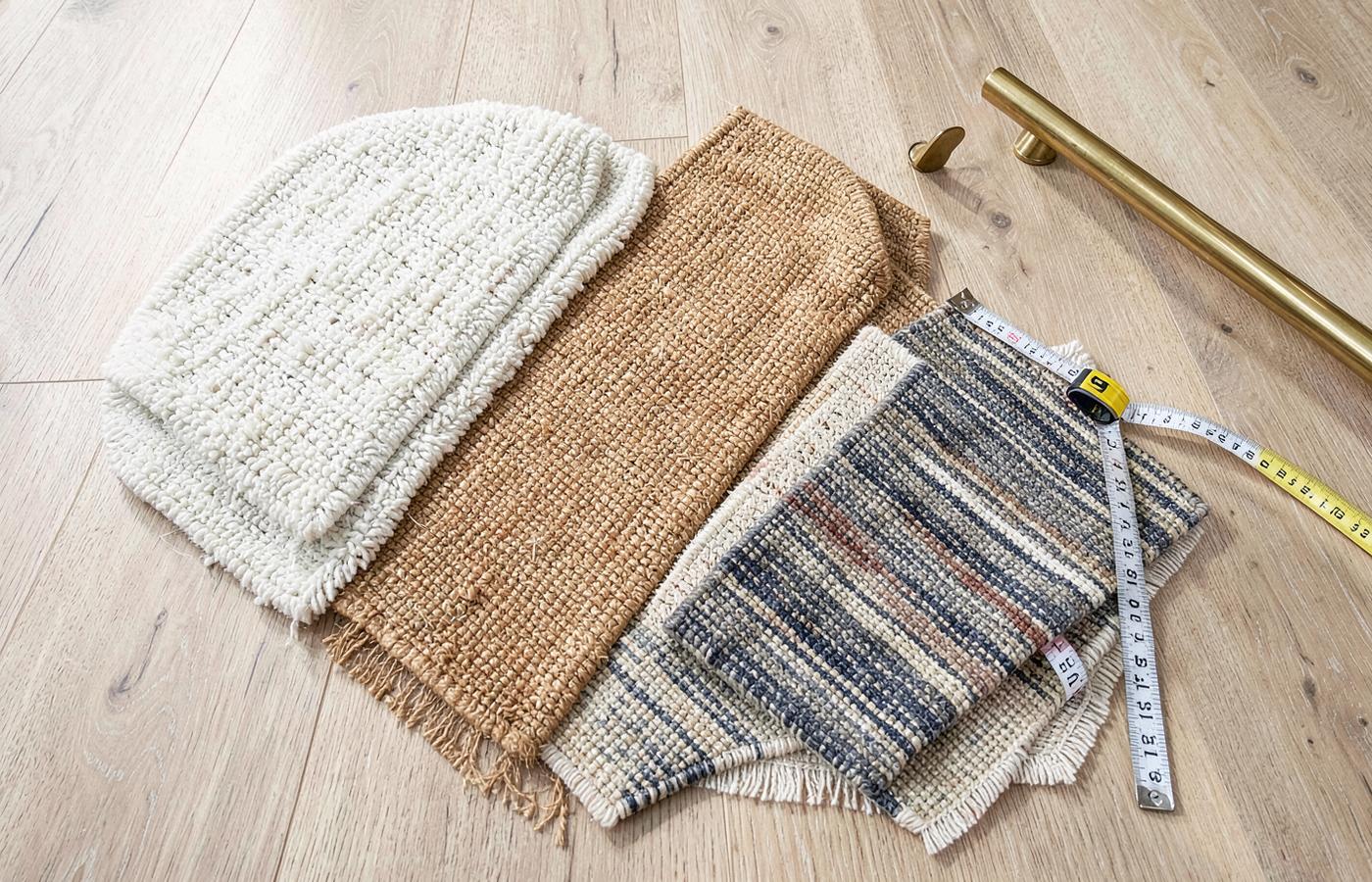
In the world of interior design and flooring, few specifications are as universally respected as the 80/20 wool blend. To understand why it is so highly regarded, we must look at what each component brings to the staircase. Wool is nature's miracle fibre. It is naturally crimped, acting like a tiny spring that resists crushing. It is also naturally flame-retardant, a crucial safety feature for the central exit route of a home. Furthermore, wool's complex structure allows it to hide dry soil, keeping the runner looking clean even between vacuuming sessions.
However, pure wool can be susceptible to abrasion. On the sharp 'nose' of a stair tread, feet don't just land; they push off with significant force, creating a grinding action. This is where the 20% nylon comes in. Nylon is one of the strongest man-made fibres, with incredible tensile strength. By blending a small amount of nylon into the wool, manufacturers create a yarn that is significantly tougher and more resistant to the friction of daily use. This blend ensures that the runner doesn't 'bald' at the edges or develop thin patches in the traffic lane.
Performance on the stairs: The resilience factor
The most common way stair carpets fail is 'matting'—the process where fibres become flattened and lose their ability to stand back up. A matted runner looks shiny, worn, and thin, even if the fibres themselves haven't broken. Wool blends excel at resisting matting because of the inherent 'memory' of the wool fibre. The natural curl of the wool ensures that after you step off the stair, the fibres actively move back to their upright position.
This resilience is enhanced by the way the yarns are spun. In a high-quality blended runner, the wool and nylon are intimately mixed before being spun into yarn, ensuring a consistent performance across every inch of the material. This makes blended wool particularly suitable for winder stairs or complex flights where the carpet is under varied stresses from different directions.
Appearance retention and aesthetics
A stair runner is a major visual element in any home, often being the first thing guests see when they enter the hallway. Blended wool runners have a unique, matte finish that synthetic-only carpets struggle to replicate. The way wool absorbs light gives it a richness and depth of colour that looks sophisticated and timeless. Whether you choose a traditional pattern or a modern, neutral plain runner, the wool blend will hold its colour beautifully over time.
Furthermore, wool is naturally multi-tonal. Even a 'solid' colour wool runner is made up of fibres with slight variations in shade, which is incredibly effective at disguising the small marks and dust that are inevitable in a busy home. This 'forgiveness' is one of the main reasons interior designers almost always specify wool blends for high-traffic entryways and stairs.
Comparing blended wool to other materials
| Material | Longevity | Feel | Fire Safety | Eco-Impact |
|---|---|---|---|---|
| 80/20 Wool Blend | 20+ Years | Warm & Soft | Excellent | Moderate (Renewable) |
| 100% Wool | 15-20 Years | Very Soft | Excellent | High (Renewable) |
| 100% Nylon | 10-15 Years | Synthetic | Good | Low (Oil-based) |
| Polypropylene | 5-10 Years | Coarse | Poor | Low (Oil-based) |
Natural insulation and acoustics
Staircases are often the coldest part of a house, acting as a chimney that draws heat away from the ground floor. A thick wool-blend runner acts as a high-performance insulator, trapping heat in its millions of tiny air pockets. This can make a noticeable difference to the ambient temperature of your hallway and landing.
Beyond thermal insulation, wool is an incredible acoustic dampener. The complex, irregular surface of the wool fibres is perfect for breaking up sound waves. If you have children running up and down the stairs or live in a multi-storey townhouse, a wool-blend runner will significantly reduce the 'thumping' noise that travels through the building's structure. It transforms a noisy, echoing stairwell into a quiet, peaceful transit space.
The importance of density and weight
When shopping for a blended wool runner, you will often see a 'pile weight' (usually in ounces per square yard, such as 40oz, 50oz, or 60oz). While weight is important, density is even more critical for stairs. A 'heavy' carpet with a tall, loose pile can actually perform worse on stairs than a 'lighter' carpet with a short, dense pile.
On a staircase, you want a construction where the yarns are packed tightly together. This prevents the individual fibres from bending over when stepped on, which is the primary cause of wear. A dense 40oz wool-blend twist will usually outperform a loose 60oz shag-style carpet on a staircase every time. When testing samples, try to push your thumb down into the pile; the more resistance you feel, the better it will likely perform on your stairs.
Wool-blend varieties: Twist vs. Velvet vs. Loop
Wool blends are available in several different textures, each with its own advantages for stairs:
- Twist Pile: The most popular choice. The yarn is tightly twisted to give it a slightly textured, 'bark-like' appearance. It is incredibly durable and very good at hiding footprints and vacuum marks.
- Velvet Pile: A smoother, more formal look. While beautiful, velvet piles show 'shading' (where the pile leans in different directions), which some people find looks like staining. It is better suited for formal, low-traffic stairs.
- Loop Pile (Berber): While wool-blend loops are common, they are generally not recommended for households with pets, as claws can easily catch and pull the loops, causing permanent damage.
For the majority of homes, a high-density 80/20 wool-blend twist is the safest and most practical recommendation. It offers the best balance of longevity and ease of maintenance. You can read more about these styles in our guide to the best carpet for stair runners.
Maintenance: Caring for your investment
One of the biggest myths about wool is that it is 'difficult' to clean. In reality, wool's natural properties make it very forgiving. The surface of a wool fibre is covered in microscopic scales that act as a shield against dirt and liquid. If you spill something on a wool blend, you often have a several-minute window to blot it up before it penetrates the fibre.
The most important part of maintenance is vacuuming. You should vacuum your stair runner at least twice a week using a vacuum with a rotating brush (beater bar). This lifts the pile and removes the sharp grit that settles at the base of the carpet. If left in place, this grit acts like sandpaper, cutting the fibres from the bottom up every time you step on them. For more tips, see our full guide on cleaning and maintenance.
Installation tips for wool blends
Wool-blend runners are heavy and substantial, which means they require a high-quality installation to stay in place. They should always be installed over a high-density underlay—we recommend a 9mm or 11mm rubber or crumb-rubber pad. This provides the necessary support for the runner and prevents it from stretching or shifting over time.
Because of their thickness, wool blends look particularly good when installed using the Hollywood method, where the carpet is wrapped tightly around the stair nosing. This highlights the luxury of the material and creates a very tailored, high-end look. However, the traditional waterfall method is also a great choice for those who prefer a softer, more relaxed aesthetic.
Health and safety: Fire and indoor air quality
Safety is a paramount concern for any staircase. Wool is naturally fire-retardant because of its high protein and moisture content. It is difficult to ignite, and if it does catch fire, it tends to char and self-extinguish rather than melting and spreading like many synthetics. This provides vital extra minutes for evacuation in the event of a fire.
Additionally, wool blends are excellent for indoor air quality. They have the ability to absorb common household pollutants like formaldehyde and nitrogen dioxide, trapping them within the fibre for the life of the carpet. Wool is also naturally hypoallergenic and does not promote the growth of dust mites or bacteria, provided it is kept dry and vacuumed regularly.
Is a blended wool runner right for your home?
If you value longevity, classic aesthetics, and a healthy home environment, then a blended wool runner is almost certainly the right choice. While the initial investment is higher, the daily pleasure of walking on a high-quality natural material and the peace of mind that comes with its durability make it a favourite among architects and designers.
Before purchasing, always request a large sample. Place it on your stairs and look at it at different times of the day. Notice how the colour changes in the morning light versus the evening. A wool runner is a 20-year decision, so taking the time to choose the right shade and texture is well worth the effort. For further guidance, explore our guide on how to choose a stair runner.
The lifecycle of a wool blend
Unlike plastic-based carpets that will sit in a landfill for centuries, the wool component of an 80/20 blend is biodegradable. While the nylon portion is not, the overall environmental impact of a long-lived wool runner is significantly lower than that of several short-lived synthetic ones. By choosing quality, you are choosing a more sustainable path for your home.
In summary, the 80/20 wool blend remains the 'gold standard' for a reason. It is the perfect marriage of nature and technology, designed specifically to meet the unique challenges of the domestic staircase. It is warm, quiet, safe, and beautiful—a true foundational element for a well-designed home.
Frequently asked questions
- Why is 80/20 wool the standard for stairs?
- The 80/20 blend combines the natural resilience, warmth, and flame resistance of wool with the exceptional tensile strength and durability of nylon. This ratio is widely considered the 'sweet spot' for staircases, providing the luxury of a natural fibre with the toughness needed for high-traffic vertical surfaces.
- Is a wool blend better than 100% wool for stairs?
- For most residential stairs, yes. While 100% wool is beautiful and luxurious, the addition of 20% nylon significantly increases the carpet's resistance to abrasion and pilling. This helps the runner maintain its appearance for longer in the high-friction 'traffic lane' of the staircase.
- Do wool blends shed more than synthetics?
- New wool-blend runners will experience some 'pilling' or shedding in the first few weeks as short fibres work their way to the surface. This is perfectly normal and reduces over time with regular vacuuming. Modern manufacturing techniques have significantly minimised this compared to older wool carpets.
- Are wool-blend runners easy to clean?
- Wool blends have excellent natural stain resistance due to the protective lanolin coating on the wool fibres. However, they are sensitive to high-alkaline cleaning products. Spills should be blotted immediately, and only pH-neutral cleaners should be used to avoid damaging the fibre structure.
- How long does a wool-blend stair runner last?
- With a high-quality 80/20 blend and proper underlay, a stair runner can easily last 15 to 25 years. Its longevity is one of its primary advantages over cheaper, purely synthetic alternatives that may mat or flatten within a few years.
- Is a wool blend safe for allergy sufferers?
- Yes, wool is a natural air filter, trapping dust and allergens in its fibres until they are vacuumed away. This prevents them from circulating in the air. As long as the runner is vacuumed regularly with a HEPA-filter vacuum, it can be a very healthy choice for the home.
- Does a wool blend feel scratchy?
- High-quality 80/20 blends are remarkably soft. The nylon is blended at a molecular or yarn level, so the predominant feel is that of the wool. It provides a warm, cushioned sensation that is far superior to budget synthetics.
Related guides
- MaterialsStair Runner Materials ComparedWool, nylon, polypropylene, sisal and jute judged on stair-specific wear, comfort, cleaning and safety.
- ComparisonsWool vs Synthetic Stair RunnersWool, nylon, polyester and polypropylene compared on stair-specific wear, cleaning, comfort and price.
 MaterialsStair Runner Underlay and PaddingWhy pad choice matters more on stairs than anywhere else, and how to specify density, thickness and cut.